Fernweh: Home
ExploreGuideDestinationsMy tripsMy trip
de|en
All Places & RegionsRound tripsNight trains in EuropeAll highlightsAbout FernwehFAQPrivacy PolicyImprint
Download on the App StoreGet it on Google Play
ExploreGuideDestinationsMy tripsMy trip
    • Neighborhoods & highlights
    • Eat & drink
    • Culture
    • Getting around
    • Accommodation
    • Plan trip
    • Nearby
    Khajuraho

    Imakanksha / Wikimedia Commons / CC BY-SA 4.0, mod.

    India

    Khajuraho

    City

    Khajuraho, in northern Madhya Pradesh, is a small town home to one of India's most significant temple complexes.

    by Felix Gillen

    1. Home
    2. Destinations
    3. India
    4. Khajuraho
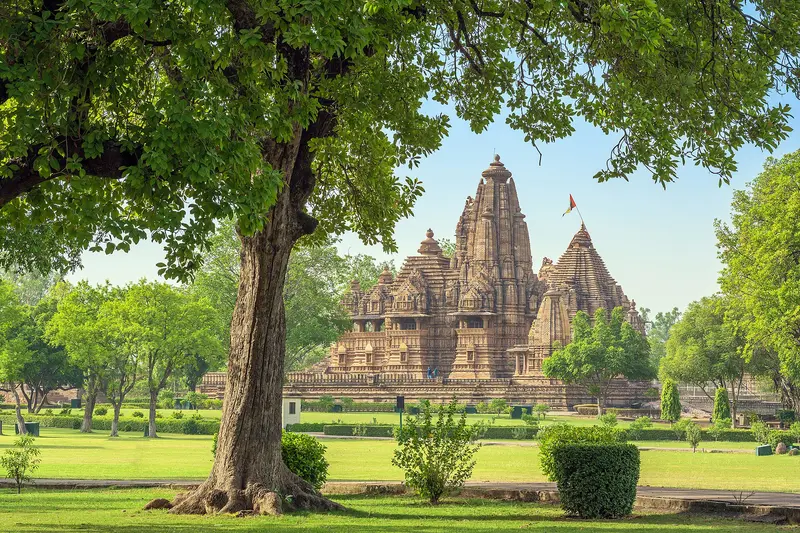
    Khajuraho, in northern Madhya Pradesh, is a small town home to one of India's most significant temple complexes. The temples of the Chandela dynasty, dating from the 10th and 11th centuries, have been on the UNESCO World Heritage List since 1986 and are famous for their intricate sculptural ornamentation.Of the original approximately 85 temples, just over 20 remain. They are divided into three groups: The Western Group, featuring the Kandariya Mahadeva Temple, is the most important; the Eastern Group comprises several Jain temples; and the Southern Group is somewhat secluded amidst fields. The erotic figures are well-known, but they constitute only a small portion of the reliefs, which primarily depict gods, dancers, musicians, and scenes of daily life.The town is manageable and can be explored by bicycle or rickshaw. One to two days are sufficient for the temples and the museum. The best time to visit is November to March; in February, the Khajuraho Dance Festival takes place against the backdrop of the temples.
    India travel guidePlan a trip with Khajuraho

    Contents

    • Neighborhoods & highlights
    • Eat & drink
    • Culture
    • Getting around
    • Accommodation
    • Nearby

    Sights in Khajuraho

    Discover the most important sights and attractions

    Lakshmana Temple

    Chetansoni / Wikimedia Commons / CC BY-SA 4.0, mod.

    Temple

    1Lakshmana Temple

    The Vishnu Temple, completed in 939, is one of the oldest and best-preserved of the Western Group. Its plinth and walls feature friezes with processions, warriors, and dancers. Practical: Admission is included in the Western Group ticket.
    Open in Google Maps
    Archaeological Museum Khajuraho

    SpeakingArch / Wikimedia Commons / CC BY-SA 4.0, mod.

    Museum

    2Archaeological Museum Khajuraho

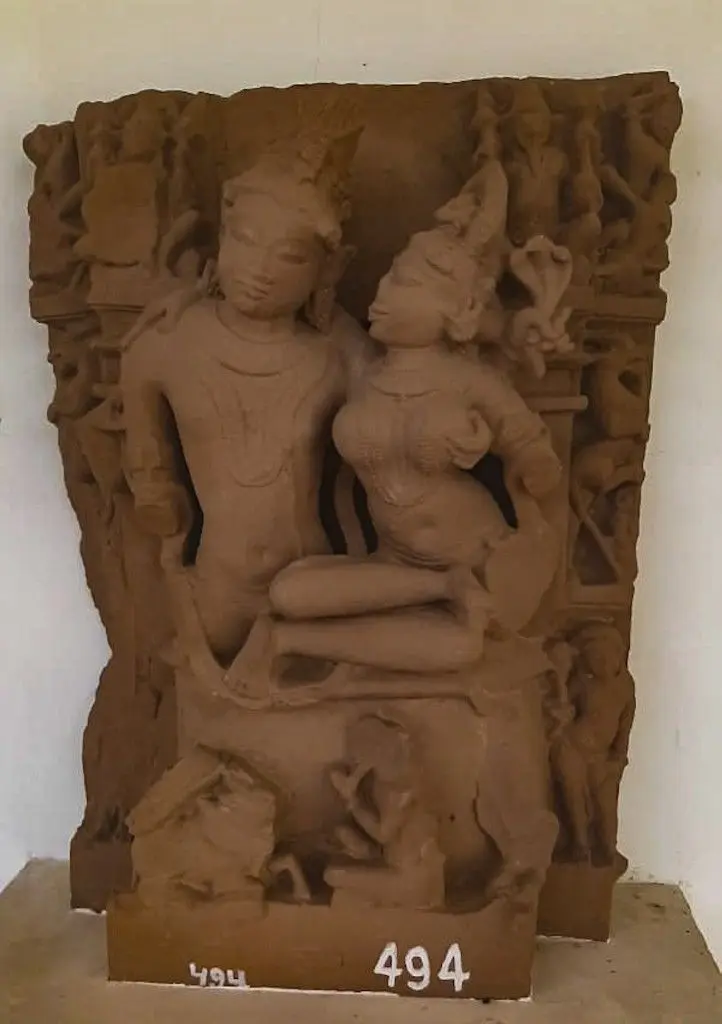
    The museum dates back to the Jardine Museum, established in 1910, and has been run by the Archaeological Survey of India since 1952. It displays sculptures from the temples, including a dancing Ganesha, figures of the river goddesses Ganga and Yamuna, and a Jain gallery. Practical: Open 9 AM - 5 PM, closed Fridays and public holidays. Admission 500 Rupees for foreigners, 30 Rupees for Indians, children under 15 free (museumsofindia.org, as of 11.11.2026).
    Open in Google Maps
    Kandariya-Mahadeva Temple

    Imakanksha / Wikimedia Commons / CC BY-SA 4.0, mod.

    Temple

    3Kandariya-Mahadeva Temple

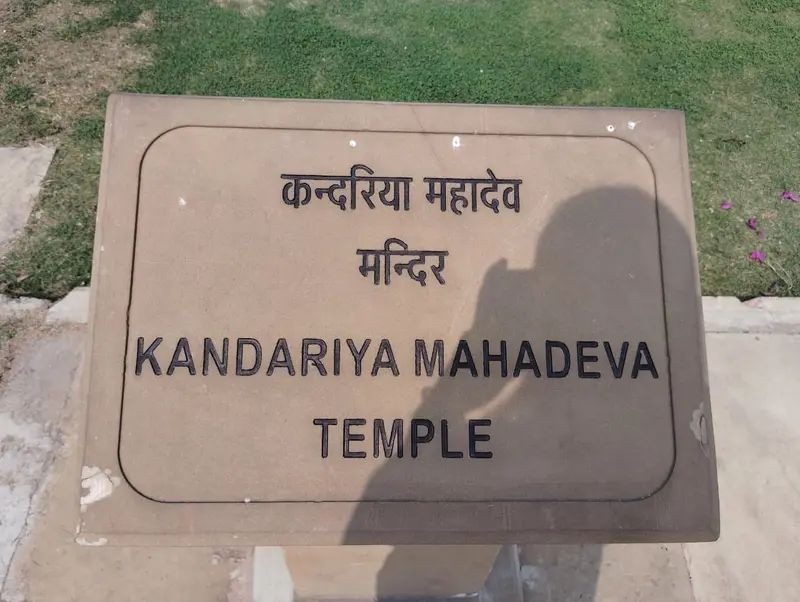
    Khajuraho's largest and most richly adorned temple is dedicated to Shiva and was completed in 1029. UNESCO describes its sculptures as masterpieces of Indian art. It stands in the Western Group, which you visit with a combined ticket. Practical tip: Entry to the Western Group is via an ASI ticket; prices for foreigners vary in sources between 500 and 600 Rupees. Check the current price on-site or online.
    Open in Google Maps
    Temple

    4Light and Sound Show (West Group)

    In the evenings, a light and sound show at the West Group tells the story of the Chandela, narrated by Amitabh Bachchan. The show was modernized in early 2025 and now lasts 35 minutes. Schedule: English at 6:30 PM, Hindi at 7:25 PM. Foreigners pay 800 Rupees, children of foreign guests 400 Rupees (As of January 2025, hosted by MP Tourism).
    Open in Google Maps

    Restaurants in Khajuraho

    1

    Raja Cafe

    Traditional cafe opposite the Westgruppe entrance, with a rooftop terrace and courtyard, serving espresso, breakfast, wood-fired pizza, and Indian dishes.
    Show on Google Maps

    The Chandela Temple

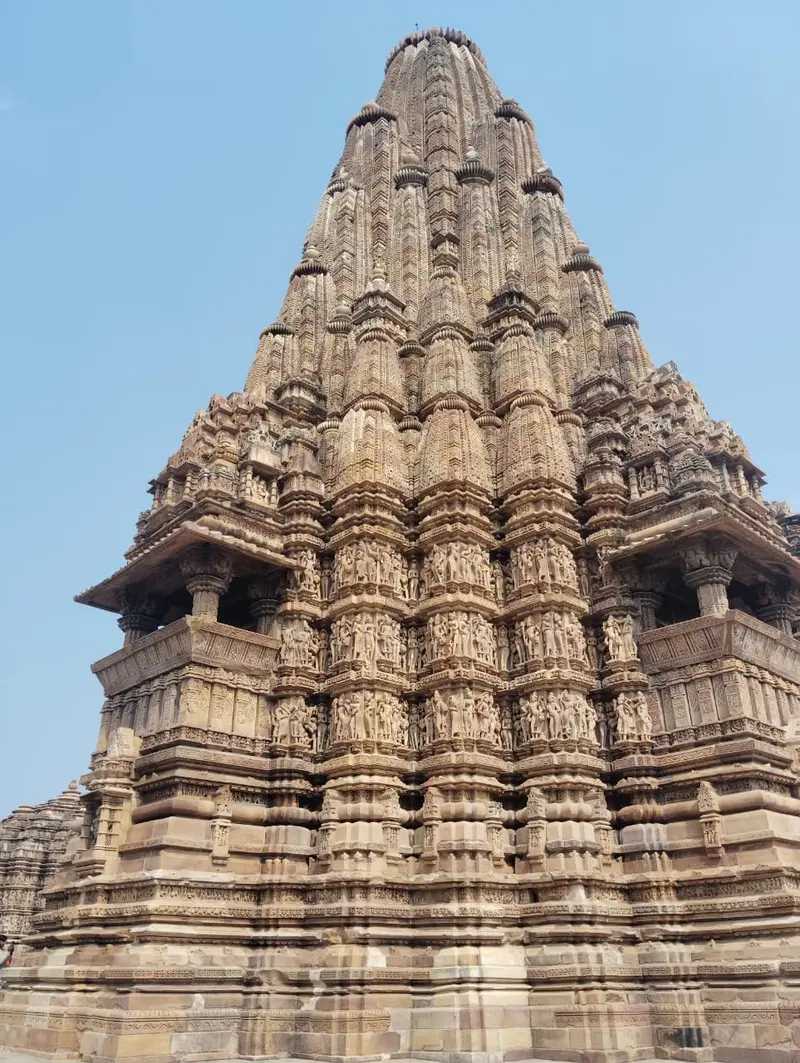
    The Chandela DynastyThe Chandela ruled the Bundelkhand region in the 10th and 11th centuries, with their heyday between 950 and 1050. During this time, the Khajuraho temples were built, serving both Hindu deities like Shiva and Vishnu, and Jainism. The Lakshmana Temple was completed in 939, the Kandariya-Mahadeva Temple in 1029.Architecture and SculptureThe temples follow the North Indian Nagara style, with towering spires that symbolize a mountain. The outer walls are covered with hundreds of figures. UNESCO highlights the Kandariya Temple's sculptural decoration as a masterpiece of Indian art.Dance and FestivalsEach year in February, artists of classical Indian dance styles perform in front of the West Group temples at the Khajuraho Dance Festival.

    Getting here and around

    Getting ThereKhajuraho Airport (HJR) is located a few kilometers outside town, serving domestic flights. Khajuraho also has a train station. Train journeys: Delhi (approx. 11.5 hours), Varanasi (approx. 11 hours), Jhansi (4-4.5 hours).Getting AroundThe Western Group is in town; the Eastern and Southern Groups are accessible by bicycle, auto-rickshaw, or cycle-rickshaw. Negotiate fares beforehand.Practical TipsTickets: An ASI ticket is required for the Western Group. The Archaeological Museum costs extra. Light and Sound Show tickets are separate, purchased from MP Tourism.Best Time: Early morning or late afternoon, when the light enhances the reliefs and it's cooler.Duration: Western Group 2 to 3 hours; Eastern and Southern Groups plus the Museum, a full day.Closing Days: The Archaeological Museum is closed on Fridays.With Children: Children under 15 enjoy free museum entry.

    Accommodations in Khajuraho

    Find perfect stay in Khajuraho

    Booking.com* (Affiliate link)
    Search Hotels
    Agoda* (Affiliate link)
    Search Hotels
    Airbnb
    Vacation Rentals

    * Affiliate link: if you book through it, we earn a small commission. The price stays the same for you.

    Plan your trip to Khajuraho

    Save places, build a route and plan your city trip, all in one place.

    1. 1
      Sunrise over alpine peaks and a sea of clouds
      1234

      Round trip

      12 days · 4 stops

      Saved

      Pick a route

      Pick a ready-made one or save places and plan your own.

      Open bookmarks
    2. 2

      Trip to Khajuraho

      Live
      • 1Lakshmana Temple3 days
      • 2Archaeological Museum Khajuraho4 days
      • 3Kandariya-Mahadeva Temple5 days
      Budget

      Plan your trip

      The planner sorts stops, days and budget. Plan together in real time.

      Start trip planning
    3. 3
      9:41 No signal
      Khajuraho
      Available offline

      Imakanksha / Wikimedia Commons / CC BY-SA 4.0, mod.

      Use it on the road

      Download the guide to your phone and use it on site, even offline.

    Nearby

    Varanasi

    Varanasi

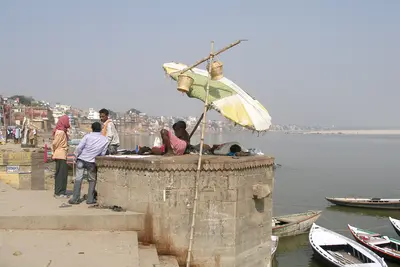
    Varanasi, situated on the Ganges in Uttar Pradesh, is the holiest city for Hindus and one of India's most impressive places. Here, at the ghats – the steps leading to the river – you witness rituals from morning ablutions to cremations as openly as nowhere else.The city boasts 84 ghats, stretching from Assi Ghat in the south to the ghats north of the Malviya Bridge. In the evenings, the Ganga Aarti at Dashashwamedh Ghat attracts hundreds of people, while early mornings see rowboats gliding along the ghats. Behind them lies the old town with its narrow lanes, the Kashi-Vishwanath Temple, and street food stalls selling Kachori and Lassi.Outside the city gates lies Sarnath, where Buddha delivered his first sermon. On the opposite bank of the Ganges stands Ramnagar Fort, once home to the Maharajas of Benares. The best time to visit is October to March. During monsoon season, the river can rise so significantly that many ghats become inaccessible.

    Vyacheslav Argenberg·CC BY 4.0

    Agra

    Agra

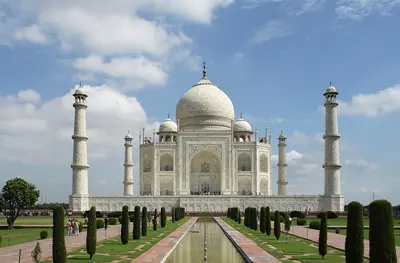
    Agra, in the state of Uttar Pradesh, around 200 kilometers southeast of Delhi, is the city of the Taj Mahal. Besides the famous tomb, attractions include the Agra Fort, the delicate Tomb of Itimad-ud-Daulah, and Akbar's Mausoleum in Sikandra, plus Fatehpur Sikri as a day trip. Agra was the capital of the Mughals before Delhi. Akbar built his fortress here between 1565 and 1573, and his grandson Shah Jahan had the Taj Mahal built starting in 1632 for his deceased wife Mumtaz Mahal. Many monuments are located on the banks of the Yamuna and can be easily combined in one day. Agra is a feasible day trip from Delhi by express train, but an overnight stay is worthwhile for the sunrise at the Taj. Note: The Taj Mahal is closed on Fridays.

    Yann; edited by Jim Carter·CC BY-SA 4.0

    Fatehpur Sikri

    Fatehpur Sikri

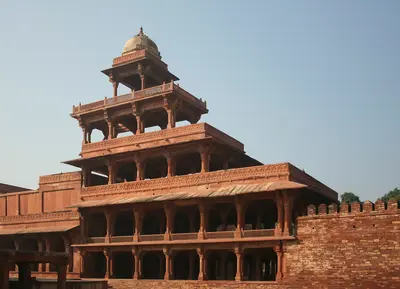
    Fatehpur Sikri, 36 to 40 kilometers west of Agra in Uttar Pradesh, is the abandoned planned city of the Mughal Emperor Akbar. The red sandstone palaces, courtyards, and grand mosque are among India's most impressive Mughal structures and have been a UNESCO World Heritage site since 1986. Akbar had the "City of Victory" built starting in 1571 on a ridge, in honor of the Sufi saint Salim Chishti. It served as capital for only about ten years; in 1585, the court moved to Lahore. The architecture combines Persian, Hindu, and Jain forms. Allow at least half a day. The complex consists of the Mosque Quarter, with Buland Darwaza and Salim Chishti's tomb (freely accessible), and the ticketed Palace Quarter.

    Diego Delso·CC BY-SA 4.0

    Ranthambore

    Ranthambore

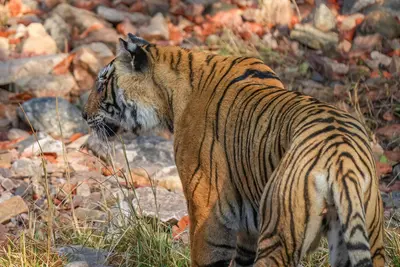
    Ranthambore National Park, near Sawai Madhopur in eastern Rajasthan, is one of India's most renowned locations for spotting tigers in the wild. Its dry forests shelter lakes, ruins, and Ranthambore Fort, which is a UNESCO World Heritage site.The protected area began as the Sawai Madhopur Game Sanctuary in 1955, became part of Project Tiger in the 1970s, and was designated a national park in 1980. Including the adjoining Kailadevi and Sawai Man Singh sanctuaries, it covers approximately 1,334 square kilometres, with the core zone spanning about 275 square kilometres.Make sure to plan more than one safari to increase your chances of a tiger encounter, and allocate an additional half-day for the fort.

    Giles Laurent·CC BY-SA 4.0

    Jaipur

    Jaipur

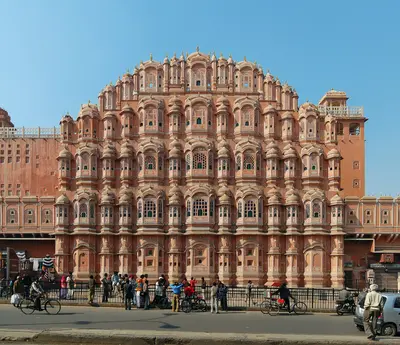
    Jaipur, the capital of Rajasthan, is located about 270 to 310 road kilometers southwest of Delhi and forms the Golden Triangle with Delhi and Agra. The pink-painted Old City, the Amer Fort-Palace, and the Jantar Mantar observatory make it the classic starting point for any Rajasthan trip.Maharaja Sawai Jai Singh II founded the city in 1727, relocating his capital here from Amer due to population growth and water scarcity. The grid street plan follows the Prastara Plan of Vastu Shastra; the main axes were designed as bazaars, and large squares, known as Chaupars, emerged at the intersections. The Old City has been on the UNESCO World Heritage list since 2019.The city received its pink hue in 1876 when Maharaja Ram Singh had it painted for the visit of the Prince of Wales. Plan at least two full days: one for Amer, Jaigarh, and Nahargarh in the hills, and one for the Old City and museums.

    Marcin Białek·CC BY-SA 4.0

    Your next steps

    Khajuraho is in India. Ways to carry on from here.

    • More in India

      Highlights, areas, routes and the best time to travel for all of India.

      India travel guide

    Sources & method

    • Photos: Wikimedia Commons. Each photo carries its credit.
    • Place data such as addresses and ratings comes from Google Maps.
    • The content is based on web research from public, traceable sources. How the content is made · The role of AI