Fernweh: Home
ExploreGuideDestinationsMy tripsMy trip
de|en
All Places & RegionsRound tripsNight trains in EuropeAll highlightsAbout FernwehFAQPrivacy PolicyImprint
Download on the App StoreGet it on Google Play
ExploreGuideDestinationsMy tripsMy trip
    • Tours
    • Eat & drink
    • Culture
    • Getting around
    • Accommodation
    • Nearby
    River Gambia National Park

    Wmtribe2015 / Wikimedia Commons / CC BY-SA 4.0, mod.

    Gambia

    River Gambia National Park

    Point of Interest

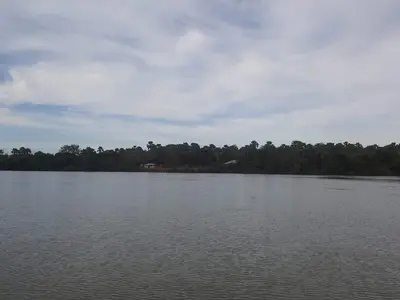
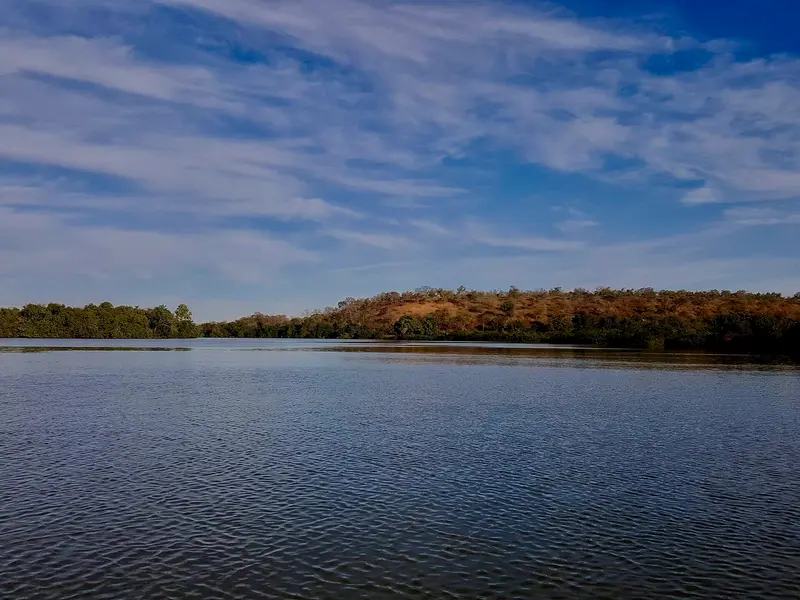
    The River Gambia National Park protects a group of forested river islands a few kilometers upstream from Kuntaur, where the Chimpanzee Rehabilitation Project has allowed chimpanzees to live freely since the late 1970s.

    by Felix Gillen

    1. Home
    2. Destinations
    3. Gambia
    4. Gambia River
    5. River Gambia National Park
    The River Gambia National Park protects a group of forested river islands a few kilometers upstream from Kuntaur, where the Chimpanzee Rehabilitation Project has allowed chimpanzees to live freely since the late 1970s. You can observe the animals exclusively from a boat, often alongside hippos, crocodiles, and waterbirds.The park was founded in 1978 and comprises one large and four small islands, often called Baboon Islands, totaling around 585 hectares. Entering the islands is forbidden.
    Gambia travel guideRound trips in GambiaPlan a trip with River Gambia National Park

    Contents

    • Tours
    • Eat & drink
    • Culture
    • Getting around
    • Accommodation
    • Nearby

    Tours & experiences in River Gambia National Park

    Search tours for River Gambia National Park on GetYourGuide* (Affiliate link)On GetYourGuide, with reviews from other travellers

    * Affiliate link: if you book through it, we earn a small commission. The price stays the same for you.

    Restaurants in River Gambia National Park

    Nature Protection

    Chimpanzees on IslandsSince the late 1970s, the Chimpanzee Rehabilitation Project has brought chimpanzees, originally from captivity, to the islands where they live in groups. To ensure the animals remain undisturbed, no land visits are permitted.Visitor RulesAccording to Bradt, every boat trip is led by a Project guide, and the islands must not be entered. Keep your distance, speak softly, and do not feed any animals.

    Travel

    Starting PointsThe park is located a few kilometers upstream from Kuntaur. According to Bradt, from Kuntaur, you can travel with private boat owners (limited to the public channel), or with the Chimpanzee Rehabilitation Project from its tent camp opposite Baboon Island, which alone has access to the channel between island and camp.Entry and RulesAccording to Bradt, an entrance fee per person is charged for every boat trip through the park, and a project guide must accompany you. Entering the islands is forbidden.

    Accommodations in River Gambia National Park

    Find perfect stay in River Gambia National Park

    Booking.com* (Affiliate link)
    Search Hotels
    Agoda* (Affiliate link)
    Search Hotels
    Airbnb
    Vacation Rentals

    * Affiliate link: if you book through it, we earn a small commission. The price stays the same for you.

    Nearby
    Stone Circles of Wassu

    The Wassu Stone Circles on the north bank, located about 20 kilometers from Lamin Koto across from Janjanbureh, are Gambia's most impressive megalithic site. These eleven circles of laterite pillars are part of the UNESCO World Heritage Site Stone Circles of Senegambia and feature the tallest stones of the entire group.The World Heritage Site was inscribed in 2006 and comprises four sites across Gambia and Senegal, totaling 93 circles. Excavations date the Wassu site to between 927 and 1305 AD, and a small museum housed in thatched round buildings explains the finds.
    Janjanbureh

    Janjanbureh

    Janjanbureh, formerly Georgetown, is located on an island in the River Gambia, approximately 300 kilometers upstream from Banjul, and is the most important starting point in the interior. From here you can reach the Wassu Stone Circles, the River Gambia National Park, and take boat trips on the river.In 1823, Captain Alexander Grant founded a settlement here for freed slaves; since 1995, the town and island have carried the name Janjanbureh. On the banks, warehouses and colonial buildings recall the trading era, and a Bantang tree in the town is considered a freedom tree.

    Wmtribe2015·CC BY-SA 4.0

    Gambia River

    Gambia River

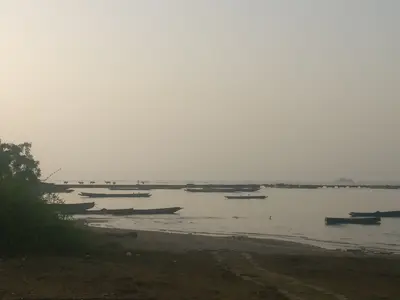
    Upriver, Gambia reveals its rural face: mangroves, rice fields, and villages line the wide river. On the north bank are the World Heritage Site Kunta Kinteh Island and Juffureh; further east, the island town of Janjanbureh, the Stone Circles of Wassu, and the River Gambia National Park with its chimpanzee islands.

    Wmtribe2015·CC BY-SA 4.0

    Kiang West National Park

    The Kiang West National Park, on the south bank of the Gambia River, about 145 kilometers from Banjul, protects Guinea savanna, dry forest, mudflats, and mangrove creeks across 115 square kilometers. It is a peaceful destination for birdwatching; according to Wikipedia, over 300 bird species have been recorded here.The park was established in 1987; its headquarters are located in Dumbuto, about an 18-minute drive from Tendaba Camp on the riverbank, which has existed since the 1970s.
    Kunta Kinteh Island and Juffureh

    Kunta Kinteh Island and Juffureh

    Kunta Kinteh Island, formerly James Island, is a small island in the Gambia River, around 30 kilometres upstream from its mouth, opposite the villages of Albreda and Juffureh on the north bank. With the ruins of its fort and the trading posts on the bank, it has been a UNESCO World Heritage site since 2003 and is one of the most important memorial sites for the transatlantic slave trade in West Africa.From 1651, Courlanders built a fort here; it was later taken over by the British, and in 1779, it was destroyed by the French. Due to erosion, the island has shrunk to a fraction of its former size. In 2011, it was named after Kunta Kinte, the main character from Alex Haley's novel "Roots," whose family is said to originate from Juffureh.

    Kenneth Aitchison·CC BY-SA 4.0

    Your next steps

    River Gambia National Park is in Gambia. Ways to carry on from here.

    • More in Gambia

      Highlights, areas, routes and the best time to travel for all of Gambia.

      Gambia travel guide
    • Round trips in Gambia

      Ready-made routes through Gambia, with stops, nights and a map.

      See the routes
    • Plan a trip with River Gambia National Park

      The Guide asks about season, length and who is coming, and suggests a trip with River Gambia National Park.

      Plan the trip

    Sources & method

    • Photos: Wikimedia Commons. Each photo carries its credit.
    • The content is based on web research from public, traceable sources. How the content is made · The role of AI