Fernweh: Home
ExploreGuideDestinationsMy tripsMy trip
de|en
All Places & RegionsRound tripsNight trains in EuropeAll highlightsAbout FernwehFAQPrivacy PolicyImprint
Download on the App StoreGet it on Google Play
ExploreGuideDestinationsMy tripsMy trip
    • Tours
    • Eat & drink
    • Getting around
    • Accommodation
    • Nearby
    National Park Volcano Masaya

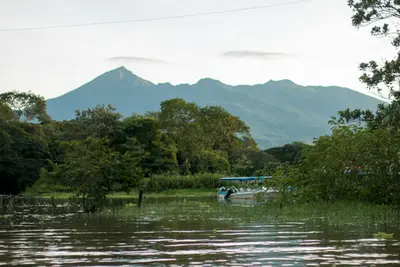
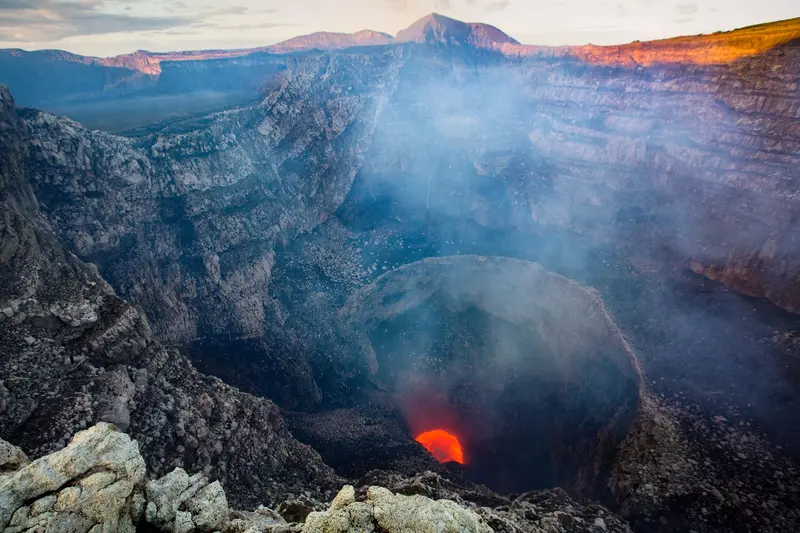
    Photo by ROBERTO ZUNIGA on Pexels

    Nicaragua

    National Park Volcano Masaya

    Point of InterestNature

    Masaya Volcano National Park, between Managua and Granada, is Nicaragua's first national park.

    by Felix Gillen

    1. Home
    2. Destinations
    3. Nicaragua
    4. Granada and Masaya
    5. National Park Volcano Masaya
    Masaya Volcano National Park, between Managua and Granada, is Nicaragua's first national park. You drive by car or on a guided tour right up to the rim of the active Santiago crater, where gases rise; in the evening a red glow may be visible deep inside, depending on activity.For volcanic activity and safety, see the FCDO travel advice for Nicaragua. In 2024 a landslide buried the lava lake and the park closed temporarily; since then the glow has been visible to varying degrees depending on activity.
    Nicaragua travel guideRound trips in NicaraguaPlan a trip with National Park Volcano Masaya

    Contents

    • Tours
    • Eat & drink
    • Getting around
    • Accommodation
    • Nearby

    Tours & experiences in National Park Volcano Masaya

    Search tours for National Park Volcano Masaya on GetYourGuide* (Affiliate link)On GetYourGuide, with reviews from other travellers

    * Affiliate link: if you book through it, we earn a small commission. The price stays the same for you.

    Restaurants in National Park Volcano Masaya

    Visit and Practice

    DirectionsThe entrance is located on the Managua–Masaya road at kilometer 23. From Granada, it takes about 40 minutes.Many accommodations in Granada and León arrange evening tours; with your own car, the evening queue can take up to an hour.Opening Hours and AdmissionAccording to the Ministry of Environment MARENA (press release August 2026), the park is open daily from 8:30 AM to 7 PM, with evening visits falling into the later time slot. Other sources cite different times; please verify before your visit.There is no current official price list; guidebooks mention around 10 US dollars for foreigners in the evening, and less during the day. Time at the crater rim is limited.Glow or lava are not guaranteed. Check the current status on-site.

    Accommodations in National Park Volcano Masaya

    Find perfect stay in National Park Volcano Masaya

    Booking.com* (Affiliate link)
    Search Hotels
    Agoda* (Affiliate link)
    Search Hotels
    Airbnb
    Vacation Rentals

    * Affiliate link: if you book through it, we earn a small commission. The price stays the same for you.

    Nearby
    Masaya

    Masaya

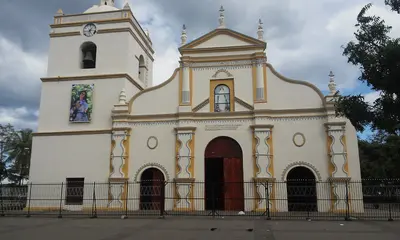
    Masaya, situated between Managua and Granada, is known as "Cuna del Folclore Nicaragüense," the cradle of Nicaraguan folk culture. Visitors are drawn by its artisan market, the indigenous quarter of Monimbó, and the festivals honoring San Jerónimo, which span several months. Just outside the city is Masaya Volcano National Park; nearby are the Pueblos Blancos, featuring Catarina's viewpoint overlooking Laguna de Apoyo.

    Byralaal·CC BY-SA 4.0

    Granada and Masaya

    Granada and Masaya

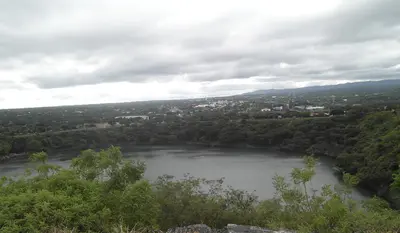
    Between Managua and Lake Nicaragua, the country's most visited destinations are close by: the colonial city of Granada on the lake shore, the artisan city of Masaya with its active volcano, and the crater lagoon Laguna de Apoyo for swimming. From Granada, Laguna de Apoyo is about 20 minutes by car; Masaya lies about 14 km west.

    Alvison Lucas Hunter Arnuero·Unsplash

    Laguna de Apoyo

    Laguna de Apoyo

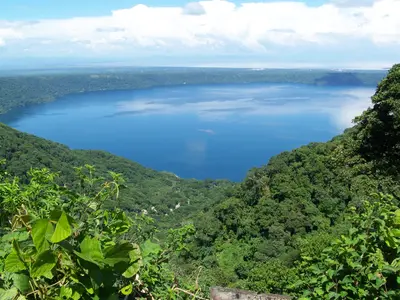
    Laguna de Apoyo, located between Granada and Masaya, is a clear crater lake formed approximately 23,000 years ago when a volcano collapsed. Travelers come here to swim, kayak, and relax on its forested shores, just about 20 minutes from Granada. The lake reaches depths of up to 175 meters, measures approximately 6.6 km in diameter, and is protected as a nature reserve.

    Zuluniga·CC0

    Managua

    Managua

    Managua, on the southern shore of Lake Managua (also called Xolotlán), has been Nicaragua's capital since 1852 and, with around one million inhabitants (2023 estimate), is the country's largest city. The earthquake of 23 December 1972 destroyed around 90 per cent of the old centre; figures for the death toll vary widely. For most travellers Managua is above all the arrival point at the international airport and a transport hub, with buses to every part of the country.For information on crime, including at the airport and bus stations, and on earthquakes, see the UK FCDO travel advice.

    Hobbitschuster·CC BY-SA 4.0

    Granada

    Granada

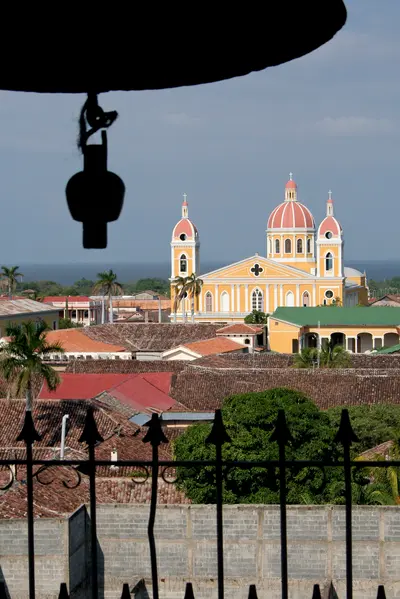
    Located on the western shore of Lake Nicaragua, Granada entices with colorful colonial houses, churches, and squares against the backdrop of Mombacho Volcano, serving as the classic base for exploring western Nicaragua. Founded by Francisco Hernández de Córdoba in 1524, it ranks among the oldest Spanish cities on the American mainland. In 1856, the troops of adventurer William Walker burned Granada to the ground during their retreat, and many buildings were subsequently rebuilt.

    Sebastian Scheper·CC BY-SA 4.0

    Your next steps

    National Park Volcano Masaya is in Nicaragua. Ways to carry on from here.

    • More in Nicaragua

      Highlights, areas, routes and the best time to travel for all of Nicaragua.

      Nicaragua travel guide
    • Round trips in Nicaragua

      Ready-made routes through Nicaragua, with stops, nights and a map.

      See the routes
    • Plan a trip with National Park Volcano Masaya

      The Guide asks about season, length and who is coming, and suggests a trip with National Park Volcano Masaya.

      Plan the trip

    Sources & method

    • Photos: Wikimedia Commons, Pexels. Each photo carries its credit.
    • The content is based on web research from public, traceable sources. How the content is made · The role of AI