Fernweh: Home
ExploreGuideDestinationsMy tripsMy trip
de|en
All Places & RegionsRound tripsNight trains in EuropeAll highlightsAbout FernwehFAQPrivacy PolicyImprint
Download on the App StoreGet it on Google Play
ExploreGuideDestinationsMy tripsMy trip
    • Neighborhoods & highlights
    • Tours
    • Eat & drink
    • Culture
    • Getting around
    • Accommodation
    • Plan trip
    • Nearby
    Managua

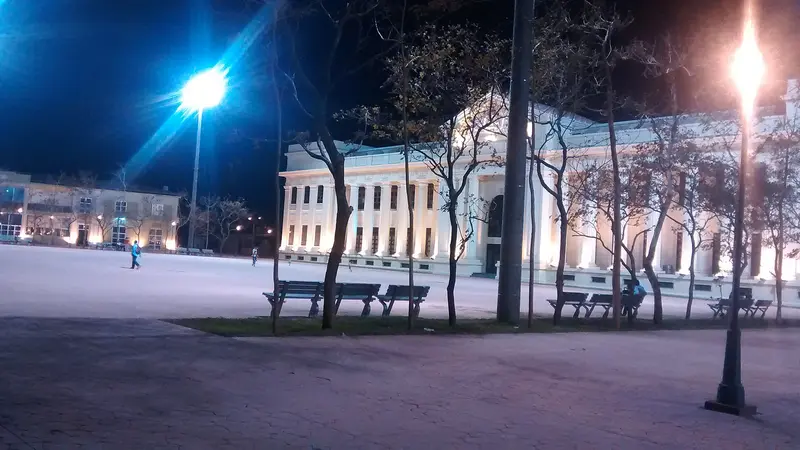
    Hobbitschuster / Wikimedia Commons / CC BY-SA 4.0, mod.

    Nicaragua

    Managua

    CityCulture

    Managua, on the southern shore of Lake Managua (also called Xolotlán), has been Nicaragua's capital since 1852 and, with around one million inhabitants (2023 estimate), is the country's largest city.

    by Felix Gillen

    1. Home
    2. Destinations
    3. Nicaragua
    4. Managua
    Managua, on the southern shore of Lake Managua (also called Xolotlán), has been Nicaragua's capital since 1852 and, with around one million inhabitants (2023 estimate), is the country's largest city. The earthquake of 23 December 1972 destroyed around 90 per cent of the old centre; figures for the death toll vary widely. For most travellers Managua is above all the arrival point at the international airport and a transport hub, with buses to every part of the country.For information on crime, including at the airport and bus stations, and on earthquakes, see the UK FCDO travel advice.
    Nicaragua travel guideRound trips in NicaraguaPlan a trip with Managua

    Contents

    • Neighborhoods & highlights
    • Tours
    • Eat & drink
    • Culture
    • Getting around
    • Accommodation
    • Nearby

    Sights in Managua

    Discover the most important sights and attractions

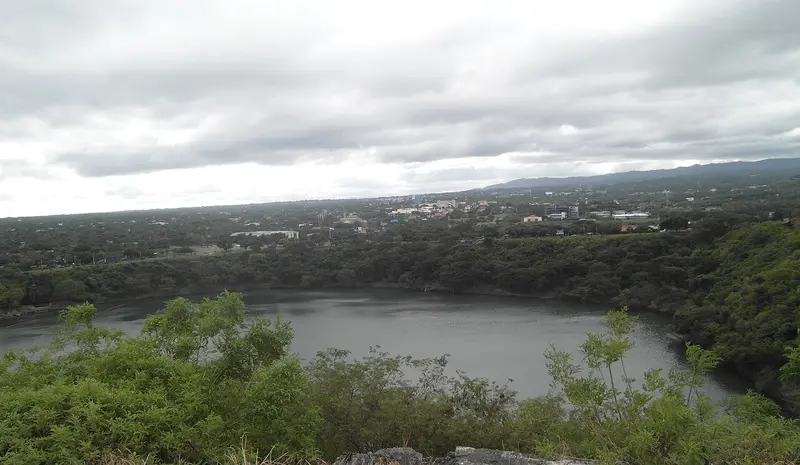
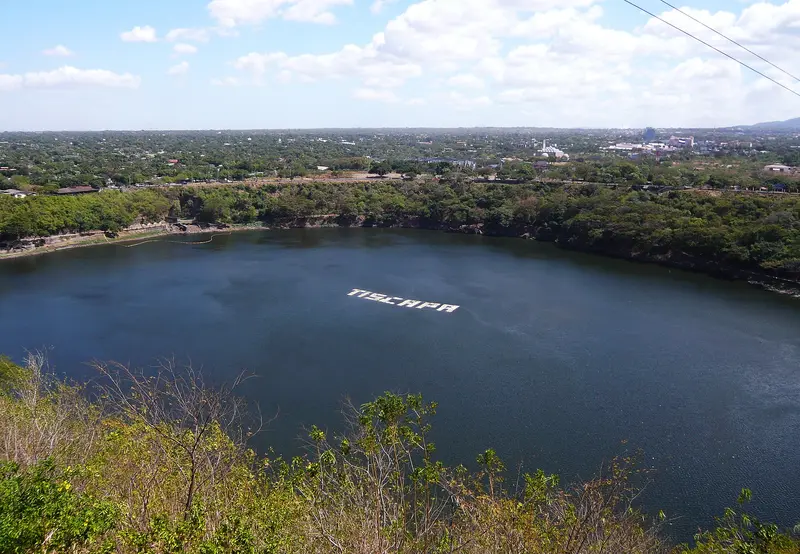
    Laguna de Tiscapa

    “Laguna de Tiscapa” by Haakon S. Krohn / Wikimedia Commons / CC BY-SA 3.0, mod.

    Park

    1Laguna de Tiscapa

    The volcanic crater lagoon right in Managua originated over 10,000 years ago and has been a nature reserve since 1991. From Loma de Tiscapa hill, you overlook the lagoon and the city; a zip line spans across the water. The lagoon is not suitable for swimming, as the water is polluted.
    Open in Google Maps
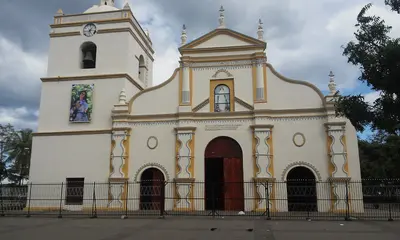
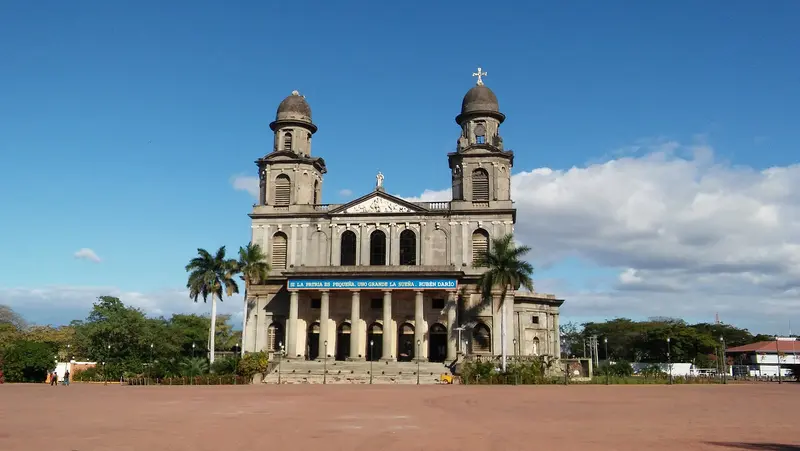
    Antigua Cathedral of Santiago

    OswaldoFlores88 / Wikimedia Commons / CC BY-SA 4.0, mod.

    2Antigua Cathedral of Santiago

    The Old Cathedral on the Plaza in the former center was built from 1928 to 1938 to plans by Belgian engineer Pablo Dambach, with an iron frame from Belgium. It was severely damaged by the 1972 earthquake and has been closed since. The facade can only be seen from outside; the grounds are fenced.
    Open in Google Maps
    National Palace of Culture

    Oscar Mojica / Wikimedia Commons / CC BY-SA 4.0, mod.

    Museum

    3National Palace of Culture

    The neoclassical palace on the Plaza in the old center, designed by Pablo Dambach, was built in the 1930s and opened in 1942. It survived the 1972 earthquake and served as Parliament's seat for over 50 years. Today, the National Museum displays pre-Columbian statues from Ometepe, ceramics, and fossils; the National Library and National Archives are also in the same building.
    Open in Google Maps
    Church

    4Metropolitan Cathedral of the Immaculate Conception

    The new cathedral was designed by Mexican architect Ricardo Legorreta and consecrated in 1993, replacing the old cathedral damaged in the earthquake. Its most striking feature is the roof with 63 small domes, which also serve to enhance earthquake safety.
    Open in Google Maps
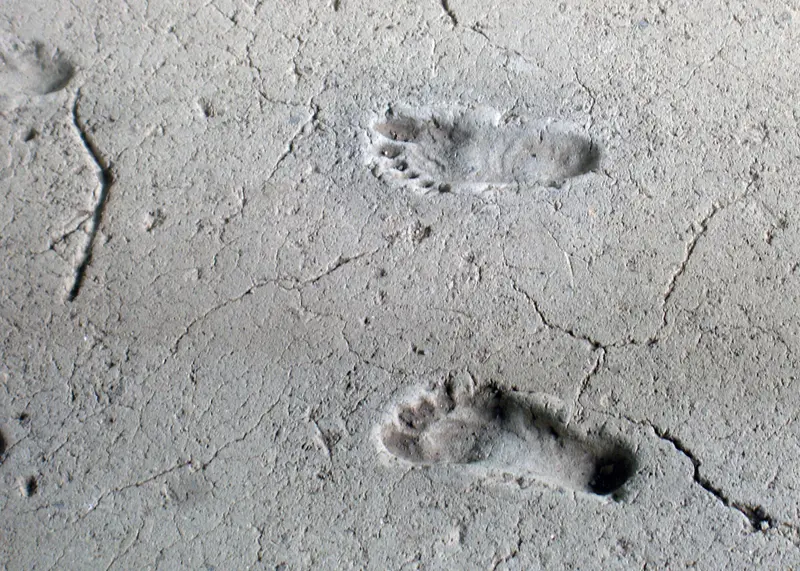
    Acahualinca Footprints

    “HuellasdeAcahualinca” by Dr d12 / Wikimedia Commons / CC BY-SA 3.0, mod.

    5Acahualinca Footprints

    In the Acahualinca district, near the lake shore, approximately 2,100-year-old human footprints are preserved in solidified volcanic ash. They were discovered in 1874 during construction work, and the museum at the site has existed since 1953. In 2025, it was reported that a new museum building is under construction there; check before your visit whether it is open.
    Open in Google Maps
    Point of Interest

    6Teatro Nacional Rubén Darío

    The National Theatre by the lakeside, opened in 1969, survived the 1972 earthquake virtually unscathed. The main hall seats 1,200, with an additional experimental stage. The program includes concerts, theatre, and exhibitions.
    Open in Google Maps

    Tours & experiences in Managua

    Search tours for Managua on GetYourGuide* (Affiliate link)On GetYourGuide, with reviews from other travellers

    * Affiliate link: if you book through it, we earn a small commission. The price stays the same for you.

    Restaurants in Managua

    1

    Doña Haydée's Kitchen

    The restaurant on Carretera a Masaya serves traditional Nicaraguan cuisine, such as Indio Viejo, Gallo Pinto, or Vigorón. It is open daily from morning until evening.
    Show on Google Maps
    2

    Primitivo Experience Steakhouse

    The steakhouse at Rotonda Centroamérica specializes in grilled meat and is considered one of the city's more upscale establishments, complemented by international dishes.
    Show on Google Maps
    3

    Restaurante Don Cándido

    Established steakhouse in the south of downtown, which Frommer's rates among Managua's best addresses. The menu features numerous grilled beef cuts, complemented by a global wine selection.
    Show on Google Maps
    4

    Los Ranchos

    The steakhouse on Carretera Sur is a well-known Managua address. Recommended: Churrasco and, to start, the onion soup, with a good wine selection. Dine on the terrace or in air-conditioned rooms.
    Show on Google Maps

    Culture and Fêtes

    Fiestas de Santo DomingoManagua celebrates its patron saint, Santo Domingo de Guzmán, August 1-10. On August 1, the small figure is carried from Las Sierritas to the old center (Bajada); it returns August 10 (Subida). Traditions include dancers painted with motor oil and masked figures.Theater and MuseumsOpened in 1969, the lakefront Teatro Nacional Rubén Darío is the country's main stage. Inside the Palacio Nacional de la Cultura, the National Museum displays pre-Columbian statues and ceramics, and Acahualinca preserves around 2,100-year-old footprints.

    Getting Here and Around

    AirportThe international airport is about 11 km east of the city. Official airport taxis cost more than those you hail on the street opposite.TaxisTaxis do not have meters: Agree on the price before getting in and clarify whether it's per person or for the group. Fares are higher after dark.Buses to Other Parts of the CountryMercado Roberto Huembes: Buses to Masaya, Granada, Rivas, San Juan del Sur, and the border with Costa Rica.UCA near Rotonda Metrocentro: Express microbuses to Masaya and Granada; they depart when full.Mercado Israel Lewites: Buses to León and the Northwest.Mercado Mayoreo: Buses to the North and East, for example to Estelí, Matagalpa, and San Carlos on the Río San Juan.

    Accommodations in Managua

    Find perfect stay in Managua

    Booking.com* (Affiliate link)
    Search Hotels
    Agoda* (Affiliate link)
    Search Hotels
    Airbnb
    Vacation Rentals

    * Affiliate link: if you book through it, we earn a small commission. The price stays the same for you.

    Plan your trip to Managua

    Save places, build a route and plan your city trip, all in one place.

    1. 1
      Sunrise over alpine peaks and a sea of clouds
      1234

      Round trip

      12 days · 4 stops

      Saved

      Pick a route

      Pick a ready-made one or save places and plan your own.

      Open bookmarks
    2. 2

      Trip to Managua

      Live
      • 1Laguna de Tiscapa3 days
      • 2Antigua Cathedral of Santiago4 days
      • 3National Palace of Culture5 days
      Budget

      Plan your trip

      The planner sorts stops, days and budget. Plan together in real time.

      Start trip planning
    3. 3
      9:41 No signal
      Managua
      Available offline

      Hobbitschuster / Wikimedia Commons / CC BY-SA 4.0, mod.

      Use it on the road

      Download the guide to your phone and use it on site, even offline.

    Nearby

    National Park Volcano Masaya

    National Park Volcano Masaya

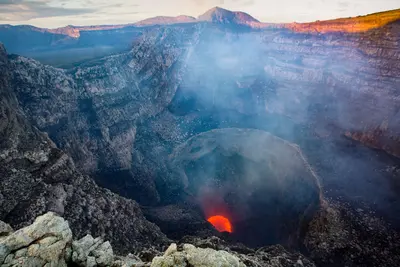
    Masaya Volcano National Park, between Managua and Granada, is Nicaragua's first national park. You drive by car or on a guided tour right up to the rim of the active Santiago crater, where gases rise; in the evening a red glow may be visible deep inside, depending on activity.For volcanic activity and safety, see the FCDO travel advice for Nicaragua. In 2024 a landslide buried the lava lake and the park closed temporarily; since then the glow has been visible to varying degrees depending on activity.

    ROBERTO ZUNIGA·Pexels

    Masaya

    Masaya

    Masaya, situated between Managua and Granada, is known as "Cuna del Folclore Nicaragüense," the cradle of Nicaraguan folk culture. Visitors are drawn by its artisan market, the indigenous quarter of Monimbó, and the festivals honoring San Jerónimo, which span several months. Just outside the city is Masaya Volcano National Park; nearby are the Pueblos Blancos, featuring Catarina's viewpoint overlooking Laguna de Apoyo.

    Byralaal·CC BY-SA 4.0

    Granada and Masaya

    Granada and Masaya

    Between Managua and Lake Nicaragua, the country's most visited destinations are close by: the colonial city of Granada on the lake shore, the artisan city of Masaya with its active volcano, and the crater lagoon Laguna de Apoyo for swimming. From Granada, Laguna de Apoyo is about 20 minutes by car; Masaya lies about 14 km west.

    Alvison Lucas Hunter Arnuero·Unsplash

    Laguna de Apoyo

    Laguna de Apoyo

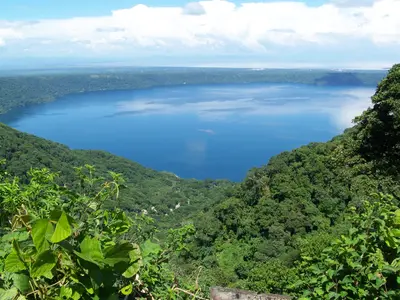
    Laguna de Apoyo, located between Granada and Masaya, is a clear crater lake formed approximately 23,000 years ago when a volcano collapsed. Travelers come here to swim, kayak, and relax on its forested shores, just about 20 minutes from Granada. The lake reaches depths of up to 175 meters, measures approximately 6.6 km in diameter, and is protected as a nature reserve.

    Zuluniga·CC0

    Granada

    Granada

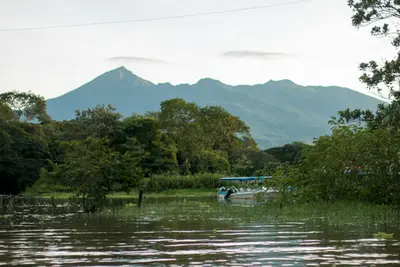
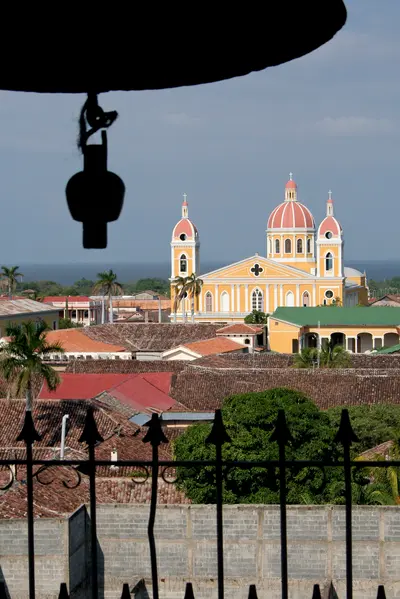
    Located on the western shore of Lake Nicaragua, Granada entices with colorful colonial houses, churches, and squares against the backdrop of Mombacho Volcano, serving as the classic base for exploring western Nicaragua. Founded by Francisco Hernández de Córdoba in 1524, it ranks among the oldest Spanish cities on the American mainland. In 1856, the troops of adventurer William Walker burned Granada to the ground during their retreat, and many buildings were subsequently rebuilt.

    Sebastian Scheper·CC BY-SA 4.0

    Your next steps

    Managua is in Nicaragua. Ways to carry on from here.

    • More in Nicaragua

      Highlights, areas, routes and the best time to travel for all of Nicaragua.

      Nicaragua travel guide
    • Round trips in Nicaragua

      Ready-made routes through Nicaragua, with stops, nights and a map.

      See the routes

    Sources & method

    • Photos: Wikimedia Commons. Each photo carries its credit.
    • Place data such as addresses and ratings comes from Google Maps.
    • The content is based on web research from public, traceable sources. How the content is made · The role of AI