ExploreTravel GuidesPlan a trip
    de|en
    All Places & RegionsAbout FernwehFAQPrivacy PolicyImprint
    ExploreTravel GuidesPlan a trip
    • Neighborhoods & highlights
    • Eat & drink
    • Nightlife
    • Accommodation
    • Plan trip
    • Nearby
    Altona & Ottensen
    AltSylt / Wikimedia Commons / CC BY-SA 4.0

    Germany

    Altona & Ottensen

    City

    Altona originated around 1535 as a fishing settlement. On August 23, 1664, it received city rights from Danish King Frederick III and grew into the second-largest city in the Danish realm.

    1. Home
    2. Destinations
    3. Germany
    4. Hamburg
    5. Altona & Ottensen
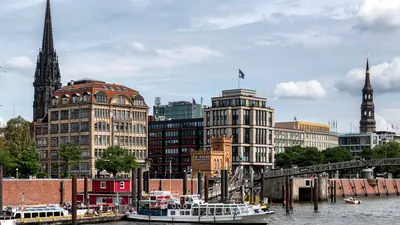
    Altona originated around 1535 as a fishing settlement. On August 23, 1664, it received city rights from Danish King Frederick III and grew into the second-largest city in the Danish realm. It only became part of Hamburg in 1938. Neighboring Ottensen, first mentioned in 1310 as the village of Ottenhusen, developed into an industrial hub after 1866 and became part of Altona in 1889. Today, Ottensen, with some 35,000 residents across 2.9 square kilometers, is a popular district for shopping and going out.From Altona Balcony, you can see across the Elbe to the Köhlbrand Bridge; along the Palmaille stand grand bourgeois buildings from the early 19th century. In Ottensen, you'll find the Fabrik cultural center with its crane and the Zeise Kinos featuring a ship's propeller from the former propeller factory. The S-Bahn lines S1, S2, and S3 stop at Altona Station.
    Altona and Ottensen lie west of St. Pauli directly on the Elbe. Altona was an independent city until 1938; Ottensen is now a popular district for shopping and nightlife. From the Altonaer Balkon, gaze over the Elbe, with the U-Boot-Museum and a fish restaurant with harbor views on the bank. The S-Bahn lines S1, S2 and S3 stop at Altona Station.

    Sights in Altona & Ottensen

    Discover the most important sights and attractions
    Altona Balcony
    Park

    1Altona Balcony

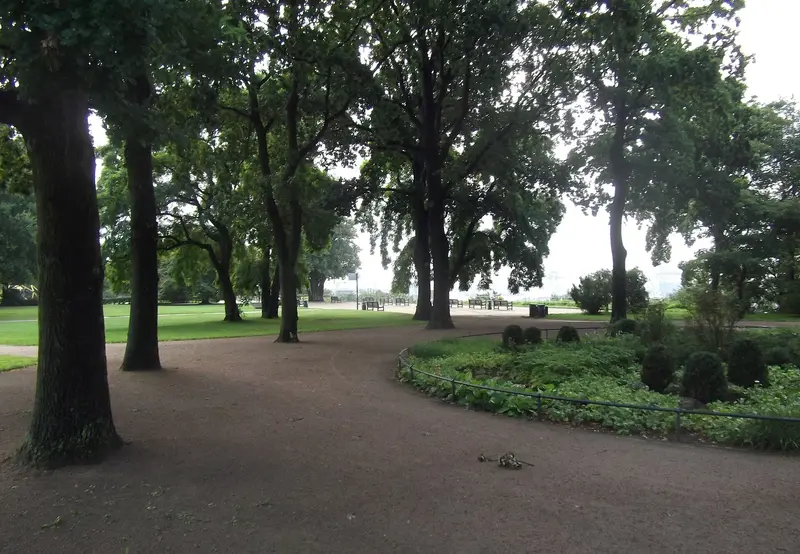
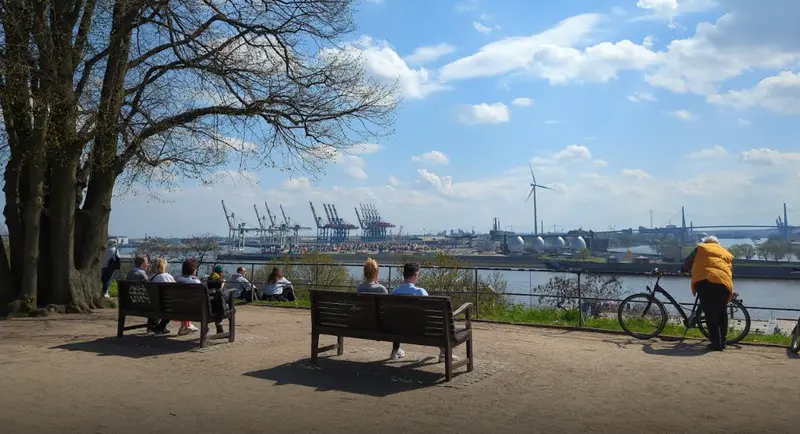
    The approx. 4.8-hectare park lies on the 27-meter-high geest bluff between Palmaille and Große Elbstraße. From the viewing platform, you'll see the Elbe, the Köhlbrand, and the Köhlbrand Bridge; Altona City Hall is visible north.
    Open in Google Maps
    Submarine Museum U-434
    Museum

    2Submarine Museum U-434

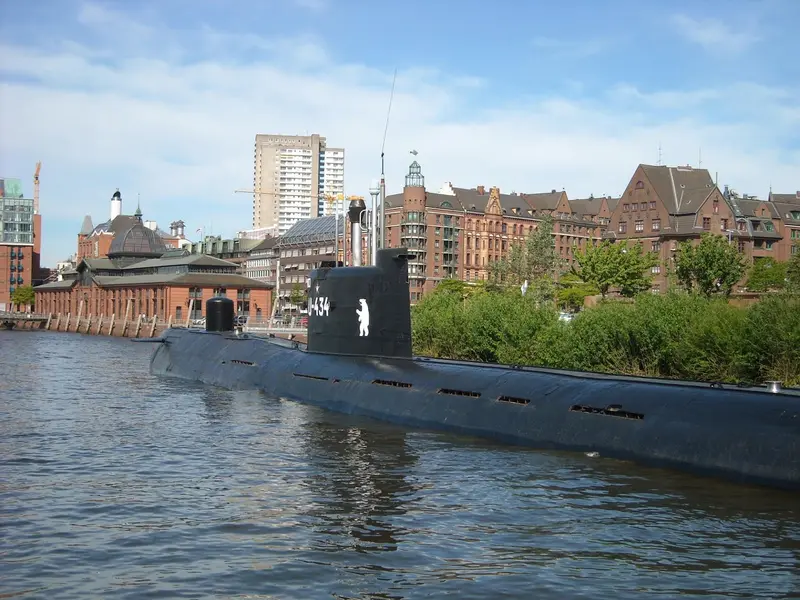
    The Soviet Tango-class submarine, built in 1976, today serves as a museum ship on the Elbe in Hamburg. During guided tours, you'll learn how the crew lived on board.
    Open in Google Maps

    Restaurants in Altona & Ottensen

    1

    Fishery Harbor Restaurant

    Established fish restaurant with harbour view, oysters, caviar and grilled seafood.
    Show on Google Maps
    2

    Köz Urfa

    Vibrant restaurant with traditional Turkish cuisine in two invitingly designed dining rooms.
    Show on Google Maps
    3

    Steakhouse MASH

    Stylish steakhouse with a great bar selection, red leather armchairs, long tables, and booth seating.
    Show on Google Maps

    Nightlife

    1

    Kimchi Guys Ottensen

    Korean bar with cocktails and fried chicken on Bahrenfelder Street in Ottensen.
    Show on Google Maps
    2

    To the Haddock Post

    Rustic seaman's pub with tap and bottled beer and a terrace overlooking the Elbe.
    Show on Google Maps

    Accommodations in Altona & Ottensen

    Find perfect stay in Altona & Ottensen

    Booking.com* (Affiliate link)
    Search Hotels
    Agoda* (Affiliate link)
    Search Hotels
    Airbnb
    Vacation Rentals

    * Affiliate link: if you book through it, we earn a small commission. The price stays the same for you.

    Campgrounds in Altona & Ottensen

    Find perfect campground in Altona & Ottensen

    Search via Google Maps
    Campgrounds nearby (15km)
    Camping.info
    Find Campgrounds
    Park4Night
    RV Parks & Camping

    Plan your trip to Altona & Ottensen

    Save places, build a route and plan your city trip, all in one place.

    1. 1
      1234

      Round trip

      12 days · 4 stops

      Saved

      Pick a route

      Pick a ready-made one or save places and plan your own.

      Open bookmarks
    2. 2

      Trip to Altona & Ottensen

      Live
      • 1Altona Balcony3 days
      • 2Submarine Museum U-4344 days
      Budget

      Plan your trip

      The planner sorts stops, days and budget. Plan together in real time.

      Start trip planning
    3. 3
      9:41 No signal
      Available offline

      Use it on the road

      Download the guide to your phone and use it on site, even offline.

    Nearby

    St. Pauli

    St. Pauli

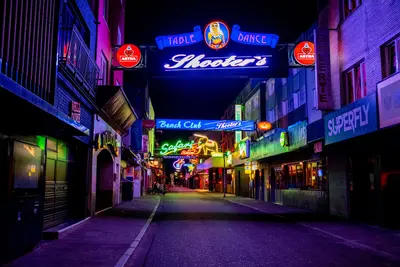
    St. Pauli, located directly on the Elbe between the city center and Altona, has been a Hamburg district since 1894. The former suburb of Hamburger Berg has borne this name since 1833. The Reeperbahn recalls the rope makers who settled here from 1633 and spun ship ropes. Today, the Kiez around Reeperbahn, Große Freiheit and Spielbudenplatz, FC St. Pauli with its Millerntor Stadium, and the harbor define the district, which is considered politically left-leaning, diverse, and tolerant.During the day, you can climb the Grüner Bunker on Feldstraße or visit Beatles-Platz, while evenings offer a choice between the theaters on Spielbudenplatz, live music clubs, and Kiez pubs. The U3 stops at Landungsbrücken, St. Pauli, and Feldstraße stations, and S-Bahn lines S1 and S3 stop at Reeperbahn station.
    Sternschanze

    Sternschanze

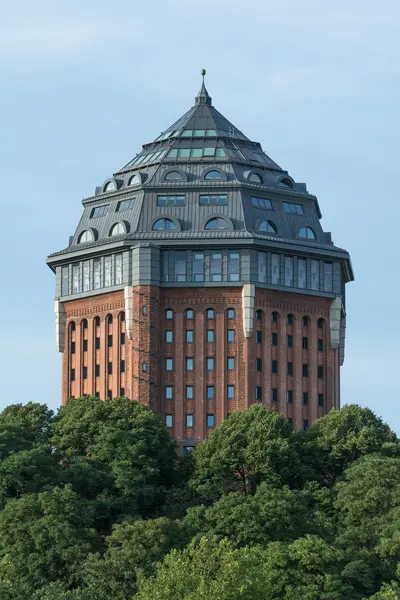
    Sternschanze, mostly known as Schanzenviertel, is Hamburg's smallest district at roughly half a square kilometre, gaining independence only on March 1, 2008. Its name dates back to a star-shaped defensive fortification established in 1682. Solid blocks of old buildings and the Rote Flora, occupied since 1989, define a quarter that has primarily drawn students and young people since the 1970s.Along Schulterblatt, the main commercial street, cafés, bakeries, restaurants, and shops line up. To take a breather, visit the approximately 12-hectare Sternschanzenpark, featuring the 59-meter-high water tower built in 1910. At Sternschanze U- and S-Bahn station in the north of the district, the U3 underground line, among others, makes a stop.
    Old Town & New Town

    Old Town & New Town

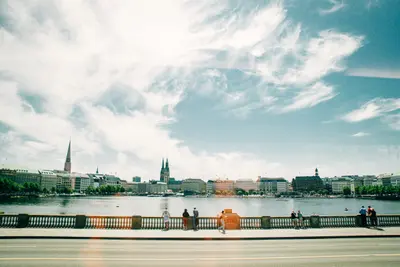
    Around Domplatz, Hammaburg was Hamburg's genesis; by 1188, a merchant settlement had emerged at Nikolaifleet. The Great Fire of 1842 destroyed large parts of the Old Town; during reconstruction, the Alsterarkaden were built. Today, office buildings, department stores, and Mönckebergstraße, the main shopping street, define the Old Town; west of the Alsterfleet lies the Neustadt.Stroll along Jungfernstieg by the Binnenalster, take an Alster boat tour from the pier, walk under the Alsterarkaden, and ride the panoramic lift 76 meters high in Mahnmal St. Nikolai. On Deichstraße at Nikolaifleet, where the 1842 fire began, stands a Baroque merchant house from 1686 at number 37. At Jungfernstieg station, the U1, U2, U4, and S1 and S3 S-Bahn lines stop.
    Hamburg

    Hamburg

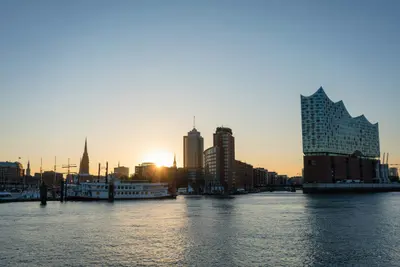
    Hamburg, Germany's second-largest city at 1.9 million inhabitants, lies on the Lower Elbe, where the Alster is dammed in the city center to form Binnenalster and Außenalster. Its port, a global transshipment hub, shapes the cityscape from Landungsbrücken to HafenCity.Here you'll experience the neo-Gothic brick ensemble of the Speicherstadt, the Elbphilharmonie (opened 2017), the baroque Michel, and the magnificent Rathaus. Evenings, St. Pauli beckons: Reeperbahn, Große Freiheit, and Hans-Albers-Platz form the city's best-known entertainment hub.
    Hamburg

    Hamburg

    The Free and Hanseatic City of Hamburg lies where the Alster and Bille rivers flow into the Lower Elbe, about 100 kilometers before the Elbe's mouth into the North Sea. As Germany's second-largest city, Hamburg is simultaneously a city-state and one of the world's most important port cities. Nearly 2500 bridges span its canals, waterways, and streams.For you, that means: brick warehouses and glass concert halls on the waterfront, barges and harbor ferries, the Inner and Outer Alster right in the city, and a nightlife that made history around the Reeperbahn in St. Pauli. Speicherstadt and Kontorhausviertel have been a UNESCO World Heritage site since 2015.