Fernweh: Home
    ExploreTravel GuidesPlan a tripMy tripLast visited
    de|en
    All Places & RegionsAll highlightsAbout FernwehFAQPrivacy PolicyImprint
    ExploreTravel GuidesPlan a tripMy tripLast visited
    • Overview
    • Places in the region
    • Recommendations
    • Food culture
    • Best travel time
    • Videos
    • Culture
    • Getting around
    • Round trips
    • Nearby
    Santa Marta & Sierra Nevada
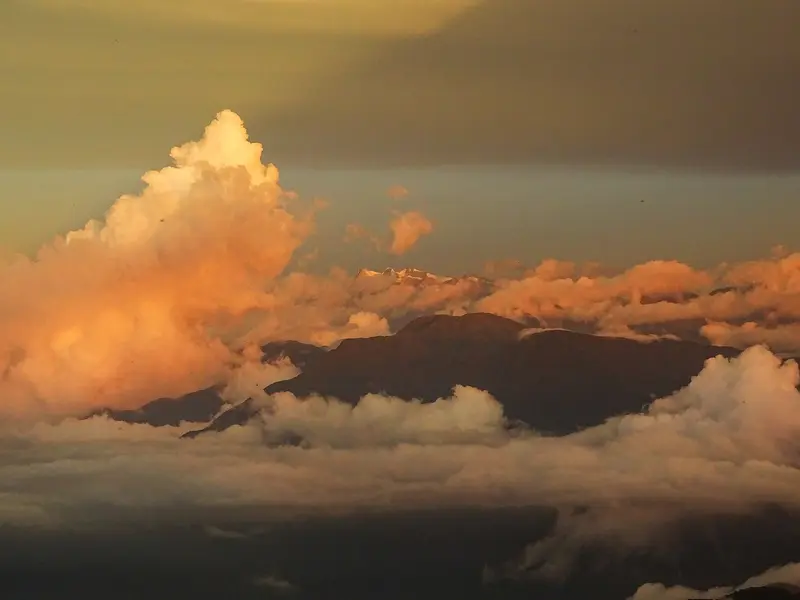
    Reduvida3 / Wikimedia Commons / CC BY-SA 4.0

    Colombia

    Santa Marta & Sierra Nevada

    Region

    The region around Santa Marta connects the Caribbean coast with the Sierra Nevada de Santa Marta, whose highest peak is only about 42 kilometers from the sea.

    by Felix Gillen

    1. Home
    2. Destinations
    3. Colombia
    4. Santa Marta & Sierra Nevada
    The region around Santa Marta connects the Caribbean coast with the Sierra Nevada de Santa Marta, whose highest peak is only about 42 kilometers from the sea. You travel here for the bays of Tayrona National Park, the mountain village of Minca, the trek to Ciudad Perdida, and the beach town of Palomino. Santa Marta is the starting point for all these destinations.
    The Sierra Nevada de Santa Marta is considered the highest coastal mountain range in the tropics. Pico Cristóbal Colón is usually given as 5,775 meters and is Colombia's highest point. UNESCO declared the mountain range a Biosphere Reserve in 1979.Coast and MountainsSanta Marta, Colombia's oldest continuously inhabited city, is located in a bay at the foot of the mountains. To its east, Tayrona National Park stretches to the sea with rainforest and coves. In the mountains lie the coffee village of Minca and the archaeological site Ciudad Perdida; further east, on the border with La Guajira, is the beach town of Palomino.PlanningThe protected areas close several times a year for rest periods and ceremonies of the indigenous peoples. Therefore, plan Tayrona and Ciudad Perdida with an eye on the current closing times.
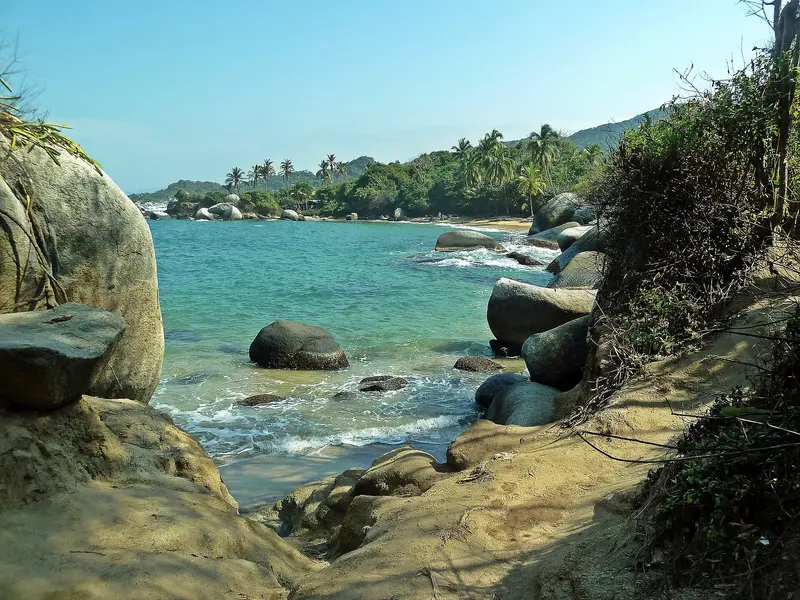
    Parque Nacional Natural Tayrona
    David Shankbone / Wikimedia Commons / CC BY-SA 3.0

    Place 1 of 4

    Parque Nacional Natural Tayrona

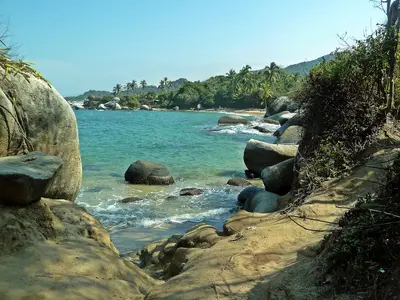
    Tayrona National Park is located about 34 kilometers east of Santa Marta, where the Sierra Nevada directly meets the Caribbean Sea. You come for bays between granite cliffs and rainforest, for hiking trails to Cabo San Juan and the ruins of Pueblito.

    Discover
    Palomino

    Place 2 of 4

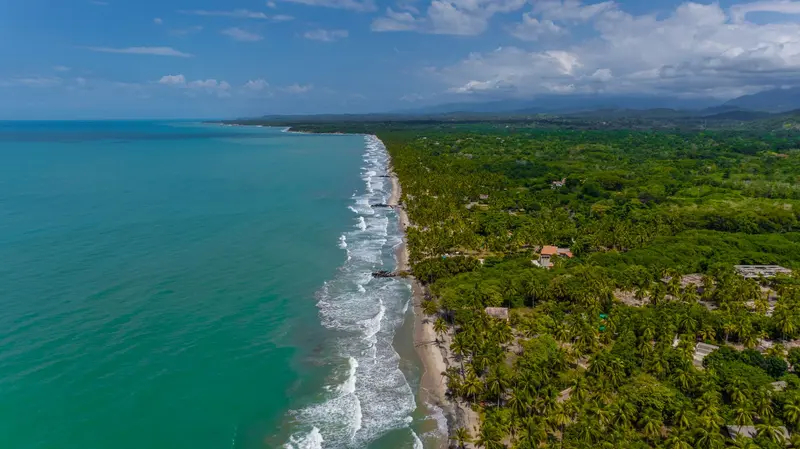
    Palomino

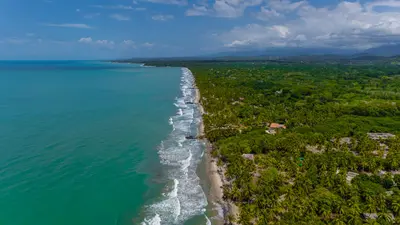
    Palomino is a small coastal town on the Caribbean coast, about 90 minutes to 2 hours east of Santa Marta, already within the La Guajira Department.

    Discover
    Minca

    Place 3 of 4

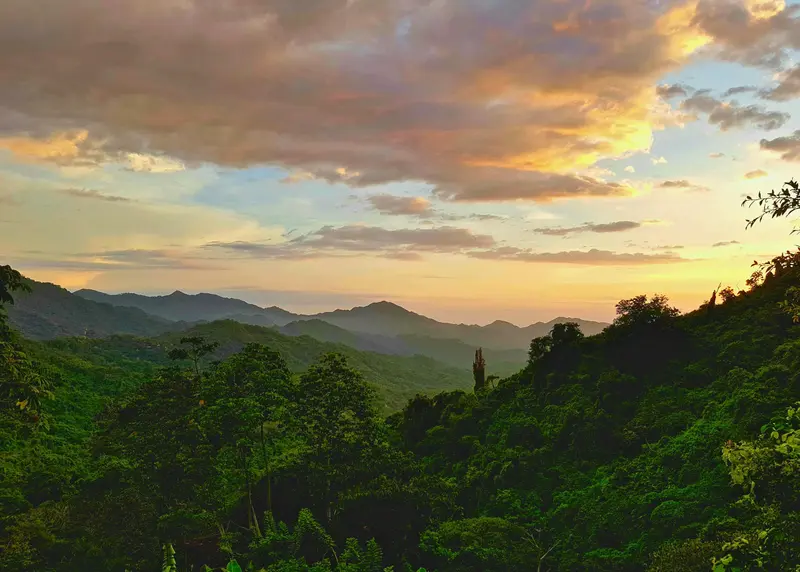
    Minca

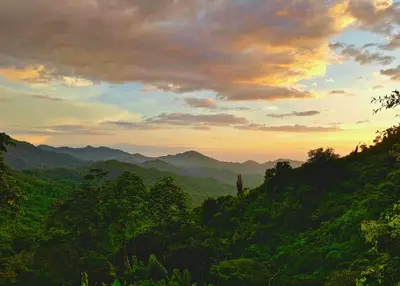
    Minca is a small mountain village in the foothills of the Sierra Nevada, about 45 minutes from Santa Marta. You come for waterfalls to swim in, coffee farms, birdwatching, and hikes with views over the coast.

    Discover
    Santa Marta

    Place 4 of 4

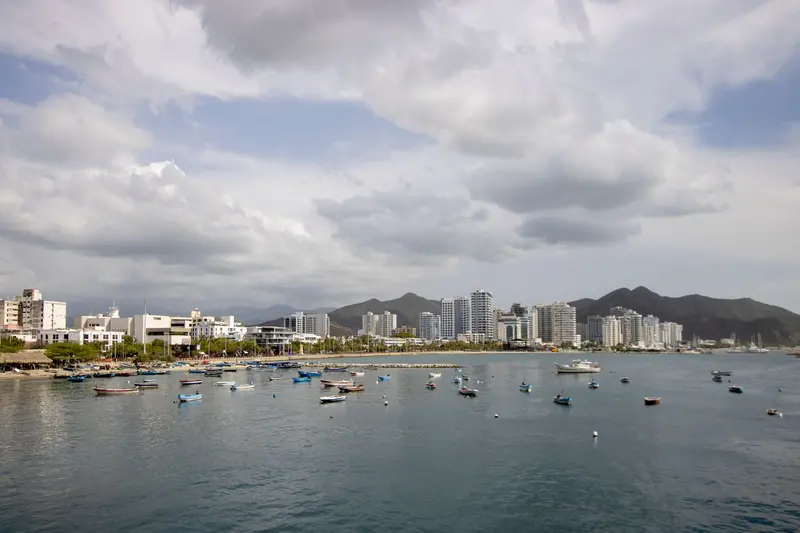
    Santa Marta

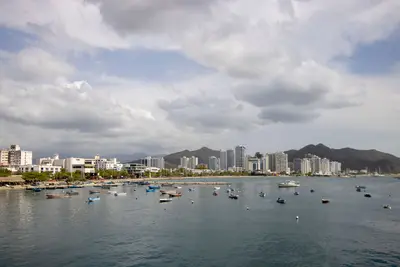
    Santa Marta is the capital of the Magdalena Department on the Caribbean coast and Colombia's oldest surviving city, founded in 1525 by Rodrigo de Bastidas. You come here as a starting point for Tayrona National Park, Minca, and the Ciudad Perdida.

    Discover

    More places in Santa Marta & Sierra Nevada
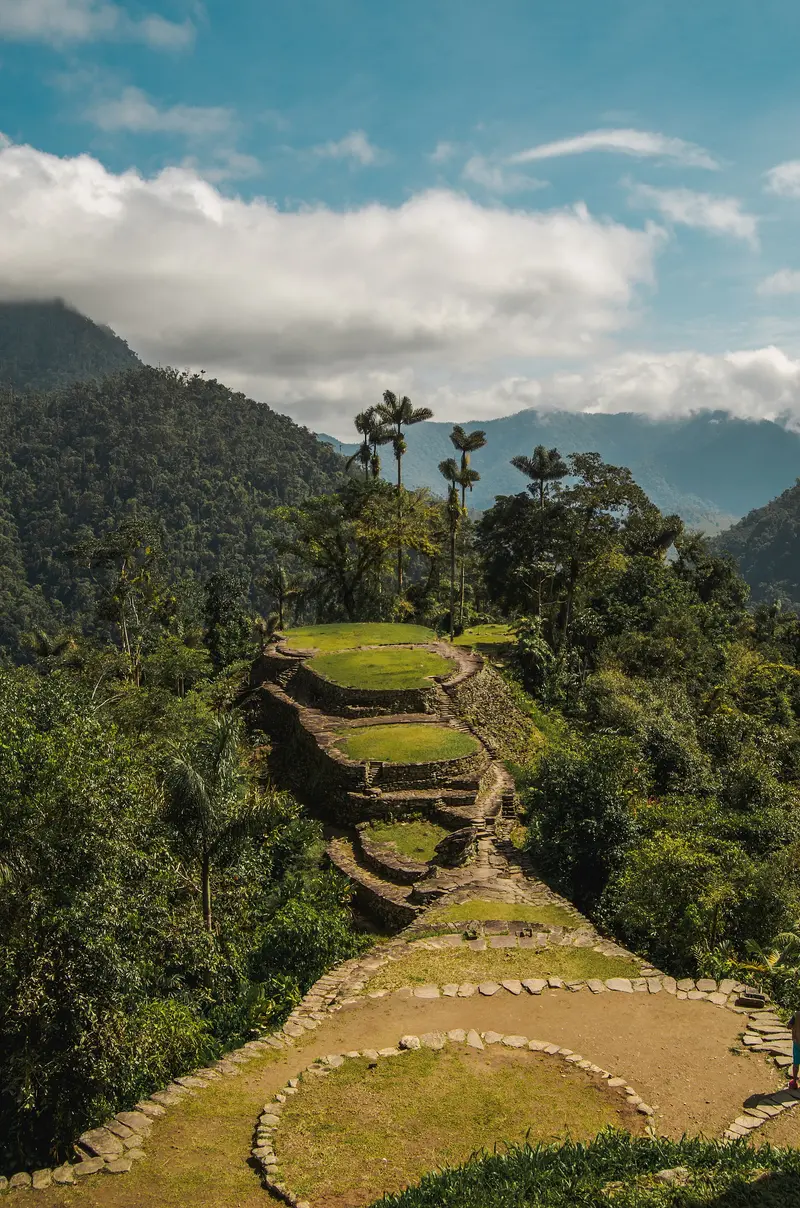
    Ciudad Perdida

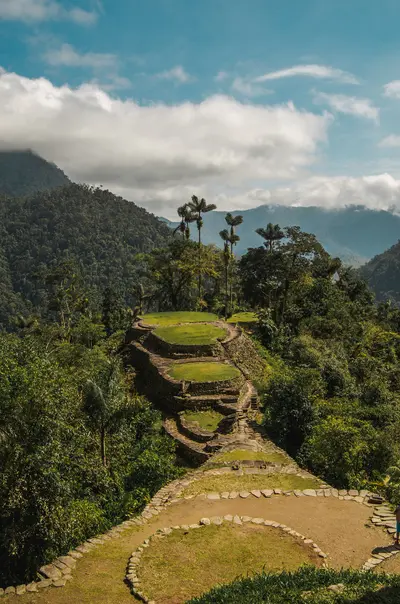
    Ciudad Perdida

    Ciudad Perdida, called Teyuna by the indigenous peoples, is a Tayrona settlement in the Sierra Nevada rainforest, accessible only via a multi-day trek from Santa Marta. You come for the terraced structures at 900 to 1,300 meters and the journey through forests and river valleys. The city originated around the 8th century and was explored by archaeologists in 1976.

    Food & Drink in the Sierra Nevada de Santa Marta

    On the coast around Santa Marta, green plantains, fish, and coconut rice dominate. In the mountains around Minca, coffee and cocoa grow, which you can try on fincas.

    Cayeye

    Cayeye

    Mashed green plantains, mainly eaten for breakfast. A local chef calls it a flagship dish of the Magdalena Department.

    Fried fish with coconut rice

    Fried fish, usually Mojarra, with lime, coconut rice and Patacones. Coconut rice is available in Santa Marta at almost every meal.
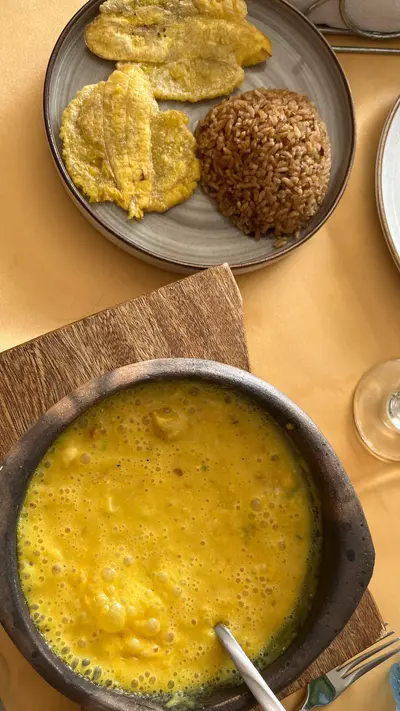
    Seafood casserole

    Seafood casserole

    Seafood in a thick coconut sauce. Like Sancocho de pescado, it is one of the most common dishes on the coast.
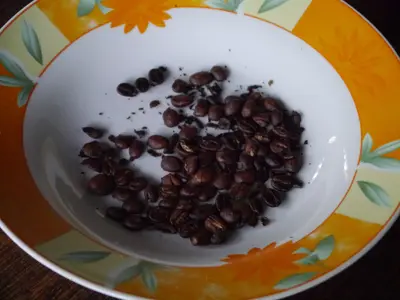
    Coffee and Cocoa from Minca

    Coffee and Cocoa from Minca

    On fincas above Minca, coffee and cacao are grown and tasted on tours. The most famous coffee finca is La Victoria with old machines.

    Best Time to Visit

    When is the best time for your trip?

    December
    January
    February
    March
    28–29°C·0–8 mm(little rain)
    On the coast near Santa Marta, it is very dry from December to April; January to March see little rain. September to November are the wettest months. The Sierra Nevada mountains see significantly more rain than the coast.
    The Alto de Mira station in the mountains records over 370 mm of rain monthly from May to November, but only about 80 mm in January. For hiking in the Sierra Nevada, the drier months are therefore more pleasant. The sea is 26 to 29 degrees.

    Seasons

    Jan
    Feb
    Mar
    Apr
    May
    Jun
    Jul
    Aug
    Sep
    Oct
    Nov
    Dec
    Dry season, Peak season
    Dry season
    Transitional
    Rain-time
    Best Time to Visit
    ▶Show detailed monthly data
    MonthTemp (°C)Rain (mm)Sun (h)
    January27.609.2
    February28.118.8
    March28.528.1
    April29.2147.6
    May29.3527.2
    June29.4607.6
    July29.2627.5
    August28.9637.1
    September28.6996.7
    October28.21276.6
    November28.0747.3
    December27.888.7

    Videos & Travel Reports

    13 of the best places to visit in Colombia

    13 of the best places to visit in Colombia

    Lonely Planet article by Steph Dyson, last updated in March 2026, covering Cartagena, the Amazon, the coffee region, Tayrona, the Sierra Nevada, La Guajira, San Gil, Providencia, Caño Cristales and…

    4 days to discover Colombia’s national parks

    Lonely Planet itinerary by Ocean Malandra (2022) through Colombian national…

    Sierra Nevada's Indigenous Peoples

    The Sierra Nevada is home to the Kogui, Arhuaco, Wiwa and Kankuamo. They are considered descendants of the Tayrona, who, among other things, built the Ciudad Perdida. Their name for the site is Teyuna.The closures of Tayrona National Park (Respira Tayrona Program) are coordinated with these four peoples. The Ciudad Perdida also closes every year by decision of the traditional indigenous authorities.

    Arrival and On the Way

    Plane: Simón Bolívar Airport (SMR) is located approximately 16 kilometers from the center of Santa Marta.Minca: Colectivos take approximately 45 minutes from Santa Marta's market to Minca; they depart once full.Tayrona and Palomino: Buses heading towards Palomino depart from Santa Marta's market and stop at the park entrances. To Palomino, you'll need around 90 minutes to 2 hours.Ciudad Perdida: Only with an authorized agency from Santa Marta; transfer is included in the tour price.
    Round trips through this region

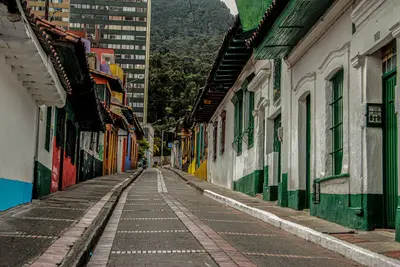
    Colombia Classics: Bogotá, Medellín, Coffee Zone and Caribbean

    Colombia Classics: Bogotá, Medellín, Coffee Zone and Caribbean

    The route connects the capital in the highlands with Medellín, the coffee fincas around Salento, and the Caribbean coast from Cartagena to Santa Marta. You cover the long distances with short domestic flights, allowing more time for the destinations.

    14 Days
    5 stops
    Open jaw
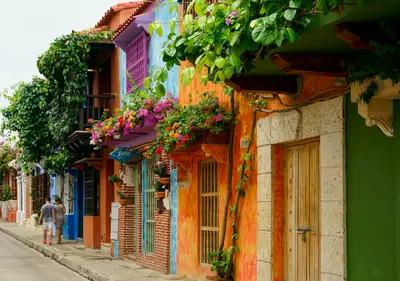
    Caribbean and Sierra Nevada: from Cartagena to La Guajira

    Caribbean and Sierra Nevada: from Cartagena to La Guajira

    The route follows the Caribbean coast from Cartagena east, with detours to the mountains of Minca, Tayrona National Park, and the beach town of Palomino. Optionally, it ends on the desert peninsula of La Guajira at Cabo de la Vela.

    12 Days
    6 stops
    Open jaw

    Nearby

    Ciudad Perdida

    Ciudad Perdida

    Ciudad Perdida, called Teyuna by the indigenous peoples, is a Tayrona settlement in the Sierra Nevada rainforest, accessible only via a multi-day trek from Santa Marta. You come for the terraced structures at 900 to 1,300 meters and the journey through forests and river valleys. The city originated around the 8th century and was explored by archaeologists in 1976.
    Palomino

    Palomino

    Palomino is a small coastal town on the Caribbean coast, about 90 minutes to 2 hours east of Santa Marta, already within the La Guajira Department. Here you can enjoy tubing on the Río Palomino, discover waterfalls in the hinterland, and relax on a long, wild palm-fringed beach. The town has around 2,500 inhabitants and numerous hostels.
    Minca

    Minca

    Minca is a small mountain village in the foothills of the Sierra Nevada, about 45 minutes from Santa Marta. You come for waterfalls to swim in, coffee farms, birdwatching, and hikes with views over the coast. The village has fewer than 1,000 inhabitants and today thrives mainly on hostels and lodges.
    Parque Nacional Natural Tayrona

    Parque Nacional Natural Tayrona

    Tayrona National Park is located about 34 kilometers east of Santa Marta, where the Sierra Nevada directly meets the Caribbean Sea. You come for bays between granite cliffs and rainforest, for hiking trails to Cabo San Juan and the ruins of Pueblito. The park closes completely three times a year.
    Santa Marta

    Santa Marta

    Santa Marta is the capital of the Magdalena Department on the Caribbean coast and Colombia's oldest surviving city, founded in 1525 by Rodrigo de Bastidas. You come here as a starting point for Tayrona National Park, Minca, and the Ciudad Perdida. The city has around half a million inhabitants; highlights include the colonial center with the Gold Museum, as well as the beach districts of Taganga and El Rodadero.

    Sources & method

    • Photos: Wikimedia Commons. Each photo carries its credit.
    • Video reportages: 13 of the best places to visit in Colombia, 4 days to discover Colombia’s national parks
    • The content is based on web research from public, traceable sources. How the content is made · The role of AI