ExploreTravel GuidesPlan a trip
    de|en
    All Places & RegionsAbout FernwehFAQPrivacy PolicyImprint
    ExploreTravel GuidesPlan a trip
    • Neighborhoods & highlights
    • Eat & drink
    • Accommodation
    • Plan trip
    • Nearby
    Bad Münstereifel
    Wolkenkratzer / Wikimedia Commons / CC BY-SA 4.0

    Germany

    Bad Münstereifel

    City

    Bad Münstereifel is located on the Erft river in the district of Euskirchen, approximately 30 kilometers southwest of Bonn.

    1. Home
    2. Destinations
    3. Germany
    4. Eifel
    5. Bad Münstereifel
    Bad Münstereifel is located on the Erft river in the district of Euskirchen, approximately 30 kilometers southwest of Bonn. The old town is encircled by a nearly completely preserved, 1.6-kilometer-long city wall from the early 13th century, featuring 18 towers and four city gates. Within the walls stand the Romanesque Collegiate Church of St. Chrysanthus and Daria and the Romanische Haus from 1167, now a local history museum.Since 2014, the City Outlet, the first outlet center located within a city center, has been spread across the historic buildings. Since 1974, Bad Münstereifel has been a state-recognized Kneipp spa. In the district of Effelsberg, there is a radio telescope with a 100-meter diameter.

    Sights in Bad Münstereifel

    Discover the most important sights and attractions

    Minster of St. Chrysanthus and Daria
    Church

    1Minster of St. Chrysanthus and Daria

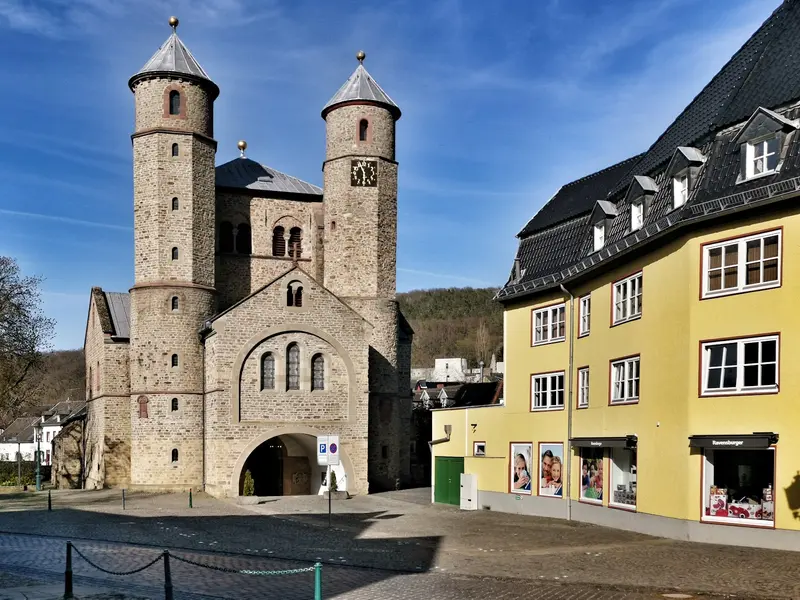
    The 11th-century Romanesque basilica features a three-towered westwork modeled after St. Pantaleon in Cologne and a five-aisled crypt. Since 2019, a treasury showcases triptychs, paraments, and a Roman matron stone.
    Open in Google Maps
    Radio Telescope Effelsberg
    Attraction

    2Radio Telescope Effelsberg

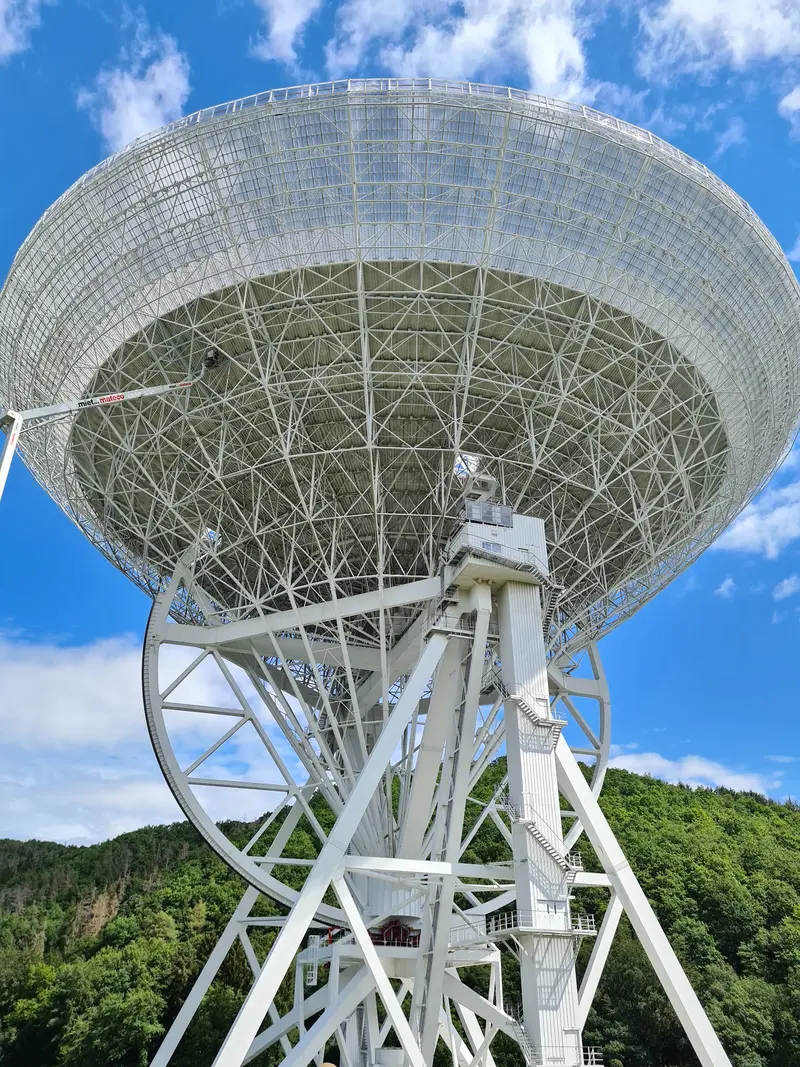
    The 100-meter radio telescope of the Max Planck Institute for Radio Astronomy was built between 1968 and 1971 and is now the second-largest steerable radio telescope in the world. From the parking lot, about one kilometer away, a Planetary Path with information boards leads to the telescope. In the visitor pavilion, registered groups can attend free lectures since September 2026; a visit to the telescope itself is not possible.
    Open in Google Maps
    Romanesque House (Hürten Museum)
    Museum

    3Romanesque House (Hürten Museum)

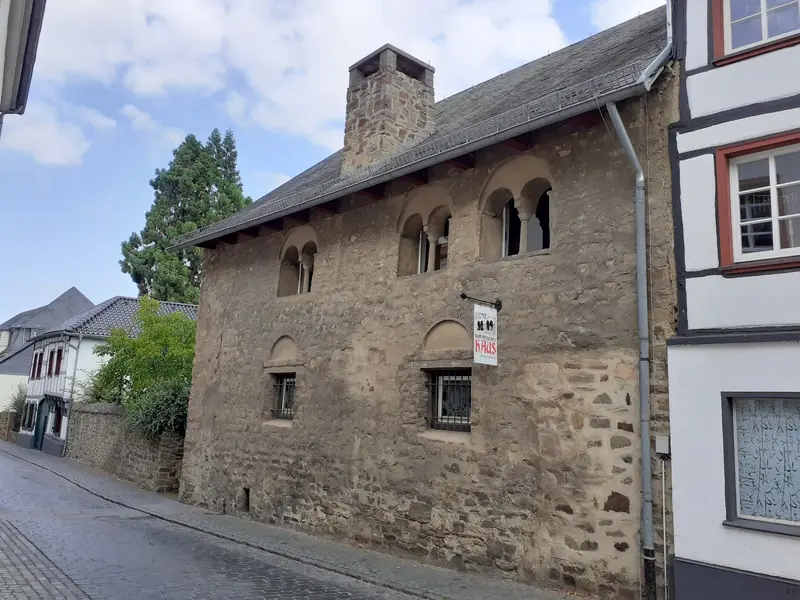
    Built 1167, the house is one of western Germany's oldest stone homes. Since 1975, it has housed the local museum, since 2012 the Hürten-Museum, with an archaeological collection in the vaulted cellar and a ground-floor banquet hall.
    Open in Google Maps
    Werther Gate
    Attraction

    4Werther Gate

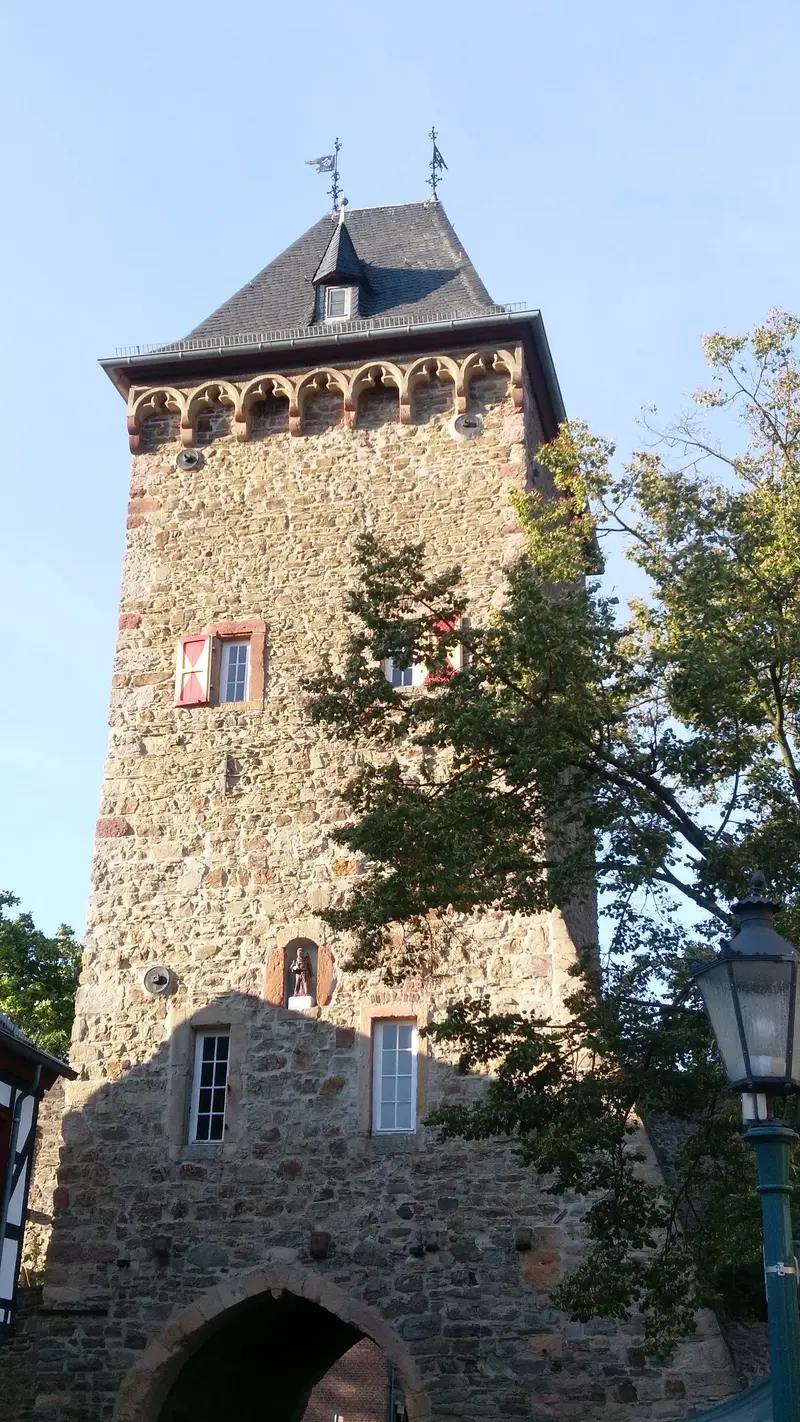
    The Werther Gate, located in the north of the Old Town, is the highest of the four city gates belonging to the nearly completely preserved city fortifications from the early 13th century. It is named after the older Franconian settlement of Werthe, and its slender gate tower is topped with a circumferential cornice.
    Open in Google Maps

    Restaurants in Bad Münstereifel

    1

    Restaurant Marielle

    Restaurant and café on Unnaustraße, that also serves breakfast.
    Show on Google Maps
    2

    JoJos Creperie

    Crêperie and Café on Wertherstraße with French cuisine and desserts.
    Show on Google Maps
    3

    Amigo Grill

    Grill restaurant on Trierer Straße with Kebab, Pizza and grilled dishes.
    Show on Google Maps

    Accommodations in Bad Münstereifel

    Find perfect stay in Bad Münstereifel

    Booking.com* (Affiliate link)
    Search Hotels
    Agoda* (Affiliate link)
    Search Hotels
    Airbnb
    Vacation Rentals

    * Affiliate link: if you book through it, we earn a small commission. The price stays the same for you.

    Campgrounds in Bad Münstereifel

    Find perfect campground in Bad Münstereifel

    Search via Google Maps
    Campgrounds nearby (15km)
    Camping.info
    Find Campgrounds
    Park4Night
    RV Parks & Camping

    Plan your trip to Bad Münstereifel

    Save places, build a route and plan your city trip, all in one place.

    1. 1
      1234

      Round trip

      12 days · 4 stops

      Saved

      Pick a route

      Pick a ready-made one or save places and plan your own.

      Open bookmarks
    2. 2

      Trip to Bad Münstereifel

      Live
      • 1Minster of St. Chrysanthus and Daria3 days
      • 2Radio Telescope Effelsberg4 days
      • 3Romanesque House (Hürten Museum)5 days
      Budget

      Plan your trip

      The planner sorts stops, days and budget. Plan together in real time.

      Start trip planning
    3. 3
      9:41 No signal
      Available offline

      Use it on the road

      Download the guide to your phone and use it on site, even offline.

    Nearby

    Eifel

    Eifel

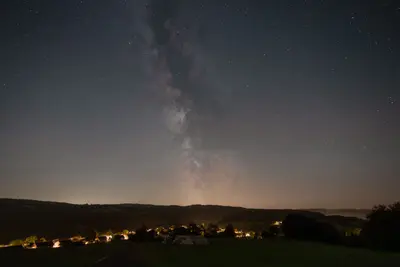
    The Eifel is a low mountain range spanning over 5,300 square kilometers between the Cologne Bay, Rhine, and Moselle. It lies in North Rhine-Westphalia and Rhineland-Palatinate, extending westward into the Belgian Ardennes and Luxembourg's Oesling. Its highest peak is the Hohe Acht, a volcanic cone at 746.9 meters.In the north, the Eifel National Park protects beech forests around Lake Urft and Kermeter; just beside it lies the half-timbered town of Monschau in the Rur valley. To the east, Lake Laach and Maria Laach Abbey tell of the volcanic past, and at the Nürburgring, you can drive your own car on the Nordschleife. The Eifelsteig long-distance hiking trail has connected Aachen with Trier since 2009.
    Eifel National Park

    Eifel National Park

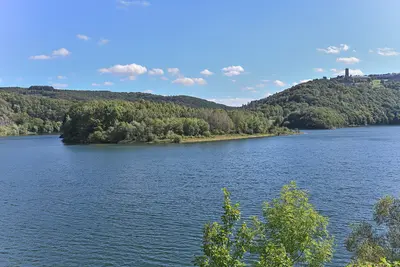
    Eifel National Park was established on January 1, 2004, as North Rhine-Westphalia's first national park, covering approximately 10,770 hectares between Nideggen, Gemünd, the Belgian border, and the Rursee. It primarily protects woodrush-beech forests, alongside lakes, streams, and open grasslands. The Kermeter forest area, with its high proportion of beeches, and the Urfttalsperre form the heart of the park.Around 3,300 hectares previously belonged to the Vogelsang military training area, which has been publicly accessible since January 1, 2006. Today, Vogelsang IP houses the Eifel National Park Centre, from which you look out over the Urftsee. If you plan to be out for several days, take the 85-kilometer-long Wilderness Trail from Monschau-Höfen to Hürtgenwald-Zerkall in four daily stages.
    Nürburgring

    Nürburgring

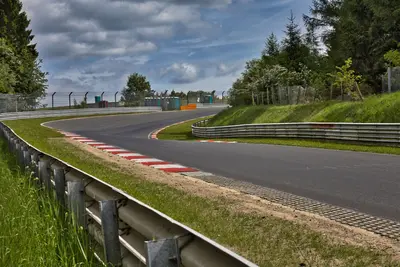
    The Nürburgring, near Nürburg in the Ahrweiler district, was inaugurated on June 18, 1927, and is named after the Nürburg castle ruins. Today, it's famous for the 20.8-kilometer Nordschleife (North Loop), which racing driver Jackie Stewart dubbed the 'Green Hell' due to its hilly, forest-lined course. The 24-hour race starts here every year.Since its opening, you can drive the Nordschleife with your own road-legal car during tourist drives for a fee. According to Autozeitung, the 2026 season runs from March 7 to November 15, usually from 5:30 PM to 7:30 PM on weekdays and from 8 AM to 7 PM on event-free weekends. A lap costs 30 Euros from Monday to Thursday, and 35 Euros from Friday to Sunday and on public holidays (as of March 2026). Motorcycles have no longer been permitted since 2025. Times vary depending on the schedule, so check the official opening hours beforehand.
    Bonn

    Bonn

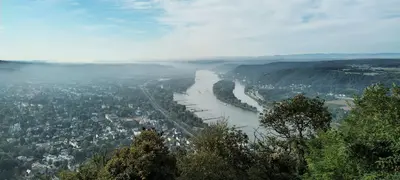
    Bonn is located on the Rhine south of Cologne and was the seat of the Bundestag, Bundesrat, and Federal Government from 1949 to 1999. This city of approximately 314,000 residents is also the birthplace of Ludwig van Beethoven: He was born in December 1770 at the Beethoven-Haus on Bonngasse, which today houses the world's largest Beethoven collection.Along the Museumsmeile, the Haus der Geschichte and the Kunstmuseum tell the story of the Federal Republic and 20th-century art. In the city center stand the Minster and Poppelsdorfer Palace, which today belongs to the university. A popular excursion leads to Drachenfels in the Siebengebirge.
    Monschau

    Monschau

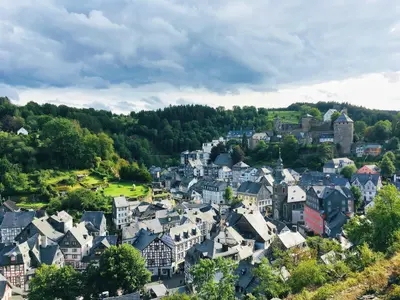
    Monschau lies in the narrow valley of the Rur, nestled between the slopes of the Naturpark Hohes Venn-Eifel, close to the Belgian border. The medieval old town is traversed by the Rur and is characterized by half-timbered buildings and slate-clad houses, which today host cafés, restaurants, and artisan shops.The town grew prosperous from fine cloth production: it began here in the late 16th century, reaching its zenith in the 18th century under Johann Heinrich Scheibler. This story is told in the Rote Haus, now a museum showcasing bourgeois domestic culture. Above the town, Burg Monschau, dating from the early 13th century, now houses a youth hostel.