ExploreTravel GuidesPlan a trip
    de|en
    All Places & RegionsAbout FernwehFAQPrivacy PolicyImprint
    ExploreTravel GuidesPlan a trip
    Eifel National Park
    Cayambe / Wikimedia Commons / CC BY-SA 4.0

    Germany

    Eifel National Park

    Point of InterestNature

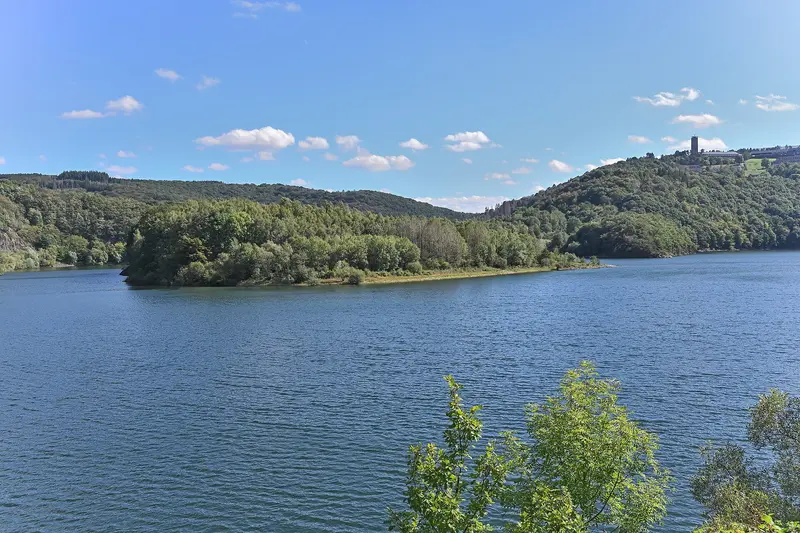
    Eifel National Park was established on January 1, 2004, as North Rhine-Westphalia's first national park, covering approximately 10,770 hectares between Nideggen, Gemünd, the Belgian border, and the Rursee.

    1. Home
    2. Destinations
    3. Germany
    4. Eifel
    5. Eifel National Park
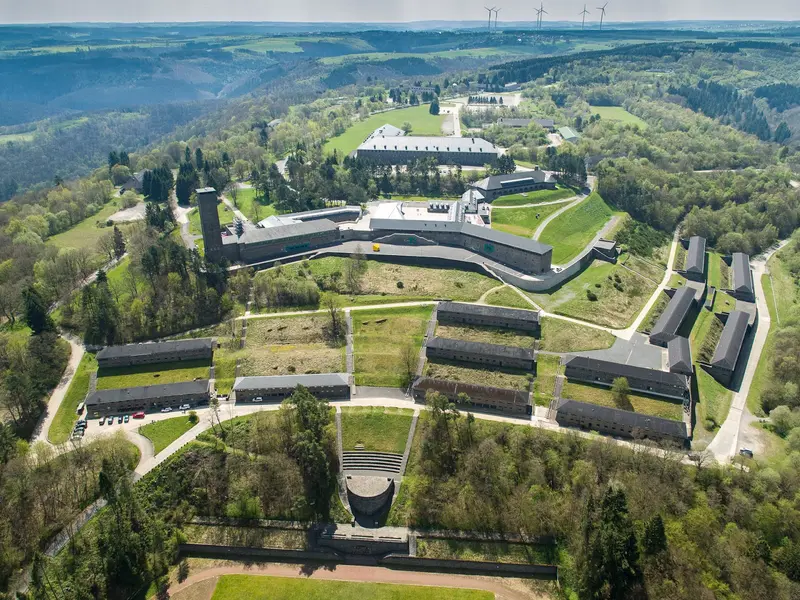
    Eifel National Park was established on January 1, 2004, as North Rhine-Westphalia's first national park, covering approximately 10,770 hectares between Nideggen, Gemünd, the Belgian border, and the Rursee. It primarily protects woodrush-beech forests, alongside lakes, streams, and open grasslands. The Kermeter forest area, with its high proportion of beeches, and the Urfttalsperre form the heart of the park.Around 3,300 hectares previously belonged to the Vogelsang military training area, which has been publicly accessible since January 1, 2006. Today, Vogelsang IP houses the Eifel National Park Centre, from which you look out over the Urftsee. If you plan to be out for several days, take the 85-kilometer-long Wilderness Trail from Monschau-Höfen to Hürtgenwald-Zerkall in four daily stages.

    Sights in Eifel National Park

    Discover the most important sights and attractions

    Urft Dam Wall & Urft Lake
    Attraction

    1Urft Dam Wall & Urft Lake

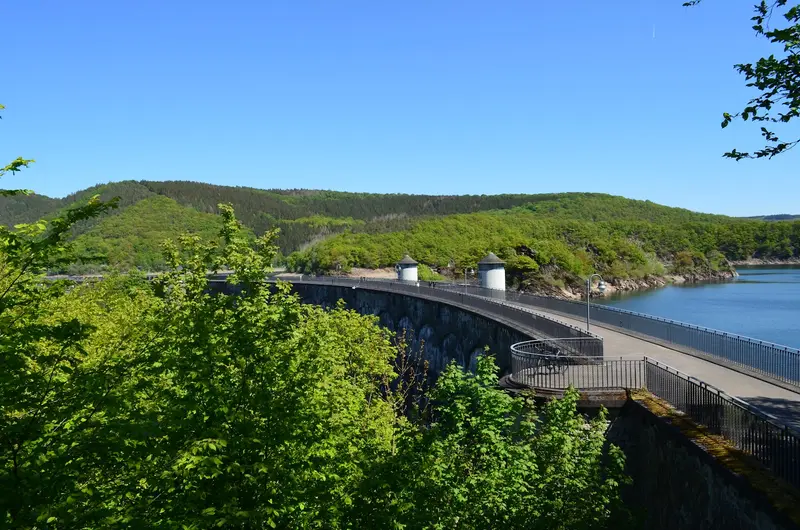
    The rubble stone wall, built from 1900 to 1905, is 58.5 meters high and was Europe's highest dam until 1912. Swimming and boating are not permitted on Urftsee, but the electric boats of Rursee-Schifffahrt stop at the Urft Dam.
    Open in Google Maps
    Nature Experience Realm Wilder Kermeter
    National Park

    2Nature Experience Realm Wilder Kermeter

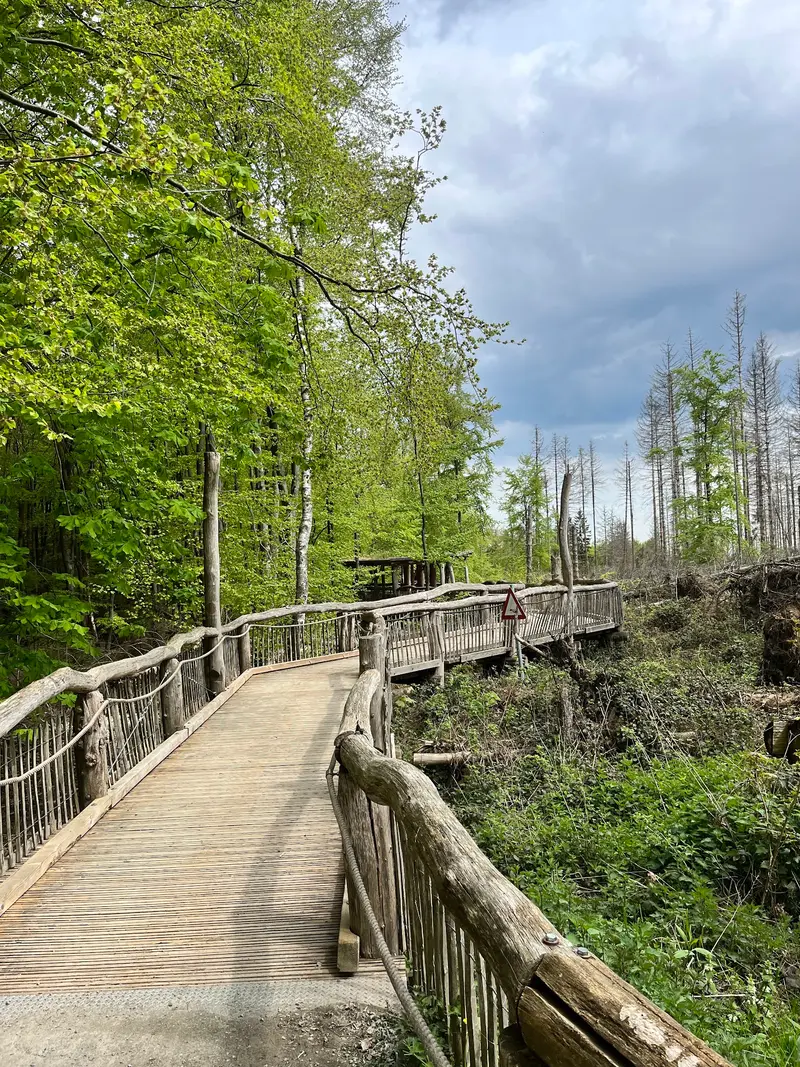
    Accessible experience area in the beech-rich forest region Kermeter: Gravel paths and wooden boardwalks lead to a viewpoint over the lake landscape.
    Open in Google Maps
    Vogelsang IP
    Museum

    3Vogelsang IP

    The complex, built in the 1930s as an NS-Ordensburg, was a military exercise area until 2006 and now houses the Eifel National Park Centre and the permanent exhibition "Bestimmung: Herrenmensch". From the grounds, you'll see the Urftsee; it's open daily from 10 am to 5 pm.
    Open in Google Maps

    Restaurants in Eifel National Park

    Accommodations in Eifel National Park

    Find perfect stay in Eifel National Park

    Booking.com* (Affiliate link)
    Search Hotels
    Agoda* (Affiliate link)
    Search Hotels
    Airbnb
    Vacation Rentals

    * Affiliate link: if you book through it, we earn a small commission. The price stays the same for you.

    Campgrounds in Eifel National Park

    Find perfect campground in Eifel National Park

    Search via Google Maps
    Campgrounds nearby (15km)
    Camping.info
    Find Campgrounds
    Park4Night
    RV Parks & Camping

    Nearby

    Monschau

    Monschau

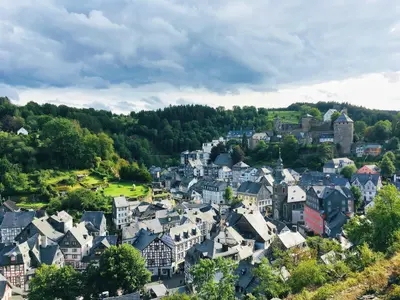
    Monschau lies in the narrow valley of the Rur, nestled between the slopes of the Naturpark Hohes Venn-Eifel, close to the Belgian border. The medieval old town is traversed by the Rur and is characterized by half-timbered buildings and slate-clad houses, which today host cafés, restaurants, and artisan shops.The town grew prosperous from fine cloth production: it began here in the late 16th century, reaching its zenith in the 18th century under Johann Heinrich Scheibler. This story is told in the Rote Haus, now a museum showcasing bourgeois domestic culture. Above the town, Burg Monschau, dating from the early 13th century, now houses a youth hostel.
    Bad Münstereifel

    Bad Münstereifel

    Bad Münstereifel is located on the Erft river in the district of Euskirchen, approximately 30 kilometers southwest of Bonn. The old town is encircled by a nearly completely preserved, 1.6-kilometer-long city wall from the early 13th century, featuring 18 towers and four city gates. Within the walls stand the Romanesque Collegiate Church of St. Chrysanthus and Daria and the Romanische Haus from 1167, now a local history museum.Since 2014, the City Outlet, the first outlet center located within a city center, has been spread across the historic buildings. Since 1974, Bad Münstereifel has been a state-recognized Kneipp spa. In the district of Effelsberg, there is a radio telescope with a 100-meter diameter.
    Eupen

    Eupen

    Eupen, close to the German border about 15 kilometers south of Aachen, is the capital of the German-speaking Community of Belgium. Here you speak German, experience baroque townhouses from the time of the clothmakers, and are just minutes away from the edge of the High Fens.The city is divided into the Upper Town with its Market Square and St. Nikolaus, and the Lower Town along the Weser. Just outside the city gates are the Wesertalsperre and Hertogenwald, popular destinations for hiking and cycling.
    Eifel

    Eifel

    The Eifel is a low mountain range spanning over 5,300 square kilometers between the Cologne Bay, Rhine, and Moselle. It lies in North Rhine-Westphalia and Rhineland-Palatinate, extending westward into the Belgian Ardennes and Luxembourg's Oesling. Its highest peak is the Hohe Acht, a volcanic cone at 746.9 meters.In the north, the Eifel National Park protects beech forests around Lake Urft and Kermeter; just beside it lies the half-timbered town of Monschau in the Rur valley. To the east, Lake Laach and Maria Laach Abbey tell of the volcanic past, and at the Nürburgring, you can drive your own car on the Nordschleife. The Eifelsteig long-distance hiking trail has connected Aachen with Trier since 2009.
    Aachen

    Aachen

    Aachen is located in Germany's westernmost tip, bordering Belgium and the Netherlands. Around 800, Charlemagne had his Palatine Chapel built here, the core of today's Cathedral. In 814, he was laid to rest there, and between 936 and 1531, 30 kings were crowned in the Octagon. In 1978, the Cathedral became Germany's first monument on the UNESCO World Heritage list.The city, with around 249,000 inhabitants, is compact: its Cathedral, Cathedral Treasury, Town Hall on Katschhof, and Elisenbrunnen are close by. Try Aachener Printen, a spicy pastry available in bakeries all year round. Cologne is about 50 minutes away by regional train.