ExploreTravel GuidesPlan a trip
    de|en
    All Places & RegionsAbout FernwehFAQPrivacy PolicyImprint
    ExploreTravel GuidesPlan a trip
    • Neighborhoods & highlights
    • Eat & drink
    • Food culture
    • Culture
    • Getting around
    • Accommodation
    • Plan trip
    • Nearby
    Ostend

    Belgium

    Ostend

    City

    Ostend is the largest city on the Belgian coast and is reachable from Brussels by train in about 80 minutes.

    1. Home
    2. Destinations
    3. Belgium
    4. Belgian Coast
    5. Ostend
    Ostend is the largest city on the Belgian coast and is reachable from Brussels by train in about 80 minutes. Wide sandy beaches, a long promenade, fishing boats in the harbour, and the legacy of painter James Ensor make the city so appealing.In the 19th century, the Belgian royal family spent their summers here, as evidenced by the Royal Galleries and the casino on the beach. Today, you can eat North Sea shrimp at the fish market, visit the Mercator training ship, and ride the Coastal Tram to nearby towns.
    Ostend has a good 72,000 inhabitants, making it the largest city on the Belgian North Sea. The city center, port, and promenade are close together and can be explored on foot. For destinations along the coast, such as Raversyde to the west or De Haan to the east, take the Kusttram. The beach promenade, with its Kursaal and Venetian Galleries, showcases the sophisticated Belle Époque seaside resort, while around Visserskaai and Vistrap, it's all about the fishing trade. On the eastern bank of the harbor, Fort Napoleon lies between the dunes.

    Sights in Ostend

    Discover the most important sights and attractions

    Museum

    1Sail-training ship Mercator

    The sailing training ship of the Belgian Merchant Navy was built in Leith, Scotland, in 1932 and has been a museum ship in Ostend since 1964. It is located in the marina at Jan Piersplein and is open Tuesday to Sunday.

    Open in Google Maps
    Museum

    2Fort Napoleon

    Napoleon had the fort built in 1811 in the dunes at the harbour entrance, anticipating a British attack. After a five-year restoration, it has been open to the public since 2000, telling its story today on a circular tour.
    Open in Google Maps

    Restaurants in Ostend

    Food and Drink

    Grey North Sea Shrimps

    The small grey North Sea shrimps are sold early in the morning at the fish market. You eat them freshly peeled, as a Tomate-crevette in a hollowed-out tomato, or as a croquette.

    Prawn Croquettes

    Crispy deep-fried croquettes with creamy crab filling, a true classic on the coast as an appetizer.

    Fish from Vistrap

    At the open-air fish market on Visserskaai, traders sell freshly caught North Sea fish daily. It remains closed during storms at sea and on Christmas and New Year's Day.

    Ensor, Art and Royal Bath

    James EnsorThe painter James Ensor (1860-1949) was born in Ostend and remained connected to the city his entire life. His home on Vlaanderenstraat, where he lived from 1917 until his death, is now part of the Ensorhuis. The art museum Mu.ZEE, featuring works by Ensor and Léon Spilliaert, is undergoing renovation and is scheduled to reopen in 2028. Until then, it presents exhibitions in the Venetiaanse Gaanderijen on the promenade.Royal Seaside ResortFrom the 19th century onwards, the royal family made Ostend their summer residence. For them, the Royal Galleries on the promenade and the Wellington Racetrack, opened in 1883, were built. The first casino, the Kursaal, opened directly on the beach in 1857; today's building remains a meeting point for dinners, gaming, and concerts.

    Arrival and On the Way

    Getting ThereFrom Brussels North, Central, and Midi, a fast Intercity train runs hourly via Ghent and Bruges to Ostend, travel time approximately 1 hour 20 minutes. Slower trains via Kortrijk take significantly longer. Ferries to England ceased operating in 2013.Around TownExplore the city centre with its promenade, harbour, and fish market on foot. The Kusttram stops at the station, running along the entire Belgian coast from De Panne to Knokke-Heist. During the day, it runs every 10 to 20 minutes depending on the season, and every 30 minutes in the evening; with a day or multi-day pass, you can hop on and off as often as you like.

    Accommodations in Ostend

    Find perfect stay in Ostend

    Booking.com* (Affiliate link)
    Search Hotels
    Agoda* (Affiliate link)
    Search Hotels
    Airbnb
    Vacation Rentals

    * Affiliate link: if you book through it, we earn a small commission. The price stays the same for you.

    Campgrounds in Ostend

    Find perfect campground in Ostend

    Search via Google Maps
    Campgrounds nearby (15km)
    Camping.info
    Find Campgrounds
    Park4Night
    RV Parks & Camping

    Plan your trip to Ostend

    Save places, build a route and plan your city trip, all in one place.

    1. 1
      1234

      Round trip

      12 days · 4 stops

      Saved

      Pick a route

      Pick a ready-made one or save places and plan your own.

      Open bookmarks
    2. 2

      Trip to Ostend

      Live
      • 1Sail-training ship Mercator3 days
      • 2Fort Napoleon4 days
      Budget

      Plan your trip

      The planner sorts stops, days and budget. Plan together in real time.

      Start trip planning
    3. 3
      9:41 No signal
      Available offline

      Use it on the road

      Download the guide to your phone and use it on site, even offline.

    Nearby

    Belgian Coast

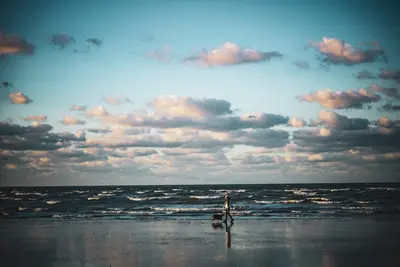
    The Belgian North Sea coast stretches from De Panne on the French border to Knokke-Heist on the Dutch border. The Kusttram connects all coastal resorts along approximately 67 kilometers, interspersed with wide sandy beaches, dunes, and seaside resorts like Ostend.
    Bruges

    Bruges

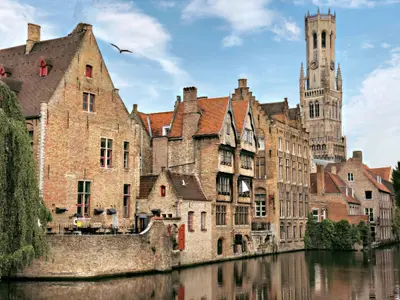
    Bruges, in West Flanders and an hour by train from Brussels, has largely preserved its medieval core of canals, brick gables, and church spires. Its Old Town, a UNESCO World Heritage site since 2000, showcases how one of Northern Europe's richest 15th-century trading cities appeared.Behind the famous Markt and Burg squares, museums hold works by Flemish Masters like Jan van Eyck and Hans Memling. Evenings, once day-trippers depart, the canals, Beguinage, and old beer pubs revert to locals.

    West Flanders

    Belgium's westernmost province stretches from the North Sea to the French border. Inland lie medieval Bruges, whose Old Town is a UNESCO World Heritage site, and Ypres with its cemeteries and memorials from the Western Front of World War I.
    Ypres

    Ypres

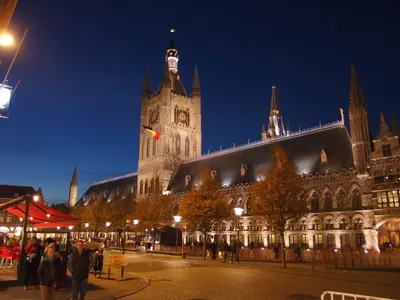
    Ypres (Ieper) in West Flanders, near the French border, is Belgium's central place of remembrance for the First World War. Every evening at 8 PM, the Last Post sounds under the Menin Gate for the fallen of the Commonwealth armies, and war cemeteries like Tyne Cot lie around the city.The old town with its Cloth Halls and Cathedral was almost completely destroyed in the war and then faithfully rebuilt. Those staying for a day combine the In Flanders Fields Museum, a walk on the Vauban ramparts, and the evening ceremony.
    Dunkerque (Dunkirk)

    Dunkerque (Dunkirk)

    Dunkerque, a significant port city on the northern French coast, is deeply connected to its maritime history and the events of the Second World War. The city is internationally renowned for "Operation Dynamo" in 1940, its history comprehensively documented at the Musée Dunkerque 1940 Opération Dynamo. You can visit the Port Museum to learn more about the port's development and seafaring, or climb the historic Leughenaer Tower, a former 15th-century lighthouse. The long sandy beach of Malo-les-Bains invites you for walks and offers a contrast to the industrial port area. Culturally, the lively Dunkerque Carnival shapes the city, an annual event of great importance to locals. To explore the history and coastal landscape at your leisure, a visit outside the main season in spring or autumn is recommended. For an authentic insight into the local cuisine, try the regional fish dishes in the harbor restaurants.