Fernweh: Home
ExploreGuideDestinationsMy tripsMy trip
de|en
All Places & RegionsRound tripsNight trains in EuropeAll highlightsAbout FernwehFAQPrivacy PolicyImprint
Download on the App StoreGet it on Google Play
ExploreGuideDestinationsMy tripsMy trip
    • Places & highlights
    • Tours
    • Eat & drink
    • Culture
    • Getting around
    • Accommodation
    • Nearby
    Great Wall

    Francesco Bini / Wikimedia Commons / CC BY-SA 4.0, mod.

    China

    Great Wall

    OtherCultureNatureUNESCO

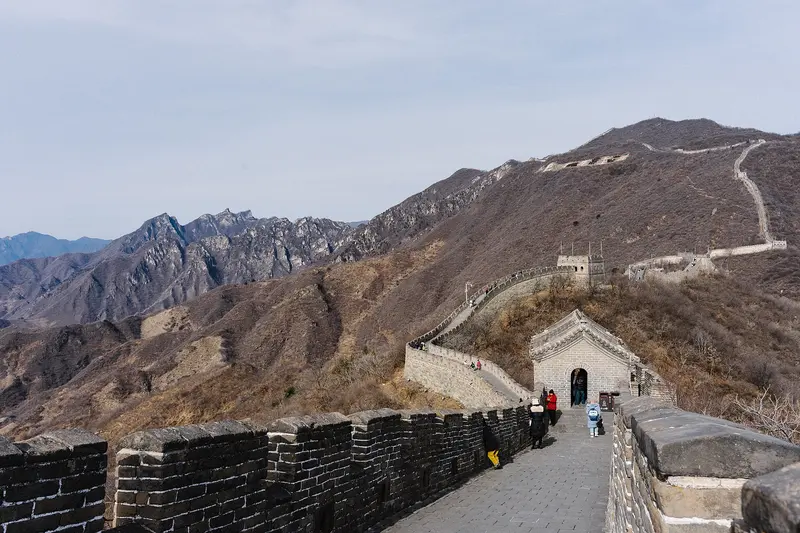
    The Great Wall stretches north of Beijing across mountain ridges and has been a UNESCO World Heritage site since 1987.

    by Felix Gillen

    1. Home
    2. Destinations
    3. China
    4. N. China
    5. Great Wall
    The Great Wall stretches north of Beijing across mountain ridges and has been a UNESCO World Heritage site since 1987. The sections visible today mostly date from the Ming Dynasty and can be visited as a day trip from the capital, three of them with very different characteristics.Mutianyu is located about 65 to 70 kilometers northeast of the city, is restored and well-developed with a cable car, chairlift, and toboggan run. Badaling, about 80 kilometers northwest, is reachable by high-speed train and consequently crowded. Jinshanling, about 130 kilometers northeast in Hebei Province, is half-restored, half in its original state, and significantly quieter; the journey takes about two and a half hours.
    China travel guideRound trips in ChinaPlan a trip with Great Wall

    Contents

    • Places & highlights
    • Tours
    • Eat & drink
    • Culture
    • Getting around
    • Accommodation
    • Nearby

    Sights in Great Wall

    Discover the most important sights and attractions

    Jinshanling

    Luka Peternel / Wikimedia Commons / CC BY-SA 4.0, mod.

    National Park

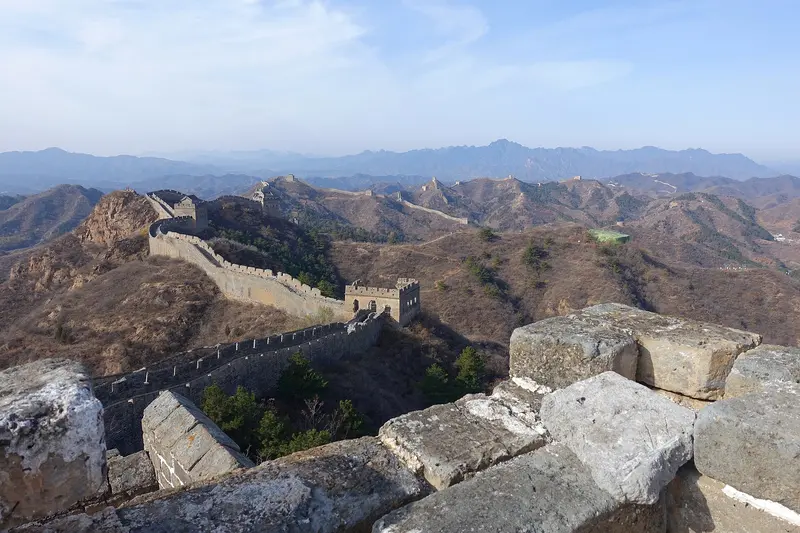
    1Jinshanling

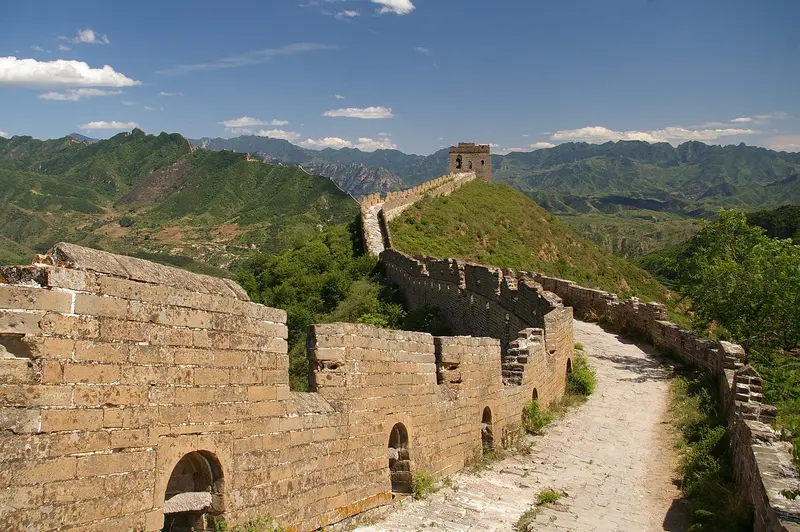
    Approximately 130 kilometers northeast of Beijing in Luanping County, Hebei Province, the wall here stretches over a mountain ridge, partly restored, partly in its original state. The section is about 10.5 kilometers long and has 67 watchtowers; it is considered significantly quieter than Mutianyu and Badaling. Hiking routes range from three kilometers (about two hours) to ten kilometers (about five hours). Admission 65 CNY from April to October, 55 CNY from November to March. The cable car will be out of service for maintenance from late October 2026; the direct bus from Beijing operates only seasonally. The formerly popular hike to Simatai is currently not possible.
    Open in Google Maps
    Mutianyu

    Lloyd Tudor / Wikimedia Commons / CC BY-SA 4.0, mod.

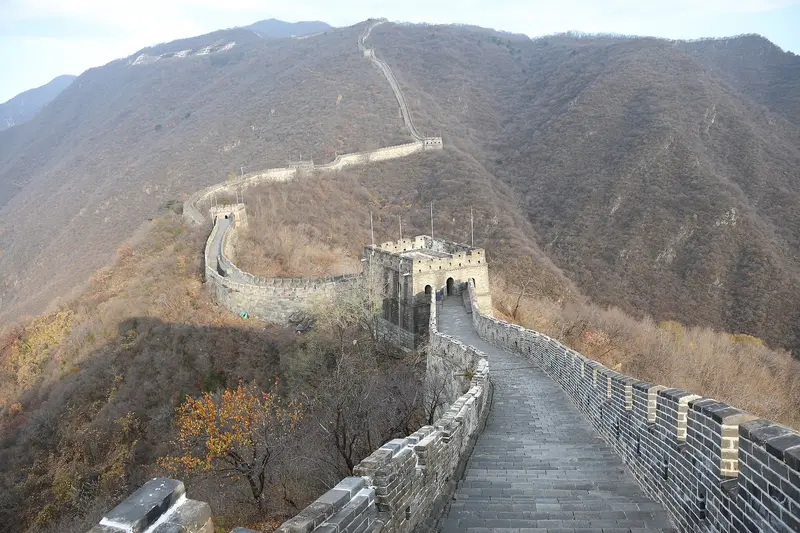
    2Mutianyu

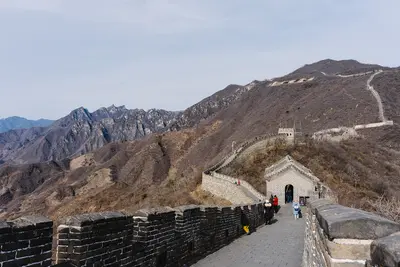
    The restored section is located approximately 65 to 70 kilometers northeast of Peking. About three kilometers of wall with 20 numbered watchtowers are accessible; Tower 20 is the highest point. A shuttle bus runs from the visitor center to the wall's base. Up you go on foot, by cable car or chairlift; down, if you wish, via toboggan run. The city's official ticket portal lists 45 CNY for entry; shuttle and lifts cost extra. For the medium route, allow about two hours; to Tower 20, around three hours; for the full length, five to six hours. During peak times, advance online booking is advisable.
    Open in Google Maps
    Attraction

    3Badaling

    The Ming section, about 80 kilometers northwest of Beijing, is the easiest to reach: high-speed trains run from Beijing North to the underground Badaling Great Wall station, which opened at the end of 2019. Consequently, it's very crowded here. Admission costs 40 CNY (April to October) or 35 CNY (November to March) and includes the Great Wall Museum, which is closed on Mondays.
    Open in Google Maps
    Simatai

    Jakub Hałun / Wikimedia Commons / CC BY-SA 4.0, mod.

    National Park

    4Simatai

    This largely unrestored section in Miyun County, about 120 km from Beijing, is the only one you can visit in the evening when the Wall on the ridge is illuminated. Access is through Gubei Water Town (WTown) at the foot of the mountains. Daytime admission costs 40 CNY; combo tickets including Water Town and cable car are more expensive. Reserve tickets up to ten days and at least 24 hours in advance via the official Beijing WTown website or WeChat Mini-Program; payment is only accepted via Alipay or WeChat Pay. Direct buses depart from Wangjing West, taking about two hours.
    Open in Google Maps
    Park

    5Huanghuacheng

    In Huairou District, about 70 km from Beijing, three sections of the Wall disappear into a reservoir, which is why the site is also called the Water Great Wall. Besides hiking up, you can see the Wall from a boat, and in spring, wildflowers bloom on the slopes. According to the Beijing Municipal Government, adult admission costs 60 CNY. It's open weekdays in summer from 8:30 AM to 5 PM, and in winter until 4:30 PM. It is usually quieter here than in Badaling and Mutianyu.
    Open in Google Maps
    Attraction

    6Juyongguan

    The Pass in Changping District is Beijing's nearest Wall section, approx. 60 km from the center. The approx. 4.1 km site was restored in 1992, accessible since 1998. The valley holds the Cloud Terrace (Yuntai), a stone platform with Yuan-era reliefs. According to Beijing City Administration, entry costs 40 CNY in high season and 35 CNY in low season; no reservation needed. Open 8:30 AM to 5:30 PM; until 4:30 PM in winter. About two hours suffice for the tour; it gets crowded on weekends.
    Open in Google Maps

    Tours & experiences in Great Wall

    Search tours for Great Wall on GetYourGuide* (Affiliate link)On GetYourGuide, with reviews from other travellers

    * Affiliate link: if you book through it, we earn a small commission. The price stays the same for you.

    Restaurants in Great Wall

    1

    The Schoolhouse at Mutianyu

    Restaurant in a former school in Mutianyu village, few km from the Great Wall entrance. Beijing Tourism notes Western cuisine; China Discovery also mentions Asian dishes, around 180 CNY per person. Typically open from March to November.
    Show on Google Maps

    History of the Wall

    From Northern Qi to the Ming DynastyAt Mutianyu, an initial wall was built as early as the mid-6th century under the Northern Qi. However, most of the sections visible today north of Beijing were rebuilt and expanded during the Ming Dynasty, in Jinshanling among others under General Qi Jiguang in the 16th century.World Heritage SiteThe Great Wall has been on the UNESCO World Heritage List since 1987. At Badaling, the Great Wall Museum showcases its history, and admission is included in the Badaling ticket.

    Directions to the Sections

    MutianyuBus 916 Express: Dongzhimen to Huairou, then transfer to lines h23, h24, h35 or h36. Total 2-2.5 hrs. More comfortable: Tourist buses from Qianmen/Dongzhimen, or a taxi. Shuttle bus runs from visitor center to wall's foot.BadalingHigh-speed trains run from Beijing North to the underground Badaling Great Wall Station.JinshanlingThe direct bus from Beijing runs seasonally (approx. April-early November). Alternatively, take the S5 train to Gubeikou, then a taxi. The Jinshanling cable car has been closed for maintenance since late October 2026.

    Accommodations in Great Wall

    Find perfect stay in Great Wall

    Booking.com* (Affiliate link)
    Search Hotels
    Agoda* (Affiliate link)
    Search Hotels
    Airbnb
    Vacation Rentals

    * Affiliate link: if you book through it, we earn a small commission. The price stays the same for you.

    Nearby

    N. China

    N. China

    Northern China is the historical heartland of the last imperial dynasties. Beijing was the capital during the Ming and Qing dynasties and boasts the Forbidden City, Temple of Heaven, and Summer Palace, some of the country's most famous structures. North of the capital, the Great Wall stretches across the mountains, with easily accessible sections like Mutianyu, Badaling, and Jinshanling.Southwest of Beijing, in Shanxi Province, lies the ancient city of Pingyao, whose Ming Dynasty city wall from 1370 is completely preserved. Pingyao is reachable from Beijing by high-speed train in about three and a half to four hours.

    Lloyd Tudor·CC BY-SA 4.0

    Peking

    Peking

    Beijing is the capital of China and has approximately 21.8 million inhabitants (end of 2024). The city first became a capital in 1153 under the Jin Dynasty; under Kublai Khan, the Yuan capital Dadu was established, and since the early 15th century, the emperors of the Ming and Qing dynasties ruled here. The Forbidden City, the Temple of Heaven, and the Summer Palace date from this period.Beijing boasts eight UNESCO World Heritage Sites, including the Great Wall and, since 2024, the Central Axis, which extends from the Temple of Heaven, past the Imperial Palace, to the Drum and Bell Tower. Nestled between these magnificent structures are the Hutongs, narrow alleys of courtyard houses, especially around the Shichahai lakes. For the main attractions, you'll need three to four days, plus one day for the Wall.Important: The Palace Museum, Tian'anmen Square, and National Museum can only be visited with a prior online reservation in your name. Many establishments are closed on Mondays. Always carry your passport with you.

    Reinhold Möller Ermell·CC BY-SA 4.0

    Pingyao

    Pingyao

    Pingyao in Shanxi Province is, according to UNESCO, an exceptionally well-preserved example of a traditional Han Chinese city from the Ming and Qing dynasties and has been a World Heritage Site since 1997. The city wall, built in 1370, is around 12 meters high and encloses an old town of approximately 2.25 square kilometers over more than 6 kilometers.In the 19th and early 20th centuries, Pingyao was a financial center: in 1823, China's first exchange bank, Rishengchang, was founded here. The World Heritage Site also includes the Shuanglin Temple with over 2,000 painted figures and the Zhenguo Temple with a wooden hall dating back to 963. No cars are allowed in the old town; plan for one to two nights.

    Chensiyuan·CC BY-SA 4.0

    DMZ and Paju

    DMZ and Paju

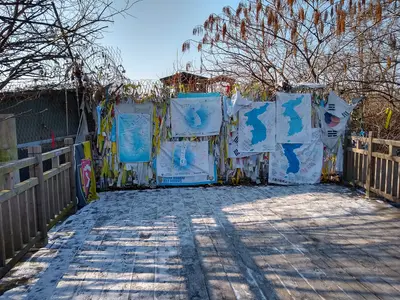
    Before any visit to the border region, check the current UK FCDO travel advice for South Korea (gov.uk/foreign-travel-advice).Individual visits to the Demilitarized Zone are restricted. You visit it on the Paju DMZ Peace Tour from Imjingak or on an organised tour from Seoul. Course A runs from Imjingak to the Third Tunnel, the Dora Observatory and back via Tongil-chon, takes about 3 hours and costs 12,200 KRW including the monorail in the tunnel. Tickets are sold on site from 9 am to 2:30 pm, bookings via dmz.paju.go.kr.Since 24 April 2026, the DMZ Peace Link Train has also run on the 2nd and 4th Friday of each month from Seoul Station via Unjeong and Imjingang to Dorasan. Reservations are made through KORAIL's tourism website.You must carry your original passport; copies or phone photos are not accepted. The area is closed on Mondays and public holidays, and tours can be cancelled without notice because of the security situation or the weather. The JSA at Panmunjom has been closed to regular tourists since 18 July 2023; since May 2025 only special visits for selected groups take place there, and a visit is still not possible for ordinary travellers (as of November 2026).

    Lance Vanlewen·CC BY-SA 4.0

    Hongdae and Mapo

    Hongdae and Mapo

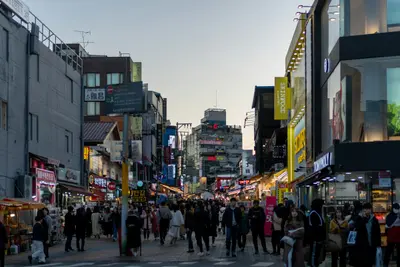
    Around Hongik University in Mapo District, a young neighborhood with art, indie bands, and live clubs has emerged, known simply as Hongdae. Along a former railway line, the Gyeongui Line Forest Park stretches, a green strip lined with cafes on both sides. In neighboring Mangwon, the market blends traditional stalls with new cafes and dessert shops.

    Patrick·Unsplash

    Your next steps

    Great Wall is in China. Ways to carry on from here.

    • More in China

      Highlights, areas, routes and the best time to travel for all of China.

      China travel guide
    • Round trips in China

      Ready-made routes through China, with stops, nights and a map.

      See the routes
    • Plan a trip with Great Wall

      The Guide asks about season, length and who is coming, and suggests a trip with Great Wall.

      Plan the trip

    Sources & method

    • Photos: Wikimedia Commons. Each photo carries its credit.
    • Place data such as addresses and ratings comes from Google Maps.
    • The content is based on web research from public, traceable sources. How the content is made · The role of AI