Fernweh: Home
ExploreGuideDestinationsMy tripsMy trip
de|en
All Places & RegionsRound tripsNight trains in EuropeAll highlightsAbout FernwehFAQPrivacy PolicyImprint
Download on the App StoreGet it on Google Play
ExploreGuideDestinationsMy tripsMy trip
    • Places in the region
    • Round trips
    • Nearby
    N. China

    Lloyd Tudor / Wikimedia Commons / CC BY-SA 4.0, mod.

    China

    N. China

    Region

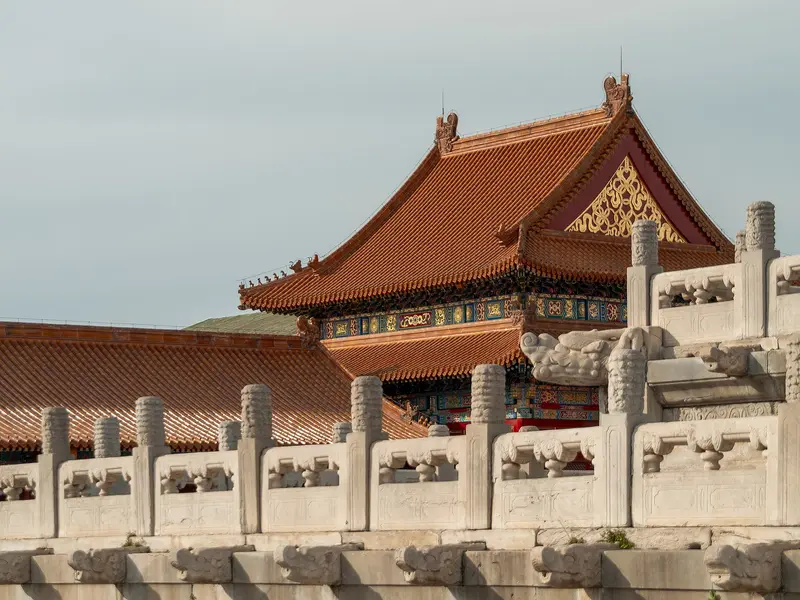
    Northern China is the historical heartland of the last imperial dynasties.

    by Felix Gillen

    1. Home
    2. Destinations
    3. China
    4. N. China
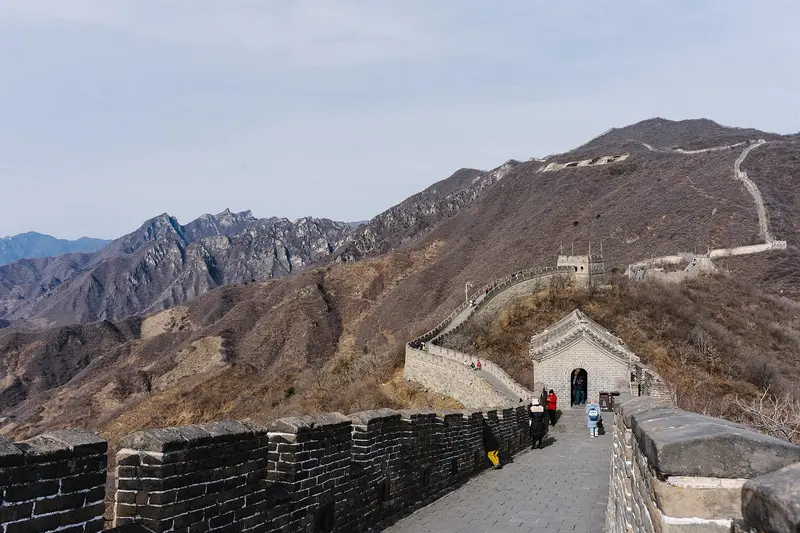
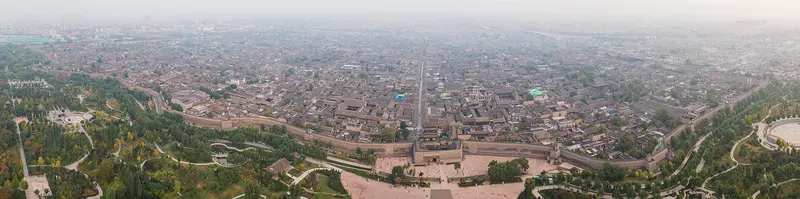
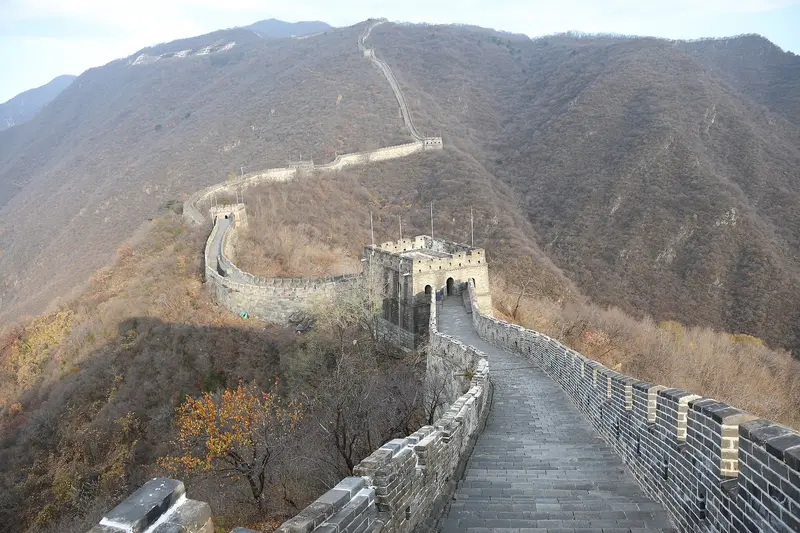
    Northern China is the historical heartland of the last imperial dynasties. Beijing was the capital during the Ming and Qing dynasties and boasts the Forbidden City, Temple of Heaven, and Summer Palace, some of the country's most famous structures. North of the capital, the Great Wall stretches across the mountains, with easily accessible sections like Mutianyu, Badaling, and Jinshanling.Southwest of Beijing, in Shanxi Province, lies the ancient city of Pingyao, whose Ming Dynasty city wall from 1370 is completely preserved. Pingyao is reachable from Beijing by high-speed train in about three and a half to four hours.
    China travel guideSee the round tripPlan a trip with N. China

    Contents

    • Places in the region
    • Round trips
    • Nearby
    Pingyao

    Chensiyuan / Wikimedia Commons / CC BY-SA 4.0, mod.

    Place 1 of 3

    Pingyao

    Pingyao in Shanxi Province is, according to UNESCO, an exceptionally well-preserved example of a traditional Han Chinese city from the Ming and Qing dynasties and has been a World Heritage Site since 1997.

    Discover
    Great Wall

    Francesco Bini / Wikimedia Commons / CC BY-SA 4.0, mod.

    Place 2 of 3

    Great Wall

    The Great Wall stretches north of Beijing across mountain ridges and has been a UNESCO World Heritage site since 1987.

    Discover
    Peking

    Reinhold Möller Ermell / Wikimedia Commons / CC BY-SA 4.0, mod.

    Place 3 of 3

    Peking

    Beijing is the capital of China and has approximately 21.8 million inhabitants (end of 2024).

    Discover

    Sights in N. China

    Discover the most important sights and attractions

    Attraction

    Ming Tombs

    Approximately 42 kilometers north-northwest of Beijing's city center lie the tomb complexes of 13 Ming emperors, starting with Yongle. As part of the Imperial Tombs of the Ming and Qing, they are a UNESCO World Heritage site. Accessible sites include Changling and the excavated Dingling. Entry to Dingling costs 60 CNY in high season, and to Changling 45 or 30 CNY. Tickets can be purchased on site without reservation.
    Open in Google Maps

    Round trips through this region

    China Classic: Beijing, Xi'an, Chengdu, Guilin and Shanghai

    China Classic: Beijing, Xi'an, Chengdu, Guilin and Shanghai

    The classic first China trip links Imperial Beijing, the Great Wall, Xi'an's Terracotta Army, Chengdu's pandas, the Li River's karst landscape, and Yangtze Delta cities. Most legs are by high-speed train; only between Guilin and Shanghai is a domestic flight sensible. Book trains via 12306 using your passport; sales start 15 days before departure.

    19 Days
    7 stops
    Open jaw

    Huangdan2060·CC0

    Nearby

    Xi'an

    Xi'an

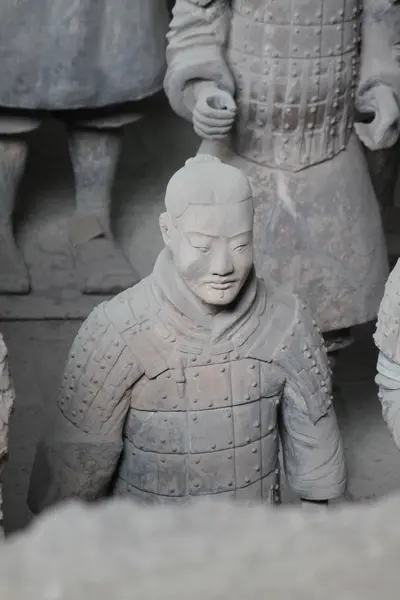
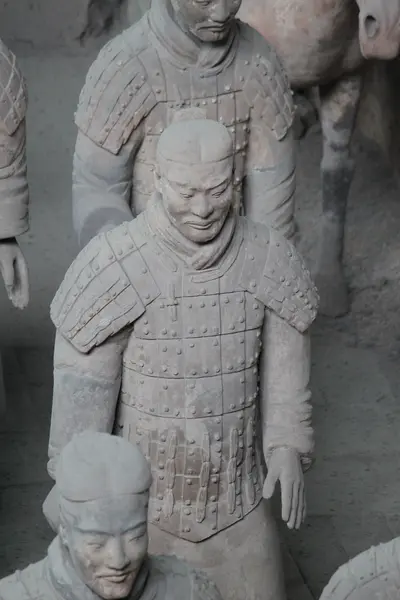
    Xi'an, the capital of Shaanxi Province, is one of China's great ancient capitals: Among others, Western Zhou, Qin, Western Han, Sui, and Tang ruled from here; under the Tang, the city was called Chang'an. Most famous is the Terracotta Army in the mausoleum of the First Emperor, discovered in 1974 and a UNESCO World Heritage site since 1987.The old city is encircled by a fully preserved city wall from the Ming Dynasty, built from 1370 onwards and 13.7 kilometers long. Within the walls are the Bell and Drum Tower, the Muslim Quarter with the Great Mosque and Hui street food, and to the south, the Giant Wild Goose Pagoda from the year 652. Plan at least two full days, one of them for the Terracotta Army.

    Gary Lee Todd, Ph.D.·CC0

    Shaanxi and Silk Road

    Shaanxi and Silk Road

    Shaanxi Province in central China served for centuries as the seat of emperors: Under the Zhou, Qin, Han, Sui, and Tang dynasties, the capital was located in the area of modern-day Xi'an. This is where the Silk Road begins, and several sites in the city are UNESCO World Heritage Silk Road sites.The main highlight is the mausoleum of the First Emperor with the Terracotta Army, along with the fully preserved city wall and the Muslim Quarter. From Beijing, you can reach Xi'an by high-speed train in just over four hours.

    Gary Lee Todd, Ph.D.·CC0

    DMZ and Paju

    DMZ and Paju

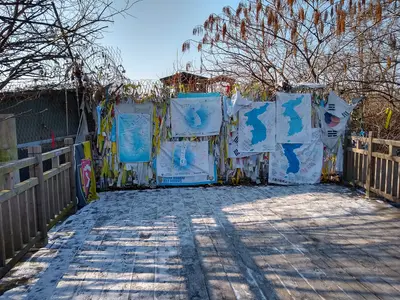
    Before any visit to the border region, check the current UK FCDO travel advice for South Korea (gov.uk/foreign-travel-advice).Individual visits to the Demilitarized Zone are restricted. You visit it on the Paju DMZ Peace Tour from Imjingak or on an organised tour from Seoul. Course A runs from Imjingak to the Third Tunnel, the Dora Observatory and back via Tongil-chon, takes about 3 hours and costs 12,200 KRW including the monorail in the tunnel. Tickets are sold on site from 9 am to 2:30 pm, bookings via dmz.paju.go.kr.Since 24 April 2026, the DMZ Peace Link Train has also run on the 2nd and 4th Friday of each month from Seoul Station via Unjeong and Imjingang to Dorasan. Reservations are made through KORAIL's tourism website.You must carry your original passport; copies or phone photos are not accepted. The area is closed on Mondays and public holidays, and tours can be cancelled without notice because of the security situation or the weather. The JSA at Panmunjom has been closed to regular tourists since 18 July 2023; since May 2025 only special visits for selected groups take place there, and a visit is still not possible for ordinary travellers (as of November 2026).

    Lance Vanlewen·CC BY-SA 4.0

    Hongdae and Mapo

    Hongdae and Mapo

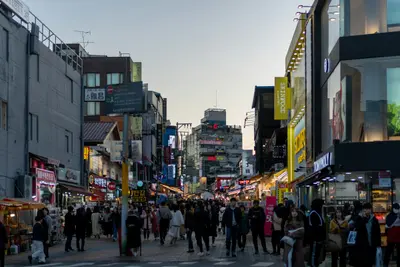
    Around Hongik University in Mapo District, a young neighborhood with art, indie bands, and live clubs has emerged, known simply as Hongdae. Along a former railway line, the Gyeongui Line Forest Park stretches, a green strip lined with cafes on both sides. In neighboring Mangwon, the market blends traditional stalls with new cafes and dessert shops.

    Patrick·Unsplash

    Jongno and Palace Quarter

    Jongno and Palace Quarter

    Seoul's historic heart stretches from Gwanghwamun Square, featuring statues of King Sejong and Admiral Yi Sun-sin, to the Joseon Dynasty palaces. Gyeongbokgung, Changdeokgung, Changgyeonggung, and the Jongmyo Shrine are tightly grouped here, with Bukchon Hanok Village and Samcheong-dong's galleries in between. West of Gyeongbokgung, Seochon, one of the city's oldest residential areas, is worth exploring, with the Tongin Market.

    Daniel Bernard·Unsplash

    Your next steps

    N. China is in China. Ways to carry on from here.

    • More in China

      Highlights, areas, routes and the best time to travel for all of China.

      China travel guide
    • Round trips with N. China

      One route passes through N. China, with stops, nights and a map.

      See the round trip
    • Plan a trip with N. China

      The Guide asks about season, length and who is coming, and suggests a trip with N. China.

      Plan the trip

    Sources & method

    • Photos: Wikimedia Commons. Each photo carries its credit.
    • Place data such as addresses and ratings comes from Google Maps.
    • The content is based on web research from public, traceable sources. How the content is made · The role of AI