Fernweh: Home
ExploreGuideDestinationsMy tripsMy trip
de|en
All Places & RegionsRound tripsNight trains in EuropeAll highlightsAbout FernwehFAQPrivacy PolicyImprint
Download on the App StoreGet it on Google Play
ExploreGuideDestinationsMy tripsMy trip
    • Neighborhoods & highlights
    • Recommendations
    • Walking tours
    • Tours
    • Eat & drink
    • Culture
    • Getting around
    • Accommodation
    • Plan trip
    • Round trips
    • Nearby
    Peking

    Reinhold Möller Ermell / Wikimedia Commons / CC BY-SA 4.0, mod.

    China

    Peking

    CityCultureUNESCO

    Beijing is the capital of China and has approximately 21.8 million inhabitants (end of 2024).

    by Felix Gillen

    1. Home
    2. Destinations
    3. China
    4. N. China
    5. Peking
    Beijing is the capital of China and has approximately 21.8 million inhabitants (end of 2024). The city first became a capital in 1153 under the Jin Dynasty; under Kublai Khan, the Yuan capital Dadu was established, and since the early 15th century, the emperors of the Ming and Qing dynasties ruled here. The Forbidden City, the Temple of Heaven, and the Summer Palace date from this period.Beijing boasts eight UNESCO World Heritage Sites, including the Great Wall and, since 2024, the Central Axis, which extends from the Temple of Heaven, past the Imperial Palace, to the Drum and Bell Tower. Nestled between these magnificent structures are the Hutongs, narrow alleys of courtyard houses, especially around the Shichahai lakes. For the main attractions, you'll need three to four days, plus one day for the Wall.Important: The Palace Museum, Tian'anmen Square, and National Museum can only be visited with a prior online reservation in your name. Many establishments are closed on Mondays. Always carry your passport with you.
    China travel guideSee the round tripPlan a trip with Peking

    Contents

    • Neighborhoods & highlights
    • Recommendations
    • Walking tours
    • Tours
    • Eat & drink
    • Culture
    • Getting around
    • Accommodation
    • Round trips
    • Nearby

    Sights in Peking

    Discover the most important sights and attractions

    Tiananmen and Tiananmen Square

    “Gate of Heavenly Peace, Tiananmen - panoramio” by konget / Wikimedia Commons / CC BY-SA 3.0, mod.

    Historic Landmark

    1Tiananmen and Tiananmen Square

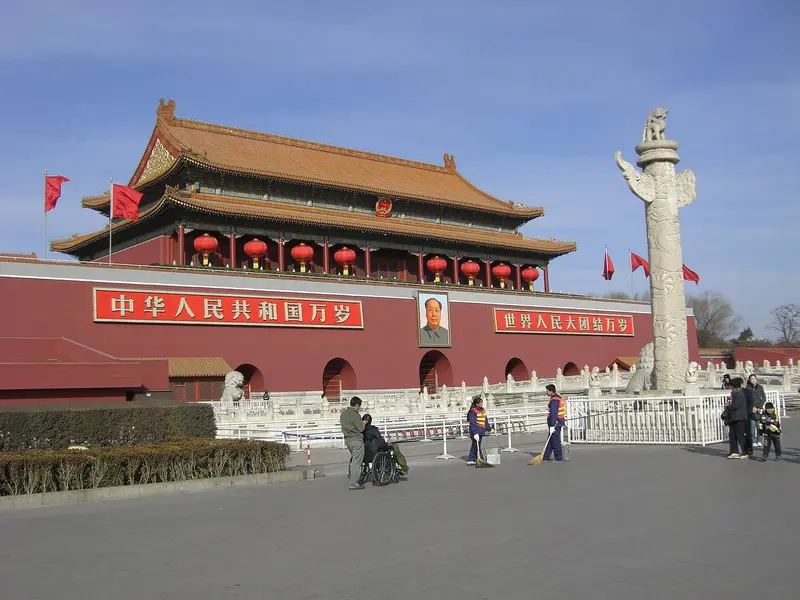
    The Gate of Heavenly Peace is the southern entrance to the Imperial Palace. In front of it lies the approximately 765 by 282 meter square, featuring the National Museum and Mao Mausoleum. Admission is free, but since December 2021, it's only possible with a reservation in your name, for example, via the WeChat mini-program. New time slots are released daily at 12 PM for the following days; same-day booking is not possible. Bring your original passport and expect security checks. The flag-raising ceremony at sunrise is a separate time slot.
    Open in Google Maps
    Palace Museum (Forbidden City)

    David290 / Wikimedia Commons / CC BY-SA 4.0, mod.

    Museum

    2Palace Museum (Forbidden City)

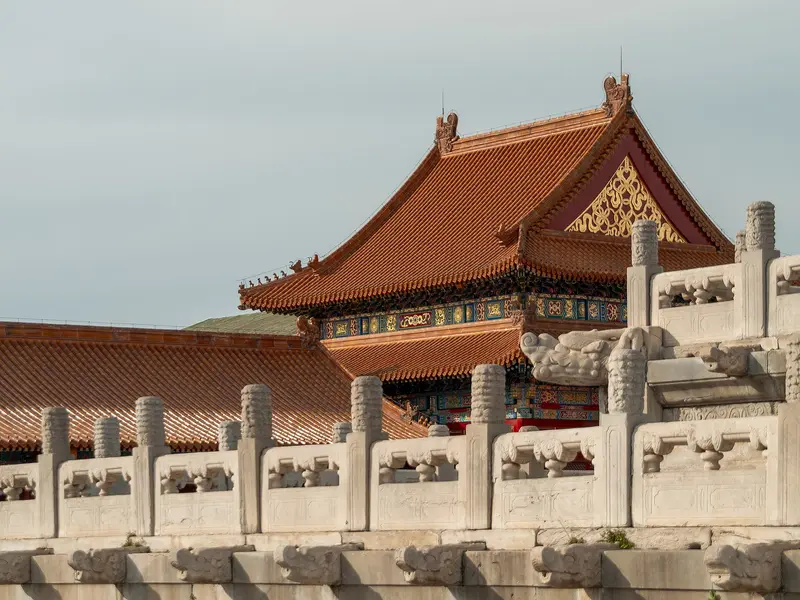
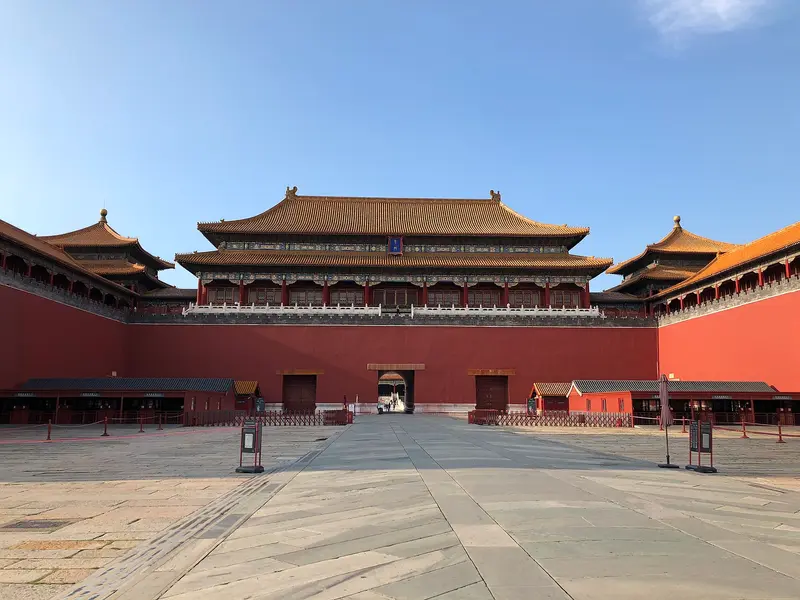
    The Ming and Qing Dynasties' Imperial Palace, built from 1406 to 1420 under Emperor Yongle, has been a UNESCO World Heritage site since 1987. About 980 preserved buildings occupy roughly 72 hectares. Tickets are online-only, reserved in your name. Sales begin 8 PM, seven days prior to visit, with a daily quota of 40,000 visitors. Admission: 60 CNY (April-Oct) or 40 CNY (Nov-Mar). Treasure Gallery and Clock Hall: 10 CNY each extra. Children under 1.20 m free. The entrance is south, at the Meridian Gate (Wumen), where you show your original passport. The exit is north, at Shenwumen. Allow at least three hours.
    Open in Google Maps
    Heaven Temple

    Fong Chen / Wikimedia Commons / public domain

    Place of Worship

    3Heaven Temple

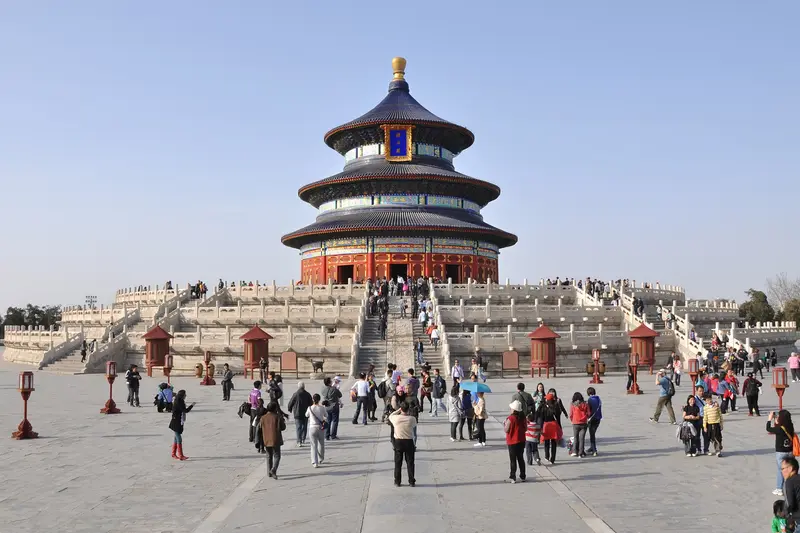
    The emperors prayed here for a good harvest; the original altar was completed in 1420. The complex covers 273 hectares and has been a UNESCO World Heritage site since 1998, its landmark being the round Hall of Prayer for Good Harvests. Park admission is 15 CNY during high season, while the combo ticket including the halls is 34 CNY. Tickets can be reserved online up to seven days in advance with a passport, or purchased on-site if capacity allows. Come early in the morning between 7 and 9 AM via the East Gate (subway Line 5, Tiantan Dongmen), when locals practice Tai Chi and gymnastics. The tour takes one to two hours.
    Open in Google Maps
    Summer Palace

    “Longevity Hill of the Summer Palace” by xiquinhosilva / Wikimedia Commons / CC BY 2.0, mod.

    Attraction

    4Summer Palace

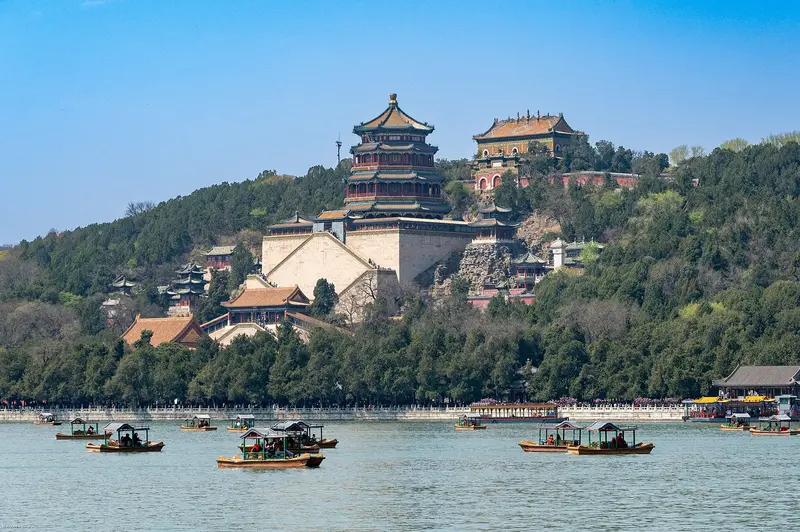
    The imperial garden complex in the city's northwest, established in 1750 and rebuilt on its old foundations in 1886, has been a UNESCO World Heritage site since 1998. Halls, pavilions, and bridges are scattered around the artificial 2.2-square-kilometer Kunming Lake and Longevity Hill. Admission costs 30 CNY (April to October) or 20 CNY (November to March). Tickets are available online up to seven days in advance with a passport, or at the ticket office. Some special areas are closed on Mondays during the low season.
    Open in Google Maps
    Park

    5Jingshan Park

    The artificial hill directly north of the Imperial Palace was built from the excavation of the palace moats. In 1644, the last Ming Emperor Chongzhen took his own life here. From the Wanchun Pavilion at the highest point, about a 10 to 15-minute ascent, you overlook the golden roofs of the Forbidden City, the White Pagoda in Beihai Park, and the Drum Tower. Entry costs 2 CNY, and it's just a few minutes' walk from the north exit of the Palace Museum.
    Open in Google Maps
    Park

    6Beihai Park

    West of Jingshan, the former Imperial Park surrounds a large lake, with the White Pagoda on its island. Open to the public since 1925. Entry: 10 CNY (high season), 5 CNY (low season); combo ticket: 20 or 15 CNY. The park's North Gate leads directly to the Shichahai Lakes.
    Open in Google Maps

    City walks in Peking

    Curated walking tours through the city's highlights, handpicked by experienced travel journalists.

    Along the Central Axis: from Tian'anmen to the Hutongs
    Full-day walking tour from South to North along the Central Axis, declared World Heritage in 2024, from Tian'anmen Square through the Imperial Palace and via Jingshan to the Shichahai Lakes and into the Hutongs. Reserve Tian'anmen Square and Palace Museum in advance with your pass. Do not go on a Monday: The Palace Museum and the Drum and Bell Tower are closed then.
    Open in Google Maps
    Stops (7)

    Tours & experiences in Peking

    Search tours for Peking on GetYourGuide* (Affiliate link)On GetYourGuide, with reviews from other travellers

    * Affiliate link: if you book through it, we earn a small commission. The price stays the same for you.

    Restaurants in Peking

    1

    King's Joy

    Vegetarian fine-dining restaurant in Wudaoying Hutong, right next to the Lama Temple, awarded two stars in the MICHELIN Guide Beijing 2027.
    Show on Google Maps

    Sheng Yong Xing (Chaoyang)

    Restaurant serving Pekingese cuisine, known for duck roasted in a stone oven over jujube wood. Awarded one star in the MICHELIN Guide Beijing 2027.
    Show on Google Maps

    Mansion Cuisine by Jingyan

    Peking cuisine in a courtyard house in Dongcheng; the specialty is Peking duck roasted over jujube wood, served in three courses. Awarded one star by the MICHELIN Guide.
    Show on Google Maps
    2

    TRB Hutong

    Contemporary French cuisine in the courtyard of a historic temple east of the Imperial Palace, awarded one star in the MICHELIN Guide Beijing 2027.
    Show on Google Maps

    No. 69 Fangzhuanchang Zhajiangmian

    Simple noodle shop in a Hutong, serving just one dish: Zhajiangmian, the Beijing noodle classic. Bib Gourmand in the MICHELIN Guide Beijing 2027.
    Show on Google Maps

    Jing Hua Lou

    Restaurant with classic Beijing cuisine in the north of the city, Bib Gourmand in the MICHELIN Guide Beijing 2027.
    Show on Google Maps

    Hutongs, Courtyard Homes & Beijing Opera

    Hutongs and SiheyuanHutongs are narrow alleyways formed by rows of Siheyuan, traditional courtyard houses. They originated during the Yuan Dynasty, though many were demolished in recent decades. Well-preserved districts can be found around Shichahai, Nanluoguxiang, and the Lama Temple.Peking OperaPeking Opera emerged in the late 18th century when theatre troupes from Anhui came to the capital in 1790 for the 80th birthday of the Qianlong Emperor. It combines singing, pantomime, and acrobatics, with roles structured into fixed types like Sheng, Dan, Jing, and Chou. Since 2010, it has been on the UNESCO Intangible Cultural Heritage list.Central AxisThe city was planned along a north-south axis, which was designated as a World Heritage site in 2024. Among the landmarks located on it are the Temple of Heaven, Tian'anmen, the Imperial Palace, Jingshan, and the Drum and Bell Towers.

    Arrival and Getting Around

    AirportsCapital Airport (PEK): approx. 25 km northeast. The Capital Airport Express operates for 25 CNY via Dongzhimen (connecting to Metro Lines 2 and 13) to Beixinqiao (Line 5).Daxing Airport (PKX): approx. 46 km south. The Daxing Airport Express reaches Caoqiao in about 20 minutes, with transfers to Lines 10 and 19.Train StationsBeijing West: towards Xi'an, Chengdu, Wuhan, Guangzhou (Metro 7 and 9)Beijing South: towards Shanghai, Nanjing, Suzhou, Hangzhou (Metro 4 and 14)Beijing Fengtai: including towards Taiyuan and Pingyao (Metro 10 and 16)Beijing North: trains to the Great Wall at Badaling (Metro 2, 4, 13)Within the CityThe Metro is the fastest mode of transport. At the gates, you can pay contactless with Visa or Mastercard. Taxis and ride-hailing services are best ordered via Didi. Allow extra time for security checks at Tian'anmen and Metro entrances.

    Accommodations in Peking

    Find perfect stay in Peking

    Booking.com* (Affiliate link)
    Search Hotels
    Agoda* (Affiliate link)
    Search Hotels
    Airbnb
    Vacation Rentals

    * Affiliate link: if you book through it, we earn a small commission. The price stays the same for you.

    Plan your trip to Peking

    Save places, build a route and plan your city trip, all in one place.

    1. 1
      Sunrise over alpine peaks and a sea of clouds
      1234

      Round trip

      12 days · 4 stops

      Saved

      Pick a route

      Pick a ready-made one or save places and plan your own.

      Open bookmarks
    2. 2

      Trip to Peking

      Live
      • 1Tiananmen and Tiananmen Square3 days
      • 2Palace Museum (Forbidden City)4 days
      • 3Heaven Temple5 days
      Budget

      Plan your trip

      The planner sorts stops, days and budget. Plan together in real time.

      Start trip planning
    3. 3
      9:41 No signal
      Peking
      Available offline

      Reinhold Möller Ermell / Wikimedia Commons / CC BY-SA 4.0, mod.

      Use it on the road

      Download the guide to your phone and use it on site, even offline.

    Round trips with Peking

    China Classic: Beijing, Xi'an, Chengdu, Guilin and Shanghai

    China Classic: Beijing, Xi'an, Chengdu, Guilin and Shanghai

    The classic first China trip links Imperial Beijing, the Great Wall, Xi'an's Terracotta Army, Chengdu's pandas, the Li River's karst landscape, and Yangtze Delta cities. Most legs are by high-speed train; only between Guilin and Shanghai is a domestic flight sensible. Book trains via 12306 using your passport; sales start 15 days before departure.

    19 Days
    7 stops
    Open jaw

    Huangdan2060·CC0

    Nearby

    N. China

    N. China

    Northern China is the historical heartland of the last imperial dynasties. Beijing was the capital during the Ming and Qing dynasties and boasts the Forbidden City, Temple of Heaven, and Summer Palace, some of the country's most famous structures. North of the capital, the Great Wall stretches across the mountains, with easily accessible sections like Mutianyu, Badaling, and Jinshanling.Southwest of Beijing, in Shanxi Province, lies the ancient city of Pingyao, whose Ming Dynasty city wall from 1370 is completely preserved. Pingyao is reachable from Beijing by high-speed train in about three and a half to four hours.

    Lloyd Tudor·CC BY-SA 4.0

    Great Wall

    Great Wall

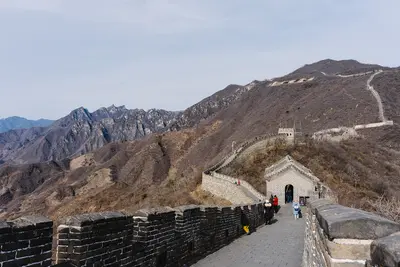
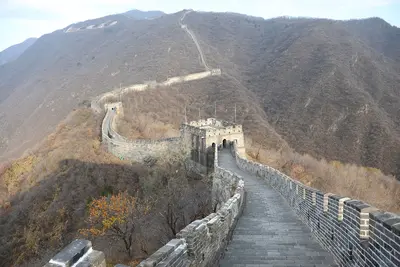
    The Great Wall stretches north of Beijing across mountain ridges and has been a UNESCO World Heritage site since 1987. The sections visible today mostly date from the Ming Dynasty and can be visited as a day trip from the capital, three of them with very different characteristics.Mutianyu is located about 65 to 70 kilometers northeast of the city, is restored and well-developed with a cable car, chairlift, and toboggan run. Badaling, about 80 kilometers northwest, is reachable by high-speed train and consequently crowded. Jinshanling, about 130 kilometers northeast in Hebei Province, is half-restored, half in its original state, and significantly quieter; the journey takes about two and a half hours.

    Francesco Bini·CC BY-SA 4.0

    Pingyao

    Pingyao

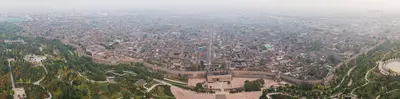
    Pingyao in Shanxi Province is, according to UNESCO, an exceptionally well-preserved example of a traditional Han Chinese city from the Ming and Qing dynasties and has been a World Heritage Site since 1997. The city wall, built in 1370, is around 12 meters high and encloses an old town of approximately 2.25 square kilometers over more than 6 kilometers.In the 19th and early 20th centuries, Pingyao was a financial center: in 1823, China's first exchange bank, Rishengchang, was founded here. The World Heritage Site also includes the Shuanglin Temple with over 2,000 painted figures and the Zhenguo Temple with a wooden hall dating back to 963. No cars are allowed in the old town; plan for one to two nights.

    Chensiyuan·CC BY-SA 4.0

    Xi'an

    Xi'an

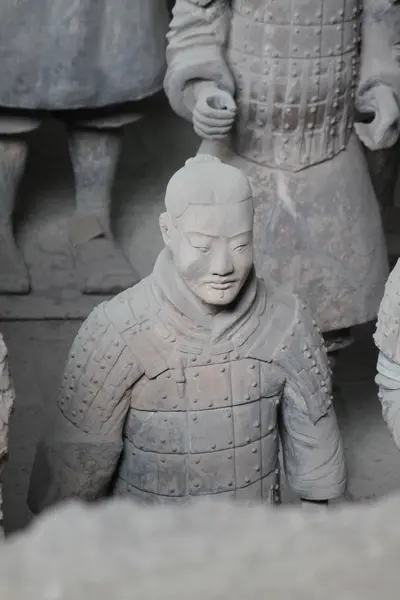
    Xi'an, the capital of Shaanxi Province, is one of China's great ancient capitals: Among others, Western Zhou, Qin, Western Han, Sui, and Tang ruled from here; under the Tang, the city was called Chang'an. Most famous is the Terracotta Army in the mausoleum of the First Emperor, discovered in 1974 and a UNESCO World Heritage site since 1987.The old city is encircled by a fully preserved city wall from the Ming Dynasty, built from 1370 onwards and 13.7 kilometers long. Within the walls are the Bell and Drum Tower, the Muslim Quarter with the Great Mosque and Hui street food, and to the south, the Giant Wild Goose Pagoda from the year 652. Plan at least two full days, one of them for the Terracotta Army.

    Gary Lee Todd, Ph.D.·CC0

    Shaanxi and Silk Road

    Shaanxi and Silk Road

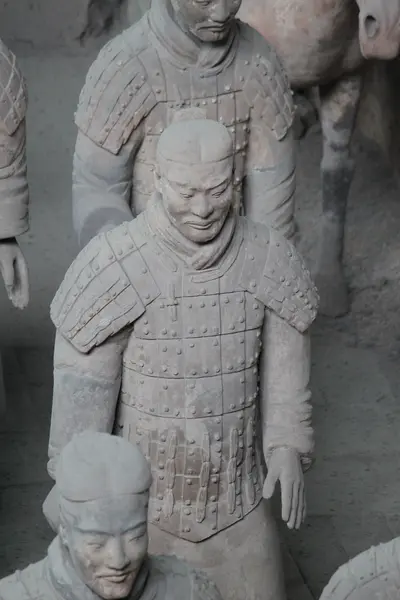
    Shaanxi Province in central China served for centuries as the seat of emperors: Under the Zhou, Qin, Han, Sui, and Tang dynasties, the capital was located in the area of modern-day Xi'an. This is where the Silk Road begins, and several sites in the city are UNESCO World Heritage Silk Road sites.The main highlight is the mausoleum of the First Emperor with the Terracotta Army, along with the fully preserved city wall and the Muslim Quarter. From Beijing, you can reach Xi'an by high-speed train in just over four hours.

    Gary Lee Todd, Ph.D.·CC0

    Your next steps

    Peking is in China. Ways to carry on from here.

    • More in China

      Highlights, areas, routes and the best time to travel for all of China.

      China travel guide
    • Round trips with Peking

      One route passes through Peking, with stops, nights and a map.

      See the round trip

    Sources & method

    • Photos: Wikimedia Commons. Each photo carries its credit.
    • Place data such as addresses and ratings comes from Google Maps.
    • The content is based on web research from public, traceable sources. How the content is made · The role of AI