Fernweh
    ExploreTravel GuidesMy Trips
    de|en
    About FernwehImprintFAQPrivacy Policy
    ExploreTravel GuidesMy Trips
    Moustiers

    Moustiers

    CityCultureNatureMountainsCulinary
    1. Home
    2. Destinations
    3. France
    4. Provence
    5. Moustiers
    Welcome to **Moustiers-Sainte-Marie**, one of France's most beautiful villages, picturesquely nestled against a rock face! This Provençal gem enchants you with its unique charm, the famous legend of the Heavenly Star, and a centuries-old tradition of exquisite Faience ceramics. Discover narrow streets, historic buildings, and enjoy the breathtaking scenery at the gateway to the majestic Gorges du Verdon.
    • Neighborhoods & highlights
    • Walking tours
    • Eat & drink
    • Culture
    • Getting around
    • Accommodation
    • Plan trip
    • Nearby
    • Neighborhoods & highlights
    • Walking tours
    • Eat & drink
    • Culture
    • Getting around
    • Accommodation
    • Plan trip
    • Nearby

    Overview

    The village of Moustiers-Sainte-Marie is picturesquely situated at the foot of a cliff and marks the western entrance to the stunning Gorges du Verdon. It is officially ranked among the most beautiful villages in France and is known for its centuries-old tradition of fine Faïence ceramics. Along its winding streets, you'll discover numerous workshops and boutiques showcasing handcrafted artworks. A striking landmark is the golden star, which hangs on a chain between two rock outcrops and dates back to a local legend. The parish church Notre-Dame-de-l'Assomption with its Romanesque bell tower offers a rewarding insight into the regional architecture. For a quieter experience, a visit in spring or autumn is recommended to enjoy the atmosphere away from summer tourism. Take the opportunity to observe local artisans at work.

    Places in Moustiers

    Discover the most important sights and attractions

    Sights in Moustiers

    1L'Étoile de Moustiers

    The L'Étoile de Moustiers is an iconic landmark that hangs high above the picturesque village of Moustiers-Sainte-Marie in France. This golden star figure, suspended by a long chain between two rock faces, has been an integral part of the local identity for centuries. Its exact origin is shrouded in legend, with the most well-known telling the story of a knight who, during the Crusades, swore while in Saracen captivity to hang a star above his home village upon his return. Regardless of its precise history, the star today symbolizes the resilience and unique charm of Moustiers.As you wander through the village's alleys, you will repeatedly spot the star in the sky from various perspectives. It forms a fascinating contrast to the Provençal architecture and the surrounding limestone cliffs. Our Tip: For the best view and an unforgettable photo, you should venture the climb to the Notre-Dame de Beauvoir chapel. From up there, you not only have a spectacular view of the village and the landscape, but also an excellent perspective on the star itself. It's best to plan your visit in the morning to make the most of the light and avoid the largest tourist crowds.
    Open in Google Maps

    2Chapelle Notre-Dame de Beauvoir

    The Chapelle Notre-Dame de Beauvoir perches majestically above the picturesque village of Moustiers-Sainte-Marie and is a significant religious and historical landmark of the region. Its origins date back to the 12th century, with the current structure featuring elements from various periods, including the 16th and 17th centuries. The chapel is a traditional pilgrimage site dedicated to the Virgin Mary, boasting a long history of veneration.The ascent to the chapel is via a steep, cobbled path of the Stations of the Cross, which winds through olive groves and takes about 20 minutes. Along the way, you'll pass 14 stations depicting the Passion of Christ. Once at the top, a simple yet atmospheric chapel awaits you, and above all, a breathtaking panoramic view over Moustiers, the surrounding valleys, and the Lac de Sainte-Croix. From here, you can also see the famous golden star chain suspended between the rocks, whose legend is linked to a Crusader.Practical Tip: Wear sturdy footwear for the ascent, as the path can be slippery in places. For the best photos and to avoid the largest crowds, a visit in the early morning or late afternoon is recommended. The lighting conditions are then ideal, and the day's heat is less intense.
    Open in Google Maps

    3Musée de la Faïence

    The Musée de la Faïence in Moustiers-Sainte-Marie is dedicated to the rich history and art of local faience production, a tradition that has shaped the village since the 17th century. Here, you'll discover a comprehensive collection of ceramic pieces documenting the evolution of this craftsmanship over several centuries. The exhibition guides you through various eras, from early works often influenced by Italian styles to the flourishing period in the 18th century, when Moustiers faience became renowned for its delicate blue decors on a white background. You'll see exquisite plates, bowls, and decorative objects that reflect the technical skills and artistic creativity of Moustiers' faience makers. The significance of faience for the local economy and culture is vividly illustrated. Our tip: Take your time to study the intricate, hand-painted details of the decorations, which often depict mythological scenes, biblical narratives, or elaborate floral patterns. For an undisturbed experience, a visit right after opening in the morning is recommended.
    Open in Google Maps

    4Ateliers de Faïence

    The Faience Workshops in Moustiers-Sainte-Marie represent a deeply rooted craft tradition that has shaped the village since the 17th century. Moustiers is renowned worldwide for its exquisite faience, distinguished by its characteristic blue and white decors and unparalleled finesse. In these workshops, you can follow the entire manufacturing process firsthand, from the careful shaping of the clay to the delicate painting and the final firing in special kilns.Moustiers faience is famous for its high quality and detailed motifs, often inspired by Provençal flora and fauna, mythological scenes, or typical grotesques. Many workshops offer you the opportunity to watch the artisans at their precise work and understand the various techniques passed down through generations. Our Tip: Ideally, visit the workshops on a weekday morning to experience the artists at work and take advantage of the quiet to admire the fine details of the faience art in the exhibition rooms. Pay special attention to the workshops' signatures to recognize authenticity.
    Open in Google Maps

    5Gorges du Verdon

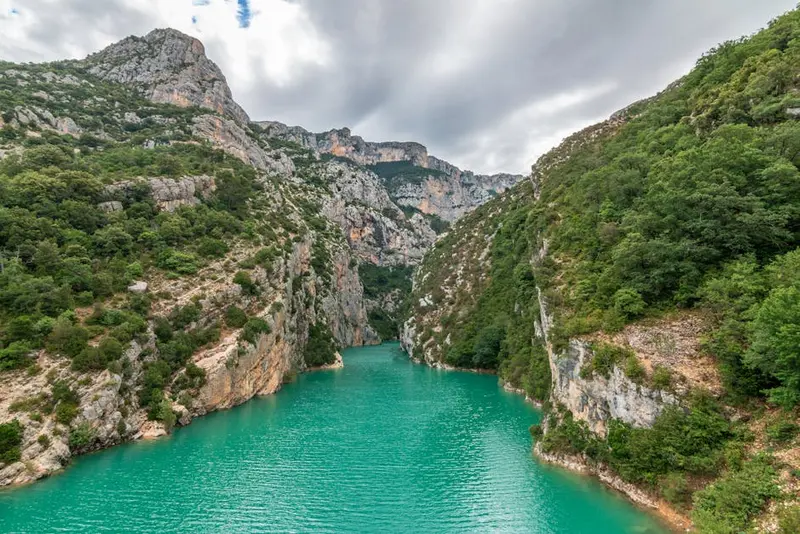
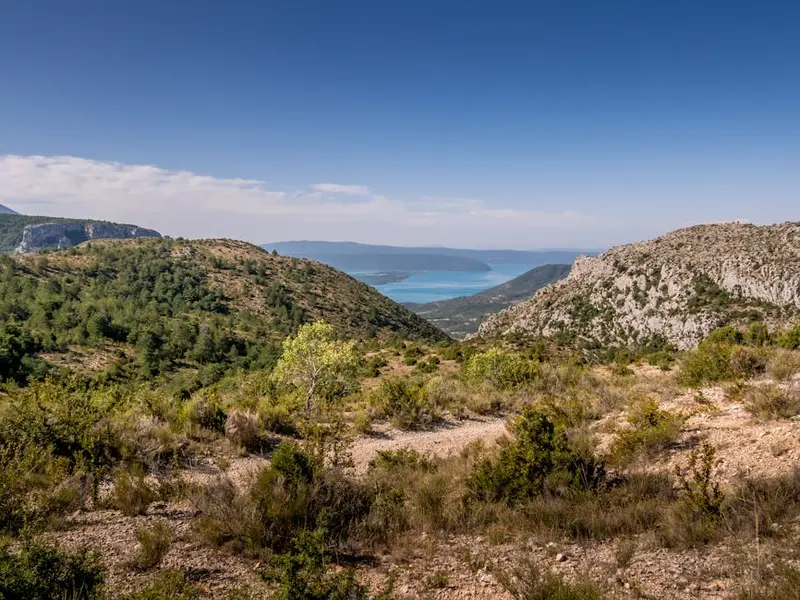
    The Gorges du Verdon, often referred to as Europe's deepest canyon, is a stunning natural landscape in Provence, shaped over millions of years. Here, the Verdon River has carved a spectacular gorge into the limestone, its distinctive turquoise water an unforgettable sight. You can explore the gorge in various ways: Either drive along the panoramic roads, such as the Route des Crêtes in the north or the Corniche Sublime in the south, which offer breathtaking views. Alternatively, embark on hikes along the numerous trails that lead through the gorge, or rent a kayak or pedal boat on Lac de Sainte-Croix to experience the emerald green water up close. The region is also a popular destination for climbers. Our Tip: Visit the Gorges du Verdon in late spring or early autumn to avoid the largest crowds and enjoy pleasant temperatures for outdoor activities. For the best photos of the gorge, we recommend the viewpoints along the Route des Crêtes, especially Point Sublime.
    Open in Google Maps

    6L'Étoile de Moustiers

    Die L'Étoile de Moustiers ist das ikonische Wahrzeichen des Dorfes Moustiers-Sainte-Marie. Eine goldene Sternenfigur hängt an einer 135 Meter langen Kette, die zwischen zwei Felswänden über dem Dorf gespannt ist. Ihre genaue Herkunft ist von Legenden umwoben, die bekannteste erzählt von einem Ritter aus dem 13. Jahrhundert, der nach seiner Rückkehr aus maurischer Gefangenschaft in Erinnerung an ein Gelübde den Stern aufhängte. Du kannst den Stern von fast überall im Dorf sehen, besonders gut vom Kirchplatz aus oder auf dem Weg zur Kapelle Notre-Dame de Beauvoir. Unser Tipp: Für die besten Fotos und eine ruhigere Atmosphäre besuche Moustiers am frühen Morgen. Das weiche Licht der aufgehenden Sonne lässt den Stern besonders glänzen und vermeidet die Menschenmassen des Tages. Achte auf die Details der Kette, die sich über die Schlucht spannt.
    Open in Google Maps

    City walks in Moustiers

    Curated walking tours through the city's highlights — handpicked by experienced travel journalists.

    Moustiers Gaumenfreuden: Eine Kulinarische Reise durch die Provence

    Entdecken Sie Moustiers-Sainte-Marie von seiner schmackhaftesten Seite! Dieser Spaziergang entführt Sie in die Welt der Provenzalischen Küche und lokaler Spezialitäten. Von duftendem Brot über exzellentes Olivenöl bis hin zu handgemachten Süßigkeiten – kosten Sie sich durch die reichen Aromen der Region und lernen Sie die Geschichten hinter den Produkten kennen. Ein Fest für die Sinne, abseits der bekannten Sehenswürdigkeiten.

    ~1 Std. 45 Min.
    In Google Maps öffnen
    Stopps (6)

    Restaurants & Cafes

    Moustiers: A Heritage of Clay and Stars

    Moustiers-Sainte-Marie, nestled between two rock faces at the entrance to the Gorges du Verdon, boasts a rich history dating back to the 5th century, when monks founded a chapel here. This early settlement laid the foundation for today's village, whose development was significantly shaped by the Middle Ages. Its strategic location made it an important trading and craft center in the region.The village's architecture bears witness to this past, with the 12th-century Romanesque parish church Notre-Dame-de-l'Assomption, whose bell tower shows Lombard influences, and the narrow streets lined with old stone houses. A unique feature is the golden star suspended over 150 meters above the village, which, according to legend, was placed by a crusader as a vow and remains Moustiers' emblem to this day.Culturally, Moustiers-Sainte-Marie is world-renowned primarily for its faience art. Since the 17th century, a golden age of ceramic production flourished here, reaching its peak under King Louis XIV. The Moustiers faience makers created exquisite pieces with characteristic blue and yellow motifs, which were highly sought after throughout Europe. To this day, several workshops uphold this ancient tradition, preserving the craftsmanship and specific decors that significantly shape the village's cultural heritage.

    Exploring Locally

    Moustiers-Sainte-Marie is a picturesque village, ideally explored on foot to fully enjoy its narrow streets and unique shops. Arrival is usually by rental car, as public transport is very limited in this rural region of Provence. Parking is available on the outskirts of the village, from where you can easily walk to the center.

    Accommodations in Moustiers

    Accommodations in Moustiers

    Find perfect stay in Moustiers

    Booking.com
    Search Hotels
    Agoda
    Search Hotels
    Airbnb
    Vacation Rentals
    Hotels.com
    Hotels Worldwide
    Hostelworld
    Hostels

    Campgrounds in Moustiers

    Find perfect campground in Moustiers

    Search via Google Maps
    Campgrounds nearby (15km)
    Camping.info
    Find Campgrounds
    Park4Night
    RV Parks & Camping

    Plan your trip to Moustiers

    Save places, build a route and plan your city trip — all in one place.

    Save places

    Bookmark sights, restaurants and neighborhoods you're interested in.

    Build your route

    Turn your bookmarks into a route — define order, days and budget.

    Refine with AI

    Let Mein Fernweh suggest experiences and put together a tailored daily plan.

    Start trip planningOpen bookmarks

    Locations nearby

    These places are nearby — perfect for additional days or a day trip.

    Gorges du Verdon

    Gorges du Verdon

    The Gorges du Verdon, known as Europe's deepest canyon, fascinates with its majestic limestone formations and the striking turquoise waters of the Verdon River.This natural landscape offers numerous opportunities for outdoor activities; here you can go kayaking, rafting, or undertake challenging hikes that reveal the region's unique geology.A central attraction is the Lac de Sainte-Croix, a large reservoir at the end of the canyon, ideal for swimming and boat trips.The panoramic road Corniche Sublime leads along the southern edge and offers spectacular views of the deep gorges and steep rock faces.The charming village of Moustiers-Sainte-Marie, famous for its faience ceramics and the star suspended between two rocks, is a cultural highlight near the gorge.For an in-depth exploration, the Sentier Martel is recommended, a challenging hiking trail that takes you directly through the gorge. The months of May and June, as well as September and October, are ideal for hiking to avoid the high season and enjoy pleasant temperatures.
    Aix-en-Provence

    Aix-en-Provence

    Aix-en-Provence, the former capital of Provence, welcomes you with an elegant atmosphere, shaped by historic buildings and shade-giving plane trees. Stroll along the famous Cours Mirabeau, lined with magnificent mansions and numerous fountains that significantly define the cityscape. Discover charming alleyways and impressive 17th-century townhouses in the Quartier Mazarin, south of the Cours Mirabeau. Visit the Atelier de Cézanne, where the famous painter Paul Cézanne created many of his works, and gain insights into his artistry. The Cathédrale Saint-Sauveur combines Romanesque, Gothic, and Baroque elements, testifying to the city's rich history. For authentic impressions, it is recommended to visit the lively weekly markets, which offer fresh regional products and antiques. The best time to visit is spring or autumn, to explore the city at pleasant temperatures and with fewer tourists.
    Col de la Bonette

    Col de la Bonette

    The Col de la Bonette is not just a pass, but a true Alpine highlight! With its breathtaking elevation of 2,715 meters, which even rises to 2,802 meters via the Cime de la Bonette loop, it is considered one of Europe's highest drivable roads. Here, a spectacular drive awaits you through the high-Alpine landscape of the Mercantour National Park, with magnificent panoramas that reward every kilometer of the challenging route.
    Antibes Juan-les-Pins

    Antibes Juan-les-Pins

    Antibes Juan-les-Pins on the Côte d'Azur blends historic charm with modern coastal flair. In Vieil Antibes, you'll discover winding alleyways, the lively Marché Provençal, and the Musée Picasso in Château Grimaldi, which was once Picasso's studio. The impressive Port Vauban, one of Europe's largest marinas, captivates with its luxury yachts and the Fort Carré fortress. Juan-les-Pins beckons with fine sandy beaches and a vibrant nightlife, particularly evident during the annual Jazz à Juan Festival. A stroll along the picturesque Cap d'Antibes also reveals exclusive villas and expansive views of the Mediterranean Sea. For a more relaxed experience, a visit in spring or autumn is recommended to explore the city without the summer crowds.
    Gordes

    Gordes

    Welcome to Gordes, one of France's most beautiful villages! This village, majestically perched on a rocky spur in the heart of the Luberon, will enchant you with its terraced stone houses that seem to rise organically from the rock. Stroll through the labyrinthine streets, enjoy the breathtaking panoramic view of the valley, and let yourself be captivated by the golden light of Provence in this iconic postcard setting.