Fernweh: Home
ExploreGuideDestinationsMy tripsMy trip
de|en
All Places & RegionsRound tripsNight trains in EuropeAll highlightsAbout FernwehFAQPrivacy PolicyImprint
Download on the App StoreGet it on Google Play
ExploreGuideDestinationsMy tripsMy trip
    • Tours
    • Eat & drink
    • Culture
    • Getting around
    • Accommodation
    • Nearby
    Coiba National Park

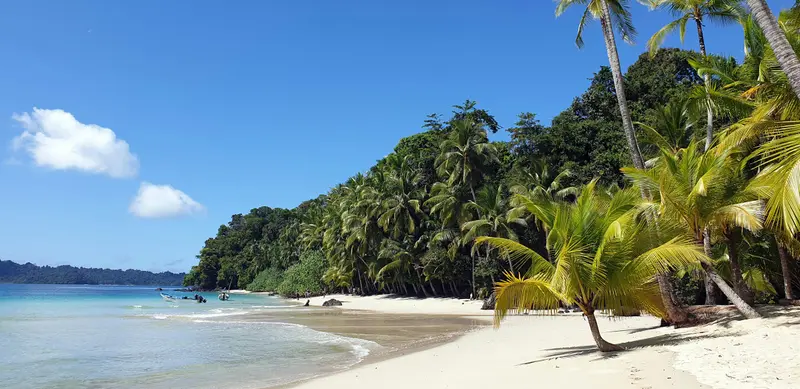
    Photo by Chema Photo on Unsplash

    Panama

    Coiba National Park

    Point of Interest

    Der Nationalpark Coiba liegt im Golf von Chiriquí vor der Pazifikküste Panamas und umfasst die Insel Coiba, 38 kleinere Inseln und das umgebende Meer.

    by Felix Gillen

    1. Home
    2. Destinations
    3. Panama
    4. Coiba National Park
    Der Nationalpark Coiba liegt im Golf von Chiriquí vor der Pazifikküste Panamas und umfasst die Insel Coiba, 38 kleinere Inseln und das umgebende Meer. Seit 2005 ist er UNESCO-Welterbe, vor allem wegen der vielen endemischen Arten und der großen Meeresvielfalt.Von 1919 bis 2004 war Coiba eine Strafkolonie, deshalb blieb der Wald weitgehend unberührt. Im Juni 2026 beschloss die Regierung, Hochrisiko-Häftlinge vorübergehend in Einrichtungen des Grenzschutzes SENAN auf der Insel zu verlegen, wie lange, ist offen. Hier leben unter anderem der Coiba-Brüllaffe und Hellrote Aras. Im Meer siehst du Mantarochen, Walhaie und Hammerhaie. Die IUCN bewertete den Erhaltungszustand 2025 mit „significant concern“, vor allem wegen Überfischung.
    Panama travel guideRound trips in PanamaPlan a trip with Coiba National Park

    Contents

    • Tours
    • Eat & drink
    • Culture
    • Getting around
    • Accommodation
    • Nearby

    Tours & experiences in Coiba National Park

    Search tours for Coiba National Park on GetYourGuide* (Affiliate link)On GetYourGuide, with reviews from other travellers

    * Affiliate link: if you book through it, we earn a small commission. The price stays the same for you.

    Restaurants in Coiba National Park

    Prison Island and Marine Reserve

    HistoryFrom 1919, Coiba was a penal colony. Because the island was isolated for so long, its forest remained largely untouched. Today, it is the core of a National Park, which has been a UNESCO World Heritage site since 2005.WildlifeThe island is home to endemic species such as the Coiba Howler Monkey and a large population of Scarlet Macaws. In the sea, you can see Manta Rays, Whale Sharks, Hammerhead Sharks, and Sea Turtles.

    Arrival and Tips

    ArrivalFrom Panama City, it's about a 4-hour drive via the Panamericana to Santiago de Veraguas, then to coastal Santa Catalina. From there, a boat takes you into the park.Key InfoPay admission at MiAmbiente. Daily admission for Coiba is bookable via the reservation portal reservasap.miambiente.gob.pa. For foreign visitors, it's 20 US dollars per day; camping costs more (as of August 2026, verify before travel). There are no restaurants in the park, so take water and provisions.

    Accommodations in Coiba National Park

    Find perfect stay in Coiba National Park

    Booking.com* (Affiliate link)
    Search Hotels
    Agoda* (Affiliate link)
    Search Hotels
    Airbnb
    Vacation Rentals

    * Affiliate link: if you book through it, we earn a small commission. The price stays the same for you.

    Nearby
    Boquete

    Boquete

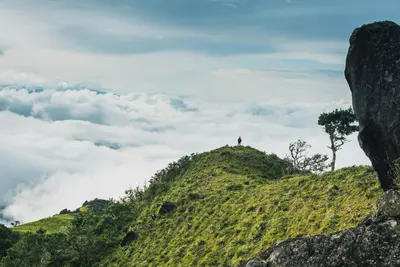
    Boquete is located in a green valley on the slopes of Volcán Barú in the Chiriquí Highlands, approximately 40 km north of David. You come for the cool mountain climate, the hiking trails in the cloud forest, and the coffee, including the Geisha variety.The town stretches along the Río Caldera. Bajo Boquete with the main square is the center; north of it, around Los Naranjos, are the coffee areas and the access to Volcán Barú National Park.Every year in January, the Feria de las Flores y del Café takes place here, with its 53rd edition in 2026 from January 7 to 18.

    Cristhian Carreño·Unsplash

    Volcán Barú National Park

    Volcán Barú National Park

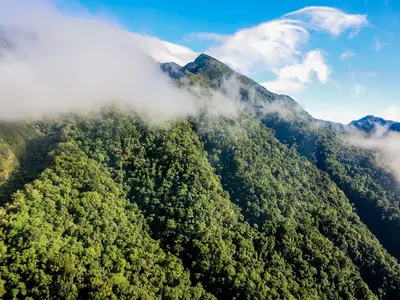
    Volcán Barú, between Boquete and Volcán in the Chiriquí Highlands, is Panama's highest point at 3,474 m. You ascend it because from the summit on clear days you can see both the Pacific and the Caribbean.The National Park encompasses cloud forest on the volcano's slopes. Here lives the Quetzal, which you are most likely to see between February and May. On the lower slopes are the cultivation areas of Boquete and Cerro Punta.The main trail to the summit begins above Boquete; from the west, a more difficult trail leads up from Paso Ancho near Volcán. The Sendero Los Quetzales connects Boquete with Cerro Punta on the north side of the volcano.

    FranHogan·CC BY-SA 4.0

    Bocas del Toro

    Bocas del Toro

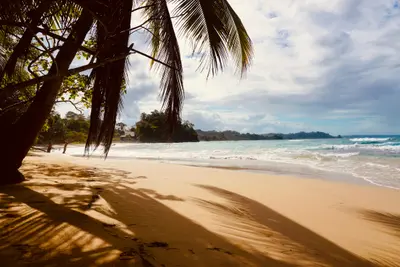
    Bocas del Toro is an archipelago of forested islands and many small cays on the Caribbean coast of north-western Panama, near the Costa Rican border. You come for the beaches, the coral reefs of Isla Bastimentos National Marine Park and the laid-back island villages linked by water taxis.The three main islands are Isla Colón with the main town, Bocas Town, Isla Carenero just opposite, and Isla Bastimentos with the Afro-Caribbean village of Old Bank. Much of Bastimentos and the Cayos Zapatilla belong to the Parque Nacional Marino Isla Bastimentos, established in 1988.On Playa Larga on Bastimentos, sea turtles nest roughly from April to September. On the mainland are the port of Almirante and the border crossing to Costa Rica at Guabito. For crime in Bocas del Toro, see the FCDO Travel Advice for Panama.

    Azzedine Rouichi·Unsplash

    Puerto Jiménez

    Puerto Jiménez

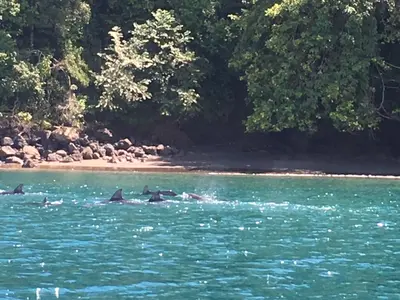
    Puerto Jiménez is the largest town on the Osa Peninsula, located on its eastern side along the Golfo Dulce in Costa Rica's South Pacific. You come here as a starting point for Corcovado National Park and for boat tours on the gulf, where dolphins live and humpback whales give birth to their young.The town isn't a destination itself, but a practical supply hub with supermarkets, sodas, tour operators, and a small airfield. In the early 20th century, farmers and gold prospectors settled here, and with the establishment of Corcovado National Park, Puerto Jiménez transformed into a hub for nature-based tourism.From here, tours depart to the park entrances La Leona and El Tigre, as well as boat trips to Sirena. On the Golfo Dulce, you can observe dolphins, kayak through mangroves, or embark on night tours with bioluminescent plankton.At the southern tip of the peninsula, about an hour's drive away, lies Cabo Matapalo with several surf spots for experienced surfers. The calm Playa Platanares beach, south of the airfield, is suitable for swimming.

    Editorofthewiki·CC BY-SA 4.0

    Bocas Town (Isla Colón)

    Bocas Town (Isla Colón)

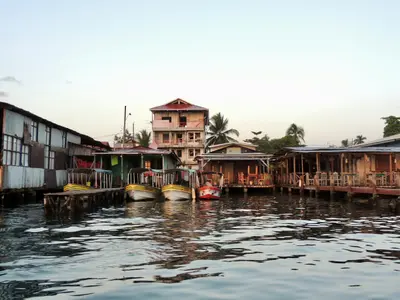
    Bocas Town is the main settlement on Isla Colón and the heart of the Bocas del Toro archipelago, about half an hour by water taxi from the mainland port of Almirante. You'll stay here because water taxis depart from the docks to almost all islands, beaches, and reefs.Life centers around Calle 3, the main street, and Parque Simón Bolívar. Many restaurants and bars are built on stilts over the water, and the small airport is just a few blocks from the center.Via the island road, you can reach Playa Bluff on the east coast and Boca del Drago with Playa Estrella in the northwest.

    Camilo Pinaud·Unsplash

    Your next steps

    Coiba National Park is in Panama. Ways to carry on from here.

    • More in Panama

      Highlights, areas, routes and the best time to travel for all of Panama.

      Panama travel guide
    • Round trips in Panama

      Ready-made routes through Panama, with stops, nights and a map.

      See the routes
    • Plan a trip with Coiba National Park

      The Guide asks about season, length and who is coming, and suggests a trip with Coiba National Park.

      Plan the trip

    Sources & method

    • Photos: Unsplash. Each photo carries its credit.
    • The content is based on web research from public, traceable sources. How the content is made · The role of AI