Fernweh: Home
    ExploreTravel GuidesPlan a tripMy tripLast visited
    de|en
    All Places & RegionsAll highlightsAbout FernwehFAQPrivacy PolicyImprint
    ExploreTravel GuidesPlan a tripMy tripLast visited
    Torneträsk

    Sweden

    Torneträsk

    LakeNatureMountainsFor Families

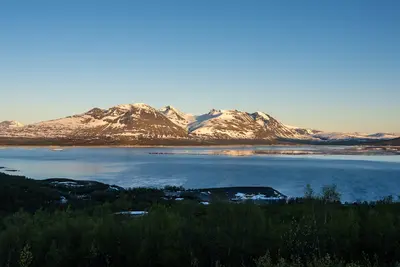
    At approximately 330 square kilometers, Lake Torneträsk (Sami Duortnosjávri) is Sweden's sixth-largest lake and is considered Scandinavia's largest fell lake.

    by Felix Gillen

    1. Home
    2. Destinations
    3. Sweden
    4. Swedish Lapland (Lapland)
    5. Torneträsk
    At approximately 330 square kilometers, Lake Torneträsk (Sami Duortnosjávri) is Sweden's sixth-largest lake and is considered Scandinavia's largest fell lake. The lake, approximately 69 kilometers long, reaches depths of up to 168 meters and lies nestled among the mountains north of Kiruna. Along its southern shore lie Abisko, Björkliden, and views of the Lapporten. In winter, observe the Northern Lights here; in summer, hike under the Midnight Sun.

    Sights

    Discover the most important sights and attractions

    1Lapporten (Das Tor nach Lappland)

    The Lapporten (Sami Čuonjávággi) is a striking U-shaped valley southeast of Abisko, carved by Ice Age glaciers. It is bounded by the mountains Nissuntjårro (1540 m) and Tjuonatjåkka (1721 m). Lapporten is one of Sweden's most photographed mountain motifs and visible from many points around Torneträsk. While no marked hiking trail runs through it, the terrain is easily traversable.
    Open in Google Maps

    2Björkliden Fjällby

    This mountain village on the south side of Torneträsk is a year-round destination offering numerous activities. In winter, excellent ski and snowboard slopes await, while in summer, hiking, fishing, and golf under the Midnight Sun entice. It is an ideal starting point to actively explore the beauty of the surroundings.
    Open in Google Maps

    Restaurants & Cafes

    Restaurang Rakkas

    Restaurang Rakkas in Björkliden Fjällby is renowned for its Swedish and Sami cuisine, served with a modern twist. Look forward to dishes reflecting local flavors, such as fresh berries and game, while you enjoy the breathtaking view of Torneträsk. A perfect spot to recharge after a day spent in nature.
    Show on Google Maps

    Culture, Art & History at Torneträsk

    Sámi Settlement AreaThe Torneträsk and its surroundings are part of the traditional settlement area of the Sámi. The lake was a vital component of the reindeer herding migration routes and offered a livelihood through fishing.Ore Railway and MiningWith the advent of mining in Kiruna and the construction of the Ore Railway, which extended to Narvik from 1903, Swedish settlers and workers arrived at the lake. This significantly transformed the region, yet Sámi culture remained a core part of the regional identity.Building Styles and HandicraftsTraditional Sámi constructions, such as the Kåta (a hut made of wood or peat) and the Lavvu tent, reflect their mobile way of life. The traditional craft of Duodji encompasses works from wood, reindeer horn, and leather, and the unique vocal tradition of Joik is cherished to this day.

    Getting Around Here

    The picturesque expanse around Lake Torneträsk in Swedish Lapland requires an adapted approach to getting around, as urban transport like metros or trams do not exist here. The regional bus service from Länstrafiken Norrbotten offers limited connections to larger towns such as Kiruna or Abisko. Timetables vary seasonally, and early planning as well as using the official app are highly recommended.For local exploration, hiking and cycling are the most beautiful and sustainable options in the warmer months; bike rentals can be found in nearby tourist centers. Taxis are, if available at all, only by pre-booking and are costly due to the long distances, while ride-sharing services are not found in this remote region. The area is excellent for pedestrians and nature lovers who wish to explore hiking trails or cross-country ski tracks directly from their accommodation.In winter, snowmobiles or private transfers are popular alternatives to experience the untouched landscape, which is essential for an authentic Arctic experience. For maximum flexibility and to reach remote natural attractions, renting your own vehicle is the most practical solution.

    Accommodations in Torneträsk

    Find perfect stay in Torneträsk

    Booking.com* (Affiliate link)
    Search Hotels
    Agoda* (Affiliate link)
    Search Hotels
    Airbnb
    Vacation Rentals

    * Affiliate link: if you book through it, we earn a small commission. The price stays the same for you.

    Campgrounds in Torneträsk

    Find perfect campground in Torneträsk

    Search via Google Maps
    Campgrounds nearby (15km)
    Camping.info
    Find Campgrounds
    Park4Night
    RV Parks & Camping

    Nearby

    Abisko National Park

    Abisko National Park

    The Abisko National Park in Swedish Lapland was founded in 1909 and covers approximately 77 square kilometers between the shore of Lake Torneträsk and the fells to the southwest. It lies about 195 kilometers north of the Arctic Circle and is considered one of the best places for observing the Northern Lights thanks to its often cloudless skies, especially from the Aurora Sky Station on Mount Nuolja. During the day, the Kungsleden invites you to hike, or you can follow the canyon of the Abiskojåkka. The Naturum Abisko provides information about the region's flora, fauna, and history. You can see the Northern Lights during the dark season from approximately September to March, and the Midnight Sun from late May to mid-July.
    Abisko

    Abisko

    Abisko is located on the southern shore of Torneträsk, about 195 kilometres north of the Arctic Circle, and is one of Sweden's most famous places for observing the Northern Lights. This small village is the starting point for Abisko National Park, the Aurora Sky Station on Mount Nuolja, and the long-distance hiking trail Kungsleden. In summer, the sun doesn't set for weeks, while in winter, long nights and snow characterize the landscape.
    Kiruna

    Kiruna

    Kiruna is located far north of the Arctic Circle and is inextricably linked to iron ore: The mine of the state-owned LKAB corporation in Mount Kiirunavaara is considered the world's largest and most modern underground iron ore mine. As mining operations advance beneath the city, a new center is emerging approximately three kilometers east of the old downtown, to which historical buildings will also be relocated. In summer, you can experience the Midnight Sun here; in winter, chances of seeing the Northern Lights are good, and the ICEHOTEL in Jukkasjärvi is just a short drive away.
    Gällivare

    Gällivare

    Gällivare, located north of the Arctic Circle in Swedish Lapland, has been a mining town since the construction of the ore railway in the late 19th century. Here you'll experience the nature of the fells, Sámi culture, and a community undergoing change: The neighbouring town of Malmberget is largely being abandoned due to ore mining. From Dundret, its local mountain, you can see the midnight sun in summer, and in winter, the chances for the Northern Lights are good.
    Swedish Lapland (Lapland)

    Swedish Lapland (Lapland)

    Swedish Lapland is the Arctic part of Sweden: vast forests, fells and lakes, plus the Sámi culture. In winter, Northern Lights chances are good from September to March; in summer, the sun doesn't set from late May to mid-July. Highlights include the ICEHOTEL, the Treehotel, the Kungsleden and the UNESCO World Heritage Site Laponia.

    Sources & method

    • Photos: Unsplash. Each photo carries its credit.
    • The content is based on web research from public, traceable sources. How the content is made · The role of AI