Fernweh: Home
    ExploreTravel GuidesPlan a tripMy tripLast visited
    de|en
    All Places & RegionsAll highlightsAbout FernwehFAQPrivacy PolicyImprint
    ExploreTravel GuidesPlan a tripMy tripLast visited
    Abisko National Park

    Sweden

    Abisko National Park

    National ParkFor Families

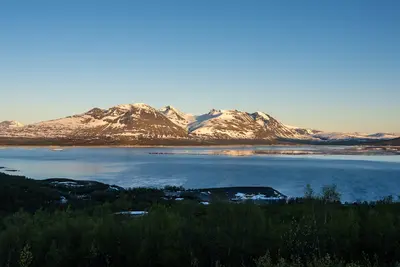
    The Abisko National Park in Swedish Lapland was founded in 1909 and covers approximately 77 square kilometers between the shore of Lake Torneträsk and the fells to the southwest.

    by Felix Gillen

    1. Home
    2. Destinations
    3. Sweden
    4. Swedish Lapland (Lapland)
    5. Abisko National Park
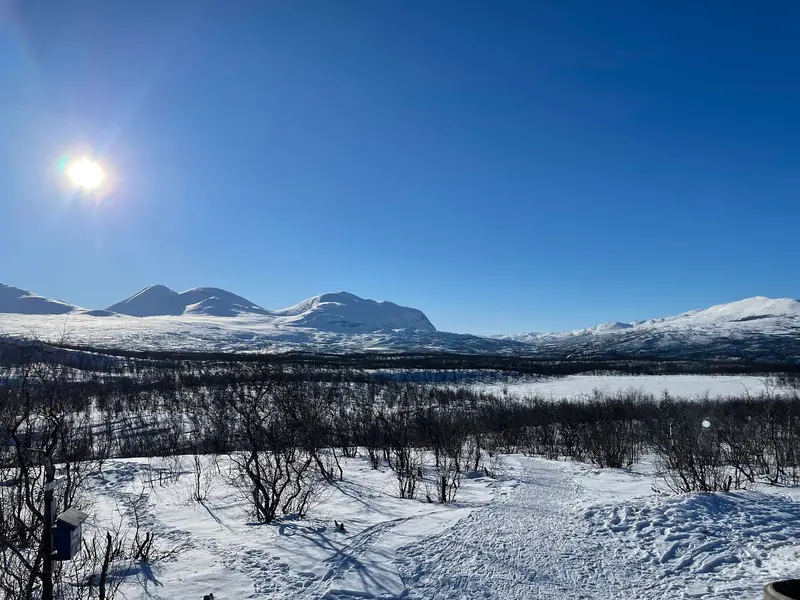
    The Abisko National Park in Swedish Lapland was founded in 1909 and covers approximately 77 square kilometers between the shore of Lake Torneträsk and the fells to the southwest. It lies about 195 kilometers north of the Arctic Circle and is considered one of the best places for observing the Northern Lights thanks to its often cloudless skies, especially from the Aurora Sky Station on Mount Nuolja. During the day, the Kungsleden invites you to hike, or you can follow the canyon of the Abiskojåkka. The Naturum Abisko provides information about the region's flora, fauna, and history. You can see the Northern Lights during the dark season from approximately September to March, and the Midnight Sun from late May to mid-July.

    Sehenswürdigkeiten

    Discover the most important sights and attractions

    Stornabben

    1Stornabben

    The Stornabben is an elevation in Abisko National Park, south of Abisko Östra. From the top, you look out over Torneträsk and the fells of the national park. The landscape owes its shape to the glaciers of the last Ice Age. The ascent is possible on trails and rewards in summer under the midnight sun and in winter with chances of Northern Lights. Tip: Plan your visit early in the morning or late in the afternoon, when the light is most beautiful and there are fewer people around.
    Open in Google Maps
    Attraction

    2Aurora Sky Station

    The Aurora Sky Station is located at an altitude of around 900 meters on Mount Nuolja (Njullá) in Abisko National Park and is considered one of the world's most famous places for observing the Northern Lights. This is aided by the so-called "Blue Hole": Above Torneträsk, the sky is often clearer than in the surrounding area. You reach it by chairlift, and the ride takes about 30 minutes. At the top, you'll find a viewing terrace, an observation tower, a café, a shop, and an exhibition about the Northern Lights.The station is open during two seasons: in the dark winter for the Northern Lights and in summer for the Midnight Sun; it remains closed in between. Check the current opening hours and book your lift ticket in advance if possible.
    Open in Google Maps

    Essen & Trinken

    Abisko: Sami Heritage and Research Tradition

    SápmiAbisko National Park is located in Sápmi, the traditional Sámi settlement area. Long before the park's establishment, Sámi communities used the area for reindeer husbandry, hunting, and fishing, and reindeer herding continues to shape the region today.Iron Ore Line and ScienceThe Iron Ore Line reached Kiruna in 1899 and extended to Narvik from 1903. It opened up the area around Abisko for research and early tourism. The scientific research station was founded in nearby Vassijaure in 1903 and moved to Abisko in 1913; since 1935, it has been part of the Royal Swedish Academy of Sciences. The National Park itself was intended from the outset to preserve mountain nature and serve research.TraditionsLiving Sámi traditions include the handicraft Duodji and the vocal art Joik. Alongside Sámi huts, the functional buildings of the research station and Abisko Tourist Station characterize the landscape.

    Exploring on site

    Getting ThereAbisko is located on the Iron Ore Line between Kiruna and Narvik. Abisko Östra and Abisko Turiststation train stations are served by regional trains and the night train from Stockholm. By car, you can reach the park via the E10, with parking available at the Turiststation.In the ParkThe national park is a popular destination for hikers: marked trails, including the Kungsleden, start directly at Abisko Turiststation. Roughly four kilometers separate Abisko Östra and the Turiststation. Taxis from Kiruna must be pre-booked. In winter, cross-country skiing, snowshoeing, and dog sledding are common ways to get around; check weather and avalanche conditions beforehand.

    Accommodations in Abisko National Park

    Find perfect stay in Abisko National Park

    Booking.com* (Affiliate link)
    Search Hotels
    Agoda* (Affiliate link)
    Search Hotels
    Airbnb
    Vacation Rentals

    * Affiliate link: if you book through it, we earn a small commission. The price stays the same for you.

    Campgrounds in Abisko National Park

    Find perfect campground in Abisko National Park

    Search via Google Maps
    Campgrounds nearby (15km)
    Camping.info
    Find Campgrounds
    Park4Night
    RV Parks & Camping

    Nearby

    Abisko

    Abisko

    Abisko is located on the southern shore of Torneträsk, about 195 kilometres north of the Arctic Circle, and is one of Sweden's most famous places for observing the Northern Lights. This small village is the starting point for Abisko National Park, the Aurora Sky Station on Mount Nuolja, and the long-distance hiking trail Kungsleden. In summer, the sun doesn't set for weeks, while in winter, long nights and snow characterize the landscape.
    Torneträsk

    Torneträsk

    At approximately 330 square kilometers, Lake Torneträsk (Sami Duortnosjávri) is Sweden's sixth-largest lake and is considered Scandinavia's largest fell lake. The lake, approximately 69 kilometers long, reaches depths of up to 168 meters and lies nestled among the mountains north of Kiruna. Along its southern shore lie Abisko, Björkliden, and views of the Lapporten. In winter, observe the Northern Lights here; in summer, hike under the Midnight Sun.
    Kiruna

    Kiruna

    Kiruna is located far north of the Arctic Circle and is inextricably linked to iron ore: The mine of the state-owned LKAB corporation in Mount Kiirunavaara is considered the world's largest and most modern underground iron ore mine. As mining operations advance beneath the city, a new center is emerging approximately three kilometers east of the old downtown, to which historical buildings will also be relocated. In summer, you can experience the Midnight Sun here; in winter, chances of seeing the Northern Lights are good, and the ICEHOTEL in Jukkasjärvi is just a short drive away.
    Swedish Lapland (Lapland)

    Swedish Lapland (Lapland)

    Swedish Lapland is the Arctic part of Sweden: vast forests, fells and lakes, plus the Sámi culture. In winter, Northern Lights chances are good from September to March; in summer, the sun doesn't set from late May to mid-July. Highlights include the ICEHOTEL, the Treehotel, the Kungsleden and the UNESCO World Heritage Site Laponia.
    Gällivare

    Gällivare

    Gällivare, located north of the Arctic Circle in Swedish Lapland, has been a mining town since the construction of the ore railway in the late 19th century. Here you'll experience the nature of the fells, Sámi culture, and a community undergoing change: The neighbouring town of Malmberget is largely being abandoned due to ore mining. From Dundret, its local mountain, you can see the midnight sun in summer, and in winter, the chances for the Northern Lights are good.

    Sources & method

    • Photos: Unsplash, Google Maps. Each photo carries its credit.
    • Place data such as addresses and ratings comes from Google Maps.
    • The content is based on web research from public, traceable sources. How the content is made · The role of AI