Fernweh: Home
    ExploreTravel GuidesPlan a tripMy tripLast visited
    de|en
    All Places & RegionsAll highlightsAbout FernwehFAQPrivacy PolicyImprint
    ExploreTravel GuidesPlan a tripMy tripLast visited
    Grand Teton National Park
    Michael Gäbler / Wikimedia Commons / CC BY 3.0

    United States

    Grand Teton National Park

    Point of InterestNatureMountains

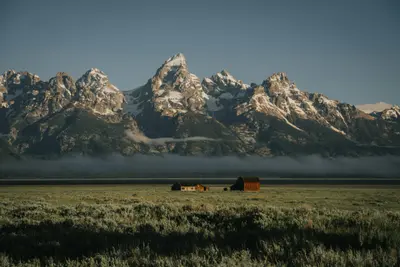
    Grand Teton National Park in northwestern Wyoming protects the Teton Range and the valley floor of Jackson Hole. The Grand Teton itself rises to 13,775 feet (4,199 m), more than 7,000 feet above the valley.

    by Felix Gillen

    1. Home
    2. Destinations
    3. United States
    4. Wyoming
    5. Grand Teton National Park
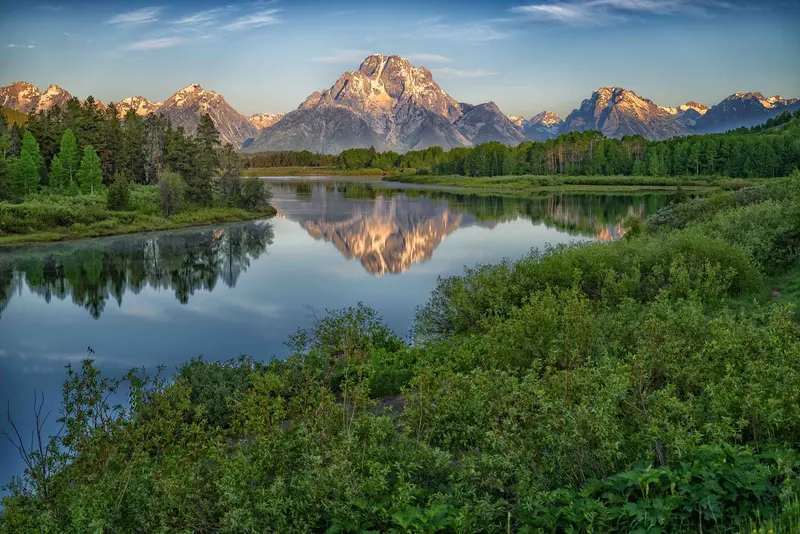
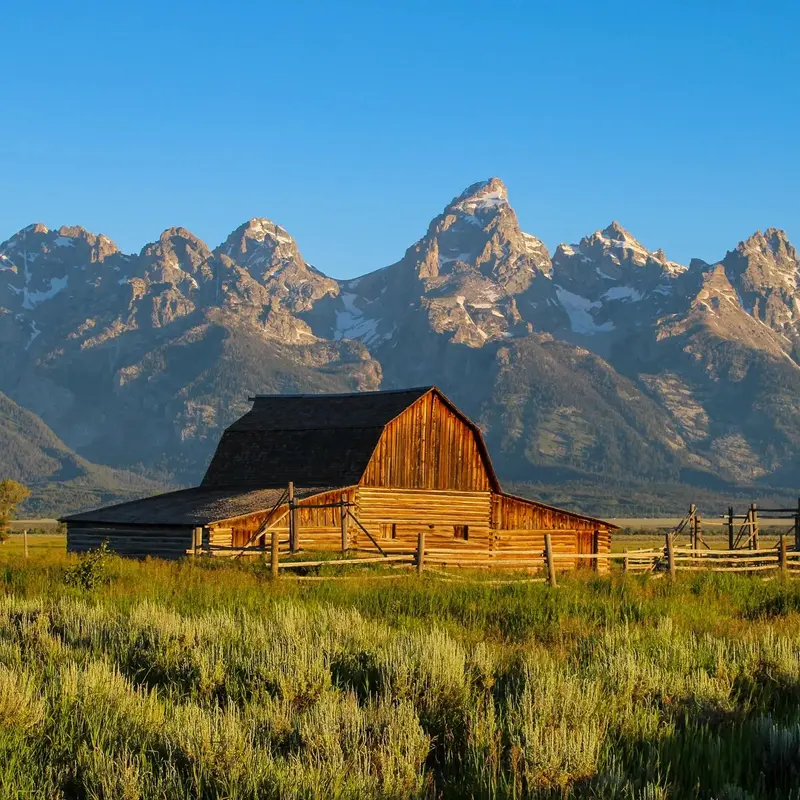
    Grand Teton National Park in northwestern Wyoming protects the Teton Range and the valley floor of Jackson Hole. The Grand Teton itself rises to 13,775 feet (4,199 m), more than 7,000 feet above the valley. You come for the alpine lakes at the foot of the range, the trails up into the canyons and the wildlife in the wetlands along the Snake River.The Teton Range runs about 40 miles (64 km). Strung along its base are glacial lakes such as Jenny Lake and 15-mile-long (24 km) Jackson Lake. At Oxbow Bend, Mount Moran is mirrored in the Snake River on calm days, and on Mormon Row old homesteaders' barns stand in front of the peaks.Know Before You GoEntrance fee: $35 per vehicle, valid for 7 days and separate from Yellowstone's fee. Visitors who are not U.S. residents pay an extra $100 per person (age 16 and up) unless they hold an annual pass.Season: The park is open year-round. Teton Park Road is open to cars from May 1 to October 31; from November through April many roads and facilities are closed. In 2026 the Jenny Lake Visitor Center was open May 15 to October 12.Time: Plan on at least two days, more for longer canyon hikes. From June through August expect lines at the Jenny Lake boat dock.

    Sights in Grand Teton National Park

    Discover the most important sights and attractions

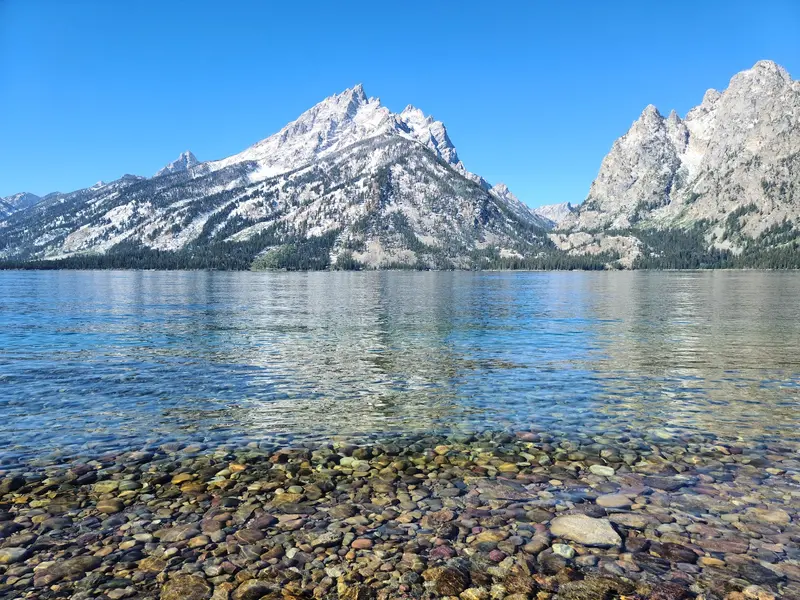
    Jenny Lake
    Attraction

    1Jenny Lake

    The glacial lake formed about 12,000 years ago behind a terminal moraine and is approximately 2.2 miles (3.5 km) long. It is named after Jenny, a Shoshone who was married to the trapper Richard “Beaver Dick” Leigh. Take the shuttle boat to the west shore and hike half a mile from there to Hidden Falls or a mile to Inspiration Point at the entrance of Cascade Canyon.
    Open in Google Maps
    Oxbow Bend
    Attraction

    2Oxbow Bend

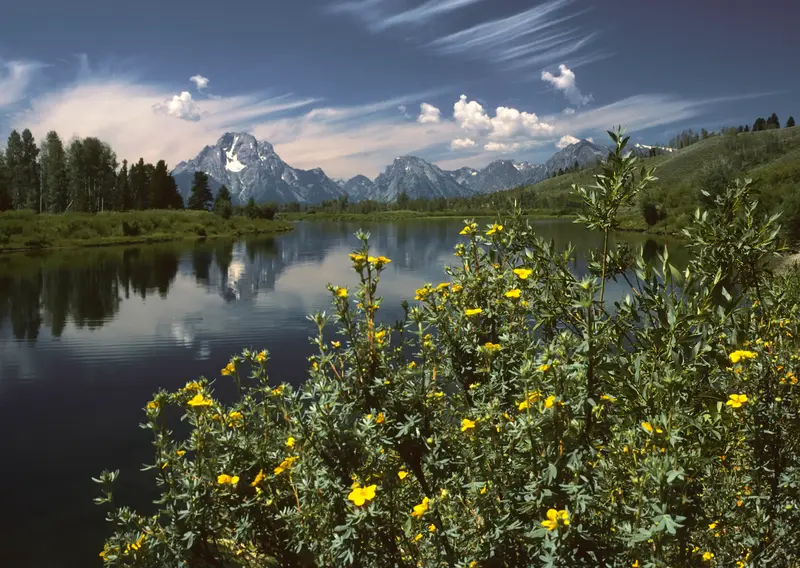
    This bend in the Snake River lies along Highway 89/191 between Jackson Lake Junction and Moran Junction. On calm days Mount Moran is mirrored in the water; sunrise and sunset are the most popular times. With luck you'll spot pelicans, great blue herons, otters, moose or bears.
    Open in Google Maps
    Mormon Row
    Point of Interest

    3Mormon Row

    Mormon settlers from Idaho established the Gros Ventre community with 27 homesteads here starting in the 1890s. Six distinct farm groups with barns, fences, and irrigation ditches are still preserved, including the Moulton family homesteads, whose barns are popular photographic subjects against the Teton Range. Since 1997, the district has been listed on the National Register of Historic Places; bison often graze in the surrounding area.
    Open in Google Maps
    Chapel of the Transfiguration
    Church

    4Chapel of the Transfiguration

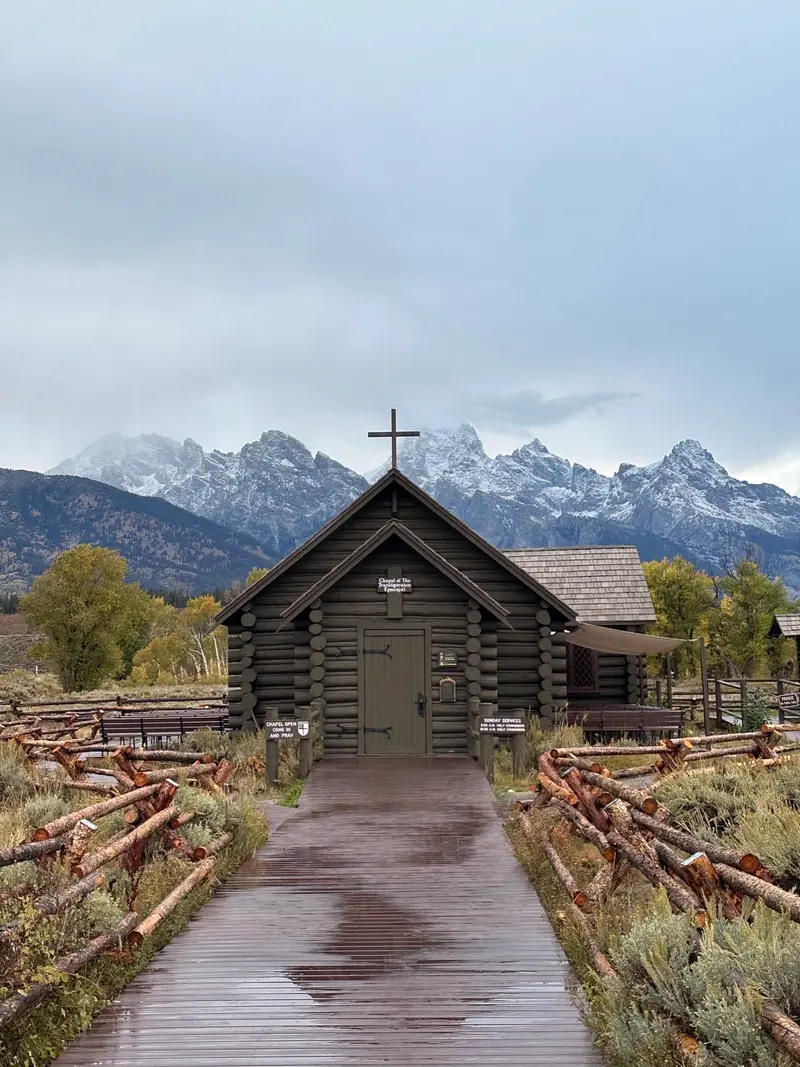
    The small chapel from 1925 stands near Moose on land donated by Maud Noble, owner of Menor's Ferry. Instead of a stained-glass window, a large window behind the altar frames the peaks of the Cathedral Group. It belongs to St. John's Episcopal Church in Jackson and has been on the National Register of Historic Places since 1980.
    Open in Google Maps
    Craig Thomas Discovery and Visitor Center
    Attraction

    5Craig Thomas Discovery and Visitor Center

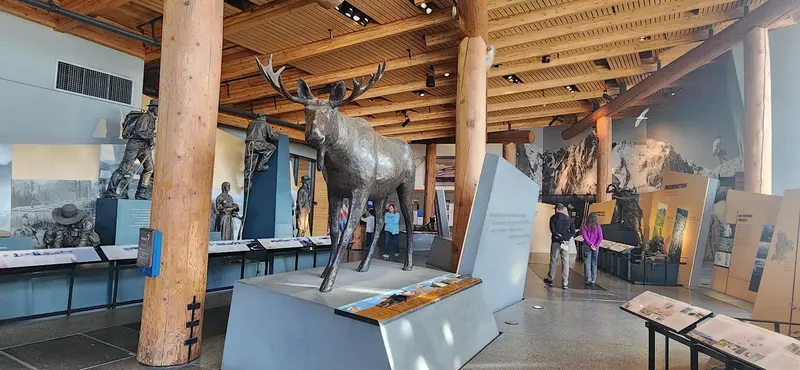
    The visitor center in Moose is the first stop in the south of the park. Exhibitions on mountaineering, conservation, and indigenous history, a relief model of the park, and films prepare you for your visit, and permits and park passes are available at the counter. In 2026, it was open from April 10 to October 31.
    Open in Google Maps

    Restaurants in Grand Teton National Park

    Culture and History

    First InhabitantsHumans have lived in Jackson Hole for at least 11,000 years. The Shoshone, specifically the Tukudika, who lived in the mountains, primarily hunted bighorn sheep. Following the establishment of the Wind River Indian Reservation in 1868, the Shoshone of the region were relocated there.Settlers and RockefellerIn 1892, Menor's Ferry was established near Moose, allowing wagons to reach the west bank of the Snake River. From the 1890s onwards, Mormon families from Idaho settled east of Blacktail Butte; their homesteads along Mormon Row have been listed on the National Register of Historic Places since 1997. The park was initially established on February 26, 1929, encompassing only the mountains. Beginning in the 1930s, John D. Rockefeller Jr. purchased land in the valley through the Snake River Land Company to donate it to the National Park Service. In 1943, this land became the Jackson Hole National Monument, and in 1950, it was merged with the park.Chapel and AirportThe small Chapel of the Transfiguration, built in 1925 near Moose, frames the peaks of the Cathedral Group behind its altar through a large window. Since the 1950 merger, Jackson Hole Airport has been the only commercial airport in the USA located within a national park.

    Getting There and Getting Around

    Jackson Hole Airport sits in the southern part of the park, and the town of Jackson is about 7 miles (11 km) farther south. There is no public transit into the park, so you'll need a car or a guided tour.Teton Park Road: The road along the foot of the mountains gives access to Jenny Lake and String Lake and is open to cars May 1 to October 31. Oxbow Bend is on Highway 89/191 between Jackson Lake Junction and Moran Junction.Jenny Lake: Jenny Lake Boating runs shuttle boats to the west shore every 10 to 15 minutes; round trip is $20 for adults, no reservations. From the dock it's half a mile to Hidden Falls and a mile to Inspiration Point.Visitor centers: In 2026 the Craig Thomas Discovery and Visitor Center in Moose was open April 10 to October 31, and Colter Bay on Jackson Lake May 8 to September 30.On to Yellowstone: Your Grand Teton pass is not valid in Yellowstone; you pay again at the South Entrance.

    Accommodations in Grand Teton National Park

    Find perfect stay in Grand Teton National Park

    Booking.com* (Affiliate link)
    Search Hotels
    Agoda* (Affiliate link)
    Search Hotels
    Airbnb
    Vacation Rentals

    * Affiliate link: if you book through it, we earn a small commission. The price stays the same for you.

    Campgrounds in Grand Teton National Park

    Find perfect campground in Grand Teton National Park

    Search via Google Maps
    Campgrounds nearby (15km)
    Camping.info
    Find Campgrounds
    Park4Night
    RV Parks & Camping

    Nearby

    Jackson

    Jackson

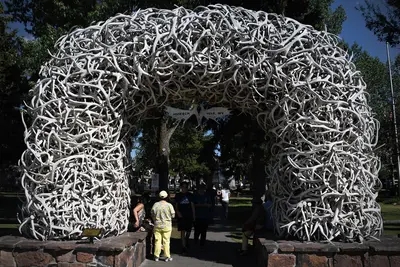
    Jackson, home to about 10,800 people, is the main town in the Jackson Hole valley and the natural base for Grand Teton National Park. It sits at 6,237 feet (1,901 m), right next to the National Elk Refuge, and is named for trapper David Jackson, who also gave the valley its name.Shops, restaurants and bars such as the Million Dollar Cowboy Bar line the Town Square with its four elk-antler arches. In summer a shootout is staged there Monday through Saturday at 6 p.m.; in winter there's an ice rink. On the edge of town, Snow King Mountain was Wyoming's first ski area, and Jackson Hole Mountain Resort in Teton Village is 12 miles (19 km) away.Know Before You GoLocation: Jackson Hole Airport is about 7 miles (11 km) north of town, inside Grand Teton National Park.Seasons: Summer is for the national parks; winter is for skiing and horse-drawn sleigh rides among the elk on the refuge.Without a car: The START bus is free within town, but no public bus runs to the national parks.
    Yellowstone National Park

    Yellowstone National Park

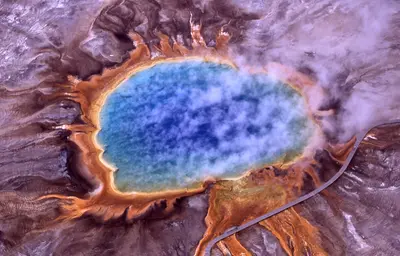
    Established in 1872, Yellowstone is considered the world's first national park. Most of it lies in northwest Wyoming, with slivers in Montana and Idaho, and people come for the geysers, the hot springs, and the free-roaming bison and elk.The park has more than 10,000 hydrothermal features, including over 500 geysers. Old Faithful goes off about every 90 minutes on average, and predicted times are posted at the visitor center. In the Grand Canyon of the Yellowstone, the Lower Falls drop 308 feet, and in the Lamar Valley in the northeast corner you can watch bison at dawn and, with luck, wolves.Good to knowFees: $35 per vehicle for 7 days, cash or card. Since 2026, visitors who don't live in the U.S. pay an extra $100 per person age 16 and up, unless they have an annual pass. No entry reservation is required.Season: In 2026 the first roads from the West and North entrances opened on April 17, with more following in May. Most roads close to cars in early November.Time: Give it at least two days, ideally three; distances between areas are long. Start early, because lots at Old Faithful and Grand Prismatic fill fast in summer.
    Wyoming

    Wyoming

    Wyoming borders Montana, South Dakota, Nebraska, Colorado, Utah, and Idaho, and with about 589,000 residents it's the least populous state in the country. You come for the national parks, the mountains, and the old Western towns, and you drive long stretches of nearly empty country in between.In the northwest, Yellowstone and Grand Teton National Park sit end to end, linked by the John D. Rockefeller Jr. Memorial Parkway. Jackson, at the south end of Grand Teton, is the base for flights, hotels, and restaurants. Gannett Peak, the state's highest summit, rises in the remote Wind River Range.In the northeast, Devils Tower stands 867 feet above its base and 1,267 feet above the Belle Fourche River. Theodore Roosevelt made it the first national monument in 1906. Cody, named for Buffalo Bill, sits on the road to Yellowstone's East Entrance; the capital, Cheyenne, is in the southeast corner.
    Arches National Park

    Arches National Park

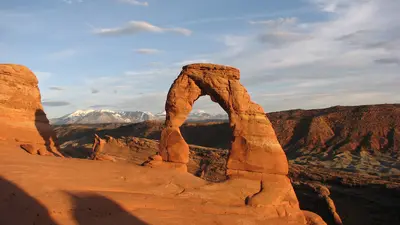
    Arches National Park lies in eastern Utah just north of the town of Moab, about four hours southeast of Salt Lake City. It holds more than 2,000 sandstone arches, and the most famous, including Delicate Arch and Landscape Arch, are within short to moderate hikes of the road.A 19-mile scenic drive runs through the park past the trailheads for the Windows Section, Balanced Rock, Wolfe Ranch and, at the far end, Devils Garden. You'll reach many arches within 15 minutes on foot, but there's almost no shade along the way.Moab as your baseMoab is five minutes from the park entrance and also the base for Canyonlands National Park and Dead Horse Point State Park. It has hotels at every price point, grocery stores, gas and outfitters for jeep, rafting and canyoneering trips. Rooms book up early in the March to October high season.What to know in 2026No timed entry: you don't need an entry reservation in 2026. Expect lines at the entrance on weekends and holidays, and lots that staff close temporarily when they fill up.Still reservation-only: Devils Garden Campground (March through October) and every Fiery Furnace hike, self-guided or ranger-led.Entrance fee: $30 per private vehicle. Arches does not charge the $100 nonresident surcharge. The $55 Southeast Utah Parks annual pass covers Arches, Canyonlands and two national monuments.Heat: July and August highs often pass 100°F. Hike early or late and carry at least two liters of water per person; water is only available at the visitor center.
    Moab

    Moab

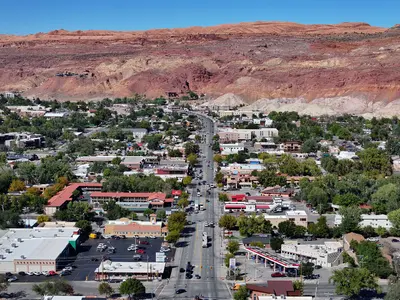
    Moab is a small town of about 5,000 people in eastern Utah, on the Colorado River and US 191, just under four hours' drive southeast of Salt Lake City. It's where you'll stay for Arches National Park, five minutes up the road, and Canyonlands' Island in the Sky district, about 45 minutes away.Main Street doubles as US 191: motels, outfitters, grocery stores and most restaurants are on it or a block or two off it. Jeep, rafting and mountain bike tours leave from here, and in the evening most visitors end up on the Main Street patios after a day on the trail.Good to knowPeak season: March through October, especially around Easter (Jeep Safari) and holiday weekends like Memorial Day and Labor Day. Book rooms and campsites weeks or months ahead.Heat: July and August regularly top 100°F. Hike early in the morning or in the evening.Groceries: City Market on Main Street is the biggest grocery store in the area. Stock up on water and supplies before heading into the parks.

    Sources & method

    • Photos: Wikimedia Commons, Google Maps. Each photo carries its credit.
    • Place data such as addresses and ratings comes from Google Maps.
    • The content is based on web research from public, traceable sources. How the content is made · The role of AI