ExploreTravel GuidesPlan a trip
    de|en
    All Places & RegionsAbout FernwehFAQPrivacy PolicyImprint
    ExploreTravel GuidesPlan a trip
    • Places in the region
    • Getting around
    • Nearby
    Wyoming

    United States

    Wyoming

    Region

    Wyoming is located in the western USA between Montana, South Dakota, Nebraska, Colorado, Utah, and Idaho, and is traversed by chains of the Rocky Mountains.

    1. Home
    2. Destinations
    3. United States
    4. Wyoming
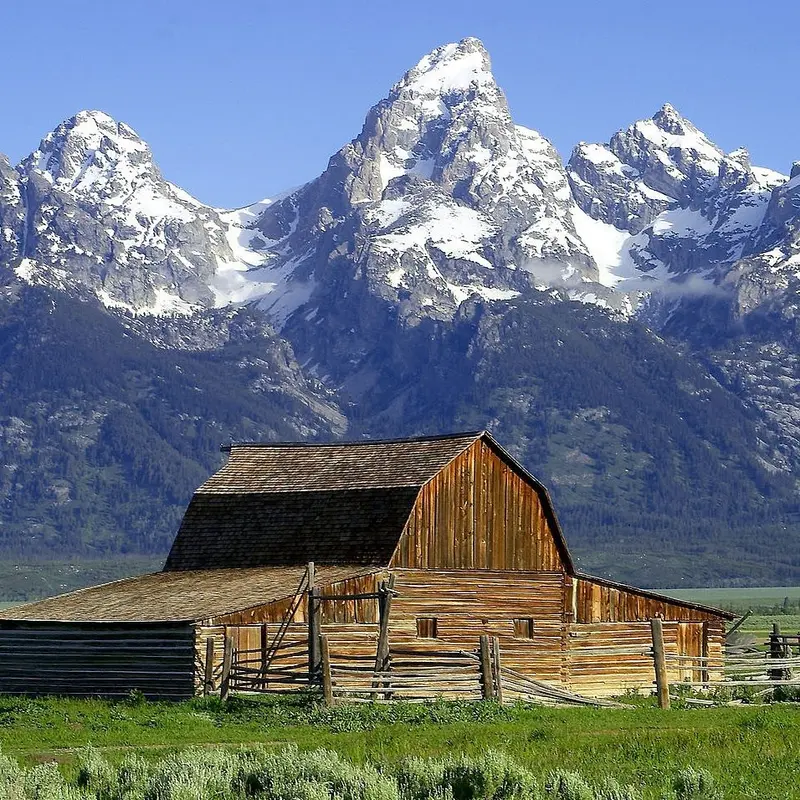
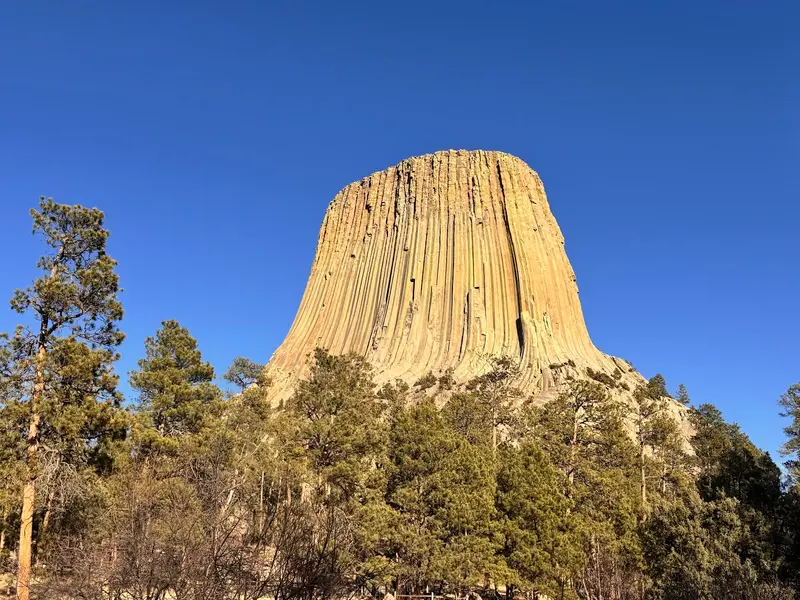
    Wyoming is located in the western USA between Montana, South Dakota, Nebraska, Colorado, Utah, and Idaho, and is traversed by chains of the Rocky Mountains. With approximately 589,000 inhabitants, it is the least populous state, and you come for its national parks, high mountains, and towns steeped in Western history.In the northwest, next to Yellowstone, lies Grand Teton National Park, about 16 km south of it and connected via the John D. Rockefeller Jr. Memorial Parkway. Grand Teton reaches 4,199 m, and Jackson Lake is the park's largest lake. In the remote Wind River Range, over 40 peaks rise higher than 13,000 feet, including Gannett Peak, the state's highest mountain.In the northeast, Devils Tower rises 386 m above the Belle Fourche River. Theodore Roosevelt declared it the first US National Monument in 1906. Cody, founded in 1896 with the involvement of Buffalo Bill, is located at the entrance to Yellowstone's East Gate. The capital and largest city is Cheyenne.

    More places in Wyoming

    Yellowstone National Park

    Yellowstone National Park

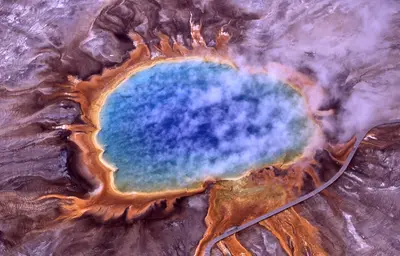
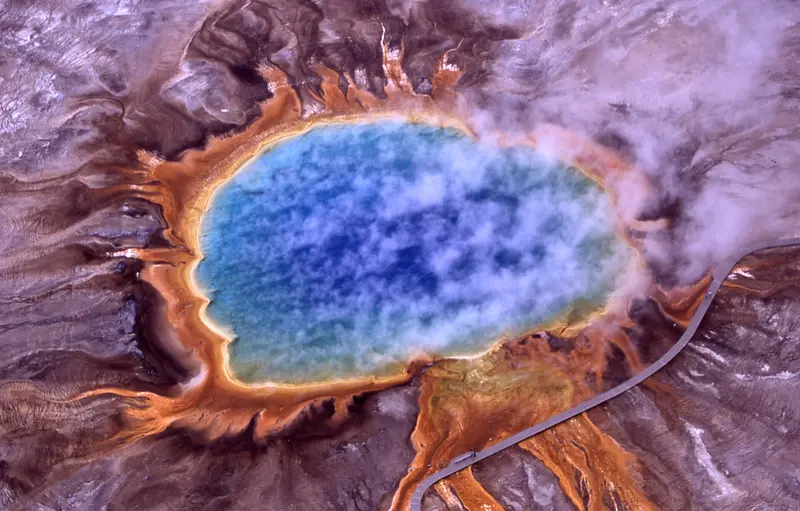
    Yellowstone National Park is located in the Rocky Mountains, predominantly in northwest Wyoming, with small parts in Montana and Idaho. Founded in 1872, the park is considered the world's first national park, and you come for the hot springs, geysers, and free-ranging bison.The park boasts over 10,000 hydrothermal features, including more than 500 geysers. The most famous, Old Faithful, erupts on average approximately every 90 minutes. In the Grand Canyon of the Yellowstone, the Lower Falls plunge 94 m, and Yellowstone Lake is situated at an elevation of 2,357 m. The park has been a UNESCO World Heritage site since 1978.The approximately 230 km long Grand Loop Road connects the main areas. Most roads are closed to regular vehicles from early November to late April; only the route from Gardiner to Cooke City is passable year-round. Admission costs 35 US dollars per car for 7 days. Visitors without US residency pay an additional 100 US dollars per person from age 16. A reservation is not required.

    Sights in Wyoming

    Discover the most important sights and attractions

    Lamar Valley
    Park

    Lamar Valley

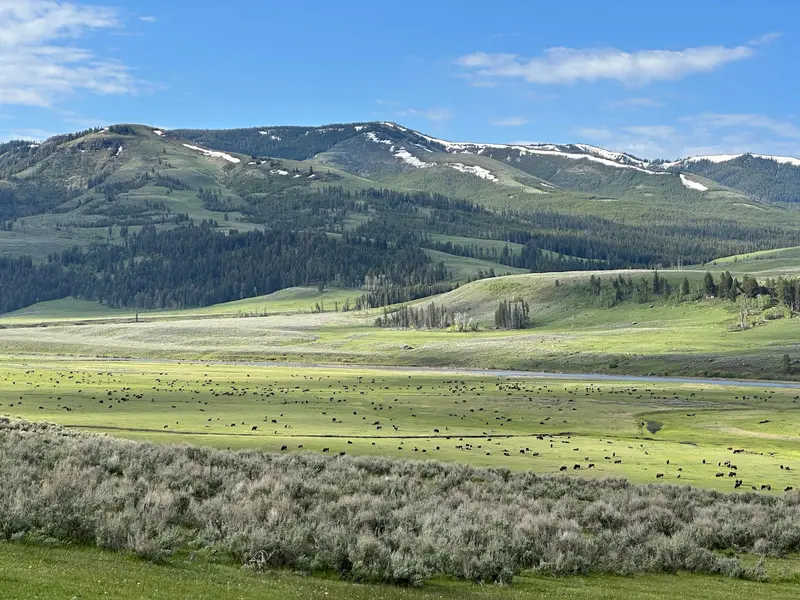
    The valley of the approximately 64 km long Lamar River in the northeast of Yellowstone National Park is considered one of the most reliable places for wolf sightings, plus you'll see bison and pronghorn. The road from Gardiner to Cooke City through the valley is open year-round.
    Open in Google Maps
    Grand Canyon of the Yellowstone
    Attraction

    Grand Canyon of the Yellowstone

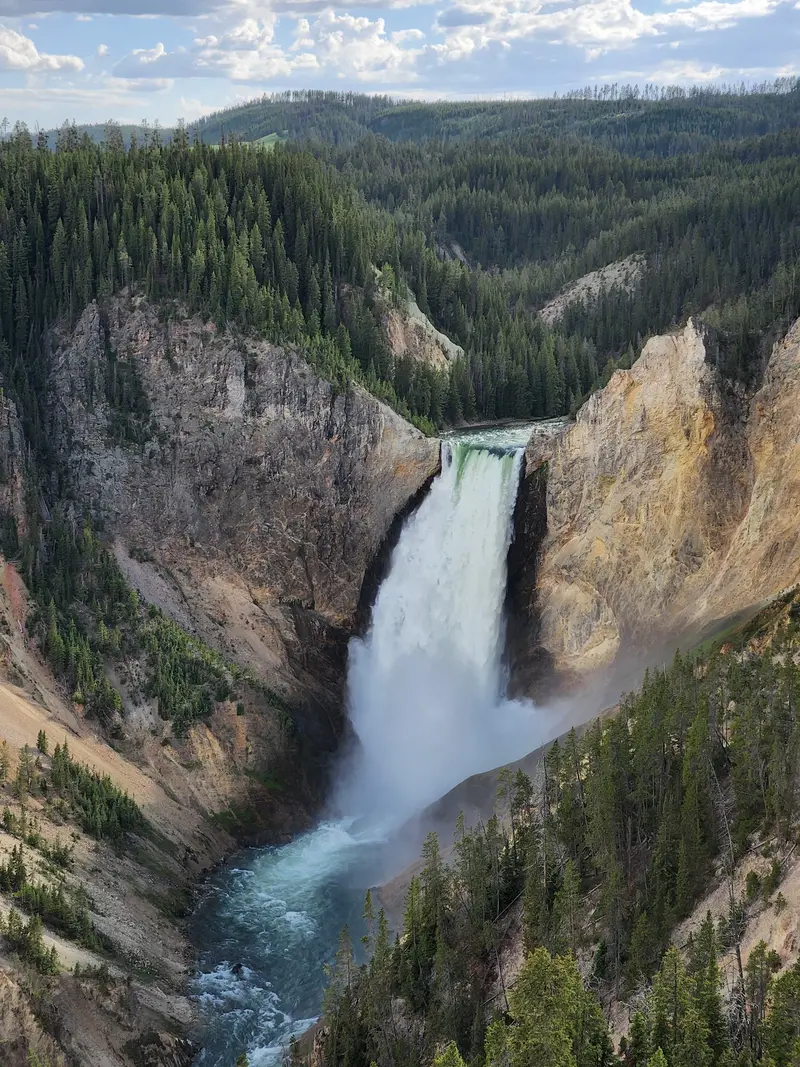
    The V-shaped canyon of the Yellowstone River in Yellowstone National Park is approximately 32 km long. The Lower Falls plunge 94 m, the Upper Falls 33 m, and a steep path leads down to the Brink of the Lower Falls.
    Open in Google Maps
    Mammoth Hot Springs
    Attraction

    Mammoth Hot Springs

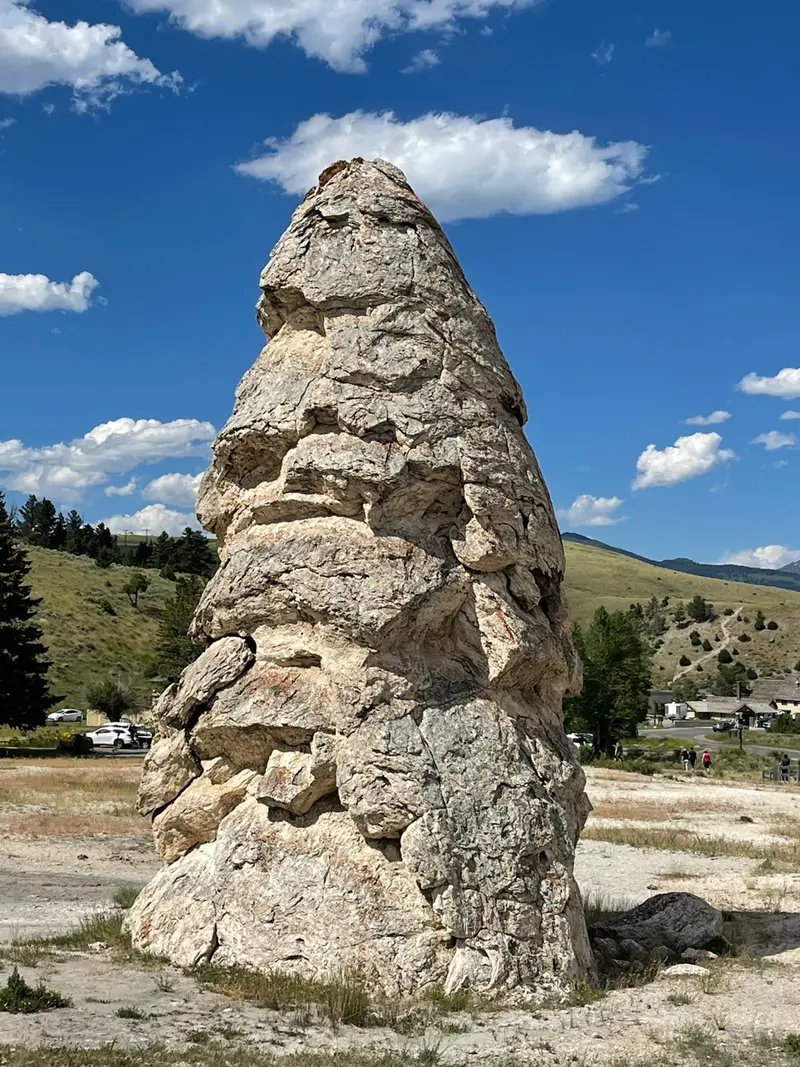
    Yellowstone's north has sinter terraces at 2,053 m, formed by calcium carbonate deposited by cooling spring water. The best-known is Minerva Terrace; Fort Yellowstone, built from 1891, sits on an older terrace.
    Open in Google Maps
    Norris Geyser Basin
    Museum

    Norris Geyser Basin

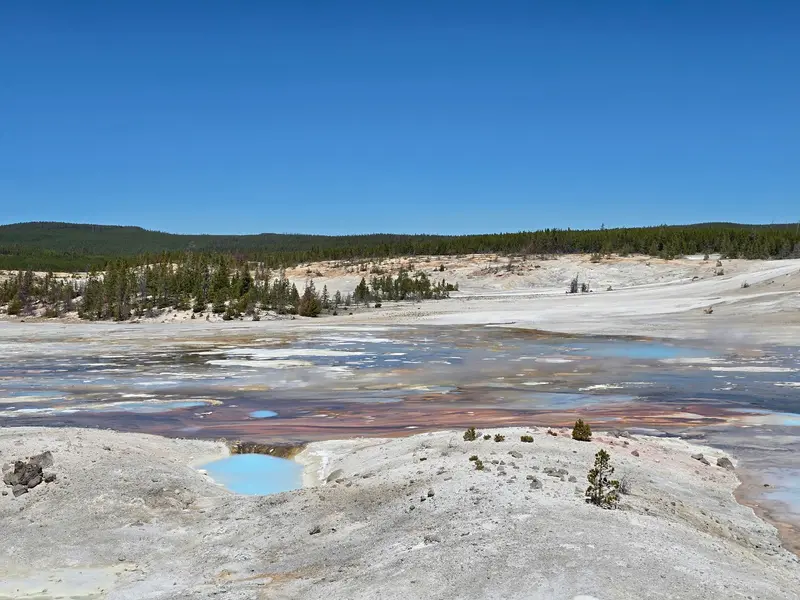
    Norris is considered Yellowstone National Park's hottest geyser basin and comprises areas like Porcelain Basin and Back Basin. It is home to Steamboat Geyser, the tallest active geyser on Earth, with eruptions over 90 m.
    Open in Google Maps
    Grand Teton National Park
    National Park

    Grand Teton National Park

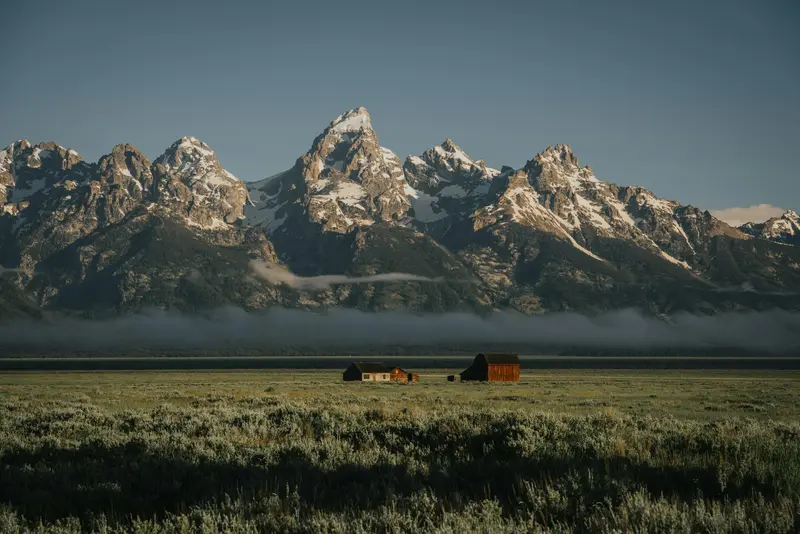
    South of Yellowstone, the jagged peaks of the Teton Range rise directly from the Jackson Hole valley without foothills. Around Jenny Lake, there are hiking trails and a boat ferry, and at Mormon Row stand the most photographed barns of the West.
    Open in Google Maps
    Devils Tower National Monument
    National Park

    Devils Tower National Monument

    The around 260 m high columnar basalt monolith in northeast Wyoming became the USA's first National Monument in 1906. For many Plains tribes, it is a sacred site, therefore climbers voluntarily forgo ascents in June. A 2 km loop trail leads around the tower's base.
    Open in Google Maps

    Getting There and Around

    The state's largest airport is Jackson Hole Airport, the only commercial airport located within a US National Park. Distances are great, so a rental car is practically indispensable.Grand Teton National Park is located about 16 km south of Yellowstone, connected via the John D. Rockefeller Jr. Memorial Parkway.From Cody, US Routes 14, 16, and 20 lead through a canyon to Yellowstone's East Entrance.The Jackson Hole Mountain Resort ski area in Teton Village is about 19 km north of Jackson.
    Nearby

    Yellowstone National Park

    Yellowstone National Park

    Yellowstone National Park is located in the Rocky Mountains, predominantly in northwest Wyoming, with small parts in Montana and Idaho. Founded in 1872, the park is considered the world's first national park, and you come for the hot springs, geysers, and free-ranging bison.The park boasts over 10,000 hydrothermal features, including more than 500 geysers. The most famous, Old Faithful, erupts on average approximately every 90 minutes. In the Grand Canyon of the Yellowstone, the Lower Falls plunge 94 m, and Yellowstone Lake is situated at an elevation of 2,357 m. The park has been a UNESCO World Heritage site since 1978.The approximately 230 km long Grand Loop Road connects the main areas. Most roads are closed to regular vehicles from early November to late April; only the route from Gardiner to Cooke City is passable year-round. Admission costs 35 US dollars per car for 7 days. Visitors without US residency pay an additional 100 US dollars per person from age 16. A reservation is not required.
    Utah

    Utah

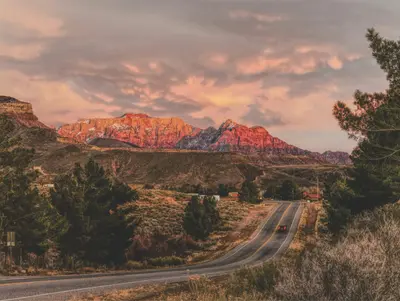
    Utah lies between Nevada, Arizona, Colorado, Wyoming, and Idaho in the heart of the American West. You travel here primarily for the five national parks in the south, known as the "Mighty Five," and for the ski resorts in the Wasatch Mountains near Salt Lake City.The capital, Salt Lake City, hosted the Winter Olympics in 2002, and they will take place again in Utah in 2034. Northwest of the city lies the Great Salt Lake, a remnant of the prehistoric Lake Bonneville. The state is predominantly dry; its highest peak is Kings Peak in the Uinta Mountains.In the south, the parks are close together: Zion with the Narrows of the Virgin River, Bryce Canyon with hundreds of Hoodoos, Capitol Reef along the Waterpocket Fold, as well as Arches and Canyonlands near Moab. Monument Valley and Lake Powell are in the border region with Arizona.
    Grand Canyon National Park

    Grand Canyon National Park

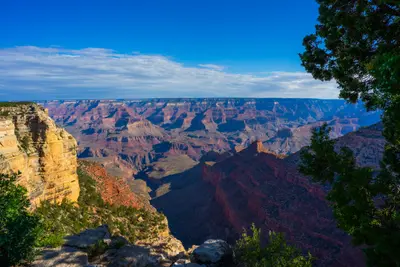
    The Grand Canyon National Park in Arizona protects the 446-kilometer-long canyon of the Colorado River, which is up to 29 kilometers wide and up to 1,857 meters deep. From the South Rim, about a 90-minute drive north of Flagstaff, you'll gaze upon a landscape that has been a UNESCO World Heritage site since 1979.The heart of the South Rim is Grand Canyon Village, home to the Hotel El Tovar, which opened in 1905. Hermit Road extends about 11 kilometers to viewpoints along the rim and is accessible only by shuttle bus from March to November. At Desert View stands the Watchtower, designed by Mary Colter in 1932. On the North Rim, over 2,400 meters high, a wildfire destroyed the Grand Canyon Lodge in 2025; there will be no accommodation there in 2026.Entry costs 35 US dollars per vehicle; visitors without US residency aged 16 and over pay an additional 100 dollars per person. This surcharge is waived with the America-the-Beautiful Pass for non-residents (250 dollars). An entry reservation is not required; payment is by card only.
    Nevada

    Nevada

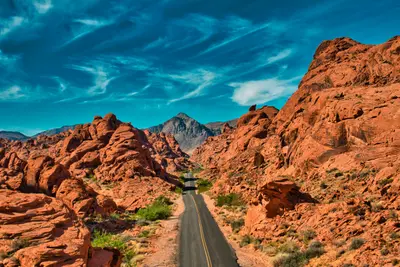
    Nevada is located east of California, between Oregon, Idaho, Utah, and Arizona. The state is primarily known as the home of Las Vegas, but you'll also find desert mountains, red sandstone canyons, and one side of Lake Tahoe here.With an average of around 180 millimeters of precipitation per year, Nevada is the driest state in the USA. Most of it belongs to the Great Basin, the south to the Mojave Desert, and over 80 percent of its area is federally administered. Its highest peak is Boundary Peak at 4,007 meters. Carson City is the capital, Reno is the center of the north, and about one-third of Lake Tahoe's water area lies in Nevada.To the east, the Great Basin National Park protects bristlecone pines, which are up to 5,000 years old, as well as the Lehman Caves. Around Las Vegas are the Hoover Dam from 1936, the Valley of Fire, Nevada's oldest State Park, and the Red Rock Canyon National Conservation Area. A part of Death Valley also belongs to Nevada.
    Downtown and Fremont Street

    Downtown and Fremont Street

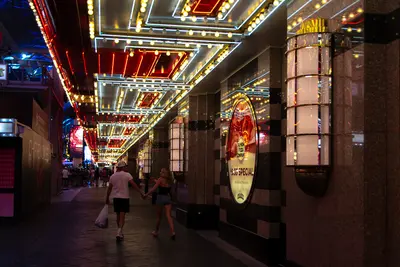
    Downtown is the old Las Vegas: The first casinos were located here, long before resorts grew on the Strip. The Golden Nugget opened in 1946, and even today, casinos line Fremont Street, appearing smaller, louder, and more affordable than their rivals to the south.Since 1995, a roughly 420-meter-long and 27-meter-high barrel vault canopy has spanned four city blocks. The Fremont Street Experience was updated in 2019 with over 49 million LEDs; in the evenings, light and music shows run on it, with bands playing on three stages. Beneath the canopy, people zip past on the SlotZilla zipline. The latest addition is Circa, which opened in 2020, an adults-only hotel with a massive sportsbook and a rooftop pool amphitheater. East of Las Vegas Boulevard, Fremont East begins, featuring bars, the Downtown Container Park, and the neon bar Atomic Liquors.During the day, two museums are worth visiting: The Mob Museum, housed in the former 1933 federal courthouse, tells the story of organized crime, while the Neon Museum displays over 200 decommissioned city signs.Come in the late afternoon, visit one of the museums, and stay for dinner and the first light show. Downtown is more compact than the Strip; almost everything is within walking distance.