Fernweh: Home
    ExploreTravel GuidesPlan a tripMy tripLast visited
    de|en
    All Places & RegionsAll highlightsAbout FernwehFAQPrivacy PolicyImprint
    ExploreTravel GuidesPlan a tripMy tripLast visited
    • Neighborhoods & highlights
    • Videos
    • Eat & drink
    • Food culture
    • Culture
    • Nightlife
    • Getting around
    • Accommodation
    • Plan trip
    • Nearby
    Danzig (Gdańsk)

    Poland

    Danzig (Gdańsk)

    City

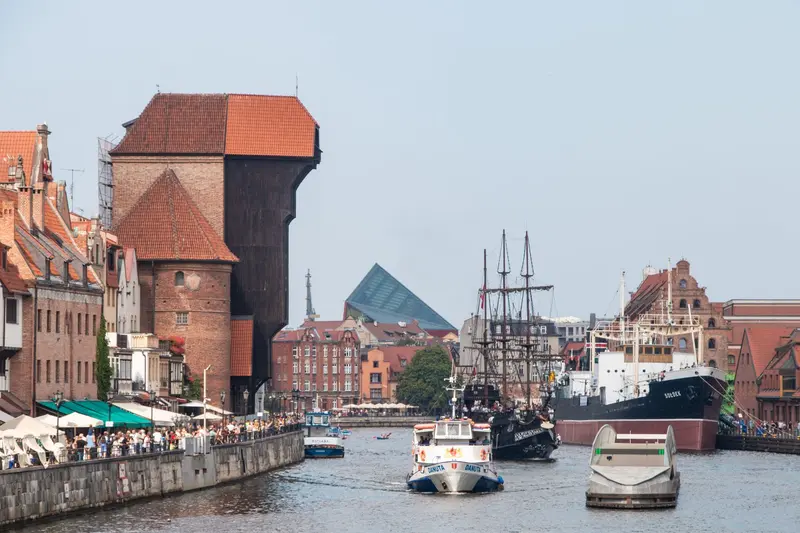
    Danzig (Gdańsk) is located on Gdańsk Bay, where the Motława River flows into the Baltic Sea, west of the Vistula estuary.

    by Felix Gillen

    1. Home
    2. Destinations
    3. Poland
    4. Danzig (Gdańsk)
    Danzig (Gdańsk) is located on Gdańsk Bay, where the Motława River flows into the Baltic Sea, west of the Vistula estuary. With nearly 490,000 inhabitants, the capital of the Pomeranian Voivodeship is Poland's sixth-largest city and forms the Tri-City (Trójmiasto) with Sopot and Gdingen (Gdynia). For centuries, Danzig was a Hanseatic city, prospering through grain trade and amber. In 1945, its center lay almost entirely in ruins, but it was rebuilt under Polish leadership. The heart is the Main Town (Główne Miasto) with Long Lane, Long Market, and Mariacka Street. To the north lies the Old Town, and east of the Motława are Granary Island and Langgarten. Further north, the shipyards dominate the landscape, where Solidarność originated in 1980. Outside the center are Langfuhr (Wrzeszcz) and Oliva (Oliwa). In Oliwa, you'll find the monastery founded around 1185 and the cathedral. A weekend is sufficient for the Old Town and the main museums. With two or three more days, you can visit Westerplatte and take the S-Bahn to Sopot or continue to the Hel Peninsula.

    Sights in Danzig (Gdańsk)

    Discover the most important sights and attractions

    Mary's Church (Bazylika Mariacka)
    Church

    1Mary's Church (Bazylika Mariacka)

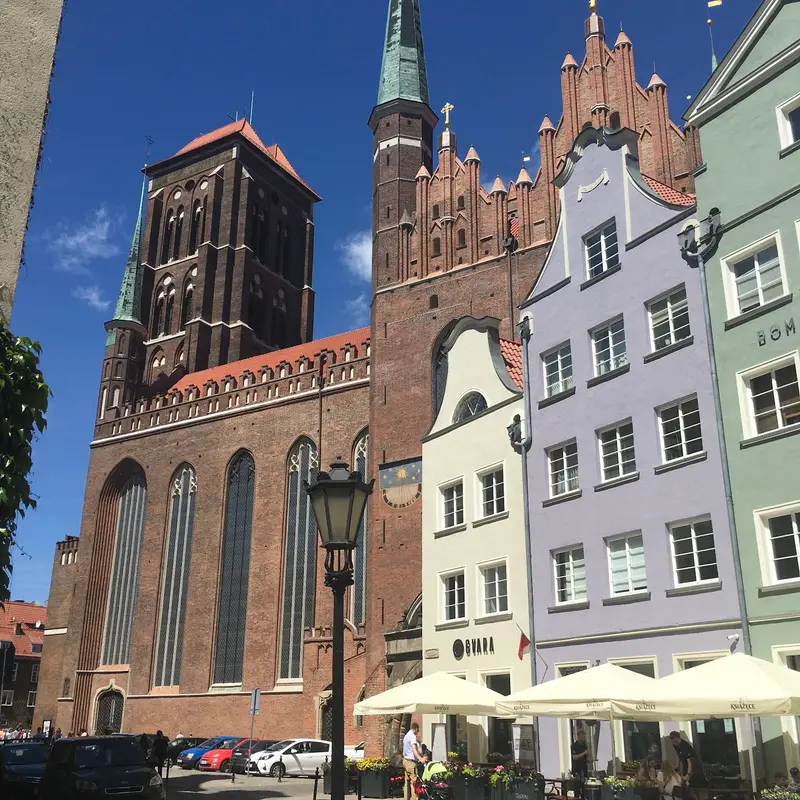
    St. Mary's Church was built starting in 1343 and completed in 1502. It is one of the three largest brick churches north of the Alps and is 105.5 meters long. Inside is the astronomical clock by Hans Düringer from the 15th century; its 82-meter-high tower has 409 steps.
    Open in Google Maps
    Artushof (Dwór Artusa)
    Museum

    2Artushof (Dwór Artusa)

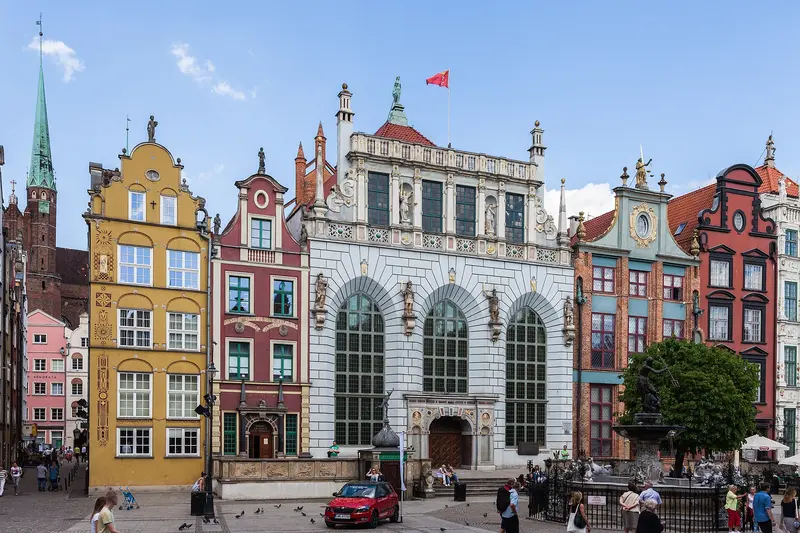
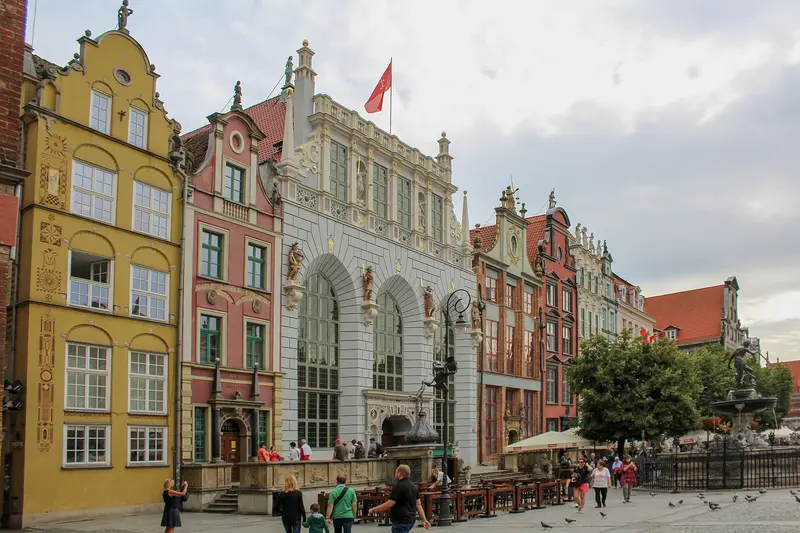
    The Artushof on the Long Market was the meeting place of the Gdańsk merchant guild. Today, it is a department of the city's Historical Museum.
    Open in Google Maps
    Long Market (Długi Targ)

    3Long Market (Długi Targ)

    The Long Market, the Main Town's grand square, is flanked by burgher houses, the Main Town Hall and the Green Gate. At its heart is the Neptune Fountain, with the Artus Court right beside it.
    Open in Google Maps
    Westerplatte
    Attraction

    4Westerplatte

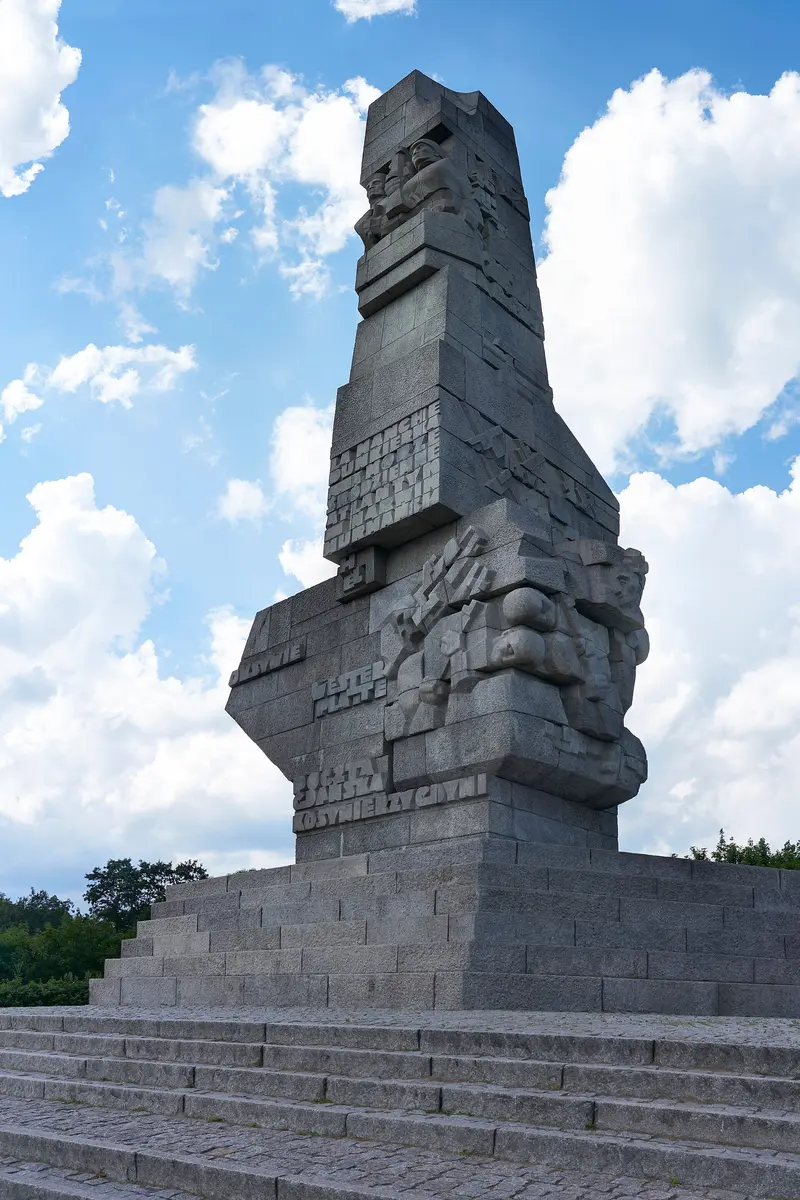
    On the forested peninsula at the harbour entrance, the battleship Schleswig-Holstein attacked the Polish ammunition depot on September 1, 1939; this attack is considered the start of World War II in Europe. The crew held out until September 7. The Westerplatte Monument was unveiled in 1966.
    Open in Google Maps
    Museum of the Second World War
    Museum

    5Museum of the Second World War

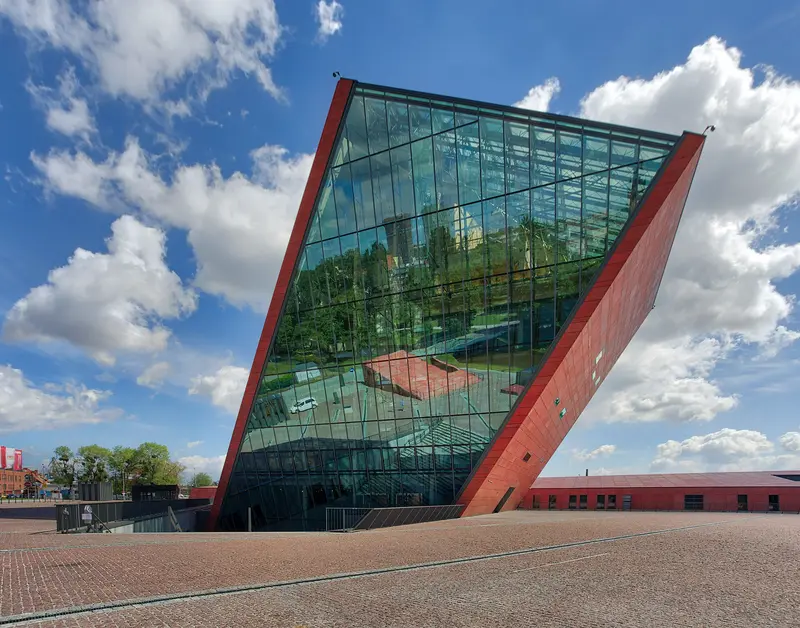
    The museum opened in March 2017 in a distinctive new building on Wałowa Street, near the Old Town. The exhibition presents the Second World War from a Polish perspective.
    Open in Google Maps
    European Solidarność Centre
    Museum

    6European Solidarność Centre

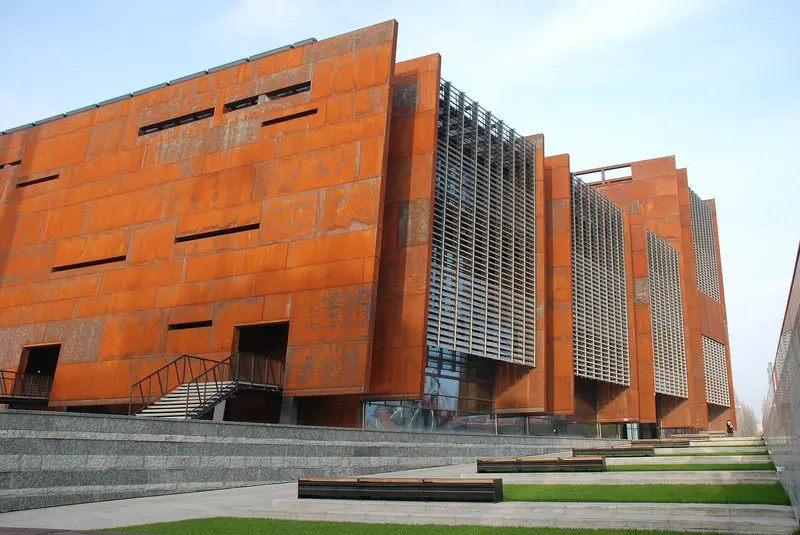
    The center opened in late August 2014 on the site of the Gdańsk Shipyard, where strikes under Lech Wałęsa took place in August 1980. The permanent exhibition displays around 2,000 exhibits on the history of Solidarność; the facade resembles the ship hulls built at the shipyard.
    Open in Google Maps

    Videos & Travel Reports

    Das moderne Danzig | Ostseereport

    Der NDR-Ostseereport zeigt Danzig zwischen Hansebauten und neuen Quartieren: auf dem früheren Werftgelände, wo die Junge Stadt entsteht, in der Graffiti-Szene und im Europäischen Zentrum der…

    An hour-long best-of-Poland special from the public television series Rick…

    Restaurants in Danzig (Gdańsk)

    1

    Arco by Paco Pérez

    The restaurant of Spanish chef Paco Pérez is on the 33rd floor of Olivia Star, offering views over the Tri-City and Gdańsk Bay, and holds a Michelin star. It serves a tasting menu with Polish ingredients and Spanish techniques.
    Show on Google Maps
    2

    Treinta y Tres

    Arco by Paco Pérez's sister restaurant, on the same floor at Olivia Star, serves Mediterranean cuisine and Spanish tapas. The Michelin Guide gives it a Bib Gourmand.
    Show on Google Maps
    3

    Elixir

    Restaurant and cocktail bar, the first venue in Poland to earn a Green Michelin star for its sustainable work. The cuisine is tailored to the cocktails.
    Show on Google Maps
    4

    Hewelke

    The restaurant is named after the Gdańsk brewer and astronomer Johannes Hevelius and is located in a former brewery with brick vaults. The Michelin Guide awards it a Bib Gourmand.
    Show on Google Maps

    Food and Drink in Gdansk

    Kashubian Herring

    Kashubian-style herring comes in several varieties: in tomato sauce with onions and pickles, or in a cream sauce with onion and apple.

    Danziger Goldwasser

    A clear, spicy-sweet herbal liqueur with gold leaf flakes, whose history dates back to 1598 and the Danzig distillery Der Lachs. It contains, among others, cardamom, coriander, citrus peel, juniper, and cinnamon.

    Machandel

    Colorless juniper schnapps, which was distilled until 1945 in nearby Tiegenhof (Nowy Dwór Gdański) and marketed as a Gdansk specialty.

    Culture and History

    Hanseatic City and Reconstruction Gdańsk was a member of the Hanseatic League from 1361 until the last Hansetag in 1669. This story is told by the gabled houses of Langgasse, Artushof as a meeting place for merchants, and St. Mary's Church, one of the three largest brick churches north of the Alps. Much of what you see today is the result of reconstruction after 1945. On Long Market, the 44th Modern Hansetag was opened in June 2024. Where the 20th Century Began and Ended On September 1, 1939, the battleship Schleswig-Holstein shelled the Polish garrison on Westerplatte; the attack is considered the start of World War II in Europe. In August 1980, workers at the Lenin Shipyard went on strike, and from their strike committee under Lech Wałęsa, the Solidarność trade union emerged. The Museum of the Second World War and the European Solidarność Centre tell both chapters in detail.

    Nightlife

    1

    Józef K.

    Bar and café on Piwna, named after Franz Kafka's novel character, with retro lamps and books on the walls.
    Show on Google Maps
    2

    Flisak '76

    Family-run cocktail bar in a vaulted cellar on Chlebnicka in Rechtstadt, open since 1976.
    Show on Google Maps
    3

    Brovarnia Gdańsk

    A brewery restaurant situated in a 17th-century warehouse on Szafarnia. All beer is brewed in-house.
    Show on Google Maps

    Getting Here and Around

    Getting There Lech Wałęsa Airport is northern Poland's main airport. The PKM Metropolitan Rail, in service since 2015, connects it directly to the rail network and city center. Long-distance trains arrive from Warsaw and Szczecin. By road, reach the city via national roads DK1, DK6, and DK7. Getting Around the City Rechtstadt, Altstadt and Speicherinsel are best explored on foot. For longer trips, use trams and the extensive bus network. The SKM S-Bahn connects to Sopot, Gdingen, and Wejherowo. Tickets are sold at machines and via apps like Jakdojade or zBiletem. The Metropolitan Ticket covers buses, trams, and Tricity regional trains. You won't need a car downtown; leave it at your accommodation.
    Accommodations in Danzig (Gdańsk)

    Find perfect stay in Danzig (Gdańsk)

    Booking.com* (Affiliate link)
    Search Hotels
    Agoda* (Affiliate link)
    Search Hotels
    Airbnb
    Vacation Rentals

    * Affiliate link: if you book through it, we earn a small commission. The price stays the same for you.

    Campgrounds in Danzig (Gdańsk)

    Find perfect campground in Danzig (Gdańsk)

    Search via Google Maps
    Campgrounds nearby (15km)
    Camping.info
    Find Campgrounds
    Park4Night
    RV Parks & Camping

    Plan your trip to Danzig (Gdańsk)

    Save places, build a route and plan your city trip, all in one place.

    1. 1
      Sunrise over alpine peaks and a sea of clouds
      1234

      Round trip

      12 days · 4 stops

      Saved

      Pick a route

      Pick a ready-made one or save places and plan your own.

      Open bookmarks
    2. 2

      Trip to Danzig (Gdańsk)

      Live
      • 1Mary's Church (Bazylika Mariacka)3 days
      • 2Artushof (Dwór Artusa)4 days
      • 3Long Market (Długi Targ)5 days
      Budget

      Plan your trip

      The planner sorts stops, days and budget. Plan together in real time.

      Start trip planning
    3. 3
      9:41 No signal
      Danzig (Gdańsk)
      Available offline

      Use it on the road

      Download the guide to your phone and use it on site, even offline.

    Nearby

    Sopot

    Sopot

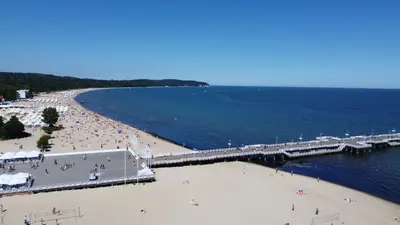
    Sopot is located between Danzig (Gdańsk) and Gdingen (Gdynia) on the Bay of Gdańsk, has around 32,000 inhabitants, and together with its two neighboring cities forms the Tricity. From a fishing village, it transformed into a seaside resort in the 19th century: in 1823, doctor Johann Georg Haffner opened the first bathing establishment with a spa facility. Between the World Wars, the casino and the Wagner festivals at the Forest Opera made the then Zoppot a sophisticated meeting point. Life revolves around the pedestrian-only Monte Cassino Street, which everyone simply calls Monciak, and the pier, considered Europe's longest wooden pier. Around the square by the Molo stand the Kurhaus (spa house), the lighthouse, and the Grand Hotel from the 1920s. A little inland, nestled in the forest, is the Forest Opera. In summer, the beach and Monciak fill up, and in the evenings, Sopot becomes the entertainment district of the Tricity. Outside of peak season, it's significantly quieter, and the pier is particularly worthwhile then, especially in clear weather.
    Hel Peninsula

    Hel Peninsula

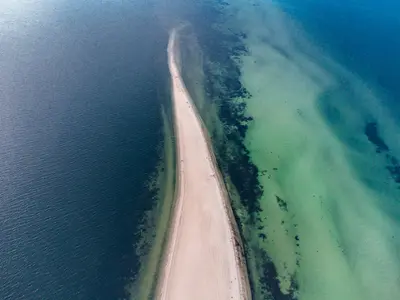
    The Hel Peninsula (Mierzeja Helska) extends 34 kilometers into the Baltic Sea, partially separating the Bay of Gdansk from the open sea. It is only 200 meters to three kilometers wide, narrowest at Władysławowo and Kuźnica. Dune chains up to 25 meters high protect the spit from the surf; on one side lies a beach on the Baltic Sea, on the other the calmer waters of the bay. Small towns line the road and railway: Chałupy and Kuźnica near the mainland, then Jastarnia and the seaside resort of Jurata, where the Polish president has his summer residence, and finally the port town of Hel at the tip. A cycle path runs the entire length of the peninsula. In summer, Hel is a popular destination for beach holidays and kitesurfing; outside the season, the spit becomes very quiet.

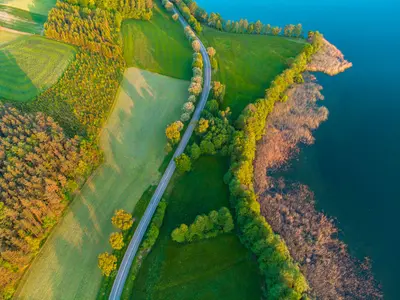
    The Pomeranian Voivodeship (Pomorskie) stretches from Gdańsk Bay to the shifting dunes of Łeba and from the Vistula Delta to the forests of Kashubia. Spanning 18,324 square kilometers, it is home to approximately 2.36 million people, its capital and largest city being Danzig (Gdańsk). The current voivodeship was established with the administrative reform in 1999. Along the coast are the Tri-City of Danzig, Sopot, and Gdingen (Gdynia), the narrow Hel Peninsula, and the seaside resort of Łeba. In the hinterland lie the Kashubian Lakes, where Kashubian is an official language in four municipalities, and in the south, Malbork Castle on the Nogat river.
    Marienburg (Malbork)

    Marienburg (Malbork)

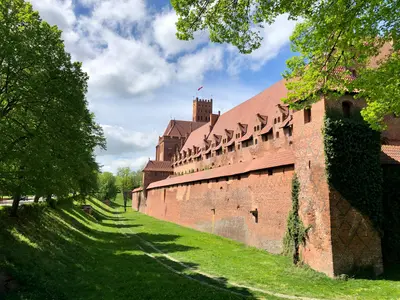
    Marienburg (Malbork), located on the Nogat, a distributary of the Vistula, is considered Europe's largest brick building: over 30 million bricks were used across approximately 21 hectares. The Teutonic Order constructed the complex between about 1270 and 1300; from 1309, it was the Grand Master's seat. A UNESCO World Heritage site since 1997, it attracts around 500,000 visitors each year. The castle has three sections: the Upper Castle (with St. Mary's Church), the Middle Castle (Grand Master's Palace, Great Refectory), and the Outer Bailey (housing service buildings). Plan half a day for the interiors; an excursion from Danzig is easily manageable by train or car.
    Łeba and Słowiński National Park

    Łeba and Słowiński National Park

    Łeba is a small seaside resort with around 3,000 inhabitants at the mouth of the river of the same name into the Baltic Sea, about 50 kilometers northeast of Stolp (Słupsk). The town has been a spa since 1862. Its location between the Baltic Sea, Lake Łebsko (Jezioro Łebsko), and Sarbsko Lake makes it a starting point for the Słowiński National Park, which begins directly to its west. The national park, founded in 1967, is known for its shifting dunes: The Łącka Dune reaches 42 meters and moves up to ten meters annually. Additionally, there's Lake Łebsko, with a good 71 square kilometers the largest coastal lake west of Gdańsk, and Lake Gardno. Since the 1970s, the area has been a UNESCO Biosphere Reserve, and a Ramsar wetland since 1995. In the town itself, days revolve around the beach, the harbor canal, and fried fish eateries. For the dune, you should plan half a day, ideally early in the morning or late in the afternoon.

    Sources & method

    • Photos: Wikimedia Commons, Pexels, Google Maps. Each photo carries its credit.
    • Place data such as addresses and ratings comes from Google Maps.
    • Video reportages: Das moderne Danzig | Ostseereport, Rick Steves' Europe: Poland
    • The content is based on web research from public, traceable sources. How the content is made · The role of AI