Fernweh: Home
    ExploreTravel GuidesPlan a tripMy tripLast visited
    de|en
    All Places & RegionsAll highlightsAbout FernwehFAQPrivacy PolicyImprint
    ExploreTravel GuidesPlan a tripMy tripLast visited
    • Neighborhoods & highlights
    • Eat & drink
    • Food culture
    • Culture
    • Getting around
    • Accommodation
    • Plan trip
    • Nearby
    Hel Peninsula

    Poland

    Hel Peninsula

    City

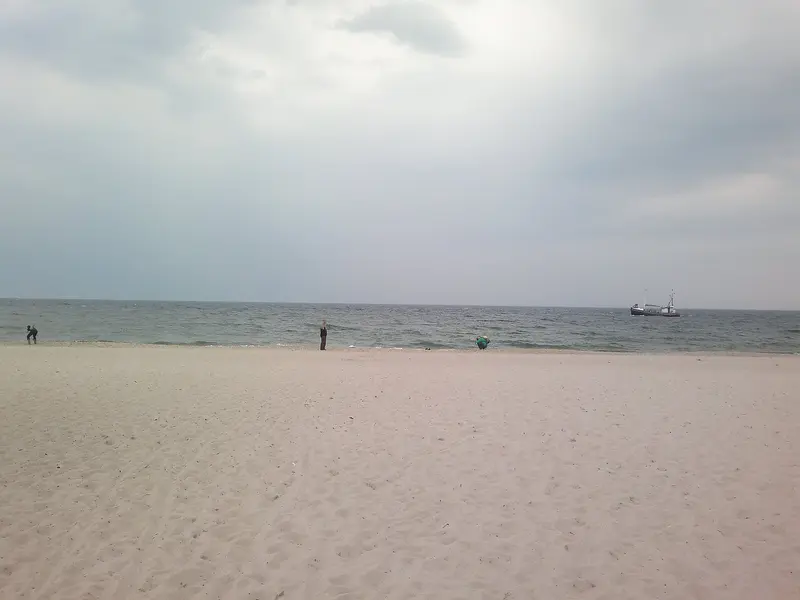
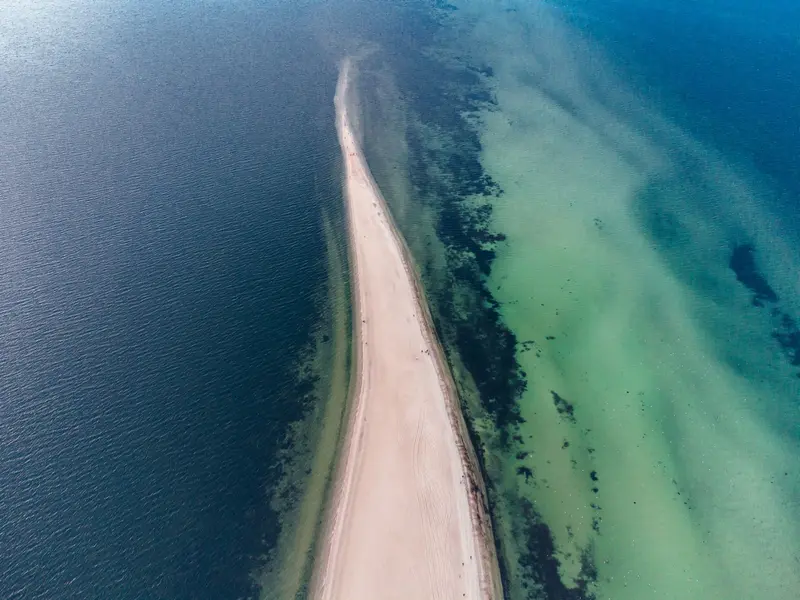
    The Hel Peninsula (Mierzeja Helska) extends 34 kilometers into the Baltic Sea, partially separating the Bay of Gdansk from the open sea.

    by Felix Gillen

    1. Home
    2. Destinations
    3. Poland
    4. Hel Peninsula
    The Hel Peninsula (Mierzeja Helska) extends 34 kilometers into the Baltic Sea, partially separating the Bay of Gdansk from the open sea. It is only 200 meters to three kilometers wide, narrowest at Władysławowo and Kuźnica. Dune chains up to 25 meters high protect the spit from the surf; on one side lies a beach on the Baltic Sea, on the other the calmer waters of the bay. Small towns line the road and railway: Chałupy and Kuźnica near the mainland, then Jastarnia and the seaside resort of Jurata, where the Polish president has his summer residence, and finally the port town of Hel at the tip. A cycle path runs the entire length of the peninsula. In summer, Hel is a popular destination for beach holidays and kitesurfing; outside the season, the spit becomes very quiet.

    Sights in Hel Peninsula

    Discover the most important sights and attractions

    Hel Spit (Cape Hel)
    Point of Interest

    1Hel Spit (Cape Hel)

    The outermost tip of the peninsula beyond the town of Hel. Here ends the spit that partially separates the Bay of Gdansk from the open Baltic Sea.
    Open in Google Maps
    Lighthouse Hel
    Historic Landmark

    2Lighthouse Hel

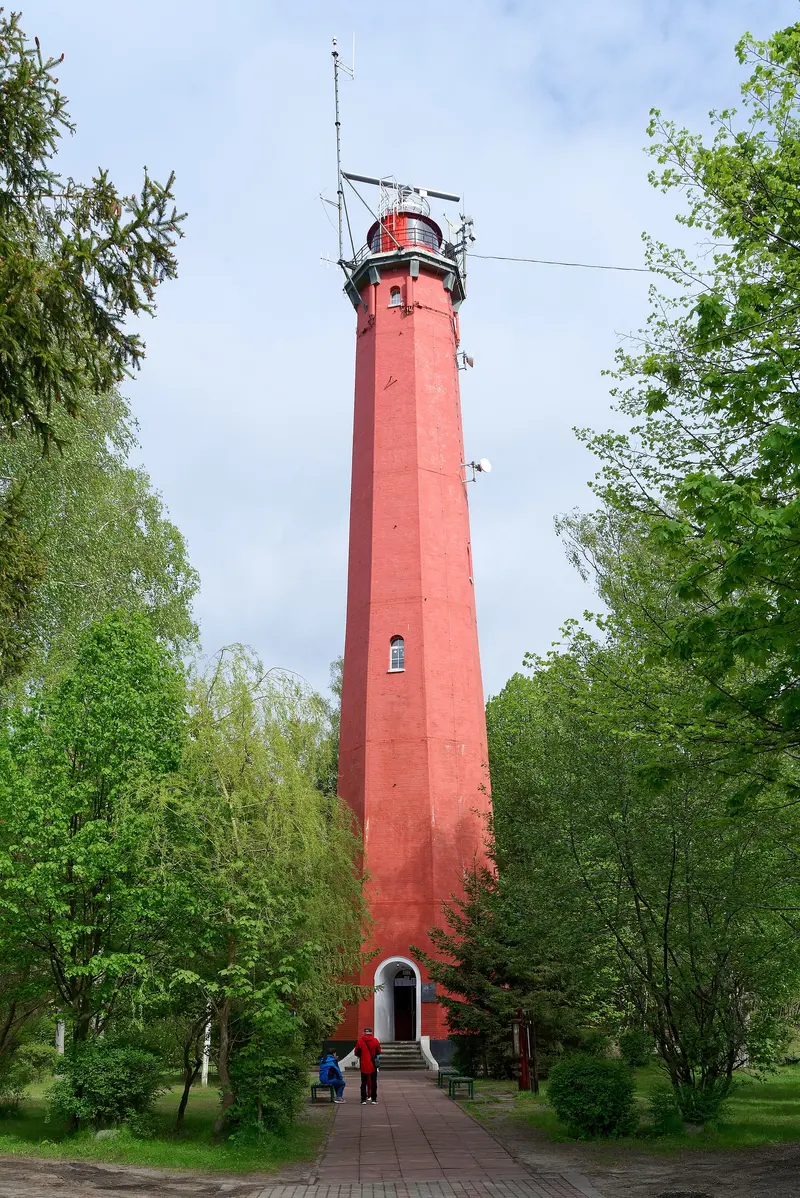
    The current lighthouse was built in 1942, ten meters from the foundation of the 1939-demolished predecessor, and is 41.5 meters high up to its radar platform. It is still in operation today.
    Open in Google Maps
    Sealarium Hel
    Museum

    3Sealarium Hel

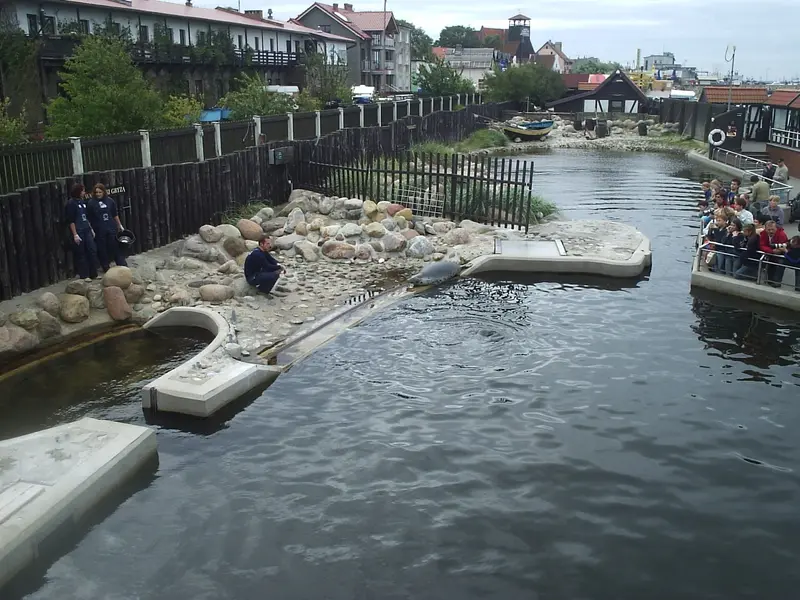
    The Seal Sanctuary of the Stacja Morska of the University of Gdańsk is located in Hel. Most visitors gather at the pools for the feedings with a short lecture, held from September to June at 11 AM and 2 PM, and four times daily in July and August. It is open daily from 10 AM. Admission costs 30 Złoty, reduced 25 Złoty; tickets are available at machines before the entrance or online, reservations are not possible.
    Open in Google Maps
    Muzeum Rybołówstwa (Fisheries Museum)

    4Muzeum Rybołówstwa (Fisheries Museum)

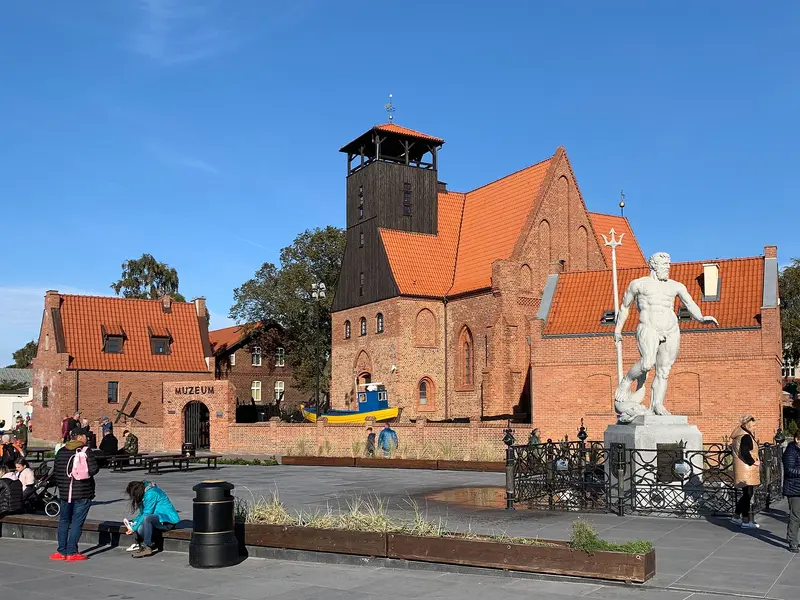
    The branch of the National Maritime Museum in Gdańsk opened in 1972 in the Peter and Paul Church, a formerly Protestant church from the 15th century. The exhibition tells the story of the Baltic Sea, fishing in Gdańsk Bay and the Vistula Lagoon, and the history of the peninsula. Outside stand traditional fishing boats.
    Open in Google Maps
    Muzeum Obrony Wybrzeża (Coastal Defense Museum)

    5Muzeum Obrony Wybrzeża (Coastal Defense Museum)

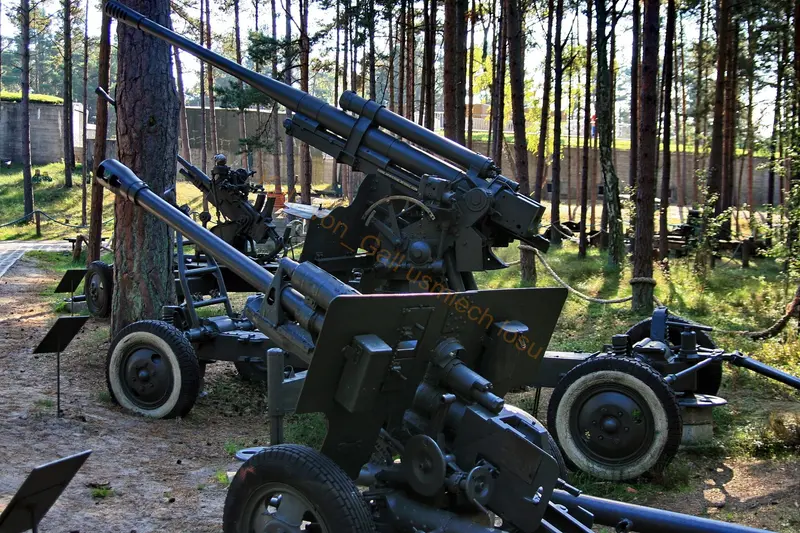
    Opened in 2006, the museum on ul. Helska occupies buildings of the former German coastal battery Schleswig-Holstein, with its 406mm guns. See Gun Emplacement No. 2 with accommodations and munition depots, a multi-story fire control tower with observation deck, and the reconstructed pre-war Heliodor Laskowski Battery. A narrow-gauge railway links facilities; since 2017, it's part of the Helski Kompleks Muzealny.
    Open in Google Maps

    Restaurants in Hel Peninsula

    1

    Urwis House

    Restaurant on Sychty Street in Jastarnia with multiple indoor and outdoor areas and moderately priced Polish cuisine.
    Show on Google Maps
    2

    Maszoperia

    Located on Wiejska in Hel, this restaurant spans three typical fishermen's houses, one dating from 1830. Most dishes adhere to traditional recipes, with fish and seafood taking centre stage.
    Show on Google Maps
    3

    Cutter

    A restaurant, café, and traditional fish eatery all in one, on Wiejska Street in Hel. Spread across three rooms, featuring a fireplace and a bar crafted from a genuine fishing cutter, the focus is on traditionally prepared fish dishes.
    Show on Google Maps

    Eating and Drinking on Hel

    Fish dishes from traditional recipes

    Restaurants in Hel, such as those in old fishing houses on Wiejska, primarily offer traditionally prepared fish dishes and seafood on the menu.

    Herring, Kashubian

    Kashubian-style herring is available in several varieties: in tomato sauce with onions and pickled cucumbers, or in a cream sauce with onion and apple.

    Helskie anchovies

    Skinless sprat fillets, marinated in a spiced brine. This specialty has been on the Polish List of Traditional Products since 2022. Sprats were long an everyday fish on the Kashubian coast.

    History of the Peninsula

    Stronghold on the Bay of Gdańsk The Teutonic Order brought the peninsula under its control in 1309 and 1343. In 1772, it fell to Prussia, and after World War I, to Poland. Poland developed Hel into a fortified area, which was defended after the German invasion in 1939 until October 2. Many bunkers and batteries are accessible today; in 2006, the Museum of Coastal Defense opened in Hel. End of War and Place of Refuge In spring 1945, the peninsula became a place of refuge for German soldiers and civilians. On April 16, 1945, the freighter Goya was torpedoed with an estimated over 7,000 refugees on board. The peninsula remained in German hands until the capitulation in May 1945.

    Arrival and On the Go

    Getting there A train line connects the peninsula with Tricity and ends in Hel. A road runs parallel to it, reaching the tip. A relaxed alternative is taking a ferry from Gdańsk to Hel; the journey takes about two hours. Getting around A bike path runs along the entire length of the peninsula, connecting the towns. During peak season, beachside parking is scarce; travelling by train or bike gives you more flexibility.

    Accommodations in Hel Peninsula

    Find perfect stay in Hel Peninsula

    Booking.com* (Affiliate link)
    Search Hotels
    Agoda* (Affiliate link)
    Search Hotels
    Airbnb
    Vacation Rentals

    * Affiliate link: if you book through it, we earn a small commission. The price stays the same for you.

    Campgrounds in Hel Peninsula

    Find perfect campground in Hel Peninsula

    Search via Google Maps
    Campgrounds nearby (15km)
    Camping.info
    Find Campgrounds
    Park4Night
    RV Parks & Camping

    Plan your trip to Hel Peninsula

    Save places, build a route and plan your city trip, all in one place.

    1. 1
      Sunrise over alpine peaks and a sea of clouds
      1234

      Round trip

      12 days · 4 stops

      Saved

      Pick a route

      Pick a ready-made one or save places and plan your own.

      Open bookmarks
    2. 2

      Trip to Hel Peninsula

      Live
      • 1Hel Spit (Cape Hel)3 days
      • 2Lighthouse Hel4 days
      • 3Sealarium Hel5 days
      Budget

      Plan your trip

      The planner sorts stops, days and budget. Plan together in real time.

      Start trip planning
    3. 3
      9:41 No signal
      Hel Peninsula
      Available offline

      Use it on the road

      Download the guide to your phone and use it on site, even offline.

    Nearby

    Sopot

    Sopot

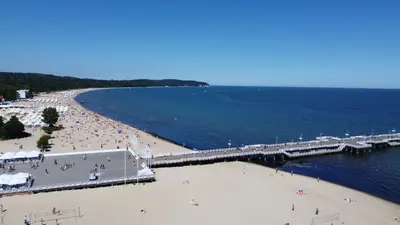
    Sopot is located between Danzig (Gdańsk) and Gdingen (Gdynia) on the Bay of Gdańsk, has around 32,000 inhabitants, and together with its two neighboring cities forms the Tricity. From a fishing village, it transformed into a seaside resort in the 19th century: in 1823, doctor Johann Georg Haffner opened the first bathing establishment with a spa facility. Between the World Wars, the casino and the Wagner festivals at the Forest Opera made the then Zoppot a sophisticated meeting point. Life revolves around the pedestrian-only Monte Cassino Street, which everyone simply calls Monciak, and the pier, considered Europe's longest wooden pier. Around the square by the Molo stand the Kurhaus (spa house), the lighthouse, and the Grand Hotel from the 1920s. A little inland, nestled in the forest, is the Forest Opera. In summer, the beach and Monciak fill up, and in the evenings, Sopot becomes the entertainment district of the Tricity. Outside of peak season, it's significantly quieter, and the pier is particularly worthwhile then, especially in clear weather.
    Danzig (Gdańsk)

    Danzig (Gdańsk)

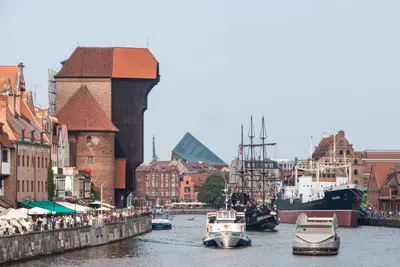
    Danzig (Gdańsk) is located on Gdańsk Bay, where the Motława River flows into the Baltic Sea, west of the Vistula estuary. With nearly 490,000 inhabitants, the capital of the Pomeranian Voivodeship is Poland's sixth-largest city and forms the Tri-City (Trójmiasto) with Sopot and Gdingen (Gdynia). For centuries, Danzig was a Hanseatic city, prospering through grain trade and amber. In 1945, its center lay almost entirely in ruins, but it was rebuilt under Polish leadership. The heart is the Main Town (Główne Miasto) with Long Lane, Long Market, and Mariacka Street. To the north lies the Old Town, and east of the Motława are Granary Island and Langgarten. Further north, the shipyards dominate the landscape, where Solidarność originated in 1980. Outside the center are Langfuhr (Wrzeszcz) and Oliva (Oliwa). In Oliwa, you'll find the monastery founded around 1185 and the cathedral. A weekend is sufficient for the Old Town and the main museums. With two or three more days, you can visit Westerplatte and take the S-Bahn to Sopot or continue to the Hel Peninsula.

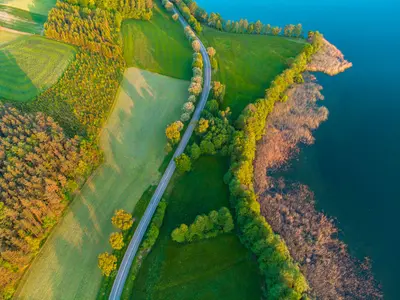
    The Pomeranian Voivodeship (Pomorskie) stretches from Gdańsk Bay to the shifting dunes of Łeba and from the Vistula Delta to the forests of Kashubia. Spanning 18,324 square kilometers, it is home to approximately 2.36 million people, its capital and largest city being Danzig (Gdańsk). The current voivodeship was established with the administrative reform in 1999. Along the coast are the Tri-City of Danzig, Sopot, and Gdingen (Gdynia), the narrow Hel Peninsula, and the seaside resort of Łeba. In the hinterland lie the Kashubian Lakes, where Kashubian is an official language in four municipalities, and in the south, Malbork Castle on the Nogat river.
    Marienburg (Malbork)

    Marienburg (Malbork)

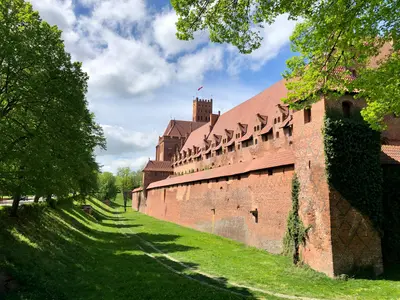
    Marienburg (Malbork), located on the Nogat, a distributary of the Vistula, is considered Europe's largest brick building: over 30 million bricks were used across approximately 21 hectares. The Teutonic Order constructed the complex between about 1270 and 1300; from 1309, it was the Grand Master's seat. A UNESCO World Heritage site since 1997, it attracts around 500,000 visitors each year. The castle has three sections: the Upper Castle (with St. Mary's Church), the Middle Castle (Grand Master's Palace, Great Refectory), and the Outer Bailey (housing service buildings). Plan half a day for the interiors; an excursion from Danzig is easily manageable by train or car.
    Łeba and Słowiński National Park

    Łeba and Słowiński National Park

    Łeba is a small seaside resort with around 3,000 inhabitants at the mouth of the river of the same name into the Baltic Sea, about 50 kilometers northeast of Stolp (Słupsk). The town has been a spa since 1862. Its location between the Baltic Sea, Lake Łebsko (Jezioro Łebsko), and Sarbsko Lake makes it a starting point for the Słowiński National Park, which begins directly to its west. The national park, founded in 1967, is known for its shifting dunes: The Łącka Dune reaches 42 meters and moves up to ten meters annually. Additionally, there's Lake Łebsko, with a good 71 square kilometers the largest coastal lake west of Gdańsk, and Lake Gardno. Since the 1970s, the area has been a UNESCO Biosphere Reserve, and a Ramsar wetland since 1995. In the town itself, days revolve around the beach, the harbor canal, and fried fish eateries. For the dune, you should plan half a day, ideally early in the morning or late in the afternoon.

    Sources & method

    • Photos: Wikimedia Commons, Pexels, Google Maps. Each photo carries its credit.
    • Place data such as addresses and ratings comes from Google Maps.
    • The content is based on web research from public, traceable sources. How the content is made · The role of AI