Fernweh: Home
    ExploreTravel GuidesPlan a tripMy tripLast visited
    de|en
    All Places & RegionsAll highlightsAbout FernwehFAQPrivacy PolicyImprint
    ExploreTravel GuidesPlan a tripMy tripLast visited
    Marienburg (Malbork)

    Poland

    Marienburg (Malbork)

    Point of Interest

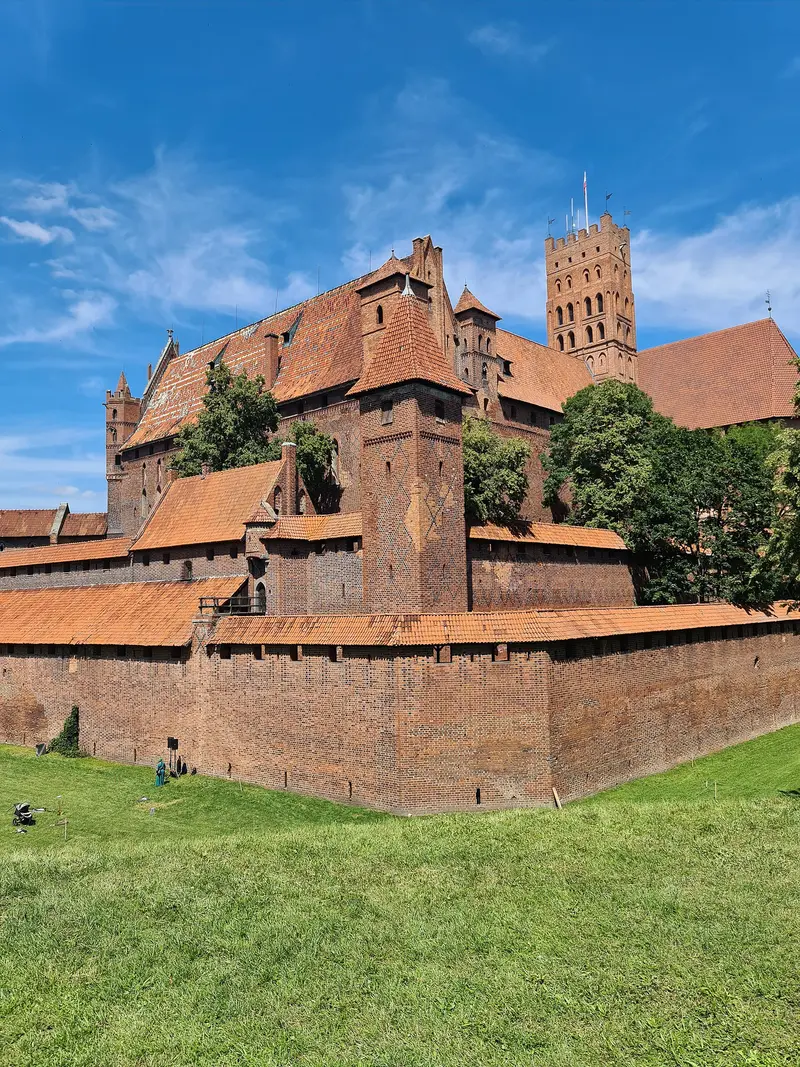
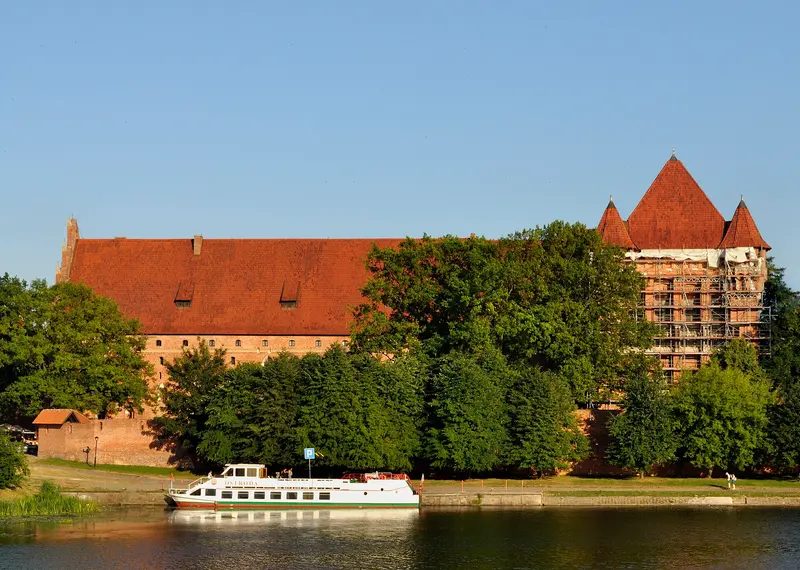
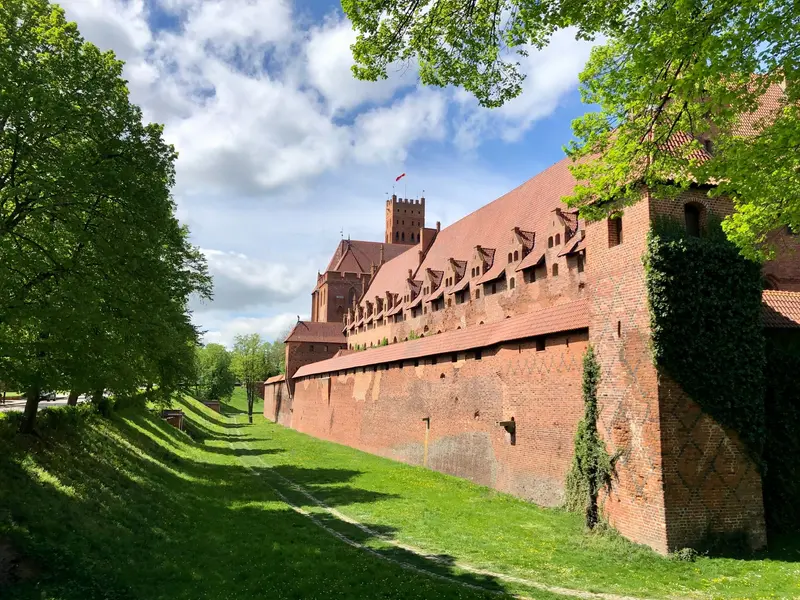
    Marienburg (Malbork), located on the Nogat, a distributary of the Vistula, is considered Europe's largest brick building: over 30 million bricks were used across approximately 21 hectares.

    by Felix Gillen

    1. Home
    2. Destinations
    3. Poland
    4. Marienburg (Malbork)
    Marienburg (Malbork), located on the Nogat, a distributary of the Vistula, is considered Europe's largest brick building: over 30 million bricks were used across approximately 21 hectares. The Teutonic Order constructed the complex between about 1270 and 1300; from 1309, it was the Grand Master's seat. A UNESCO World Heritage site since 1997, it attracts around 500,000 visitors each year. The castle has three sections: the Upper Castle (with St. Mary's Church), the Middle Castle (Grand Master's Palace, Great Refectory), and the Outer Bailey (housing service buildings). Plan half a day for the interiors; an excursion from Danzig is easily manageable by train or car.

    Sights in Marienburg (Malbork)

    Discover the most important sights and attractions

    Middle Castle (Zamek Średni)

    1Middle Castle (Zamek Średni)

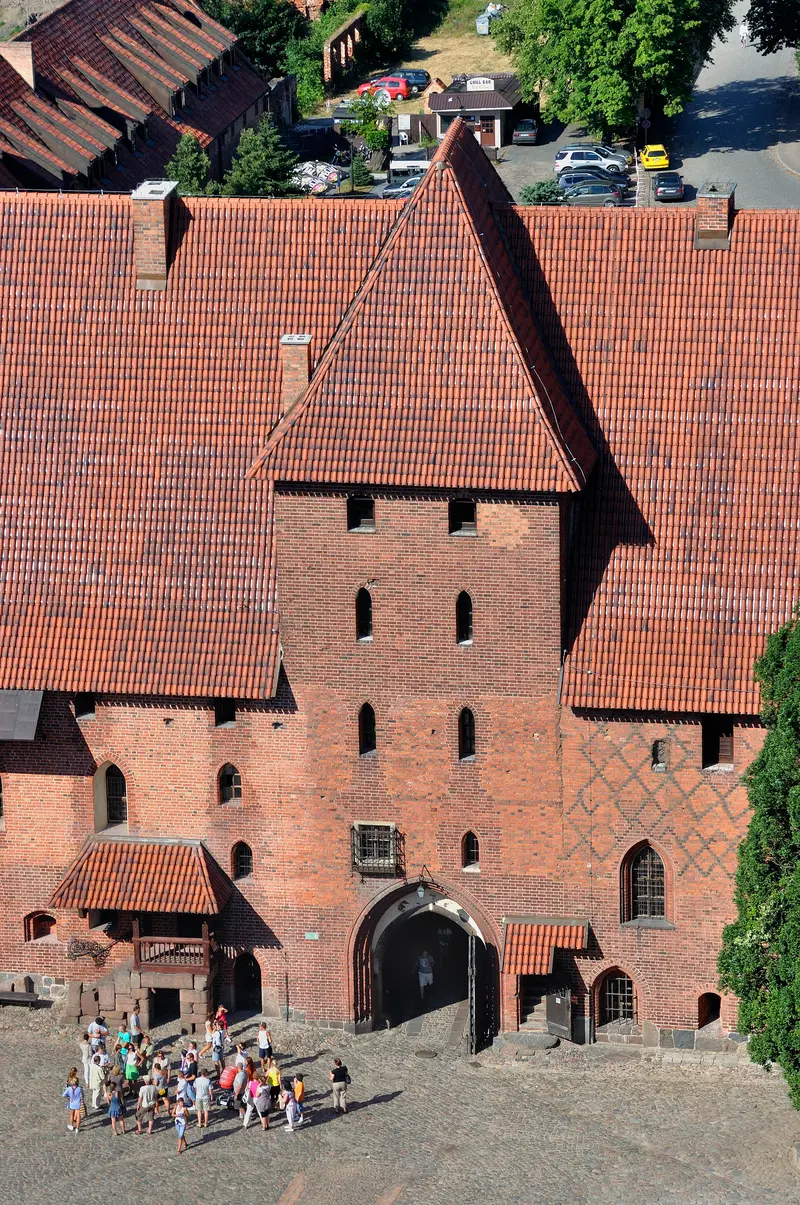
    In the Middle Castle are the Grand Master's Palace and the Great Refectory, a hall around 30 meters long.
    Open in Google Maps
    High Castle (Zamek Wysoki)

    2High Castle (Zamek Wysoki)

    The High Castle is the oldest part of the castle, which the Teutonic Order built on the Nogat between approximately 1270 and 1300. In St. Mary's Church, the eight-meter-high Madonna figure stands once again, having been destroyed in 1945 and reconsecrated on March 31, 2016, after its restoration.
    Open in Google Maps
    Hochmeister Palace
    Historic Landmark

    3Hochmeister Palace

    The tower-like palace, completed around 1400, was the residence of the Grand Masters of the Teutonic Order. Its summer and winter refectories are famous.
    Open in Google Maps

    Videos & Travel Reports

    Rick Steves' Europe: Poland

    An hour-long best-of-Poland special from the public television series Rick Steves' Europe. It starts in Kraków and the Auschwitz-Birkenau Memorial, continues to Warsaw, Toruń and Malbork Castle and…

    Restaurants in Marienburg (Malbork)

    1

    Gothic Cafe & Restaurant

    Restaurant on the castle grounds, offering Polish-Pomeranian cuisine.
    Show on Google Maps
    2

    Piwniczka

    Castle complex restaurant with Polish-Pomeranian cuisine.
    Show on Google Maps

    History of the Order Castle

    From the Seat of the Order to a Polish Royal Castle In 1309, the Grand Master of the Teutonic Order moved his seat to the Nogat. Mercenaries sold the castle to the Polish king in 1456, who then took up residence in it in 1457. In 1772, it passed to Prussia and was restored in the late 19th century under Emperor Wilhelm II by Conrad Steinbrecht. Destruction and Reconstruction The fighting in 1945 destroyed around 60 percent of the complex. Poland rebuilt it after the war, and the Castle Museum was founded in 1961. A symbol of this reconstruction is the eight-meter-high Madonna figure of St. Mary's Church, which was reconsecrated in 2016 after its restoration.

    Visit and Directions

    Opening Hours and TicketsDuring the autumn-winter season (October 1, 2026 to April 25, 2027), the castle opens Tuesdays to Sundays at 9 AM. Last entry for the Castle Route (Trasa Zamkowa – Historyczna) is at 12:45 PM; the interiors and exhibitions close at 3 PM. On Mondays, only the Outer Route (Trasa Spacerowa) across the grounds is open, from 9 AM to 4 PM, with last entry at 2:30 PM. This season, the Castle Route costs 80 Złoty, 60 Złoty reduced; the Outer Route costs 35 Złoty, 25 Złoty reduced. The audio guide, in German and English among others, is included. Tickets can be purchased online at zamek.malbork.pl or on site. The castle remains closed on November 1, and on December 24 and 25. Please check the museum's website for current times and prices before your visit.Getting ThereMalbork has a train station, and intercity buses also stop in the city. By car, you can reach Malbork via roads 22 and 55; the drive from Gdańsk takes approximately 50 minutes. Parking and numerous restaurants are available near the castle.

    Accommodations in Marienburg (Malbork)

    Find perfect stay in Marienburg (Malbork)

    Booking.com* (Affiliate link)
    Search Hotels
    Agoda* (Affiliate link)
    Search Hotels
    Airbnb
    Vacation Rentals

    * Affiliate link: if you book through it, we earn a small commission. The price stays the same for you.

    Campgrounds in Marienburg (Malbork)

    Find perfect campground in Marienburg (Malbork)
    Search via Google Maps
    Campgrounds nearby (15km)
    Camping.info
    Find Campgrounds
    Park4Night
    RV Parks & Camping

    Nearby

    Danzig (Gdańsk)

    Danzig (Gdańsk)

    Danzig (Gdańsk) is located on Gdańsk Bay, where the Motława River flows into the Baltic Sea, west of the Vistula estuary. With nearly 490,000 inhabitants, the capital of the Pomeranian Voivodeship is Poland's sixth-largest city and forms the Tri-City (Trójmiasto) with Sopot and Gdingen (Gdynia). For centuries, Danzig was a Hanseatic city, prospering through grain trade and amber. In 1945, its center lay almost entirely in ruins, but it was rebuilt under Polish leadership. The heart is the Main Town (Główne Miasto) with Long Lane, Long Market, and Mariacka Street. To the north lies the Old Town, and east of the Motława are Granary Island and Langgarten. Further north, the shipyards dominate the landscape, where Solidarność originated in 1980. Outside the center are Langfuhr (Wrzeszcz) and Oliva (Oliwa). In Oliwa, you'll find the monastery founded around 1185 and the cathedral. A weekend is sufficient for the Old Town and the main museums. With two or three more days, you can visit Westerplatte and take the S-Bahn to Sopot or continue to the Hel Peninsula.
    Sopot

    Sopot

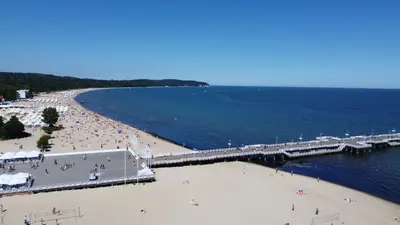
    Sopot is located between Danzig (Gdańsk) and Gdingen (Gdynia) on the Bay of Gdańsk, has around 32,000 inhabitants, and together with its two neighboring cities forms the Tricity. From a fishing village, it transformed into a seaside resort in the 19th century: in 1823, doctor Johann Georg Haffner opened the first bathing establishment with a spa facility. Between the World Wars, the casino and the Wagner festivals at the Forest Opera made the then Zoppot a sophisticated meeting point. Life revolves around the pedestrian-only Monte Cassino Street, which everyone simply calls Monciak, and the pier, considered Europe's longest wooden pier. Around the square by the Molo stand the Kurhaus (spa house), the lighthouse, and the Grand Hotel from the 1920s. A little inland, nestled in the forest, is the Forest Opera. In summer, the beach and Monciak fill up, and in the evenings, Sopot becomes the entertainment district of the Tricity. Outside of peak season, it's significantly quieter, and the pier is particularly worthwhile then, especially in clear weather.

    The Pomeranian Voivodeship (Pomorskie) stretches from Gdańsk Bay to the shifting dunes of Łeba and from the Vistula Delta to the forests of Kashubia. Spanning 18,324 square kilometers, it is home to approximately 2.36 million people, its capital and largest city being Danzig (Gdańsk). The current voivodeship was established with the administrative reform in 1999. Along the coast are the Tri-City of Danzig, Sopot, and Gdingen (Gdynia), the narrow Hel Peninsula, and the seaside resort of Łeba. In the hinterland lie the Kashubian Lakes, where Kashubian is an official language in four municipalities, and in the south, Malbork Castle on the Nogat river.
    Hel Peninsula

    Hel Peninsula

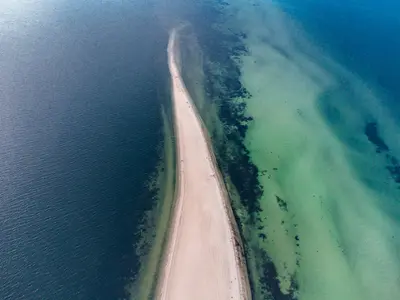
    The Hel Peninsula (Mierzeja Helska) extends 34 kilometers into the Baltic Sea, partially separating the Bay of Gdansk from the open sea. It is only 200 meters to three kilometers wide, narrowest at Władysławowo and Kuźnica. Dune chains up to 25 meters high protect the spit from the surf; on one side lies a beach on the Baltic Sea, on the other the calmer waters of the bay. Small towns line the road and railway: Chałupy and Kuźnica near the mainland, then Jastarnia and the seaside resort of Jurata, where the Polish president has his summer residence, and finally the port town of Hel at the tip. A cycle path runs the entire length of the peninsula. In summer, Hel is a popular destination for beach holidays and kitesurfing; outside the season, the spit becomes very quiet.
    Kuyavian-Pomerania

    Kuyavian-Pomerania

    Kuyavian-Pomeranian (Kujawsko-Pomorskie) is in north-central Poland, straddling the lower Vistula, with nearly 2 million residents. The voivodeship, formed in 1999, unites historic regions: Kuyavia, parts of Pomerelia, Chełmno Land, and Dobrzyń Land. Bydgoszcz is the Voivode's administrative seat; Parliament and Marshal's Office are in Toruń.The landscape includes numerous lakes like Gopło and vast forests, especially the Tuchola Forest (Bory Tucholskie). Culturally, Brick Gothic of Hanseatic towns on the Vistula and archaeological sites like Biskupin shape the region.

    Sources & method

    • Photos: Wikimedia Commons, Pexels, Google Maps. Each photo carries its credit.
    • Place data such as addresses and ratings comes from Google Maps.
    • Video reportages: Rick Steves' Europe: Poland
    • The content is based on web research from public, traceable sources. How the content is made · The role of AI