Fernweh: Home
    ExploreTravel GuidesPlan a tripMy tripLast visited
    de|en
    All Places & RegionsAll highlightsAbout FernwehFAQPrivacy PolicyImprint
    ExploreTravel GuidesPlan a tripMy tripLast visited
    • Overview
    • Places in the region
    • Round trips
    • Nearby
    Kuyavian-Pomerania
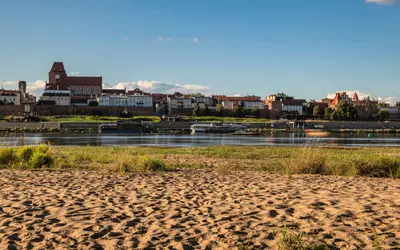
    1bumer / Wikimedia Commons / CC BY-SA 4.0

    Poland

    Kuyavian-Pomerania

    Region

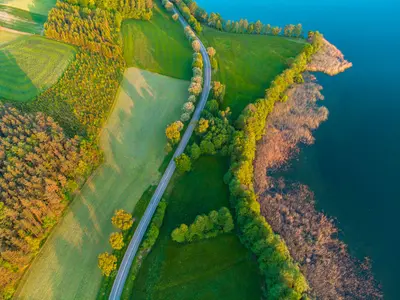
    Kuyavian-Pomeranian (Kujawsko-Pomorskie) is in north-central Poland, straddling the lower Vistula, with nearly 2 million residents.

    by Felix Gillen

    1. Home
    2. Destinations
    3. Poland
    4. Kuyavian-Pomerania
    Kuyavian-Pomeranian (Kujawsko-Pomorskie) is in north-central Poland, straddling the lower Vistula, with nearly 2 million residents. The voivodeship, formed in 1999, unites historic regions: Kuyavia, parts of Pomerelia, Chełmno Land, and Dobrzyń Land. Bydgoszcz is the Voivode's administrative seat; Parliament and Marshal's Office are in Toruń.The landscape includes numerous lakes like Gopło and vast forests, especially the Tuchola Forest (Bory Tucholskie). Culturally, Brick Gothic of Hanseatic towns on the Vistula and archaeological sites like Biskupin shape the region.
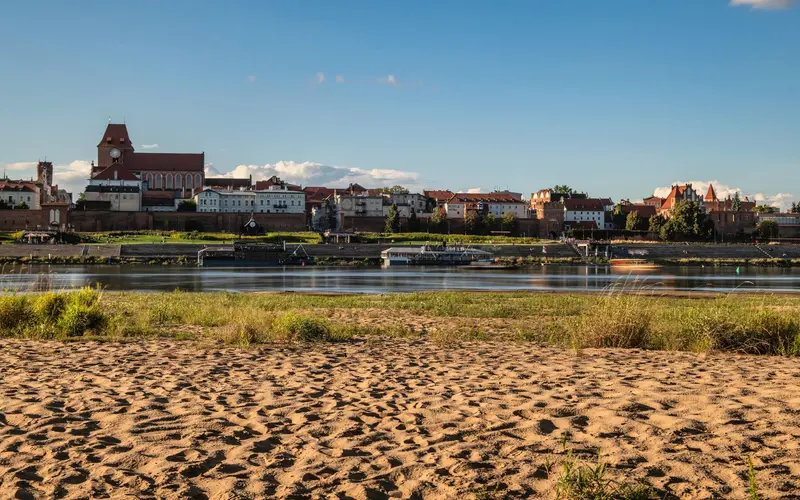
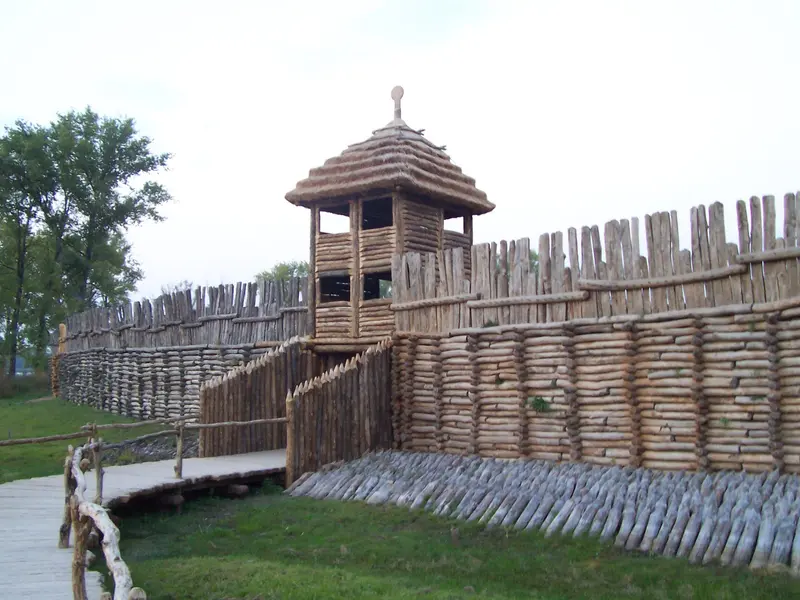
    The most important travel destination is Thorn (Toruń), whose medieval Old Town has been a UNESCO World Heritage site since 1997 and where Nicolaus Copernicus was born. Bydgoszcz is the region's largest city; other cities include Włocławek, Grudziądz, and Inowrocław. North of Toruń, on the Vistula River, lies Chełmno, which received Chełmno law in 1233 and has a well-preserved Old Town with six Gothic churches. About 8 km south of Żnin, the open-air museum Biskupin showcases a reconstructed fortified settlement from the 8th century BC. In the spa town of Ciechocinek on the Vistula River, three wooden brine graduation towers dating from 1824 to 1859 stand, with a total length of approximately 1.7 km, making them the largest wooden structure of their kind in Europe.

    More places in Kuyavian-Pomerania

    Thorn (Toruń)

    Thorn (Toruń)

    Thorn (Toruń) is on the Vistula River in north-central Poland, sharing the capital role of the Kuyavian-Pomeranian Voivodeship with Bydgoszcz. The Teutonic Order founded the city in 1231; it received city rights in 1233 and later became an important member of the Hanseatic League. Nicolaus Copernicus was born here in 1473, lending his name to the university founded in 1945. The city has about 192,000 inhabitants. The medieval city, with its Brick Gothic, has been UNESCO World Heritage since 1997. It consists of three parts: the Old Town in the west with the Town Hall, St. John's Cathedral, and St. Mary's Church; the New Town in the east, established from 1264; and between them on the southern edge, the remains of the Teutonic Knights' Castle. The street network has largely remained unchanged since medieval times. In the evenings, you can meet up in the pubs and cellar bars around the Old Town Market. Toruń is also well-known for its gingerbread, the Toruński piernik.

    Sights in Kuyavian-Pomerania

    Discover the most important sights and attractions

    Biskupin
    Museum

    Biskupin

    The fortified Lusatian Culture settlement, dating to c. 747 BC, was discovered 1933 by teacher Walenty Szwajcer and students. Today it's an open-air museum with reconstructed ramparts, a street of wooden houses, about 8 km south of Żnin.
    Open in Google Maps
    Old Town of Chełmno

    Old Town of Chełmno

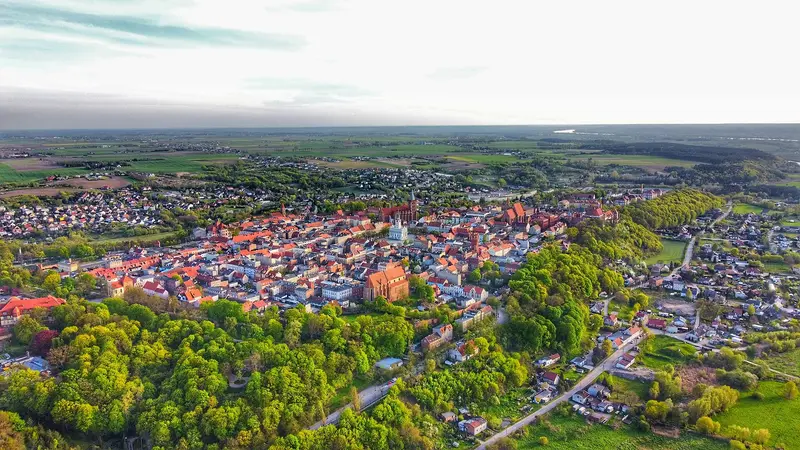
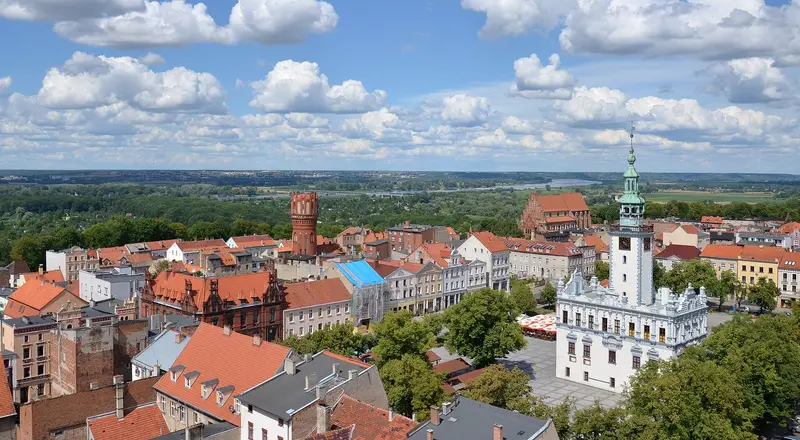
    The small town on the Vistula received Kulm law in 1233 and was a member of the Hanse. Its well-preserved medieval Old Town with six Gothic churches, around 2.3 km of city walls, and the Renaissance town hall on the market square has been a national historical monument since 2005. In the Parish Church of the Assumption of Mary, a relic of Saint Valentine is kept.
    Open in Google Maps

    Round trips through this region

    Poland's Classics by Train

    Poland's Classics by Train

    Just under two weeks by train through Poland's major cities: from the capital Warsaw to Krakow, then on to Wrocław, to the brick city of Toruń, and finally to Gdańsk on the Baltic Sea. From Krakow, you can visit the Wieliczka Salt Mine and the Auschwitz-Birkenau Memorial and Museum as day trips; from Gdańsk, Sopot and Malbork Castle. PKP Intercity long-distance trains connect all stages directly, with the longest journeys lasting around three to three and a half hours. No car is needed for this route.

    12 Days
    9 stops
    Open jaw

    Nearby

    Thorn (Toruń)

    Thorn (Toruń)

    Thorn (Toruń) is on the Vistula River in north-central Poland, sharing the capital role of the Kuyavian-Pomeranian Voivodeship with Bydgoszcz. The Teutonic Order founded the city in 1231; it received city rights in 1233 and later became an important member of the Hanseatic League. Nicolaus Copernicus was born here in 1473, lending his name to the university founded in 1945. The city has about 192,000 inhabitants. The medieval city, with its Brick Gothic, has been UNESCO World Heritage since 1997. It consists of three parts: the Old Town in the west with the Town Hall, St. John's Cathedral, and St. Mary's Church; the New Town in the east, established from 1264; and between them on the southern edge, the remains of the Teutonic Knights' Castle. The street network has largely remained unchanged since medieval times. In the evenings, you can meet up in the pubs and cellar bars around the Old Town Market. Toruń is also well-known for its gingerbread, the Toruński piernik.
    Marienburg (Malbork)

    Marienburg (Malbork)

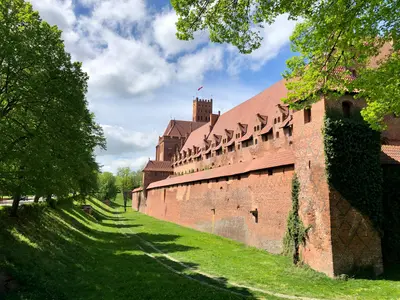
    Marienburg (Malbork), located on the Nogat, a distributary of the Vistula, is considered Europe's largest brick building: over 30 million bricks were used across approximately 21 hectares. The Teutonic Order constructed the complex between about 1270 and 1300; from 1309, it was the Grand Master's seat. A UNESCO World Heritage site since 1997, it attracts around 500,000 visitors each year. The castle has three sections: the Upper Castle (with St. Mary's Church), the Middle Castle (Grand Master's Palace, Great Refectory), and the Outer Bailey (housing service buildings). Plan half a day for the interiors; an excursion from Danzig is easily manageable by train or car.

    The Pomeranian Voivodeship (Pomorskie) stretches from Gdańsk Bay to the shifting dunes of Łeba and from the Vistula Delta to the forests of Kashubia. Spanning 18,324 square kilometers, it is home to approximately 2.36 million people, its capital and largest city being Danzig (Gdańsk). The current voivodeship was established with the administrative reform in 1999. Along the coast are the Tri-City of Danzig, Sopot, and Gdingen (Gdynia), the narrow Hel Peninsula, and the seaside resort of Łeba. In the hinterland lie the Kashubian Lakes, where Kashubian is an official language in four municipalities, and in the south, Malbork Castle on the Nogat river.
    Danzig (Gdańsk)

    Danzig (Gdańsk)

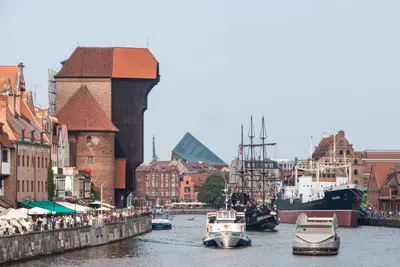
    Danzig (Gdańsk) is located on Gdańsk Bay, where the Motława River flows into the Baltic Sea, west of the Vistula estuary. With nearly 490,000 inhabitants, the capital of the Pomeranian Voivodeship is Poland's sixth-largest city and forms the Tri-City (Trójmiasto) with Sopot and Gdingen (Gdynia). For centuries, Danzig was a Hanseatic city, prospering through grain trade and amber. In 1945, its center lay almost entirely in ruins, but it was rebuilt under Polish leadership. The heart is the Main Town (Główne Miasto) with Long Lane, Long Market, and Mariacka Street. To the north lies the Old Town, and east of the Motława are Granary Island and Langgarten. Further north, the shipyards dominate the landscape, where Solidarność originated in 1980. Outside the center are Langfuhr (Wrzeszcz) and Oliva (Oliwa). In Oliwa, you'll find the monastery founded around 1185 and the cathedral. A weekend is sufficient for the Old Town and the main museums. With two or three more days, you can visit Westerplatte and take the S-Bahn to Sopot or continue to the Hel Peninsula.
    Sopot

    Sopot

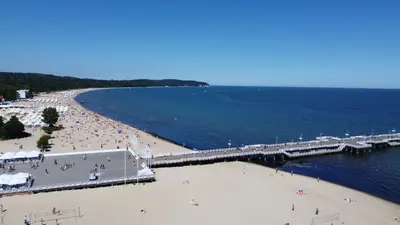
    Sopot is located between Danzig (Gdańsk) and Gdingen (Gdynia) on the Bay of Gdańsk, has around 32,000 inhabitants, and together with its two neighboring cities forms the Tricity. From a fishing village, it transformed into a seaside resort in the 19th century: in 1823, doctor Johann Georg Haffner opened the first bathing establishment with a spa facility. Between the World Wars, the casino and the Wagner festivals at the Forest Opera made the then Zoppot a sophisticated meeting point. Life revolves around the pedestrian-only Monte Cassino Street, which everyone simply calls Monciak, and the pier, considered Europe's longest wooden pier. Around the square by the Molo stand the Kurhaus (spa house), the lighthouse, and the Grand Hotel from the 1920s. A little inland, nestled in the forest, is the Forest Opera. In summer, the beach and Monciak fill up, and in the evenings, Sopot becomes the entertainment district of the Tricity. Outside of peak season, it's significantly quieter, and the pier is particularly worthwhile then, especially in clear weather.

    Sources & method

    • Photos: Wikimedia Commons. Each photo carries its credit.
    • Place data such as addresses and ratings comes from Google Maps.
    • The content is based on web research from public, traceable sources. How the content is made · The role of AI