Just under two weeks by train through Poland's major cities: from the capital Warsaw to Krakow, then on to Wrocław, to the brick city of Toruń, and finally to Gdańsk on the Baltic Sea. From Krakow, you can visit the Wieliczka Salt Mine and the Auschwitz-Birkenau Memorial and Museum as day trips; from Gdańsk, Sopot and Malbork Castle. PKP Intercity long-distance trains connect all stages directly, with the longest journeys lasting around three to three and a half hours. No car is needed for this route.
12 Days / 11 Nights
May to September; book tickets for Auschwitz-Birkenau and the Wieliczka Salt Mine early online.
9 stops
Why This Route?
Five cities, five very different chapters of Polish history: post-1945 rebuilt Warsaw, the ancient royal city of Krakow, multilingual Wrocław, the Hanseatic city of Toruń, and Gdańsk of Solidarność. All are connected by fast train routes, allowing you to experience each city with an overnight stay and use the journeys for relaxation.
Hidden Gems
Koneser Area in Warsaw-Praga: former vodka factory grounds on Ząbkowska, with eateries, galleries, and the Museum of Polish Vodka
Krakus Mound (Kopiec Krakusa) in Podgórze: one of Krakow's two prehistoric mounds and the city's oldest man-made structure, offering views over the Vistula to the Old Town
Oliva Monastery in Gdańsk: Cistercian abbey founded in 1186, with a cathedral, just outside the center.
Getting there and back
Open jaw: start and end are in different places
Arrival
Flight · Warschau-Chopin (WAW)SKM and Koleje Mazowieckie trains run from Warsaw Chopin Airport’s underground station to the city center; bus line 175 also heads downtown.
Departure
Flight · Danzig (GDN)The Metropolitan Railway PKM connects Gdańsk Lech Wałęsa Airport directly with the Tri-City rail network. If you prefer to travel by train: Gdańsk to Warsaw takes just under three hours with the fastest trains.
Itinerary
Stop 1 • 2 Nights
Warsaw (Warszawa)
City
Route highlight
Warsaw (Warszawa) has been the seat of the Polish royal court since 1596 and has been the country's capital again since 1918. The city on the Vistula has around 1.86 million inhabitants; in the metropolitan area, depending on the definition, 2.6 to 3.5 million people live. Its character is marked by discontinuities: After the Warsaw Uprising from August 1 to October 2, 1944, and the subsequent targeted destruction by the German occupiers, the city was largely uninhabitable. Afterwards, a mix of reconstructed facades, socialist classicism, and glass skyscrapers emerged around the Palace of Culture.
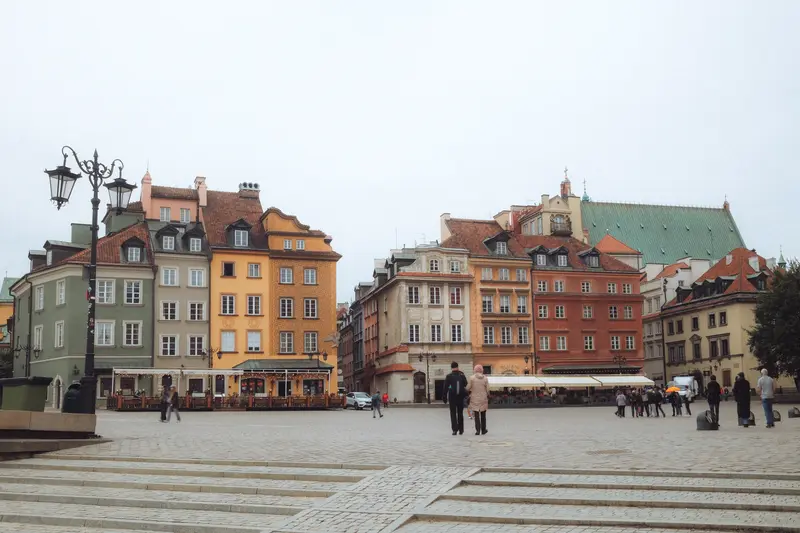
The Old Town was rebuilt after the war according to historical plans, ceremoniously reopened in 1953, and recognized as a UNESCO World Heritage Site in 1980, precisely because of this reconstruction. From Castle Square with the Sigismund's Column and the reconstructed Royal Castle, the Royal Route leads south via Krakowskie Przedmieście and Nowy Świat, past aristocratic palaces, to Łazienki Park and further to the Baroque Wilanów Palace.
On the right bank of the Vistula lies Praga, which was significantly less destroyed during the war than the left bank. In old factories like the Koneser complex on Ząbkowska street, you'll find eateries, cultural venues, and the Museum of Polish Vodka. On the left bank below the escarpment, Powiśle stretches along the Vistula with the Copernicus Science Centre and the University Library. Muranów, predominantly a Jewish quarter before the war and part of the ghetto from 1940, was largely rebuilt from the rubble of the ghetto after 1945; today, it is home to the POLIN Museum.
Start in the capital: reconstructed Old Town, Royal Route to Łazienki Park, plus the POLIN Museum and the Museum of the Warsaw Uprising. Metro, tram, and bus are part of the ZTM network.
6 Sights
4 Restaurants
The Culture in Warsaw
Remembrance and Reconstruction
The city openly confronts its destruction. The Warsaw Uprising Museum, located in a former tram power station in Wola, tells the story of the 63 days in late summer 1944. The POLIN Museum in Muranów recounts a thousand years of Jewish life in Poland. The post-war reconstruction of the Old Town is considered a cultural achievement in itself: UNESCO inscribed it on the World Heritage List in 1980 as a nearly complete reconstruction.
Chopin and Music
Fryderyk Chopin grew up in Warsaw, and his name greets you everywhere, from the airport to Łazienki Park. There, at Wacław Szymanowski's Chopin Monument, free open-air piano concerts take place on Sundays from July to the end of September, usually at 12 PM and 4 PM. The Museum Łazienki Królewskie publishes the schedule for each season.
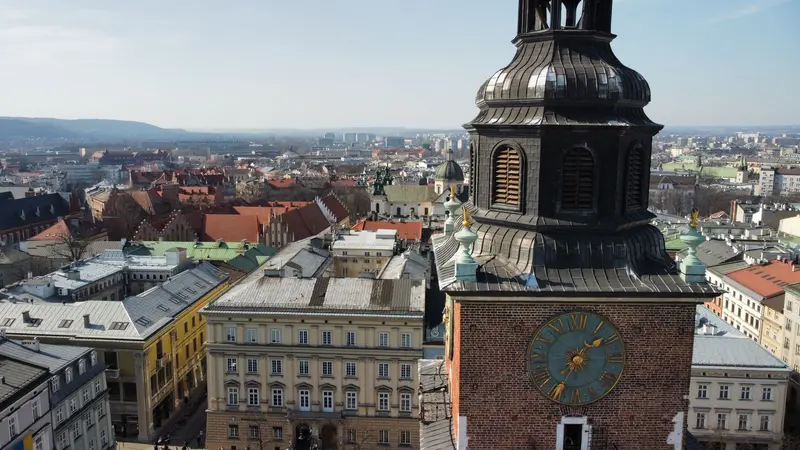
Krakow (Kraków) lies on the Vistula in southern Poland and, with around 800,000 inhabitants, is the country's second-largest city. Until 1596, it was the capital of the Kingdom of Poland; on Wawel Hill, kings were crowned until 1734 and most of them were interred. Since 1978, its historic center—the Old Town, Wawel, Stradom, and Kazimierz—has been a UNESCO World Heritage site.The Old Town (Stare Miasto) surrounds the Rynek Główny, whose layout dates back to 1257. A green belt, the Planty, occupies the site of the former city fortifications; the historic Royal Route begins at St. Florian's Gate and led coronation processions up to Wawel. South of it lies Kazimierz, founded as a separate city in 1335 and for centuries a center of Jewish life. Today, synagogues, cafés, and bars mingle there.Beyond the Vistula lies Podgórze, where German occupiers established the ghetto in 1941; in the Zabłocie district stands Oskar Schindler's former enamel factory. To the east, Nowa Huta is an industrial city of the socialist era, incorporated in 1951.
From Warszawa Centralna, about two and a half hours by Pendolino. Old Town, Wawel, and Kazimierz you'll explore on foot.
6 Sights
4 Restaurants
Culture and History
Royal City and UniversityKrakow was residence of Polish kings until 1596, when Sigismund III moved the court to Warsaw. Wawel Cathedral remained the coronation and burial church. In 1364, Casimir the Great founded the Krakow Academy (today's Jagiellonian University), Central Europe's second oldest university after Prague. From St. Mary's Church's taller tower, the Hejnał, a trumpet melody stopping mid-note, is played hourly, recalling a legendary 1241 Mongol attack.Jewish KrakowKazimierz hosts central Jewish historical buildings: the Old Synagogue, Remuh Synagogue (with cemetery), Tempel Synagogue, and Isaac Synagogue. The Old Synagogue is now a museum. Since 1988, the Jewish Culture Festival is held annually, from late June to early July. In Podgórze, the ghetto sites and Schindler's Factory recall the persecution and murder of Krakow's Jews under German occupation.
Wieliczka is located about 13 kilometers southeast of Krakow (Kraków) and has lived from salt since the Middle Ages. The first shafts were dug in the 13th century, and the town was granted city rights in 1290. Salt mining ended in 1996; the mine has been on the UNESCO World Heritage list since 1978, joined by the Bochnia mine in 2008, and the Saltworks Castle in 2013. Together, they form the World Heritage site Royal Salt Mines Wieliczka and Bochnia.Most visitors come for the underground tourist route, but the town itself is also worth a tour. At Rynek Górny, the buildings follow the medieval layout, while Rynek Dolny was once a trading place for salt and is located by the Regis Shaft. The town also features the Saltworks Castle, the wooden St. Sebastian's Church, and a brine graduation tower.
Half-day trip from Krakow by regional train SKA1 to Wieliczka Rynek-Kopalnia. The underground tourist route is approximately 3.5 kilometers long and takes two to three hours; it's best to buy tickets online in advance.
3 Sights
3 Restaurants
Culture and History
City of SaltInitially, brine was evaporated here; underground rock salt mining began in the 13th century. From the late 13th century until 1945, the Salt-Count's Castle (Zamek Żupny) was the seat of Żupy Krakowskie, which managed the Kraków Salt Mines. Today, it is home to the Museum of the Kraków Salt Mines.Art Above and Below GroundMiners carved chapels and sculptures from salt in the chambers. The most famous is the Kinga Chapel, 101 meters deep. Above ground stands the larch wood St. Sebastian's Church, built in 1582, with stained-glass windows by Stanisław Matejko and murals by Włodzimierz Tetmajer from 1906.
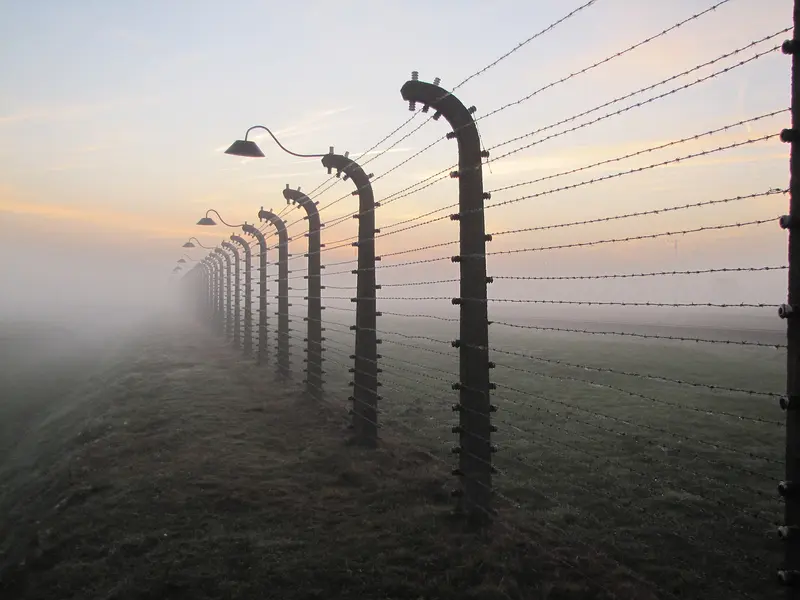
The Auschwitz-Birkenau Memorial and State Museum is located on the outskirts of Oświęcim, west of Krakow (Kraków). German occupiers established the camp in 1940, and Auschwitz II-Birkenau was built from October 1941. According to estimates by the Memorial, approximately 1.1 million people were murdered in Auschwitz, about 1 million of them Jews. The victims also included approximately 70,000 Poles, 21,000 Sinti and Roma, 15,000 Soviet prisoners of war, and about 12,000 prisoners of other nationalities.On January 27, 1945, Soviet troops liberated the camp; since 2005, this day has been the International Holocaust Remembrance Day. The Polish Parliament founded the museum on July 2, 1947, and since 1979, the site has been on the UNESCO World Heritage List. The site covers approximately 191 hectares: the former main camp Auschwitz I and the much larger Birkenau, about three kilometers away; a free shuttle bus provided by the Memorial connects both parts. For a visit, you should allow at least half a day.
Day trip from Krakow. Regional trains to Oświęcim take about 1 to 1.5 hours, while buses stop directly at the Memorial. Admission is only possible with a personalized ticket reserved in advance on visit.auschwitz.org; allow at least half a day.
2 Sights
1 Restaurant
History and Remembrance
Site of the CrimeAuschwitz was the largest German concentration camp and the largest center for the immediate extermination of Jews. From 1942, it became the center for the murder of European Jews. Above the gate of the main camp Auschwitz I is the inscription “Arbeit macht frei”. Since 1960, countries from which people were deported to Auschwitz have displayed their own exhibitions in the blocks of the main camp; separate exhibitions are dedicated to the Shoah in Block 27 and to the Sinti and Roma.Conduct on the GroundsPhotography for private purposes is permitted without flash or tripod, but not in Room 5 of Block 4 and in the basement of Block 11. The courtyard of Block 11 is a silent zone. The Memorial recommends visits from the age of 14.
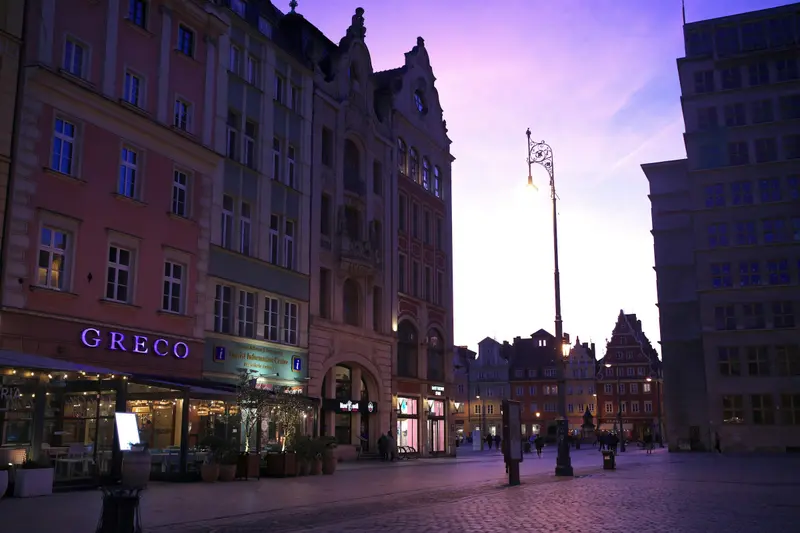
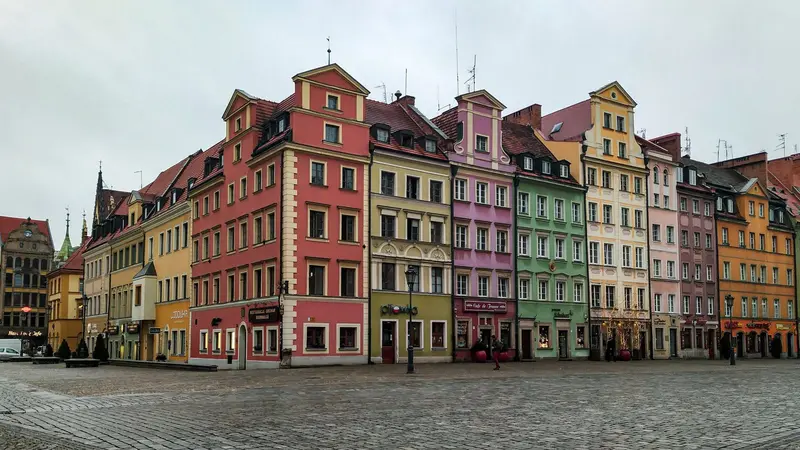
Breslau (Wrocław) is, with around 673,000 inhabitants, Poland's third-largest city and the capital of Lower Silesia. The city lies on the upper Oder River and spans about twelve islands, connected by 100 to 300 bridges, depending on how they are counted. Around the year 1000, a bishopric was founded here, and in 1261, Wrocław was granted Magdeburg Law. In 2016, it was a European Capital of Culture.The heart of the Old Town is the Market Square (Rynek) with its Gothic Town Hall, surrounded by burgher houses and churches. North of the Old Town, bridges lead to Cathedral Island (Ostrów Tumski), the oldest part of the city, featuring a cathedral and churches. To the east, in Scheitniger Park, stands the Centennial Hall, which has been a UNESCO World Heritage site since 2006.As you stroll through the city, you'll repeatedly encounter small bronze gnomes on house walls, lampposts, and stairs. The first figure commemorates the anti-communist Orange Alternative movement; meanwhile, there are now more than 1,000 of them. You should plan at least two to three days for your visit to the city.
From Krakow, just under three hours by direct Intercity. Ring, Cathedral Island, and Centennial Hall; on the way, you'll meet the Wroclaw Dwarfs.
6 Sights
4 Restaurants
History and Culture
A City of Many MastersBreslau was first mentioned around 900, and Mieszko I. took the settlement in 990. After its destruction by the Mongols in 1241, German settlers rebuilt the city. In 1335, Breslau passed to Bohemia, in 1526 to the Habsburgs, and in 1741/42 to Prussia, later serving as the capital of the Province of Silesia. After 1945, the city came under Polish administration, the German population was expelled by 1948, and Polish settlers moved in. On Cathedral Island, Nicolaus Copernicus served as Scholaster of the Collegiate Church of the Holy Cross from 1503 to 1538.Modern Architecture and Culture of RemembranceBuilt by Max Berg between 1911 and 1913, the Centennial Hall, with its 67-meter-diameter reinforced concrete dome, was a milestone in modern architecture. The city showcases the Racławice Panorama, a 114-meter-long cyclorama that came to Breslau from Lemberg (Lviv) after World War II. The Dwarfs originate from the Orange Alternative, an anti-communist protest movement. The first dwarf was installed in ul. Świdnicka in 2001.
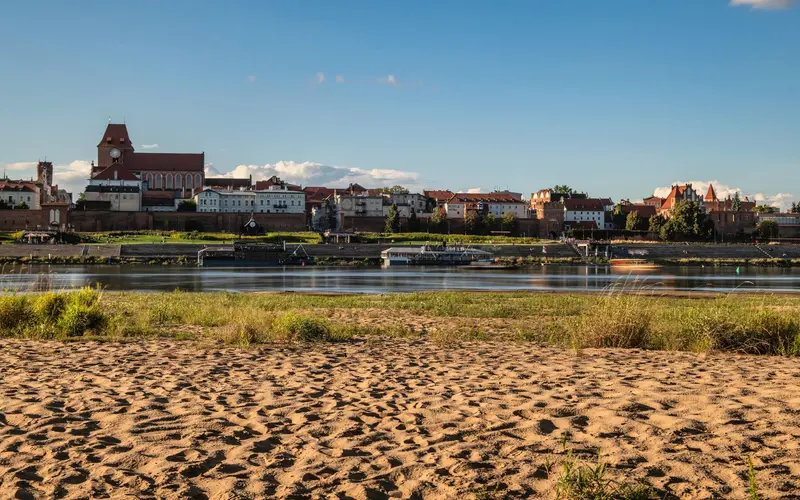
Thorn (Toruń) is on the Vistula River in north-central Poland, sharing the capital role of the Kuyavian-Pomeranian Voivodeship with Bydgoszcz. The Teutonic Order founded the city in 1231; it received city rights in 1233 and later became an important member of the Hanseatic League. Nicolaus Copernicus was born here in 1473, lending his name to the university founded in 1945. The city has about 192,000 inhabitants.
The medieval city, with its Brick Gothic, has been UNESCO World Heritage since 1997. It consists of three parts: the Old Town in the west with the Town Hall, St. John's Cathedral, and St. Mary's Church; the New Town in the east, established from 1264; and between them on the southern edge, the remains of the Teutonic Knights' Castle. The street network has largely remained unchanged since medieval times.
In the evenings, you can meet up in the pubs and cellar bars around the Old Town Market. Toruń is also well-known for its gingerbread, the Toruński piernik.
The longest leg: Direct Intercity trains run only a few times a day and take a good three hours from Wrocław. The Brick Gothic Old Town is a UNESCO World Heritage site, try the Toruń gingerbread.
5 Sights
3 Restaurants
Culture in Toruń
Copernicus and Science
The city's most famous son is omnipresent: His birthplace is a museum, a monument stands in the Old Town Market Square, and the university founded in 1945 bears his name. The Regional Museum in the Old Town Hall displays paintings by Jan Matejko, Jacek Malczewski, Stanisław Ignacy Witkiewicz and Zdzisław Beksiński.
Gingerbread City
Toruń gingerbread is the city's best-known product; the craft of gingerbread making was first mentioned here in 1380. Widely popular are the Katarzynki, the Toruń Catherine gingerbreads. Fabryka Cukiernicza Kopernik has been baking gingerbread in the city since the 18th century, and at the Toruń Gingerbread Museum, located in the former Weese family gingerbread factory, you can try making it yourself.
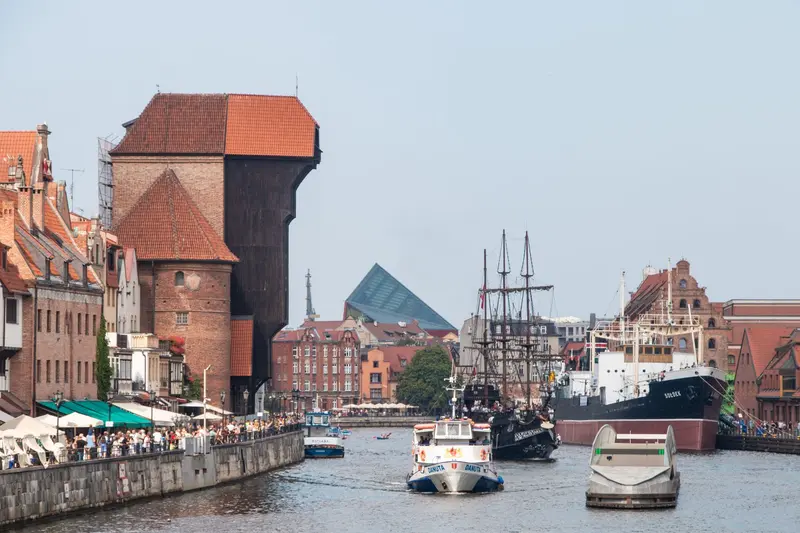
Danzig (Gdańsk) is located on Gdańsk Bay, where the Motława River flows into the Baltic Sea, west of the Vistula estuary. With nearly 490,000 inhabitants, the capital of the Pomeranian Voivodeship is Poland's sixth-largest city and forms the Tri-City (Trójmiasto) with Sopot and Gdingen (Gdynia). For centuries, Danzig was a Hanseatic city, prospering through grain trade and amber. In 1945, its center lay almost entirely in ruins, but it was rebuilt under Polish leadership.
The heart is the Main Town (Główne Miasto) with Long Lane, Long Market, and Mariacka Street. To the north lies the Old Town, and east of the Motława are Granary Island and Langgarten. Further north, the shipyards dominate the landscape, where Solidarność originated in 1980. Outside the center are Langfuhr (Wrzeszcz) and Oliva (Oliwa). In Oliwa, you'll find the monastery founded around 1185 and the cathedral.
A weekend is sufficient for the Old Town and the main museums. With two or three more days, you can visit Westerplatte and take the S-Bahn to Sopot or continue to the Hel Peninsula.
About two hours from Thorn by direct train. Main Town with Long Market, Museum of the Second World War and European Solidarity Centre.
6 Sights
4 Restaurants
Culture and History
Hanseatic City and Reconstruction
Gdańsk was a member of the Hanseatic League from 1361 until the last Hansetag in 1669. This story is told by the gabled houses of Langgasse, Artushof as a meeting place for merchants, and St. Mary's Church, one of the three largest brick churches north of the Alps. Much of what you see today is the result of reconstruction after 1945. On Long Market, the 44th Modern Hansetag was opened in June 2024.
Where the 20th Century Began and Ended
On September 1, 1939, the battleship Schleswig-Holstein shelled the Polish garrison on Westerplatte; the attack is considered the start of World War II in Europe. In August 1980, workers at the Lenin Shipyard went on strike, and from their strike committee under Lech Wałęsa, the Solidarność trade union emerged. The Museum of the Second World War and the European Solidarność Centre tell both chapters in detail.
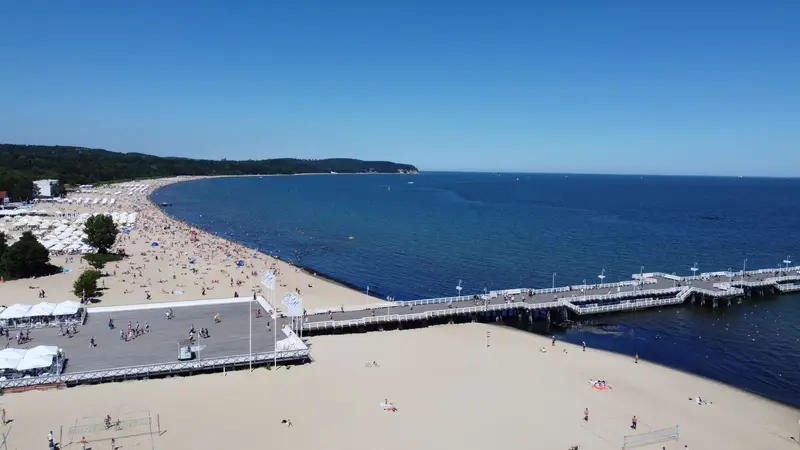
Sopot is located between Danzig (Gdańsk) and Gdingen (Gdynia) on the Bay of Gdańsk, has around 32,000 inhabitants, and together with its two neighboring cities forms the Tricity. From a fishing village, it transformed into a seaside resort in the 19th century: in 1823, doctor Johann Georg Haffner opened the first bathing establishment with a spa facility. Between the World Wars, the casino and the Wagner festivals at the Forest Opera made the then Zoppot a sophisticated meeting point.
Life revolves around the pedestrian-only Monte Cassino Street, which everyone simply calls Monciak, and the pier, considered Europe's longest wooden pier. Around the square by the Molo stand the Kurhaus (spa house), the lighthouse, and the Grand Hotel from the 1920s. A little inland, nestled in the forest, is the Forest Opera.
In summer, the beach and Monciak fill up, and in the evenings, Sopot becomes the entertainment district of the Tricity. Outside of peak season, it's significantly quieter, and the pier is particularly worthwhile then, especially in clear weather.
Half-day trip with the SKM commuter train from Gdańsk: Walk along Monte Cassino Street to the long wooden pier.
5 Sights
3 Restaurants
Culture and History
Seaside Resort with a Long Tradition
After the establishment of spa operations in 1823, Sopot grew rapidly: in 1827 the first pier was built, followed by the Kurhaus (spa house) from 1909 to 1911, and the casino in 1919. The current Kurhaus is a new building from 2007 to 2009. The Grand Hotel, north of the pier, was constructed as a casino hotel between 1924 and 1927.
Stage Under the Trees
The Forest Opera, built in 1909, offers 5,047 seats. From 1924, annual Wagner festivals, modeled after Bayreuth, took place here. Since 1964, it has been the venue for the Sopot Festival, which was cancelled from 1981 to 1983.
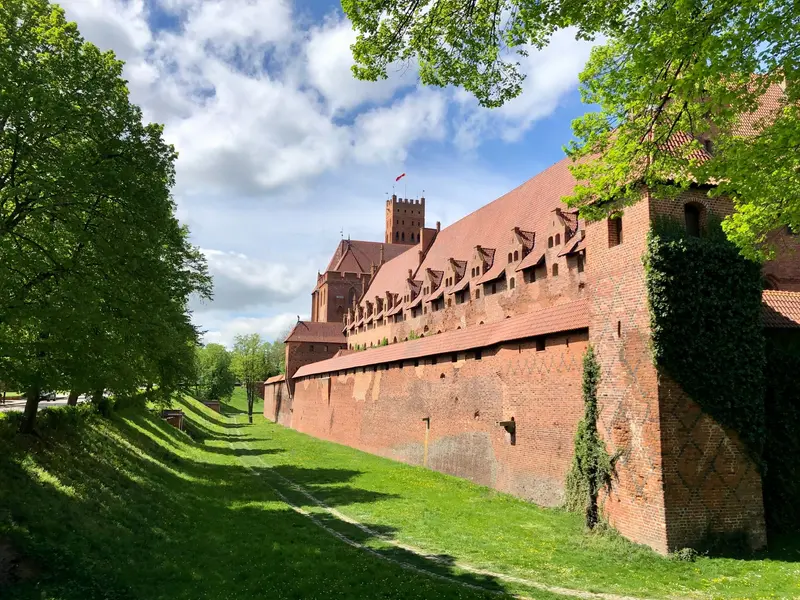
Marienburg (Malbork), located on the Nogat, a distributary of the Vistula, is considered Europe's largest brick building: over 30 million bricks were used across approximately 21 hectares. The Teutonic Order constructed the complex between about 1270 and 1300; from 1309, it was the Grand Master's seat. A UNESCO World Heritage site since 1997, it attracts around 500,000 visitors each year.
The castle has three sections: the Upper Castle (with St. Mary's Church), the Middle Castle (Grand Master's Palace, Great Refectory), and the Outer Bailey (housing service buildings). Plan half a day for the interiors; an excursion from Danzig is easily manageable by train or car.
Tagesausflug ab Danzig, die Züge brauchen meist rund eine halbe Stunde. Für die Innenräume der Ordensburg brauchst du einen halben Tag; im Winterhalbjahr schließen sie bereits um 15 Uhr.
3 Sights
2 Restaurants
History of the Order Castle
From the Seat of the Order to a Polish Royal Castle
In 1309, the Grand Master of the Teutonic Order moved his seat to the Nogat. Mercenaries sold the castle to the Polish king in 1456, who then took up residence in it in 1457. In 1772, it passed to Prussia and was restored in the late 19th century under Emperor Wilhelm II by Conrad Steinbrecht.
Destruction and Reconstruction
The fighting in 1945 destroyed around 60 percent of the complex. Poland rebuilt it after the war, and the Castle Museum was founded in 1961. A symbol of this reconstruction is the eight-meter-high Madonna figure of St. Mary's Church, which was reconsecrated in 2016 after its restoration.