Fernweh: Home
    ExploreTravel GuidesPlan a tripMy tripLast visited
    de|en
    All Places & RegionsAll highlightsAbout FernwehFAQPrivacy PolicyImprint
    ExploreTravel GuidesPlan a tripMy tripLast visited
    Auschwitz-Birkenau Memorial Site
    Jacek7770 / Wikimedia Commons / CC BY-SA 4.0

    Poland

    Auschwitz-Birkenau Memorial Site

    Point of Interest

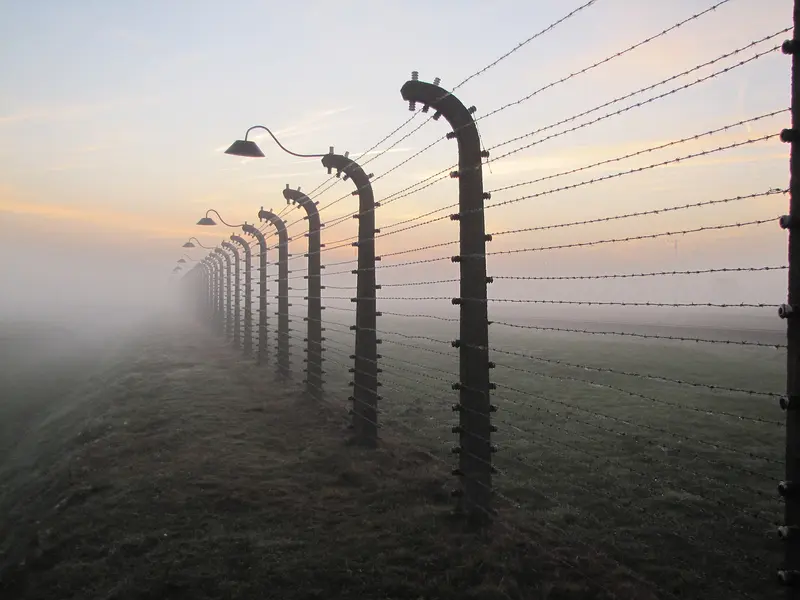
    The Auschwitz-Birkenau Memorial and State Museum is located on the outskirts of Oświęcim, west of Krakow (Kraków). German occupiers established the camp in 1940, and Auschwitz II-Birkenau was built from October 1941.

    by Felix Gillen

    1. Home
    2. Destinations
    3. Poland
    4. Małopolska
    5. Auschwitz-Birkenau Memorial Site
    The Auschwitz-Birkenau Memorial and State Museum is located on the outskirts of Oświęcim, west of Krakow (Kraków). German occupiers established the camp in 1940, and Auschwitz II-Birkenau was built from October 1941. According to estimates by the Memorial, approximately 1.1 million people were murdered in Auschwitz, about 1 million of them Jews. The victims also included approximately 70,000 Poles, 21,000 Sinti and Roma, 15,000 Soviet prisoners of war, and about 12,000 prisoners of other nationalities.On January 27, 1945, Soviet troops liberated the camp; since 2005, this day has been the International Holocaust Remembrance Day. The Polish Parliament founded the museum on July 2, 1947, and since 1979, the site has been on the UNESCO World Heritage List. The site covers approximately 191 hectares: the former main camp Auschwitz I and the much larger Birkenau, about three kilometers away; a free shuttle bus provided by the Memorial connects both parts. For a visit, you should allow at least half a day.

    Sights in Auschwitz-Birkenau Memorial Site

    Discover the most important sights and attractions

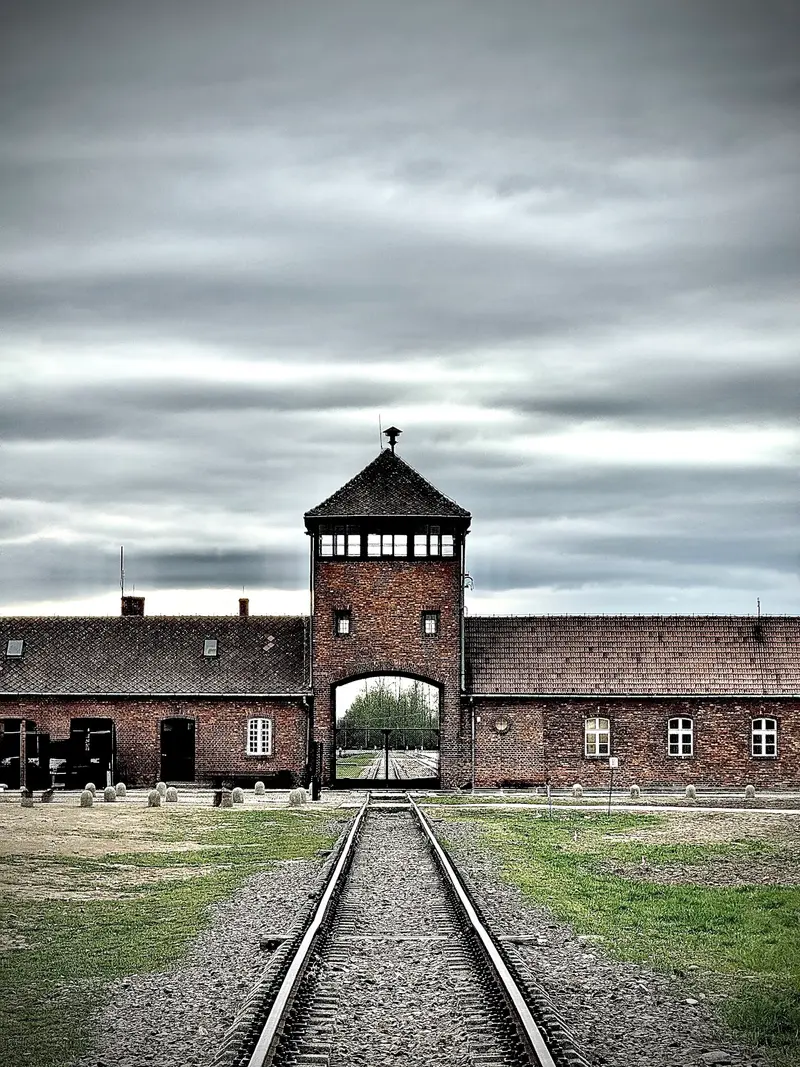
    Auschwitz II-Birkenau
    Museum

    1Auschwitz II-Birkenau

    Birkenau Camp, constructed from October 1941, is located approximately three kilometers from the Main Camp and, covering 171 hectares, comprises the largest part of the memorial site. A free shuttle bus connects both parts. The International Monument for the Victims has stood between the ruins of the crematoria since 1967. Here too, you should allow at least 90 minutes.
    Open in Google Maps
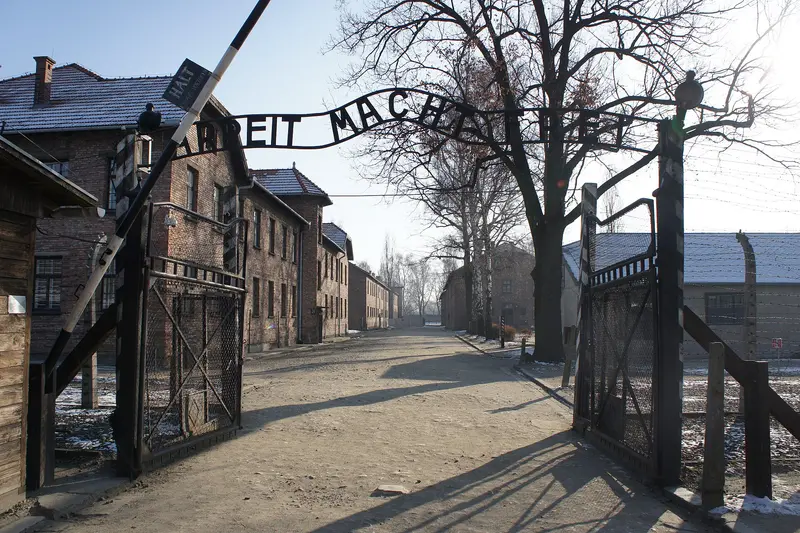
    Auschwitz I (Main Camp)
    Museum

    2Auschwitz I (Main Camp)

    The main camp, established in 1940, has the 'Arbeit macht frei' gate. Its brick blocks house main and national exhibitions, displaying documents, photos, and personal items of the deportees. Tours begin here; plan at least 90 minutes.
    Open in Google Maps

    Videos & Travel Reports

    Rick Steves' Europe: Poland

    An hour-long best-of-Poland special from the public television series Rick Steves' Europe. It starts in Kraków and the Auschwitz-Birkenau Memorial, continues to Warsaw, Toruń and Malbork Castle and…

    Restaurants in Auschwitz-Birkenau Memorial Site

    1

    Cabin on Zaborska

    Restaurant with Polish cuisine at ul. Zaborska 40 in Oświęcim, with a parking lot and outdoor seating in summer.
    Show on Google Maps

    History and Remembrance

    Site of the CrimeAuschwitz was the largest German concentration camp and the largest center for the immediate extermination of Jews. From 1942, it became the center for the murder of European Jews. Above the gate of the main camp Auschwitz I is the inscription “Arbeit macht frei”. Since 1960, countries from which people were deported to Auschwitz have displayed their own exhibitions in the blocks of the main camp; separate exhibitions are dedicated to the Shoah in Block 27 and to the Sinti and Roma.Conduct on the GroundsPhotography for private purposes is permitted without flash or tripod, but not in Room 5 of Block 4 and in the basement of Block 11. The courtyard of Block 11 is a silent zone. The Memorial recommends visits from the age of 14.

    Visit and Arrival

    Reservations, Guides, and RulesEntry is free, but only possible with a personalized entry card, which you must reserve online in advance at visit.auschwitz.org; no tickets are available at the ticket office. Free tickets for unguided visits are limited and can be reserved no earlier than 90 and no later than seven days before your visit. Groups must book a guide from the Memorial, while individual travelers can join a paid guided tour; the Memorial recommends booking tours approximately two months in advance. A standard tour lasts about three and a half hours. Arrive at least 30 minutes beforehand due to security checks. Bags must not exceed 35 × 25 × 15 cm; larger luggage should be left in your car or at the paid luggage storage facility at the main car park (5 Złoty per locker).The last entry time varies by month, from 2 PM in December to 7 PM in June, July, and August; you can stay for 90 minutes afterward. The site is closed on January 1st, December 25th, and Easter Sunday. Current rules are available at auschwitz.org.Getting ThereBuses and minibuses from Krakow and Katowice stop directly at the Memorial. Oświęcim train station is about 1.5 kilometers away. The main car park at ul. Więźniów Oświęcimia 55 is free; in Birkenau, there is a paid municipal car park. A free shuttle bus runs between Auschwitz I and Birkenau. Krakow-Balice and Katowice-Pyrzowice airports are both approximately 50 kilometers away.

    Accommodations in Auschwitz-Birkenau Memorial Site

    Find perfect stay in Auschwitz-Birkenau Memorial Site
    Booking.com* (Affiliate link)
    Search Hotels
    Agoda* (Affiliate link)
    Search Hotels
    Airbnb
    Vacation Rentals

    * Affiliate link: if you book through it, we earn a small commission. The price stays the same for you.

    Campgrounds in Auschwitz-Birkenau Memorial Site
    Find perfect campground in Auschwitz-Birkenau Memorial Site
    Search via Google Maps
    Campgrounds nearby (15km)
    Camping.info
    Find Campgrounds
    Park4Night
    RV Parks & Camping

    Nearby

    Kattowitz (Katowice)

    Kattowitz (Katowice)

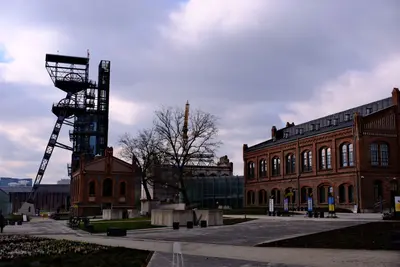
    Katowice is the capital of the Silesian Voivodeship and the hub of an urban agglomeration with several million inhabitants. The village grew into an industrial city in the 19th century thanks to coal and ore, receiving city rights in 1865. Following a plebiscite and the division of Upper Silesia, it joined Poland and became the capital of the Autonomous Silesian Voivodeship in 1922. From 1953 to 1956, it was called Stalinogród. Today, approximately 279,000 people live here.The city center (Śródmieście) stretches from the train station to the Rynek. Nearby lies the pedestrian street ul. Mariacka, with its 19th-century neo-Gothic St. Mary's Church, which becomes the hub of nightlife in the evenings. Just a few minutes' walk north stand the Spodek Hall and the Culture Zone (Strefa Kultury) on the grounds of the former Katowice Mine. In the east of the city, the mining settlements of Nikiszowiec and Giszowiec are preserved.Since 2015, Katowice has been a UNESCO Creative City of Music. Alongside NOSPR concerts, the OFF Festival in August and the Tauron Nowa Muzyka Festival shape the calendar, while the Spodek hosts the finals of the Intel Extreme Masters e-sports tournaments.
    Krakow (Kraków)

    Krakow (Kraków)

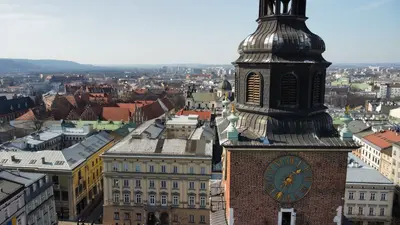
    Krakow (Kraków) lies on the Vistula in southern Poland and, with around 800,000 inhabitants, is the country's second-largest city. Until 1596, it was the capital of the Kingdom of Poland; on Wawel Hill, kings were crowned until 1734 and most of them were interred. Since 1978, its historic center—the Old Town, Wawel, Stradom, and Kazimierz—has been a UNESCO World Heritage site.The Old Town (Stare Miasto) surrounds the Rynek Główny, whose layout dates back to 1257. A green belt, the Planty, occupies the site of the former city fortifications; the historic Royal Route begins at St. Florian's Gate and led coronation processions up to Wawel. South of it lies Kazimierz, founded as a separate city in 1335 and for centuries a center of Jewish life. Today, synagogues, cafés, and bars mingle there.Beyond the Vistula lies Podgórze, where German occupiers established the ghetto in 1941; in the Zabłocie district stands Oskar Schindler's former enamel factory. To the east, Nowa Huta is an industrial city of the socialist era, incorporated in 1951.
    Silesia

    Silesia

    The Silesian Voivodeship (województwo śląskie) in southern Poland was established in 1999 from the former voivodeships of Katowice, Częstochowa, and Bielsko-Biała. It encompasses the eastern part of Upper Silesia, a portion of Cieszyn Silesia, and areas historically belonging to Lesser Poland, including Częstochowa and the Dąbrowa Basin. Approximately 4.3 million people live across its 12,334 square kilometers.Its core is the Upper Silesian Industrial Region around Katowice, Gliwice, and Zabrze, which grew in the 19th century with hard coal mining. Disused mines are now museums and cultural venues. To the north, the Kraków-Częstochowa Upland stretches through the region with castle ruins on limestone cliffs; to the south, the Silesian Beskids rise.
    Wieliczka

    Wieliczka

    Wieliczka is located about 13 kilometers southeast of Krakow (Kraków) and has lived from salt since the Middle Ages. The first shafts were dug in the 13th century, and the town was granted city rights in 1290. Salt mining ended in 1996; the mine has been on the UNESCO World Heritage list since 1978, joined by the Bochnia mine in 2008, and the Saltworks Castle in 2013. Together, they form the World Heritage site Royal Salt Mines Wieliczka and Bochnia.Most visitors come for the underground tourist route, but the town itself is also worth a tour. At Rynek Górny, the buildings follow the medieval layout, while Rynek Dolny was once a trading place for salt and is located by the Regis Shaft. The town also features the Saltworks Castle, the wooden St. Sebastian's Church, and a brine graduation tower.
    Tschenstochau (Częstochowa)

    Tschenstochau (Częstochowa)

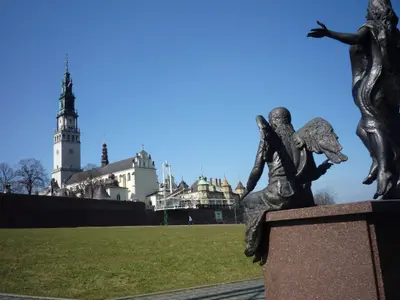
    Tschenstochau (Częstochowa) on the Warta River, with approx. 206,000 residents, is the second-largest city in Silesian Voivodeship. It is known for the Jasna Góra Pauline Monastery, founded in 1382 by Duke Władysław of Opole (Władysław Opolczyk), which attracts three to four million pilgrims and visitors annually with its miraculous Black Madonna icon. The city gained Magdeburg Rights in 1502 and railway connection to Warsaw-Vienna in 1846.The approx. 1.5-kilometer-long and 44-meter-wide Avenue of the Most Holy Virgin Mary (Aleja Najświętszej Maryi Panny) connects the Old Town and city center with the monastery hill. It starts at Plac Daszyńskiego, leads via Plac Biegańskiego, and ends at the parks below Jasna Góra. Along it are townhouses from around 1900, the neo-Gothic Church of the Most Holy Name of Mary, and the Pilgrim Museum. Away from the monastery, the Matchstick Museum showcases a piece of the city's industrial history.

    Sources & method

    • Photos: Wikimedia Commons, Google Maps. Each photo carries its credit.
    • Place data such as addresses and ratings comes from Google Maps.
    • Video reportages: Rick Steves' Europe: Poland
    • The content is based on web research from public, traceable sources. How the content is made · The role of AI