Fernweh: Home
    ExploreTravel GuidesPlan a tripMy tripLast visited
    de|en
    All Places & RegionsAll highlightsAbout FernwehFAQPrivacy PolicyImprint
    ExploreTravel GuidesPlan a tripMy tripLast visited
    • Neighborhoods & highlights
    • Videos
    • Eat & drink
    • Food culture
    • Culture
    • Nightlife
    • Getting around
    • Accommodation
    • Plan trip
    • Nearby
    Krakow (Kraków)

    Poland

    Krakow (Kraków)

    City

    Krakow (Kraków) lies on the Vistula in southern Poland and, with around 800,000 inhabitants, is the country's second-largest city.

    by Felix Gillen

    1. Home
    2. Destinations
    3. Poland
    4. Małopolska
    5. Krakow (Kraków)
    Krakow (Kraków) lies on the Vistula in southern Poland and, with around 800,000 inhabitants, is the country's second-largest city. Until 1596, it was the capital of the Kingdom of Poland; on Wawel Hill, kings were crowned until 1734 and most of them were interred. Since 1978, its historic center—the Old Town, Wawel, Stradom, and Kazimierz—has been a UNESCO World Heritage site.The Old Town (Stare Miasto) surrounds the Rynek Główny, whose layout dates back to 1257. A green belt, the Planty, occupies the site of the former city fortifications; the historic Royal Route begins at St. Florian's Gate and led coronation processions up to Wawel. South of it lies Kazimierz, founded as a separate city in 1335 and for centuries a center of Jewish life. Today, synagogues, cafés, and bars mingle there.Beyond the Vistula lies Podgórze, where German occupiers established the ghetto in 1941; in the Zabłocie district stands Oskar Schindler's former enamel factory. To the east, Nowa Huta is an industrial city of the socialist era, incorporated in 1951.

    Sights in Krakow (Kraków)

    Discover the most important sights and attractions

    St. Mary's Church (Bazylika Mariacka)
    Church

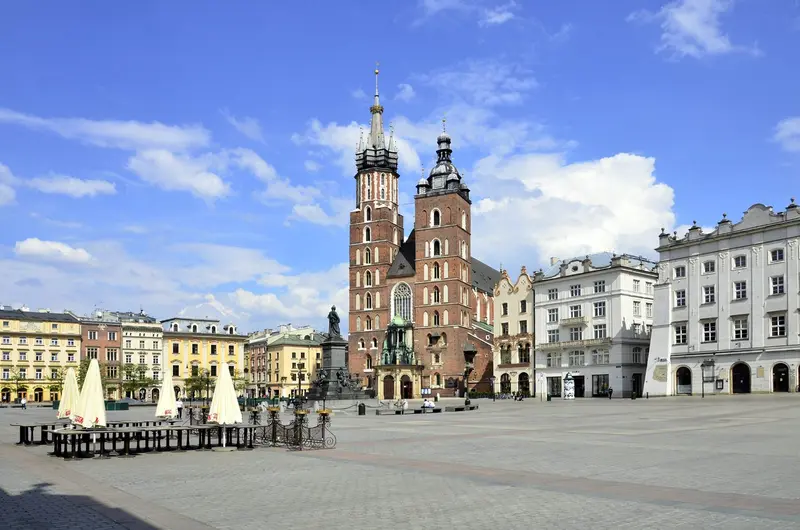
    1St. Mary's Church (Bazylika Mariacka)

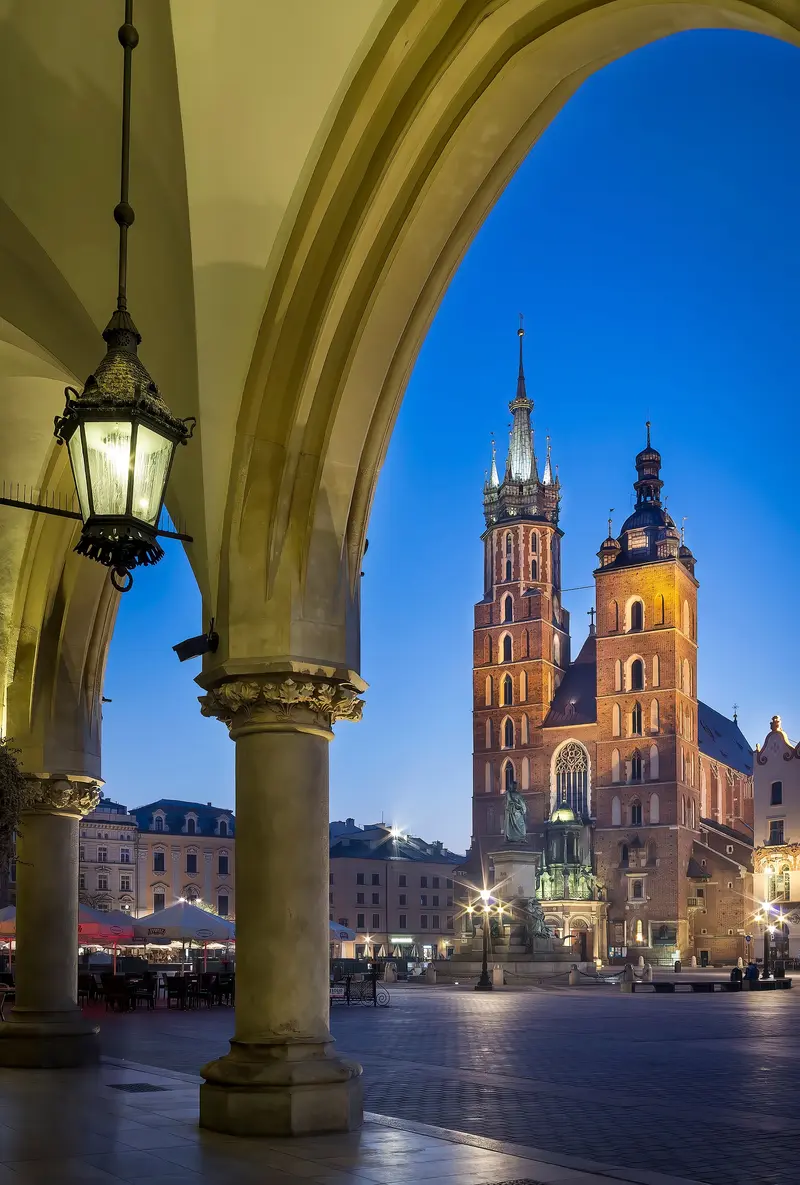
    The Gothic church on the east side of the market houses the high altar by Veit Stoß, completed around 1489, one of the most significant carved altarpieces of the Late Gothic period. From the higher of the two towers, the Hejnał sounds every full hour, breaking off mid-melody.
    Open in Google Maps
    Wawel: Royal Castle and Cathedral
    Museum

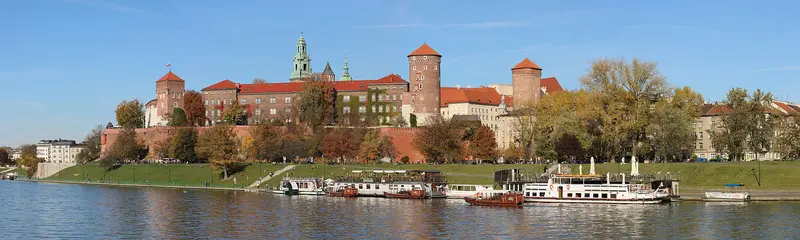
    2Wawel: Royal Castle and Cathedral

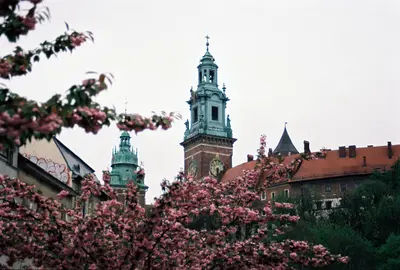
    On the hill above the Vistula, Polish kings resided. The castle showcases in several exhibitions the State Rooms, the Crown Treasury, and the Armoury, including the coronation sword Szczerbiec; the Dragon's Den is open seasonally. In the cathedral, kings were crowned and buried until 1734; in the Sigismund Tower hangs the approximately 11-ton Sigismund Bell.
    Open in Google Maps
    Krakus Hill (Kopiec Krakusa) in Podgórze
    Historic Landmark

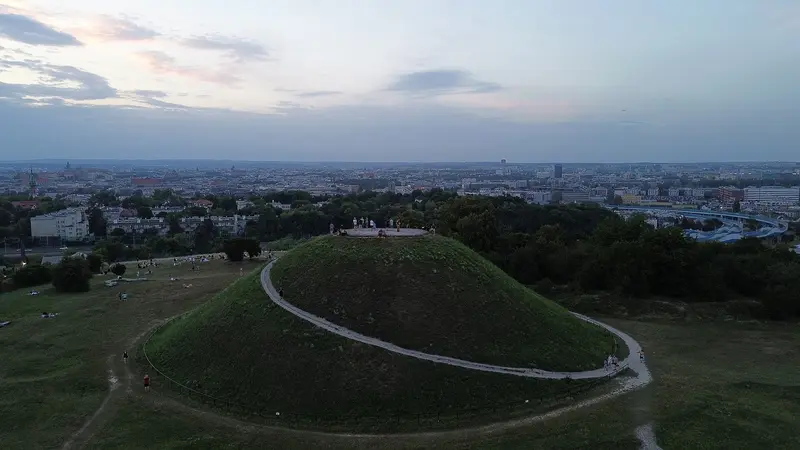
    3Krakus Hill (Kopiec Krakusa) in Podgórze

    The 16-meter-high hill on Mount Lasota in Podgórze is traditionally held to be the tomb of the legendary Prince Krakus; its age is debated by archaeologists. From the top, you overlook Podgórze and the Vistula up to the Old Town.
    Open in Google Maps
    Oskar Schindler Enamel Factory
    Museum

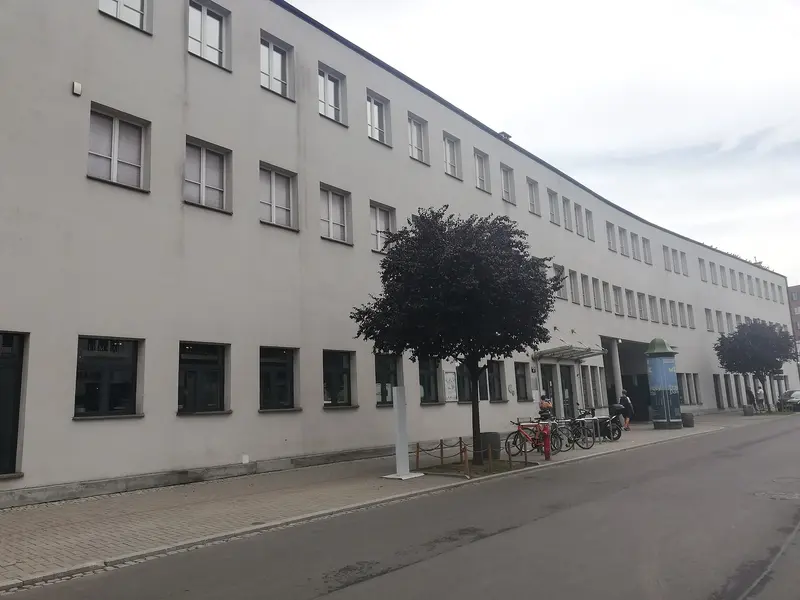
    4Oskar Schindler Enamel Factory

    The Museum of Kraków's exhibition “Kraków under German Occupation 1939–1945” in the former factory at ul. Lipowa 4 in Zabłocie. Tickets are limited and available online up to 90 days in advance; online tickets are personalised, bring ID. Entry is free on Mondays, no advance booking possible. Current opening hours and prices at muzeumkrakowa.pl.
    Open in Google Maps
    Rynek Główny and Cloth Halls
    Attraction

    5Rynek Główny and Cloth Halls

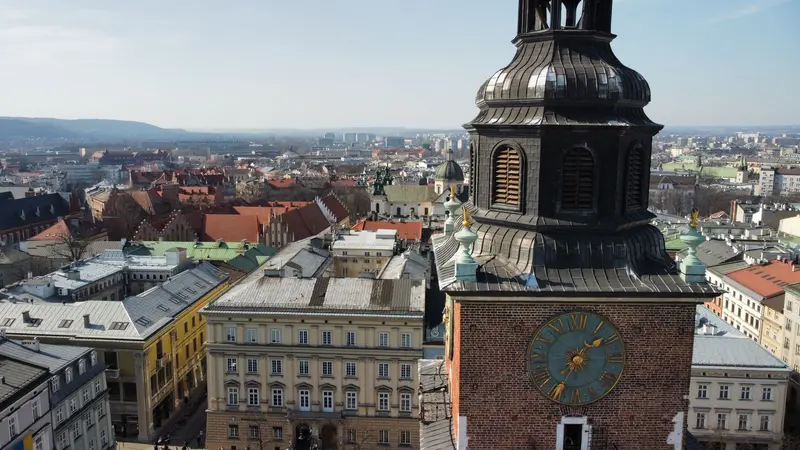
    The Main Market Square in the heart of the Old Town traces its layout back to 1257, when Krakow was granted Magdeburg city rights. In the center stand the Cloth Hall (Sukiennice), rebuilt in Renaissance style from 1556 to 1559; on the upper floor, the National Museum showcases 19th-century Polish painting and sculpture.
    Open in Google Maps
    Kazimierz and Old Synagogue
    Museum

    6Kazimierz and Old Synagogue

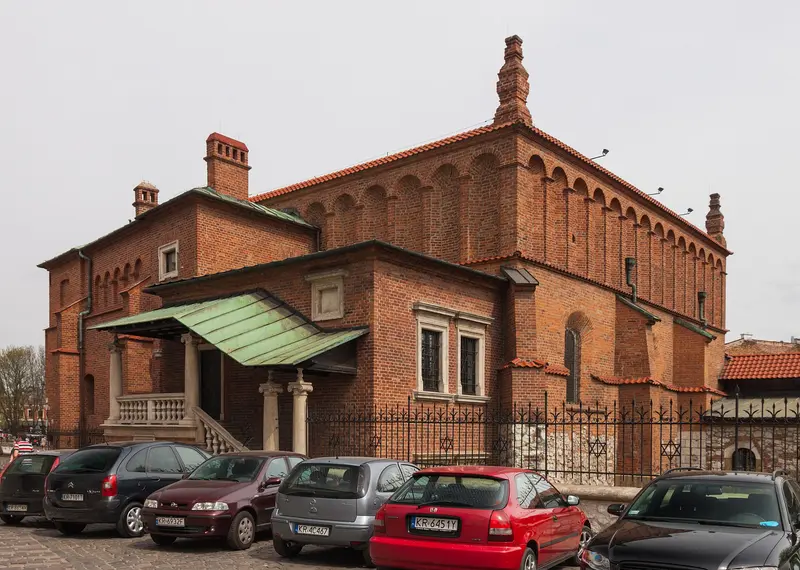
    Founded in 1335, Kazimierz was for centuries the center of Jewish life in Krakow. The Old Synagogue now houses a museum of Jewish history; nearby are the Remuh Synagogue (with its cemetery), the Tempel and Isaac Synagogues. In 1993, Steven Spielberg shot much of Schindler's List in the district.
    Open in Google Maps

    Videos & Travel Reports

    Rick Steves' Europe: Poland

    An hour-long best-of-Poland special from the public television series Rick Steves' Europe. It starts in Kraków and the Auschwitz-Birkenau Memorial, continues to Warsaw, Toruń and Malbork Castle and…

    Ramon Babazadeh fährt mit einem Goralen-Floß durch den Dunajec-Durchbruch im…

    Restaurants in Krakow (Kraków)

    1

    Folga

    Modern restaurant in Kazimierz, awarded a Bib Gourmand by the Guide Michelin.
    Show on Google Maps
    2

    NOAH

    Israeli cuisine in Kazimierz, since 2025 with a Bib Gourmand in the Michelin Guide.
    Show on Google Maps
    3

    Right Here

    Traditional Polish cuisine at ul. Kanonicza 22, between Old Town and Wawel, recommended in the Michelin Guide.
    Show on Google Maps
    4

    Kogel Mogel

    Polish restaurant on ul. Sienna 12 near the Rynek, Michelin Guide recommended; its menu reinterprets Krakow classics, with a garden terrace in summer.
    Show on Google Maps

    Food and Drink

    Obwarzanek krakowski

    Braided yeast ring, boiled before baking and sprinkled with salt, poppy seeds or sesame. Since 2010, it has been registered as a Protected Geographical Indication (PGI) by the EU and may only be baked in Krakow and the Krakow and Wieliczka districts.

    Zapiekanka

    Baked baguette half with mushrooms and cheese, traditionally with ketchup. The well-known stalls are in the Okrąglak Rotunda on Plac Nowy in Kazimierz.

    Maczanka Krakow-style

    Kraków bun with braised pork neck, onions, and caraway; the bun is dipped in the roasting juices, served with pickled cucumbers.

    Culture and History

    Royal City and UniversityKrakow was residence of Polish kings until 1596, when Sigismund III moved the court to Warsaw. Wawel Cathedral remained the coronation and burial church. In 1364, Casimir the Great founded the Krakow Academy (today's Jagiellonian University), Central Europe's second oldest university after Prague. From St. Mary's Church's taller tower, the Hejnał, a trumpet melody stopping mid-note, is played hourly, recalling a legendary 1241 Mongol attack.Jewish KrakowKazimierz hosts central Jewish historical buildings: the Old Synagogue, Remuh Synagogue (with cemetery), Tempel Synagogue, and Isaac Synagogue. The Old Synagogue is now a museum. Since 1988, the Jewish Culture Festival is held annually, from late June to early July. In Podgórze, the ghetto sites and Schindler's Factory recall the persecution and murder of Krakow's Jews under German occupation.

    Nightlife

    1

    Alchemia

    Pub and café at ul. Estery 5 in Kazimierz, featuring old furniture and candlelight. The cellar hosts concerts, plus a jazz festival in autumn.
    Show on Google Maps
    2

    Singer

    Bar on ul. Estery 20, Kazimierz, one of the district's first, with old Singer sewing machine tables and candlelight. A cafe by day, it fills up late at night.
    Show on Google Maps
    3

    Mleczarnia

    Café-bar on ul. Meiselsa 20 in Kazimierz with old photos on the walls and a seasonal beer garden across the street.
    Show on Google Maps

    Getting Here & Around

    Getting HereFrom Kraków-Balice Airport, the SKA1 regional train takes about 17 minutes to reach Kraków Główny main station. Tickets are available from vending machines; for current fares and timetables, check Koleje Małopolskie. The Old Town is just a few minutes' walk from the main station.Getting Around and ParkingThe Old Town and Kazimierz are best explored on foot. Trams and buses connect the districts; find ticket types and prices at ztp.krakow.pl. On-street parking in the city centre is charged Monday-Saturday; times and tariffs at krakow.pl. From 1 January 2026, Krakow introduces a Low Emission Zone (Strefa Czystego Transportu); check if your vehicle is permitted to enter at sct.zdmk.krakow.pl.
    Accommodations in Krakow (Kraków)

    Find perfect stay in Krakow (Kraków)

    Booking.com* (Affiliate link)
    Search Hotels
    Agoda* (Affiliate link)
    Search Hotels
    Airbnb
    Vacation Rentals

    * Affiliate link: if you book through it, we earn a small commission. The price stays the same for you.

    Campgrounds in Krakow (Kraków)

    Find perfect campground in Krakow (Kraków)

    Search via Google Maps
    Campgrounds nearby (15km)
    Camping.info
    Find Campgrounds
    Park4Night
    RV Parks & Camping

    Plan your trip to Krakow (Kraków)

    Save places, build a route and plan your city trip, all in one place.

    1. 1
      Sunrise over alpine peaks and a sea of clouds
      1234

      Round trip

      12 days · 4 stops

      Saved

      Pick a route

      Pick a ready-made one or save places and plan your own.

      Open bookmarks
    2. 2

      Trip to Krakow (Kraków)

      Live
      • 1St. Mary's Church (Bazylika Mariacka)3 days
      • 2Wawel: Royal Castle and Cathedral4 days
      • 3Krakus Hill (Kopiec Krakusa) in Podgórze5 days
      Budget

      Plan your trip

      The planner sorts stops, days and budget. Plan together in real time.

      Start trip planning
    3. 3
      9:41 No signal
      Krakow (Kraków)
      Available offline

      Use it on the road

      Download the guide to your phone and use it on site, even offline.

    Nearby

    Wieliczka

    Wieliczka

    Wieliczka is located about 13 kilometers southeast of Krakow (Kraków) and has lived from salt since the Middle Ages. The first shafts were dug in the 13th century, and the town was granted city rights in 1290. Salt mining ended in 1996; the mine has been on the UNESCO World Heritage list since 1978, joined by the Bochnia mine in 2008, and the Saltworks Castle in 2013. Together, they form the World Heritage site Royal Salt Mines Wieliczka and Bochnia.Most visitors come for the underground tourist route, but the town itself is also worth a tour. At Rynek Górny, the buildings follow the medieval layout, while Rynek Dolny was once a trading place for salt and is located by the Regis Shaft. The town also features the Saltworks Castle, the wooden St. Sebastian's Church, and a brine graduation tower.
    Małopolska

    Małopolska

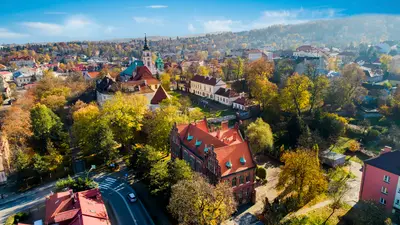
    Lesser Poland (Małopolska) stretches from the Vistula around Krakow (Kraków) to the peaks of the High Tatras on the Slovakian border. Krakow, capital of the Kingdom of Poland until 1596, serves as the administrative and cultural heart of the Voivodeship; its Old Town, the Wieliczka Salt Mine, and the Auschwitz-Birkenau Memorial together form several UNESCO World Heritage Sites located close by.To the south, the land rises through hills to the Carpathians. Around Zakopane and in the Pieniny, the Goral people define the landscape with their wooden architecture, sheep's cheese, and folk music, and in the villages of Southern Lesser Poland stand Gothic wooden churches that have been World Heritage Sites since 2003.
    Auschwitz-Birkenau Memorial Site

    Auschwitz-Birkenau Memorial Site

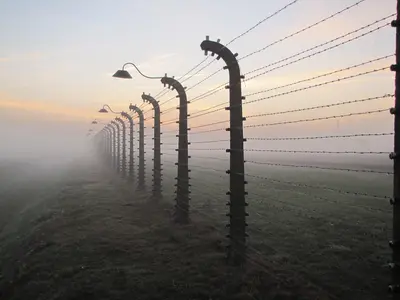
    The Auschwitz-Birkenau Memorial and State Museum is located on the outskirts of Oświęcim, west of Krakow (Kraków). German occupiers established the camp in 1940, and Auschwitz II-Birkenau was built from October 1941. According to estimates by the Memorial, approximately 1.1 million people were murdered in Auschwitz, about 1 million of them Jews. The victims also included approximately 70,000 Poles, 21,000 Sinti and Roma, 15,000 Soviet prisoners of war, and about 12,000 prisoners of other nationalities.On January 27, 1945, Soviet troops liberated the camp; since 2005, this day has been the International Holocaust Remembrance Day. The Polish Parliament founded the museum on July 2, 1947, and since 1979, the site has been on the UNESCO World Heritage List. The site covers approximately 191 hectares: the former main camp Auschwitz I and the much larger Birkenau, about three kilometers away; a free shuttle bus provided by the Memorial connects both parts. For a visit, you should allow at least half a day.
    Kattowitz (Katowice)

    Kattowitz (Katowice)

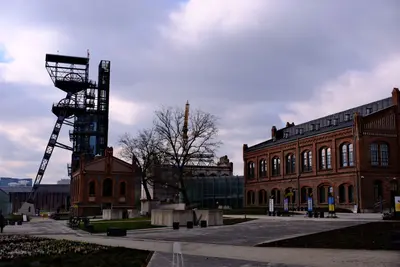
    Katowice is the capital of the Silesian Voivodeship and the hub of an urban agglomeration with several million inhabitants. The village grew into an industrial city in the 19th century thanks to coal and ore, receiving city rights in 1865. Following a plebiscite and the division of Upper Silesia, it joined Poland and became the capital of the Autonomous Silesian Voivodeship in 1922. From 1953 to 1956, it was called Stalinogród. Today, approximately 279,000 people live here.The city center (Śródmieście) stretches from the train station to the Rynek. Nearby lies the pedestrian street ul. Mariacka, with its 19th-century neo-Gothic St. Mary's Church, which becomes the hub of nightlife in the evenings. Just a few minutes' walk north stand the Spodek Hall and the Culture Zone (Strefa Kultury) on the grounds of the former Katowice Mine. In the east of the city, the mining settlements of Nikiszowiec and Giszowiec are preserved.Since 2015, Katowice has been a UNESCO Creative City of Music. Alongside NOSPR concerts, the OFF Festival in August and the Tauron Nowa Muzyka Festival shape the calendar, while the Spodek hosts the finals of the Intel Extreme Masters e-sports tournaments.
    Silesia

    Silesia

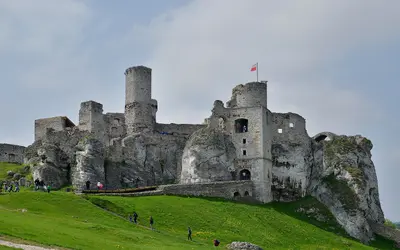
    The Silesian Voivodeship (województwo śląskie) in southern Poland was established in 1999 from the former voivodeships of Katowice, Częstochowa, and Bielsko-Biała. It encompasses the eastern part of Upper Silesia, a portion of Cieszyn Silesia, and areas historically belonging to Lesser Poland, including Częstochowa and the Dąbrowa Basin. Approximately 4.3 million people live across its 12,334 square kilometers.Its core is the Upper Silesian Industrial Region around Katowice, Gliwice, and Zabrze, which grew in the 19th century with hard coal mining. Disused mines are now museums and cultural venues. To the north, the Kraków-Częstochowa Upland stretches through the region with castle ruins on limestone cliffs; to the south, the Silesian Beskids rise.

    Sources & method

    • Photos: Wikimedia Commons, Pexels, Google Maps. Each photo carries its credit.
    • Place data such as addresses and ratings comes from Google Maps.
    • Video reportages: Rick Steves' Europe: Poland, Wunderschön! Polens Süden: Von der Hohen Tatra nach Krakau
    • The content is based on web research from public, traceable sources. How the content is made · The role of AI