Fernweh: Home
    ExploreTravel GuidesPlan a tripMy tripLast visited
    de|en
    All Places & RegionsAll highlightsAbout FernwehFAQPrivacy PolicyImprint
    ExploreTravel GuidesPlan a tripMy tripLast visited
    • Neighborhoods & highlights
    • Videos
    • Eat & drink
    • Food culture
    • Culture
    • Nightlife
    • Getting around
    • Accommodation
    • Plan trip
    • Nearby
    Warsaw (Warszawa)

    Poland

    Warsaw (Warszawa)

    City

    Warsaw (Warszawa) has been the seat of the Polish royal court since 1596 and has been the country's capital again since 1918.

    by Felix Gillen

    1. Home
    2. Destinations
    3. Poland
    4. Masovia
    5. Warsaw (Warszawa)
    Warsaw (Warszawa) has been the seat of the Polish royal court since 1596 and has been the country's capital again since 1918. The city on the Vistula has around 1.86 million inhabitants; in the metropolitan area, depending on the definition, 2.6 to 3.5 million people live. Its character is marked by discontinuities: After the Warsaw Uprising from August 1 to October 2, 1944, and the subsequent targeted destruction by the German occupiers, the city was largely uninhabitable. Afterwards, a mix of reconstructed facades, socialist classicism, and glass skyscrapers emerged around the Palace of Culture. The Old Town was rebuilt after the war according to historical plans, ceremoniously reopened in 1953, and recognized as a UNESCO World Heritage Site in 1980, precisely because of this reconstruction. From Castle Square with the Sigismund's Column and the reconstructed Royal Castle, the Royal Route leads south via Krakowskie Przedmieście and Nowy Świat, past aristocratic palaces, to Łazienki Park and further to the Baroque Wilanów Palace. On the right bank of the Vistula lies Praga, which was significantly less destroyed during the war than the left bank. In old factories like the Koneser complex on Ząbkowska street, you'll find eateries, cultural venues, and the Museum of Polish Vodka. On the left bank below the escarpment, Powiśle stretches along the Vistula with the Copernicus Science Centre and the University Library. Muranów, predominantly a Jewish quarter before the war and part of the ghetto from 1940, was largely rebuilt from the rubble of the ghetto after 1945; today, it is home to the POLIN Museum.

    Sights in Warsaw (Warszawa)

    Discover the most important sights and attractions

    Łazienki Park (Łazienki Królewskie)
    Museum

    1Łazienki Park (Łazienki Królewskie)

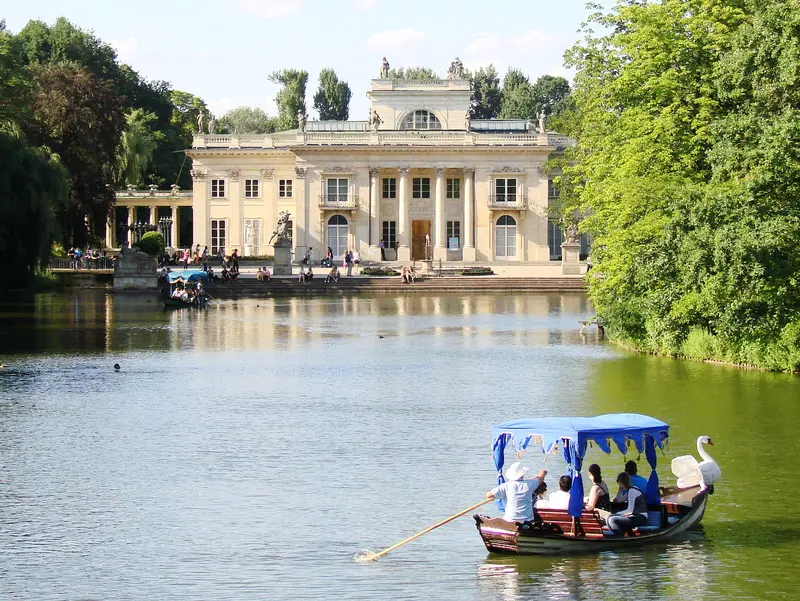
    At 80 hectares, Łazienki Park is Warsaw's largest park complex, created for King Stanisław August Poniatowski. The classical palace on the island was rebuilt by Dominik Merlini from 1772 to 1793. At the Chopin Monument, free piano concerts take place on Sundays in summer.
    Open in Google Maps
    POLIN (Museum of the History of Polish Jews)
    Museum

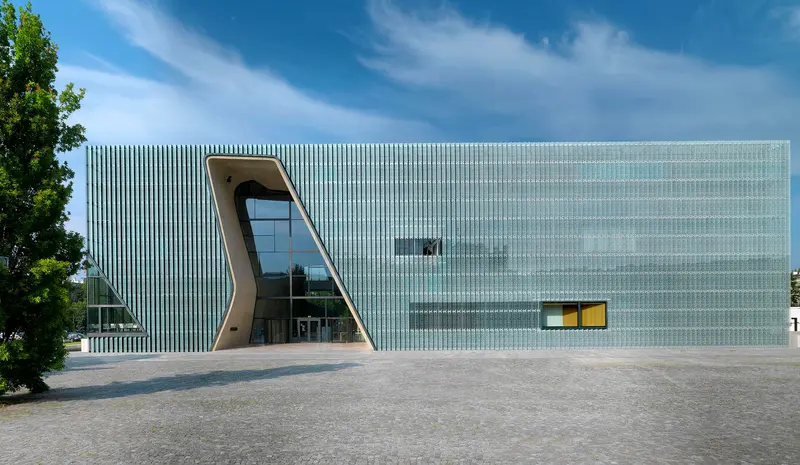
    2POLIN (Museum of the History of Polish Jews)

    The museum in Muranów stands on the site of the former Warsaw Ghetto, opposite the Ghetto Heroes Monument. The building, designed by Finnish architects Rainer Mahlamäki and Ilmari Lahdelma, was opened in 2013, with the permanent exhibition on a thousand years of Jewish history in Poland following in 2014. In 2016, POLIN received the European Museum of the Year Award.
    Open in Google Maps
    Museum of the Warsaw Uprising (Muzeum Powstania Warszawskiego)
    Museum

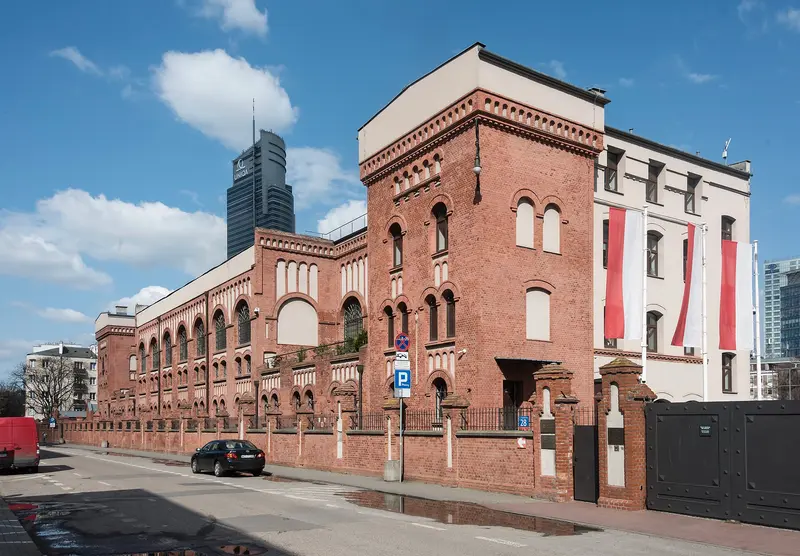
    3Museum of the Warsaw Uprising (Muzeum Powstania Warszawskiego)

    Opened in 2004, the museum in the Wola district commemorates the Warsaw Uprising (August 1 – October 2, 1944). It is housed in a former tram power plant, built 1904-1908 and later converted into a district heating plant.
    Open in Google Maps
    Wilanów Palace (Pałac w Wilanowie)
    Museum

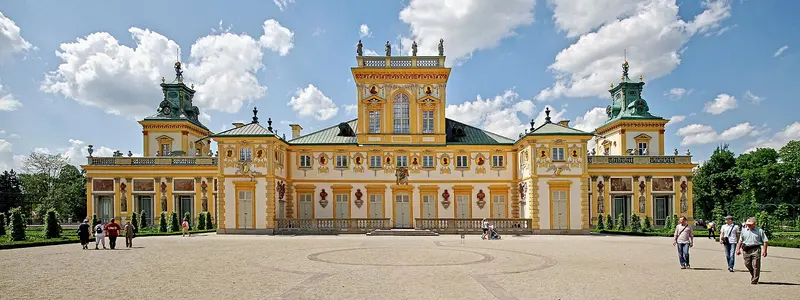
    4Wilanów Palace (Pałac w Wilanowie)

    King Jan III Sobieski had the Baroque three-wing complex at the southern end of the approximately 10 km long Royal Route built from 1677. Since 1805, the palace has been a museum, its interiors blending Baroque, Rococo, Classicism, and Empire.
    Open in Google Maps
    Old Town Market (Rynek Starego Miasta)
    Historic Landmark

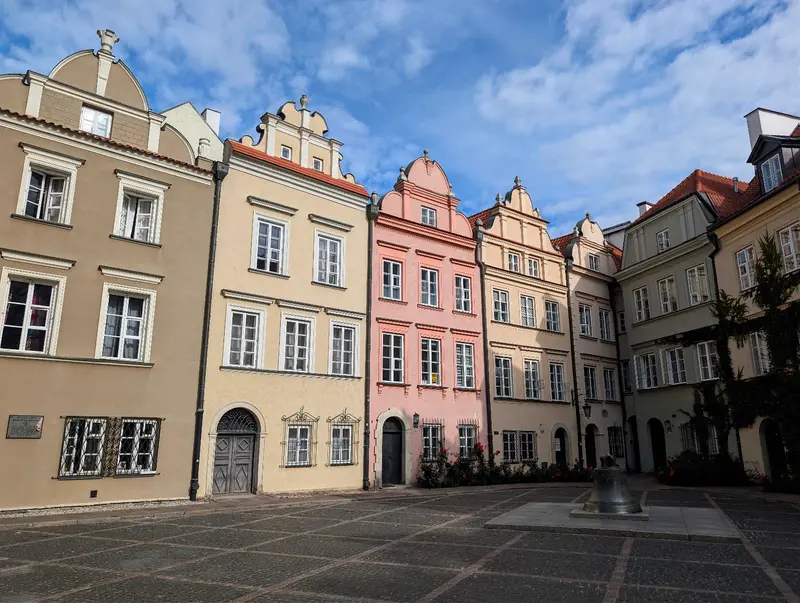
    5Old Town Market (Rynek Starego Miasta)

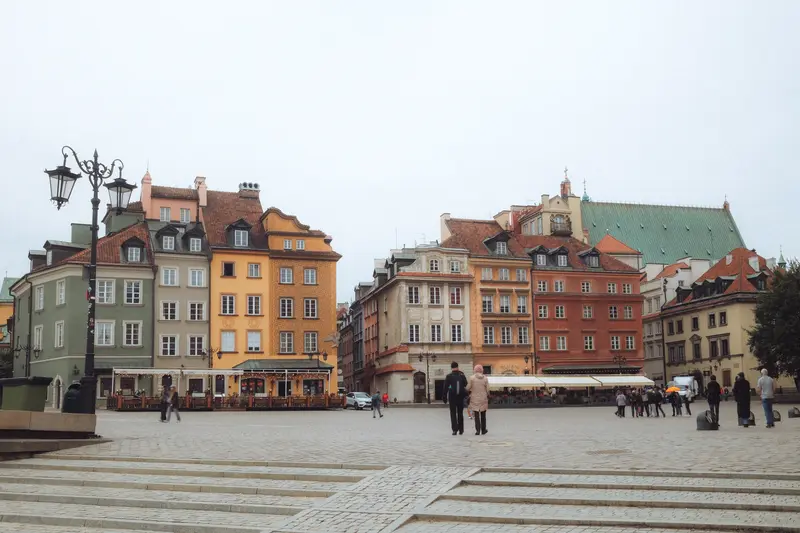
    The Market Square forms the heart of Warsaw's Old Town. After its destruction in 1944, its townhouses were reconstructed; the Old Town was ceremoniously re-opened in 1953 and recognized as a UNESCO World Heritage site in 1980. A few steps away lie Castle Square with Sigismund's Column from 1644 and the reconstructed Royal Castle.
    Open in Google Maps
    Palace of Culture and Science (Pałac Kultury i Nauki)
    Attraction

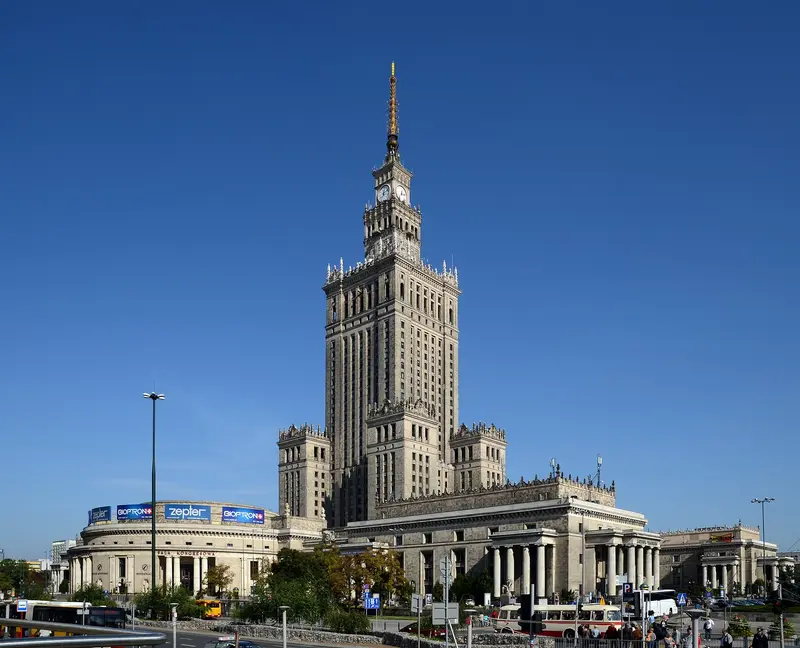
    6Palace of Culture and Science (Pałac Kultury i Nauki)

    The Socialist Realism-style tower, built 1952–1955 as a “gift from the Soviet people to the Polish people,” is 237 m high with spire and antenna. The observation terrace on the 30th floor, at around 114 m, offers a wide city view. Since 2025, the Neon Museum is housed here.
    Open in Google Maps

    Videos & Travel Reports

    Rick Steves' Europe: Poland

    An hour-long best-of-Poland special from the public television series Rick Steves' Europe. It starts in Kraków and the Auschwitz-Birkenau Memorial, continues to Warsaw, Toruń and Malbork Castle and…

    Warsaw-born travel vlogger Eva zu Beck guides DW Travel through her home city,…

    Restaurants in Warsaw (Warszawa)

    1

    Wyraj

    A small, cozy restaurant on Krochmalna, named after the paradise of Slavic mythology. The cuisine draws on classic Polish recipes, everything is made in-house, and the menu changes with the seasons. The Guide Michelin awards it with the Bib Gourmand.
    Show on Google Maps
    2

    Koneser Grill

    Grill restaurant in Centrum Praskie Koneser, a former vodka distillery in Praga that now combines apartments, shops, cultural venues, and a museum. The focus is on in-house aged steaks, and sharing dishes is expressly encouraged. Bib Gourmand in the Michelin Guide.
    Show on Google Maps
    3

    Rozbrat 20

    A Michelin-starred restaurant on its namesake street, which, despite its reputation, retains a neighborhood feel. From the front room, you can watch the kitchen team at work; elaborate, creative modern dishes are served.
    Show on Google Maps
    4

    Kieliszki na Próżnej

    A wine bar and bistro on Próżna, recognizable by the large glass rack above the entrance area and a black-and-white animal mural. The menu features robust, hearty dishes, available at particularly favorable prices for lunch, complemented by an extensive wine list. Bib Gourmand in the Michelin Guide.
    Show on Google Maps

    Food & Drink in Warsaw

    Warsaw-style Flaki

    Tripe soup, Warsaw style, one of the dishes that are associated with the capital city.

    Pyzy with meat

    Potato dumplings with meat filling, a hearty classic of Warsaw cuisine.

    Wuzetka

    Chocolate cream pastry, its name often linked to Warsaw's W-Z East-West Route.

    The Culture in Warsaw

    Remembrance and Reconstruction The city openly confronts its destruction. The Warsaw Uprising Museum, located in a former tram power station in Wola, tells the story of the 63 days in late summer 1944. The POLIN Museum in Muranów recounts a thousand years of Jewish life in Poland. The post-war reconstruction of the Old Town is considered a cultural achievement in itself: UNESCO inscribed it on the World Heritage List in 1980 as a nearly complete reconstruction. Chopin and Music Fryderyk Chopin grew up in Warsaw, and his name greets you everywhere, from the airport to Łazienki Park. There, at Wacław Szymanowski's Chopin Monument, free open-air piano concerts take place on Sundays from July to the end of September, usually at 12 PM and 4 PM. The Museum Łazienki Królewskie publishes the schedule for each season.

    Nightlife

    1

    Water of Fire

    Cocktail bar on Wilcza in Śródmieście, designed in the style of interwar Warsaw. The seasonal menu combines house creations with forgotten classics and old Polish recipes, plus a shelf with Polish vodkas and liqueurs.
    Show on Google Maps
    2

    W Oparach Absurdu

    A pub on Ząbkowska in Praga with fairy lights, old lampshades, and mismatched furniture. In the evenings, there's often live music, draught beer from Amber Brewery, plus gin, cocktails, and small dishes like Pierogi.
    Show on Google Maps
    3

    RAJ (Nowy Świat Pavilions)

    A bar in one of the Hof Pawilony pavilions, accessible via passages behind Nowy Świat. The courtyard features around 20 small bars, each with its own character.
    Show on Google Maps

    Travel & On the Go

    Arrival Warsaw Chopin Airport is 8 km southwest of the center. Since 2012, it has its own station with SKM and Koleje Mazowieckie trains to the city. During the day, bus 175 also goes to Plac Piłsudskiego in the center; at night, the N32. The greater area is also served by Modlin Airport. Long-distance trains stop at Warszawa Centralna (center) and Warszawa Wschodnia (Praga). Getting Around and Parking Metro (M1 & M2), trams, and buses are part of ZTM Warszawa. City tickets are also valid on SKM and Koleje Mazowieckie suburban trains within the tariff zone. The Old Town, Royal Route, and Powiśle are best explored on foot. If driving, park in the city center's paid SPPN zone, active weekdays 8 AM – 8 PM; pay at meters. It's often easier to leave your car at the hotel.
    Accommodations in Warsaw (Warszawa)

    Find perfect stay in Warsaw (Warszawa)

    Booking.com* (Affiliate link)
    Search Hotels
    Agoda* (Affiliate link)
    Search Hotels
    Airbnb
    Vacation Rentals

    * Affiliate link: if you book through it, we earn a small commission. The price stays the same for you.

    Campgrounds in Warsaw (Warszawa)

    Find perfect campground in Warsaw (Warszawa)

    Search via Google Maps
    Campgrounds nearby (15km)
    Camping.info
    Find Campgrounds
    Park4Night
    RV Parks & Camping

    Plan your trip to Warsaw (Warszawa)

    Save places, build a route and plan your city trip, all in one place.

    1. 1
      Sunrise over alpine peaks and a sea of clouds
      1234

      Round trip

      12 days · 4 stops

      Saved

      Pick a route

      Pick a ready-made one or save places and plan your own.

      Open bookmarks
    2. 2

      Trip to Warsaw (Warszawa)

      Live
      • 1Łazienki Park (Łazienki Królewskie)3 days
      • 2POLIN (Museum of the History of Polish Jews)4 days
      • 3Museum of the Warsaw Uprising (Muzeum Powstania Warszawskiego)5 days
      Budget

      Plan your trip

      The planner sorts stops, days and budget. Plan together in real time.

      Start trip planning
    3. 3
      9:41 No signal
      Warsaw (Warszawa)
      Available offline

      Use it on the road

      Download the guide to your phone and use it on site, even offline.

    Nearby

    Masovia

    Masovia

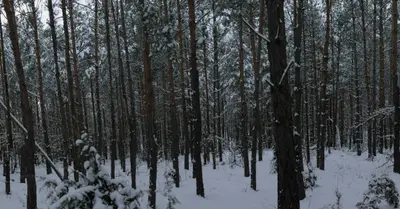
    Masovia (Mazowsze), with approximately 35,600 km², is Poland's largest voivodeship by area and home to about 5.5 million inhabitants. Located in the Central Polish Lowlands, the region spans both sides of the middle Vistula, also crossed by the Bug, Narew, Bzura, and Pilica. At its heart is the capital, Warsaw, surrounded by lowlands, forests, and river valleys. On the city's outskirts begins the Kampinos National Park with dunes and swamps, and to its west, in Żelazowa Wola, lies Fryderyk Chopin's birthplace.
    Łódź

    Łódź

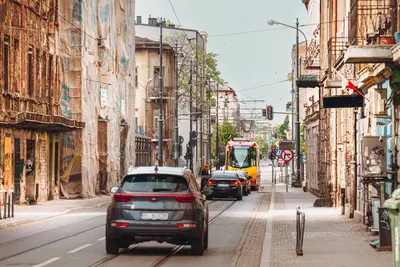
    With around 640,000 inhabitants, Łódź is one of Poland's largest cities and the capital of its namesake voivodeship. Its ascent was driven by the textile industry: the first textile factory was established in 1826, by 1900 over 300,000 people lived in the city, and in 1904 approximately 70,000 workers were employed in 546 factories. From this period, industrialists' palaces and brick factories remain, and Polish, German, Jewish, and Russian traditions still shape the city's cuisine today. The backbone of the city is the Piotrkowska, a several-kilometer-long promenade featuring Art Nouveau facades, courtyards, and the entertainment complex OFF Piotrkowska. Izrael Poznański’s former factory was transformed into Manufaktura, housing museums, restaurants, and the ms2 art gallery; his palace stands right next to it. Księży Młyn is the workers' settlement built by industrialist Karl Scheibler, with brick houses and factory buildings. New cultural venues such as the former EC1 power plant, with its planetarium and film center, complement the industrial monuments. Large-format murals, many of which have been created since 2011 during the Urban Forms Foundation festival, have also earned Łódź the reputation of a city of murals.
    Kazimierz Dolny

    Kazimierz Dolny

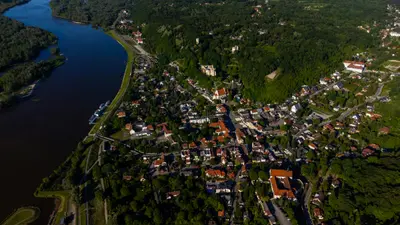
    Kazimierz Dolny is located on the east bank of the Vistula River, approximately 50 km west of Lublin, and has around 2,500 inhabitants. First mentioned in 1249, the town was a port for grain trade on the Vistula. After being burned by Swedish troops in 1656 and the end of the grain trade, it lost its significance. From the late 19th century onwards, painters, writers, and summer visitors brought new life to the town.The market square, with its Renaissance burgher houses of the Przybyła family, is the center. Not far away, the Celej House holds a section of the Vistula Museum. Other sights include the parish church, the castle ruins, and the Three Crosses Hill (Drei-Kreuze-Berg) offering views of the Vistula Valley. Around the town, loess gorges wind through the Kazimierz Landscape Park, accompanied by old granaries.The town and its surroundings have been protected as a Polish Historical Monument since 1994. On summer weekends it is busy; during the week and in the off-season, it is quieter.
    Łódź Region

    Łódź Region

    The Łódź Voivodeship (Łódzkie) lies in the heart of Poland and has a population of around 2.34 million. It was established in 1999, mainly from the former voivodeships of Łódź, Sieradz, and Piotrków; its capital and largest city is Łódź. The north belongs to the Central Polish Lowlands, while the hillier south is already part of the Polish Uplands. Around 70 percent of its area is agricultural, and with roughly 22 percent forest cover, it is the country's least forested voivodeship.
    Lublin

    Lublin

    Lublin is located approximately 170 km southeast of Warsaw and, with around 327,000 inhabitants, is Poland's eighth-largest city. Five universities make it a young student city. In 1317, Lublin received Magdeburg rights and became a trading post on the Via Regia; in 1569, the Union of Lublin between Poland and Lithuania was concluded here.The Old Town lies on the edge of the Bystrzyca Valley and is surrounded by remnants of the city walls, including the Krakow Gate and Grodzka Gate. On the Market Square stands the former Town Hall, the Crown Tribunal, ringed by Renaissance burgher houses, the Cathedral, and the Dominican Basilica. The Grodzka Gate formerly marked the boundary to the Jewish Quarter; behind it rises the Castle with the Holy Trinity Chapel. West of the Old Town, the New Town and the Saxon Garden connect.On the outskirts, the Majdanek Memorial commemorates the German concentration and extermination camp. Two days should be planned for Lublin, easily combinable with Kazimierz Dolny and Zamość.

    Sources & method

    • Photos: Wikimedia Commons, Pexels, Google Maps. Each photo carries its credit.
    • Place data such as addresses and ratings comes from Google Maps.
    • Video reportages: Rick Steves' Europe: Poland, The Warsaw You've Never Seen Before: Eva zu Beck's Secret Sights
    • The content is based on web research from public, traceable sources. How the content is made · The role of AI