Fernweh: Home
    ExploreTravel GuidesPlan a tripMy tripLast visited
    de|en
    All Places & RegionsAll highlightsAbout FernwehFAQPrivacy PolicyImprint
    ExploreTravel GuidesPlan a tripMy tripLast visited
    • Neighborhoods & highlights
    • Eat & drink
    • Food culture
    • Culture
    • Nightlife
    • Getting around
    • Accommodation
    • Plan trip
    • Nearby
    Łódź

    Poland

    Łódź

    City

    With around 640,000 inhabitants, Łódź is one of Poland's largest cities and the capital of its namesake voivodeship.

    by Felix Gillen

    1. Home
    2. Destinations
    3. Poland
    4. Łódź Region
    5. Łódź
    With around 640,000 inhabitants, Łódź is one of Poland's largest cities and the capital of its namesake voivodeship. Its ascent was driven by the textile industry: the first textile factory was established in 1826, by 1900 over 300,000 people lived in the city, and in 1904 approximately 70,000 workers were employed in 546 factories. From this period, industrialists' palaces and brick factories remain, and Polish, German, Jewish, and Russian traditions still shape the city's cuisine today. The backbone of the city is the Piotrkowska, a several-kilometer-long promenade featuring Art Nouveau facades, courtyards, and the entertainment complex OFF Piotrkowska. Izrael Poznański’s former factory was transformed into Manufaktura, housing museums, restaurants, and the ms2 art gallery; his palace stands right next to it. Księży Młyn is the workers' settlement built by industrialist Karl Scheibler, with brick houses and factory buildings. New cultural venues such as the former EC1 power plant, with its planetarium and film center, complement the industrial monuments. Large-format murals, many of which have been created since 2011 during the Urban Forms Foundation festival, have also earned Łódź the reputation of a city of murals.

    Sights in Łódź

    Discover the most important sights and attractions

    Piotrkowska Street (Ulica Piotrkowska)

    1Piotrkowska Street (Ulica Piotrkowska)

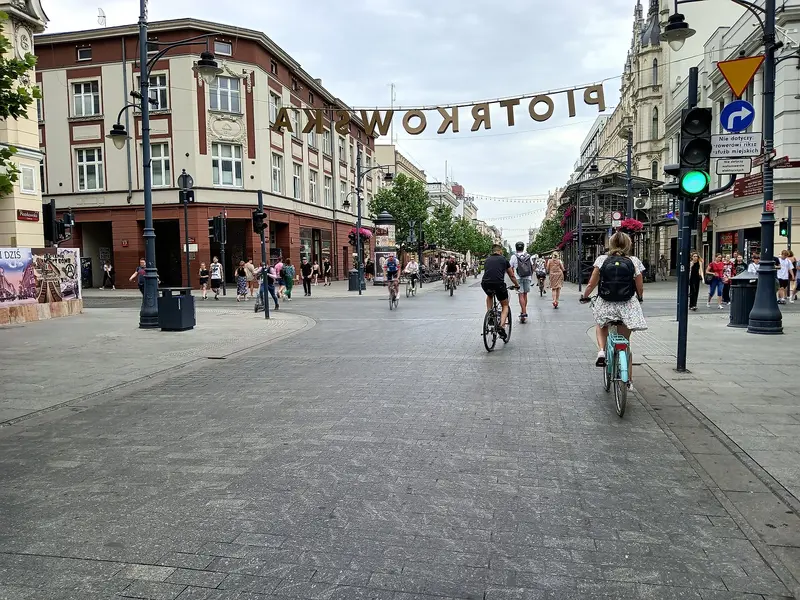
    The main street of Łódź stretches approximately 4.9 km south from Plac Wolności and is lined with Art Nouveau and Historicist buildings. In its courtyards, restaurants, bars, and shops have set up, for instance, in the former factory complex OFF Piotrkowska at number 138/140.
    Open in Google Maps
    Księży Młyn
    Attraction

    2Księży Młyn

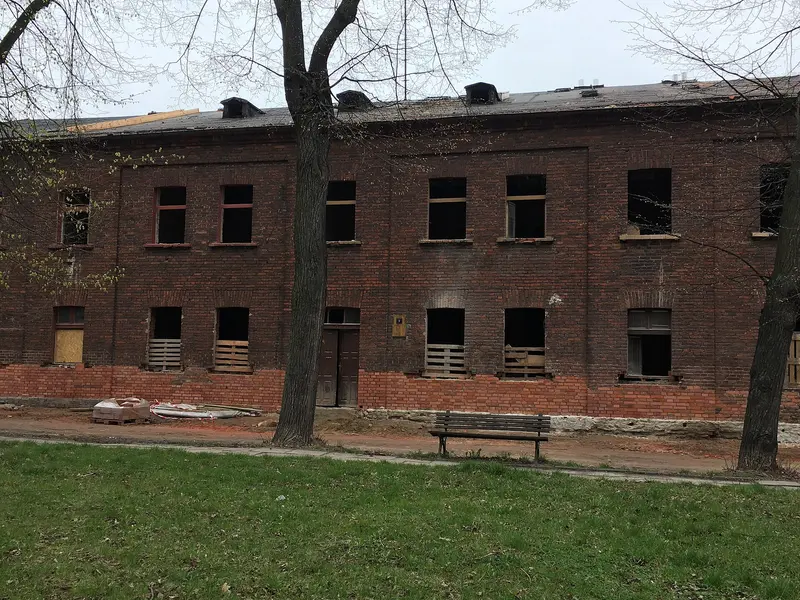
    The industrial settlement of the textile manufacturer Karl Scheibler emerged from 1870 onwards as a largely independent place with a spinning mill and brick workers' houses, known as Familoki. The complex includes the palace from 1875, which Scheibler's son-in-law Edward Herbst inhabited, and is now a department of the Muzeum Sztuki.
    Open in Google Maps
    EC1 Łódź
    Attraction

    3EC1 Łódź

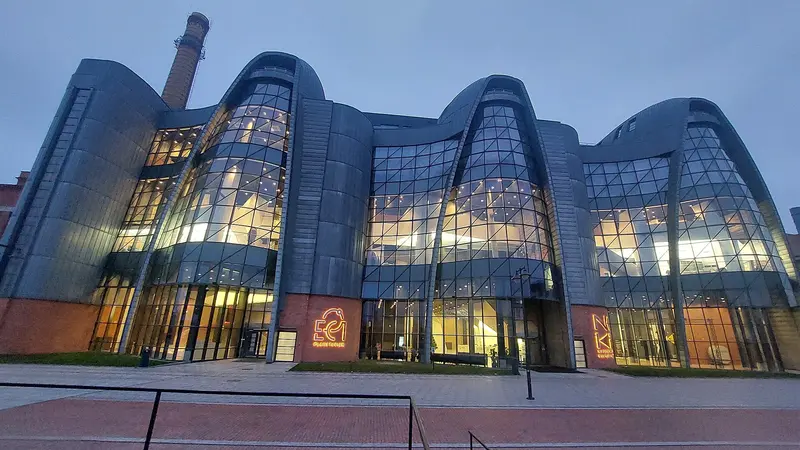
    The former power plant beside Łódź Fabryczna station is now a cultural center with Science & Technology Center, Planetarium, the 2023-opened Comic Center, and the National Center for Film Culture.
    Open in Google Maps
    Manufaktura
    Shopping Mall

    4Manufaktura

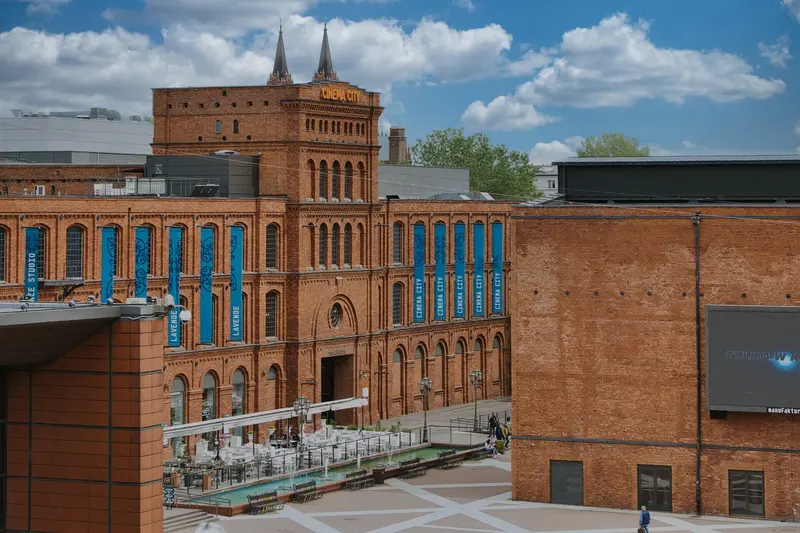
    The former cotton factory of industrialist Izrael Poznański, who acquired the site in 1871, operated until 1997 and was reopened in 2006 as a shopping and leisure complex with restaurants, a hotel, and a cinema. The site also houses the Factory Museum and, since 2008, ms2, the modern art gallery of Muzeum Sztuki.
    Open in Google Maps
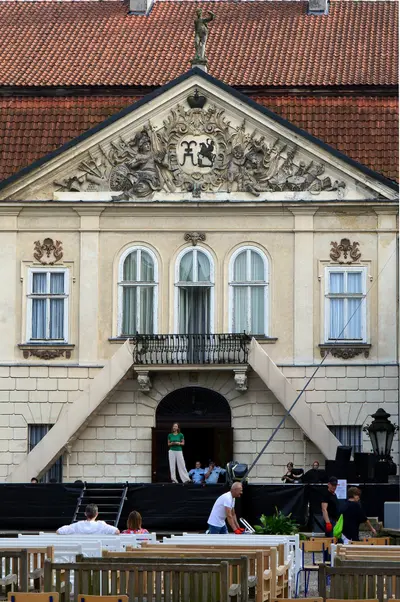
    Poznański Palace (Pałac Poznańskiego)

    5Poznański Palace (Pałac Poznańskiego)

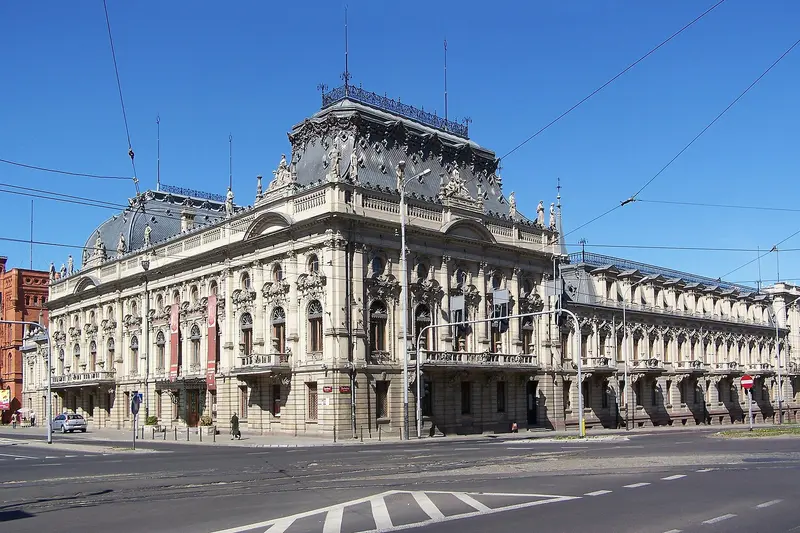
    The palace on Ogrodowa was built between 1888 and 1903 for the family of the manufacturer Izrael Poznański in the style of Neo-Renaissance and Neo-Baroque and is located right next to Manufaktura. Today, the Museum of the City of Łódź presents its exhibitions here.
    Open in Google Maps
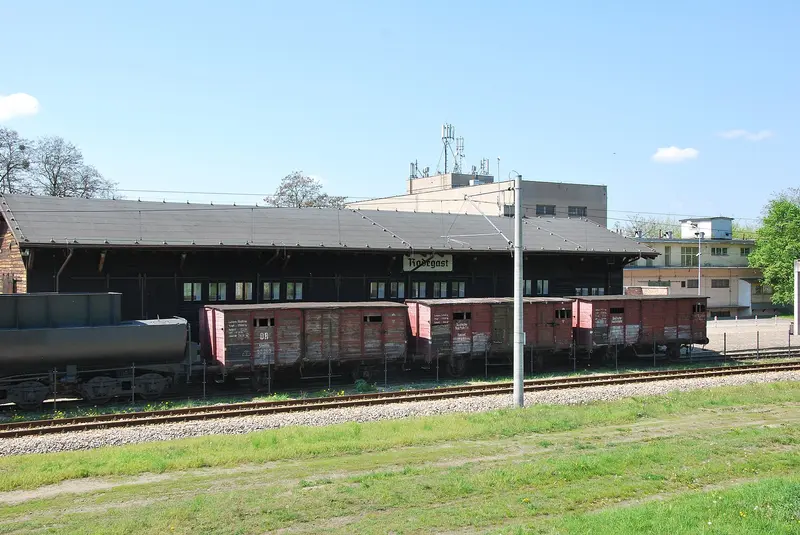
    Radegast Station (Stacja Radegast)
    Attraction

    6Radegast Station (Stacja Radegast)

    The historic train station is a memorial site for the victims of the Litzmannstadt Ghetto, which the German occupiers established on February 8, 1940, in Łódź. In 1944, more than 150,000 Jews were deported from here to the Kulmhof and Auschwitz extermination camps; since 2005, the station building has served as a memorial.
    Open in Google Maps

    Restaurants in Łódź

    1

    Acanti

    Restaurant at Hotel Traugutta 12, a converted old tenement house, featuring a bright dining room on the ground floor and a darker cellar space. The cuisine combines modern Polish dishes with European influences, and the Guide Michelin awards it a Bib Gourmand.
    Show on Google Maps
    2

    Malinowa

    Restaurant in the former ballroom of the Grand Hotel an der Piotrkowska, which has been welcoming guests for over 130 years. Historic ambiance meets a contemporary interior, the cuisine is modern and fresh. Recommended by the Guide Michelin.
    Show on Google Maps
    3

    Fire and Salt

    Steakhouse in a former factory in the newly revitalized Ogrody Geyera district on Piotrkowska, with brick walls and an open kitchen. The focus is on dry-aged steaks from the charcoal grill. Recommended by the Guide Michelin.
    Show on Google Maps

    Eating & Drinking in Łódź

    Zalewajka

    Soup made from sour rye Żur with potatoes, a dish of simple working-class cuisine that is one of Łódź's typical meals.

    Prażoki

    Hearty potato dish, served with cracklings, sauerkraut or salt herring.

    Żulik

    A bread that is counted among the typical baked goods of Łódź cuisine.

    Culture in Łódź

    Film City Founded in 1948, the National Film School made Łódź a film city; its alumni include Roman Polański and Andrzej Wajda. The Kinematography Museum in Scheibler Palace showcases film history, and EC1 is home to the National Centre for Film Culture, featuring a museum, archive, and cinema. Industry and Remembrance The Muzeum Sztuki dates from the 1929-1932 modern art collection by the a.r. group, and now holds some 17,000 objects; its ms2 gallery is in Manufaktura. Its history also includes the Ghetto Litzmannstadt, established by German occupiers in 1940. A memorial to its victims is at Radegast Station.

    Nightlife

    1

    OFF Piotrkowska

    Former Ramisch Cotton Factory at Piotrkowska 138/140, which today houses bars, clubs, restaurants, food trucks, studios, and design companies. The courtyard is liveliest in the evenings.
    Show on Google Maps
    2

    Brush Barber Shop & Cocktail Bar

    Daytime barbershop, from 7 PM a cocktail bar in OFF Piotrkowska.
    Show on Google Maps
    3

    Browar Księży Młyn

    Brewpub on Tymienieckiego, located in the former Grohman cotton spinning mill in Księży Młyn. The beers are brewed in-house and served unfiltered and unpasteurised, plus there's a menu ranging from burgers to ramen.
    Show on Google Maps

    Arrival & On the Go

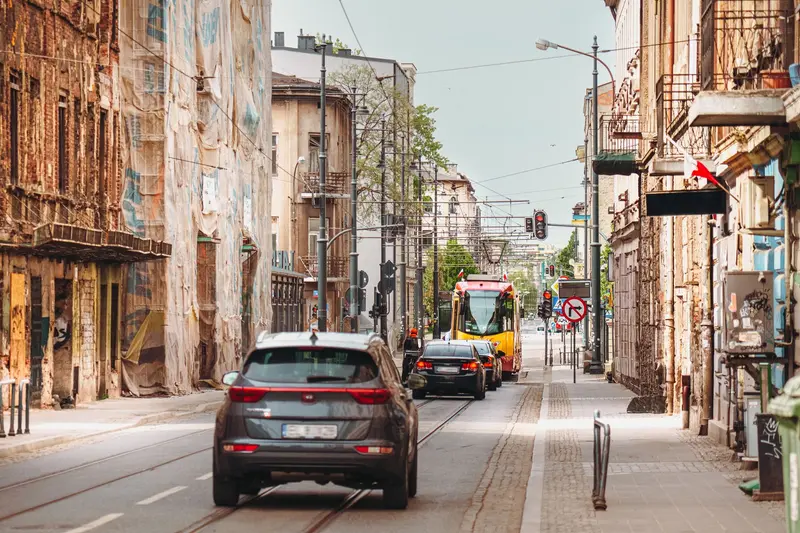
    Getting There Northeast of the city, the A1 (north-south) and A2 (east-west) motorways intersect at the Łódź Północ junction; the A1 bypasses Łódź to the east. In the city centre is the underground Łódź Fabryczna station, which reopened in December 2016; another major station is Łódź Kaliska. Łódź-Władysław Reymont Airport is located about 6 km southwest of the centre, with bus lines 65A and 65B connecting it to the city. Getting Around the City The municipal transport company MPK Łódź operates a tram network, on which electric trams have been running since 1898, as well as numerous bus lines. Piotrkowska is best explored on foot. If you arrive by car, it's best to arrange parking with your accommodation beforehand.
    Accommodations in Łódź

    Find perfect stay in Łódź

    Booking.com* (Affiliate link)
    Search Hotels
    Agoda* (Affiliate link)
    Search Hotels
    Airbnb
    Vacation Rentals

    * Affiliate link: if you book through it, we earn a small commission. The price stays the same for you.

    Campgrounds in Łódź

    Find perfect campground in Łódź

    Search via Google Maps
    Campgrounds nearby (15km)
    Camping.info
    Find Campgrounds
    Park4Night
    RV Parks & Camping

    Plan your trip to Łódź

    Save places, build a route and plan your city trip, all in one place.

    1. 1
      Sunrise over alpine peaks and a sea of clouds
      1234

      Round trip

      12 days · 4 stops

      Saved

      Pick a route

      Pick a ready-made one or save places and plan your own.

      Open bookmarks
    2. 2

      Trip to Łódź

      Live
      • 1Piotrkowska Street (Ulica Piotrkowska)3 days
      • 2Księży Młyn4 days
      • 3EC1 Łódź5 days
      Budget

      Plan your trip

      The planner sorts stops, days and budget. Plan together in real time.

      Start trip planning
    3. 3
      9:41 No signal
      Łódź
      Available offline

      Use it on the road

      Download the guide to your phone and use it on site, even offline.

    Nearby

    Łódź Region

    Łódź Region

    The Łódź Voivodeship (Łódzkie) lies in the heart of Poland and has a population of around 2.34 million. It was established in 1999, mainly from the former voivodeships of Łódź, Sieradz, and Piotrków; its capital and largest city is Łódź. The north belongs to the Central Polish Lowlands, while the hillier south is already part of the Polish Uplands. Around 70 percent of its area is agricultural, and with roughly 22 percent forest cover, it is the country's least forested voivodeship.
    Tschenstochau (Częstochowa)

    Tschenstochau (Częstochowa)

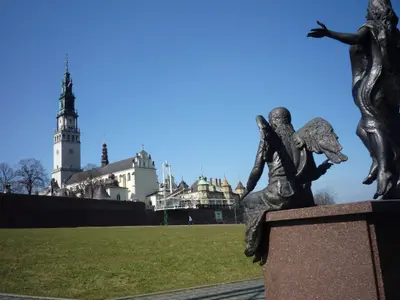
    Tschenstochau (Częstochowa) on the Warta River, with approx. 206,000 residents, is the second-largest city in Silesian Voivodeship. It is known for the Jasna Góra Pauline Monastery, founded in 1382 by Duke Władysław of Opole (Władysław Opolczyk), which attracts three to four million pilgrims and visitors annually with its miraculous Black Madonna icon. The city gained Magdeburg Rights in 1502 and railway connection to Warsaw-Vienna in 1846.The approx. 1.5-kilometer-long and 44-meter-wide Avenue of the Most Holy Virgin Mary (Aleja Najświętszej Maryi Panny) connects the Old Town and city center with the monastery hill. It starts at Plac Daszyńskiego, leads via Plac Biegańskiego, and ends at the parks below Jasna Góra. Along it are townhouses from around 1900, the neo-Gothic Church of the Most Holy Name of Mary, and the Pilgrim Museum. Away from the monastery, the Matchstick Museum showcases a piece of the city's industrial history.
    Warsaw (Warszawa)

    Warsaw (Warszawa)

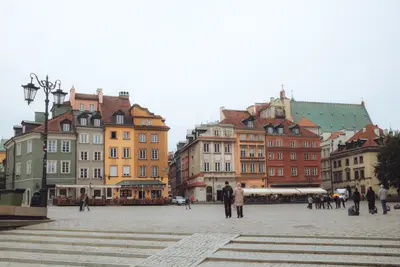
    Warsaw (Warszawa) has been the seat of the Polish royal court since 1596 and has been the country's capital again since 1918. The city on the Vistula has around 1.86 million inhabitants; in the metropolitan area, depending on the definition, 2.6 to 3.5 million people live. Its character is marked by discontinuities: After the Warsaw Uprising from August 1 to October 2, 1944, and the subsequent targeted destruction by the German occupiers, the city was largely uninhabitable. Afterwards, a mix of reconstructed facades, socialist classicism, and glass skyscrapers emerged around the Palace of Culture. The Old Town was rebuilt after the war according to historical plans, ceremoniously reopened in 1953, and recognized as a UNESCO World Heritage Site in 1980, precisely because of this reconstruction. From Castle Square with the Sigismund's Column and the reconstructed Royal Castle, the Royal Route leads south via Krakowskie Przedmieście and Nowy Świat, past aristocratic palaces, to Łazienki Park and further to the Baroque Wilanów Palace. On the right bank of the Vistula lies Praga, which was significantly less destroyed during the war than the left bank. In old factories like the Koneser complex on Ząbkowska street, you'll find eateries, cultural venues, and the Museum of Polish Vodka. On the left bank below the escarpment, Powiśle stretches along the Vistula with the Copernicus Science Centre and the University Library. Muranów, predominantly a Jewish quarter before the war and part of the ghetto from 1940, was largely rebuilt from the rubble of the ghetto after 1945; today, it is home to the POLIN Museum.
    Silesia

    Silesia

    The Silesian Voivodeship (województwo śląskie) in southern Poland was established in 1999 from the former voivodeships of Katowice, Częstochowa, and Bielsko-Biała. It encompasses the eastern part of Upper Silesia, a portion of Cieszyn Silesia, and areas historically belonging to Lesser Poland, including Częstochowa and the Dąbrowa Basin. Approximately 4.3 million people live across its 12,334 square kilometers.Its core is the Upper Silesian Industrial Region around Katowice, Gliwice, and Zabrze, which grew in the 19th century with hard coal mining. Disused mines are now museums and cultural venues. To the north, the Kraków-Częstochowa Upland stretches through the region with castle ruins on limestone cliffs; to the south, the Silesian Beskids rise.
    Masovia

    Masovia

    Masovia (Mazowsze), with approximately 35,600 km², is Poland's largest voivodeship by area and home to about 5.5 million inhabitants. Located in the Central Polish Lowlands, the region spans both sides of the middle Vistula, also crossed by the Bug, Narew, Bzura, and Pilica. At its heart is the capital, Warsaw, surrounded by lowlands, forests, and river valleys. On the city's outskirts begins the Kampinos National Park with dunes and swamps, and to its west, in Żelazowa Wola, lies Fryderyk Chopin's birthplace.

    Sources & method

    • Photos: Wikimedia Commons, Pexels, Google Maps. Each photo carries its credit.
    • Place data such as addresses and ratings comes from Google Maps.
    • The content is based on web research from public, traceable sources. How the content is made · The role of AI