Fernweh: Home
    ExploreTravel GuidesPlan a tripMy tripLast visited
    de|en
    All Places & RegionsAll highlightsAbout FernwehFAQPrivacy PolicyImprint
    ExploreTravel GuidesPlan a tripMy tripLast visited
    • Neighborhoods & highlights
    • Eat & drink
    • Food culture
    • Culture
    • Getting around
    • Accommodation
    • Plan trip
    • Nearby
    Kazimierz Dolny

    Poland

    Kazimierz Dolny

    City

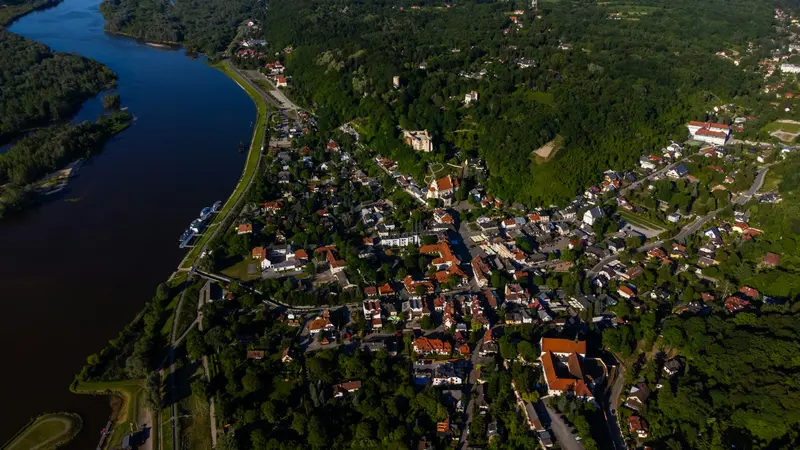
    Kazimierz Dolny is located on the east bank of the Vistula River, approximately 50 km west of Lublin, and has around 2,500 inhabitants. First mentioned in 1249, the town was a port for grain trade on the Vistula.

    by Felix Gillen

    1. Home
    2. Destinations
    3. Poland
    4. Lublin Region
    5. Kazimierz Dolny
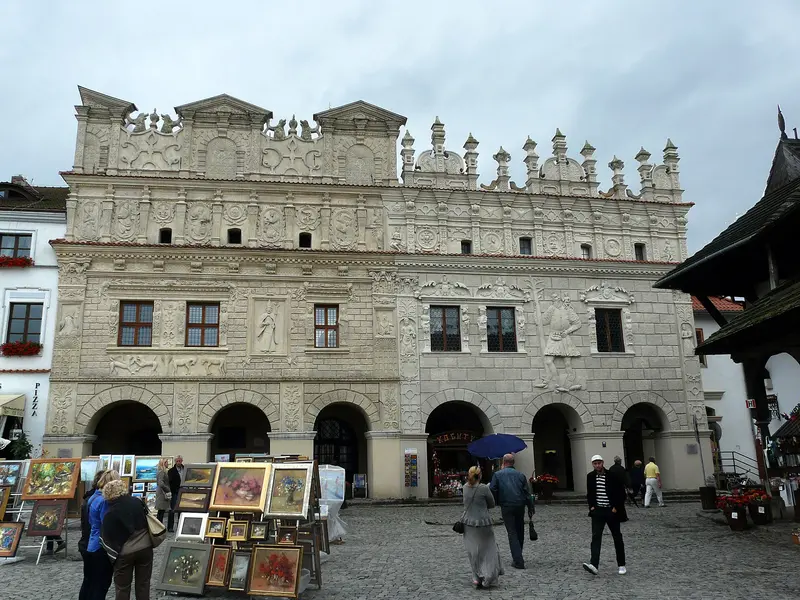
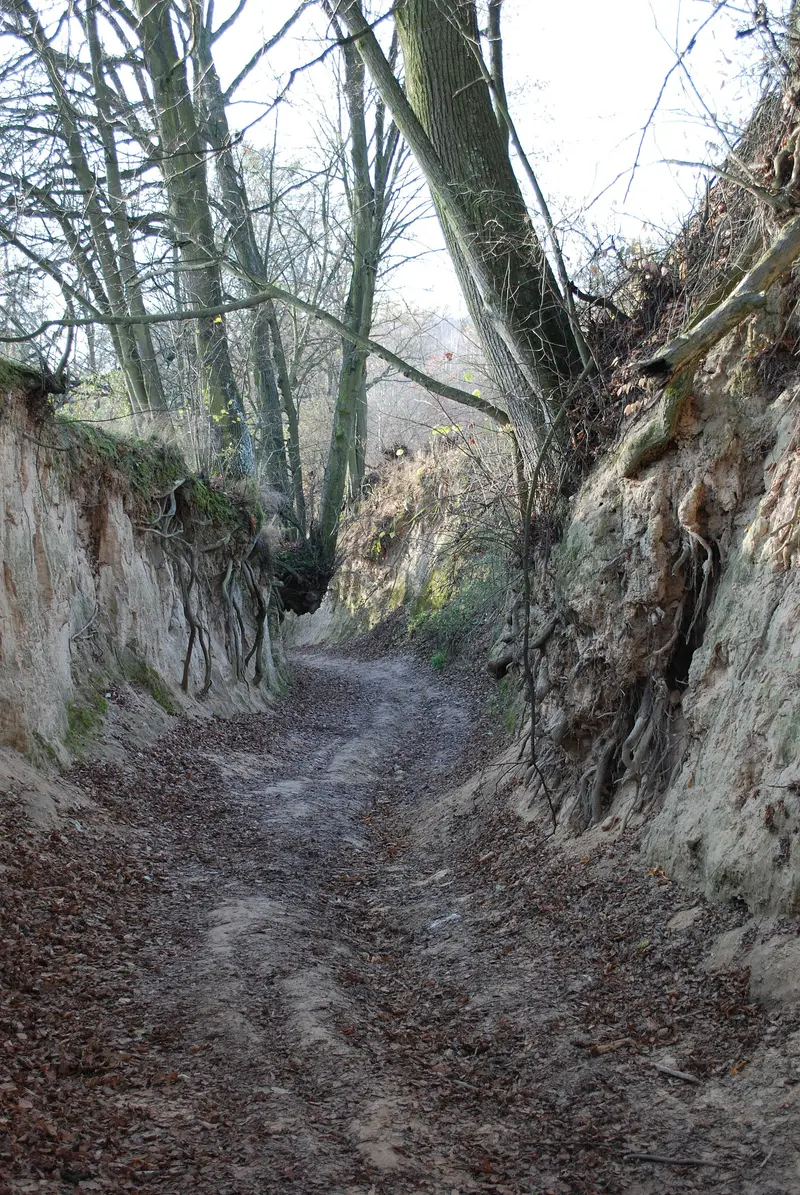
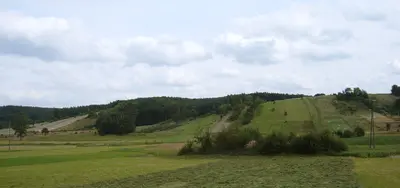
    Kazimierz Dolny is located on the east bank of the Vistula River, approximately 50 km west of Lublin, and has around 2,500 inhabitants. First mentioned in 1249, the town was a port for grain trade on the Vistula. After being burned by Swedish troops in 1656 and the end of the grain trade, it lost its significance. From the late 19th century onwards, painters, writers, and summer visitors brought new life to the town.The market square, with its Renaissance burgher houses of the Przybyła family, is the center. Not far away, the Celej House holds a section of the Vistula Museum. Other sights include the parish church, the castle ruins, and the Three Crosses Hill (Drei-Kreuze-Berg) offering views of the Vistula Valley. Around the town, loess gorges wind through the Kazimierz Landscape Park, accompanied by old granaries.The town and its surroundings have been protected as a Polish Historical Monument since 1994. On summer weekends it is busy; during the week and in the off-season, it is quieter.

    Sights in Kazimierz Dolny

    Discover the most important sights and attractions

    Three Crosses Hill (Góra Trzech Krzyży)
    Attraction

    1Three Crosses Hill (Góra Trzech Krzyży)

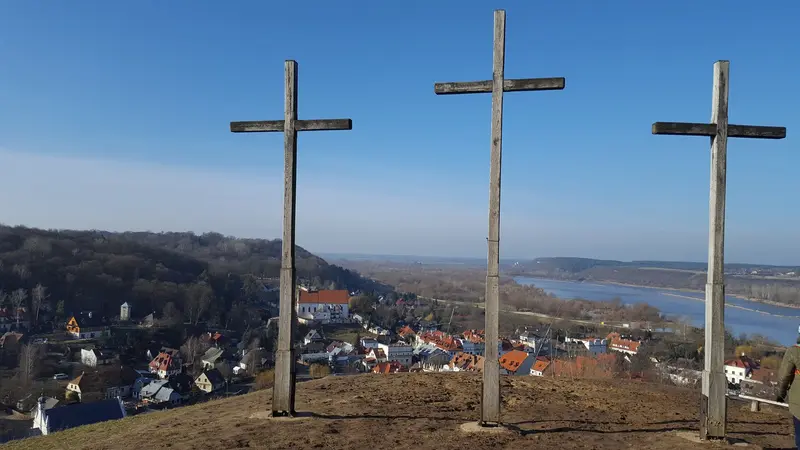
    The first three crosses were erected in 1708 to commemorate victims of an epidemic; the present ones date from 1852. The hill rises about 50 meters above the market. The summit offers a panoramic view of Kazimierz and the Vistula Valley.
    Open in Google Maps
    Market Square and Przybyła Houses
    Historic Landmark

    2Market Square and Przybyła Houses

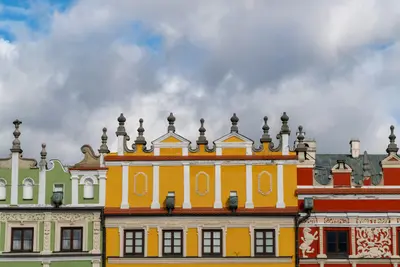
    The Renaissance houses of the Przybyła family on the Market Square are among the town's most famous buildings, built like most houses from local limestone. The houses of the Przybyła brothers, with their Mannerist ornamentation, were built around 1615. Not far away, on ul. Senatorska, stands the Celej Patrician House, rebuilt before 1630, housing a branch of the Weichsel Museum.
    Open in Google Maps
    Loess Gorge Korzeniowy Dół
    Attraction

    3Loess Gorge Korzeniowy Dół

    The Root Gorge is the most famous of the loess gorges around Kazimierz. For almost 700 meters, exposed tree roots jut out of its multi-meter-high walls. Its entrance is about 2 km from the market, with uneven ground.
    Open in Google Maps
    Old castle
    Castle

    4Old castle

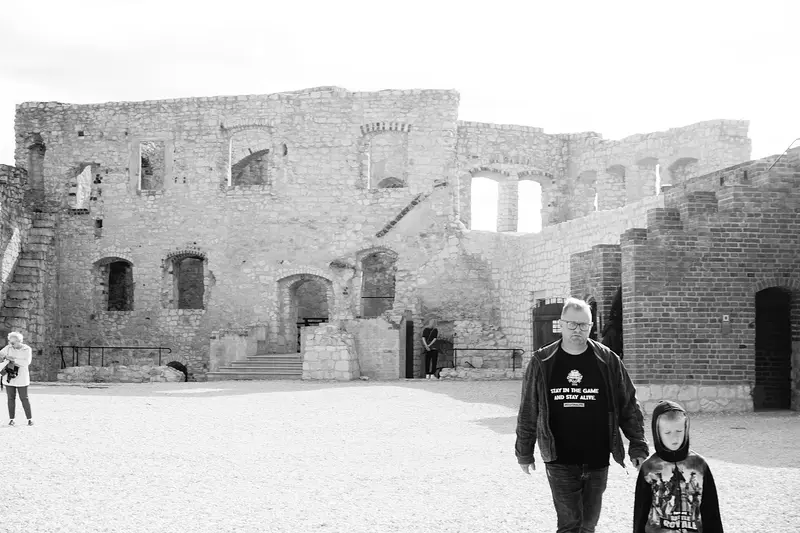
    The ruins of the 14th to 16th-century castle above ul. Zamkowa, along with the parish church and burgher houses, are among the architectural monuments that have made Kazimierz a Polish Historic Monument since 1994.
    Open in Google Maps

    Restaurants in Kazimierz Dolny

    1

    Hair Salon

    At ul. Witkiewicza 2, near the market. Serving traditional Polish and Jewish cuisine, like potato pancakes or tagliatelle with porcini.
    Show on Google Maps
    2

    Bajgiel

    A small café-bistro specializing in bagels and serving Polish-Jewish cuisine at moderate prices, also known for its cheesecake.
    Show on Google Maps
    3

    Sarzyński's Bakery

    The bakery at ul. Nadrzeczna 6 is the most famous address for the Kogut, the rooster-shaped pastry that has become a symbol of Kazimierz.
    Show on Google Maps

    Food & Beverages

    Kogut Kazimierski

    Pastry in the shape of a rooster, the symbol of the city. It is baked only in Kazimierz, the most famous being the Sarzyński bakery on ul. Nadrzeczna.

    Potato pancakes

    Kartoffelpuffer (placki) are part of traditional Polish and Jewish cuisine, offered by several establishments at the market, such as U Fryzjera.

    Polish-Jewish Cuisine

    Some eateries recall the town's Jewish past, such as with bagels (bajgle) or dishes of Polish-Jewish cuisine.

    History and Culture

    Grain Port and Artists' TownKazimierz owed its prosperity to the grain trade on the Vistula River. The houses on the market square and the parish church, built between 1586 and 1589, are constructed from local limestone. From the late 19th century, artists flocked here, including the painter Tadeusz Pruszkowski and the writer Maria Kuncewiczowa. The Yiddish film Der Dybbuk was filmed here in 1937.Jewish Heritage and FestivalsFor many years, Kazimierz was home to a large Jewish community. In 1940, the German occupiers established a ghetto, which was dissolved in 1942. Today, the town is known for its festivals: the Folk Music Bands and Folk Singers Festival since 1966, the Dwa Brzegi Film Festival, and the Pardes Jewish Culture Festival.

    Getting There and About

    Getting ThereKazimierz Dolny has no railway. From Warsaw, take a train or bus to Puławy, then a regional bus. Lublin has direct buses. Off-season, services are less frequent; check the schedule beforehand.LocallyThe town center is small and easily explored on foot. The Korzeniowy Dół gorge is around 2 km from the market; the path is uneven, sturdy shoes help. If you come by car, park it in a car park on the outskirts.
    Accommodations in Kazimierz Dolny

    Find perfect stay in Kazimierz Dolny

    Booking.com* (Affiliate link)
    Search Hotels
    Agoda* (Affiliate link)
    Search Hotels
    Airbnb
    Vacation Rentals

    * Affiliate link: if you book through it, we earn a small commission. The price stays the same for you.

    Campgrounds in Kazimierz Dolny

    Find perfect campground in Kazimierz Dolny

    Search via Google Maps
    Campgrounds nearby (15km)
    Camping.info
    Find Campgrounds
    Park4Night
    RV Parks & Camping

    Plan your trip to Kazimierz Dolny

    Save places, build a route and plan your city trip, all in one place.

    1. 1
      Sunrise over alpine peaks and a sea of clouds
      1234

      Round trip

      12 days · 4 stops

      Saved

      Pick a route

      Pick a ready-made one or save places and plan your own.

      Open bookmarks
    2. 2

      Trip to Kazimierz Dolny

      Live
      • 1Three Crosses Hill (Góra Trzech Krzyży)3 days
      • 2Market Square and Przybyła Houses4 days
      • 3Loess Gorge Korzeniowy Dół5 days
      Budget

      Plan your trip

      The planner sorts stops, days and budget. Plan together in real time.

      Start trip planning
    3. 3
      9:41 No signal
      Kazimierz Dolny
      Available offline

      Use it on the road

      Download the guide to your phone and use it on site, even offline.

    Nearby

    Lublin

    Lublin

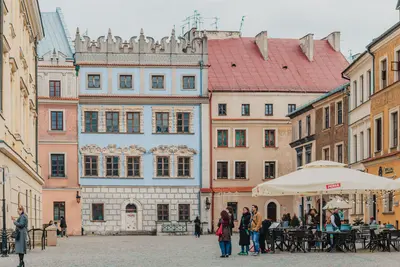
    Lublin is located approximately 170 km southeast of Warsaw and, with around 327,000 inhabitants, is Poland's eighth-largest city. Five universities make it a young student city. In 1317, Lublin received Magdeburg rights and became a trading post on the Via Regia; in 1569, the Union of Lublin between Poland and Lithuania was concluded here.The Old Town lies on the edge of the Bystrzyca Valley and is surrounded by remnants of the city walls, including the Krakow Gate and Grodzka Gate. On the Market Square stands the former Town Hall, the Crown Tribunal, ringed by Renaissance burgher houses, the Cathedral, and the Dominican Basilica. The Grodzka Gate formerly marked the boundary to the Jewish Quarter; behind it rises the Castle with the Holy Trinity Chapel. West of the Old Town, the New Town and the Saxon Garden connect.On the outskirts, the Majdanek Memorial commemorates the German concentration and extermination camp. Two days should be planned for Lublin, easily combinable with Kazimierz Dolny and Zamość.
    Lublin Region

    Lublin Region

    The Lublin Voivodeship is in far eastern Poland, bordering Belarus and Ukraine. To the west, the Vistula, to the east, the Bug, form much of its border. Around two million people live here; Lublin is its only major city. The landscape ranges from the Lublin Upland, across the Roztocze hills, to Polesie in the northeast.In 1569, the Lublin Union was concluded here, uniting Poland and Lithuania. During WWII, German occupiers established extermination camps Majdanek, Belzec, and Sobibor in the region. Today, the Renaissance city Zamość, the Vistula town Kazimierz Dolny, and Roztocze and Polesie National Parks draw visitors.
    Zamość

    Zamość

    Zamość is located in southeastern Poland, approximately 240 km from Warsaw and 110 km from Lemberg (Lwiw), and has about 58,000 inhabitants. From 1578, Jan Zamoyski had the city designed by the Venetian architect Bernardo Morando as an ideal Renaissance town, which earned it the nickname "Padua of the North." Since 1992, the Old Town has been a UNESCO World Heritage site.The Old Town has a hexagonal layout: in the west were the Zamoyski family residence and the Academy, and in the east, the burgher town with three squares: the Great Market (Rynek Wielki), the Salt Market, and the Water Market. On the Great Market, with its arcaded houses, stands the Town Hall with its 52-meter-high clock tower. Remains of the fortress are preserved around the Old Town.You can see the main sights in one day. Zamość also serves as an excellent base for excursions into the Roztocze National Park.
    Warsaw (Warszawa)

    Warsaw (Warszawa)

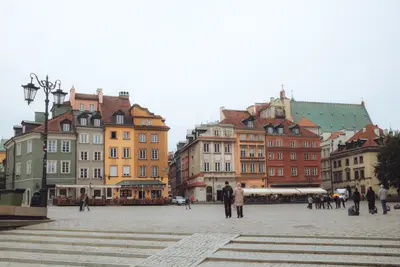
    Warsaw (Warszawa) has been the seat of the Polish royal court since 1596 and has been the country's capital again since 1918. The city on the Vistula has around 1.86 million inhabitants; in the metropolitan area, depending on the definition, 2.6 to 3.5 million people live. Its character is marked by discontinuities: After the Warsaw Uprising from August 1 to October 2, 1944, and the subsequent targeted destruction by the German occupiers, the city was largely uninhabitable. Afterwards, a mix of reconstructed facades, socialist classicism, and glass skyscrapers emerged around the Palace of Culture. The Old Town was rebuilt after the war according to historical plans, ceremoniously reopened in 1953, and recognized as a UNESCO World Heritage Site in 1980, precisely because of this reconstruction. From Castle Square with the Sigismund's Column and the reconstructed Royal Castle, the Royal Route leads south via Krakowskie Przedmieście and Nowy Świat, past aristocratic palaces, to Łazienki Park and further to the Baroque Wilanów Palace. On the right bank of the Vistula lies Praga, which was significantly less destroyed during the war than the left bank. In old factories like the Koneser complex on Ząbkowska street, you'll find eateries, cultural venues, and the Museum of Polish Vodka. On the left bank below the escarpment, Powiśle stretches along the Vistula with the Copernicus Science Centre and the University Library. Muranów, predominantly a Jewish quarter before the war and part of the ghetto from 1940, was largely rebuilt from the rubble of the ghetto after 1945; today, it is home to the POLIN Museum.
    Łańcut Castle

    Łańcut Castle

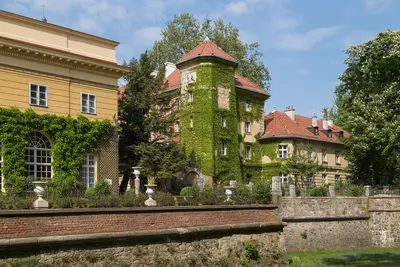
    Łańcut Castle (Zamek w Łańcucie), located in the Carpathian Foothills near Rzeszów, is a former magnate residence of the Lubomirski and Potocki families. Stanisław Lubomirski, Voivode of Kraków, had the complex expanded between 1629 and 1641 following plans by Maciej Trapola; after 1783, Izabela Lubomirska converted parts of the fortifications into gardens. From 1816, it belonged to the Potocki family, residing there until 1944. Since September 1944, the castle has served as a museum, and since 2005, the complex and its park have held the status of a Polish historical monument.In addition to the castle rooms, the museum houses the Coach House with a collection of carriages and accessories; the Orchid House in the park; a department for icons and sacred art; and a Judaica collection connected with the Synagogue of Łańcut founded by the Lubomirskis. The approx. 36-hectare landscape park, with an Italian Garden, Rose Garden, and moat, surrounds the castle.

    Sources & method

    • Photos: Wikimedia Commons, Unsplash, Google Maps. Each photo carries its credit.
    • Place data such as addresses and ratings comes from Google Maps.
    • The content is based on web research from public, traceable sources. How the content is made · The role of AI