Fernweh: Home
    ExploreTravel GuidesPlan a tripMy tripLast visited
    de|en
    All Places & RegionsAll highlightsAbout FernwehFAQPrivacy PolicyImprint
    ExploreTravel GuidesPlan a tripMy tripLast visited
    • Neighborhoods & highlights
    • Eat & drink
    • Food culture
    • Culture
    • Nightlife
    • Getting around
    • Accommodation
    • Plan trip
    • Nearby
    Lublin

    Poland

    Lublin

    City

    Lublin is located approximately 170 km southeast of Warsaw and, with around 327,000 inhabitants, is Poland's eighth-largest city. Five universities make it a young student city.

    by Felix Gillen

    1. Home
    2. Destinations
    3. Poland
    4. Lublin Region
    5. Lublin
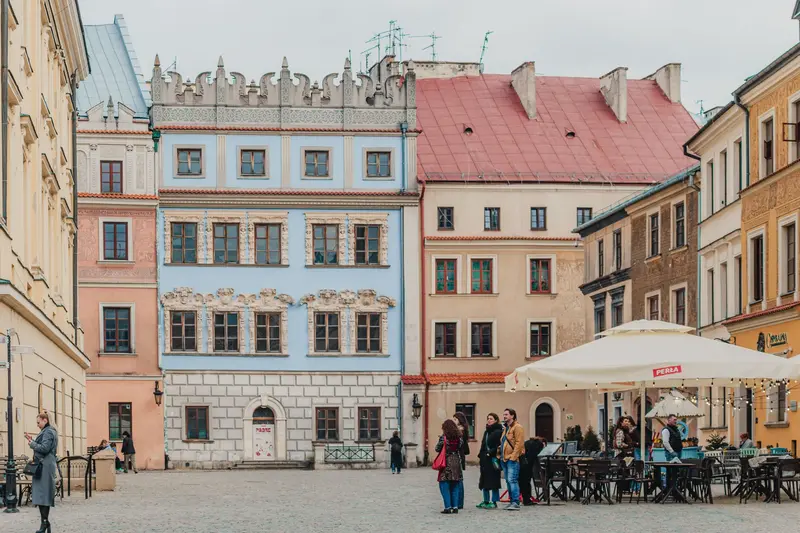
    Lublin is located approximately 170 km southeast of Warsaw and, with around 327,000 inhabitants, is Poland's eighth-largest city. Five universities make it a young student city. In 1317, Lublin received Magdeburg rights and became a trading post on the Via Regia; in 1569, the Union of Lublin between Poland and Lithuania was concluded here.The Old Town lies on the edge of the Bystrzyca Valley and is surrounded by remnants of the city walls, including the Krakow Gate and Grodzka Gate. On the Market Square stands the former Town Hall, the Crown Tribunal, ringed by Renaissance burgher houses, the Cathedral, and the Dominican Basilica. The Grodzka Gate formerly marked the boundary to the Jewish Quarter; behind it rises the Castle with the Holy Trinity Chapel. West of the Old Town, the New Town and the Saxon Garden connect.On the outskirts, the Majdanek Memorial commemorates the German concentration and extermination camp. Two days should be planned for Lublin, easily combinable with Kazimierz Dolny and Zamość.

    Sights in Lublin

    Discover the most important sights and attractions

    Cracow Gate (Brama Krakowska)
    Museum

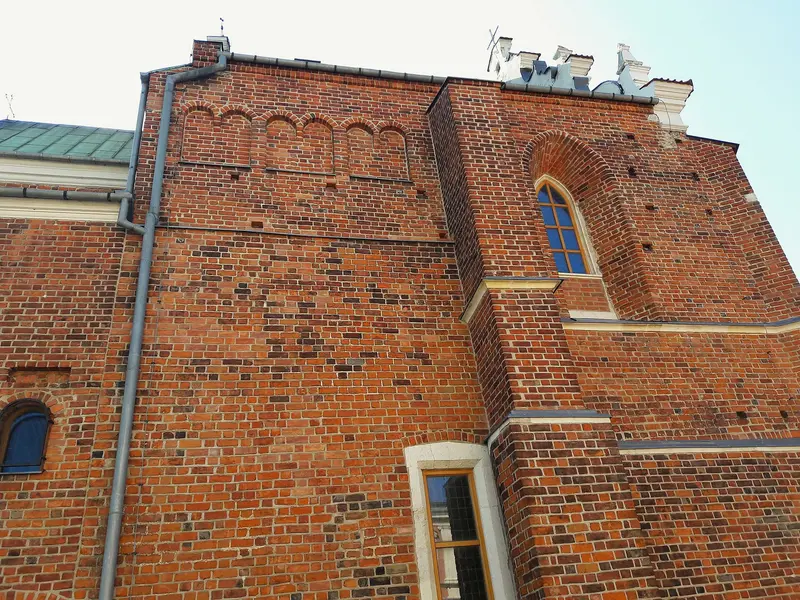
    1Cracow Gate (Brama Krakowska)

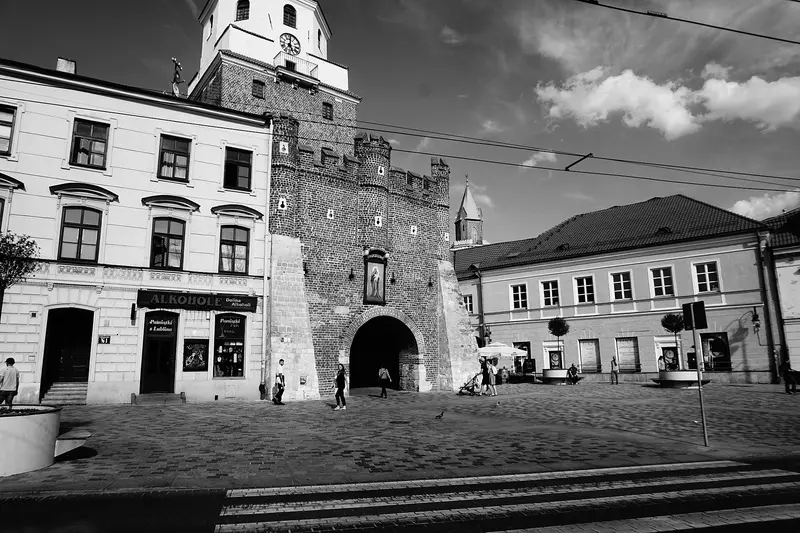
    The 14th-century Gothic city gate, one of the two surviving gates of the Old Town, acquired Baroque features in the 18th century. Its octagonal top with a copper helmet was presumably added in the 16th century, following the fires of 1515 and 1575.
    Open in Google Maps
    Holy Trinity Chapel
    Church

    2Holy Trinity Chapel

    The 14th-century castle chapel is adorned inside with Russian-Byzantine frescoes, commissioned by King Władysław II Jagiełło and completed in 1418. Gothic architecture and Orthodox painting converge here in one space. The chapel belongs to the National Museum within the castle.
    Open in Google Maps
    Lublin Castle
    Castle

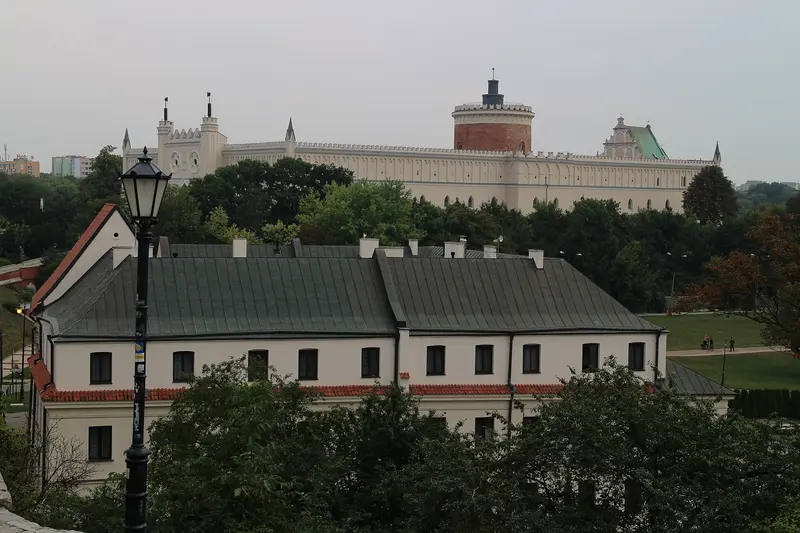
    3Lublin Castle

    The stone keep (donjon), dating from the 13th or early 14th century, like the chapel, survived the destruction of the 17th century. The rest of the building was constructed in the 19th century in Neo-Gothic style as a prison and served as a detention centre from 1831 to 1954, including during the German occupation. Since 1957, it has been the main headquarters of the National Museum Lublin.
    Open in Google Maps
    Grodzka Gate and Teatr NN
    Museum

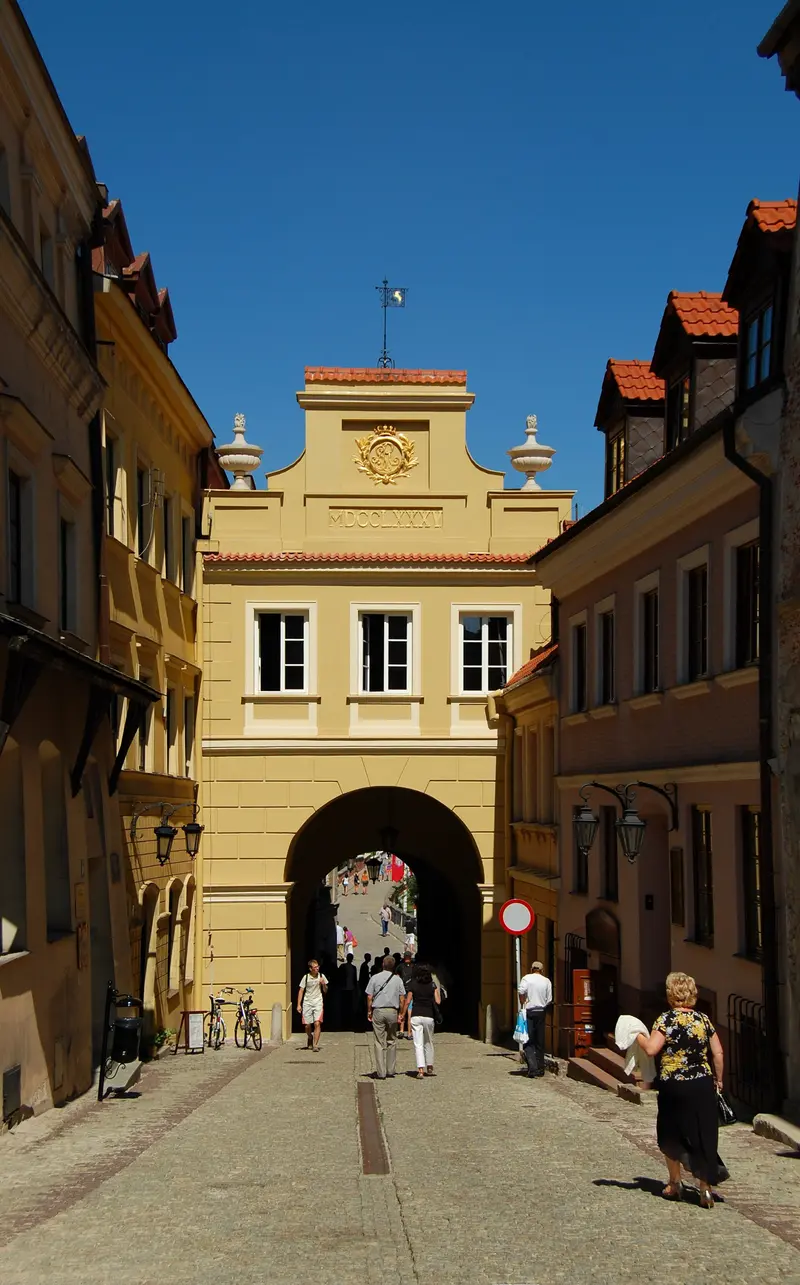
    4Grodzka Gate and Teatr NN

    The Gate, also known as the Jewish Gate, formerly separated the Christian city from the Jewish quarter. Today, the Grodzka Gate – NN Theatre Centre presents the permanent exhibition Lublin. Memory of the Place about the pre-war city and its inhabitants. The Centre is located at ul. Grodzka 21; current opening hours and guided tours can be found at teatrnn.pl.
    Open in Google Maps
    Lublin Underground Route
    Attraction

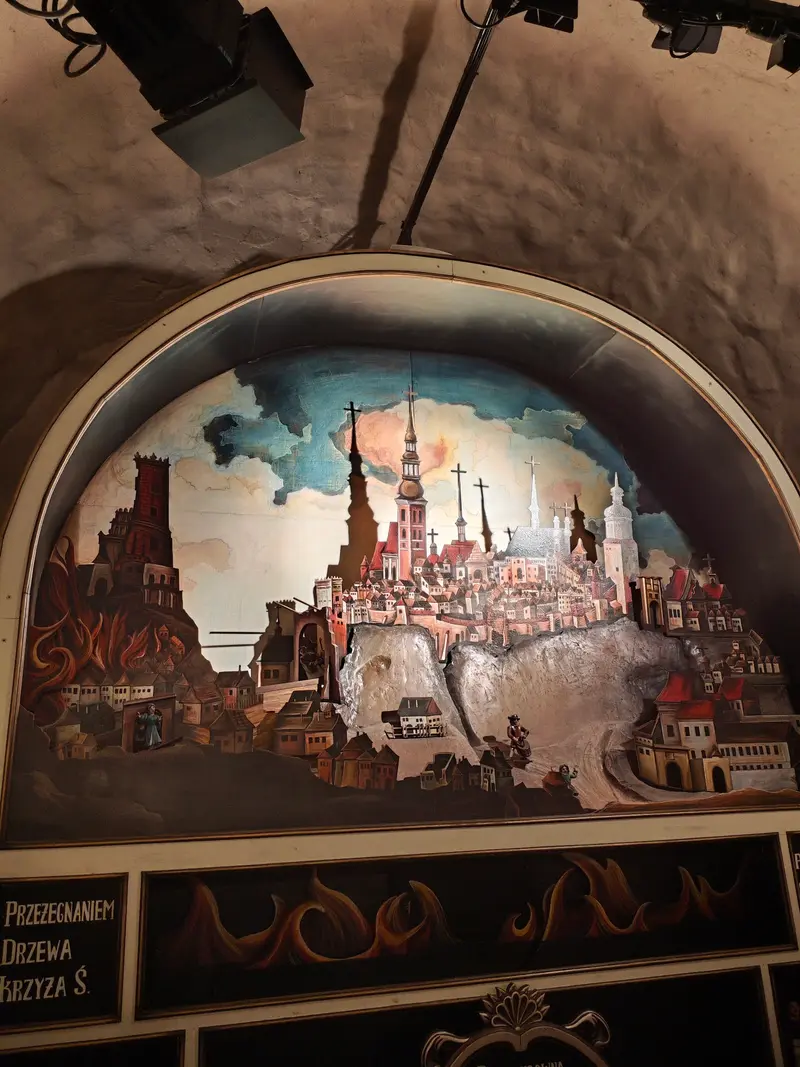
    5Lublin Underground Route

    The tour begins at Market Square (Rynek 1) and leads through connected cellars beneath Old Town houses. Guided visits are at fixed times, varying seasonally.
    Open in Google Maps

    Restaurants in Lublin

    1

    2PiEr

    The restaurant on the fifth floor of the Lublin Congress Centre on ul. Grottgera offers city views and was newly added to the Michelin Guide in 2026 with a Bib Gourmand. The guide highlights traditional dishes such as Wiener Schnitzel and Pavlova, alongside cocktails and local beers.
    Show on Google Maps
    2

    Kuchnia Otwarta

    Restaurant with modern cuisine at ul. Nałęczowska 18, recommended by the Guide Michelin 2026. Two tasting menus or a seasonal menu are available in two rooms; the Guide praises the wine list.
    Show on Google Maps
    3

    Pearl Beer Drinkery

    Gastropub of the Lublin Brewery Perła at ul. Bernardyńska 15, also recommended by the Guide Michelin 2026. The focus is on freshly tapped beers, paired with hearty traditional cuisine. The complex includes bars, a terrace, and a cinema.
    Show on Google Maps

    Eating & Drinking

    Cebularz lubelski

    Flat yeast flatbread made from wheat flour, with onions and poppy seeds. Originating from the kitchens of Jewish bakers in Lublin's Old Town, it has been an EU-protected regional specialty since 2014.

    Forszmak lubelski

    A hearty stew from Lublin cuisine, which you'll find in restaurants offering local dishes.

    Beer from Perła

    Perła is among Poland's major breweries. At their Pijalnia on ul. Bernardyńska, try freshly tapped beers.

    History and Culture

    Union, Trade, and Jewish LifeLublin was first mentioned in 1198. The Union of Lublin in 1569 established the Polish-Lithuanian Commonwealth here. For centuries, Lublin was home to a large Jewish community. The Grodzka Gate, also known as the Jewish Gate, separated the Christian city within the walls from the Jewish quarter. Today, the Grodzka Gate – Teatr NN Centre, with its exhibition 'Lublin. Memory of the Place,' documents the life of the pre-war city and its inhabitants.Occupation and Post-War PeriodDuring World War II, the German occupiers established a ghetto and murdered the Jewish population; on its outskirts lay the Majdanek concentration and extermination camp. In the castle, which served as a prison from 1831 to 1954, SS members shot some 300 prisoners on July 22, 1944, before withdrawing. After the war, the Old Town was rebuilt. In 1980, strikes in the Lublin region spurred the later Solidarność movement.

    Nightlife

    1

    Czarna Owca Gastro Pub

    Gastropub at ul. Narutowicza 9 with cocktails, craft beer, and burgers.
    Show on Google Maps
    2

    Padbar

    Craft beer bar on ul. Grodzka in the Old Town in a basement room, with board and video games.
    Show on Google Maps
    3

    U Szewca Irish Pub

    Irish Pub on ul. Grodzka 18 in the Old Town, with a wide beer selection, Polish wines, and a variety of vodka and whisky, serving predominantly Polish cuisine like Pierogi and Barszcz.
    Show on Google Maps

    Getting Here & Around

    Getting ThereLublin Airport is located in Świdnik, east of the city, and is connected by train to Lublin Główny main station in about 15 minutes. From the main station, trains also run to Warsaw. Right next to the station, the new bus terminal opened in January 2024.In the CityExplore the Old Town, Castle, and Krakowskie Przedmieście on foot. For the train station, Open-Air Museum, and Majdanek Memorial, it's best to take the city bus. If you arrive by car, it's best to park it at your hotel or in a car park outside the Old Town.
    Accommodations in Lublin

    Find perfect stay in Lublin

    Booking.com* (Affiliate link)
    Search Hotels
    Agoda* (Affiliate link)
    Search Hotels
    Airbnb
    Vacation Rentals

    * Affiliate link: if you book through it, we earn a small commission. The price stays the same for you.

    Campgrounds in Lublin

    Find perfect campground in Lublin

    Search via Google Maps
    Campgrounds nearby (15km)
    Camping.info
    Find Campgrounds
    Park4Night
    RV Parks & Camping

    Plan your trip to Lublin

    Save places, build a route and plan your city trip, all in one place.

    1. 1
      Sunrise over alpine peaks and a sea of clouds
      1234

      Round trip

      12 days · 4 stops

      Saved

      Pick a route

      Pick a ready-made one or save places and plan your own.

      Open bookmarks
    2. 2

      Trip to Lublin

      Live
      • 1Cracow Gate (Brama Krakowska)3 days
      • 2Holy Trinity Chapel4 days
      • 3Lublin Castle5 days
      Budget

      Plan your trip

      The planner sorts stops, days and budget. Plan together in real time.

      Start trip planning
    3. 3
      9:41 No signal
      Lublin
      Available offline

      Use it on the road

      Download the guide to your phone and use it on site, even offline.

    Nearby

    Lublin Region

    Lublin Region

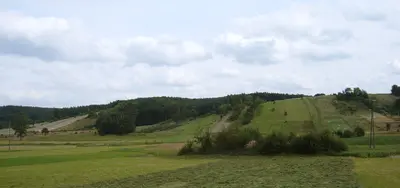
    The Lublin Voivodeship is in far eastern Poland, bordering Belarus and Ukraine. To the west, the Vistula, to the east, the Bug, form much of its border. Around two million people live here; Lublin is its only major city. The landscape ranges from the Lublin Upland, across the Roztocze hills, to Polesie in the northeast.In 1569, the Lublin Union was concluded here, uniting Poland and Lithuania. During WWII, German occupiers established extermination camps Majdanek, Belzec, and Sobibor in the region. Today, the Renaissance city Zamość, the Vistula town Kazimierz Dolny, and Roztocze and Polesie National Parks draw visitors.
    Kazimierz Dolny

    Kazimierz Dolny

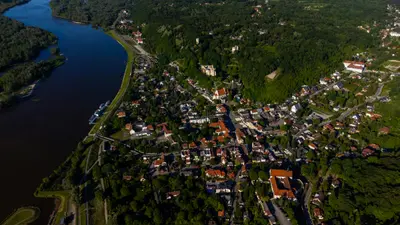
    Kazimierz Dolny is located on the east bank of the Vistula River, approximately 50 km west of Lublin, and has around 2,500 inhabitants. First mentioned in 1249, the town was a port for grain trade on the Vistula. After being burned by Swedish troops in 1656 and the end of the grain trade, it lost its significance. From the late 19th century onwards, painters, writers, and summer visitors brought new life to the town.The market square, with its Renaissance burgher houses of the Przybyła family, is the center. Not far away, the Celej House holds a section of the Vistula Museum. Other sights include the parish church, the castle ruins, and the Three Crosses Hill (Drei-Kreuze-Berg) offering views of the Vistula Valley. Around the town, loess gorges wind through the Kazimierz Landscape Park, accompanied by old granaries.The town and its surroundings have been protected as a Polish Historical Monument since 1994. On summer weekends it is busy; during the week and in the off-season, it is quieter.
    Zamość

    Zamość

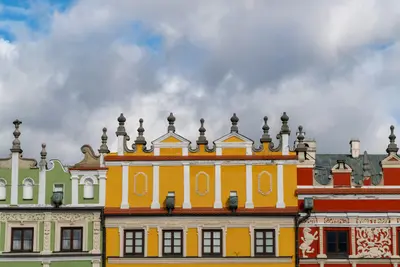
    Zamość is located in southeastern Poland, approximately 240 km from Warsaw and 110 km from Lemberg (Lwiw), and has about 58,000 inhabitants. From 1578, Jan Zamoyski had the city designed by the Venetian architect Bernardo Morando as an ideal Renaissance town, which earned it the nickname "Padua of the North." Since 1992, the Old Town has been a UNESCO World Heritage site.The Old Town has a hexagonal layout: in the west were the Zamoyski family residence and the Academy, and in the east, the burgher town with three squares: the Great Market (Rynek Wielki), the Salt Market, and the Water Market. On the Great Market, with its arcaded houses, stands the Town Hall with its 52-meter-high clock tower. Remains of the fortress are preserved around the Old Town.You can see the main sights in one day. Zamość also serves as an excellent base for excursions into the Roztocze National Park.
    Łańcut Castle

    Łańcut Castle

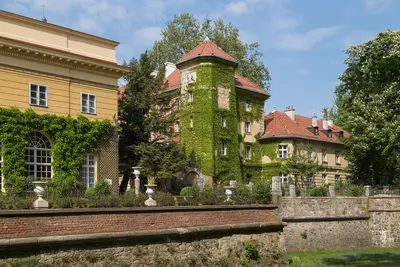
    Łańcut Castle (Zamek w Łańcucie), located in the Carpathian Foothills near Rzeszów, is a former magnate residence of the Lubomirski and Potocki families. Stanisław Lubomirski, Voivode of Kraków, had the complex expanded between 1629 and 1641 following plans by Maciej Trapola; after 1783, Izabela Lubomirska converted parts of the fortifications into gardens. From 1816, it belonged to the Potocki family, residing there until 1944. Since September 1944, the castle has served as a museum, and since 2005, the complex and its park have held the status of a Polish historical monument.In addition to the castle rooms, the museum houses the Coach House with a collection of carriages and accessories; the Orchid House in the park; a department for icons and sacred art; and a Judaica collection connected with the Synagogue of Łańcut founded by the Lubomirskis. The approx. 36-hectare landscape park, with an Italian Garden, Rose Garden, and moat, surrounds the castle.

    The Carpathian Foothills (Podkarpackie) in southeastern Poland border Slovakia to the south and Ukraine to the east. Rzeszów is the capital of the voivodeship, formed in 1999; its largest rivers are the San, Wisłoka, and Wisłok.To the south, the landscape rises to the Bieszczady, where Tarnica, at 1,346 meters, forms the highest point of the voivodeship. Noble residences like Łańcut and Krasiczyn, the fortress city of Przemyśl, and wooden Cerkwie tell of the eventful history of this borderland.

    Sources & method

    • Photos: Wikimedia Commons, Pexels, Google Maps. Each photo carries its credit.
    • Place data such as addresses and ratings comes from Google Maps.
    • The content is based on web research from public, traceable sources. How the content is made · The role of AI