Fernweh: Home
    ExploreTravel GuidesPlan a tripMy tripLast visited
    de|en
    All Places & RegionsAll highlightsAbout FernwehFAQPrivacy PolicyImprint
    ExploreTravel GuidesPlan a tripMy tripLast visited
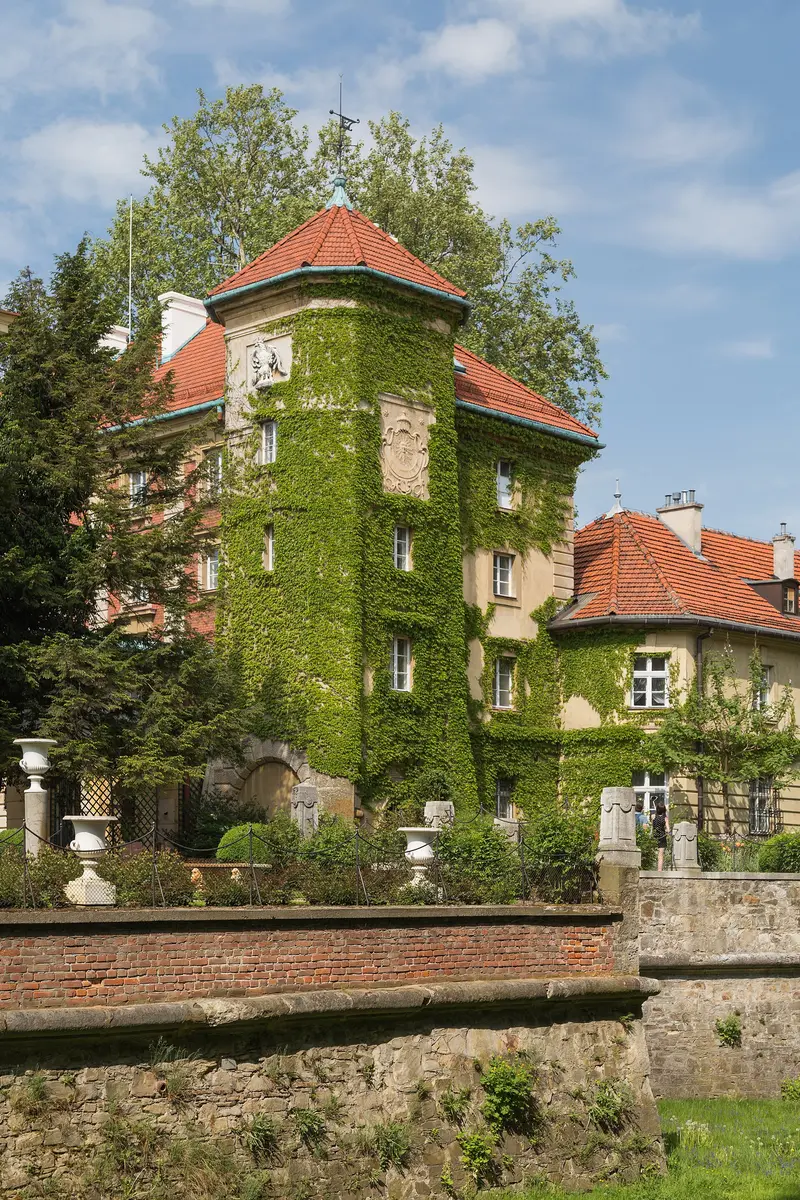
    Łańcut Castle
    Marcin Konsek / Wikimedia Commons / CC BY-SA 4.0

    Poland

    Łańcut Castle

    Point of Interest

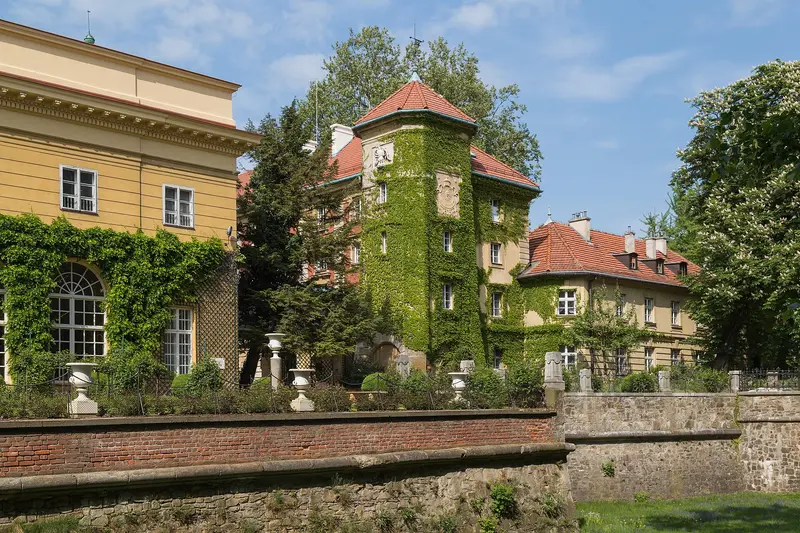
    Łańcut Castle (Zamek w Łańcucie), located in the Carpathian Foothills near Rzeszów, is a former magnate residence of the Lubomirski and Potocki families.

    by Felix Gillen

    1. Home
    2. Destinations
    3. Poland
    4. Łańcut Castle
    Łańcut Castle (Zamek w Łańcucie), located in the Carpathian Foothills near Rzeszów, is a former magnate residence of the Lubomirski and Potocki families. Stanisław Lubomirski, Voivode of Kraków, had the complex expanded between 1629 and 1641 following plans by Maciej Trapola; after 1783, Izabela Lubomirska converted parts of the fortifications into gardens. From 1816, it belonged to the Potocki family, residing there until 1944. Since September 1944, the castle has served as a museum, and since 2005, the complex and its park have held the status of a Polish historical monument.In addition to the castle rooms, the museum houses the Coach House with a collection of carriages and accessories; the Orchid House in the park; a department for icons and sacred art; and a Judaica collection connected with the Synagogue of Łańcut founded by the Lubomirskis. The approx. 36-hectare landscape park, with an Italian Garden, Rose Garden, and moat, surrounds the castle.

    Sights in Łańcut Castle

    Discover the most important sights and attractions
    Palace Park
    Park

    1Palace Park

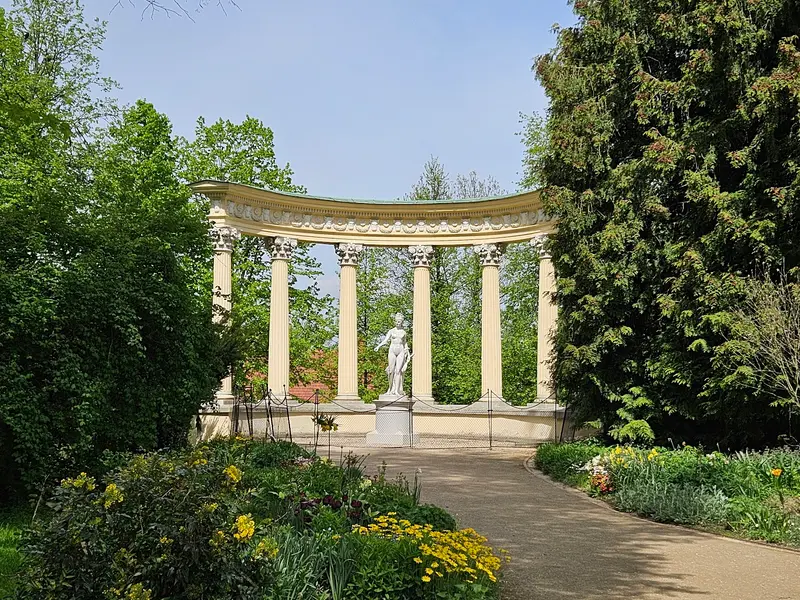
    The approximately 36-hectare English-style landscape park was primarily created in the late 19th and early 20th centuries. It includes the Italian Garden, a rose garden, and the moat around the castle.
    Open in Google Maps
    Orchid House (Storczykarnia)
    Museum

    2Orchid House (Storczykarnia)

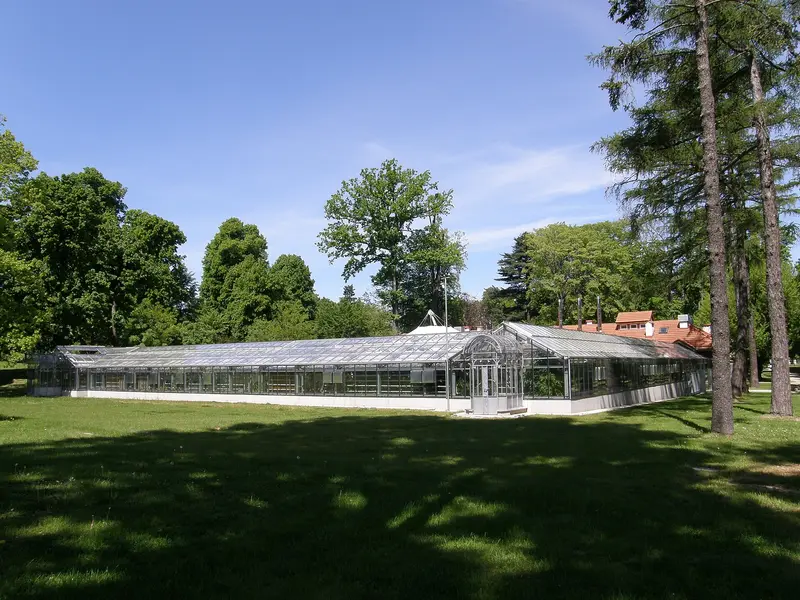
    The historic greenhouse in the castle park is now one of the museum's exhibition areas and displays an orchid collection.
    Open in Google Maps
    Łańcut Castle
    Museum

    3Łańcut Castle

    The Lubomirski-Potocki Residence, expanded in the 17th century under Stanisław Lubomirski and home to the Potockis until 1944. Since 1944, the museum showcases residential and state rooms; the tour route changed in 2026.
    Open in Google Maps

    Restaurants in Łańcut Castle

    1

    Piktonówka

    Restaurant and pizzeria at ul. Kościuszki 13, near the castle. The menu combines European and Italian cuisine with Polish dishes such as Kopytka, and there's also a children's play area on three levels.
    Show on Google Maps

    History and Culture

    From a Tower to a Magnate's ResidenceIt started as a tower, presumably built by the Pilecki family in the second half of the 16th century and expanded around 1610 by the Stadnickis. Under Stanisław Lubomirski, the residence with bastions and a moat was built between 1629 and 1641, following plans by Maciej Trapola. In 1816, the property passed to Alfred and Artur Potocki, becoming a majorate in 1830. The park received its current form primarily in the late 19th and early 20th centuries.Music at the PalaceSince 1960, a music festival has taken place every May, originally known as the Chamber Music Days, and since 1981 as the Festiwal Muzyki in Łańcut. It is considered one of Poland's major classical music festivals.

    Visiting and Arrival

    Opening Hours & TicketsThe museum at ul. Zamkowa 1 (per website) operates Tue-Sun 11 AM-6 PM, Mon 10 AM-1 PM; closed some holidays. Tickets for areas (Castle, Coach House, Orchid House) available online at bilety.zamek-lancut.pl or at the box office. Castle tour route changed in 2026; check prices and current info at zamek-lancut.pl beforehand.Getting ThereTrains from Rzeszów Główny reach Łańcut in ~10 mins, running early morning to late evening. Check station-to-castle route and schedules beforehand.

    Accommodations in Łańcut Castle

    Find perfect stay in Łańcut Castle

    Booking.com* (Affiliate link)
    Search Hotels
    Agoda* (Affiliate link)
    Search Hotels
    Airbnb
    Vacation Rentals

    * Affiliate link: if you book through it, we earn a small commission. The price stays the same for you.

    Campgrounds in Łańcut Castle

    Find perfect campground in Łańcut Castle
    Search via Google Maps
    Campgrounds nearby (15km)
    Camping.info
    Find Campgrounds
    Park4Night
    RV Parks & Camping

    Nearby

    The Carpathian Foothills (Podkarpackie) in southeastern Poland border Slovakia to the south and Ukraine to the east. Rzeszów is the capital of the voivodeship, formed in 1999; its largest rivers are the San, Wisłoka, and Wisłok.To the south, the landscape rises to the Bieszczady, where Tarnica, at 1,346 meters, forms the highest point of the voivodeship. Noble residences like Łańcut and Krasiczyn, the fortress city of Przemyśl, and wooden Cerkwie tell of the eventful history of this borderland.
    Zamość

    Zamość

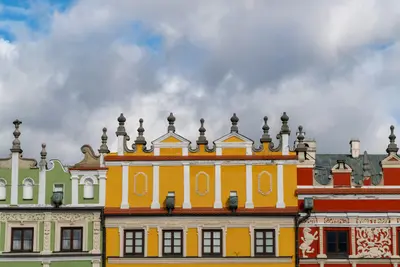
    Zamość is located in southeastern Poland, approximately 240 km from Warsaw and 110 km from Lemberg (Lwiw), and has about 58,000 inhabitants. From 1578, Jan Zamoyski had the city designed by the Venetian architect Bernardo Morando as an ideal Renaissance town, which earned it the nickname "Padua of the North." Since 1992, the Old Town has been a UNESCO World Heritage site.The Old Town has a hexagonal layout: in the west were the Zamoyski family residence and the Academy, and in the east, the burgher town with three squares: the Great Market (Rynek Wielki), the Salt Market, and the Water Market. On the Great Market, with its arcaded houses, stands the Town Hall with its 52-meter-high clock tower. Remains of the fortress are preserved around the Old Town.You can see the main sights in one day. Zamość also serves as an excellent base for excursions into the Roztocze National Park.
    Lublin Region

    Lublin Region

    The Lublin Voivodeship is in far eastern Poland, bordering Belarus and Ukraine. To the west, the Vistula, to the east, the Bug, form much of its border. Around two million people live here; Lublin is its only major city. The landscape ranges from the Lublin Upland, across the Roztocze hills, to Polesie in the northeast.In 1569, the Lublin Union was concluded here, uniting Poland and Lithuania. During WWII, German occupiers established extermination camps Majdanek, Belzec, and Sobibor in the region. Today, the Renaissance city Zamość, the Vistula town Kazimierz Dolny, and Roztocze and Polesie National Parks draw visitors.
    Bieszczady

    Bieszczady

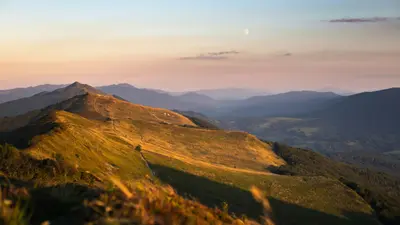
    The Bieszczady Mountains, in the far southeast of Poland, bordering Slovakia and Ukraine, are part of the Eastern Carpathians. Its heart is the Bieszczady National Park (Bieszczadzki Park Narodowy), founded in 1973, and at over 292 square kilometers, it's the largest national park in the Polish mountains. Since 1992, it has been part of the transnational East Carpathian Biosphere Reserve, and since 2021, parts of its beech forests have been on the UNESCO World Heritage List.Characteristic features are the Połoniny, treeless mountain meadows above the tree line, such as Połonina Caryńska and Połonina Wetlińska, as well as the peaks Tarnica (1346 meters), Krzemień, and Halicz. Bears, wolves, lynx, and a free-ranging herd of European bison live in the forests. To the north lies the Solina Reservoir, Poland's largest capacity reservoir; in the region's villages stand wooden Cerkwie, including the UNESCO World Heritage churches of Smolnik and Turzańsk.
    Lublin

    Lublin

    Lublin is located approximately 170 km southeast of Warsaw and, with around 327,000 inhabitants, is Poland's eighth-largest city. Five universities make it a young student city. In 1317, Lublin received Magdeburg rights and became a trading post on the Via Regia; in 1569, the Union of Lublin between Poland and Lithuania was concluded here.The Old Town lies on the edge of the Bystrzyca Valley and is surrounded by remnants of the city walls, including the Krakow Gate and Grodzka Gate. On the Market Square stands the former Town Hall, the Crown Tribunal, ringed by Renaissance burgher houses, the Cathedral, and the Dominican Basilica. The Grodzka Gate formerly marked the boundary to the Jewish Quarter; behind it rises the Castle with the Holy Trinity Chapel. West of the Old Town, the New Town and the Saxon Garden connect.On the outskirts, the Majdanek Memorial commemorates the German concentration and extermination camp. Two days should be planned for Lublin, easily combinable with Kazimierz Dolny and Zamość.

    Sources & method

    • Photos: Wikimedia Commons, Google Maps. Each photo carries its credit.
    • Place data such as addresses and ratings comes from Google Maps.
    • The content is based on web research from public, traceable sources. How the content is made · The role of AI