Fernweh: Home
    ExploreTravel GuidesPlan a tripMy tripLast visited
    de|en
    All Places & RegionsAll highlightsAbout FernwehFAQPrivacy PolicyImprint
    ExploreTravel GuidesPlan a tripMy tripLast visited
    • Neighborhoods & highlights
    • Videos
    • Eat & drink
    • Food culture
    • Culture
    • Nightlife
    • Getting around
    • Accommodation
    • Plan trip
    • Nearby
    Breslau (Wrocław)

    Poland

    Breslau (Wrocław)

    City

    Breslau (Wrocław) is, with around 673,000 inhabitants, Poland's third-largest city and the capital of Lower Silesia.

    by Felix Gillen

    1. Home
    2. Destinations
    3. Poland
    4. Lower Silesia
    5. Breslau (Wrocław)
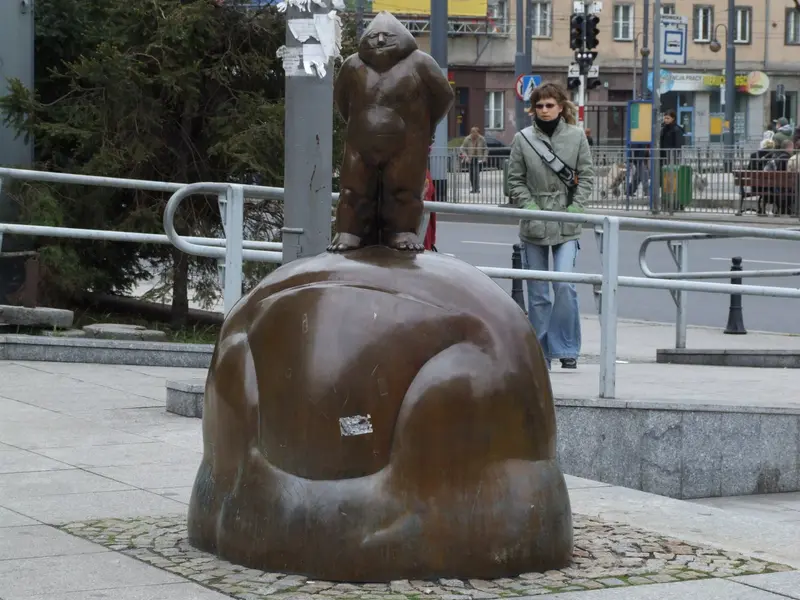
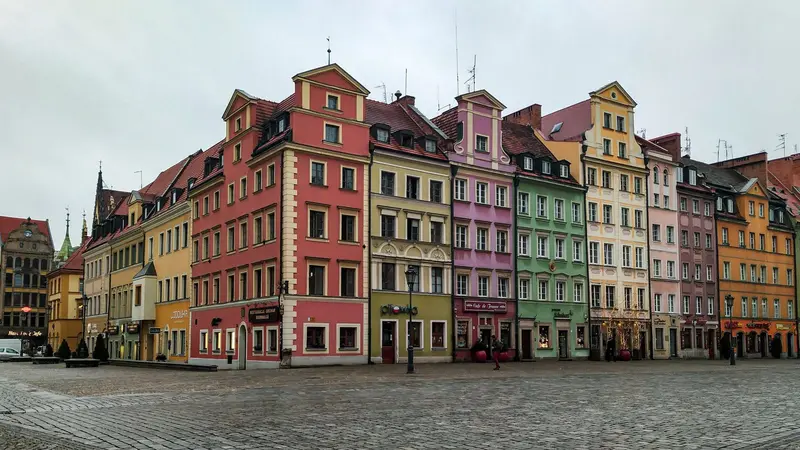
    Breslau (Wrocław) is, with around 673,000 inhabitants, Poland's third-largest city and the capital of Lower Silesia. The city lies on the upper Oder River and spans about twelve islands, connected by 100 to 300 bridges, depending on how they are counted. Around the year 1000, a bishopric was founded here, and in 1261, Wrocław was granted Magdeburg Law. In 2016, it was a European Capital of Culture.The heart of the Old Town is the Market Square (Rynek) with its Gothic Town Hall, surrounded by burgher houses and churches. North of the Old Town, bridges lead to Cathedral Island (Ostrów Tumski), the oldest part of the city, featuring a cathedral and churches. To the east, in Scheitniger Park, stands the Centennial Hall, which has been a UNESCO World Heritage site since 2006.As you stroll through the city, you'll repeatedly encounter small bronze gnomes on house walls, lampposts, and stairs. The first figure commemorates the anti-communist Orange Alternative movement; meanwhile, there are now more than 1,000 of them. You should plan at least two to three days for your visit to the city.

    Sights in Breslau (Wrocław)

    Discover the most important sights and attractions

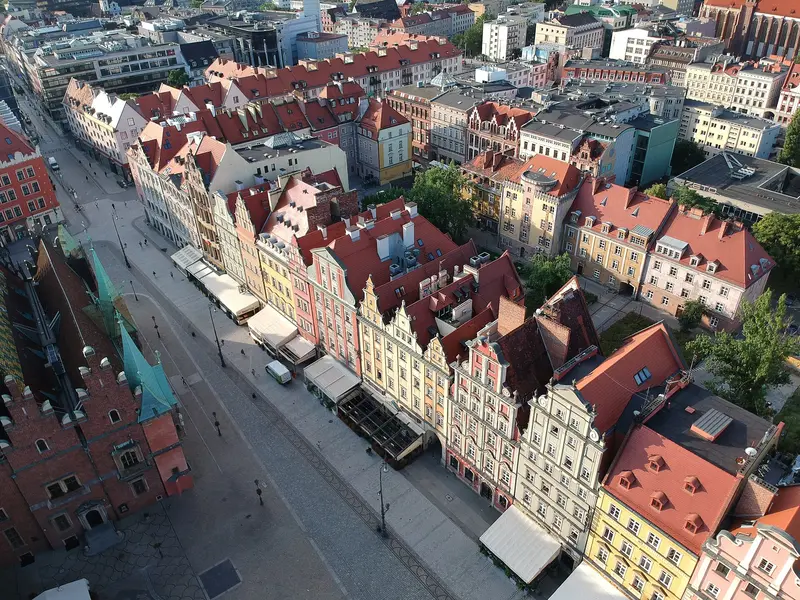
    Ring (Rynek) and Old Town Hall

    1Ring (Rynek) and Old Town Hall

    The spacious market square is the center of the Old Town. In its middle stands the Gothic Town Hall, which was built from 1299 until the 16th century and took its present form in the late 15th century. Inside, the Museum of Civic Art displays its collection. In the cellar lies the Piwnica Świdnicka, which is considered one of Europe's oldest restaurants.
    Open in Google Maps
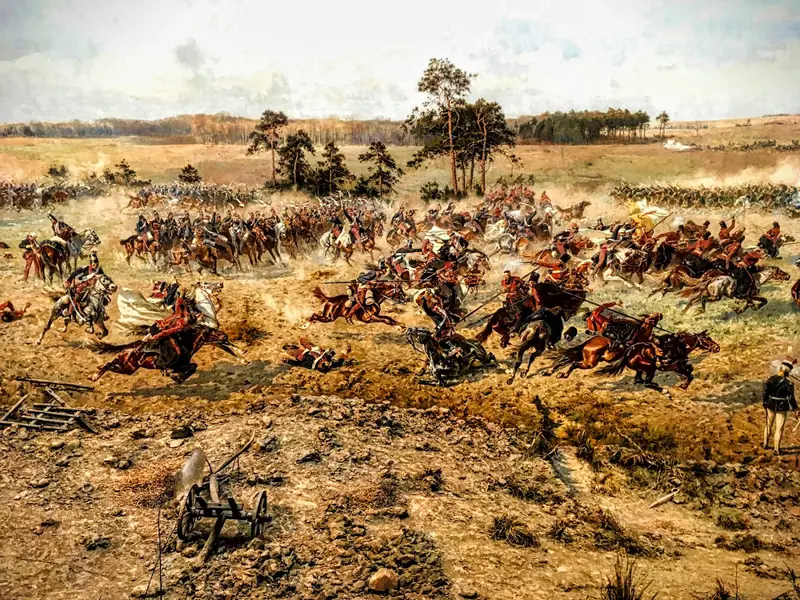
    Panorama of Racławice
    Museum

    2Panorama of Racławice

    The panorama is 15 meters high and 114 meters long, depicting the Battle of Racławice on April 4, 1794, during the Kościuszko Uprising. Jan Styka and Wojciech Kossak painted it in 1893/94 for Lemberg (Lviv). After World War II, it was moved to Breslau and has been on display in its own circular building since June 14, 1985.
    Open in Google Maps
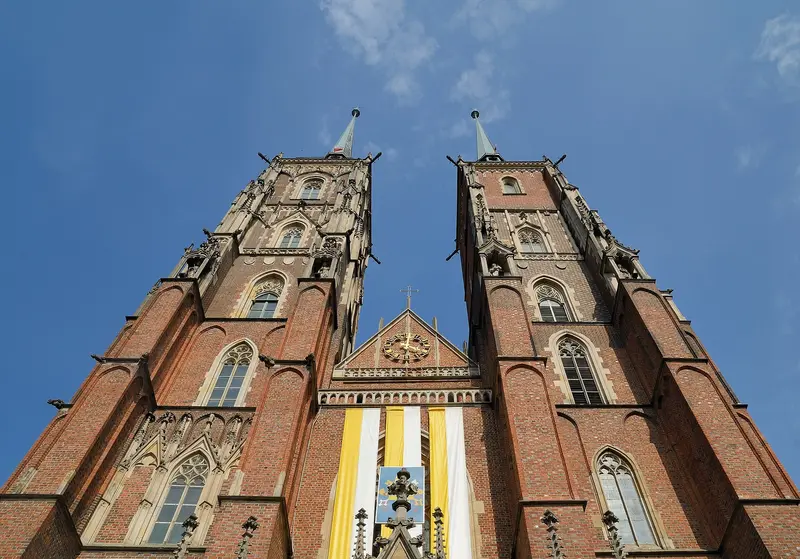
    St. John the Baptist Cathedral
    Church

    3St. John the Baptist Cathedral

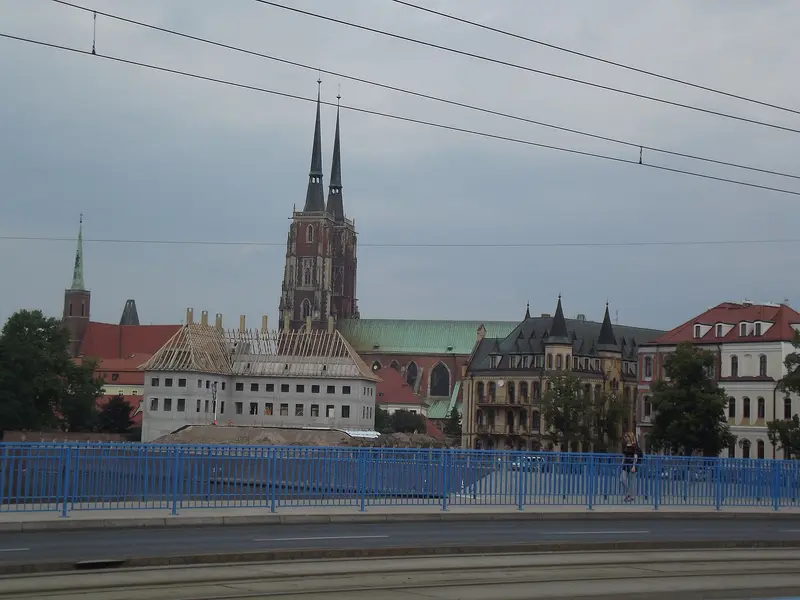
    The Gothic new building began in 1244 with the choir, which was completed by 1272; the nave was finished around 1349. Its two western towers are approximately 97 meters tall. Around 70 percent of the structure was destroyed in World War II, the cathedral was reconsecrated in 1951, and its pointed spires were only restored in 1991.
    Open in Google Maps
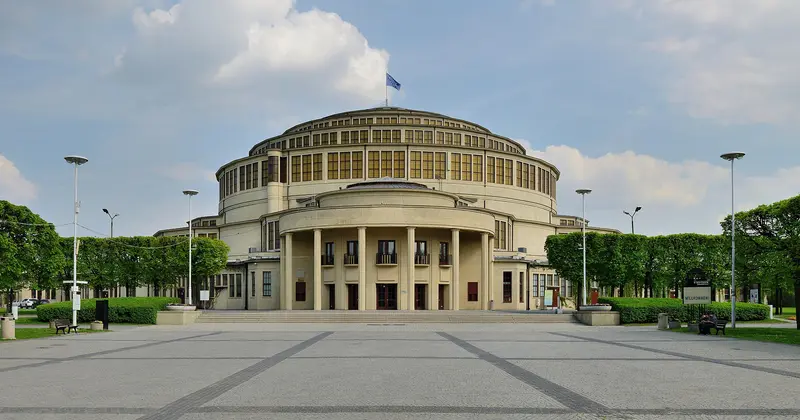
    Centennial Hall (Hala Stulecia)
    Attraction

    4Centennial Hall (Hala Stulecia)

    Max Berg built the hall from 1911 to 1913 for the Centennial Exhibition, commemorating the Wars of Liberation against Napoleon. Its reinforced concrete dome measures 67 metres in diameter; upon completion, no reinforced concrete roof in the world had a larger span. It has been a UNESCO World Heritage site since 2006. Surrounding the hall are Hans Poelzig's Pergola and the Scheitniger Park (Park Szczytnicki). Today, the hall hosts concerts, trade fairs, and sporting events.
    Open in Google Maps
    Papa Dwarf and the Wrocław Dwarfs
    Attraction

    5Papa Dwarf and the Wrocław Dwarfs

    The Papa Dwarf (Krasnal Papa) on ul. Świdnicka was erected in 2001 to commemorate the Orange Alternative, an anti-communist movement whose symbol was a dwarf. In 2005, the first five small bronze figures were added; today, more than 1,000 stand in the city. Many visitors set out with a map to find them in alleys, by lampposts, and at house entrances.
    Open in Google Maps
    Ostrów Tumski (Cathedral Island)
    Natural Feature

    6Ostrów Tumski (Cathedral Island)

    The oldest part of Breslau was once an island between branches of the Oder; in the 19th century, the old riverbed was filled in. After 1000, the bishop's see was established here; in 1315, the island passed to the Church. Sights include the Cathedral, the Holy Cross Church, the Cathedral Bridge, and the statue of Johannes Nepomuk. In the evenings, a lamplighter still lights the gas lamps by hand. Since 1994, Cathedral Island has been part of the Polish Historic Monument 'Historic Centre of Breslau'.
    Open in Google Maps

    Videos & Travel Reports

    By tram through the Polish city of Wrocław

    DW Documentary rides tram line No. 1 through Wrocław with driver Tatjana Granowska and meets residents along the route, from a houseboat dweller on the Oder to the Colorful Courtyards art project in…

    Restaurants in Breslau (Wrocław)

    1

    IDA Kitchen and Wine

    Restaurant and wine bar on ul. Łazienna, combining traditional cuisine with modern techniques. The Guide Michelin 2026 awarded it a Bib Gourmand.
    Show on Google Maps
    2

    BABA

    The restaurant on ul. Nożownicza near the Ring received a Bib Gourmand in the Guide Michelin 2025; its modern cuisine is led by a female chef.
    Show on Google Maps
    3

    Tarasova

    The restaurant in the convention center at the Jahrhunderthalle offers modern à la carte cuisine and holds a Bib Gourmand in the 2026 Guide Michelin.
    Show on Google Maps
    4

    Piwnica Świdnicka

    The cellar restaurant under the Old Town Hall is considered one of Europe's oldest restaurants.
    Show on Google Maps

    Eating and Drinking

    Silesian Sour Rye Soup (Żurek)

    Sour soup made from fermented rye flour with meat broth, white sausage, marjoram, and dried mushrooms. In Wrocław restaurants, it is often served in a hollowed-out bread loaf.

    Silesian Roulade (Rolada śląska)

    Meat roulade with Silesian potato dumplings and red cabbage. It is a classic dish of Silesian cuisine, found in many restaurants with regional menus.

    Wine from Lower Silesia

    In Lower Silesia there are small wineries whose wines are featured in the city's wine bars and restaurants.

    History and Culture

    A City of Many MastersBreslau was first mentioned around 900, and Mieszko I. took the settlement in 990. After its destruction by the Mongols in 1241, German settlers rebuilt the city. In 1335, Breslau passed to Bohemia, in 1526 to the Habsburgs, and in 1741/42 to Prussia, later serving as the capital of the Province of Silesia. After 1945, the city came under Polish administration, the German population was expelled by 1948, and Polish settlers moved in. On Cathedral Island, Nicolaus Copernicus served as Scholaster of the Collegiate Church of the Holy Cross from 1503 to 1538.Modern Architecture and Culture of RemembranceBuilt by Max Berg between 1911 and 1913, the Centennial Hall, with its 67-meter-diameter reinforced concrete dome, was a milestone in modern architecture. The city showcases the Racławice Panorama, a 114-meter-long cyclorama that came to Breslau from Lemberg (Lviv) after World War II. The Dwarfs originate from the Orange Alternative, an anti-communist protest movement. The first dwarf was installed in ul. Świdnicka in 2001.

    Nightlife

    1

    Continuation

    Craft beer bar on ul. Ofiar Oświęcimskich with around 20 rotating beers on tap. Weekends are busy; on weekdays, it's best to come early.
    Show on Google Maps
    2

    Vertigo Jazz Club

    Wrocław's largest jazz club on ul. Oławska offers live concerts and its own kitchen. Tickets for concerts are best purchased on the club's website.
    Show on Google Maps
    3

    Authoress

    Café and Bar on the north side of the Ring.
    Show on Google Maps

    Arrival & Exploring

    Getting ThereWrocław-Nikolaus-Kopernikus Airport is located approximately 10 km west of the city centre. Bus line 106 (206 at night) takes about 45 minutes to Wrocław Główny main train station and the bus station. From the main station, there are train connections to other major Polish cities and to Germany.Within the CityRing and Dominsel are close by and easily accessible on foot. For the Jahrhunderthalle east of the Old Town, the tram is the best option. If you come by car, it's best to park it at your hotel or in a car park on the edge of the Old Town.

    Accommodations in Breslau (Wrocław)

    Find perfect stay in Breslau (Wrocław)

    Booking.com* (Affiliate link)
    Search Hotels
    Agoda* (Affiliate link)
    Search Hotels
    Airbnb
    Vacation Rentals

    * Affiliate link: if you book through it, we earn a small commission. The price stays the same for you.

    Campgrounds in Breslau (Wrocław)

    Find perfect campground in Breslau (Wrocław)

    Search via Google Maps
    Campgrounds nearby (15km)
    Camping.info
    Find Campgrounds
    Park4Night
    RV Parks & Camping

    Plan your trip to Breslau (Wrocław)

    Save places, build a route and plan your city trip, all in one place.

    1. 1
      Sunrise over alpine peaks and a sea of clouds
      1234

      Round trip

      12 days · 4 stops

      Saved

      Pick a route

      Pick a ready-made one or save places and plan your own.

      Open bookmarks
    2. 2

      Trip to Breslau (Wrocław)

      Live
      • 1Ring (Rynek) and Old Town Hall3 days
      • 2Panorama of Racławice4 days
      • 3St. John the Baptist Cathedral5 days
      Budget

      Plan your trip

      The planner sorts stops, days and budget. Plan together in real time.

      Start trip planning
    3. 3
      9:41 No signal
      Breslau (Wrocław)
      Available offline

      Use it on the road

      Download the guide to your phone and use it on site, even offline.

    Nearby

    Lower Silesia

    Lower Silesia

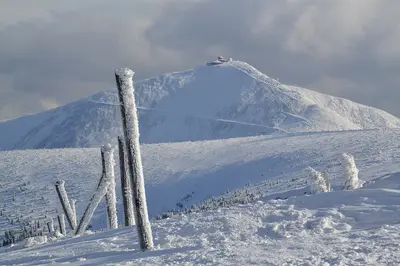
    Lower Silesia (Dolny Śląsk) in southwestern Poland borders Saxony and the Czech Republic. Approximately 2.9 million people live on its roughly 19,900 km², with Breslau (Wrocław) as its capital and largest city. To the south, the Sudetes Mountains rise, featuring the Giant Mountains, whose highest peak, Schneekoppe (Śnieżka), reaches 1603 meters. Northward, the land transitions into the flat Silesian Lowland along the Oder River.Throughout history, the region alternated between Bohemia, the Habsburgs, and Prussia, finally becoming part of Poland after 1945. Castles, churches, and historic towns bear witness to this past: the Churches of Peace in Schweidnitz (Świdnica) and Jauer (Jawor), the stately homes in the Hirschberg Valley, and Fürstenstein Castle near Waldenburg (Wałbrzych).
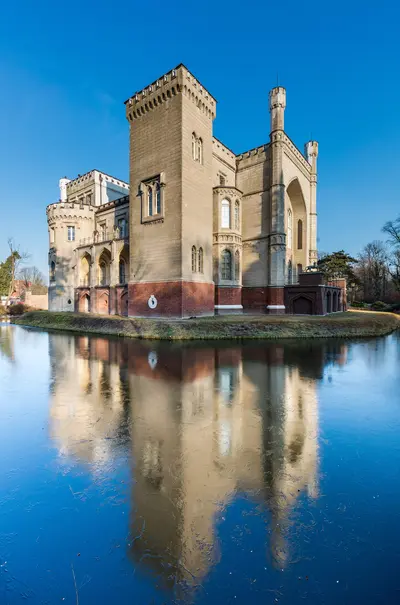
    Fürstenstein Castle (Zamek Książ)

    Fürstenstein Castle (Zamek Książ)

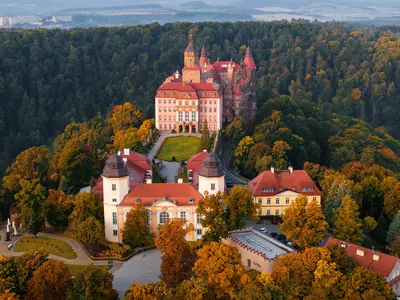
    Schloss Fürstenstein (Zamek Książ) is, after Marienburg and Wawel, the third largest castle in Poland. It thrones on the northern edge of Waldenburg (Wałbrzych) on a rock above the deep gorge of the Polsnitz (Pełcznica).The building combines medieval, Renaissance, Baroque, and Neo-Renaissance styles: Its core dates back to a castle of Duke Bolko I of Schweidnitz from the late 13th century; during the renovation from 1909 to 1923, a new wing and the 47-meter-high main tower were added. A visit includes the state rooms, the terraced gardens, the underground passages from World War II, the stud farm, and the palm house. Around the castle extends a landscape park, which you can explore on forest paths.
    Krummhübel (Karpacz) and Giant Mountains

    Krummhübel (Karpacz) and Giant Mountains

    Krummhübel (Karpacz) is located in the Giant Mountains, by the Lomnica river, at the foot of Sněžka (Śnieżka). At 1603 meters, Sněžka is the range's highest peak and lies on the Czech border. With just over 4,000 residents, the town is one of Lower Silesia's key holiday resorts, perfect for summer hiking and winter skiing.Karpacz stretches up the valley. The lower part holds the town center with churches, town hall, and museums. Further up is Brückenberg (Karpacz Górny), home to the Norwegian Wang Stave Church. Above the town, the Giant Mountains National Park (Karkonoski Park Narodowy) offers trails to Sněžka.Plan a full day for the ascent; check weather and lift operations beforehand, as ridge conditions can change rapidly.
    Great Poland

    Great Poland

    Greater Poland (Wielkopolska) in the west of the country is considered the cradle of Poland: Posen (Poznań) and Gnesen (Gniezno) were home to the first Piast rulers, and Kalisch (Kalisz) is known as Poland's oldest city. With approximately 29,800 km², the voivodeship is the country's second largest, and about 3.5 million people live here.The landscape is flat and characterized by the Greater Poland Lake District, with almost nine-tenths of the region draining via the Warthe. Amid fields and forests lie churches, castles, and manor houses, many of them just a short drive from Posen.
    Görlitz

    Görlitz

    Görlitz on the Lusatian Neisse is Germany's easternmost city. Since 1945, the river has formed the border with Poland; its eastern districts are now the independent Polish city of Zgorzelec, reachable on foot via the Altstadtbrücke.During World War II, Görlitz remained almost entirely spared from destruction, and its historic Old Town, including Untermarkt and Obermarkt, is consequently well-preserved. This makes the city a popular and frequently used film set.

    Sources & method

    • Photos: Wikimedia Commons, Pexels, Google Maps. Each photo carries its credit.
    • Place data such as addresses and ratings comes from Google Maps.
    • Video reportages: By tram through the Polish city of Wrocław
    • The content is based on web research from public, traceable sources. How the content is made · The role of AI