Fernweh: Home
    ExploreTravel GuidesPlan a tripMy tripLast visited
    de|en
    All Places & RegionsAll highlightsAbout FernwehFAQPrivacy PolicyImprint
    ExploreTravel GuidesPlan a tripMy tripLast visited
    • Overview
    • Places in the region
    • Nearby
    Great Poland
    Diego Delso / Wikimedia Commons / CC BY-SA 4.0

    Poland

    Great Poland

    Region

    Greater Poland (Wielkopolska) in the west of the country is considered the cradle of Poland: Posen (Poznań) and Gnesen (Gniezno) were home to the first Piast rulers, and Kalisch (Kalisz) is known as Poland's oldest city.

    by Felix Gillen

    1. Home
    2. Destinations
    3. Poland
    4. Great Poland
    Greater Poland (Wielkopolska) in the west of the country is considered the cradle of Poland: Posen (Poznań) and Gnesen (Gniezno) were home to the first Piast rulers, and Kalisch (Kalisz) is known as Poland's oldest city. With approximately 29,800 km², the voivodeship is the country's second largest, and about 3.5 million people live here.The landscape is flat and characterized by the Greater Poland Lake District, with almost nine-tenths of the region draining via the Warthe. Amid fields and forests lie churches, castles, and manor houses, many of them just a short drive from Posen.
    The starting point for the region is Poznań, the capital of the voivodeship, with its Old Town, Cathedral Island, and lively restaurant scene. The A2 motorway between Berlin and Warsaw runs through the heart of Greater Poland, and Poznań is also the most important railway hub and has an international airport.From Poznań, the most important destinations can be easily combined as day trips: Gniezno with its cathedral, where the first Polish archdiocese was founded in the year 1000, Kórnik Castle with its library and arboretum, and Rogalin Castle with the Raczyński family's art collection.Greater Poland is one of the driest regions in Poland. Countryside excursions are best from spring to autumn, when the parks and gardens of the castles are green.

    More places in Great Poland

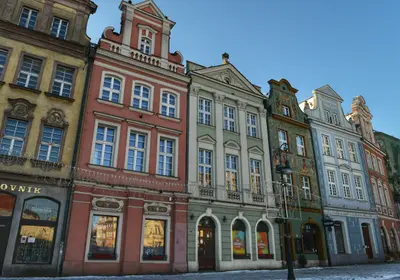
    Posen (Poznań)

    Posen (Poznań)

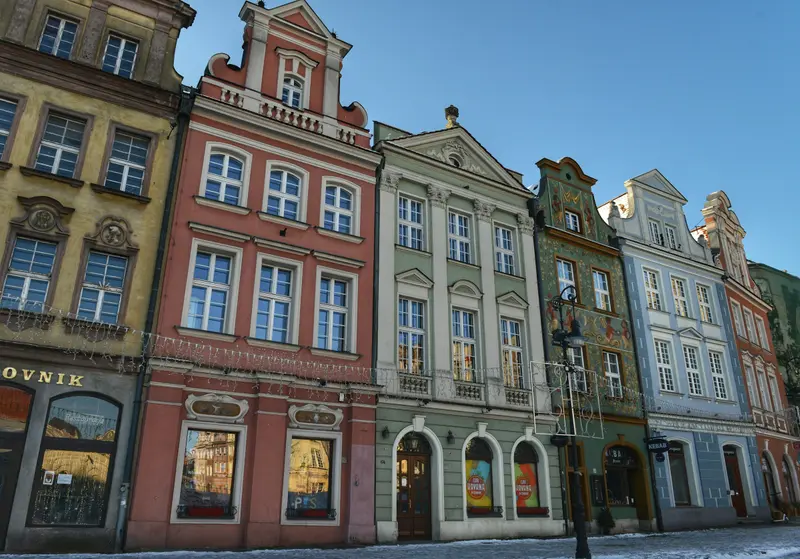
    Poznań (Posen), located on the Warta River approximately halfway between Berlin and Warsaw, is Poland's fifth-largest city with around 534,000 inhabitants. On Cathedral Island, Poland's first bishopric was established in 968; opposite, a city was founded from 1253 under Magdeburg Law. A university, trade fair, and vibrant restaurant scene characterize daily life today.The city's heart is the Old Market Square (Stary Rynek) with its Renaissance Town Hall and narrow merchant houses. East of this, beyond the Warta, are Cathedral Island (Ostrów Tumski) and its cathedral, plus the small Śródka district, linked to the island by a footbridge over the Cybina. West of the Old Town, the Imperial Quarter encircles the Imperial Castle, with the Jeżyce residential district (cafés, restaurants) beyond it.Poznań can be easily explored on foot in two to three days. Those with more time can combine the city with excursions into the Greater Poland region, for example, to Gniezno (Gnesen) or Kórnik Castle.

    Sights in Great Poland

    Discover the most important sights and attractions

    Gnesen Cathedral (Gniezno)
    Church

    Gnesen Cathedral (Gniezno)

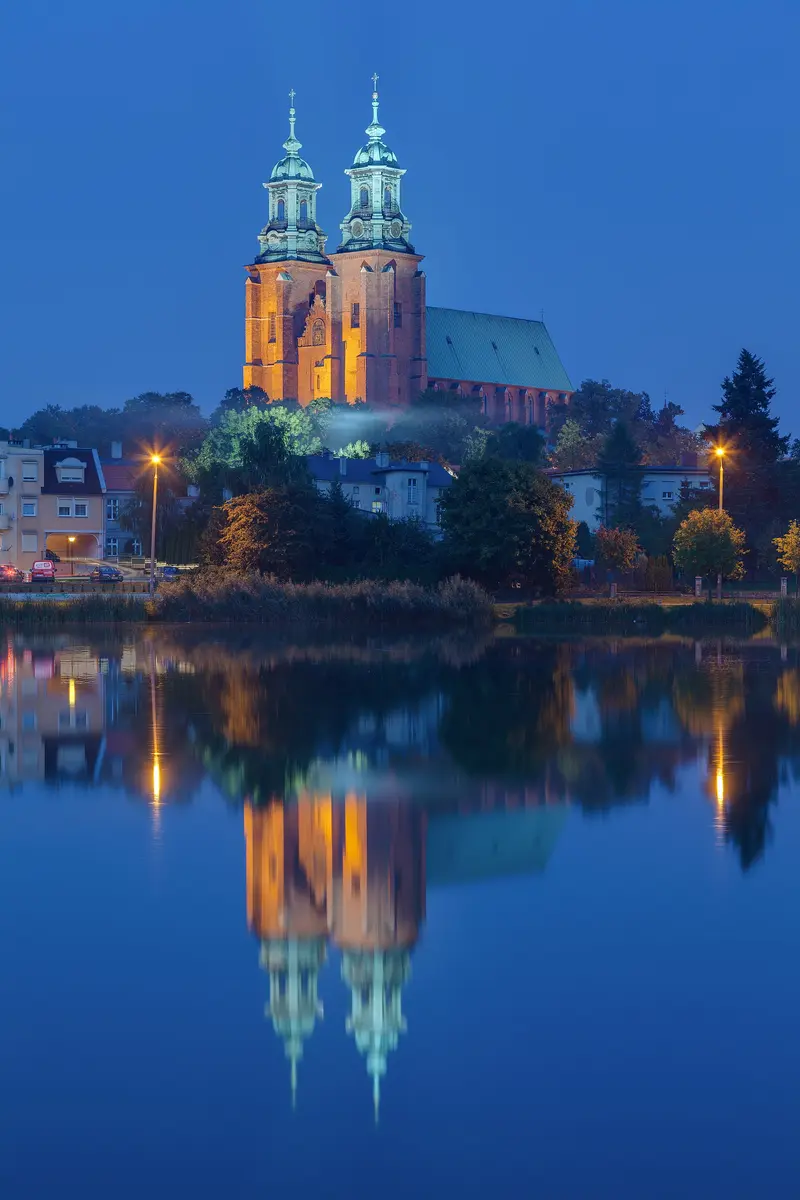
    The Archcathedral is the seat of the Primate of Poland and houses the shrine of Saint Adalbert. During the Act of Gniezno in the year 1000, the first Polish archdiocese was founded here in the presence of Emperor Otto III, and in 1025, Bolesław I was crowned as the first King of Poland. The current Gothic brick basilica was completed in 1390. The bronze door from the late 12th century is famous for its scenes from Adalbert's life and martyrdom.
    Open in Google Maps
    Rogalin Palace
    Museum

    Rogalin Palace

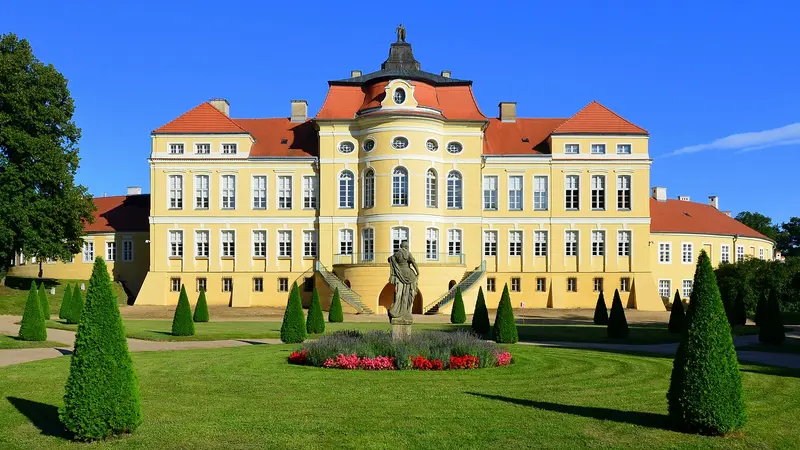
    The palace south of Poznań was built by Kazimierz Raczyński from 1770 to 1776. Today, it is a branch of the National Museum in Poznań; its art gallery displays around 250 of the more than 300 surviving works from the Raczyński collection. At the edge of the park stands the Church of St. Marcellinus, built from 1817 to 1820, with the family mausoleum where the former exiled president Edward Raczyński is also buried.
    Open in Google Maps
    Kórnik Castle
    Museum

    Kórnik Castle

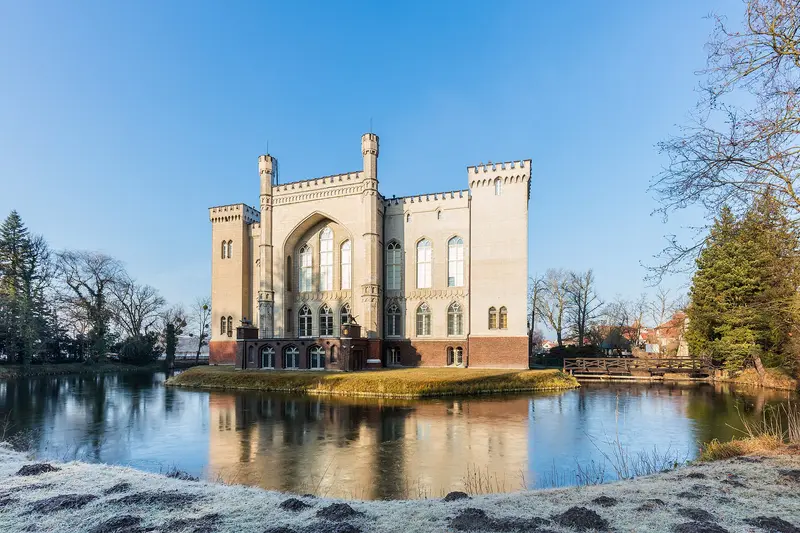
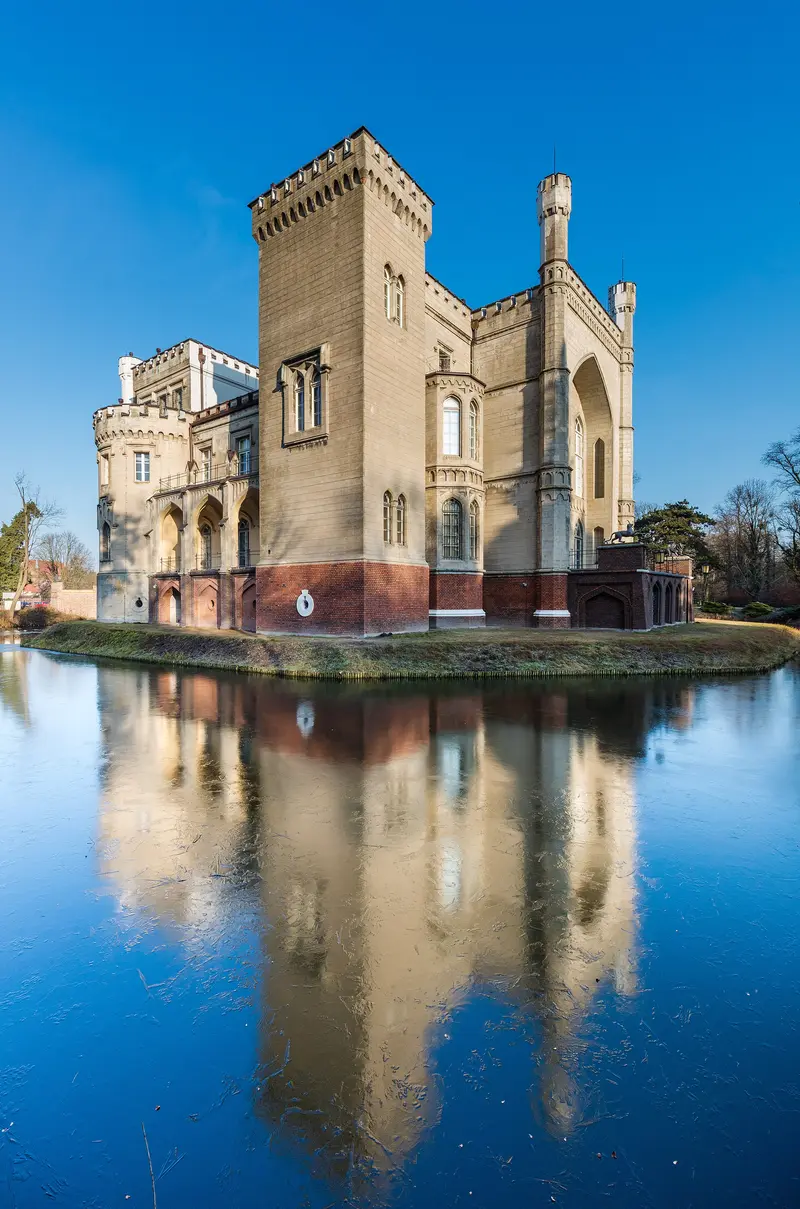
    The 15th-century castle, later residence of the Górka family, was converted by Tytus Działyński in the 19th century in the English Neo-Gothic style, primarily based on a design by Karl Friedrich Schinkel. Today, a museum showcases its rooms and an art gallery, and the Kórnik Library of the Polish Academy of Sciences is also located here. Surrounding the castle is the Kórnik Arboretum, which originated from an 18th-century French garden.
    Open in Google Maps

    Nearby

    Posen (Poznań)

    Posen (Poznań)

    Poznań (Posen), located on the Warta River approximately halfway between Berlin and Warsaw, is Poland's fifth-largest city with around 534,000 inhabitants. On Cathedral Island, Poland's first bishopric was established in 968; opposite, a city was founded from 1253 under Magdeburg Law. A university, trade fair, and vibrant restaurant scene characterize daily life today.The city's heart is the Old Market Square (Stary Rynek) with its Renaissance Town Hall and narrow merchant houses. East of this, beyond the Warta, are Cathedral Island (Ostrów Tumski) and its cathedral, plus the small Śródka district, linked to the island by a footbridge over the Cybina. West of the Old Town, the Imperial Quarter encircles the Imperial Castle, with the Jeżyce residential district (cafés, restaurants) beyond it.Poznań can be easily explored on foot in two to three days. Those with more time can combine the city with excursions into the Greater Poland region, for example, to Gniezno (Gnesen) or Kórnik Castle.
    Breslau (Wrocław)

    Breslau (Wrocław)

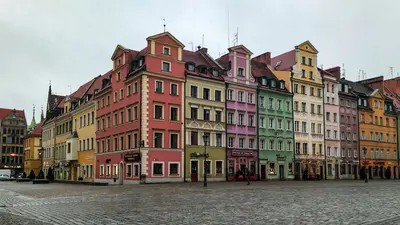
    Breslau (Wrocław) is, with around 673,000 inhabitants, Poland's third-largest city and the capital of Lower Silesia. The city lies on the upper Oder River and spans about twelve islands, connected by 100 to 300 bridges, depending on how they are counted. Around the year 1000, a bishopric was founded here, and in 1261, Wrocław was granted Magdeburg Law. In 2016, it was a European Capital of Culture.The heart of the Old Town is the Market Square (Rynek) with its Gothic Town Hall, surrounded by burgher houses and churches. North of the Old Town, bridges lead to Cathedral Island (Ostrów Tumski), the oldest part of the city, featuring a cathedral and churches. To the east, in Scheitniger Park, stands the Centennial Hall, which has been a UNESCO World Heritage site since 2006.As you stroll through the city, you'll repeatedly encounter small bronze gnomes on house walls, lampposts, and stairs. The first figure commemorates the anti-communist Orange Alternative movement; meanwhile, there are now more than 1,000 of them. You should plan at least two to three days for your visit to the city.
    Thorn (Toruń)

    Thorn (Toruń)

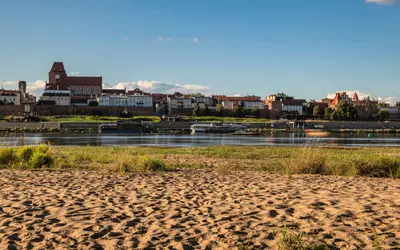
    Thorn (Toruń) is on the Vistula River in north-central Poland, sharing the capital role of the Kuyavian-Pomeranian Voivodeship with Bydgoszcz. The Teutonic Order founded the city in 1231; it received city rights in 1233 and later became an important member of the Hanseatic League. Nicolaus Copernicus was born here in 1473, lending his name to the university founded in 1945. The city has about 192,000 inhabitants. The medieval city, with its Brick Gothic, has been UNESCO World Heritage since 1997. It consists of three parts: the Old Town in the west with the Town Hall, St. John's Cathedral, and St. Mary's Church; the New Town in the east, established from 1264; and between them on the southern edge, the remains of the Teutonic Knights' Castle. The street network has largely remained unchanged since medieval times. In the evenings, you can meet up in the pubs and cellar bars around the Old Town Market. Toruń is also well-known for its gingerbread, the Toruński piernik.
    Kuyavian-Pomerania

    Kuyavian-Pomerania

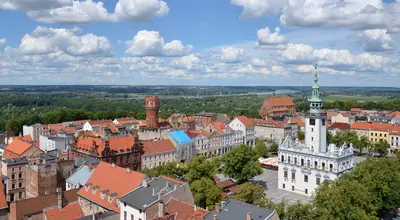
    Kuyavian-Pomeranian (Kujawsko-Pomorskie) is in north-central Poland, straddling the lower Vistula, with nearly 2 million residents. The voivodeship, formed in 1999, unites historic regions: Kuyavia, parts of Pomerelia, Chełmno Land, and Dobrzyń Land. Bydgoszcz is the Voivode's administrative seat; Parliament and Marshal's Office are in Toruń.The landscape includes numerous lakes like Gopło and vast forests, especially the Tuchola Forest (Bory Tucholskie). Culturally, Brick Gothic of Hanseatic towns on the Vistula and archaeological sites like Biskupin shape the region.
    Łódź

    Łódź

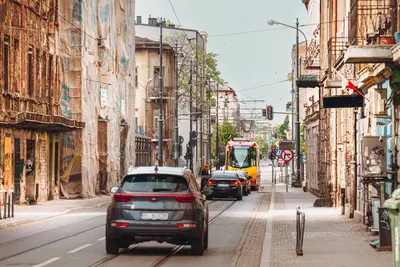
    With around 640,000 inhabitants, Łódź is one of Poland's largest cities and the capital of its namesake voivodeship. Its ascent was driven by the textile industry: the first textile factory was established in 1826, by 1900 over 300,000 people lived in the city, and in 1904 approximately 70,000 workers were employed in 546 factories. From this period, industrialists' palaces and brick factories remain, and Polish, German, Jewish, and Russian traditions still shape the city's cuisine today. The backbone of the city is the Piotrkowska, a several-kilometer-long promenade featuring Art Nouveau facades, courtyards, and the entertainment complex OFF Piotrkowska. Izrael Poznański’s former factory was transformed into Manufaktura, housing museums, restaurants, and the ms2 art gallery; his palace stands right next to it. Księży Młyn is the workers' settlement built by industrialist Karl Scheibler, with brick houses and factory buildings. New cultural venues such as the former EC1 power plant, with its planetarium and film center, complement the industrial monuments. Large-format murals, many of which have been created since 2011 during the Urban Forms Foundation festival, have also earned Łódź the reputation of a city of murals.

    Sources & method

    • Photos: Wikimedia Commons. Each photo carries its credit.
    • Place data such as addresses and ratings comes from Google Maps.
    • The content is based on web research from public, traceable sources. How the content is made · The role of AI