Fernweh: Home
    ExploreTravel GuidesPlan a tripMy tripLast visited
    de|en
    All Places & RegionsAll highlightsAbout FernwehFAQPrivacy PolicyImprint
    ExploreTravel GuidesPlan a tripMy tripLast visited
    • Overview
    • Places in the region
    • Eat & drink
    • Culture
    • Getting around
    • Round trips
    • Nearby
    Panorama Route

    South Africa

    Panorama Route

    Region

    Immerse yourself in a world of breathtaking natural wonders along South Africa's legendary Panorama Route.

    by Felix Gillen

    1. Home
    2. Destinations
    3. South Africa
    4. Mpumalanga
    5. Panorama Route
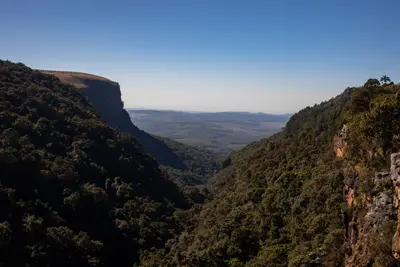
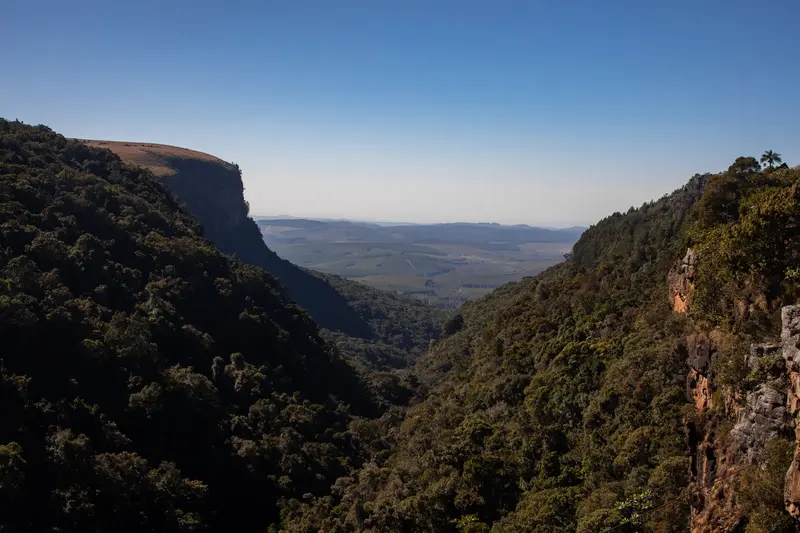
    Immerse yourself in a world of breathtaking natural wonders along South Africa's legendary Panorama Route. This spectacular destination in the Mpumalanga province will enchant you with its dramatic gorges, majestic waterfalls, and unparalleled views that will take your breath away.
    The Panorama Route in South Africa stretches along the eastern escarpment of the Drakensberg in the Mpumalanga province, showcasing one of the country's most breathtaking natural landscapes. Here, you'll experience the Blyde River Canyon, the world's third-largest canyon, with its distinctive rock formations known as the Three Rondavels. Iconic viewpoints like God's Window offer expansive views over the Lowveld, while the Bourke's Luck Potholes reveal fascinating geological erosions. The historic gold mining town of Pilgrims Rest provides an authentic glimpse into the region's history. For a relaxed exploration, you should plan at least one full day, ideally starting in the morning hours to experience the best visibility and fewer visitors.
    Graskop

    Place 1 of 2

    Graskop

    Graskop is a small town on the edge of the Escarpment and the most convenient base for the Panorama Route. God's Window, the Lisbon Falls, and Bourke's Luck Potholes are a short drive away.

    Discover
    Blyde River Canyon
    Claidheamhmor / Wikimedia Commons / CC BY-SA 4.0

    Place 2 of 2

    Blyde River Canyon

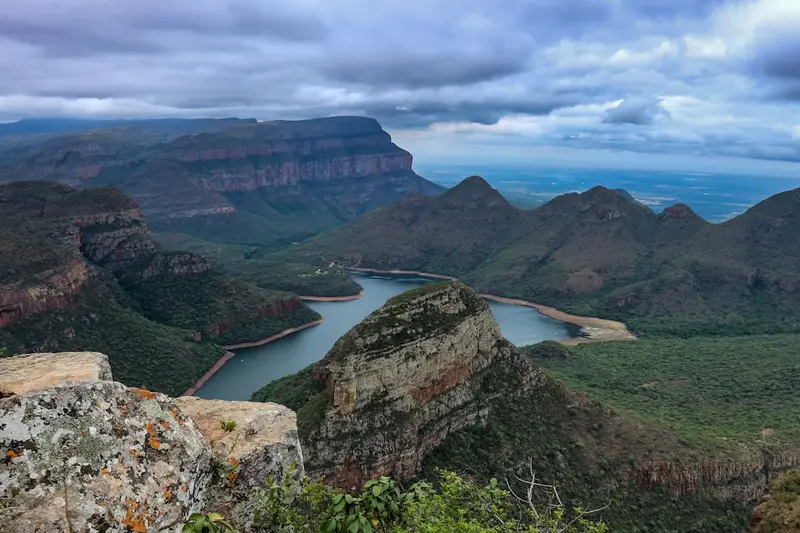
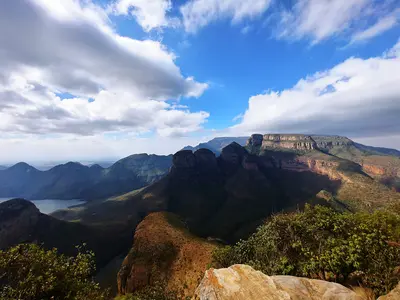
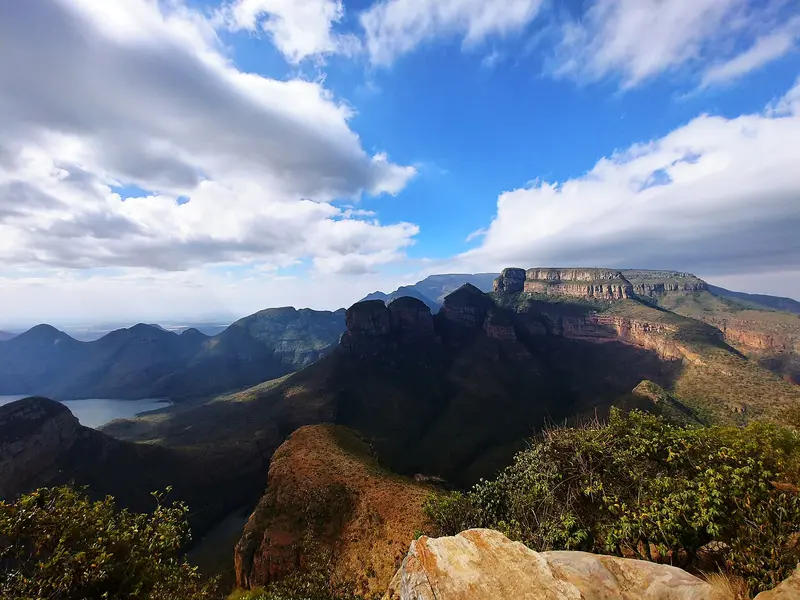
    The Blyde River Canyon (Motlatse Canyon) is one of the largest canyons on Earth and is predominantly covered by subtropical vegetation. From the viewpoint at the Three Rondavels, you look out onto three round rock domes above the Blydepoort Dam.

    Discover

    Sights in Panorama Route

    Discover the most important sights and attractions

    God's Window

    God's Window

    God's Window is an iconic viewpoint along South Africa's Panorama Route, offering breathtaking views over Mpumalanga's Lowveld. You stand here on the edge of the Drakensberg Escarpment, where the highveld abruptly drops into the lower-lying plains. This geological formation creates a dramatic landscape stretching for hundreds of kilometers. The name "God's Window" derives from the sheer endless expanse that unfolds before you, and on clear days, it reaches as far as the Kruger National Park.The path to the main viewpoint leads you through a small, dense forest, which is often damp and cool, creating a pleasant microclimate. From the various platforms, you can admire the lush vegetation, gentle hills, and winding rivers in the distance. It's a place that impressively illustrates South Africa's immense size and natural beauty.Our Tip: Ideally, visit God's Window in the early morning. At this time, the chances for clear, fog-free views are highest, before haze or clouds form. You'll also avoid the largest crowds. Wear sturdy footwear, as the paths can sometimes be damp.
    Open in Google Maps
    Lisbon Falls

    Lisbon Falls

    The Lisbon Falls are a prominent waterfall along South Africa’s famous Panorama Route. With a drop of approximately 92 meters, they rank among the highest and most impressive waterfalls in Mpumalanga province. Their name originates from the nearby Lisbon Creek, which in turn was named after a former gold prospecting settlement from the Gold Rush era. Here, you'll witness the water gracefully cascade in two main streams over a steep rock face into a basin below. The surrounding landscape features lush vegetation, providing a picturesque backdrop. Our Tip: Visit the falls early in the morning to best utilize the soft light for photos and avoid the largest crowds. An easily accessible viewpoint offers a comprehensive view of this natural phenomenon.
    Open in Google Maps
    Graskop Gorge Lift Co.

    Graskop Gorge Lift Co.

    The Graskop Gorge Lift Co. on the famous Panorama Route in South Africa offers you a unique opportunity to experience the impressive Graskop Gorge. You descend 51 metres with a glass lift into a lush, indigenous forest at the foot of the waterfall. Once at the bottom, you'll find a well-developed network of wooden walkways and suspension bridges that guides you through the pristine nature. Here you can observe the local flora and fauna up close and enjoy the cool, humid air. The facility was created to provide visitors with sustainable access to this ecologically sensitive area. Our tip: It's best to visit the gorge early in the morning to avoid the biggest crowds and fully savour the tranquility of the forest. Ensure you wear sturdy footwear, as the paths can be wet, and have your camera ready for spectacular shots of the waterfalls and dense vegetation.
    Open in Google Maps
    God's Window

    God's Window

    God's Window is an iconic viewpoint along South Africa's Panorama Route, offering you a breathtaking view over the Lowveld. You stand here at the edge of the Drakensberg Escarpment, a geological formation marking the transition from the high plateau to the lower-lying plains. From this elevated position, you overlook a vast landscape of lush forests, rolling hills, and deep gorges stretching to the horizon. On clear days, the view reportedly reaches as far as Mozambique.What you experience here is the sheer grandeur of South African nature. The name "God's Window" is aptly chosen, as the view truly resembles a gigantic window opening onto an endless horizon. There are several viewing platforms and a short, shaded forest trail that leads to further, often less crowded viewpoints.Our Tip: Visit God's Window early in the morning to enjoy the best visibility before haze or clouds form and the crowds increase. The morning hours also often provide softer light for impressive photos. Pay attention to the weather; in fog, visibility can be severely restricted.
    Open in Google Maps
    Three Rondavels Viewpoint

    Three Rondavels Viewpoint

    The **Three Rondavels Viewpoint** is undoubtedly one of the highlights along South Africa's Panorama Route. From here, you gaze upon three distinctive, hut-like rock formations that rise majestically from the Blyde River Canyon. These impressive quartzite peaks are named after the three wives of a former local chief: Mogoladikwe, Maseroto, and Namakgale, which adds cultural depth. They form a spectacular contrast to the deeply carved canyon and the Blyde River, which meanders in the distance. The formations are the result of millions of years of erosion, which has worn away the softer rock layers and exposed the harder peaks. From the well-developed viewing platform, you enjoy an unparalleled panoramic view over the world's third-largest canyon, known for its lush vegetation and dramatic cliffs. Our Tip: For the best photos and to avoid the crowds, an early morning visit is recommended. Then, the rising sun bathes the rocks in a warm, golden light. Alternatively, late afternoon also offers atmospheric lighting but is often busier.
    Open in Google Maps
    Bourke's Luck Potholes

    Bourke's Luck Potholes

    The Bourke's Luck Potholes are a fascinating geological formation on the Panorama Route in South Africa, where the Treur River meets the Blyde River. These unique, cylindrical potholes were carved over millennia into the hard quartzite rock by the erosive power of water and carried stones. The name is attributed to gold prospector Tom Bourke, who found no gold here, but whose hope for riches shaped the region. You can explore the impressive rock formations via a system of bridges and well-maintained paths, offering various perspectives on the deep, round hollows. Particularly impressive is the view of the confluence of the two rivers that shaped these natural wonders. Our Tip: It's best to visit the Potholes early in the morning or late in the afternoon to avoid the largest crowds and use the softer light for photos. Make sure to wear comfortable footwear, as the paths are partly uneven.
    Open in Google Maps

    Restaurants & Cafés

    Harry's Pancakes

    In Graskop erwartet dich die legendäre Institution Harry's Pancakes, ein absolutes Muss für jeden Besucher. Genieße süße oder herzhafte Crêpes in einer gemütlichen Atmosphäre – perfekt für eine Stärkung nach einem ereignisreichen Tag auf der Panorama Route. Die Auswahl ist riesig!
    Show on Google Maps

    The Waffle Hut

    Ebenfalls in Graskop findest du The Waffle Hut, einen weiteren lokalen Favoriten, der sich auf köstliche Waffeln spezialisiert hat. Ob mit Früchten, Sahne, Eis oder herzhaften Belägen – hier gibt es für jeden Geschmack die passende süße oder deftige Versuchung in entspannter Umgebung.
    Show on Google Maps

    Graskop Hotel Restaurant

    Für ein gediegeneres kulinarisches Erlebnis kehre im Restaurant des Graskop Hotels ein. Hier erwarten dich südafrikanische Klassiker und internationale Gerichte in einem charmanten Ambiente, das Geschichte und Komfort vereint. Eine gute Wahl für ein Abendessen mit etwas mehr Stil.
    Show on Google Maps

    The Royal Hotel Restaurant

    Tauche ein in die Geschichte des Goldrausches in Pilgrim's Rest und speise im historischen Royal Hotel Restaurant. Genieße traditionelle Küche in einem Ambiente, das dich direkt in die Kolonialzeit zurückversetzt. Ein einzigartiges Erlebnis, das mehr als nur gutes Essen bietet.
    Show on Google Maps

    Carpo's Chillas

    Restaurant in Road.
    Show on Google Maps

    Panorama Route's Cultural Heritage

    The cultural imprint of the Panorama Route stretches far back into history. The oldest traces of human settlement are found in the ancient rock art of the San, bearing witness to the land's original inhabitants and documenting their spiritual beliefs.Later, various Bantu-speaking ethnic groups like the Swazi and Pedi shaped the region with their traditions and ways of life. Architecture in historic towns like Pilgrim's Rest reflects the late 19th-century Gold Rush era, with Victorian-inspired buildings and typical corrugated iron roofs, offering a fascinating journey back in time.This unique blend of indigenous cultures, colonial influences, and the rich legacy of the mining era forms the Panorama Route's multifaceted cultural fabric. Local craft markets and cultural centers offer insights into contemporary interpretations of this rich history and preserve traditional artisanal techniques.

    Getting Around

    The Panorama Route, a picturesque natural destination in South Africa, differs significantly from urban centers when it comes to getting around. There are no subways, trams, or a comprehensive public bus system that directly connects the attractions. The most flexible and recommended method to explore the route is therefore a rental car.The roads are well-maintained, and having your own vehicle allows you to make stops as you please and enjoy the breathtaking scenery at your own pace. Alternatively, numerous tour operators offer guided tours that include transportation and often a knowledgeable guide – ideal for travelers who prefer to sit back and relax. Ride-sharing services like Uber or Bolt are available in the surrounding larger cities such as Mbombela (Nelspruit), but are only sporadically found on the route itself.Pedestrian-friendliness is limited to the marked hiking trails and viewpoints; the main roads are not designed for longer walks. For bicycles or e-scooters, the long distances and often hilly sections are mostly unsuitable; they might at most play a role in individual lodges or very small villages. Plan your routes carefully and ideally book your rental car in advance.

    Round trips through this region

    Kruger & Panorama Route

    Kruger & Panorama Route

    The route connects the Panorama Route with waterfalls, the Blyde River Canyon and viewpoints like God's Window with safari days in Kruger National Park. Hoedspruit and Nelspruit are close to the park gates and have their own airports.

    11 Days
    4 stops

    Nearby

    Graskop

    Graskop

    Graskop is a small town on the edge of the Escarpment and the most convenient base for the Panorama Route. God's Window, the Lisbon Falls, and Bourke's Luck Potholes are a short drive away. The Graskop Gorge Lift descends into a forested gorge.
    Blyde River Canyon

    Blyde River Canyon

    The Blyde River Canyon (Motlatse Canyon) is one of the largest canyons on Earth and is predominantly covered by subtropical vegetation. From the viewpoint at the Three Rondavels, you look out onto three round rock domes above the Blydepoort Dam. Bourke's Luck Potholes at the confluence of the Blyde and Treur rivers showcase water-eroded rock formations.
    Hoedspruit

    Hoedspruit

    Hoedspruit is a small town in the Lowveld on the western edge of the Kruger area, surrounded by private game reserves like Klaserie, Timbavati, and Balule. For many safari travellers, the small airport here is the gateway to the lodges, and the Panorama Route is just an hour's drive away.
    Mpumalanga

    Mpumalanga

    Mpumalanga means "place where the sun rises". The province connects the viewpoints of the Panorama Route with the southern part of the Kruger National Park.
    Kruger National Park

    Kruger National Park

    At nearly 20,000 square kilometers, Kruger National Park in northeastern South Africa is the country's largest wildlife sanctuary, roughly the size of Rhineland-Palatinate. It's home to the Big Five, plus giraffes, zebras, wild dogs, and over 500 bird species. The best part: You can explore the park on paved and gravel roads with your own rental car.

    Sources & method

    • Photos: Unsplash. Each photo carries its credit.
    • Place data such as addresses and ratings comes from Google Maps.
    • The content is based on web research from public, traceable sources. How the content is made · The role of AI