Fernweh: Home
    ExploreTravel GuidesPlan a tripMy tripLast visited
    de|en
    All Places & RegionsAll highlightsAbout FernwehFAQPrivacy PolicyImprint
    ExploreTravel GuidesPlan a tripMy tripLast visited
    • Neighborhoods & highlights
    • Recommendations
    • Walking tours
    • Videos
    • Eat & drink
    • Food culture
    • Culture
    • Nightlife
    • Getting around
    • Accommodation
    • Plan trip
    • Nearby
    Cartagena

    Colombia

    Cartagena

    City

    Cartagena de Indias is the most famous city on Colombia's Caribbean coast and, with around a million inhabitants, the capital of the Departamento Bolívar.

    by Felix Gillen

    1. Home
    2. Destinations
    3. Colombia
    4. Cartagena & Bolívar
    5. Cartagena
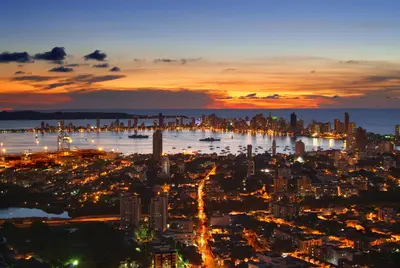
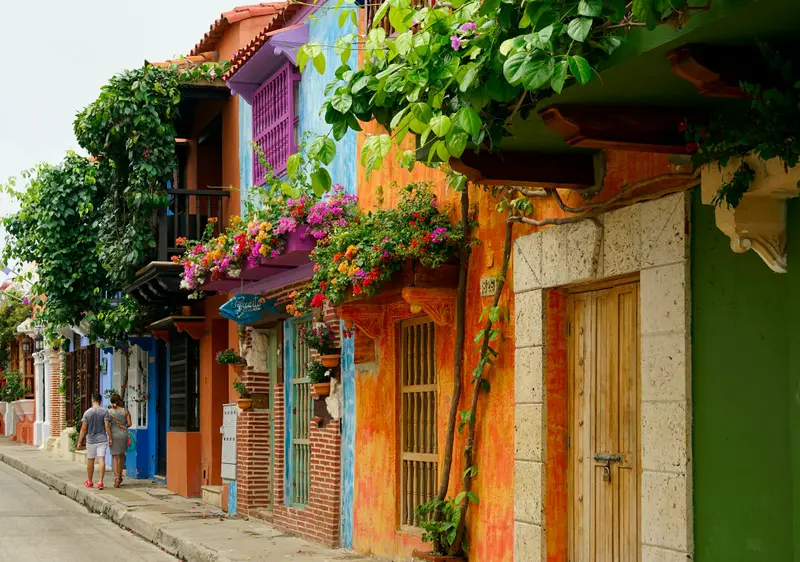
    Cartagena de Indias is the most famous city on Colombia's Caribbean coast and, with around a million inhabitants, the capital of the Departamento Bolívar. You come for the walled colonial city, which, along with its port and fortifications, has been a UNESCO World Heritage site since 1984. Within the walls are the neighborhoods San Pedro and San Diego; directly in front is the lively Getsemaní with street art and bars.

    Sights in Cartagena

    Discover the most important sights and attractions

    Sanctuary of Saint Peter Claver
    Church

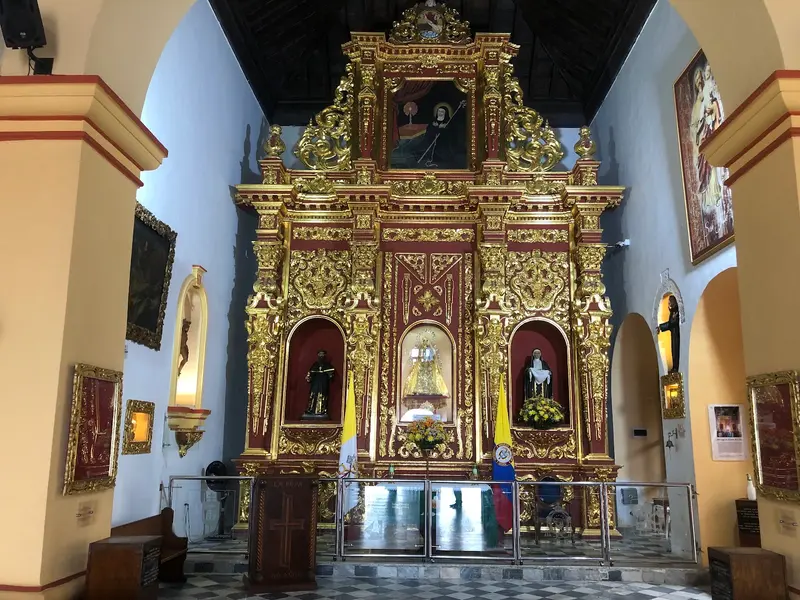
    1Sanctuary of Saint Peter Claver

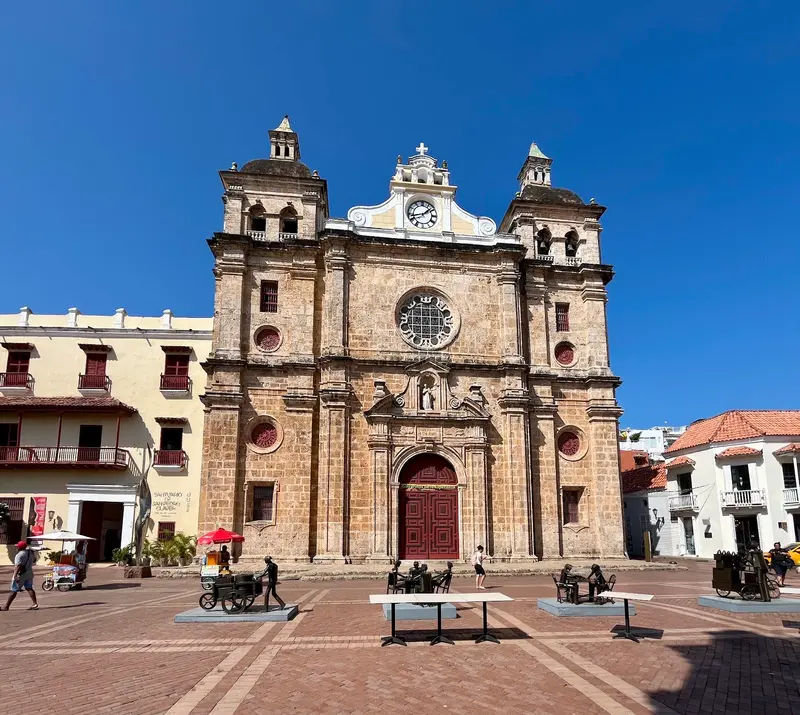
    The church and monastery honor 17th-century Jesuit Pedro Claver, aiding enslaved Africans. Its attached museum features religious art and monastic rooms. Opening hours vary (e.g., holidays), check sanpedroclaver.co beforehand.
    Open in Google Maps
    Museo del Oro Zenú
    Museum

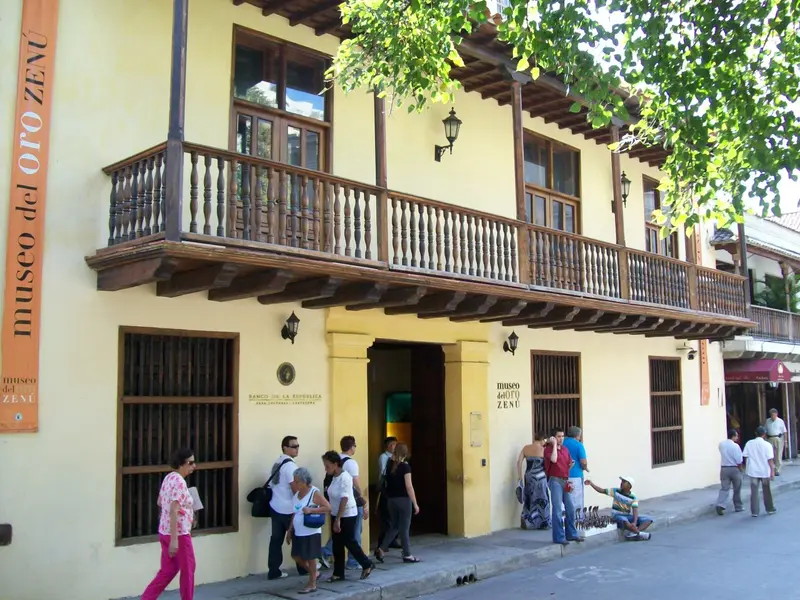
    2Museo del Oro Zenú

    The Banco de la República Museum on Plaza de Bolívar showcases goldsmith art of the Zenú people from the Caribbean region. Admission is free.
    Open in Google Maps
    Convento de la Popa
    Church

    3Convento de la Popa

    The monastery on Cerro de la Popa dates back to a wooden chapel from 1607, built by the Augustinian monk Vicente Mallol. From the city's highest point, you overlook the Old Town, the Bay, and Bocagrande. For the ascent, a taxi or a tour is recommended.
    Open in Google Maps
    Monument Torre del Reloj
    Historic Landmark

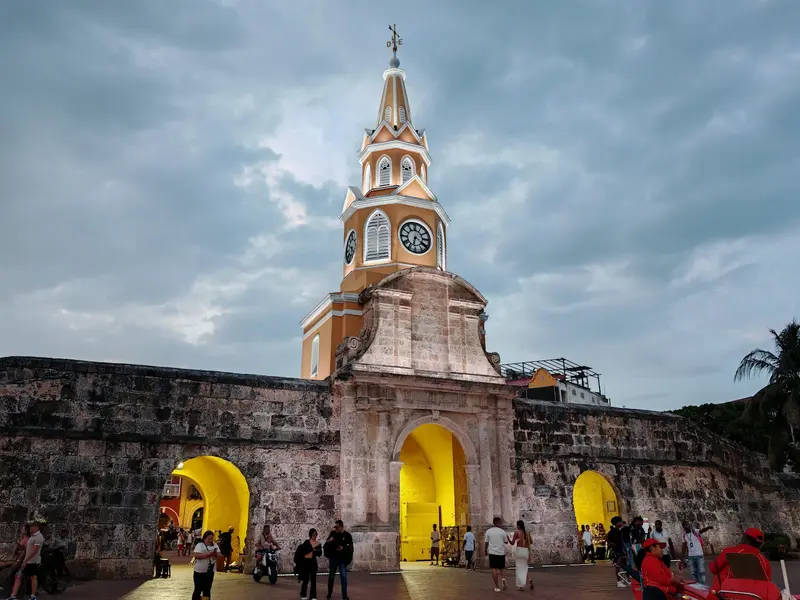
    4Monument Torre del Reloj

    The Clock Tower stands above the original main gate of the city wall, which was connected to Getsemaní by a drawbridge. The current tower was designed by architect Luis Felipe Jaspe Franco and built between 1876 and 1888. It is the main entrance to the Old City.
    Open in Google Maps
    Las Bóvedas
    Attraction

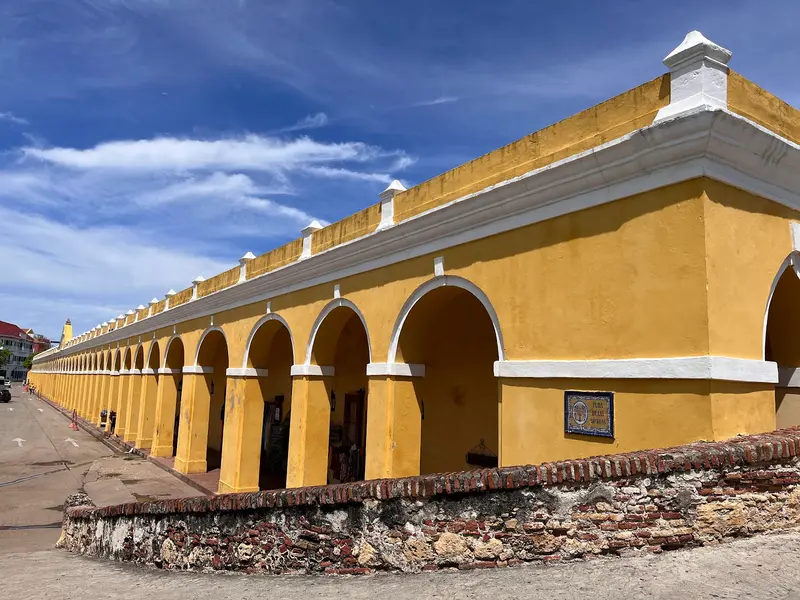
    5Las Bóvedas

    The 23 vaulted chambers were built into the city wall between the Santa Clara and Santa Catalina bastions at the end of the 18th century. Today, shops here sell handicrafts, and access is free.
    Open in Google Maps
    Castillo de San Felipe de Barajas

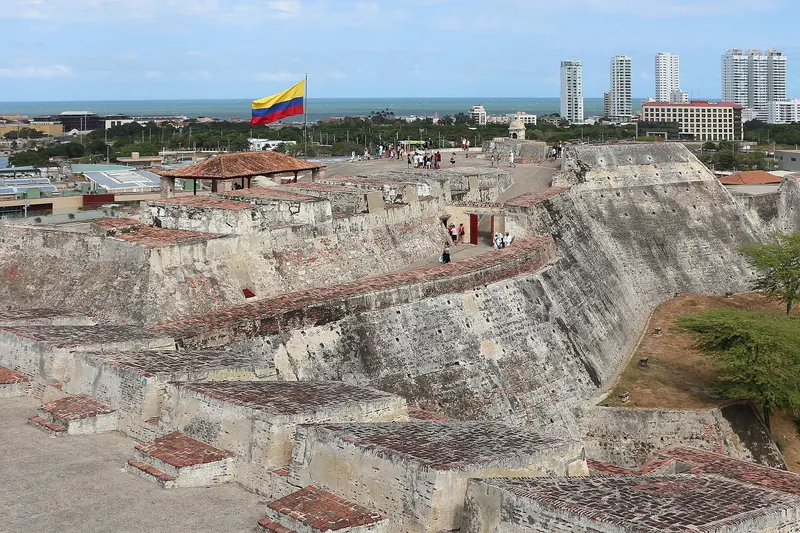
    6Castillo de San Felipe de Barajas

    The fortress stands on Cerro de San Lázaro east of the Old City and controlled access to the city by land and by sea. Its expansion began in 1639 and it was further enlarged in 1763 by Antonio de Arévalo. Beneath the complex lies a network of underground tunnels. The Castillo is operated by the Escuela Taller Cartagena de Indias.
    Open in Google Maps

    City walks in Cartagena

    Curated walking tours through the city's highlights, handpicked by experienced travel journalists.

    Walking Tour Old Town and Getsemaní

    The tour starts at the Clock Tower, leads through the walled Old City, via Plaza de Santo Domingo, the Cathedral and the Palace of the Inquisition, to the Church of San Pedro Claver and ends at Plaza de la Trinidad in Getsemaní. The route is almost 2 km long. Without museum visits, you'll need about an hour and a half; it's most pleasant in the early morning or late afternoon.

    Open in Google Maps
    Stops (7)

    Videos & Travel Reports

    13 of the best places to visit in Colombia

    13 of the best places to visit in Colombia

    Lonely Planet article by Steph Dyson, last updated in March 2026, covering Cartagena, the Amazon, the coffee region, Tayrona, the Sierra Nevada, La Guajira, San Gil, Providencia, Caño Cristales and…

    Kurzes Video aus der DW-Reihe Meet a local, in der Einheimische ihre Stadt…

    Restaurants in Cartagena

    1

    The Kitchen of Pepina

    Eatery offering Caribbean home-style cooking from the recipes of chef Pepina (María Yances). The Bogotá branch closes early 2025; the Cartagena location stays open.
    Show on Google Maps
    2

    Celele

    The restaurant, set in a colonial house in Getsemaní, uses ingredients and recipes from the Caribbean region, exploring its biodiversity. It ranked 48th in The World's 50 Best Restaurants 2025, as the sole restaurant from Colombia. Upscale pricing, reservations recommended.
    Show on Google Maps
    3

    La Cevichería

    Small fish restaurant on Calle Stuart near Plaza de San Diego, known for its ceviche, also with coconut or mango. No reservations accepted; a queue often forms at lunchtime. Mid-range prices.
    Show on Google Maps
    4

    Restaurante Carmen Cartagena

    Upscale restaurant in an Old Town colonial house with Colombian fusion cuisine. The focus is on fish and seafood like langoustines, octopus, and crabs.
    Show on Google Maps
    5

    Candé

    Restaurant in the Old Town featuring traditional cuisine from Cartagena. Enjoy live music and dance performances with your meal. Upscale pricing.
    Show on Google Maps

    Food & Drink in Cartagena

    Cartagenas Küche ist karibisch, mit Kokos, Fisch, frittierten Snacks und vielen Süßigkeiten. Vieles davon gibt es direkt auf der Straße und an den Ständen der Altstadt.
    Arepa de huevo

    Arepa de huevo

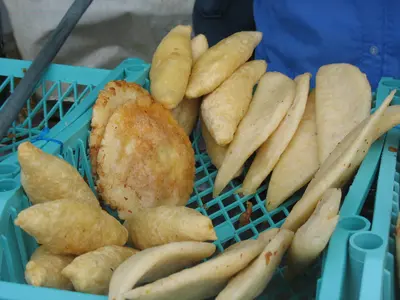
    Fried corn arepa with an egg inside, which you can get on almost every street corner. In January, street chefs compete at the Festival del Frito Cartagenero with Arepas de huevo, Carimañolas, and Empanadas.

    Cartagena Posta Negra

    Rindfleisch, in einer dunklen, süßsauren Sauce geschmort, ein Gericht aus der Arbeiterküche der Stadt. Es wird meist mit Kokosreis und Patacones serviert.
    Cocadas und Alegrías

    Cocadas und Alegrías

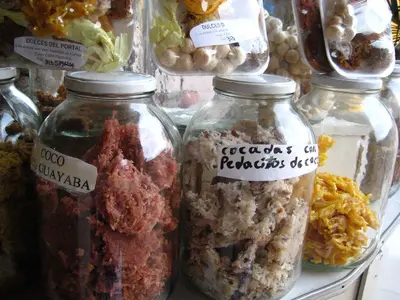
    Cocadas sind Kokoskonfekt, auch mit Guave, Ananas oder Dulce de leche, Alegrías bestehen aus Panela, Kokos und Hirse. Beides verkaufen die Stände im Portal de los Dulces an der Plaza de los Coches, gegenüber dem Uhrturm.
    Limonada de coco

    Limonada de coco

    A mixed drink of lime juice and coconut milk, often with condensed milk and ice. It's a popular refreshment with food in Cartagena.

    History and City Life

    Pedro de Heredia founded the city on June 1, 1533. Because gold and goods from the colony were shipped here, the Spanish built an extensive fortification system over centuries.In 1741, a British fleet under Admiral Edward Vernon attacked the city; Blas de Lezo led the defense. Around November 11th, Cartagena celebrates the anniversary of its independence for several days.Districts: San Pedro with cathedral and noblemen's palaces, San Diego as the former merchants' quarter, Getsemaní as the traditional working-class district.Music: In the bars of Getsemaní and the Old Town, Salsa and Champeta play, often live.

    Nightlife

    1

    Alquimico

    Cocktail bar in an old town townhouse with bars on multiple floors, each with its own concept. It ranked 11th in The World's 50 Best Bars 2025. Later in the evening, there's dancing upstairs to Latin American and electronic music.
    Show on Google Maps
    2

    Café Havana

    The city's most famous salsa bar is located in Getsemaní at the corner of Calle de la Media Luna and Calle del Guerrero. A live band plays Tuesdays through Sundays from about 8 PM, and the decor is reminiscent of 1950s Havana. It fills up quickly.
    Show on Google Maps
    3

    Bazurto Social Club

    Small club where mainly locals dance to Champeta and Salsa. It reopened in 2024 at a new location behind Plaza Santo Domingo. Occasionally, there are short dance lessons.
    Show on Google Maps
    4

    Donde Fidel Salsa Bar

    Traditional salsa bar at the Clock Tower, its guests spilling onto the square. A good place for old salsa records and people-watching.
    Show on Google Maps

    Getting Here and Around

    Airport: Rafael Núñez Airport is located in the Crespo neighborhood in the north of the city. During rush hour, a taxi will take significantly longer.On Foot: The Old Town and Getsemaní are directly next to each other and are easily explored on foot. For Castillo San Felipe and Cerro de la Popa, you'd better take a taxi.Islands: Boats to the Islas del Rosario, Barú, and Tierrabomba depart from Muelle La Bodeguita.Buses: The Transcaribe rapid bus system connects the Old Town with other neighborhoods; payment is made with a rechargeable card.

    Accommodations in Cartagena

    Find perfect stay in Cartagena

    Booking.com* (Affiliate link)
    Search Hotels
    Agoda* (Affiliate link)
    Search Hotels
    Airbnb
    Vacation Rentals

    * Affiliate link: if you book through it, we earn a small commission. The price stays the same for you.

    Plan your trip to Cartagena

    Save places, build a route and plan your city trip, all in one place.

    1. 1
      Sunrise over alpine peaks and a sea of clouds
      1234

      Round trip

      12 days · 4 stops

      Saved

      Pick a route

      Pick a ready-made one or save places and plan your own.

      Open bookmarks
    2. 2

      Trip to Cartagena

      Live
      • 1Sanctuary of Saint Peter Claver3 days
      • 2Museo del Oro Zenú4 days
      • 3Convento de la Popa5 days
      Budget

      Plan your trip

      The planner sorts stops, days and budget. Plan together in real time.

      Start trip planning
    3. 3
      9:41 No signal
      Cartagena
      Available offline

      Use it on the road

      Download the guide to your phone and use it on site, even offline.

    Nearby

    Cartagena & Bolívar

    Cartagena & Bolívar

    The region encompasses the Caribbean coast around Cartagena de Indias and the hinterland of the Departamento Bolívar up to the Río Magdalena. You come for Cartagena's walled old town, the coral reefs of the Islas del Rosario, and the colonial city of Mompox, both of which are UNESCO World Heritage sites.
    Islas del Rosario

    Islas del Rosario

    The Islas del Rosario are an archipelago of around 28 small coral islands southwest of Cartagena. They belong to the Corales del Rosario y San Bernardo National Park, which you visit from Cartagena for snorkeling, diving, and beach days. You can only reach the islands by boat, usually as a day trip combined with the Barú Peninsula and Playa Blanca.
    Santa Marta

    Santa Marta

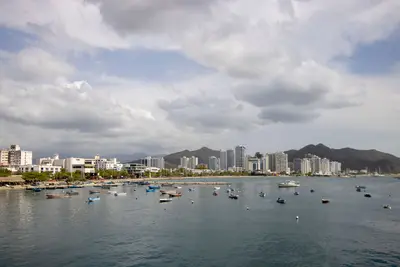
    Santa Marta is the capital of the Magdalena Department on the Caribbean coast and Colombia's oldest surviving city, founded in 1525 by Rodrigo de Bastidas. You come here as a starting point for Tayrona National Park, Minca, and the Ciudad Perdida. The city has around half a million inhabitants; highlights include the colonial center with the Gold Museum, as well as the beach districts of Taganga and El Rodadero.
    Minca

    Minca

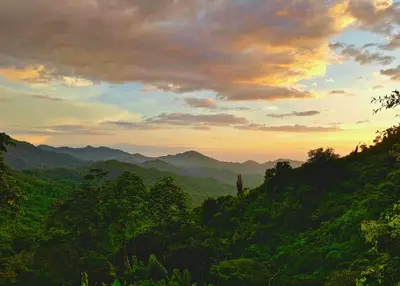
    Minca is a small mountain village in the foothills of the Sierra Nevada, about 45 minutes from Santa Marta. You come for waterfalls to swim in, coffee farms, birdwatching, and hikes with views over the coast. The village has fewer than 1,000 inhabitants and today thrives mainly on hostels and lodges.
    Santa Cruz de Mompox

    Santa Cruz de Mompox

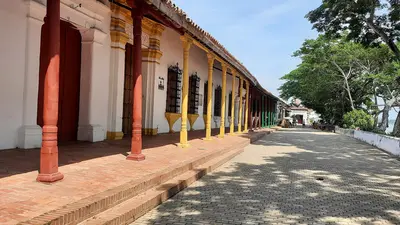
    Santa Cruz de Mompox is a colonial town on the Río Magdalena, about 250 kilometers southeast of Cartagena. You go for its old town with churches and river promenade, a UNESCO World Heritage site since 1995, and its filigree workshops. The town has nearly 50,000 inhabitants, and its quiet center is easy to explore on foot.

    Sources & method

    • Photos: Wikimedia Commons, Unsplash, Google Maps. Each photo carries its credit.
    • Place data such as addresses and ratings comes from Google Maps.
    • Video reportages: 13 of the best places to visit in Colombia, Meet a local: Cartagena, Kolumbien | DW Deutsch
    • The content is based on web research from public, traceable sources. How the content is made · The role of AI