Fernweh: Home
    ExploreTravel GuidesPlan a tripMy tripLast visited
    de|en
    All Places & RegionsAll highlightsAbout FernwehFAQPrivacy PolicyImprint
    ExploreTravel GuidesPlan a tripMy tripLast visited
    Islas del Rosario
    Rosalba Tarazona / Wikimedia Commons / CC BY-SA 2.0

    Colombia

    Islas del Rosario

    Point of Interest

    The Islas del Rosario are an archipelago of around 28 small coral islands southwest of Cartagena. They belong to the Corales del Rosario y San Bernardo National Park, which you visit from Cartagena for snorkeling, diving, and beach days.

    by Felix Gillen

    1. Home
    2. Destinations
    3. Colombia
    4. Cartagena & Bolívar
    5. Islas del Rosario
    The Islas del Rosario are an archipelago of around 28 small coral islands southwest of Cartagena. They belong to the Corales del Rosario y San Bernardo National Park, which you visit from Cartagena for snorkeling, diving, and beach days. You can only reach the islands by boat, usually as a day trip combined with the Barú Peninsula and Playa Blanca.

    Sights in Islas del Rosario

    Discover the most important sights and attractions
    Isla Grande
    Natural Feature

    1Isla Grande

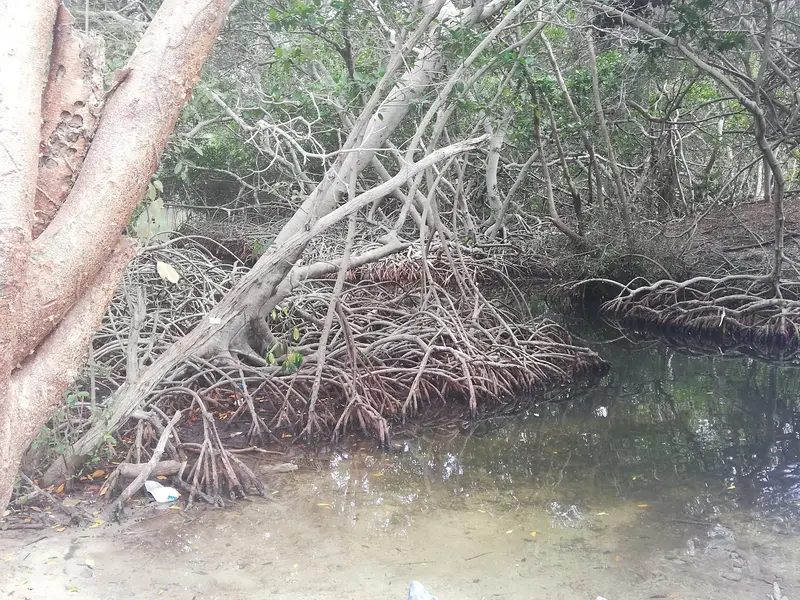
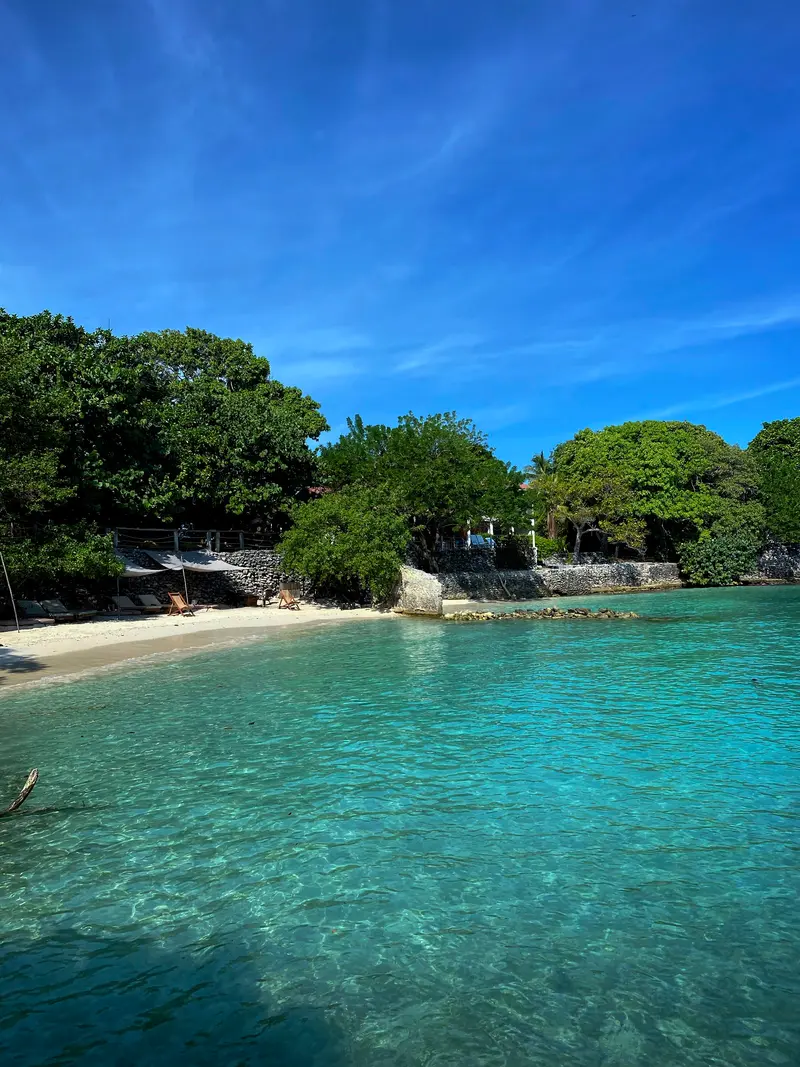
    The archipelago's largest island spans about 200 hectares. Its coast is densely vegetated and fringed with mangroves, with tranquil bays inland. The island offers overnight accommodation.
    Open in Google Maps
    Playa Blanca
    Beach

    2Playa Blanca

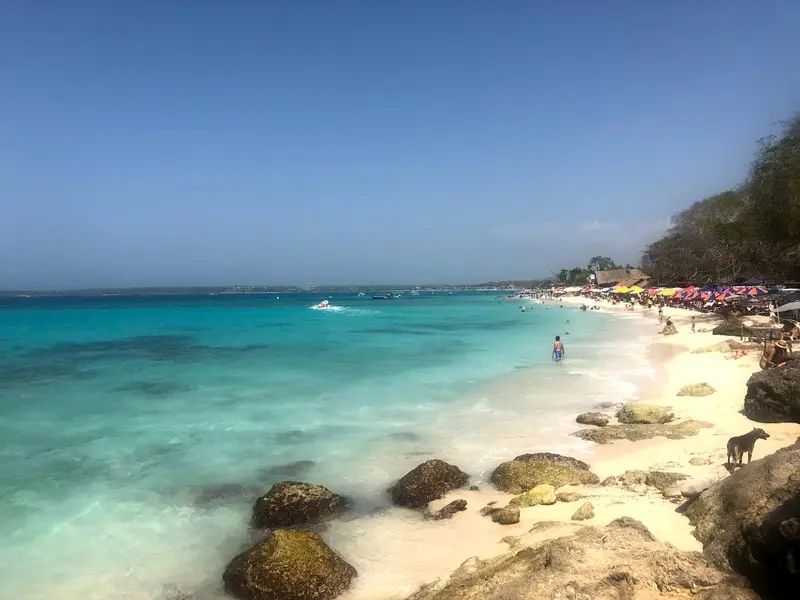
    The long sandy beach on the Barú Peninsula is one of the most famous beaches near Cartagena and a stop for many island tours. Unlike the islands, you can also reach it by land, via the bridge to Barú, in about one and a half to two hours. On weekends and during peak season, it gets very crowded.
    Open in Google Maps
    Mangrove Tunnel
    Attraction

    3Mangrove Tunnel

    The larger islands have mangrove areas with narrow channels and calm bays inland. Ask at your accommodation on Isla Grande if they rent kayaks or SUPs.
    Open in Google Maps

    Restaurants in Islas del Rosario

    Food & Drink on the Islas del Rosario

    The islands off Cartagena do not have their own unique cuisine; instead, Caribbean fish is enjoyed on the beach. Lunch is typically included in most day tours, with the menu varying by provider.

    Pescado frito con arroz de coco

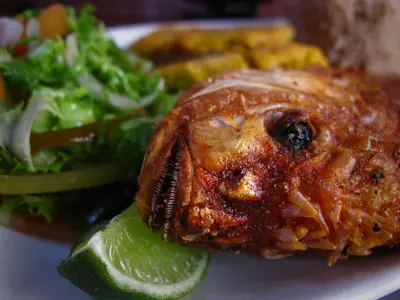
    Whole fried fish with coconut rice, patacones, and salad is the typical lunch on island excursions. Many providers also serve yuca.
    Mojarra frita

    Mojarra frita

    Fried Mojarra is a typical dish of the coast. On tours that stop at Playa Blanca on Barú, it's frequently offered as a choice.

    Consomé de pescado

    Klare Fischbrühe, die manche Touranbieter als Vorspeise zum Mittagessen reichen. Danach gibt es oft eine Süßspeise von den Inseln.

    National Park & Reefs

    The Parque Nacional Natural Corales del Rosario y San Bernardo was established in 1977 and covers approximately 120,000 hectares, predominantly marine area. It protects coral reefs, seagrass beds, mangroves, and beaches.Behavior: Bring a reusable bottle and stick to the permitted activities.

    Arrival and Fees

    Boat: The authorized pier for passenger boats is Muelle La Bodeguita in Cartagena. The crossing takes approximately 45 minutes to one and a half hours, depending on the boat and destination.Excursion Types: Organized tours including boat trip, food, snorkeling; public boats to specific sectors; or private charters.Park Fee: In 2026, National Park entry costs 13,500 COP, 11,000 COP for the San Bernardo sector. A port fee applies at the pier; inquire with tours if both are included.By Land to Playa Blanca: Via the bridge near Pasacaballos, you can reach Barú by car or bus and mototaxi; allow 1 to 2 hours.Insurance: Accident and assistance insurance is mandatory for Barú and the Islas del Rosario. Without a policy, disembarking on the islands is not allowed.

    Accommodations in Islas del Rosario

    Find perfect stay in Islas del Rosario

    Booking.com* (Affiliate link)
    Search Hotels
    Agoda* (Affiliate link)
    Search Hotels
    Airbnb
    Vacation Rentals

    * Affiliate link: if you book through it, we earn a small commission. The price stays the same for you.
    Nearby

    Cartagena

    Cartagena

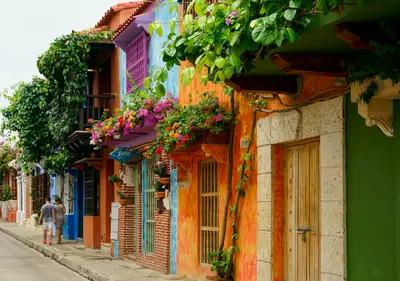
    Cartagena de Indias is the most famous city on Colombia's Caribbean coast and, with around a million inhabitants, the capital of the Departamento Bolívar. You come for the walled colonial city, which, along with its port and fortifications, has been a UNESCO World Heritage site since 1984. Within the walls are the neighborhoods San Pedro and San Diego; directly in front is the lively Getsemaní with street art and bars.
    Cartagena & Bolívar

    Cartagena & Bolívar

    The region encompasses the Caribbean coast around Cartagena de Indias and the hinterland of the Departamento Bolívar up to the Río Magdalena. You come for Cartagena's walled old town, the coral reefs of the Islas del Rosario, and the colonial city of Mompox, both of which are UNESCO World Heritage sites.
    Santa Cruz de Mompox

    Santa Cruz de Mompox

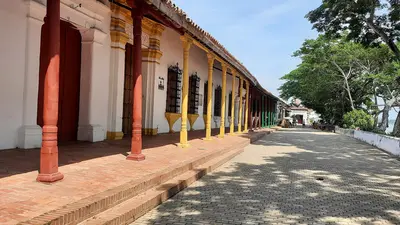
    Santa Cruz de Mompox is a colonial town on the Río Magdalena, about 250 kilometers southeast of Cartagena. You go for its old town with churches and river promenade, a UNESCO World Heritage site since 1995, and its filigree workshops. The town has nearly 50,000 inhabitants, and its quiet center is easy to explore on foot.
    Santa Marta

    Santa Marta

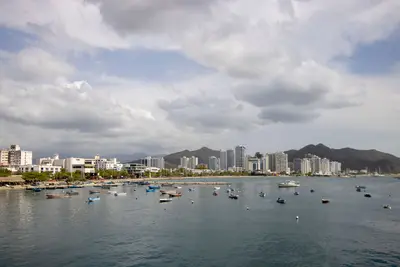
    Santa Marta is the capital of the Magdalena Department on the Caribbean coast and Colombia's oldest surviving city, founded in 1525 by Rodrigo de Bastidas. You come here as a starting point for Tayrona National Park, Minca, and the Ciudad Perdida. The city has around half a million inhabitants; highlights include the colonial center with the Gold Museum, as well as the beach districts of Taganga and El Rodadero.
    Minca

    Minca

    Minca is a small mountain village in the foothills of the Sierra Nevada, about 45 minutes from Santa Marta. You come for waterfalls to swim in, coffee farms, birdwatching, and hikes with views over the coast. The village has fewer than 1,000 inhabitants and today thrives mainly on hostels and lodges.

    Sources & method

    • Photos: Wikimedia Commons, Google Maps. Each photo carries its credit.
    • Place data such as addresses and ratings comes from Google Maps.
    • The content is based on web research from public, traceable sources. How the content is made · The role of AI