Fernweh: Home
    ExploreTravel GuidesPlan a tripMy tripLast visited
    de|en
    All Places & RegionsAll highlightsAbout FernwehFAQPrivacy PolicyImprint
    ExploreTravel GuidesPlan a tripMy tripLast visited
    • Neighborhoods & highlights
    • Recommendations
    • Walking tours
    • Eat & drink
    • Food culture
    • Culture
    • Getting around
    • Accommodation
    • Plan trip
    • Nearby
    Santa Cruz de Mompox
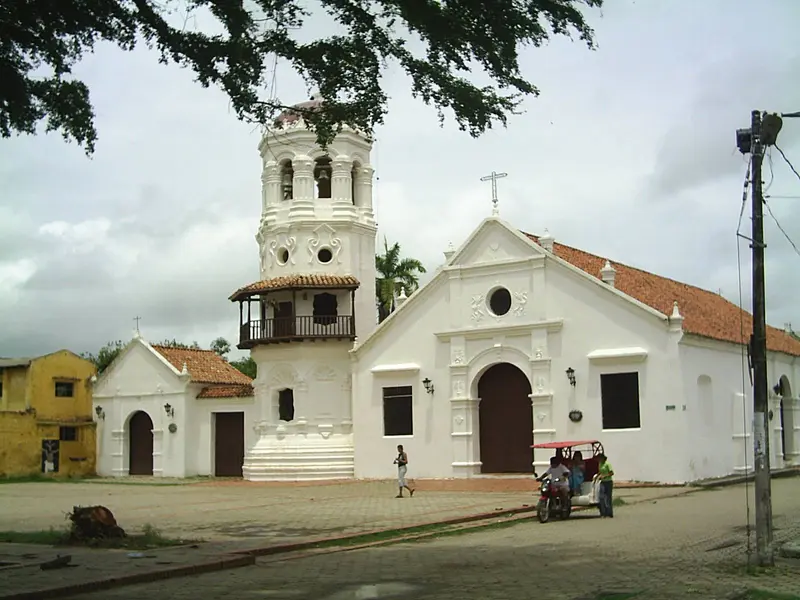
    GKantaris / Wikimedia Commons / CC BY-SA 4.0

    Colombia

    Santa Cruz de Mompox

    City

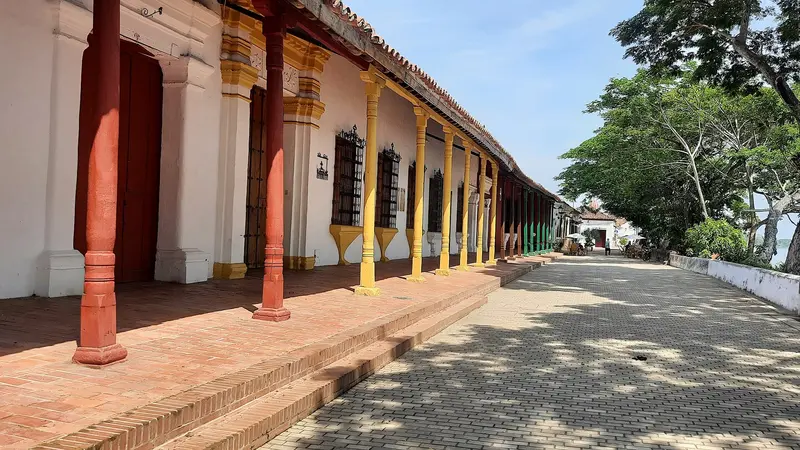
    Santa Cruz de Mompox is a colonial town on the Río Magdalena, about 250 kilometers southeast of Cartagena. You go for its old town with churches and river promenade, a UNESCO World Heritage site since 1995, and its filigree workshops.

    by Felix Gillen

    1. Home
    2. Destinations
    3. Colombia
    4. Cartagena & Bolívar
    5. Santa Cruz de Mompox
    Santa Cruz de Mompox is a colonial town on the Río Magdalena, about 250 kilometers southeast of Cartagena. You go for its old town with churches and river promenade, a UNESCO World Heritage site since 1995, and its filigree workshops. The town has nearly 50,000 inhabitants, and its quiet center is easy to explore on foot.

    Sights in Santa Cruz de Mompox

    Discover the most important sights and attractions
    Iglesia de San Francisco
    Church

    1Iglesia de San Francisco

    Kirche und Kloster der Franziskaner gehen auf das 16. Jahrhundert zurück. Von der Plaza de San Francisco starten auch Bootstouren auf dem Fluss.
    Open in Google Maps
    Museum of Religious Art
    Museum

    2Museum of Religious Art

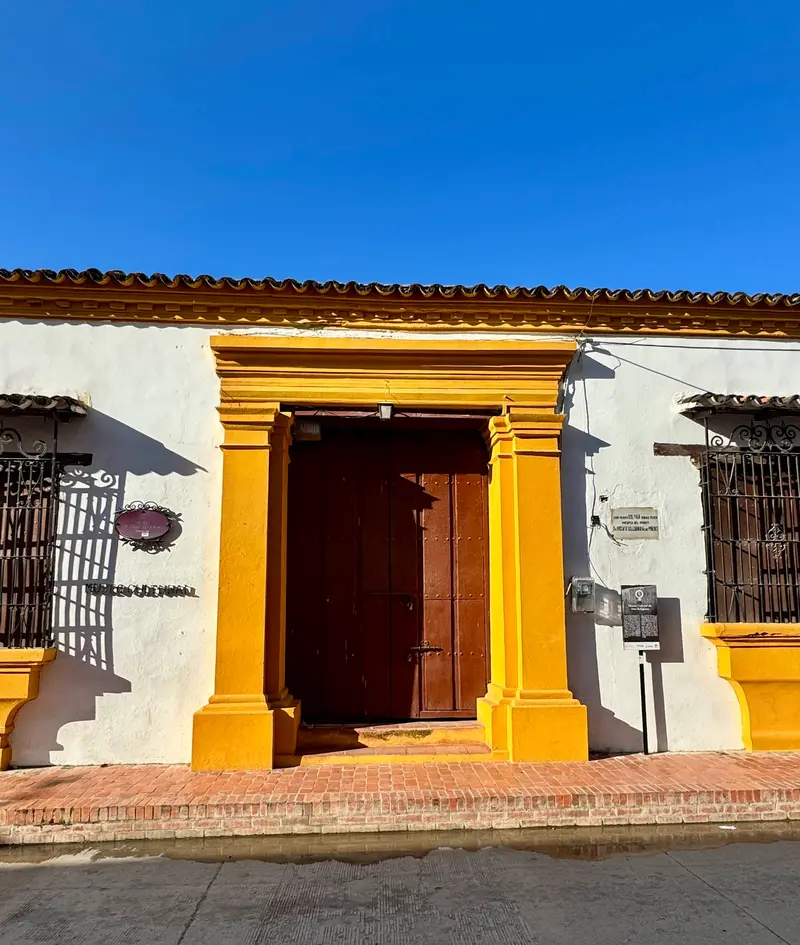
    The museum, housed in a colonial building, displays religious jewelry and gold and silver artifacts, including an 18th-century golden monstrance. According to a 2025 report, the building requires renovation; please check current opening hours before your visit.
    Open in Google Maps
    Church of Saint Barbara

    3Church of Saint Barbara

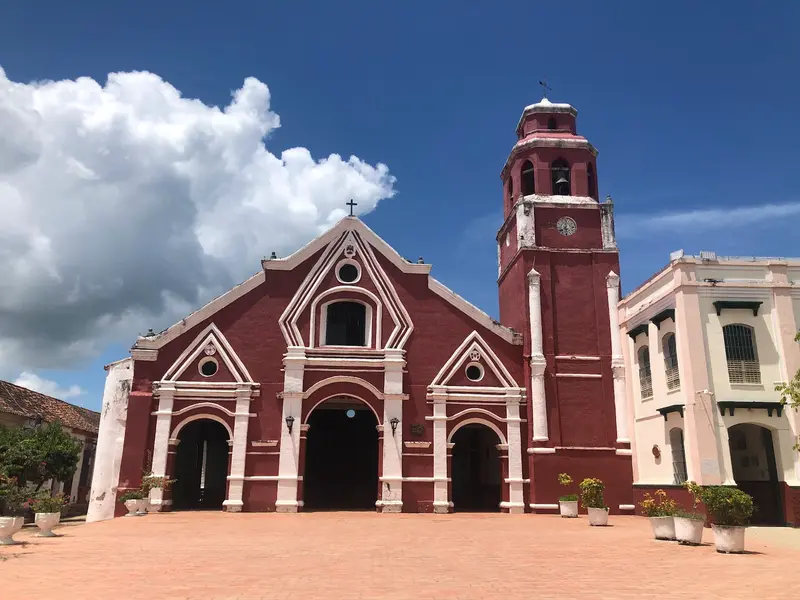
    The 1613 church, located directly on the river, is the city's most photographed landmark. Its eye-catching octagonal yellow-red bell tower is in Hispano-Moorish Baroque style. Inside, gilded altars await.
    Open in Google Maps

    City walks in Santa Cruz de Mompox

    Curated walking tours through the city's highlights, handpicked by experienced travel journalists.

    Old Town Tour by the Río Magdalena

    Der Rundgang beginnt an der Iglesia de Santa Bárbara am Fluss und führt durch die Altstadt über das Museo de Arte Religioso und die Iglesia de Santo Domingo zum Cementerio Municipal. Er endet an der Plaza de la Concepción an der Albarrada, der Uferstraße am Río Magdalena. Die Strecke ist rund 2 km lang, rechne mit anderthalb bis zwei Stunden, wegen der Hitze am besten früh am Morgen oder am späten Nachmittag.

    Open in Google Maps
    Stops (5)

    Restaurants in Santa Cruz de Mompox

    1

    Ambrosia

    Restaurant in a colonial courtyard in the historic center. The menu blends Colombian and international dishes, including coconut shrimp, ceviche, and Lomo momposino.
    Show on Google Maps

    Food & Drink in Mompox

    Die Kolonialstadt am Río Magdalena hat eine eigene, über Generationen gepflegte Küche. Ihre Spezialitäten sind Käse, geräucherte Würste, kandierte Früchte und Fruchtweine.

    Queso de capa

    A fresh cheese from fermented cow's milk, similar to mozzarella, and Mompox's best-known product. It also comes filled with guava paste.

    Lemon dessert

    Limes, slow-cooked for hours in syrup. The preparation process extends over two days.

    Butifarra momposina

    Smoked, lightly spicy sausage, its meat hand-chopped, cased, cooked, and smoked for five hours. 2024 Sabor Barranquilla named it the Caribbean's best Butifarra.

    History and Arts & Crafts

    The city was founded around 1540 by Juan de Santa Cruz and was an important stopover on the river route between the interior and Cartagena. Simón Bolívar is credited with the phrase: "Si a Caracas debo la vida, a Mompós debo la gloria."Filigrana momposina: Jewelers craft fine gold and silver threads into jewelry, a technique from the colonial era. You can watch and buy directly in many workshops.Semana Santa: The Holy Week processions with candles and flowers lead to six churches and one chapel.Jazz: The Festijazz Mompox takes place in early September, in 2026 from September 3rd to 5th.

    Getting There & Around

    Bus from Cartagena: Direct buses (e.g., Unitransco) depart from the bus terminal; according to timetable portals, the journey takes approximately 5.5 to 6.5 hours. Check timetables in advance.Road: The 2.3 km long Puente de la Reconciliación connects Yatí near Magangué with Bodega; the route to Mompox is therefore overland.Alternative: Bus to Magangué, by chalupa across the river to Bodega, and further by minibus.Plane: The small San Bernardo airport is served by SATENA with a few weekly direct flights from Medellín.On-site: Explore the center on foot; boat tours into the wetlands depart from the riverbank.Check the current UK FCDO travel advice before your trip.

    Accommodations in Santa Cruz de Mompox

    Find perfect stay in Santa Cruz de Mompox

    Booking.com* (Affiliate link)
    Search Hotels
    Agoda* (Affiliate link)
    Search Hotels
    Airbnb
    Vacation Rentals

    * Affiliate link: if you book through it, we earn a small commission. The price stays the same for you.

    Plan your trip to Santa Cruz de Mompox

    Save places, build a route and plan your city trip, all in one place.

    1. 1
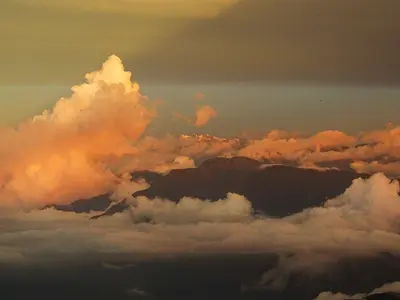
      Sunrise over alpine peaks and a sea of clouds
      1234

      Round trip

      12 days · 4 stops

      Saved

      Pick a route

      Pick a ready-made one or save places and plan your own.

      Open bookmarks
    2. 2

      Trip to Santa Cruz de Mompox

      Live
      • 1Iglesia de San Francisco3 days
      • 2Museum of Religious Art4 days
      • 3Church of Saint Barbara5 days
      Budget

      Plan your trip

      The planner sorts stops, days and budget. Plan together in real time.

      Start trip planning
    3. 3
      9:41 No signal
      Santa Cruz de Mompox
      Available offline

      Use it on the road

      Download the guide to your phone and use it on site, even offline.

    Nearby

    Cartagena

    Cartagena

    Cartagena de Indias is the most famous city on Colombia's Caribbean coast and, with around a million inhabitants, the capital of the Departamento Bolívar. You come for the walled colonial city, which, along with its port and fortifications, has been a UNESCO World Heritage site since 1984. Within the walls are the neighborhoods San Pedro and San Diego; directly in front is the lively Getsemaní with street art and bars.
    Cartagena & Bolívar

    Cartagena & Bolívar

    The region encompasses the Caribbean coast around Cartagena de Indias and the hinterland of the Departamento Bolívar up to the Río Magdalena. You come for Cartagena's walled old town, the coral reefs of the Islas del Rosario, and the colonial city of Mompox, both of which are UNESCO World Heritage sites.
    Islas del Rosario

    Islas del Rosario

    The Islas del Rosario are an archipelago of around 28 small coral islands southwest of Cartagena. They belong to the Corales del Rosario y San Bernardo National Park, which you visit from Cartagena for snorkeling, diving, and beach days. You can only reach the islands by boat, usually as a day trip combined with the Barú Peninsula and Playa Blanca.
    Santa Marta & Sierra Nevada

    Santa Marta & Sierra Nevada

    The region around Santa Marta connects the Caribbean coast with the Sierra Nevada de Santa Marta, whose highest peak is only about 42 kilometers from the sea. You travel here for the bays of Tayrona National Park, the mountain village of Minca, the trek to Ciudad Perdida, and the beach town of Palomino. Santa Marta is the starting point for all these destinations.
    Ciudad Perdida

    Ciudad Perdida

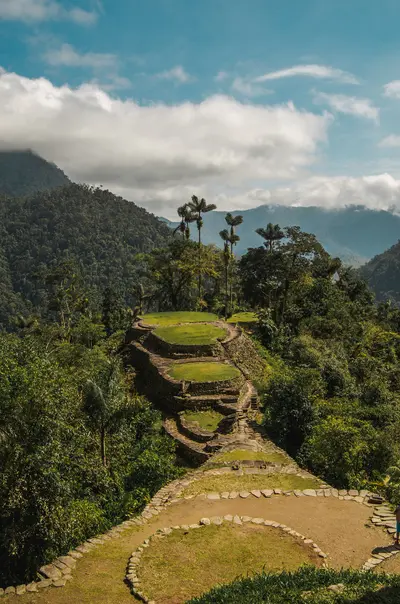
    Ciudad Perdida, called Teyuna by the indigenous peoples, is a Tayrona settlement in the Sierra Nevada rainforest, accessible only via a multi-day trek from Santa Marta. You come for the terraced structures at 900 to 1,300 meters and the journey through forests and river valleys. The city originated around the 8th century and was explored by archaeologists in 1976.

    Sources & method

    • Photos: Wikimedia Commons, Google Maps. Each photo carries its credit.
    • Place data such as addresses and ratings comes from Google Maps.
    • The content is based on web research from public, traceable sources. How the content is made · The role of AI