Fernweh: Home
ExploreGuideDestinationsMy tripsMy trip
de|en
All Places & RegionsRound tripsNight trains in EuropeAll highlightsAbout FernwehFAQPrivacy PolicyImprint
Download on the App StoreGet it on Google Play
ExploreGuideDestinationsMy tripsMy trip
    • Overview
    • Places in the region
    • Culture
    • Getting around
    • Nearby
    Lofoten

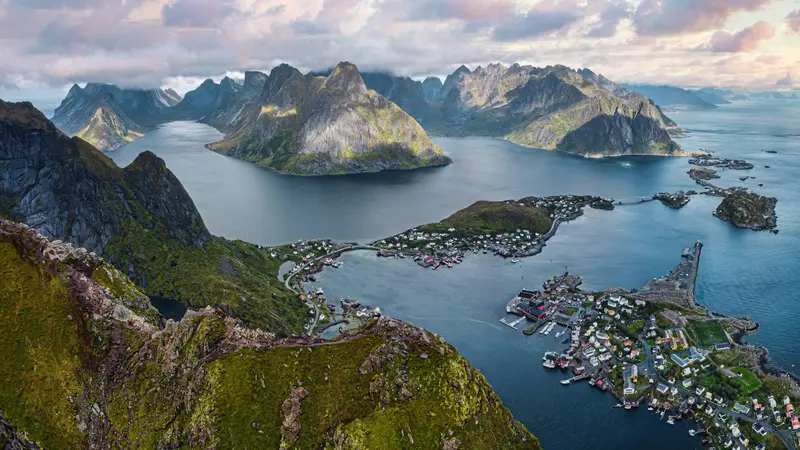
    Photo by Joshua Kettle on Unsplash

    Norway

    Lofoten

    Region

    The Lofoten Islands are an archipelago in Northern Norway, with the town of Leknes situated about 170 kilometers north of the Arctic Circle.

    by Felix Gillen

    1. Home
    2. Destinations
    3. Norway
    4. Lofoten
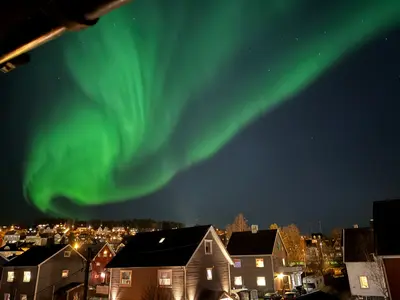
    The Lofoten Islands are an archipelago in Northern Norway, with the town of Leknes situated about 170 kilometers north of the Arctic Circle. The main islands are Austvågøya, Vestvågøya, Flakstadøya, and Moskenesøya, with Værøy and Røst located further south; Svolvær and Leknes hold city status, while Henningsvær, Reine, and Å are well-known villages.For over 1,000 years, cod has been caught here in winter, when the fish migrate from the Barents Sea to spawn. Despite their latitude, the winters are unusually mild. In Svolvær, the Midnight Sun shines from May 25th to July 17th, and in winter, travelers come for the Northern Lights. The E10 connects the main islands to the mainland via bridges and underwater tunnels; ferries operate from Bodø to Moskenes, and airports are located in Leknes and Svolvær. There is no railway; the nearest train stations are Bodø and Narvik.
    Norway travel guideRound trips in NorwayPlan a trip with Lofoten

    Contents

    • Overview
    • Places in the region
    • Culture
    • Getting around
    • Nearby
    The Lofoten extend from Austvågøya (Svolvær) in the northeast to Moskenesøya (Reine and Å) in the southwest. The E10 connects the main islands, allowing you to drive the entire chain. Svolvær (with Kabelvåg, Henningsvær) makes an eastern base; Reine and Nusfjord lie west. Plan multiple days for the islands, booking ferries and accommodation early for summer.

    More places in Lofoten

    Svolvær

    Tobias Bjørkli·Pexels

    Svolvær

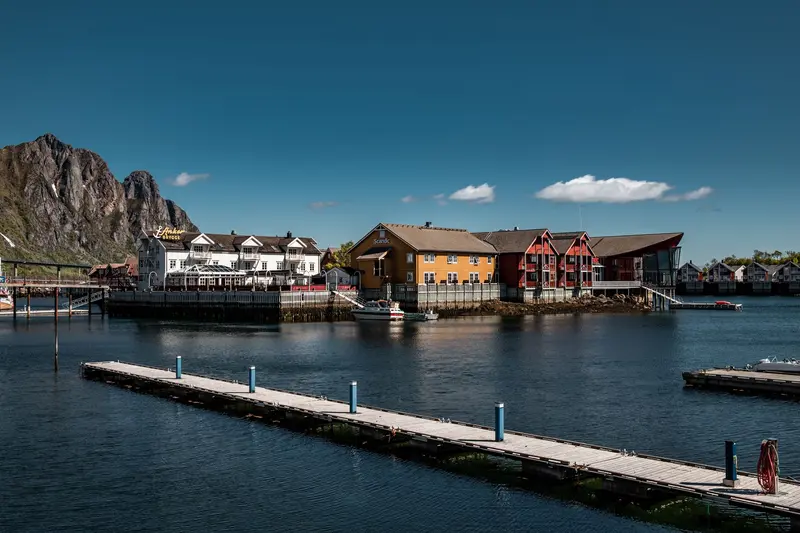
    Svolvær, located on the island of Austvågøya, is one of the two towns in Lofoten and for many, the first stop on the island chain. It serves as a base for exploring eastern Lofoten, with Kabelvåg and Henningsvær just a short distance away.In town, the Lofoten Krigsminnemuseum recounts World War II and the 1941 Lofoten Raid. A few kilometers southwest lies Kabelvåg, the ancient Vágar, considered the cradle of the Lofoten fishery. There you'll find the wooden church Lofotkatedralen, and in Storvågan, the Lofotmuseum, the Lofotakvariet, and the Espolin Gallery.Henningsvær is known for its football pitch on leveled rock at the southern tip of Hellandsøya. Svolvær has an airport in Helle and a Hurtigruten quay; a ferry also runs to Skutvik on the mainland.

    Sights in Lofoten

    Discover the most important sights and attractions

    Attraction

    Reine and Reinebringen

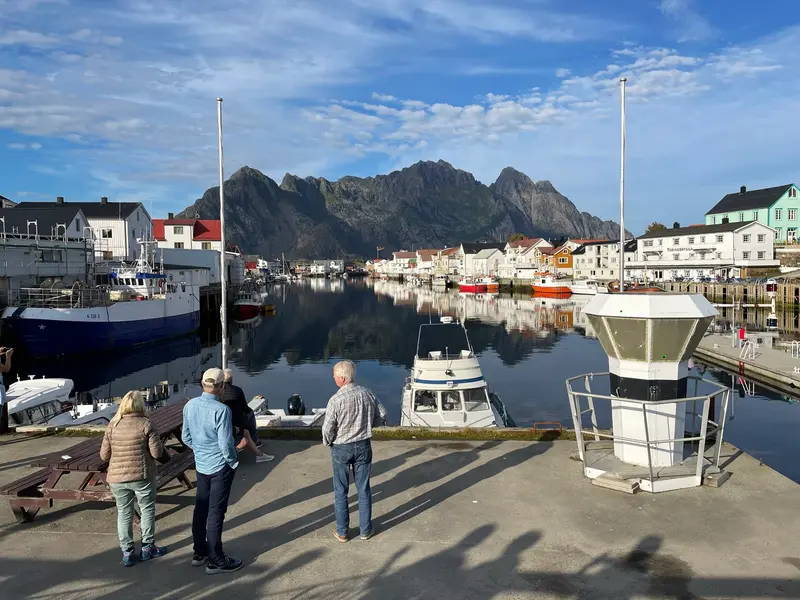
    The fishing village of Reine on Moskenesøya is located directly on the E10 and is one of the most famous motifs of the Lofoten. Above the village towers the 484-meter-high Reinebringen: A stone staircase built from 2016 to 2019 with around 1,970 steps leads up; the round trip takes one to two hours. In autumn, winter, and spring, the ascent is not advised due to rockfall and snow hazards; in summer, the path may be temporarily closed due to work. The neighboring village of Hamnøy is located approximately 1.5 kilometers northeast.
    Open in Google Maps
    Attraction

    Nusfjord

    According to Visit Lofoten, Nusfjord is one of Norway's oldest and best-preserved fishing villages. In its heyday at the beginning of the 20th century, over 1,500 fishermen lived here; a road only reached the village in the 1960s. On display are a smithy, smokehouse, boathouses, a cod liver oil factory, and the typical rorbuer.
    Open in Google Maps
    Museum

    Lofotr Viking Museum

    In Borg on the E10, some 14 km north of Leknes, a chieftain's house site was discovered in 1983: At 83 meters, it is the largest known Viking Age longhouse. The museum, opened in 1995, displays a reconstruction of the house and the excavation finds. In winter, it only opens for pre-registered groups of 15 or more; check seasonal opening times beforehand.
    Open in Google Maps
    Henningsvær

    Vikebe / Wikimedia Commons / CC0

    Attraction

    Henningsvær

    The fishing village of Henningsvær is spread across small islands off Austvågøya, primarily Heimøya and Hellandsøya, and was first mentioned in 1567. Its football pitch on a rocky island gained worldwide fame through drone photos; UEFA filmed a commercial here.
    Open in Google Maps
    Museum

    Å and Lofoten Stockfish Museum

    In Å village, the E10 ends at Lofoten's southwestern tip. Here are two museums: The Lofoten Stockfish Museum, in an old fish receiving station, shows stockfish production from landing to export, and the year-round Norwegian Fishing Village Museum (admission 150 Kroner) depicts village life.
    Open in Google Maps
    Attraction

    Haukland and Uttakleiv Beach

    Der Sandstrand von Haukland liegt an der Nordseite von Vestvågøy, etwa zehn Autominuten von Leknes; der Strand von Uttakleiv schließt sich nordwestlich an. Es gibt ein Servicegebäude mit Café und WC sowie Parkplätze für rund 100 Autos. Von hier starten Wanderungen auf den Mannen (400 m) und den Himmeltinden (931 m).
    Open in Google Maps

    Culture and History

    Birthplace of the Lofoten FisheryOld Vágar near Kabelvåg is considered the birthplace of the Lofoten fishery, and in the Middle Ages, it was the most densely populated area in Northern Norway. The first Lofoten church was probably built here in 1103 under King Øystein, and the first Rorbuer, the fishermen's cabins on stilts, around 1120. Today's Vågan kirke, the Lofoten Cathedral, was consecrated in 1898.Stockfish and Fishing VillagesFor over 1,000 years, cod has been caught in winter when the fish come to the coast to spawn. Nusfjord and the museums in Å show what life in the villages was like.Lofoten Code of ConductVisit Lofoten asks guests to follow a few rules:Only camp in designated areas and keep at least 150 meters away from inhabited houses and cabins.Use public restrooms and take your trash with you.Do not build stone cairns.During summer, open fires are generally prohibited.

    Arrival and on the way

    Getting ThereAirports in Lofoten are Leknes and Svolvær (Helle), primarily served by Widerøe from Bodø. The larger Harstad/Narvik (Evenes) airport is located outside the archipelago and offers direct flights to Oslo and Trondheim.The car ferry from Bodø to Moskenes travels via Værøy and Røst and takes about 3 hours and 15 minutes. Some seats can be reserved for an extra charge, which is recommended from May to September. Other ferries operate from Bognes to Lødingen and from Svolvær to Skutvik.Since 2007, the Lofast road has connected the islands to the mainland without a ferry. Hurtigruten ships stop in Stamsund and Svolvær.On the IslandsThe E10 connects the main islands via bridges and underwater tunnels all the way to Å. There is no train service, but buses run along the E10. You'll be most flexible with a car.Camp with a tent or motorhome only in designated areas, as required by the Lofoten Code of Conduct.

    Nearby

    Vesterålen

    Vesterålen

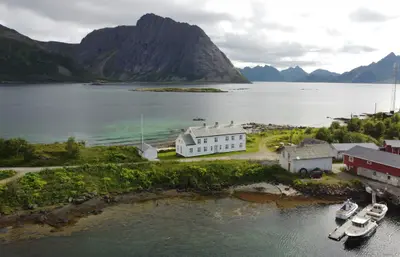
    The Vesterålen are the island group north of the Lofoten, featuring the island Andøya and the town Andenes at its northern tip. You come here for whale safaris from Andenes, the National Tourist Route Andøya, and a quieter landscape than the Lofoten.The tourist route runs 58 kilometers along the outer coast between Andenes and Bjørnskinn, passing Bleik beach. In summer, a ferry connects Andenes with Gryllefjord on Senja. The Vesterålen is also home to Kvitnes Gård, the only restaurant in Northern Norway with a Michelin Star.

    Gjermund Gustavsen·Unsplash

    Nordland

    Nordland

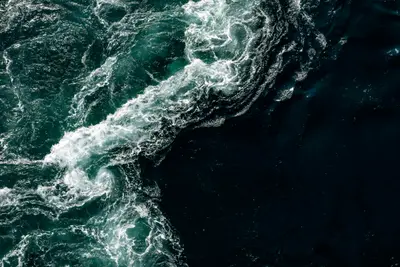
    Nordland is the province between the Arctic Circle and the Lofoten, with the port city Bodø as its center and the mining town Narvik to the north. You come here for the Saltstraumen tidal current, the coastal landscape with islands and fjords, and because Bodø and Narvik are the gateways to the Lofoten.The Nordlandsbahn ends in Bodø after about a 10-hour journey from Trondheim, crossing the Arctic Circle on Saltfjellet along the way. From Bodø, ferries depart for Moskenes in the Lofoten. Narvik is connected to Sweden via the Ofotbanen Ore Line.

    Eirik Soldal·Unsplash

    Bodø

    Bodø

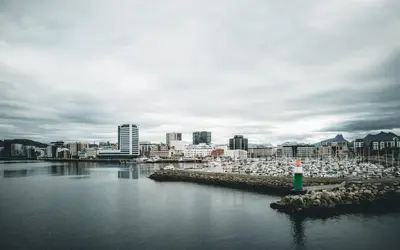
    Bodø is the capital of Nordland county, located just north of the Arctic Circle on a peninsula, and a departure port for ferries to the Lofoten Islands. You come here for the Saltstraumen tidal current, the offshore islands, and a compact city where the airport, city center, harbor, and train station are all within walking distance.After its destruction in World War II, Bodø was rebuilt; in 2024, the city was the European Capital of Culture. Its location by the open sea brings abundant light; in summer, the Midnight Sun shines. According to Visit Norway, it is home to one of the world's largest white-tailed eagle populations.In the city center are the Stormen cultural quarter and the Cathedral, with the Norwegian Aviation Museum on the outskirts. Approximately 33 kilometers away flows the Saltstraumen, and about 40 kilometers north lies the old trading post of Kjerringøy.

    Hans-Joachim Kaiser·Unsplash

    Narvik

    Narvik

    Narvik is the port city in the north of Nordland province, at the ice-free end of the Iron Ore Line from Sweden. You come here for the history of the Battle of Narvik in the Second World War, the train journey on the Ofotbanen, and the local mountain Narvikfjellet with views over the Ofotfjord.The Ofotbanen brings iron ore from the Swedish mines around Kiruna to the port, its Norwegian section to the border is 43 kilometers long. The War Museum tells of the Battle of Narvik, the naval battles and occupation; the Narvik Museum, of its rise to an industrial city.Narvikfjellet's ski resort is expanding for the 2029 Alpine World Ski Championships, with a new gondola set to open in January 2027. Within walking distance of the center are a roughly 5,000-year-old rock carving at Brennholtet and the Arctic Sauna in the harbor.

    Kristian Nordvik·Pexels

    Andenes

    Andenes

    Andenes is located at the northern tip of Andøya island in Vesterålen and is the starting point of the National Tourist Route Andøya. You primarily come here for whale safaris to the sperm whales off the coast and for the drive along the open outer coast.The main whale safari season runs from late May to mid-September, with fewer boats operating in winter. Sightings are not guaranteed. South of Andenes lies Bleik with its long sandy beach and the bird cliff Bleiksøya. Space operations have been conducted on Andøya since 1962; during launches from Andøya Spaceport, the road near Børvågen can be closed for up to 8 hours.The whale center The Whale is under construction, with its opening planned for June 2027. In summer, a ferry operates from Andenes to Gryllefjord on Senja.

    Wolfgang Hägele·CC BY-SA 4.0

    Your next steps

    Lofoten is in Norway. Ways to carry on from here.

    • More in Norway

      Highlights, areas, routes and the best time to travel for all of Norway.

      Norway travel guide
    • Round trips in Norway

      Ready-made routes through Norway, with stops, nights and a map.

      See the routes
    • Plan a trip with Lofoten

      The Guide asks about season, length and who is coming, and suggests a trip with Lofoten.

      Plan the trip

    Sources & method

    • Photos: Wikimedia Commons, Unsplash. Each photo carries its credit.
    • Place data such as addresses and ratings comes from Google Maps.
    • The content is based on web research from public, traceable sources. How the content is made · The role of AI