Fernweh: Home
ExploreGuideDestinationsMy tripsMy trip
de|en
  • Why go
  • Highlights
  • Regions
  • Round trips
  • Local food
  • Good to know
  • Best time to visit
  • Travel advice
Norway

Carsten Steger / Wikimedia Commons / CC BY-SA 4.0, mod.

Travel Guide Norway

Norway stretches along Scandinavia's west coast, extending far north of the Arctic Circle. Its most famous travel destinations are the western fjords, especially Geirangerfjord and Nærøyfjord, both UNESCO World Heritage sites.

by Felix Gillen

Why Go To Norway?

Steep rock walls, which according to UNESCO rise up to 1,400 meters from the sea, make Geirangerfjord and Nærøyfjord the Earth's most impressive fjord landscapes; both are UNESCO World Heritage. Bergen, with its Hanseatic wharf Bryggen, is the gateway to the fjords; Oslo captivates with museums and waterside opera. In the north, the Lofoten await with their fishing villages, and Tromsø with midnight sun in summer and Northern Lights in winter.

Contents

  • Highlights
  • Regions
  • Round trips
  • Local food
  • Good to know
  • Best time to visit
  • Travel advice

Where in Norway?

Pick an area. The highlights, road trips and places below follow your choice.

Highlights in Norway

What you should have seen
Oslo

Photo by Pierre Blaché on Unsplash

Highlight 1 of 4

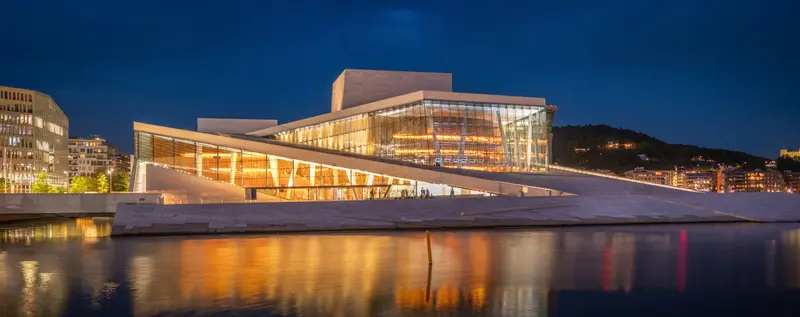
Oslo

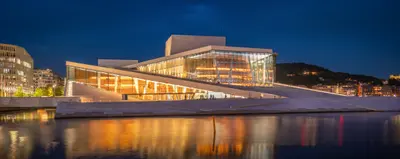
Oslo, the capital of Norway, is located at the inner end of the Oslofjord, surrounded by forested hills, the Marka, and about 40 islands within the city area.

Discover
Preikestolen and Lysefjord

Photo by Mario von Rotz on Unsplash

Highlight 2 of 4

Preikestolen and Lysefjord

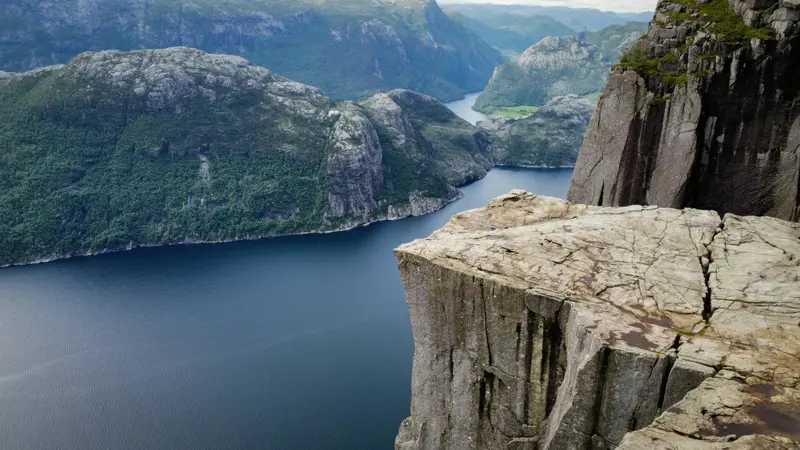
Preikestolen (Pulpit Rock) is a rock plateau 604 meters above Lysefjord, accessible from Stavanger by bus or car. The Hike The hike starts at the Preikestolen Fjellstue car park.

Discover
Bergen

Diego Delso / Wikimedia Commons / CC BY-SA 4.0, mod.
Highlight 3 of 4

Bergen

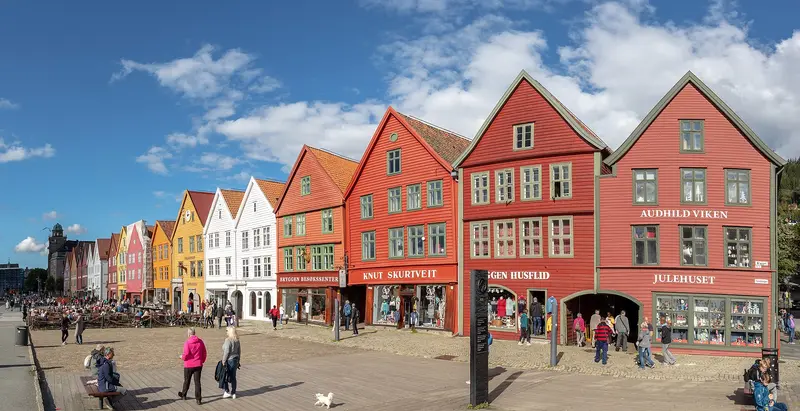
Norway's second-largest city, with almost 300,000 residents, lies on the west coast between seven mountains and is considered the gateway to the fjords.

Discover
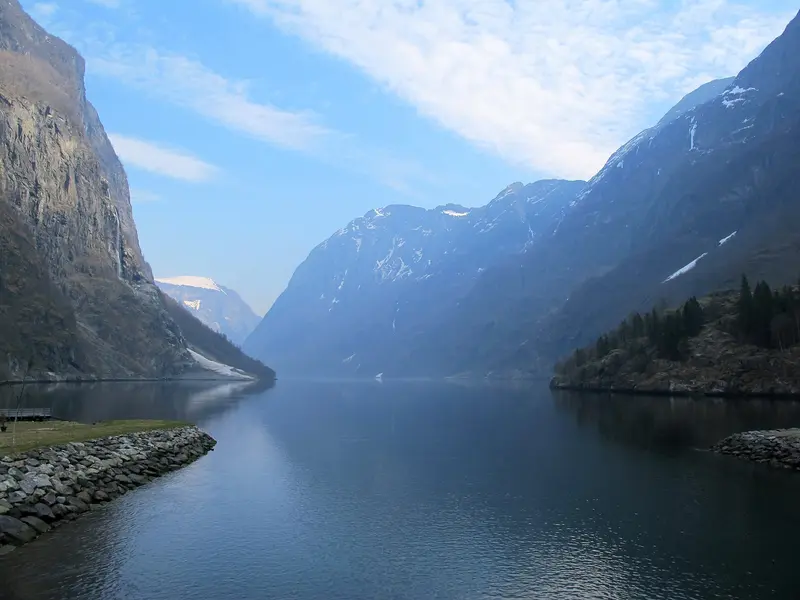
Nærøyfjord and Flåm

Acediscovery / Wikimedia Commons / CC BY 4.0, mod.

Highlight 4 of 4

Nærøyfjord and Flåm

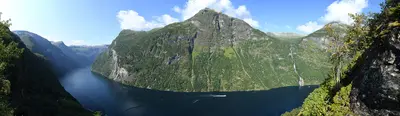
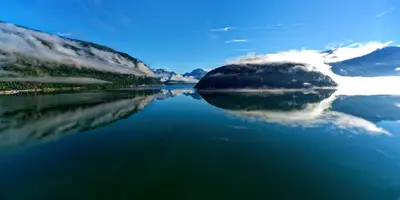
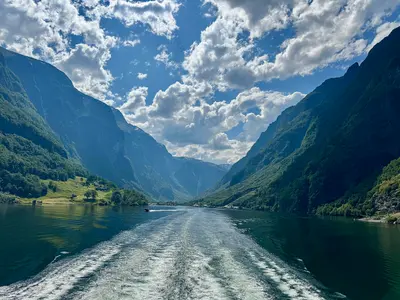
The approximately 17-kilometer Nærøyfjord is an arm of the Aurlandsfjord, which branches off the Sognefjord. At its narrowest, it is only 250 meters wide; since 2005, it has been UNESCO World Heritage.

Discover

More highlights in Norway

Geirangerfjord

Geirangerfjord

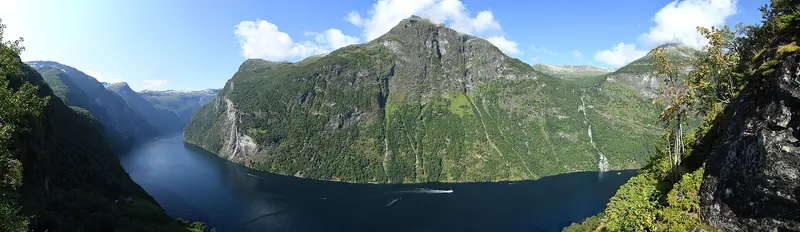
The approximately 15-kilometer-long and up to 1.5-kilometer-wide fjord in the Sunnmøre region branches off from the Sunnylvsfjord and has been a UNESCO World Heritage site since 2005. At its end lies the village of Geiranger, and at its mouth Hellesylt. Famous are the Seven Sisters waterfalls and the opposing Suitor. The fjord is one of Norway's most visited travel destinations.Note: The car ferry from Geiranger to Hellesylt is currently suspended (as of November 2026), because a zero-emission mandate applies on the World Heritage Fjord. Before your trip, check with Fjord1 if it is running again.

Carsten Steger·CC BY-SA 4.0

Lofoten

Lofoten

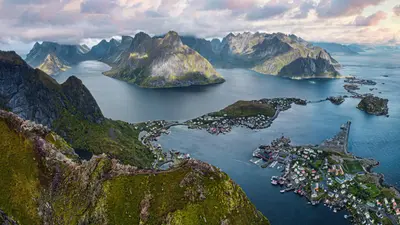
The Lofoten Islands are an archipelago in Northern Norway, with the town of Leknes situated about 170 kilometers north of the Arctic Circle. The main islands are Austvågøya, Vestvågøya, Flakstadøya, and Moskenesøya, with Værøy and Røst located further south; Svolvær and Leknes hold city status, while Henningsvær, Reine, and Å are well-known villages. For over 1,000 years, cod has been caught here in winter, when the fish migrate from the Barents Sea to spawn. Despite their latitude, the winters are unusually mild. In Svolvær, the Midnight Sun shines from May 25th to July 17th, and in winter, travelers come for the Northern Lights.…

Joshua Kettle·Unsplash

Tromsø

Tromsø

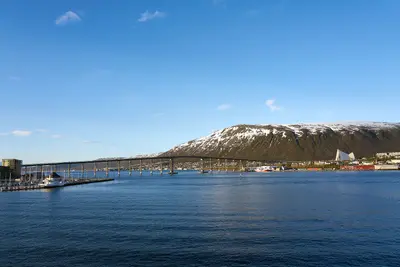
Tromsø, located on the island of Tromsøya, is the administrative center of Troms province and one of the most important destinations for Northern Lights trips in Northern Norway. The city lies within the Aurora Zone, and according to Visit Tromsø, you can see the Northern Lights from late August to early April, though there is no guarantee. From approximately May 18th to July 26th, the sun does not set; due to the surrounding mountains, it is usually visible from May 21st to July 21st. During the Polar Night, from approximately November 26th to January 15th, it does not rise above the horizon. The landmark is the Eismeerkathedrale,…

Virtual-Pano·CC BY-SA 4.0

Honningsvåg & North Cape

Honningsvåg & North Cape

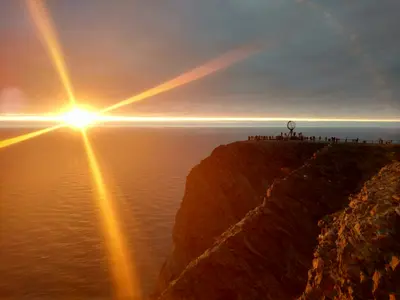
Honningsvåg is the main town on Magerøya island in Finnmark and the gateway to the North Cape. The plateau on the 307-meter-high cliff is about 34 kilometers away via the E69. The town, with some 2,800 inhabitants, is a port of call for the coastal steamers. At the North Cape, the Globe Monument has stood since 1978, next to the Nordkapphallen visitor center. Approximately 1,450 meters further north is the Knivskjellodden headland, which is not accessible by road. In winter, the final kilometers to the North Cape can only be traveled in a convoy behind a snowplow, should snowdrifts occur. Statens vegvesen annually determines the…

Nicola Gambetti·Unsplash

Hardangerfjord

Hardangerfjord

The Hardangerfjord southeast of Bergen is Norway's orchard: Fruit has been cultivated on its shores since the 13th century, with several hundred thousand trees supplying almost half of Norway's fruit. During blossom season, usually from mid-May for three to four weeks, visitors flock to Ulvik, Lofthus, and Utne.Additionally, there are waterfalls like Vøringsfossen and Låtefossen, the Hardangerbrua suspension bridge, and the long day hike to Trolltunga rock formation above Odda. The Hardanger National Tourist Route is 158 kilometers long.

Holger Uwe Schmitt·CC BY-SA 4.0

Åndalsnes and Trollstigen

Åndalsnes and Trollstigen

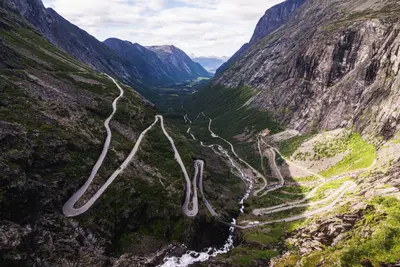
Åndalsnes in Romsdal is the starting point for some of Western Norway's most famous mountain experiences. The Romsdalsgondolen takes seven minutes up Nesaksla, the Romsdalseggen ridge hike starts in Venjesdalen, and to the south, Trollstigen winds its way up the rock face with eleven hairpin bends.The town is accessible by train from Oslo and Trondheim. Trollstigen is part of the National Tourist Route Geiranger to Trollstigen and is only passable during the summer half of the year.

Rino Adamo·Pexels

Trondheim

Trondheim

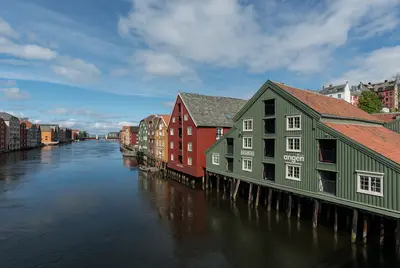
Trondheim, known as Nidaros in the Middle Ages, is the major city of Central Norway and the destination for pilgrims on St. Olavsleden. Above the old town stands Nidaros Cathedral, built over the tomb of St. Olav and the northernmost medieval cathedral. The city was founded in 997 by Olav Tryggvason. Next to the cathedral are the Archbishop's Palace, Erkebispegården, and Stiftsgården, one of Scandinavia's largest wooden buildings, since 1906 the official residence of the King in Trondheim. Crossing the Old City Bridge, you reach Bakklandet with its colorful wooden houses and cobblestones. Above, Kristiansten Fortress from 1681…

DXR·CC BY-SA 4.0

How to plan your trip to Norway

From the guide to the road: here is what comes next.

  1. 1
    Sunrise over alpine peaks and a sea of clouds
    1234

    Round trip

    12 days · 4 stops

    Saved

    Pick a route

    Pick a ready-made one or save places and plan your own.

    Browse routes
  2. 2

    Trip to Norway

    Live
    • 1Oslo3 days
    • 2Preikestolen and Lysefjord4 days
    • 3Bergen5 days
    Budget

    Plan your trip

    The planner sorts stops, days and budget. Plan together in real time.

    Go to My Trips
  3. 3
    9:41 No signal
    Norway
    Available offline

    Carsten Steger / Wikimedia Commons / CC BY-SA 4.0, mod.

    Use it on the road

    Download the guide to your phone and use it on site, even offline.

Regions to Discover

Explore the diverse regions of Norway.
Trøndelag

Trøndelag

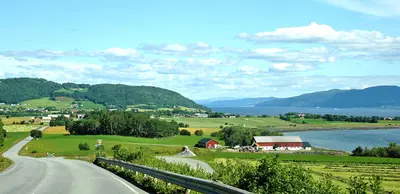
Trøndelag is the region in the middle of Norway around Trondheim, the old pilgrim city with the Nidaros Cathedral. You come here for the medieval cathedral above the tomb of St. Olav, for the wooden houses of Bakklandet, and as a stopover on the way north to the island-rich coast of Helgeland.Trondheim was founded in 997 by Olav Tryggvason. The Nidaros Cathedral is considered the northernmost medieval cathedral and is the end point of the St. Olavsleden pilgrimage. Further north on the Helgeland coast is Brønnøysund with Torghatten, a mountain with a hole straight through it.

Geir Hval·CC BY-SA 4.0

Nordland

Nordland

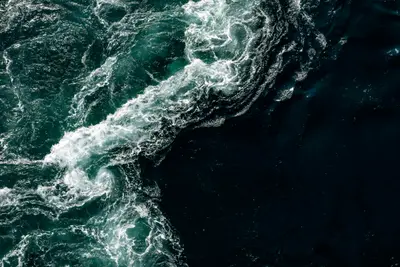
Nordland is the province between the Arctic Circle and the Lofoten, with the port city Bodø as its center and the mining town Narvik to the north. You come here for the Saltstraumen tidal current, the coastal landscape with islands and fjords, and because Bodø and Narvik are the gateways to the Lofoten.The Nordlandsbahn ends in Bodø after about a 10-hour journey from Trondheim, crossing the Arctic Circle on Saltfjellet along the way. From Bodø, ferries depart for Moskenes in the Lofoten. Narvik is connected to Sweden via the Ofotbanen Ore Line.

Eirik Soldal·Unsplash

Sørlandet and Telemark

Sørlandet and Telemark

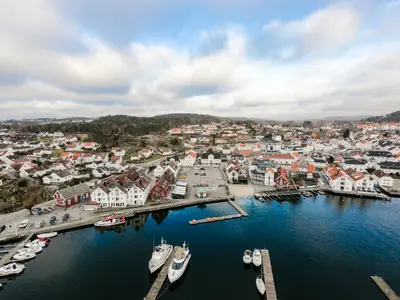
Sørlandet is Norway's south coast between Oslofjord and West Norway, with Kristiansand as its largest city and Lindesnes lighthouse at the mainland's southernmost point. Inland lies Telemark, with the UNESCO World Heritage Site Rjukan to Notodden, the historic Telemark Canal, and the country's largest stave church in Heddal. For many travellers from Germany, Norway begins here: Color Line's fast ferries connect Hirtshals in Denmark with Kristiansand and Larvik. In Kristiansand, the Kunstsilo, a new art museum in an old grain silo, opened in 2024. Telemark tells the story of Norwegian industrialisation. Here, Norsk Hydro used…

Hans Jacob Brekke·Unsplash

East Norway and Gudbrandsdal

East Norway and Gudbrandsdal

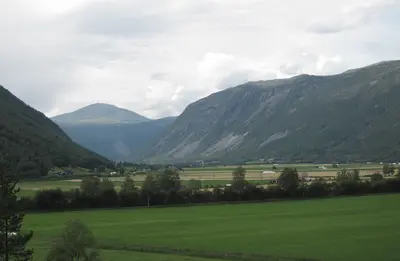
East Norway stretches from the fortress town of Fredrikstad at the mouth of the Glomma, past Lillehammer on Mjøsa, Norway's largest lake, all the way up into the high mountains of Jotunheimen and Dovrefjell. You come here for open-air museums and stave churches, for hikes between the country's highest peaks, and for the old mining town of Røros. The Gudbrandsdal valley extends northwest from Lillehammer, about 200 kilometers north of Oslo. This is the origin of the brown cheese, Gudbrandsdalsost. Jotunheimen is home to Norway's two highest mountains, Galdhøpiggen (2,469 m) and Glittertind (2,464 m), while musk oxen live in…

Erik den yngre·CC BY-SA 4.0

Finnmark

Finnmark

Finnmark is Norway's northernmost county, situated between the North Cape on Magerøya island and the borders with Finland and Russia. You come here for the North Cape, the rock art of Alta, and the vastness of the Arctic, with Northern Lights in winter and the Midnight Sun in summer.Key places include Alta, home to its UNESCO World Heritage site; Hammerfest, featuring the Meridian Column of the Struve Geodetic Arc; Honningsvåg, a gateway to the North Cape; and Kirkenes, near the Russian border, the final stop for the Hurtigruten and Havila coastal voyages.

Maris Uuetoa·Pexels

Vesterålen

Vesterålen

The Vesterålen are the island group north of the Lofoten, featuring the island Andøya and the town Andenes at its northern tip. You come here for whale safaris from Andenes, the National Tourist Route Andøya, and a quieter landscape than the Lofoten.The tourist route runs 58 kilometers along the outer coast between Andenes and Bjørnskinn, passing Bleik beach. In summer, a ferry connects Andenes with Gryllefjord on Senja. The Vesterålen is also home to Kvitnes Gård, the only restaurant in Northern Norway with a Michelin Star.

Gjermund Gustavsen·Unsplash

Sognefjord

Sognefjord

The Sognefjord north of Bergen stretches over 200 kilometers inland and is up to 1,308 meters deep. Side arms like the Nærøyfjord, the Aurlandsfjord, the Lustrafjord and the Fjærlandsfjord branch off from it.Come here for the Stave Churches of Urnes and Borgund, the glacier tongues of Jostedalsbreen, the Stegastein viewpoint above the Aurlandsfjord, and the old tourist town of Balestrand, located where the fjord is widest.

Mark Twisselmann·Unsplash

Norway's Fjords

Norway's Fjords

On the west coast, the great fjords cut deep inland. Geirangerfjord and Nærøyfjord are approximately 120 kilometres apart, together forming the UNESCO World Heritage Site of the West Norwegian Fjords: Their rock walls rise up to 1,400 metres from the sea and plunge 500 metres below sea level, with countless waterfalls cascading down the steep cliffs. Bergen is the main starting point.

Cbliu·CC BY-SA 4.0

Recommended Itineraries

Discover the best routes through Norway.
  • City breaks
  • Rail journeys & panoramic trains
Classic Norway by Train: Oslo, Flåm and Bergen

Classic Norway by Train: Oslo, Flåm and Bergen

A week without a car: You start in Oslo with the Opera, Munch Museum, and the museums on Bygdøy, then travel by Bergensbahn over the mountains to Myrdal and by Flåmsbana down to the Aurlandsfjord. After two nights by the fjord, you return to Myrdal and continue to Bergen, where Bryggen and Fløyen await. Return flight from Bergen.

9 Days
Open jaw
Stops at a glance
  1. 1.Oslo
  2. 2.Nærøyfjord and Flåm
  3. 3.Bergen
View Route Details →

What you eat in Norway

Fårikål

Xabier Cid·public domain

Fårikål

Lamb with Cabbage

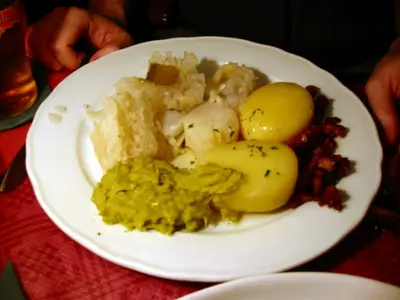
Norway's national dish: Mutton or lamb and white cabbage are layered with peppercorns and salt in a pot, then gently braised until tender. It is served with potatoes. Peak season is autumn, when lamb and mutton are served.
Gravlax

Tiia Monto·CC BY-SA 4.0

Gravlax

Marinated Salmon

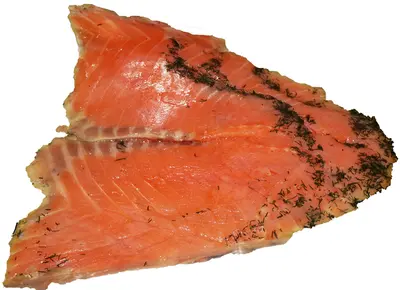
Raw salmon, sweet-and-salty cured and seasoned with dill, pepper, and often aquavit. The name means 'buried salmon'; traditionally, the fish was actually matured in the earth. Smoked salmon is also one of Norway's most important export goods.
Brunost

Svickova·public domain

Brunost

Brown Cheese

A sweet, caramel-hued “cheese” that isn't strictly cheese: It's made from caramelized milk sugar of goat or cow milk. Popular as a spread on bread and in cooking, like in sauces.
Lutefisk

Ennorehling·public domain

Lutefisk

Our Lye Fish

Dried cod (stockfish or clipfish) is soaked in lye and then cooked, a method dating back to pre-refrigeration times. Especially along the coast, Lutefisk remains a traditional Christmas meal to this day.

Meat cakes

Minced Meat Balls

Fist-sized meatballs made from ground beef, onions, salt, and pepper, served with brown gravy (kjøttkakesaus), potatoes, peas or cabbage and carrots, as well as lingonberry jam.

Good to Know

Essential info for your trip planning.

Key facts

Oslo · 5.6 million (2026) · 385,207 km²

Land & People

Land of FjordsWithout Svalbard and Jan Mayen, Norway is approximately 324,000 square kilometers and has a population of…

History & Society

Vikings and the Hanseatic LeagueThe Viking Age lasted from approximately 800 to 1050.

Food & Drink

FishSalmon: Smoked salmon and Gravlaks, cured with sugar, salt, and dill, are the best-known fish specialties.

Practical Info

Health and SafetyFor current and binding travel, safety and health advice, see the UK Foreign, Commonwealth &…

Getting Around

ArrivalColor Line connects Kiel with Oslo and Hirtshals in Denmark with Kristiansand and Larvik.

RV Travel

Overnight Stays in an RVThe "Freedom to Roam" (allemannsretten) permits tent camping in nature, but not for RVs and…

Traveling with Kids

Cities with childrenIn Oslo's Fram Museum on Bygdøy you can step inside the polar ship Fram.

Best Time to Visit

When is the best time for your trip?

May
June
July
August
September
11–16°C·108–248 mm(heavy rain)
For the fjords, May to September is best; June to August are warmest. You can see the Midnight Sun in the North from about mid-May to mid-July. Northern Lights are seen in the North from late September to March, around Tromsø and the Lofoten.
The monthly values are for Bergen (Florida Station, WMO climate normals 1991-2020). Bergen's annual rainfall is around 2,500 millimeters. Oslo is significantly drier but has cold winters with monthly averages of about minus 2 degrees Celsius. In Tromsø in the north, monthly averages from December to March are below zero.

Seasons

Jan
Feb
Mar
Apr
May
Jun
Jul
Aug
Sep
Oct
Nov
Dec
Summer, Fjord season, Midnight Sun in the North
Quieter months, in September first Northern Lights in the North
Dark season, Aurora season in the North
Shoulder Month
Best Time to Visit
▶Show detailed monthly data
MonthTemp (°C)Rain (mm)
January2.6256
February2.3209
March3.8202
April7.2141
May10.7108
June13.6132
July15.6158
August15.4208
September12.6248
October8.6268
November5.3275
December3.1290

Travel advice

Safety, entry requirements and health: the official, up-to-date advice for Norway is published by the UK government on GOV.UK.

Go to GOV.UK

Sources & method

  • Photos: Wikimedia Commons, Unsplash, Pexels. Each photo carries its credit.
  • The content is based on web research from public, traceable sources. How the content is made · The role of AI
Felix at Kuirau Park in Rotorua, New Zealand

Who's behind Fernweh?

Hi, I'm Felix.

I love to travel, and I love planning even more. Fernweh.guide is my attempt at building a really good online travel guide.

About Fernweh

All places in Norway

  • Ålesund
  • Alta
  • Åndalsnes and Trollstigen
  • Andenes
  • Bergen
  • Bodø
  • Brønnøysund
  • Dovrefjell
  • East Norway and Gudbrandsdal
  • Finnmark
  • Fredrikstad
  • Geirangerfjord
  • Hammerfest
  • Hardangerfjord
  • Hellesylt
  • Honningsvåg & North Cape
  • Jotunheimen
  • Kirkenes
  • Kristiansand
  • Kristiansund
  • Lillehammer
  • Lindesnes
  • Lofoten
  • Molde and Atlantic Road
  • Nærøyfjord and Flåm
  • Narvik
  • Nordfjordeid
  • Nordland
  • Norway's Fjords
  • Oslo
  • Preikestolen and Lysefjord
  • Røros
  • Sognefjord
  • Sørlandet and Telemark
  • Stavanger
  • Svolvær
  • Telemark
  • Tromsø
  • Trøndelag
  • Trondheim
  • Vesterålen

More about Norway

  • Best Time to Visit Norway
  • Norway with Kids
  • Norway by RV
All Places & RegionsRound tripsNight trains in EuropeAll highlightsAbout FernwehFAQPrivacy PolicyImprint
Download on the App StoreGet it on Google Play
ExploreGuideDestinationsMy tripsMy trip