Cbliu / Wikimedia Commons / CC BY-SA 4.0, mod.
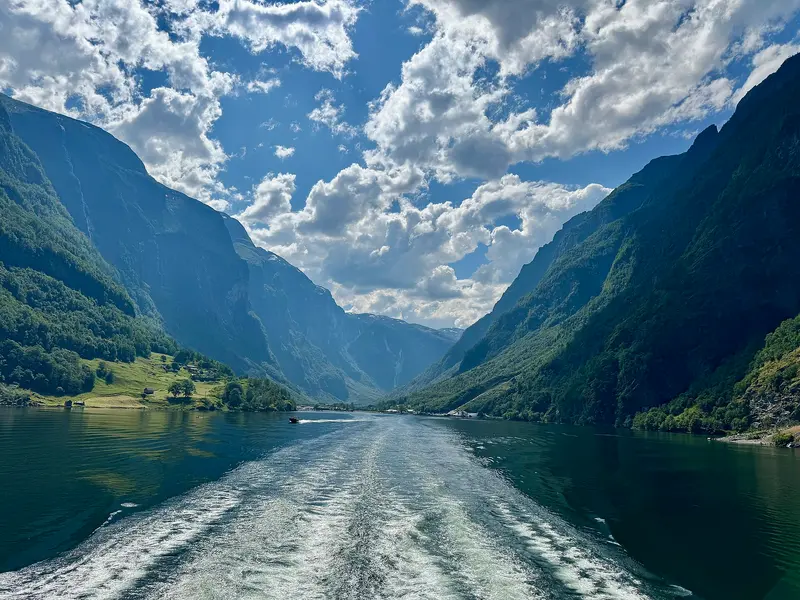
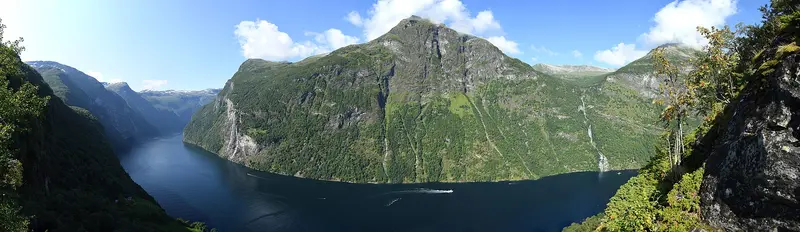
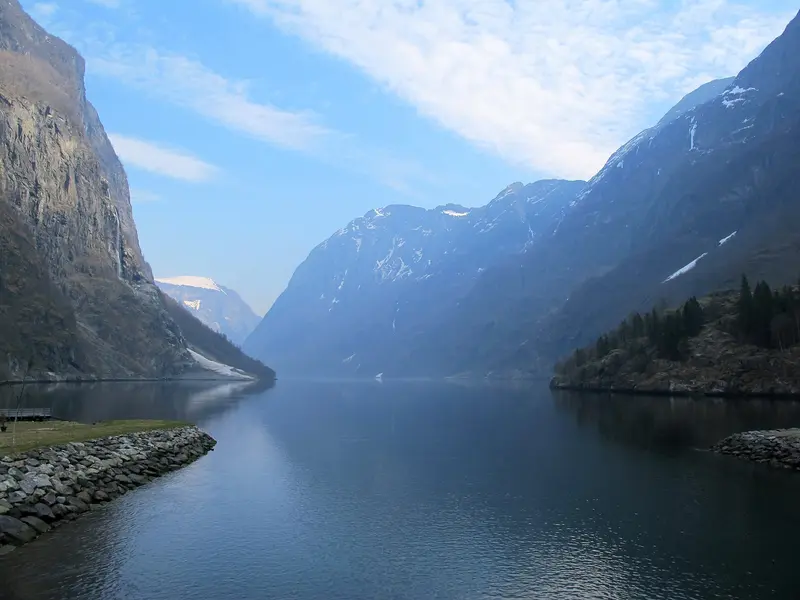
On the west coast, the great fjords cut deep inland. Geirangerfjord and Nærøyfjord are approximately 120 kilometres apart, together forming the UNESCO World Heritage Site of the West Norwegian Fjords: Their rock walls rise up to 1,400 metres from the sea and plunge 500 metres below sea level, with countless waterfalls cascading down the steep cliffs. Bergen is the main starting point.
From south to north, the major fjords line Norway's west coast. Furthest south is Stavanger, your gateway to Lysefjord, home to Preikestolen and Kjerag. North of this, the Hardangerfjord cuts into the land, known for orchards, waterfalls like Vøringsfossen, and the Trolltunga hike.Bergen is the gateway to the fjords. Further north, the over 200-kilometer-long Sognefjord follows, with branches like Nærøyfjord, Aurlandsfjord, Lustrafjord, and Fjærlandsfjord, as well as the glacier tongues of the Jostedalsbreen. Along the Nordfjord lie Nordfjordeid and the Briksdalsbreen in Oldedalen.Still further north, the Geirangerfjord branches off the Sunnylvsfjord, ending at Hellesylt. Beyond it lie the Art Nouveau town of Ålesund, Romsdal (with Åndalsnes and Trollstigen), Molde, and the Atlantic Road to Kristiansund.
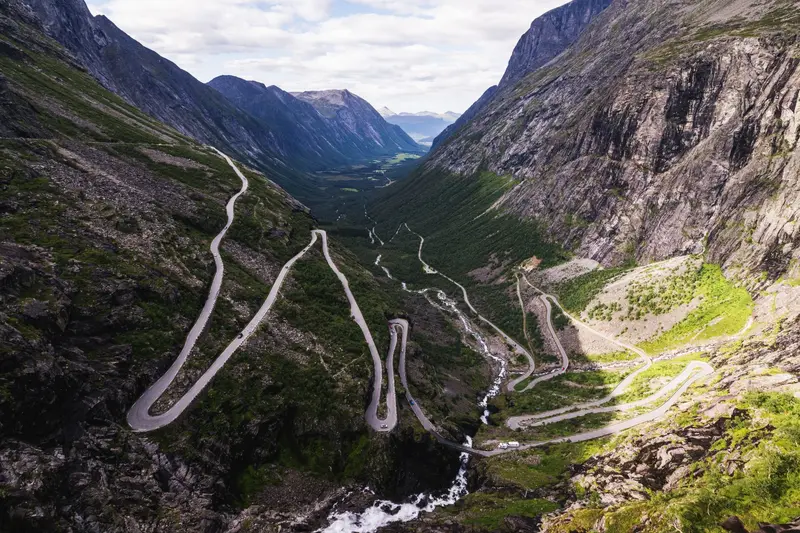
Photo by Rino Adamo on Pexels
Carsten Steger / Wikimedia Commons / CC BY-SA 4.0, mod.
Geir Hval / Wikimedia Commons / CC BY-SA 4.0, mod.
Acediscovery / Wikimedia Commons / CC BY 4.0, mod.
More places in Norway's Fjords
Clementp.frCC BY-SA 4.0
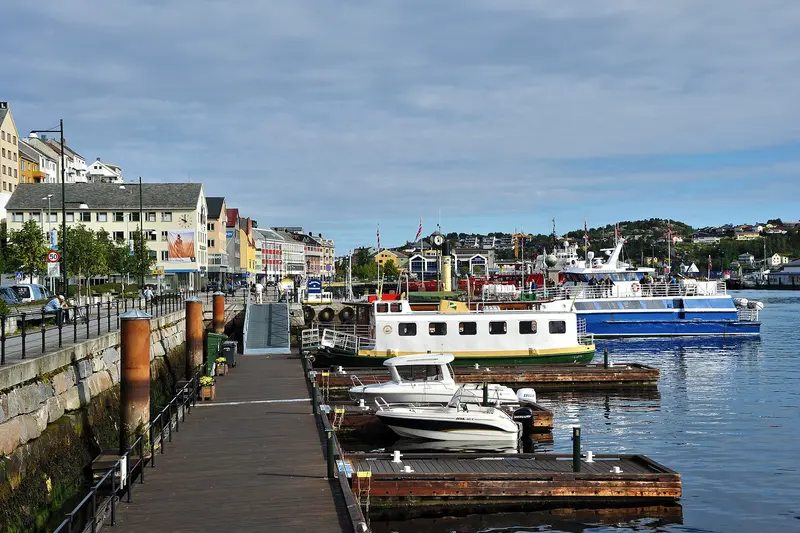
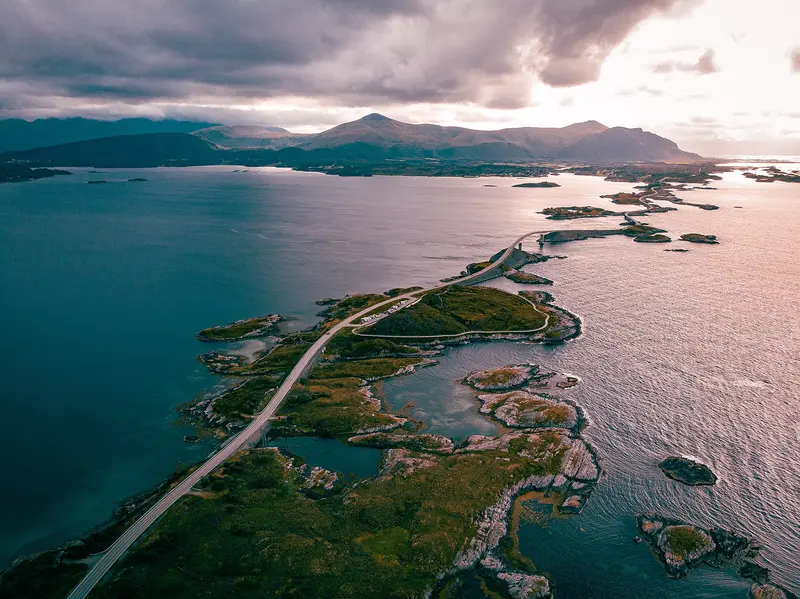
Molde, situated on the Møre og Romsdal coast between Ålesund and Kristiansund, is known as the Rose City. From the local mountain Varden, you can gaze upon 222 peaks, and in July, the city gathers for the Moldejazz jazz festival.North of Molde, you'll find the Atlantic Road. The Atlanterhavsvegen itself stretches for 8,274 meters, while the National Tourist Route from Kårvåg to the fishing village of Bud is 36 kilometers long, passing by scenic rest stops like Eldhusøya and Askevågen.
Holger Uwe SchmittCC BY-SA 4.0
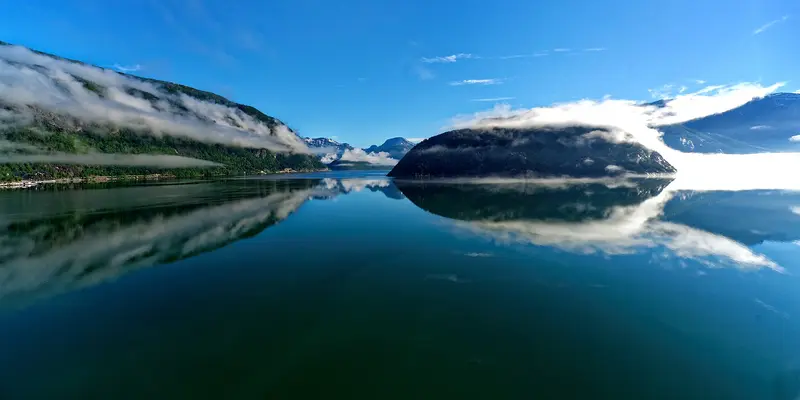
The Hardangerfjord southeast of Bergen is Norway's orchard: Fruit has been cultivated on its shores since the 13th century, with several hundred thousand trees supplying almost half of Norway's fruit. During blossom season, usually from mid-May for three to four weeks, visitors flock to Ulvik, Lofthus, and Utne.Additionally, there are waterfalls like Vøringsfossen and Låtefossen, the Hardangerbrua suspension bridge, and the long day hike to Trolltunga rock formation above Odda. The Hardanger National Tourist Route is 158 kilometers long.
Mark TwisselmannUnsplash
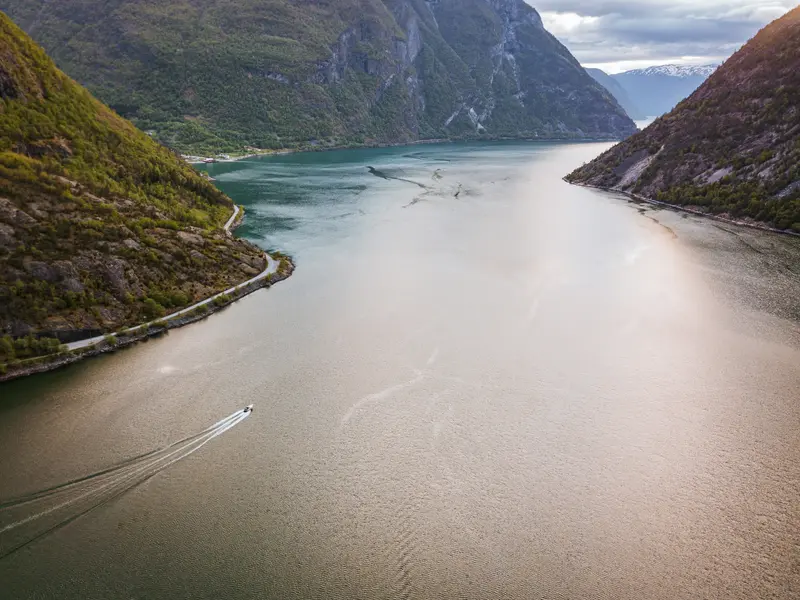
The Sognefjord north of Bergen stretches over 200 kilometers inland and is up to 1,308 meters deep. Side arms like the Nærøyfjord, the Aurlandsfjord, the Lustrafjord and the Fjærlandsfjord branch off from it.Come here for the Stave Churches of Urnes and Borgund, the glacier tongues of Jostedalsbreen, the Stegastein viewpoint above the Aurlandsfjord, and the old tourist town of Balestrand, located where the fjord is widest.
Diego DelsoCC BY-SA 4.0
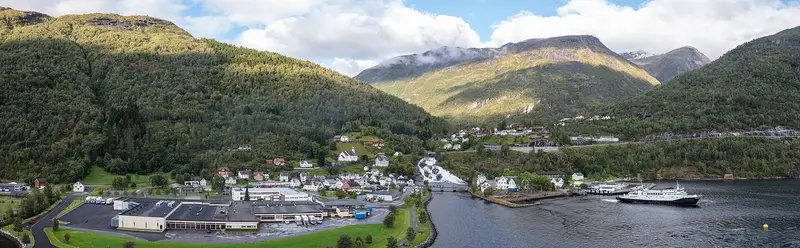
Hellesylt is a small village on the Sunnylvsfjord, where the Geirangerfjord branches off. In the middle of the village, the Hellesyltfossen waterfall plunges between two old bridges, one of the most photographed sights in the area.Until 2026, Hellesylt was the port for the car ferry through the Geirangerfjord. This ferry is currently suspended (as of November 2026); check with Fjord1 before your trip whether it is operating again.
Ramon PeruchoPexels
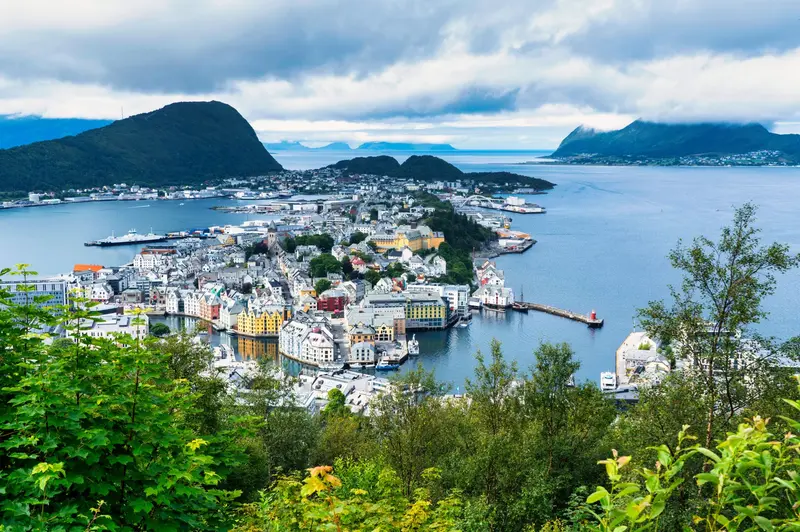
Ålesund on the Sunnmøre coast is known for its Art Nouveau townscape. After the city fire on the night of January 23, 1904, which left over 10,000 people homeless, the city center was largely rebuilt between 1904 and 1907 in the Art Nouveau style, with turrets and spires on the facades.From the City Park, 418 steps lead up to the Fjellstua viewpoint on Aksla. Other attractions include the Jugendstilsenteret in a former pharmacy, the Brosundet canal, the Atlanterhavsparken aquarium, and excursions to Giske Island.
Eloy MartinezUnsplash
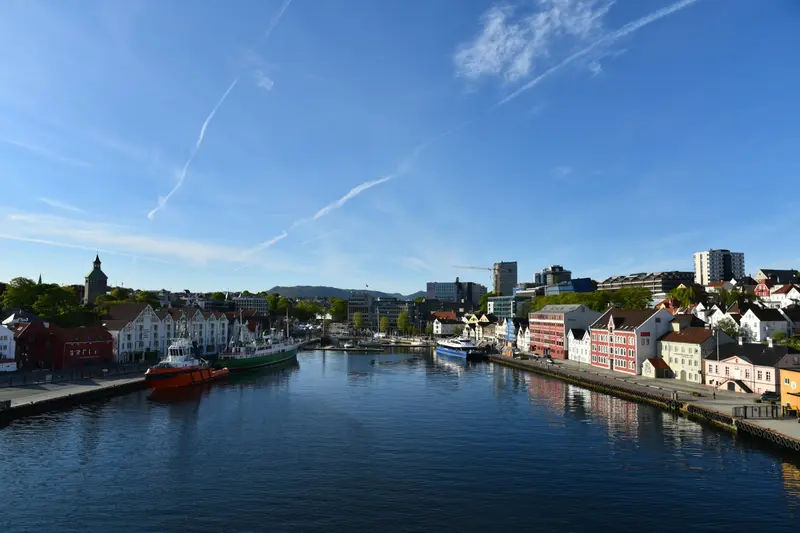
Stavanger on the southwest coast is the starting point for the Lysefjord, with Preikestolen and Kjerag. The city is known as Norway's oil capital, its growth spurred by the discovery of oil in the North Sea in 1969; in 2008, it was a European Capital of Culture alongside Liverpool.By the harbour is Gamle Stavanger with 173 mostly white wooden houses; in total, the wooden city has around 8,000 houses. Also notable are the 12th-century cathedral, the Oil Museum on the harbour promenade, and the colourful Øvre Holmegate.
Mario von RotzUnsplash
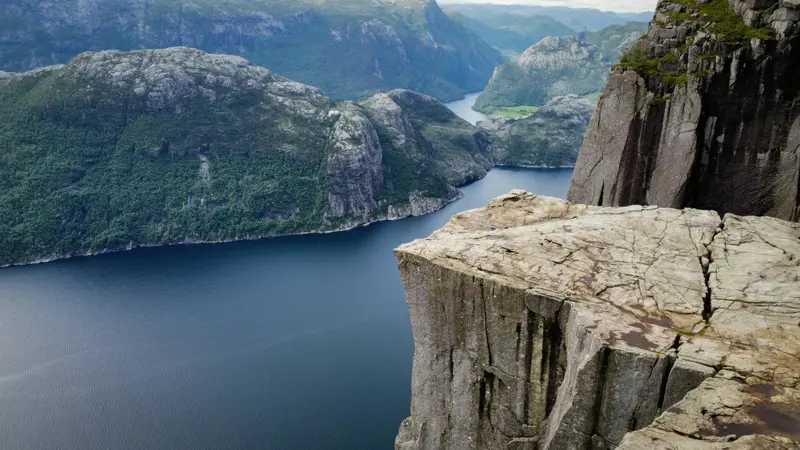
Preikestolen (Pulpit Rock) is a rock plateau 604 meters above Lysefjord, accessible from Stavanger by bus or car.The HikeThe hike starts at the Preikestolen Fjellstue car park. The trail is approximately 3.8 kilometers one way and ascends from about 270 to 604 meters; crossing several hills adds more total elevation gain.The round trip takes approximately four hours. Start early.The tour is possible year-round, with the best conditions from May to October. In snow and ice, the path is significantly more difficult, and sometimes the plateau is inaccessible in winter; a guide is recommended outside the season.Southwest of Lysebotn hangs Kjeragbolten, a boulder suspended over a 984-meter-deep abyss.
NordfjordingCC BY-SA 4.0
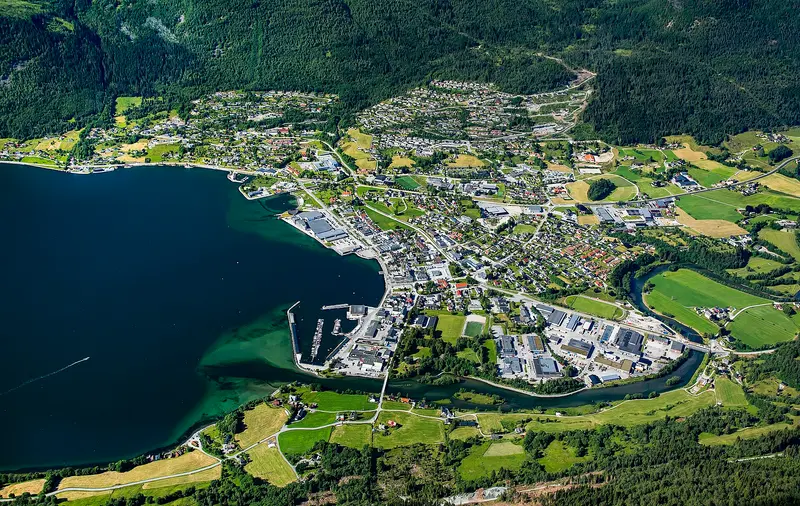
Nordfjordeid is a small town on the Nordfjord. You come here for the Sagastad Viking Centre with its replica of the Myklebust Ship, Norway's largest known Viking ship, whose remains were found in a burial mound in the town.Nordfjordeid is also home to the Norsk Fjordhestsenter, a centre for the Fjord Horse breed.
Diego DelsoCC BY-SA 4.0
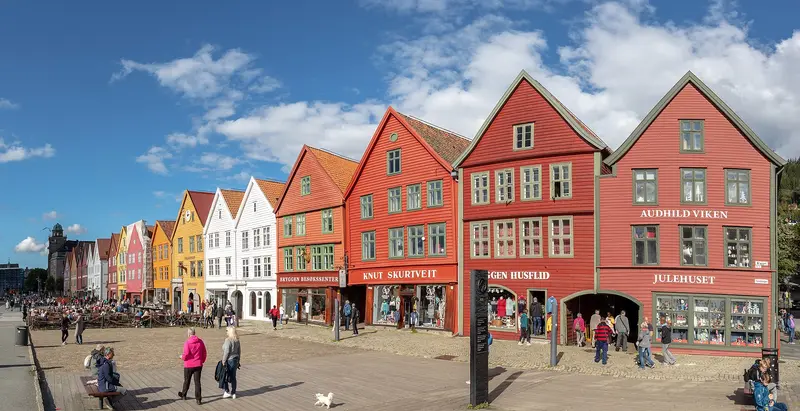
Norway's second-largest city, with almost 300,000 residents, lies on the west coast between seven mountains and is considered the gateway to the fjords. Along the harbor, the colorful wooden houses of the Hanseatic Quay Bryggen, a UNESCO World Heritage site since 1979, are lined up. Beside them, the 13th-century Bergenhus Fortress guards the harbor entrance. The Fløibanen funicular takes you up its local mountain Fløyen in eight minutes. It rains here on over 200 days a year, so rainwear belongs in your luggage.
Culture in Fjord Norway
Stave Churches and VikingsUrnes Stave Church on the Lustrafjord dates back to around 1130 and has been a UNESCO World Heritage site since 1979; the Urnes style is named after its north portal. Borgund Stave Church near Lærdal dates from the late 12th century. In Nordfjordeid, the Sagastad Viking Centre commemorates the Myklebust Ship, Norway's largest known Viking ship.Trade, Hanse and Art NouveauBergen was home to a Hanse trading post; its wharf area, Bryggen, has been a World Heritage site since 1979. Kristiansund thrived on klippfisk from the late 17th century onwards. Ålesund was rebuilt in Art Nouveau style after the city fire of 1904.Fruit and Scenic RoutesFruit has been cultivated at the Hardangerfjord since the 13th century; the blossoming usually begins in mid-May and lasts three to four weeks. Several National Tourist Routes lead through the region, including Hardanger, Aurlandsfjellet, Geiranger to Trollstigen, and Atlanterhavsvegen.
On the Road in Fjord Norway
From Bergen to the FjordsTake the Bergen Railway towards Oslo to Myrdal, then transfer to the Flåm Railway down to Flåm. Boats connect Flåm with Gudvangen, sailing through Aurlandsfjord and Nærøyfjord.The car ferry between Hellesylt and Geiranger is currently suspended (as of November 2026); check with Fjord1 before traveling to see if it's operating again. Geiranger can be reached by road.Emission-Free World Heritage FjordsIn Nærøyfjord, Aurlandsfjord, Geirangerfjord, Sunnylvsfjord, and Tafjord, a zero-emission requirement applies to passenger ships under 10,000 gross tonnage since 2026, and to larger vessels from 2032. A legal dispute is ongoing regarding an exemption for diesel ferries in Geirangerfjord.By CarMany roads are toll roads (AutoPASS), dipped headlights are always mandatory, and the blood alcohol limit is 0.02%.High-altitude mountain roads like Trollstigen or the Dalsnibba toll road are only open during the summer half-year; exact dates depend on snow conditions.
Round trips through this region

Nearby

Your next steps
Norway's Fjords is in Norway. Ways to carry on from here.
More in Norway
Highlights, areas, routes and the best time to travel for all of Norway.
Norway travel guideRound trips with Norway's Fjords
One route passes through Norway's Fjords, with stops, nights and a map.
See the round tripPlan a trip with Norway's Fjords
The Guide asks about season, length and who is coming, and suggests a trip with Norway's Fjords.
Plan the trip