Fernweh: Home
ExploreGuideDestinationsMy tripsMy trip
de|en
All Places & RegionsRound tripsNight trains in EuropeAll highlightsAbout FernwehFAQPrivacy PolicyImprint
Download on the App StoreGet it on Google Play
ExploreGuideDestinationsMy tripsMy trip
    • Overview
    • Places in the region
    • Culture
    • Getting around
    • Round trips
    • Nearby
    St. Gallen and Appenzellerland

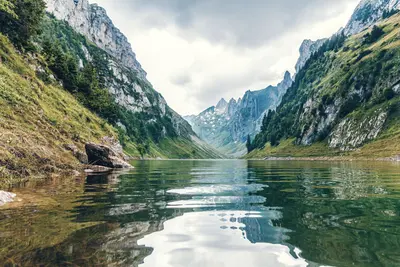
    Photo by Claudio Biesele on Unsplash

    Switzerland

    St. Gallen and Appenzellerland

    RegionCultureUNESCO

    Eastern Switzerland, between Lake Constance and the Alpstein, connects the city of St. Gallen with its UNESCO World Heritage Abbey District and the rural Appenzellerland with painted houses, Landsgemeinde, and mountain railways into the…

    by Felix Gillen

    1. Home
    2. Destinations
    3. Switzerland
    4. St. Gallen and Appenzellerland
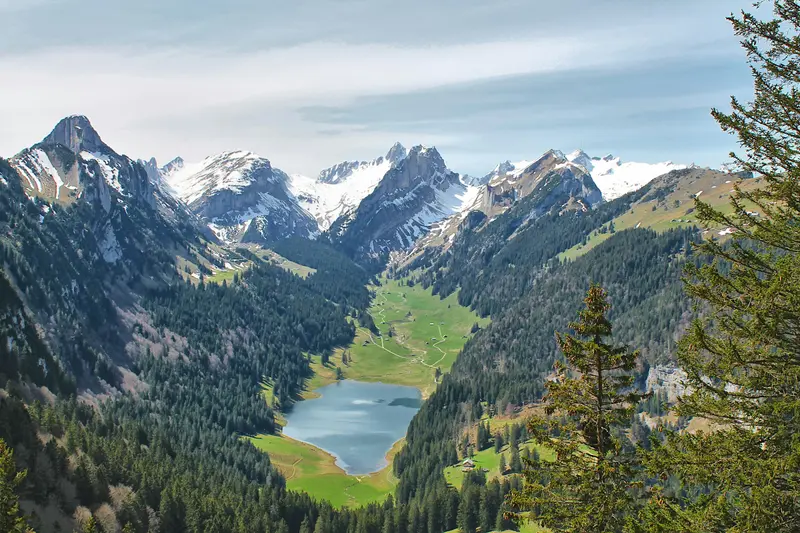
    Eastern Switzerland, between Lake Constance and the Alpstein, connects the city of St. Gallen with its UNESCO World Heritage Abbey District and the rural Appenzellerland with painted houses, Landsgemeinde, and mountain railways into the Alpstein.
    Switzerland travel guideSee the round tripPlan a trip with St. Gallen and Appenzellerland

    Contents

    • Overview
    • Places in the region
    • Culture
    • Getting around
    • Round trips
    • Nearby
    St. GallenThe Abbey District with its Cathedral and Abbey Library has been a UNESCO World Heritage site since 1983 and originated from a hermitage founded in 612. Surrounding it is the Old Town with bay windows and 'Erststockbeizli'.AppenzellerlandAppenzell has a car-free town centre with painted facades, where the Landsgemeinde convenes on Landsgemeindeplatz on the last Sunday in April. Behind it begins the Alpstein with Ebenalp, Wildkirchli, Seealpsee, and Säntis, and according to Switzerland Tourism, the region boasts Switzerland's densest network of hiking trails.
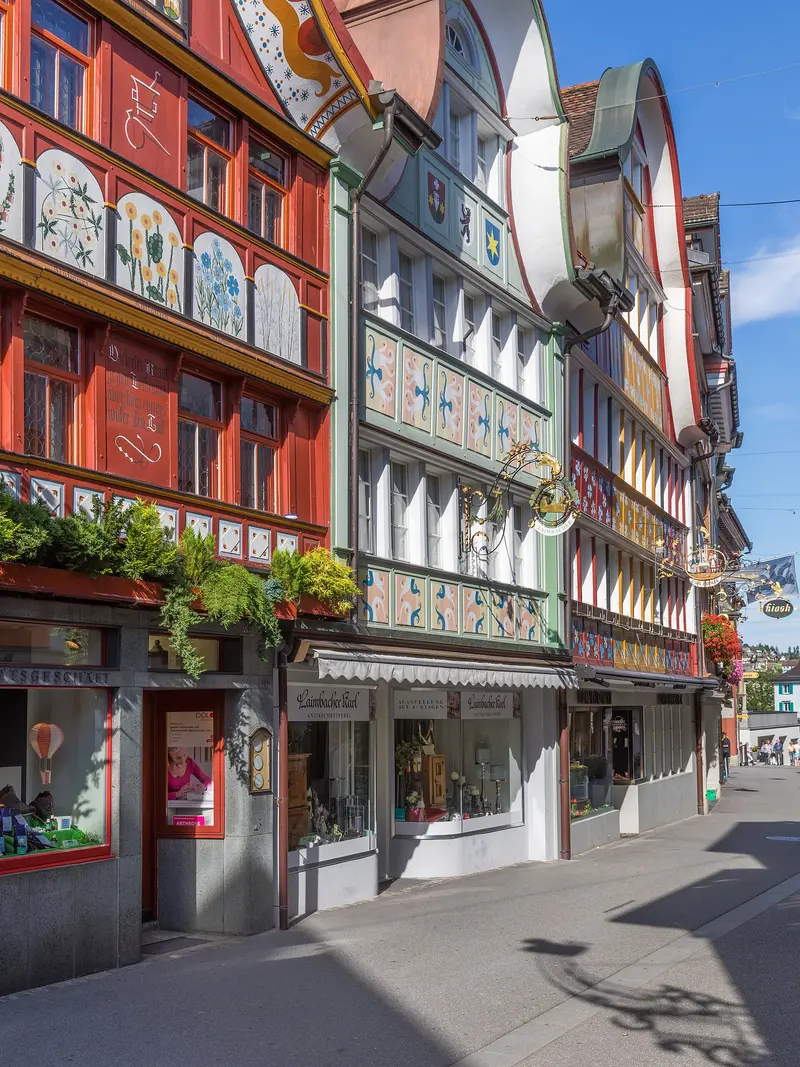
    Appenzell

    JoachimKohler-HB / Wikimedia Commons / CC BY-SA 4.0, mod.
    Place 1 of 2

    Appenzell

    Appenzell is the capital of the canton of Appenzell Innerrhoden and lies in gently rolling hills at the foot of the Alpstein range, south of St. Gallen. The heart of the village is the Hauptgasse, with more than 60 shops and colorfully painted facades.

    Discover
    St. Gallen

    JoachimKohler-HB / Wikimedia Commons / CC BY-SA 4.0, mod.

    Place 2 of 2

    St. Gallen

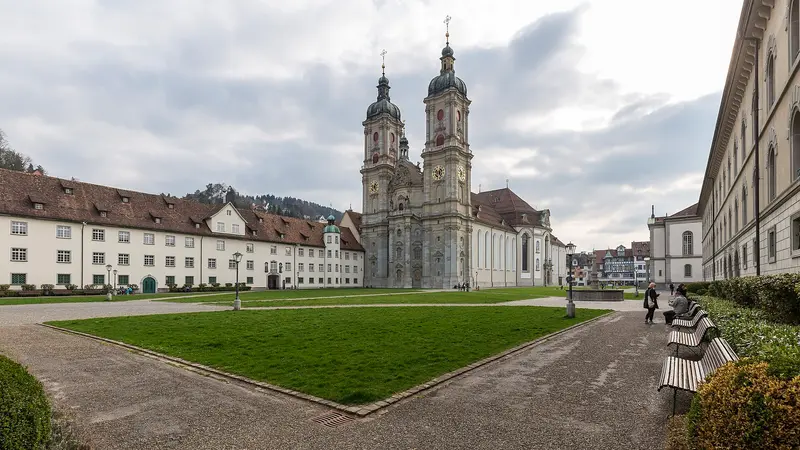
    St. Gallen is the capital of the canton of the same name and is located in northeastern Switzerland, south of Lake Constance. The city traces its origins to the hermitage of the monk Gallus, who, according to tradition, settled here in 612.

    Discover

    East Switzerland Culture

    CustomsTraditions of the Appenzellerland include yodeling and Alpine cattle drives. The Landsgemeinde in Appenzell holds its open-air vote every year on the last Sunday in April.SpecialtiesTypical are Appenzeller cheese, Biberfladen, Nidelzeltli and Quöllfrisch beer; in St. Gallen, the veal sausage.

    Exploring St. Gallen and the Appenzellerland

    RailThe Appenzeller Railways serve the region; from St. Gallen, you travel directly to Appenzell.Guest CardsThe Appenzeller Holiday Card offers over 20 free services for stays of three nights or more.The Bodensee Card PLUS includes, for example, admission to the St. Gallen Abbey District.UpdatesThe new Säntis Cable Car is scheduled by the operator to commence service on December 18, 2026; the opening is weather-dependent. Until then, no cable car operates to Säntis; the hotel and restaurants on Schwägalp remain open. Check operations before your visit on saentisbahn.ch.

    Round trips through this region
    Eastern Switzerland and Graubünden: Abbey Town, Alpstein and Engadine

    Eastern Switzerland and Graubünden: Abbey Town, Alpstein and Engadine

    The route runs from Zurich Airport to the abbey town of St. Gallen and on into the Appenzell countryside beneath the Alpstein range. Via Chur, the capital of Graubünden, the Rhaetian Railway takes you through the Vereina Tunnel into the Lower Engadine to Scuol and Guarda, then to Zernez on the edge of the Swiss National Park, and finally into the Upper Engadine to St. Moritz. You travel by train and PostAuto bus only, and the legs are short: St. Gallen to Appenzell takes just over half an hour, Chur to Scuol about 1 hour 45 minutes, Scuol to Zernez just over half an hour. You return to Zurich on the Albula Line, a UNESCO World Heritage Site. The trip is calm and varied: Baroque architecture and living traditions in the north, Engadine villages, mineral springs and true wilderness in the south.

    12 Days
    7 stops

    Rafa De·Pexels

    Nearby

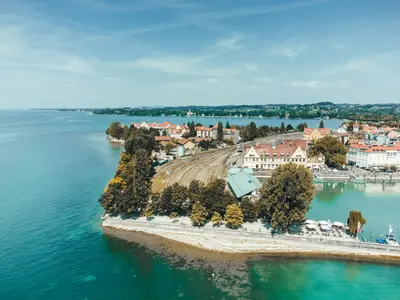
    Lake Constance

    Lake Constance

    Lake Constance, at roughly 395 meters above sea level, lies between Germany, Austria, and Switzerland, covering 536 square kilometers. Stretching 69 kilometers from Bregenz to Stein am Rhein, it plunges 251 meters at its deepest point between Fischbach and Uttwil. The Alpine Rhine flows in, the Seerhein connects the Obersee and Untersee, and the river then exits as the Hochrhein.On the German side, Baden-Württemberg and Bavaria share its shores. Travel by ferry and ship here between Konstanz, the flower island Mainau, the castle town Meersburg, and the island city Lindau, where a UNESCO World Heritage site awaits on Reichenau Island.

    Masood Aslami·Pexels

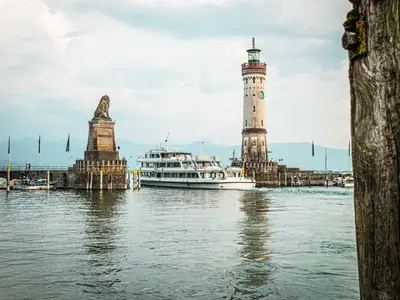
    Lindau

    Lindau

    Lindau is the Bavarian town on Lake Constance, its old town situated on an approximately 0.69-square-kilometer island in the eastern Obersee. A road bridge and the railway embankment connect it to the mainland, on which trains travel to Lindau-Insel station.The landmark is the harbor entrance: On one side, the six-meter-high Bavarian Lion made of Kelheim marble, is enthroned; opposite stands the New Lighthouse, completed in 1856, Germany's southernmost. Also featured are the 12th-century Mangturm and the painted Old Town Hall dating from 1422.

    Christopher Politano·Pexels

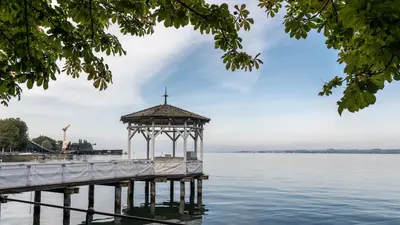
    Bregenz & Lake Constance

    Bregenz & Lake Constance

    In the very west, Vorarlberg borders Lake Constance. Bregenz is home to the Seebühne, where summer operas are staged directly on the water.

    Wolfgang Weiser·Pexels

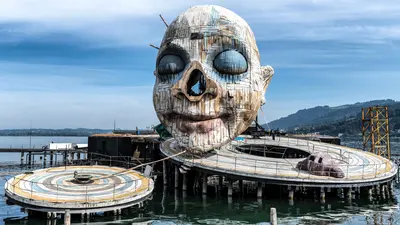
    Bregenz

    Bregenz

    Bregenz is located on Lake Constance in the far west of Austria. The city is known for the Bregenz Festival: Since 1946, opera has been performed directly on the water on the Lake Stage every July and August, in front of almost 7,000 spectators.

    Wolfgang Weiser·Pexels

    Constance

    Constance

    Konstanz, with over 85,000 inhabitants, is the largest city on Lake Constance and is located where the Rhine leaves the Upper Lake. To the south, the city borders directly on Swiss Kreuzlingen. It made world history with the Council of Constance from 1414 to 1418, during which Martin V. was elected Pope in 1417 in the market hall at the harbor, thus ending the Western Schism.At the harbor, Peter Lenk's nine-meter-high Imperia statue turns, a satirical commentary on the Council. From here, ships depart for Mainau, Meersburg, and by catamaran to Friedrichshafen, and in the old town, the Minster rises, whose tower platform is open from Easter until October.

    Artur Roman·Pexels

    Your next steps

    St. Gallen and Appenzellerland is in Switzerland. Ways to carry on from here.

    • More in Switzerland

      Highlights, areas, routes and the best time to travel for all of Switzerland.

      Switzerland travel guide
    • Round trips with St. Gallen and Appenzellerland

      One route passes through St. Gallen and Appenzellerland, with stops, nights and a map.

      See the round trip
    • Plan a trip with St. Gallen and Appenzellerland

      The Guide asks about season, length and who is coming, and suggests a trip with St. Gallen and Appenzellerland.

      Plan the trip

    Sources & method

    • Photos: Unsplash. Each photo carries its credit.
    • The content is based on web research from public, traceable sources. How the content is made · The role of AI