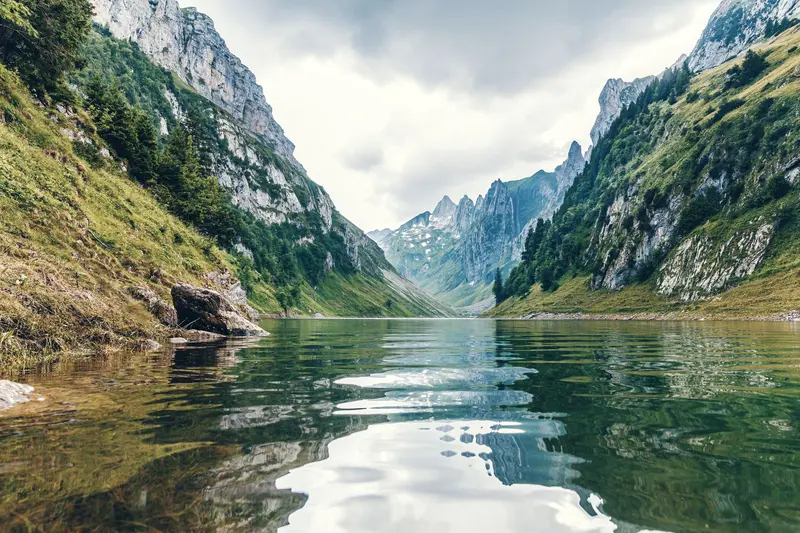
Round trip · Switzerland
Eastern Switzerland and Graubünden: Abbey Town, Alpstein and Engadine
by Felix Gillen
- 12 Days / 11 Nights
- St. Gallen → St. Moritz and Upper Engadine
The route runs from Zurich Airport to the abbey town of St. Gallen and on into the Appenzell countryside beneath the Alpstein range. Via Chur, the capital of Graubünden, the Rhaetian Railway takes you through the Vereina Tunnel into the Lower Engadine to Scuol and Guarda, then to Zernez on the edge of the Swiss National Park, and finally into the Upper Engadine to St. Moritz. You travel by train and PostAuto bus only, and the legs are short: St. Gallen to Appenzell takes just over half an hour, Chur to Scuol about 1 hour 45 minutes, Scuol to Zernez just over half an hour. You return to Zurich on the Albula Line, a UNESCO World Heritage Site. The trip is calm and varied: Baroque architecture and living traditions in the north, Engadine villages, mineral springs and true wilderness in the south.
At a glance
- Duration
- 12 Days / 11 Nights
- Stops
- 7 · St. Gallen → St. Moritz and Upper Engadine
- Arrival
- Flight · Zürich (ZRH)
- Best Time to Go
- Mid-June to mid-October
More on when to go
The Chamanna Cluozza hut in the National Park is open from mid-June to mid-October, the National Park Center runs summer hours from mid-May to the end of October, and the Brambrüesch gondola operates from June to October. The red deer rut in Val Trupchun peaks in late September, and the larches turn gold in October. The National Park is closed in winter.
7 stops
Why This Route?
This route covers a part of Switzerland that many tours skip: Eastern Switzerland, with the UNESCO-listed Abbey District of St. Gallen and Appenzell's living traditions, plus the Romansh-speaking Lower Engadine and the oldest national park in the Alps. The distances between stops are short, you don't need a car, and you only join the route of the big scenic trains at the very end.
Hidden Gems
- At Zum Goldenen Schäfli, a historic first-floor tavern in St. Gallen, the floor and Gothic wooden ceiling slope so much that the guest at the head of the table sits about 20 centimeters higher than the one at the foot
- Hermits lived in the Wildkirchli caves below Ebenalp from 1658, and in 1904 traces of cave bears and Stone Age people were found here
- In Scuol, five village fountains run with mineral water you can taste straight from the spout, so bring a cup or a glass bottle
Getting there and back
Round trip, returning to where you started
- Arrival
- Flight · Zürich (ZRH)From Zurich Airport, direct InterCity and EuroCity trains reach St. Gallen in just under 50 minutes to about an hour. From Germany, the EuroCity from Munich to Zurich stops in St. Gallen.
- Departure
- Flight · Zürich (ZRH)From St. Moritz, you reach Zurich Airport via the Albula Line and Chur in a little over three and a half hours, changing in Chur and at Zurich HB. The route through the Vereina Tunnel with a change in Landquart is slightly faster. If you are heading back to Germany by rail, travel via Zurich.
Itinerary
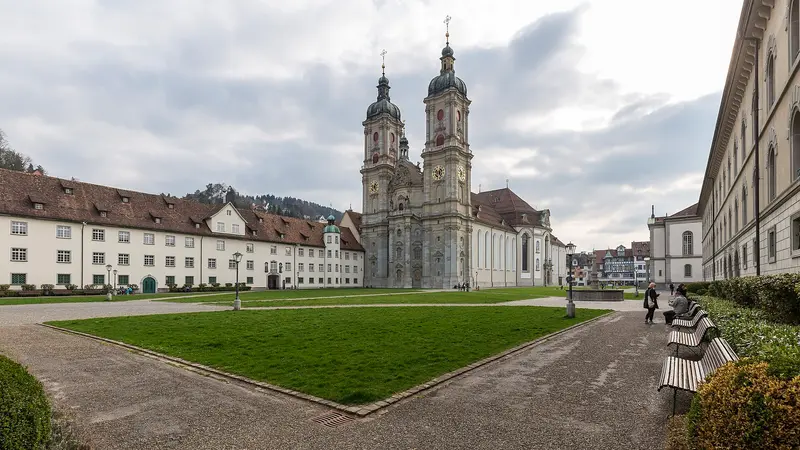
St. Gallen
St. Gallen is the capital of the canton of the same name and is located in northeastern Switzerland, south of Lake Constance. The city traces its origins to the hermitage of the monk Gallus, who, according to tradition, settled here in 612. This grew into one of Europe's most significant monasteries, which was dissolved in 1805.The Abbey District, with its Cathedral, Abbey Library, and Abbey Archives, has been a UNESCO World Heritage site since 1983. The late Baroque cathedral was built between 1755 and 1766 under Peter Thumb and Johann Michael Beer; admission is free. In the Baroque Hall of the Abbey Library, approximately 170,000 books and about 2,000 medieval manuscripts are stored, including the Carolingian Monastery Plan from the 9th century.Surrounding the Abbey District is the car-free Old Town, featuring 111 painted and carved bay windows, half-timbered houses, and small taverns on the first floor. In the late 19th century, embroidery made St. Gallen world-famous, a story now told by the Textile Museum. Above the city lie the Drei Weieren, from which you can see as far as Lake Constance on a clear day.
Just under 50 minutes by direct train from Zurich Airport. In the UNESCO-listed Abbey District, visit the Baroque cathedral and the Rococo hall of the Abbey Library, then ride the Mühleggbahn funicular up to the Drei Weieren ponds.
5 Sights
3 Restaurants
Culture in St. Gallen
A monastery, textile trade, and a distinct culinary culture define St. Gallen to this day.The Monastery's LegacyThe Abbey Library was established during the Baroque redesign of the monastery district, its hall built from 1758 to 1762 according to plans by Peter Thumb. With its inlaid shelves, carved bookcases, and ceiling frescoes, it is considered a Rococo masterpiece. A selection of the manuscripts is displayed in changing exhibitions, while the Lapidarium in the vaulted cellar showcases artifacts from the medieval monastery buildings. Since 1821, the library has also housed the Egyptian mummy of Schepenese, complete with painted sarcophagi.Embroidery and First-Floor EateriesThe prosperity of the embroidery boom is evident in the Old Town, for instance, in the magnificent oriel windows like the Camel, Gryphon, or Pelican Bay. Characteristic of St. Gallen are the Erststockbeizli (first-floor taverns): life moved to the brighter rooms on the first floor because the medieval city's ground level was damp. Many of these eateries have preserved their Gothic ceiling beams and wooden paneling.The St. Gallen BratwurstThis veal bratwurst, first mentioned in the St. Gallen Butcher's Guild statutes in 1438, still contains fresh milk today, giving it its light color. In Eastern Switzerland, it is traditionally eaten only with bread and no mustard. Due to the OLMA agricultural fair in October, it is also known as Olma-Bratwurst.
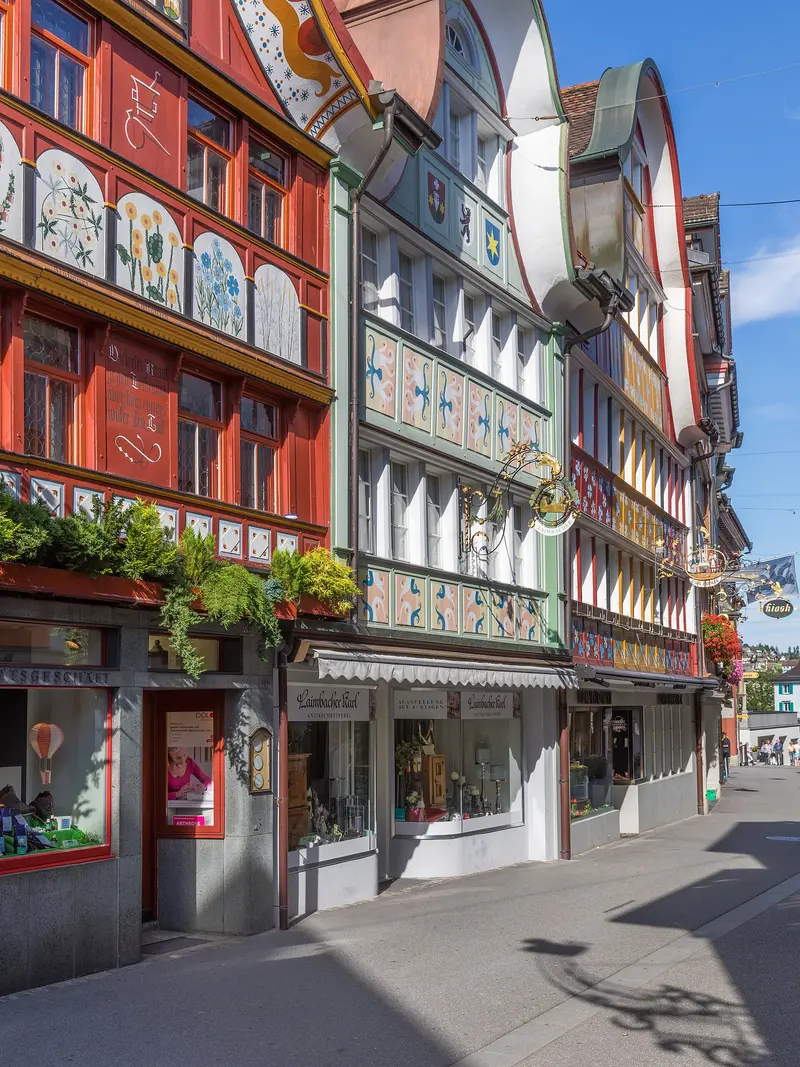
Appenzell
Appenzell is the capital of the canton of Appenzell Innerrhoden and lies in gently rolling hills at the foot of the Alpstein range, south of St. Gallen. The heart of the village is the Hauptgasse, with more than 60 shops and colorfully painted facades. Many shop and inn signs still hang here in the traditional style known as Tafeen.On the Landsgemeindeplatz, the Landsgemeinde meets on the last Sunday in April, when eligible voters decide by a show of hands in the open air. Nearby are the Town Hall, with its facade painted in 1928, and St. Mauritius Parish Church, whose parish dates back to 1071.A short train ride away, the mountains of the Alpstein begin at Wasserauen. A cable car takes six minutes to reach Ebenalp at 1,644 meters. From there, you hike down to the Wildkirchli caves and the Berggasthaus Aescher, built against the cliff, and on to the Seealpsee. Other cable cars run up the Hoher Kasten and the Kronberg.
36 minutes on the Appenzeller Bahn. Besides the Hauptgasse with its painted facades, spend a day in the Alpstein: by train to Wasserauen, six minutes up to Ebenalp by cable car, then via Wildkirchli and the Aescher down to the Seealpsee.
5 Sights
2 Restaurants
Appenzellerland Culture
Few regions in Switzerland uphold their customs as visibly as the Appenzellerland.LandsgemeindeInnerrhoden is one of the few cantons where voters still cast their ballots in the open air. During the Landsgemeinde on the last Sunday of April, they raise their hands in the Landsgemeindeplatz, and visitors are welcome to watch. Women's suffrage was only introduced in the canton in 1990.Traditional Dress, Alpfahrt, and StobedeOn holidays such as Corpus Christi, many locals wear traditional costumes when the weather is fine. Between mid-May and June, the herdsmen (Sennen) drive their cattle up to the Alps, returning between mid-August and September. Village inns and mountain guesthouses host Stobede – sociable evenings with yodeling, dancing, and music. In neighboring Ausserrhoden, the Silvesterchläuse parade through villages like Urnäsch on January 13th.Cheese, Biber, and ArtAt the Appenzeller Show Dairy in Stein, you can watch Appenzeller cheese being made, while the Bärli-Biber-Welt in Weissbad is all about the Appenzeller gingerbread. The Appenzell Museum on Hauptgasse showcases embroidery, traditional costumes, and folk art. Contemporary art can be found at the Kunsthalle Appenzell, a former brickworks, and the Appenzell Art Museum.
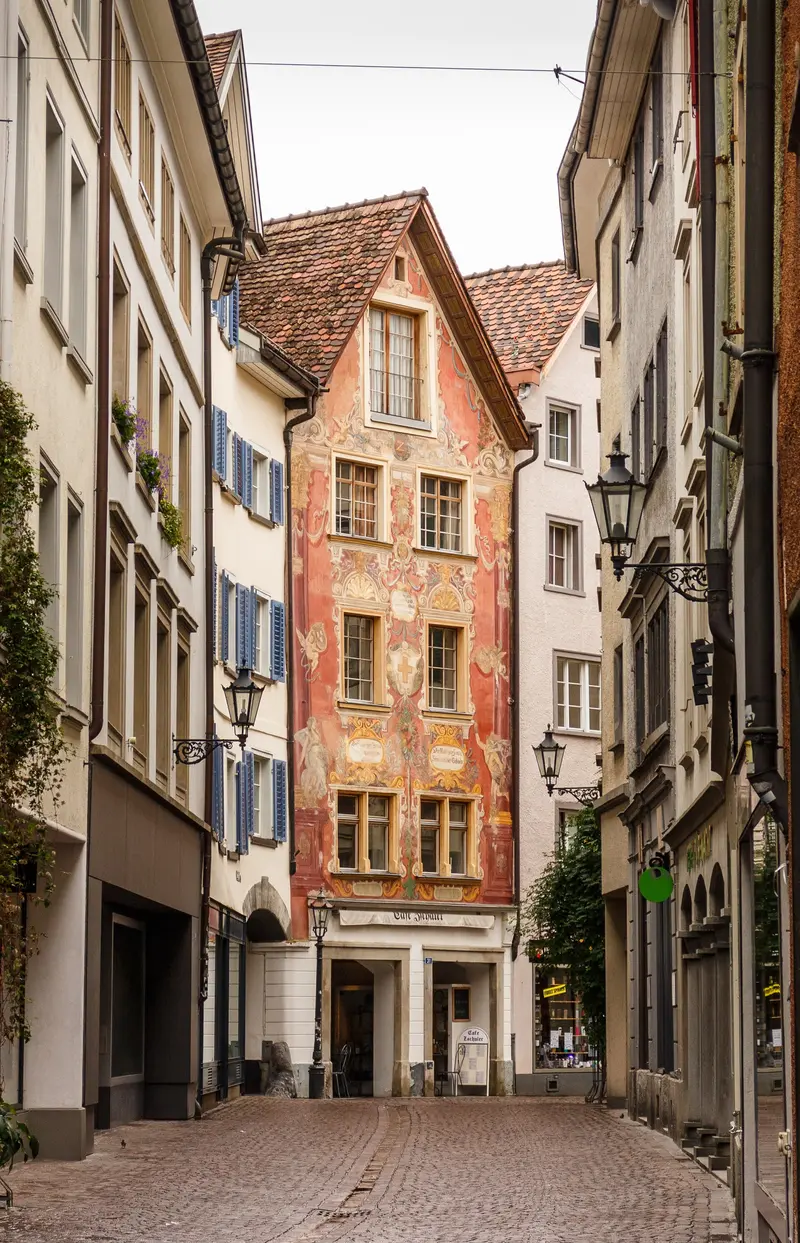
Chur
Chur, the capital of Graubünden, is considered Switzerland's oldest city with a settlement history spanning over 13,000 years. After decades of renovation, its Old Town is almost car-free; around the Arcas and in the narrow alleyways, you'll find shops, cafés, bars, and galleries.Above the Old Town, next to the Bishop's Court, stands the Cathedral of St. Mary of the Assumption, built from 1150 and consecrated in 1272, featuring a late Gothic golden high altar by Jakob Russ dating from 1486 to 1492. The Martinskirche, completed in 1492, shapes the Old Town's image; in its south wall, three stained-glass windows by Augusto Giacometti from 1919 shine. The Bündner Kunstmuseum at Postplatz displays art from Graubünden, including works by Alberto Giacometti.Chur is also a hub for the Rhaetian Railway. Here, the Bernina Express to Tirano begins, and the Glacier Express stops on its journey between St. Moritz and Zermatt. A gondola lift takes you up Chur's local mountain, Brambrüesch, to around 1600 meters.
Just over two hours with one change in Herisau. In the almost car-free Old Town stand the cathedral, consecrated in 1272, with its golden high altar by Jakob Russ, and St. Martin's Church with windows by Augusto Giacometti.
4 Sights
2 Restaurants
Culture in Chur
As the episcopal seat and capital of Graubünden, Chur unites churches, museums, and a lively old town in a compact area.Episcopal CityThe cathedral was extensively restored between 2001 and 2007. Only the ring crypt of the former Carolingian church of St. Luzi remains. The Martinskirche has been the Reformed city church since 1526, so Catholic and Reformed traditions stand closely side by side in the small old town.MuseumsThe Rätisches Museum, in a Baroque patrician house from 1675, tells the history of Graubünden. The Bündner Kunstmuseum is about a five-minute walk from the train station; both museums are closed on Mondays and are free for children under 16.Markets and SquaresChur's weekly market takes place on Saturday mornings from May to October.A monthly flea market is held on the Arcas.A Christmas market opens on the first Advent weekend.From the Haldenhüttli, a wooden pavilion from 1879 on Schanfiggerstrasse, you can view the Old Town and the cathedral.
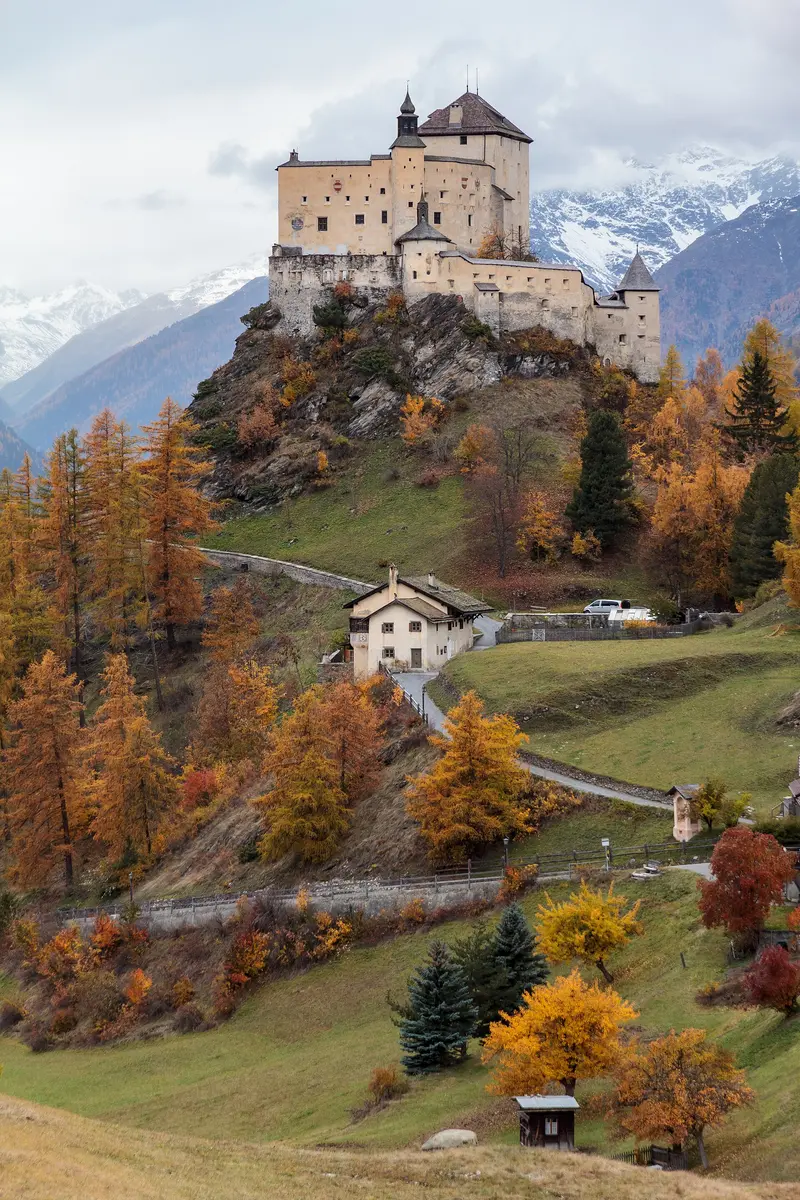
Lower Engadine
The Lower Engadine is the lower part of the Engadine valley in Graubünden, between Zernez and the Austrian border. Its main town is Scuol, at about 1,290 meters. Since 2015, Scuol, Guarda, Ardez, Ftan, Sent and Tarasp have formed a single municipality whose official language is Romansh.Scuol has been a spa town since the 19th century. More than twenty mineral springs rise within the municipality, you can taste the water straight from five village fountains, and the Bogn Engiadina has carried on the bathing tradition since 1993. Across the valley, Tarasp Castle stands on a hill and can only be visited on a guided tour.Guarda sits at 1,653 meters on a sunny terrace high above the Inn. The village, with its painted 17th-century Engadine houses, received the Wakker Prize in 1975 and inspired Selina Chönz and Alois Carigiet to create the story of Schellen-Ursli (A Bell for Ursli). From Scuol, the Rhaetian Railway takes you to Zernez and the Swiss National Park in just over half an hour.
About 1 hour 45 minutes to Scuol, changing in Landquart and passing through the Vereina Tunnel. Taste mineral water at the village fountains, join a guided tour of Tarasp Castle and visit Guarda, the village of Schellen-Ursli.
3 Sights
2 Restaurants
Lower Engadine Culture
In the Lower Engadine, Rhaeto-Romanic language, Engadine houses and old customs shape the village scape.Engadine Houses and SgraffitoYou'll find well-preserved Engadine houses in the old village part of Scuol Sot and especially in Guarda, whose narrow alleys, sgraffiti, and painted facades are a prime example of Rhaeto-Romanic village culture. Guarda's village scape is of national importance; a GPS app guides through 15 stations on its history, crafts, and nature.Schellen-Ursli and ChalandamarzThe story of Schellen-Ursli, by Selina Chönz with illustrations by Alois Carigiet, originated in 1945; Carigiet drew inspiration for Ursli's parents' house from a stately Guarda home. In Guarda, a themed trail dedicated to the story can be walked in stages, even with children. The village also observes the Chalandamarz custom, where winter is driven out with large cowbells.Water and BathsThe variety of mineral springs relates to the unique geology of the Lower Engadine Window. Scuol's water was mentioned as early as 1369; from around 1860, the healing springs were used on a larger scale. The Museum d'Engiadina Bassa in Scuol exhibits furniture, tools, looms, and traditional costumes from the valley's rural life in historic rooms.
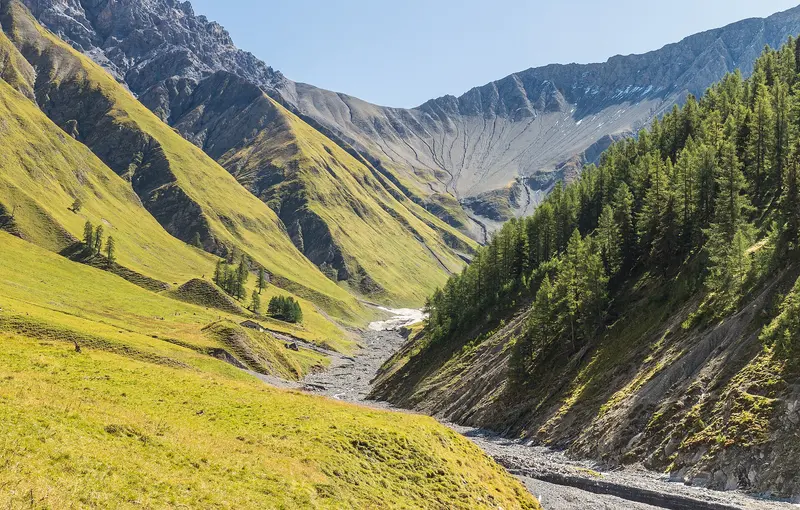
Swiss National Park
Founded on August 1, 1914, the Swiss National Park in eastern Graubünden is the oldest national park in the Alps. On 170 square kilometers, between 1400 and 3174 meters altitude, nature is allowed to develop without human intervention; the park is classified as a wilderness area of the strictest IUCN Category Ia. Roughly half the area is rock and scree, and just under a third is forest.The starting point for most visits is Zernez in Engadin, home to the National Park Centre. Twenty-one hiking routes, totaling around 100 kilometers, lead through the park. The Ofenpass road from Zernez towards Val Müstair crosses it, and PostBus stops at the trailheads. With luck, you could see red deer, chamois, ibex, marmots, and bearded vultures.Since 2017, the park has formed the core zone of the UNESCO Biosfera Engiadina Val Müstair. The rules are strict: Stay on marked trails, dogs are forbidden even on a leash, and in winter, the park is closed to protect animals.
33 minutes by train from Scuol to Zernez, the gateway town with the National Park Center. Hike the marked trails, for example through Val Trupchun, where you can watch red deer, chamois and ibex.
4 Sights
National Park Nature & Research
The National Park is not an amusement park, but an open-air laboratory observing for over a century how nature develops without interference.Wilderness Since 1914Within the park, there is no hunting, no mowing, and no logging. Around 80 percent of the subsoil consists of dolomite and limestone. 36 mammal species, around 100 bird species, and about 650 higher plant species have been counted. The area extends over the municipalities of Zernez, Scuol, S-chanf, and Val Müstair.Seasons in the ParkJune and July: Alpine flowers and most young animals.July and August: best time for high-alpine tours, such as to the Macun Lakes Plateau.Late September: Red deer rut, particularly good to experience in Val Trupchun.October: the larches turn golden.Rules for VisitorsStays are permitted only during the day and on marked paths, as well as at designated rest areas. Dogs, bikes, fires, swimming, and picking plants are prohibited; overnight stays are only possible in Chamanna Cluozza and Hotel Il Fuorn. You can book guided hikes, for example, to Margunet and Val Trupchun, at the National Park Centre.
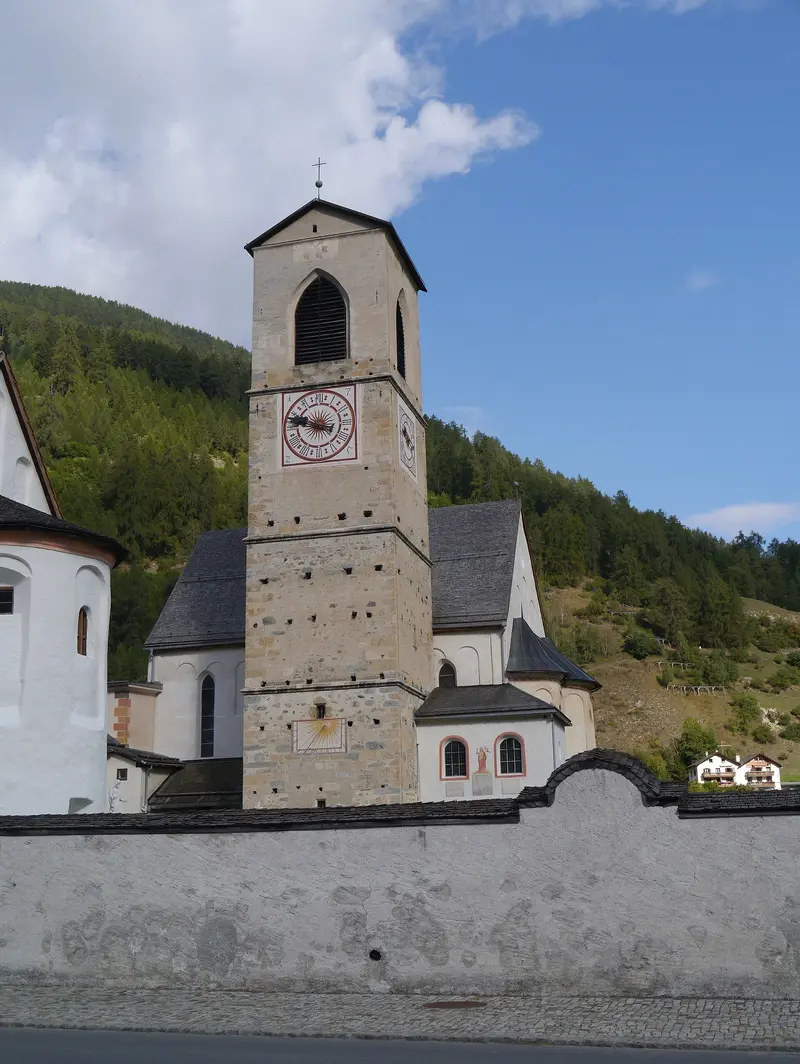
Val Müstair
Val Müstair is located in the far southeast of Graubünden, beyond the Ofenpass. The PostBus route through the valley continues to Mals in Italy's Vinschgau. In the village of Müstair stands the Benedictine Convent of St. John, which has been a UNESCO World Heritage site since 1983.According to tradition, Charlemagne founded the monastery around 775 after surviving a snowstorm on the Umbrailpass. The convent church preserves the largest and best-preserved fresco cycle from the Early Middle Ages: Carolingian murals from around 800, rediscovered in 1894 beneath later layers of paint, and Romanesque frescoes from the 12th century. Benedictine nuns still live here today.The convent museum, housed in a residential and defensive tower over a thousand years old, recounts the monastery's more than 1200-year history. From Zernez, you can reach Müstair by PostBus, traveling over the Ofenpass and through the Swiss National Park, in about 50 minutes to just over an hour. The valley, together with the National Park and Scuol, forms the UNESCO Biosfera Engiadina Val Müstair.
Day trip from Zernez by PostAuto bus over the Ofen Pass, about 50 minutes to just over an hour. The UNESCO-listed Convent of St. John preserves Carolingian frescoes from around 800.
2 Sights
Culture in Val Müstair
In Val Müstair, over twelve centuries of monastic history intertwine with the daily life of a remote mountain valley.Carolingian FrescoesSwiss researchers Robert Durrer and Joseph Zemp discovered the Carolingian frescoes in 1894 beneath several layers of paint. A portion was transferred to the Swiss National Museum in Zurich in 1908 and 1909, while the remainder was uncovered between 1947 and 1951. St. Johann has been a convent since the 12th century, and since 1528, the church has also served as the parish church of Müstair.Monastery Museum and Holy Cross ChapelAmong other exhibits, the museum displays detached Romanesque murals from around 1200; since December 2024, the permanent exhibition «Paths to and from Müstair» has been running. The Holy Cross Chapel, also Carolingian, was restored in 2018 and can be visited on specific days.
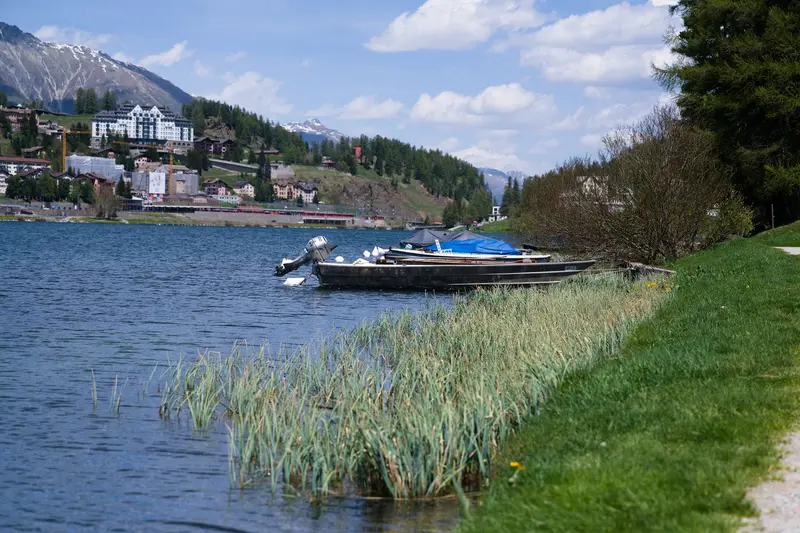
St. Moritz and Upper Engadine
St. Moritz is located in Graubünden in the Upper Engadin, a wide high valley with a chain of lakes. The town hosted the Winter Olympic Games in 1928 and 1948 and is a hub for the Rhaetian Railway, whose Albula and Bernina Lines are a UNESCO World Heritage site.The Albula Line from Thusis to St. Moritz was opened between 1903 and 1904, and the Bernina Line to Tirano in Italy in 1910. Together, these approximately 122 kilometres have formed the Rhaetian Railway World Heritage site in the Albula and Bernina Landscapes since 2008. At Berninapass, the railway reaches 2253 metres, and from the Bernina Diavolezza stop, a cable car ascends towards Piz Bernina, the highest mountain in the Eastern Alps. At Lago Bianco near Ospizio Bernina, there are short hiking trails. The Glacier Express from Zermatt also terminates in St. Moritz.
Just over 40 minutes by train from Zernez. Time for the Upper Engadine lakes and the Segantini Museum; the Bernina Line to Tirano is an option for a day trip from here.
7 Sights
3 Restaurants
Culture in St. Moritz
St. Moritz, the cradle of winter tourism, has developed unique traditions.White TurfSince 1907, horse races are held on the frozen Lake St. Moritz on three February weekends. A highlight is Skikjöring, a discipline invented by British winter guests in St. Moritz in 1906, where skiers are pulled by galloping horses.Segantini and the EngadinPainter Giovanni Segantini spent his final years in the Engadin; his Alpine triptych is displayed in the Segantini Museum. Around St. Moritz, massive Engadin houses with Sgraffito decorations shape the villages, and in daily life, Romansh is heard alongside German and Italian.
Plan this route as your trip
All stops, trains and nights go into your trip planner. You adjust dates and places to stay afterwards.
This route is a suggestion from our research. Please check timetables, times in port, opening hours and prices before you book – what your tour operator or carrier says is what counts.
Fernweh is a free travel guide and trip planner: routes researched by people, taken over in one click, used day by day on the road. More about Fernweh
7 stops
Route Summary
Duration12 Days
Stops7 Places
TypeMixed