Fernweh: Home
    ExploreTravel GuidesPlan a tripMy tripLast visited
    de|en
    All Places & RegionsAll highlightsAbout FernwehFAQPrivacy PolicyImprint
    ExploreTravel GuidesPlan a tripMy tripLast visited
    Val Müstair
    Zairon / Wikimedia Commons / CC BY-SA 4.0

    Switzerland

    Val Müstair

    Point of Interest

    Val Müstair is located in the far southeast of Graubünden, beyond the Ofenpass. The PostBus route through the valley continues to Mals in Italy's Vinschgau.

    by Felix Gillen

    1. Home
    2. Destinations
    3. Switzerland
    4. Graubünden
    5. Val Müstair
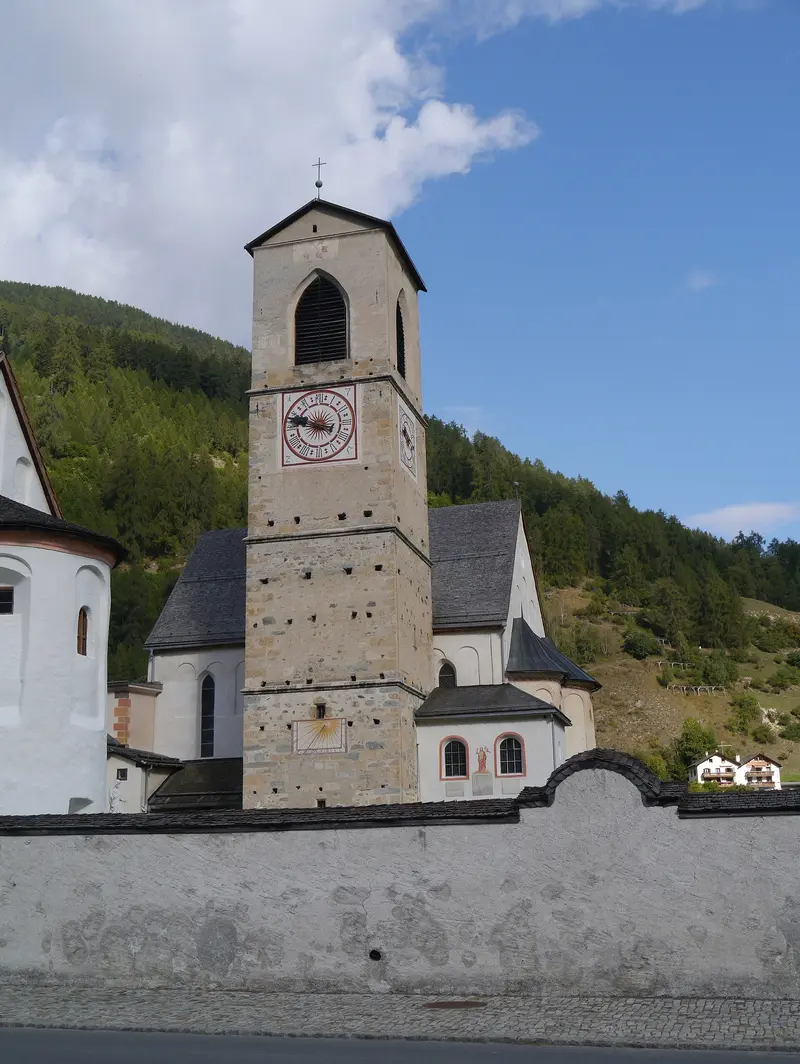
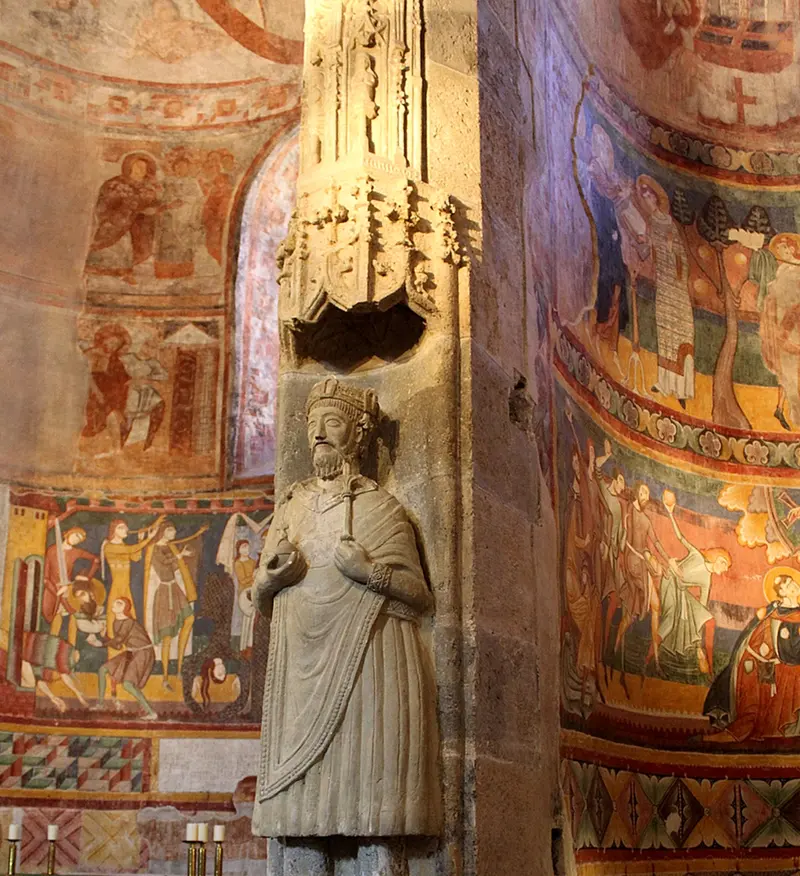
    Val Müstair is located in the far southeast of Graubünden, beyond the Ofenpass. The PostBus route through the valley continues to Mals in Italy's Vinschgau. In the village of Müstair stands the Benedictine Convent of St. John, which has been a UNESCO World Heritage site since 1983.According to tradition, Charlemagne founded the monastery around 775 after surviving a snowstorm on the Umbrailpass. The convent church preserves the largest and best-preserved fresco cycle from the Early Middle Ages: Carolingian murals from around 800, rediscovered in 1894 beneath later layers of paint, and Romanesque frescoes from the 12th century. Benedictine nuns still live here today.The convent museum, housed in a residential and defensive tower over a thousand years old, recounts the monastery's more than 1200-year history. From Zernez, you can reach Müstair by PostBus, traveling over the Ofenpass and through the Swiss National Park, in about 50 minutes to just over an hour. The valley, together with the National Park and Scuol, forms the UNESCO Biosfera Engiadina Val Müstair.

    Sights in Val Müstair

    Discover the most important sights and attractions
    Holy Cross Chapel
    Church

    1Holy Cross Chapel

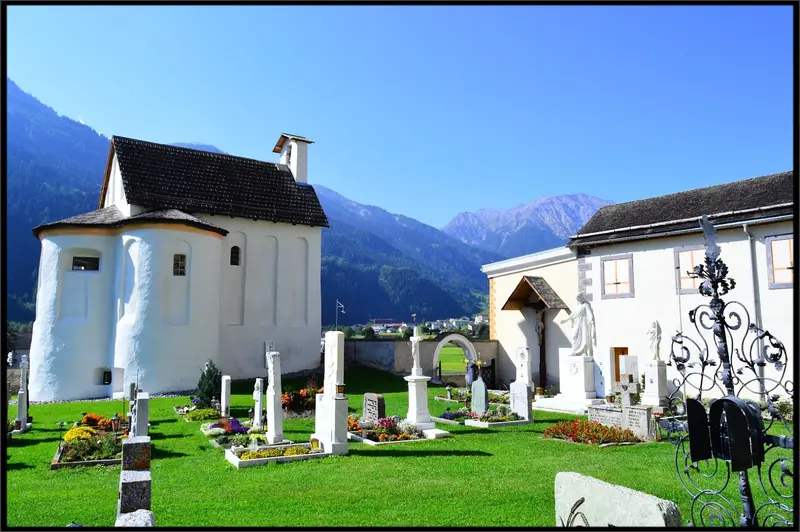
    The small chapel in the monastery precinct, like the church, dates to the Carolingian period. It was restored in 2018 and is open on select days.
    Open in Google Maps
    St. John's Monastery
    Museum

    2St. John's Monastery

    Founded traditionally around 775 by Charlemagne, the monastery became a UNESCO World Heritage site in 1983. Its abbey church holds Carolingian frescoes from c. 800 and 12th-century Romanesque murals; a monumental Charlemagne statue stands inside. The monastery museum, a thousand-year-old tower, displays its history; Benedictine nuns still live here today.
    Open in Google Maps

    Restaurants in Val Müstair

    Culture in Val Müstair

    In Val Müstair, over twelve centuries of monastic history intertwine with the daily life of a remote mountain valley.Carolingian FrescoesSwiss researchers Robert Durrer and Joseph Zemp discovered the Carolingian frescoes in 1894 beneath several layers of paint. A portion was transferred to the Swiss National Museum in Zurich in 1908 and 1909, while the remainder was uncovered between 1947 and 1951. St. Johann has been a convent since the 12th century, and since 1528, the church has also served as the parish church of Müstair.Monastery Museum and Holy Cross ChapelAmong other exhibits, the museum displays detached Romanesque murals from around 1200; since December 2024, the permanent exhibition «Paths to and from Müstair» has been running. The Holy Cross Chapel, also Carolingian, was restored in 2018 and can be visited on specific days.

    Arrival in Val Müstair

    The PostBus route 811 connects Zernez station with Müstair, Clostra Son Jon stop, and continues to Mals in Vinschgau. The journey takes approximately 50 minutes to over an hour, depending on the schedule, and leads over the Ofenpass through the Swiss National Park.As a day trip from Zernez or Scuol, Müstair can be easily combined with a hike in the National Park.The Abbey Museum is open all year round, on Sundays and public holidays only in the afternoon; it is closed only on December 25th.

    Accommodations in Val Müstair

    Find perfect stay in Val Müstair

    Booking.com* (Affiliate link)
    Search Hotels
    Agoda* (Affiliate link)
    Search Hotels
    Airbnb
    Vacation Rentals

    * Affiliate link: if you book through it, we earn a small commission. The price stays the same for you.

    Campgrounds in Val Müstair

    Find perfect campground in Val Müstair
    Search via Google Maps
    Campgrounds nearby (15km)
    Camping.info
    Find Campgrounds
    Park4Night
    RV Parks & Camping

    Nearby

    Swiss National Park

    Swiss National Park

    Founded on August 1, 1914, the Swiss National Park in eastern Graubünden is the oldest national park in the Alps. On 170 square kilometers, between 1400 and 3174 meters altitude, nature is allowed to develop without human intervention; the park is classified as a wilderness area of the strictest IUCN Category Ia. Roughly half the area is rock and scree, and just under a third is forest.The starting point for most visits is Zernez in Engadin, home to the National Park Centre. Twenty-one hiking routes, totaling around 100 kilometers, lead through the park. The Ofenpass road from Zernez towards Val Müstair crosses it, and PostBus stops at the trailheads. With luck, you could see red deer, chamois, ibex, marmots, and bearded vultures.Since 2017, the park has formed the core zone of the UNESCO Biosfera Engiadina Val Müstair. The rules are strict: Stay on marked trails, dogs are forbidden even on a leash, and in winter, the park is closed to protect animals.
    Lower Engadine

    Lower Engadine

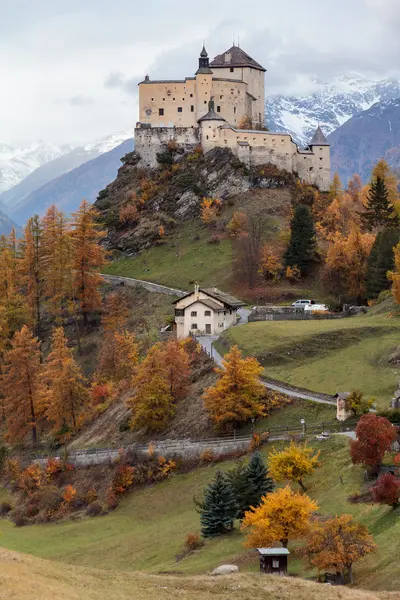
    The Lower Engadine is the lower part of the Engadine valley in Graubünden, between Zernez and the Austrian border. Its main town is Scuol, at about 1,290 meters. Since 2015, Scuol, Guarda, Ardez, Ftan, Sent and Tarasp have formed a single municipality whose official language is Romansh.Scuol has been a spa town since the 19th century. More than twenty mineral springs rise within the municipality, you can taste the water straight from five village fountains, and the Bogn Engiadina has carried on the bathing tradition since 1993. Across the valley, Tarasp Castle stands on a hill and can only be visited on a guided tour.Guarda sits at 1,653 meters on a sunny terrace high above the Inn. The village, with its painted 17th-century Engadine houses, received the Wakker Prize in 1975 and inspired Selina Chönz and Alois Carigiet to create the story of Schellen-Ursli (A Bell for Ursli). From Scuol, the Rhaetian Railway takes you to Zernez and the Swiss National Park in just over half an hour.
    St. Moritz and Oberengadin

    St. Moritz and Oberengadin

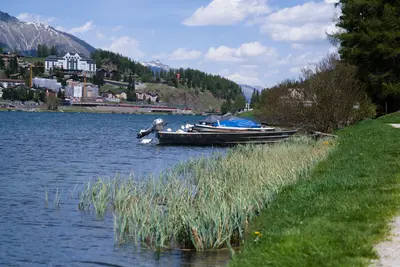
    St. Moritz is located in Graubünden in the Upper Engadin, a wide high valley with a chain of lakes. The town hosted the Winter Olympic Games in 1928 and 1948 and is a hub for the Rhaetian Railway, whose Albula and Bernina Lines are a UNESCO World Heritage site.The Albula Line from Thusis to St. Moritz was opened between 1903 and 1904, and the Bernina Line to Tirano in Italy in 1910. Together, these approximately 122 kilometres have formed the Rhaetian Railway World Heritage site in the Albula and Bernina Landscapes since 2008. At Berninapass, the railway reaches 2253 metres, and from the Bernina Diavolezza stop, a cable car ascends towards Piz Bernina, the highest mountain in the Eastern Alps. At Lago Bianco near Ospizio Bernina, there are short hiking trails. The Glacier Express from Zermatt also terminates in St. Moritz.
    Meran (Merano)

    Meran (Merano)

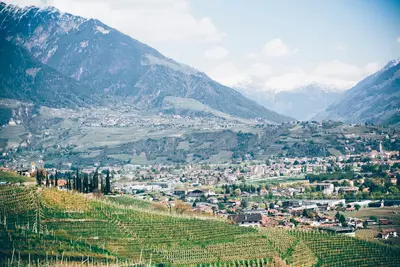
    Meran lies in a valley basin in the Etsch Valley, into which the Passeier Valley flows from the north. Its mild climate allows not only wine but also palms, cypresses, holm oaks, and Lebanon cedars to grow.Spa TownMeran has been a spa town since 1855. The Kurhaus on the Passerpromenade consists of a historicist wing (1873/74) and an Art Nouveau wing (1912-1914). The Therme Meran, opened in 2005, continues this tradition.Old Town and SurroundingsThe Laubengasse is the Old Town's main axis; the Parish Church of St. Nicholas stands on Pfarrplatz. The Tappeinerweg runs along the slope of Küchelberg; on the city's eastern edge lie the Gardens of Trauttmansdorff Castle, and north is Dorf Tirol with its namesake castle.
    Arlberg

    Arlberg

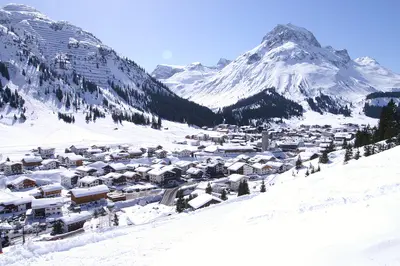
    The Arlberg Pass, at 1,793 meters, separates Vorarlberg and Tyrol. On the Tyrolean side lies St. Anton; on the Vorarlberg side, the road leads over the Flexen Pass to Zürs and Lech. Known as the cradle of alpine skiing, the region is a summer hiking area with mountain lakes, cable cars and the Skyspace by James Turrell.

    Sources & method

    • Photos: Wikimedia Commons, Google Maps. Each photo carries its credit.
    • Place data such as addresses and ratings comes from Google Maps.
    • The content is based on web research from public, traceable sources. How the content is made · The role of AI