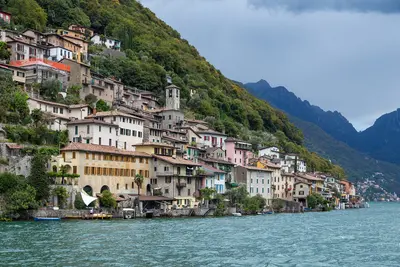
Graubünden, in eastern Switzerland, is the largest canton by area and the only one with three official languages: German, Romansh, and Italian.
Graubünden, in eastern Switzerland, is the largest canton by area and the only one with three official languages: German, Romansh, and Italian. It is known for the Engadin valley with St. Moritz and the Rhaetian Railway lines over Albula and Bernina, which have been a UNESCO World Heritage site since 2008.High valleys, lakes, and passes make Graubünden a region perfect for scenic rail journeys, summer hiking, and winter sports.
Graubünden, at around 7,105 square kilometers, is Switzerland's largest canton by area and its most sparsely populated. German, Romansh, and Italian are spoken here, and its highest peak is Piz Bernina at 4,049 meters. The Rhaetian Railway serves the canton; its Albula and Bernina lines, between Thusis and Tirano, became a UNESCO World Heritage site in 2008. Chur is the capital. For travelers, the Engadin with St. Moritz and the Swiss National Park are key destinations.
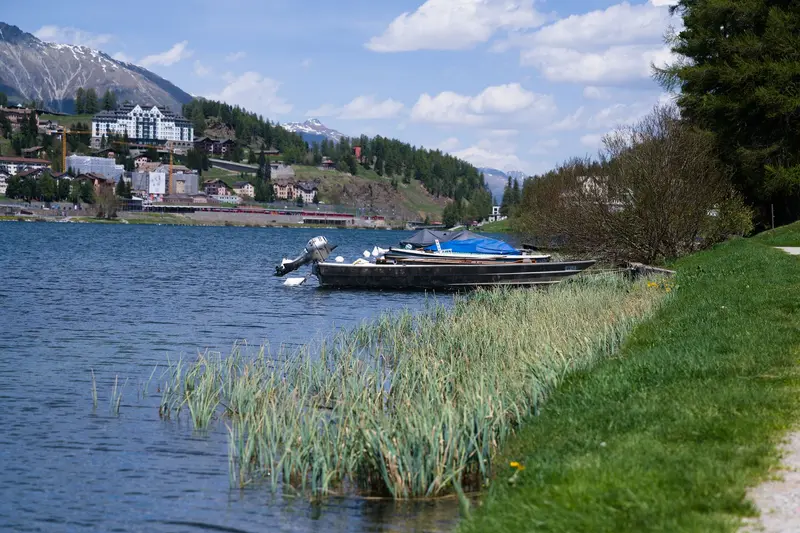
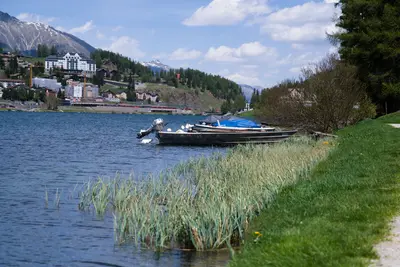
St. Moritz is located in Graubünden in the Upper Engadin, a wide high valley with a chain of lakes. The town hosted the Winter Olympic Games in 1928 and 1948 and is a hub for the Rhaetian Railway, whose Albula and Bernina Lines are a UNESCO World Heritage site.The Albula Line from Thusis to St. Moritz was opened between 1903 and 1904, and the Bernina Line to Tirano in Italy in 1910. Together, these approximately 122 kilometres have formed the Rhaetian Railway World Heritage site in the Albula and Bernina Landscapes since 2008. At Berninapass, the railway reaches 2253 metres, and from the Bernina Diavolezza stop, a cable car ascends towards Piz Bernina, the highest mountain in the Eastern Alps. At Lago Bianco near Ospizio Bernina, there are short hiking trails. The Glacier Express from Zermatt also terminates in St. Moritz.
Sights in Graubünden
Discover the most important sights and attractions
Museum
National Park Centre Zernez
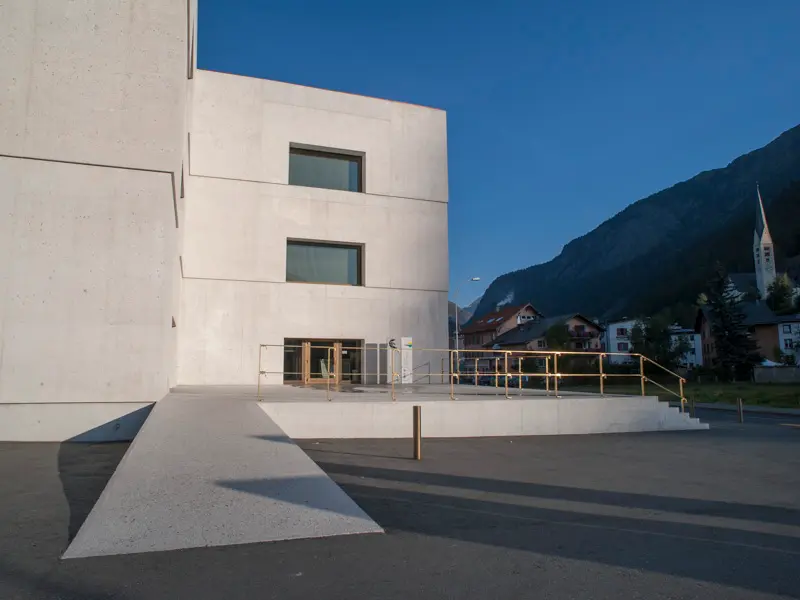
The visitor center in Zernez is the starting point for the Swiss National Park, founded in 1914. The exhibition showcases the park's wildlife.
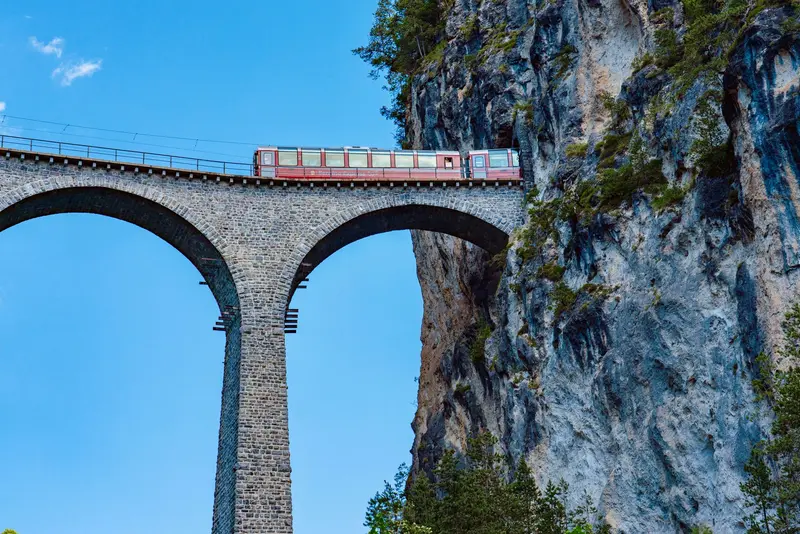
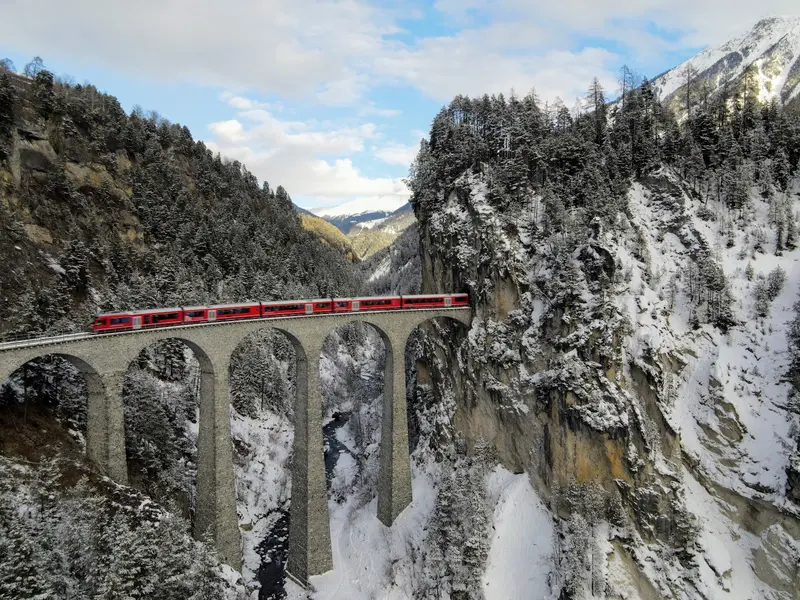
The 65-metre-high viaduct near Filisur carries the Rhaetian Railway's Albula Line on six arches directly into the Landwasser Tunnel in the rock face. It is the route's most famous structure, a UNESCO World Heritage site.
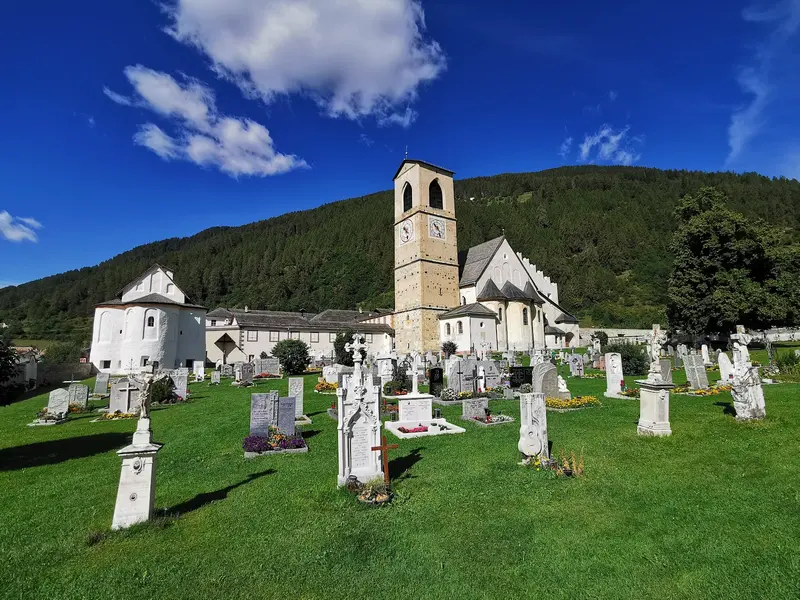
Das um 775 wohl von Karl dem Großen gegründete Kloster im Val Müstair ist seit 1983 UNESCO-Welterbe. Die Klosterkirche birgt einen der größten erhaltenen Freskenzyklen des frühen Mittelalters, noch heute leben hier Benediktinerinnen, ein Klostermuseum ist ganzjährig geöffnet.
Swiss chard leaves, filled with Spätzle dough and Salsiz, cooked in cream broth.
Grisons Nut Tart
Shortcrust pastry with a filling of caramelized walnuts, keeps well and a popular souvenir.
Bündnerfleisch
Finely sliced, air-dried beef, served as an appetizer or on a Bündner platter.
Culture in Graubünden
Graubünden is Switzerland's only trilingual canton: German, Romansh, and Italian are spoken here. In Engadin, the imposing stone houses with sgraffito decorations and deep window embrasures are striking.ChalandamarzOn March 1st, children in Engadin parade through the villages with cowbells to chase away winter. The custom became well-known far beyond the region thanks to the children's book «Schellen-Ursli».National ParkThe Swiss National Park in Lower Engadin, founded in 1914, is the oldest national park in the Alps. Strict protection applies here; you are not allowed to leave the paths.
Exploring Graubünden
The Rhaetian Railway serves almost the entire canton; its Albula and Bernina lines are UNESCO World Heritage sites. Famous are the Glacier Express to Zermatt and the Bernina Express to Tirano, Italy. Postbuses travel over the passes and into remote valleys. Many passes are closed to cars in winter.