Fernweh: Home
    ExploreTravel GuidesPlan a tripMy tripLast visited
    de|en
    All Places & RegionsAll highlightsAbout FernwehFAQPrivacy PolicyImprint
    ExploreTravel GuidesPlan a tripMy tripLast visited
    • Neighborhoods & highlights
    • Eat & drink
    • Culture
    • Getting around
    • Accommodation
    • Plan trip
    • Nearby
    Mahdia
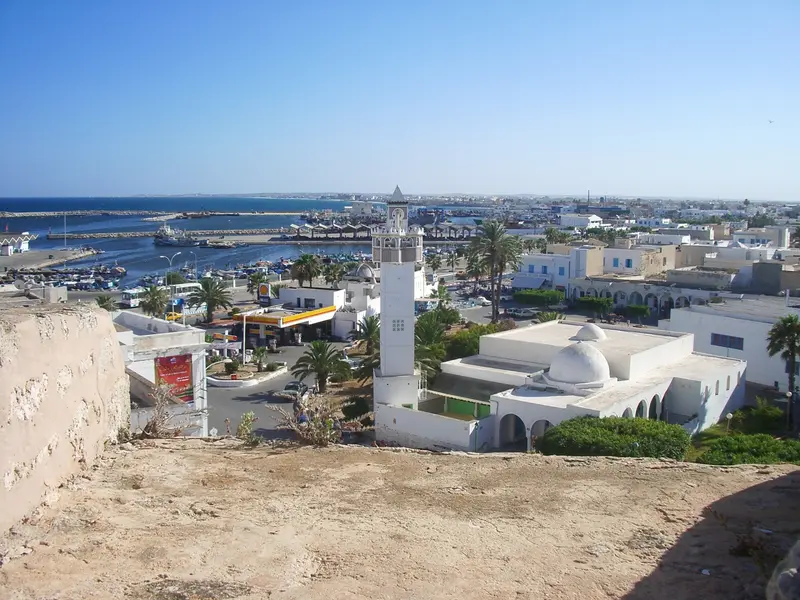
    Jaume Ollé / Wikimedia Commons / CC BY 3.0

    Tunisia

    Mahdia

    City

    Mahdia lies on a narrow peninsula on the east coast and is the southern terminus of the Metro du Sahel from Sousse and Monastir.

    by Felix Gillen

    1. Home
    2. Destinations
    3. Tunisia
    4. Sahel & Kairouan
    5. Mahdia
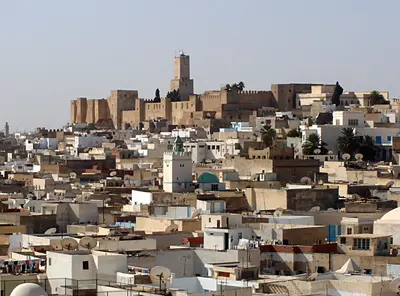
    Mahdia lies on a narrow peninsula on the east coast and is the southern terminus of the Metro du Sahel from Sousse and Monastir. The Fatimids founded the city as their capital in 916; the fortified gate Skifa el Kahla and the Great Mosque date from that time. North of the old town stretch white sandy beaches with hotels; the port is among Tunisia's largest fishing ports.

    Sights in Mahdia

    Discover the most important sights and attractions

    Skifa el Kahla
    Historic Landmark

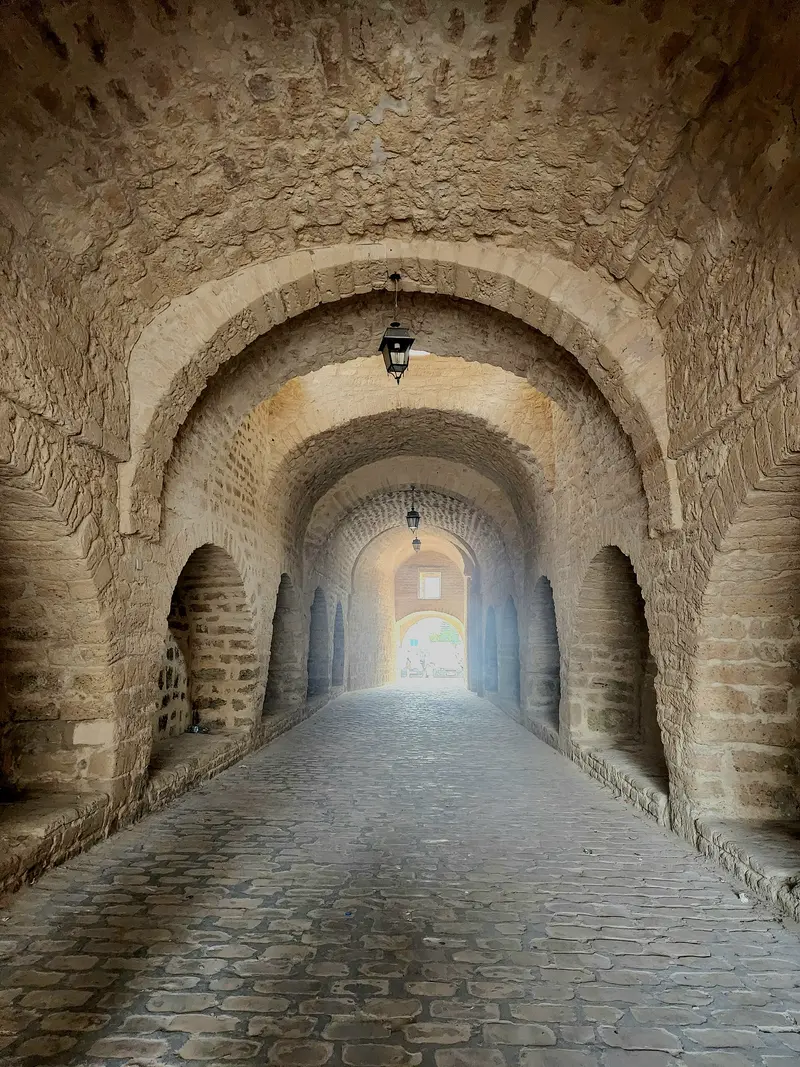
    1Skifa el Kahla

    The fortified gate was built between 916 and 921 and renewed in the 16th century; it is one of the few surviving parts of the Fatimid city wall. You enter the old town through its passage, and the Mahdia Museum, opened in 1997, is right next to it.
    Open in Google Maps
    Borj el Kebir
    Historic Landmark

    2Borj el Kebir

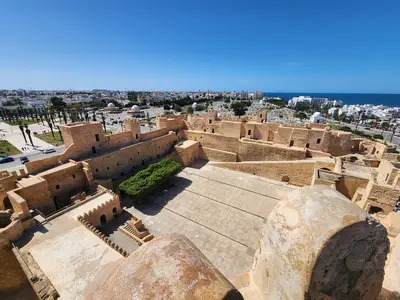
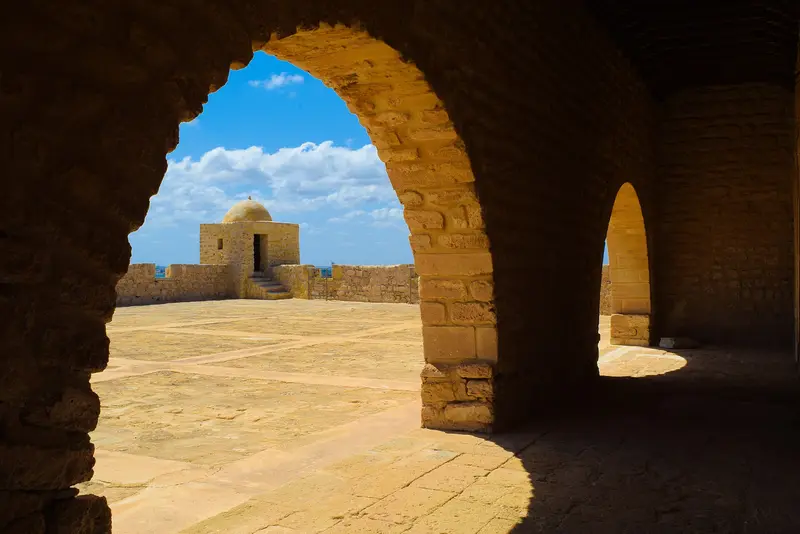
    The fort has guarded the tip of Cap Afrique since 1595. From the roof you look out over the Great Mosque, the seaside cemetery and the open sea.
    Open in Google Maps
    Great Mosque of Mahdia

    3Great Mosque of Mahdia

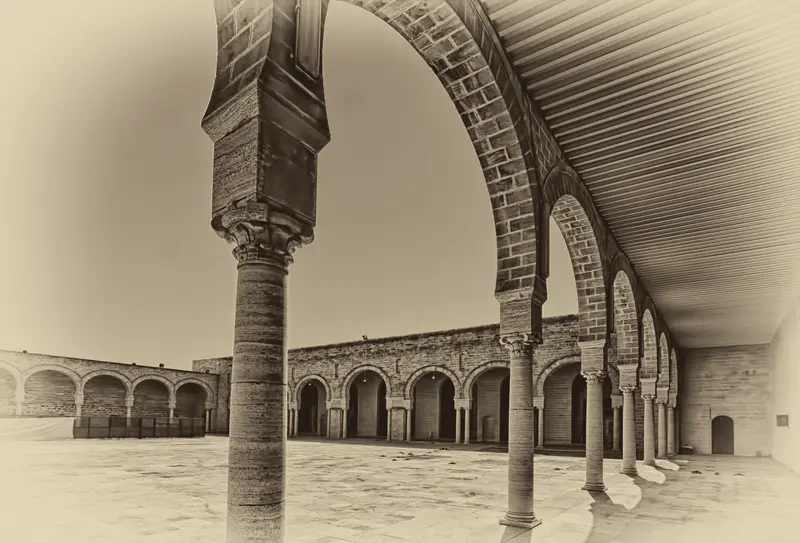
    Caliph Abdallah al-Mahdi had the mosque built from 916 on a platform reclaimed from the sea. Between 1961 and 1965, it was rebuilt according to the 10th-century plan; only the projecting north portal and the vestibule are original. It presumably never had a minaret.
    Open in Google Maps
    Sea Cemetery and Cape Africa

    4Sea Cemetery and Cape Africa

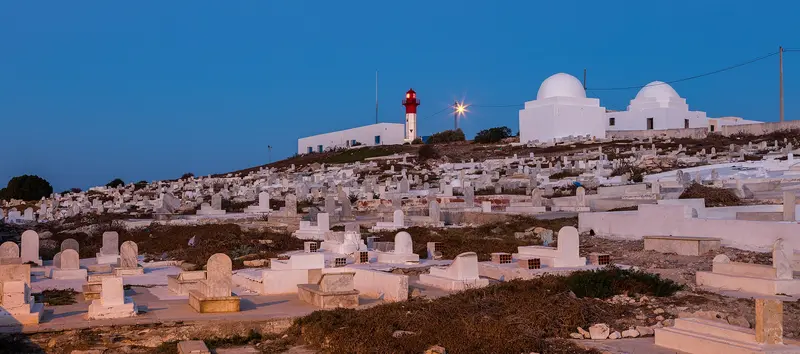
    Hundreds of white graves lie on grassy hills at the peninsula's tip, between an Ottoman fortress, a lighthouse, and the Phoenician harbor basin. Locals visit the cemetery, especially on Thursday afternoons and public holidays; please be respectful.
    Open in Google Maps
    Museum of Mahdia

    5Museum of Mahdia

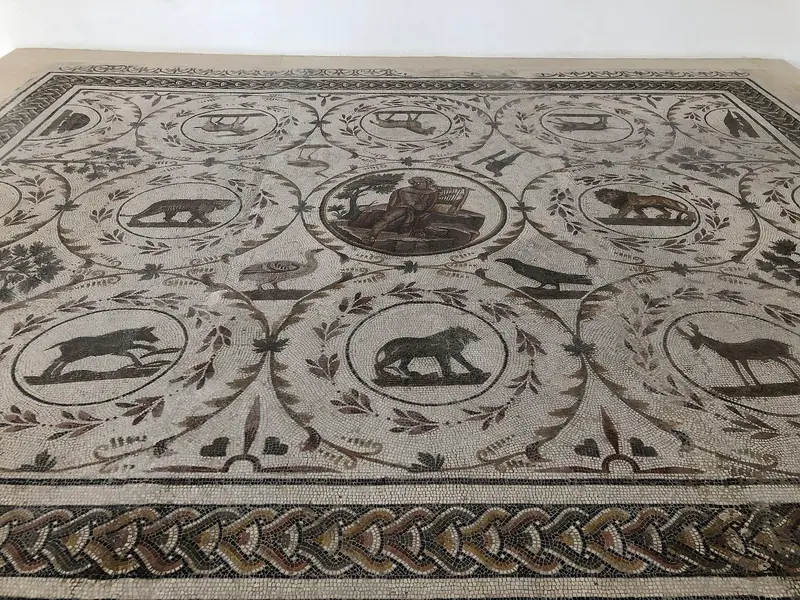
    The Regional Museum, in the former 1913 Town Hall, exhibits Punic, Roman, and Islamic artifacts, including mosaics from El Djem and the 268-coin Byzantine gold hoard of Rougga. One section focuses on the region's traditional costumes, jewelry, and textile art.
    Open in Google Maps

    Restaurants in Mahdia

    1

    Le Neptune

    The restaurant is located on the Corniche west of the Medina and specializes in grilled fish, seafood, and couscous. From the second-floor terrace, you have views of the old town and the sea.
    Show on Google Maps
    2

    Le Lido

    Fish restaurant near the harbor, more on the pricier side. Fish is charged by weight; ask for the per-kilo price before ordering.
    Show on Google Maps
    3

    Restaurant El Medina

    Family-run restaurant behind the City Market on Rue Borj Othmane. The menu features fish platters, couscous, and brik.
    Show on Google Maps

    History and Culture

    Capital of the FatimidsCaliph Abdallah al-Mahdi began construction of the city in 916 and inaugurated it on February 20, 921. Of its walls, mainly the Skifa el Kahla gate remains.At Cap AfriqueThe tip of the peninsula is called Cap Afrique. Here, Fort Borj el Kebir has watched over the coast since 1595, and before it, the sea cemetery lies right by the water.WeavingMahdia is known for its silk and wool weaving. In 2019, a craft village opened in the city.

    Getting There and Around

    Getting ThereMetro du Sahel: electric trains from Sousse, via Monastir Airport, to Mahdia station, every 40 minutes on average.Train: SNCFT connections from Tunis.Plane: nearest airport is Monastir Habib Bourguiba (MIR), directly reachable by Metro du Sahel.Around TownOld Town: Skifa el Kahla, Great Mosque, and Borj el Kebir are all within walking distance on the peninsula.Beaches: The hotel zone is located north of the city, opposite the Hiboun district.Fish Restaurants: Fish is often charged by weight; confirm the per-kilo price before ordering.

    Accommodations in Mahdia

    Find perfect stay in Mahdia

    Booking.com* (Affiliate link)
    Search Hotels
    Agoda* (Affiliate link)
    Search Hotels
    Airbnb
    Vacation Rentals

    * Affiliate link: if you book through it, we earn a small commission. The price stays the same for you.

    Plan your trip to Mahdia

    Save places, build a route and plan your city trip, all in one place.

    1. 1
      Sunrise over alpine peaks and a sea of clouds
      1234

      Round trip

      12 days · 4 stops

      Saved

      Pick a route

      Pick a ready-made one or save places and plan your own.

      Open bookmarks
    2. 2

      Trip to Mahdia

      Live
      • 1Skifa el Kahla3 days
      • 2Borj el Kebir4 days
      • 3Great Mosque of Mahdia5 days
      Budget

      Plan your trip

      The planner sorts stops, days and budget. Plan together in real time.

      Start trip planning
    3. 3
      9:41 No signal
      Mahdia
      Available offline

      Use it on the road

      Download the guide to your phone and use it on site, even offline.

    Nearby

    Monastir

    Monastir

    Monastir, located on the east coast between Sousse and Mahdia, has an international airport offering connections to many Western European countries. The city is the birthplace of Tunisia's first president, Habib Bourguiba; his golden-domed mausoleum and the Ribat, dating from 796, define its cityscape. The Medina, Ribat, and Marina are close together and easily reachable on foot, while Sousse is about 20 minutes away by louage.
    El Djem

    El Djem

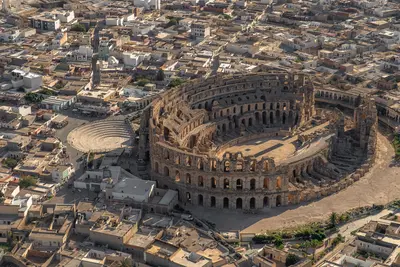
    The Amphitheatre of El Djem is one of the largest in the Roman world, situated in a small town in the Sahel, about an hour by train south of Sousse. It was built in the first half of the 3rd century in ancient Thysdrus and has been a UNESCO World Heritage site since 1979. With the same ticket, you can visit the Archaeological Museum with its mosaics and a reconstructed Roman villa.
    Sahel & Kairouan

    Sahel & Kairouan

    The Sahel is the coastal plain in eastern Tunisia, home to Sousse, Monastir, and Mahdia, a good two hours by train south of Tunis. Inland lie two of the country's most famous World Heritage Sites: the Medina of Kairouan with its Great Mosque and the Roman Amphitheatre of El Djem. Behind the beaches, olive groves stretch over flat hills.
    Sousse

    Sousse

    Sousse, with around 240,000 inhabitants (2024 census), is the largest city in the Sahel, on the east coast, a good two-hour train ride south of Tunis. Its walled Medina, with its Ribat and Great Mosque, has been a UNESCO World Heritage site since 1988; the Archaeological Museum in the Kasbah displays mosaics from Roman villas. To its north are the hotel zone and Port El Kantaoui marina. Medina, museum, and port are reachable by foot; the Metro du Sahel runs from Bab Jedid to Monastir and Mahdia.
    Sfax

    Sfax

    Sfax, with approximately 274,000 inhabitants (2024 Census), is Tunisia's second-largest city, located about 270 kilometers southeast of Tunis on the Gulf of Gabès. Its Medina is still completely enclosed by a roughly 2.75-kilometer-long city wall with 69 towers and is largely untouched by tourism.Sfax is a commercial and port city: Its port is one of the country's most important fishing ports, and about 40 percent of Tunisian olive oil originates from the surrounding area. You can explore the Old City with its Great Mosque, Kasbah, and Dar Jellouli on foot, and ferries depart from the port to the Kerkennah Islands.

    Sources & method

    • Photos: Wikimedia Commons, Google Maps. Each photo carries its credit.
    • Place data such as addresses and ratings comes from Google Maps.
    • The content is based on web research from public, traceable sources. How the content is made · The role of AI