Fernweh: Home
    ExploreTravel GuidesPlan a tripMy tripLast visited
    de|en
    All Places & RegionsAll highlightsAbout FernwehFAQPrivacy PolicyImprint
    ExploreTravel GuidesPlan a tripMy tripLast visited
    • Why go
    • Highlights
    • Explore regions
    • Round trips
    • Local food
    • Good to know
    • Best time to visit
    • Video reports
    • Travel advice
    Tunisia

    Travel Guide Tunisia

    Tunisia lies on North Africa's Mediterranean coast between Algeria and Libya, about eleven ferry hours from Palermo.

    by Felix Gillen

    Contents

    • Why go
    • Highlights
    • Explore regions
    • Round trips
    • Local food
    • Good to know
    • Best time to visit
    • Video reports
    • Travel advice

    Why Go To Tunisia?

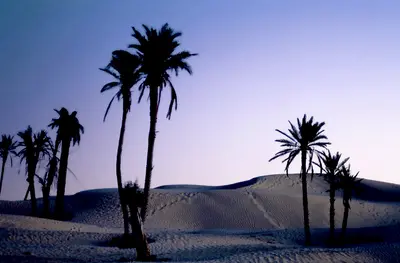
    Within a few hundred kilometres, Punic, Roman and Islamic history sit side by side. Tunisia has ten UNESCO World Heritage Sites, among them Carthage, El Djem, Dougga, Kairouan and, since 2026, the village of Sidi Bou Saïd. Add long sandy beaches, medinas with working souks and a cuisine built on harissa, olive oil and couscous. In the winter months the oases on the edge of the Sahara come into their own.

    Where in Tunisia?

    Pick a region. The highlights, road trips and places below follow your choice.
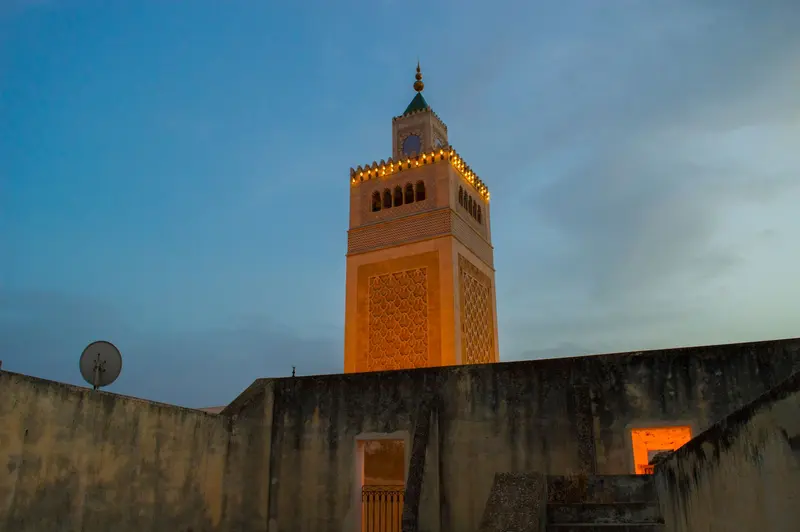
    Tunis
    Highlight 1 of 8

    Tunis

    Tunis, Tunisia's capital, lies on the Gulf of Tunis on the country's north coast. Its 698-founded Medina, with souks, mosques, and palaces, became a UNESCO World Heritage site in 1979.

    Discover
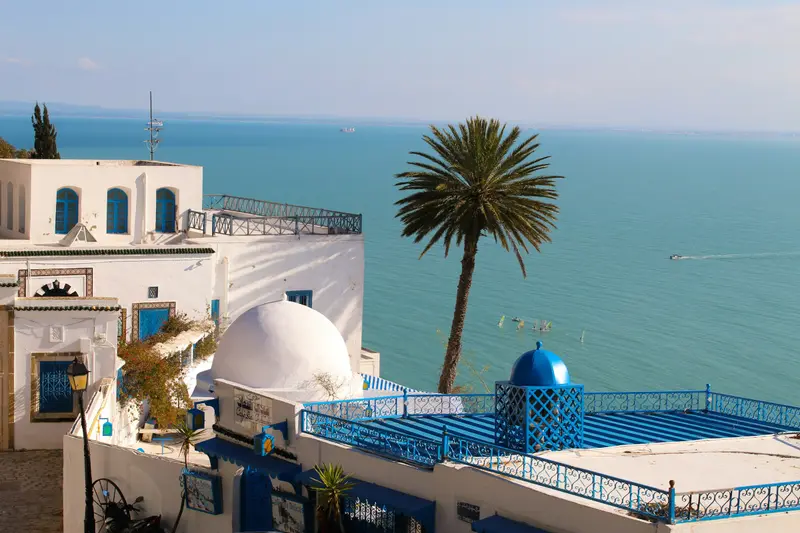
    Sidi Bou Saïd
    Highlight 2 of 8

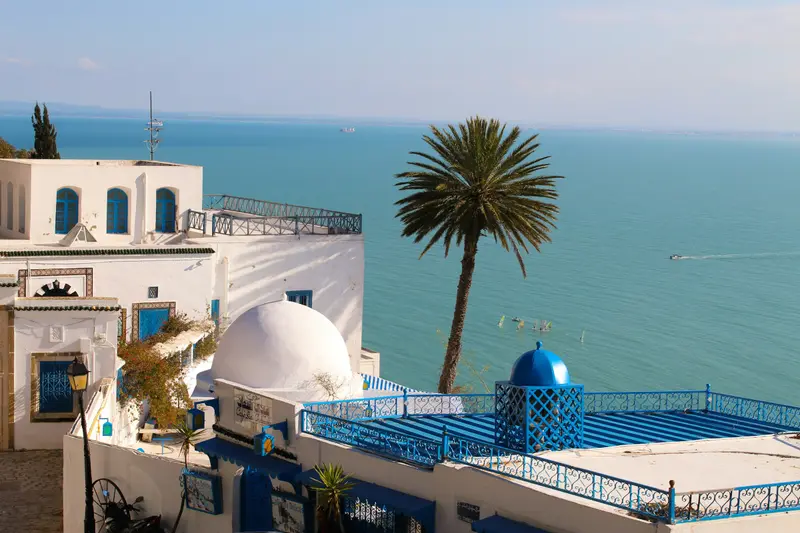
    Sidi Bou Saïd

    Sidi Bou Saïd is a village on a cliff above the Gulf of Tunis, about 20 kilometers northeast of the capital and directly above Carthage.

    Discover
    Carthage
    Bernard Gagnon / Wikimedia Commons / CC BY-SA 3.0
    Highlight 3 of 8

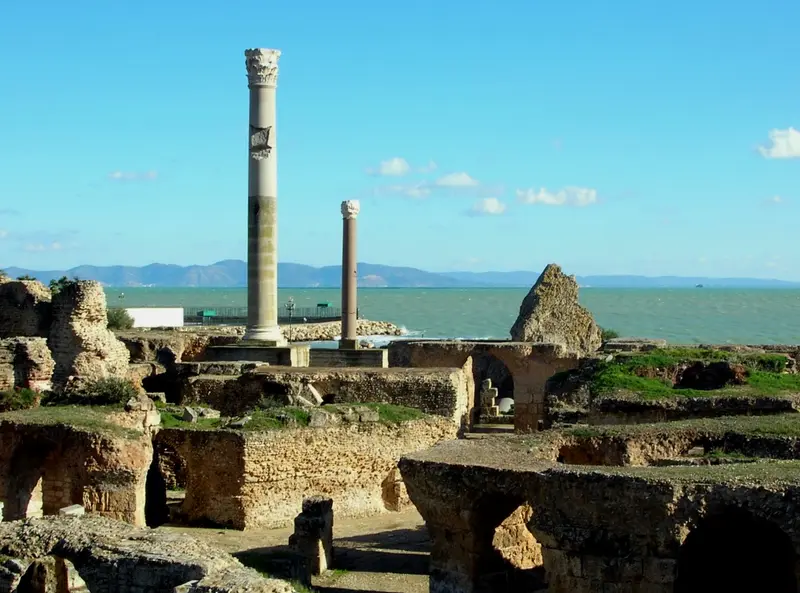
    Carthage

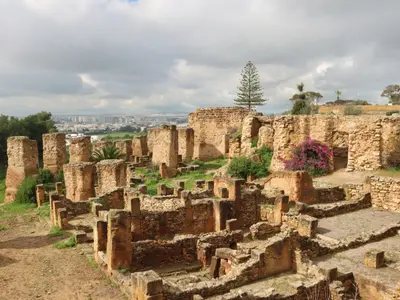
    The ruins of Carthage are scattered among residential areas on the coast northeast of Tunis and are directly accessible by the TGM suburban train.

    Discover
    Hammamet
    Habib M'henni / Wikimedia Commons / CC BY-SA 3.0
    Highlight 4 of 8

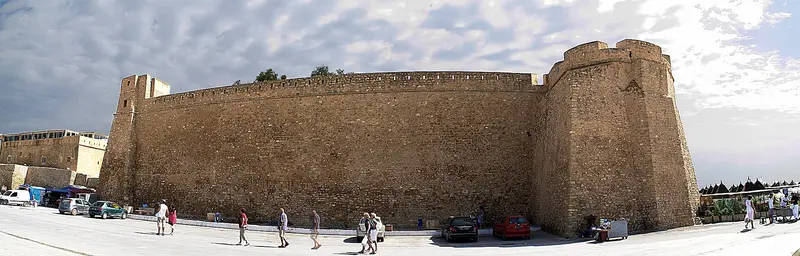
    Hammamet

    Hammamet is located approximately 60 kilometers south of Tunis and is the most important seaside resort in the Cap Bon region.

    Discover
    Sousse
    BishkekRocks 15:01, 29 December 2005 (UTC) / Wikimedia Commons / CC BY-SA 3.0
    Highlight 5 of 8

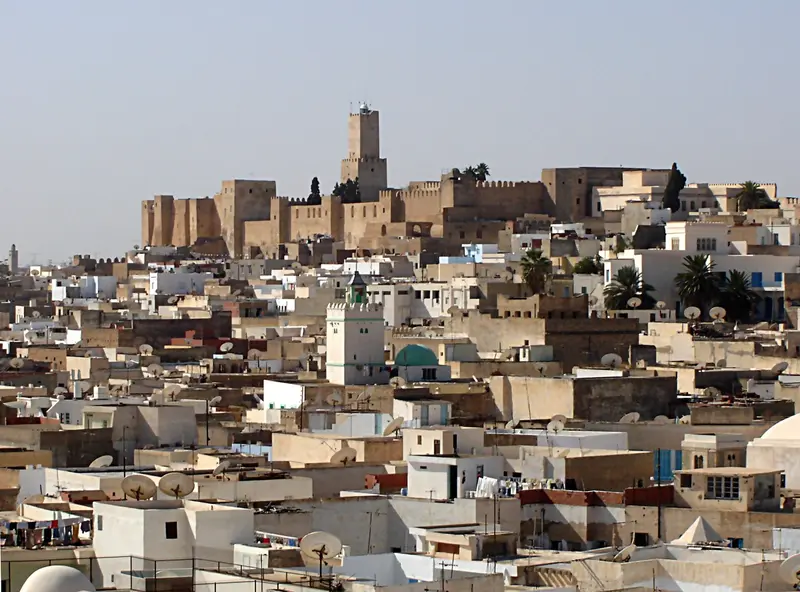
    Sousse

    Sousse, with around 240,000 inhabitants (2024 census), is the largest city in the Sahel, on the east coast, a good two-hour train ride south of Tunis.

    Discover
    Kairouan
    weetoon66 / Wikimedia Commons / CC BY-SA 2.0
    Highlight 6 of 8

    Kairouan

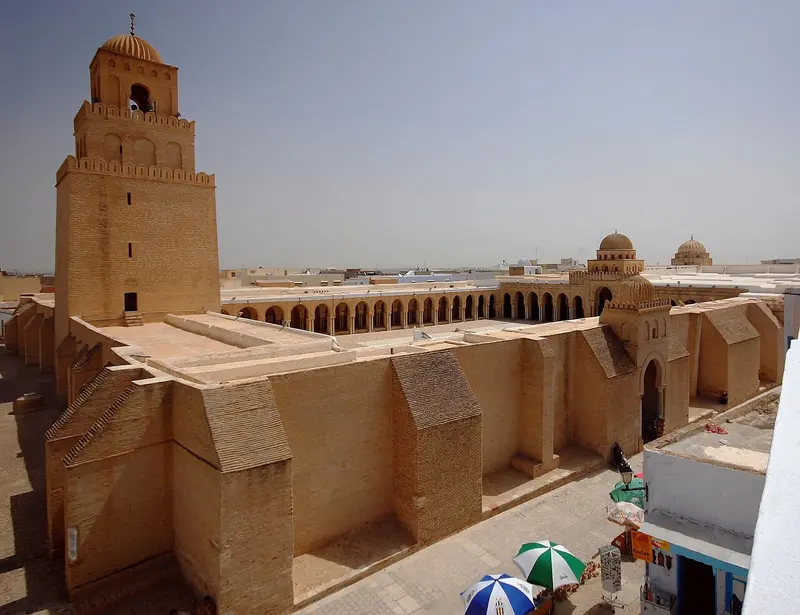
    Kairouan is located inland, about one and a half bus hours west of Sousse, and was founded around 670 by Uqba ibn Nafi. Its walled Medina, with the Great Mosque, has been a UNESCO World Heritage site since 1988.

    Discover
    El Djem
    Skander zarrad / Wikimedia Commons / CC BY-SA 4.0
    Highlight 7 of 8

    El Djem

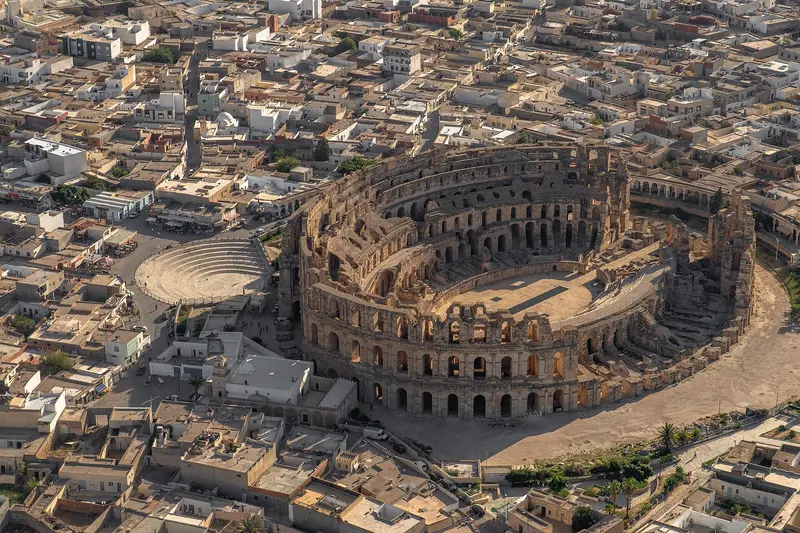
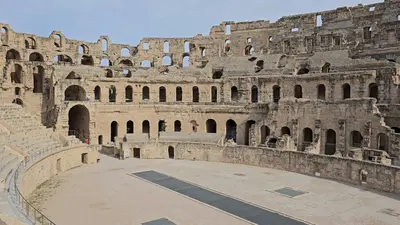
    The Amphitheatre of El Djem is one of the largest in the Roman world, situated in a small town in the Sahel, about an hour by train south of Sousse.

    Discover
    Djerba
    Highlight 8 of 8

    Djerba

    Djerba is a flat island in the Gulf of Gabès, in southeastern Tunisia, and has been a UNESCO World Heritage site since 2023.

    Discover

    More highlights in Tunisia

    Unique experiences that make Tunisia unforgettable.
    Matmata

    Matmata

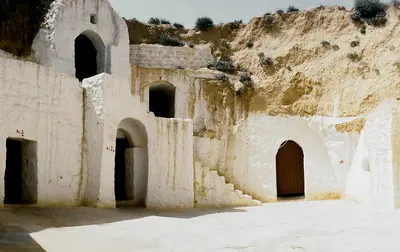
    Matmata is a Berber village about 600 m high, 40 km southwest of Gabès in southern Tunisia. You visit to see the dwellings dug into the earth around a deep courtyard, including the Hotel Sidi Driss, a filming location for 'Star Wars'.The old village is small and easily explored on foot. New Matmata, the current main town, is approximately 15 km away.
    Douz

    Douz

    Douz is known as the gateway to the Sahara: the oasis town in Kebili governorate lies about two hours' drive southeast of Tozeur on the edge of the Grand Erg Oriental. You come for the first big sand dunes, organised camel rides and the Festival international du Sahara in December.The town has around 30,000 inhabitants, most of them from the Mrazig tribe. Douz lies on the edge of areas covered by official travel warnings, and independent desert trips are advised against: check the current travel advice, such as the UK FCDO Travel Advice, before you go.
    Tozeur

    Tozeur

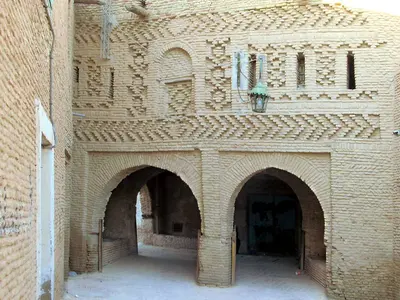
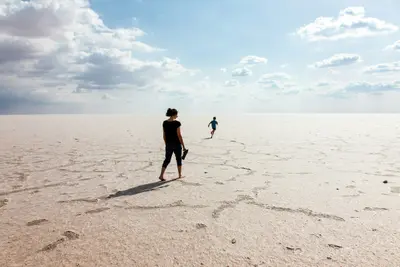
    Tozeur is the main town of the Djerid in southwestern Tunisia, about 450 kilometres southwest of Tunis on the northern edge of the Chott el Djerid salt lake. You come for the Ouled el Hadef old town with its patterned brickwork and for the palm grove with around 400,000 date palms.The town has just under 40,000 inhabitants and is easy to explore on foot, by bicycle or by horse-drawn carriage. Tozeur lies on the edge of areas covered by official travel warnings: check the current travel advice, such as the UK FCDO Travel Advice, before you go.
    Dougga

    Dougga

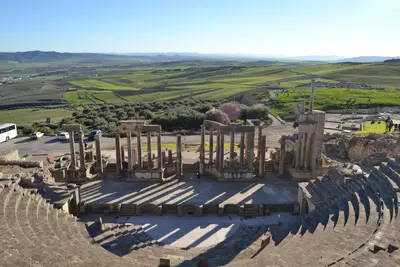
    Dougga, ancient Thugga, has been a UNESCO World Heritage Site since 1997 and is considered the best-preserved small Roman town in North Africa. The 75-hectare excavation lies about 110 km west of Tunis, with a Capitol, a theatre and a Numidian mausoleum from the 2nd century BC. Allow at least 2.5 to 3 hours for a walk around the site.

    How to plan your trip to Tunisia

    From the guide to the road: here is what comes next.

    1. 1
      Sunrise over alpine peaks and a sea of clouds
      1234

      Round trip

      12 days · 4 stops

      Saved

      Pick a route

      Pick a ready-made one or save places and plan your own.

      Browse routes
    2. 2

      Trip to Tunisia

      Live
      • 1Tunis3 days
      • 2Sidi Bou Saïd4 days
      • 3Carthage5 days
      Budget

      Plan your trip

      The planner sorts stops, days and budget. Plan together in real time.

      Go to My Trips
    3. 3
      9:41 No signal
      Tunisia
      Available offline

      Use it on the road

      Download the guide to your phone and use it on site, even offline.

    Regions to Discover

    Explore the diverse regions of Tunisia.
    Djerba & the Southeast

    Djerba & the Southeast

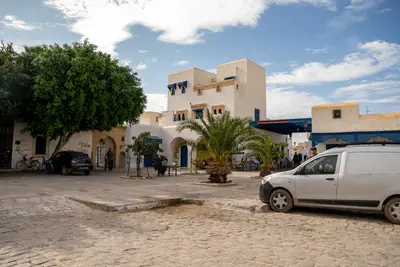
    Southeastern Tunisia links the flat island of Djerba in the Gulf of Gabès with the arid mountainous region around Matmata, approximately 40 km southwest of Gabès. You come for Djerba's beaches and its villages, whose settlement pattern has been a UNESCO World Heritage Site since 2023, and for the Berber cave dwellings dug into the ground. Djerba has its own international airport and is the usual base for the region.
    Cap Bon & Hammamet

    Cap Bon & Hammamet

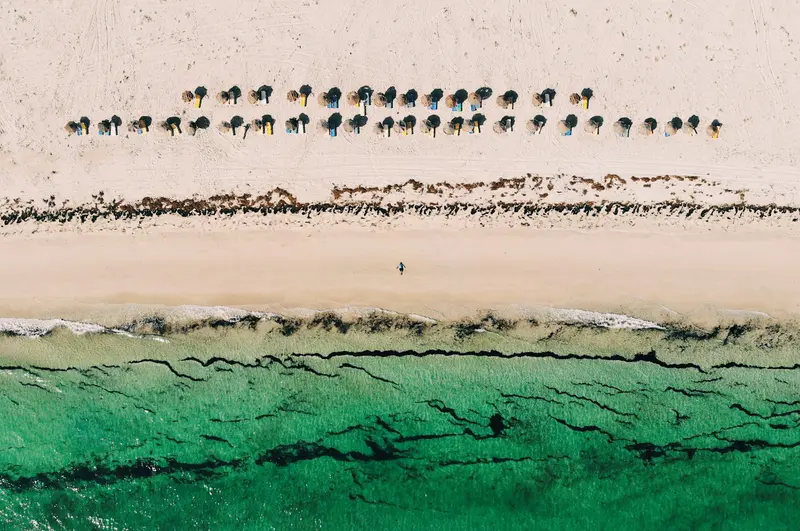
    The Cap Bon peninsula juts into the Mediterranean in northeast Tunisia, and on its southern edge, about 60 kilometers south of Tunis, lies the seaside resort of Hammamet. The region combines long sandy beaches with the Punic ruin city of Kerkouane, the pottery craft of Nabeul, and the falconry tradition of El Haouaria.Hammamet, Nabeul, and Kélibia are suitable as a base; all three are located on the coast.
    Sahel & Kairouan

    Sahel & Kairouan

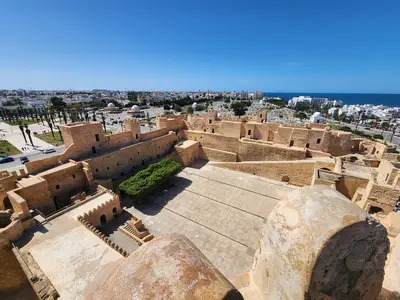
    The Sahel is the coastal plain in eastern Tunisia, home to Sousse, Monastir, and Mahdia, a good two hours by train south of Tunis. Inland lie two of the country's most famous World Heritage Sites: the Medina of Kairouan with its Great Mosque and the Roman Amphitheatre of El Djem. Behind the beaches, olive groves stretch over flat hills.
    Oases & Sahara

    Oases & Sahara

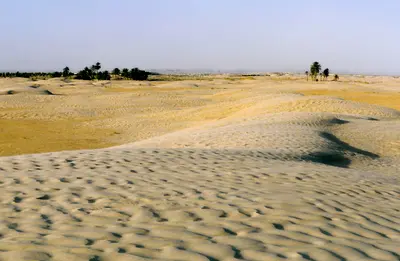
    In southwestern Tunisia, steppe and mountains give way to the Sahara: palm oases such as Tozeur and Nefta, the Chott el Djerid salt lake and the dunes of the Grand Erg Oriental near Douz define the region. You travel here for brick-built old towns, date palms, the salt lake and the first sand dunes of the Sahara.The region borders Algeria and areas covered by official travel warnings. Check the current travel advice, such as the UK FCDO Travel Advice for Tunisia, before making any plans.
    Norden & Tell

    Norden & Tell

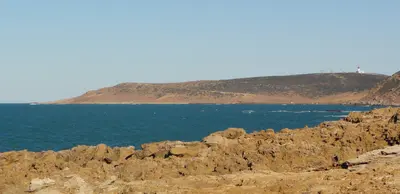
    Northern Tunisia, between Bizerte and the Algerian border, combines the Mediterranean coast with the Tell hill country west of Tunis. You come here for the Roman cities of Dougga and Bulla Regia, the port city of Bizerte, the rocky coast of Tabarka and Ichkeul National Park. Bizerte is about an hour's drive north of Tunis, Dougga about 1.5 to 2 hours west.
    Tunis & Carthage

    Tunis & Carthage

    The region Tunis & Carthage encompasses Tunisia's capital and its coastal suburbs on the Gulf of Tunis. Here, three UNESCO World Heritage Sites are close together: the Medina of Tunis, the Ruins of Carthage, and the blue-and-white village of Sidi Bou Saïd. Most travelers arrive at Tunis-Carthage Airport or by ferry at La Goulette port.

    Recommended Itineraries

    Discover the best routes through Tunisia.
    Classic Tour: Tunis, Kairouan and the Sahel

    Classic Tour: Tunis, Kairouan and the Sahel

    Twelve days through the north and the Sahel: from the medina of Tunis via the ruins of Carthage and Dougga to Kairouan, on to the amphitheatre of El Djem and down to the coast at Sousse, Monastir and Hammamet. The medina of Tunis, Carthage, Dougga, Kairouan, El Djem and the medina of Sousse are UNESCO World Heritage Sites.

    12 Days
    Stops at a glance
    1. 1.Tunis
    2. 2.Carthage
    3. 3.Sidi Bou Saïd
    4. 4.Dougga
    5. 5.Kairouan
    6. 6.El Djem
    7. 7.Sousse
    8. 8.Monastir
    9. 9.Hammamet
    View Route Details →
    The South: Djerba, Matmata and the Oases

    The South: Djerba, Matmata and the Oases

    Ten days in southern Tunisia: from the island of Djerba to the cave dwellings of Matmata, to Douz on the edge of the Grand Erg Oriental, and across the Chott el Djerid salt lake to Tozeur and Nefta. Parts of the route lie in areas covered by specific warnings in the UK FCDO Travel Advice. Check the current advice before you travel and only go into the desert on organised tours with local operators.

    10 Days
    7 stops

    What you eat in Tunisia

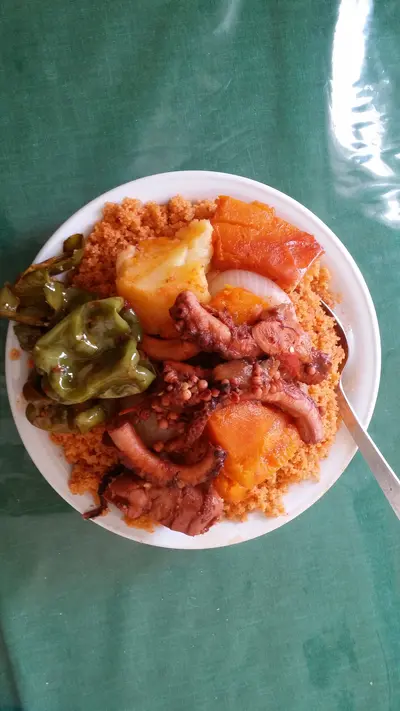
    Couscous

    Couscous

    Steamed durum wheat semolina

    Couscous is the family dish of the Maghreb: steamed durum wheat semolina with a stew of vegetables and meat. Since 2020, the knowledge and practices surrounding Couscous have been on the UNESCO List of Intangible Cultural Heritage as a shared heritage of Tunisia, Algeria, Morocco, and Mauritania.
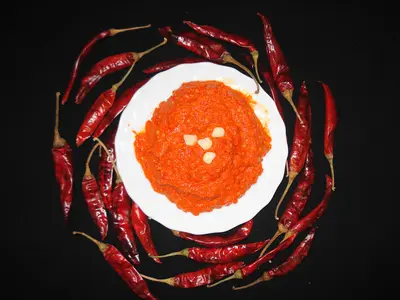
    Harissa

    Harissa

    Spicy Chili Paste

    Tunisia's red chili paste, Harissa, is a staple at almost every meal, seasoning stews, soups, and sandwiches. Since 2022, it's on the UNESCO Intangible Cultural Heritage list.
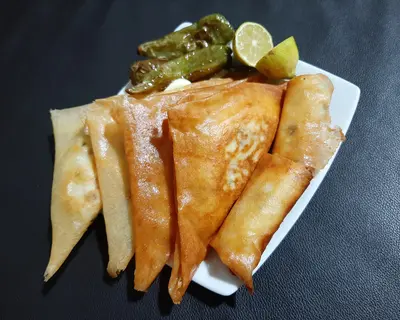
    Brik

    Brik

    Fried pastry sheet with egg

    Ein hauchdünnes Teigblatt, die Malsouka, wird mit einem rohen Ei gefüllt, oft auch mit Thunfisch, Petersilie oder Kapern, und dann frittiert. Am besten isst Du Brik sofort, mit etwas Zitrone, solange das Eigelb noch flüssig ist. Im Ramadan fehlt es selten auf dem Tisch.
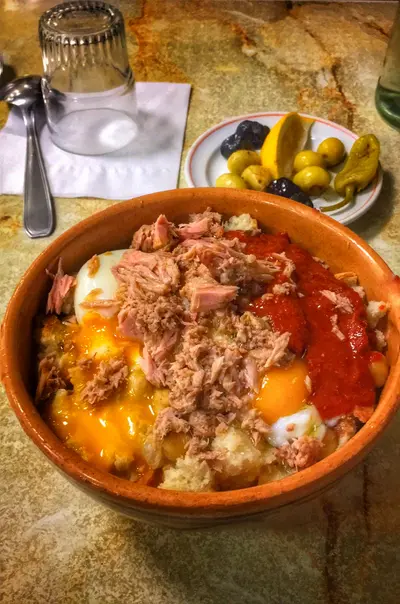
    Lablabi

    Lablabi

    Chickpea soup served with bread

    Cooked chickpeas with garlic, cumin, olive oil, and harissa are ladled over torn bread. Often, an egg, tuna, and olives are added. Lablabi is eaten hot, especially in winter.
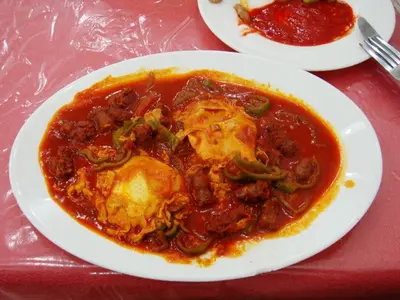
    Ojja

    Ojja

    Tomato-Pepper Pan with Egg

    Tomatoes and bell peppers braised in olive oil with garlic and caraway, into which eggs are finally cracked. Merguez is often added. With onions, potatoes, or more vegetables, it becomes the related Chakchouka.
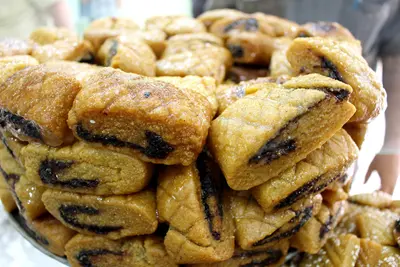
    Makroudh

    Makroudh

    Semolina pastry with date filling

    Semolina diamonds with a date paste filling, fried and soaked in honey and orange blossom water syrup. This treat is considered a specialty of Kairouan, where the first national Makroudh Festival took place in 2008.

    Good to Know

    Essential info for your trip planning.

    Land & People

    Landscapes Tunisia spans 163,610 km² and features over 1,100 kilometers of Mediterranean coastline.

    History & Society

    From Carthage to the Ottomans According to tradition, Phoenicians from Tyre founded Carthage in 814 BC.

    Food & Drink

    Tunisian Cuisine Olive oil, tomatoes, fish, and lamb form the base, while Harissa provides the spice.

    Practical Info

    Health & Safety Check the UK FCDO Travel Advice for Tunisia, linked on this country page, before and during your…

    Getting Around

    Arrival Direct flights to Tunis, Enfidha, Monastir, and Djerba are available from German-speaking countries, for…

    RV Travel

    Arriving by RV RVs reach Tunis-La Goulette by ferry from Italy or France.

    Traveling with Kids

    Beach Holidays with Children Hammamet, Sousse, Monastir, and Djerba are classic beach resorts with many hotel complexes…

    Best Time to Visit

    When is the best time for your trip?

    April
    May
    September
    October
    17–26°C·22–58 mm(little rain)
    April, May and October are best suited for Tunis, the north, and tours to the ancient sites: In Tunis, daily maximum temperatures are then between 22 and 27 °C. In September, the sea is still warm at around 25 °C, but rainfall increases again to almost 60 mm per month. For swimming, June to September is the best time, often until mid-October on the east coast and Djerba.
    Coast and NorthThe north experiences a Mediterranean climate with hot, dry summers and mild, rainy winters. In Tunis, only just over 4 mm of rain falls in July, while nearly 70 mm falls in December. The values above are from the Tunis-Carthage station (average 1991 to 2020).South and SaharaTowards the south, it quickly becomes drier: Tozeur receives barely 100 mm of rain throughout the year. In July and August, average maximum temperatures there reach around 40 °C, with records at 49 °C. For the oases and the edge of the Sahara, November to March are the most pleasant, with daytime temperatures usually below 30 °C; April and October are a compromise. Djerba is warmer than Tunis, with sea temperatures reaching around 28 °C there in August and September.

    Seasons

    Jan
    Feb
    Mar
    Apr
    May
    Jun
    Jul
    Aug
    Sep
    Oct
    Nov
    Dec
    Swim Season & Peak Summer
    Spring and Autumn: ideal for tours
    Winter: mild on the coast, best time for the desert
    Best Time to Visit
    ▶Show detailed monthly data
    MonthTemp (°C)Rain (mm)Sun (h)
    January12.3595.3
    February12.5555.7
    March14.6466.4
    April17.2387.5
    May21.0229.1
    June25.11310.3
    July28.1411.5
    August28.71510.6
    September25.6588.6
    October22.0557.0
    November17.2535.8
    December13.5685.1

    Video reports from Tunisia

    Get inspired by authentic travel tales.

    9 best places to visit in Tunisia

    9 best places to visit in Tunisia

    Lonely Planet (2025): the country's key destinations from the coast to the desert, with planning tips.

    The herbalists of Tunis medina: on borrowed thyme

    The Guardian (2022), photo essay by Harry Johnstone: the herbalists of Souq El…

    Flight-free to Tunisia: London to Tunis in two days by rail and ferry

    The Guardian (2025), by Diana Jarvis: the overland route from London to Tunis…

    Travel advice

    Safety, entry requirements and health: the official, up-to-date advice for Tunisia is published by the UK government on GOV.UK.

    Go to GOV.UK

    Sources & method

    • Photos: Wikimedia Commons, Unsplash, Pexels. Each photo carries its credit.
    • Video reportages: 9 best places to visit in Tunisia, The herbalists of Tunis medina: on borrowed thyme, Flight-free to Tunisia: London to Tunis in two days by rail and ferry
    • The content is based on web research from public, traceable sources. How the content is made · The role of AI
    Felix at Kuirau Park in Rotorua, New Zealand

    Who's behind Fernweh?

    Hi, I'm Felix.

    I love to travel, and I love planning even more. Fernweh.guide is my attempt at building a really good online travel guide.

    About Fernweh

    All places in Tunisia

    • Bizerte
    • Bulla Regia
    • Cap Bon & Hammamet
    • Carthage
    • Chott el Djerid
    • Djerba
    • Djerba & the Southeast
    • Dougga
    • Douz
    • El Djem
    • El Haouaria
    • Gabès
    • Hammamet
    • Ichkeul National Park
    • Kairouan
    • Kélibia
    • Kerkennah Islands
    • La Marsa & Gammarth
    • Mahdia
    • Matmata
    • Monastir
    • Mountain Oases Chebika, Tamerza & Midès
    • Nabeul
    • Nefta
    • Norden & Tell
    • Oases & Sahara
    • Sahel & Kairouan
    • Sfax
    • Sidi Bou Saïd
    • Sousse
    • Tabarka
    • Testour
    • Tozeur
    • Tunis
    • Tunis & Carthage
    • Zaghouan & Thuburbo Majus

    More about Tunisia

    • Best Time to Visit Tunisia
    • Tunisia with Kids