Fernweh: Home
    ExploreTravel GuidesPlan a tripMy tripLast visited
    de|en
    All Places & RegionsAll highlightsAbout FernwehFAQPrivacy PolicyImprint
    ExploreTravel GuidesPlan a tripMy tripLast visited
    • Neighborhoods & highlights
    • Walking tours
    • Eat & drink
    • Food culture
    • Best travel time
    • Culture
    • Getting around
    • Accommodation
    • Plan trip
    • Nearby
    Djerba

    Tunisia

    Djerba

    City

    Djerba is a flat island in the Gulf of Gabès, in southeastern Tunisia, and has been a UNESCO World Heritage site since 2023.

    by Felix Gillen

    1. Home
    2. Destinations
    3. Tunisia
    4. Djerba & the Southeast
    5. Djerba
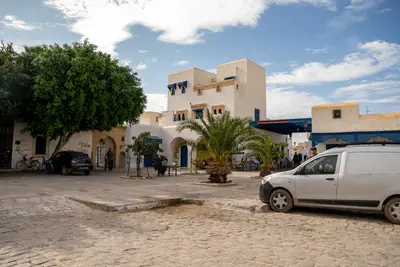
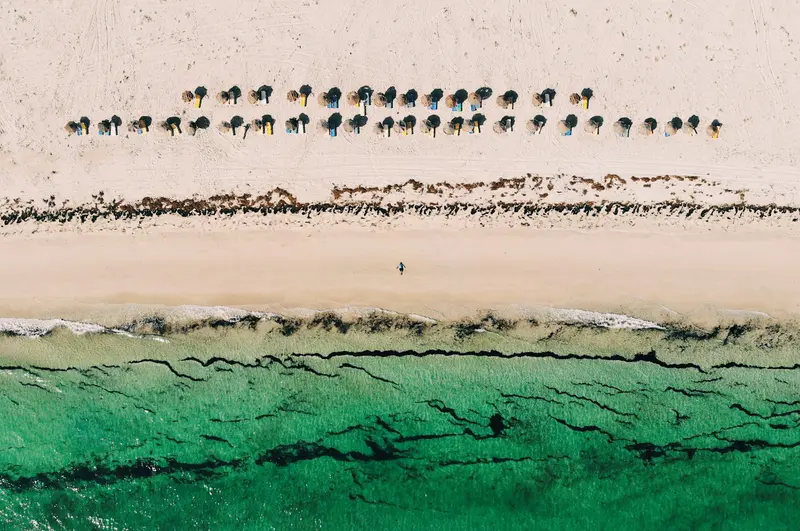
    Djerba is a flat island in the Gulf of Gabès, in southeastern Tunisia, and has been a UNESCO World Heritage site since 2023. You go there for long sandy beaches on the northeast coast, the souks of Houmt Souk, and villages like Erriadh and Guellala, where Jewish, Ibadite, and Berber traditions coexist. The island, covering approximately 514 km², has a population of just under 190,000 (2024 census). Its main town is Houmt Souk in the north, and hotels are primarily located along the coast around Sidi Mahrez. Public transport is limited; most journeys are made by taxi, rental car, or bicycle.

    Sights in Djerba

    Discover the most important sights and attractions

    La Ghriba Synagogue
    Synagogue

    1La Ghriba Synagogue

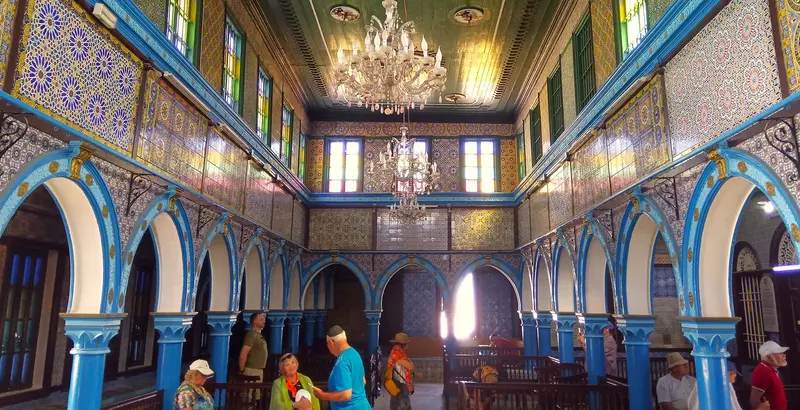
    The synagogue in Erriadh, about 9 km south of Houmt Souk, is the religious center of Djerba's Jewish community and the destination of an annual pilgrimage approximately three weeks after Passover. Following the attack in May 2023, enhanced security measures are in effect. According to the community committee, the synagogue is open to visitors year-round.
    Open in Google Maps
    Borj El Kebir

    2Borj El Kebir

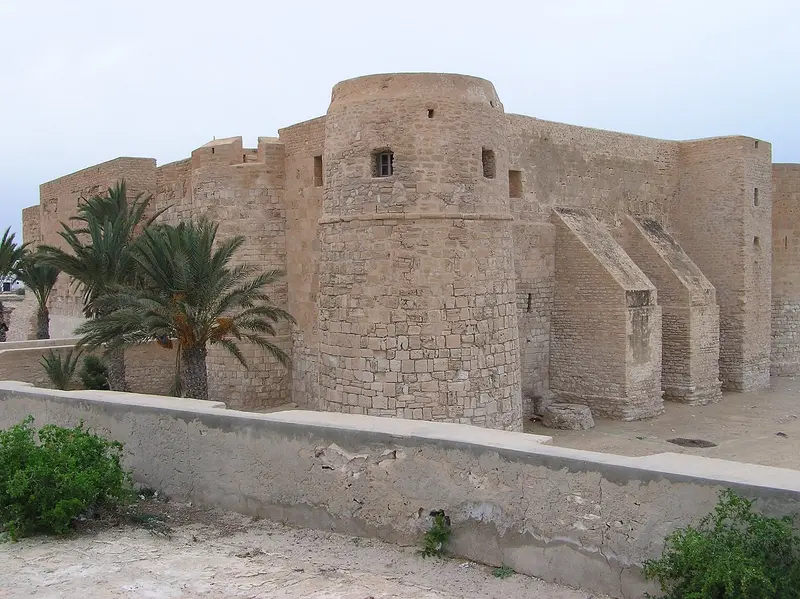
    The fortress at the harbour of Houmt Souk was built in the 15th century on the ruins of the Roman town of Girba and enlarged in the 16th century. Today it is open as a museum with exhibitions on the island's history; from the walls you look out over the harbour and the sea.
    Open in Google Maps
    Djerbahood
    Attraction

    3Djerbahood

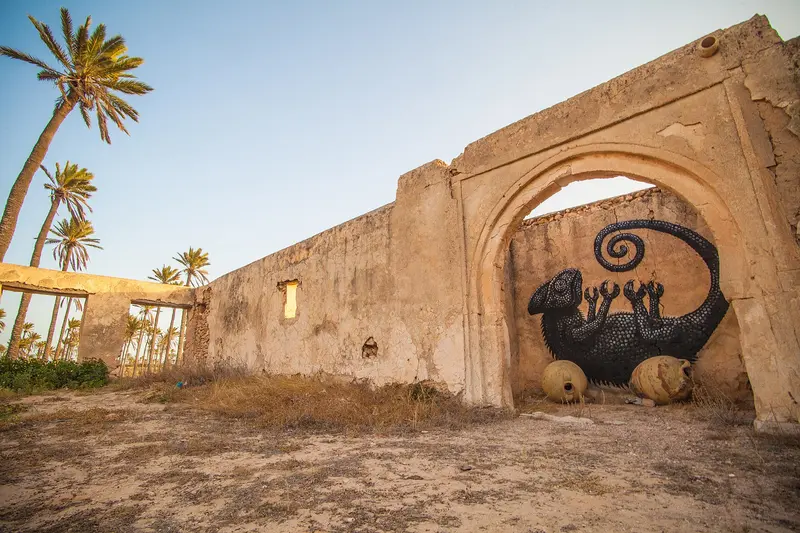
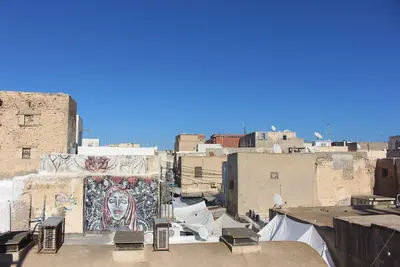
    Since 2014, international street artists have painted the house walls in Erriadh village. The murals are spread throughout the village center's alleys and are freely accessible.
    Open in Google Maps
    Museum of Guellala
    Museum

    4Museum of Guellala

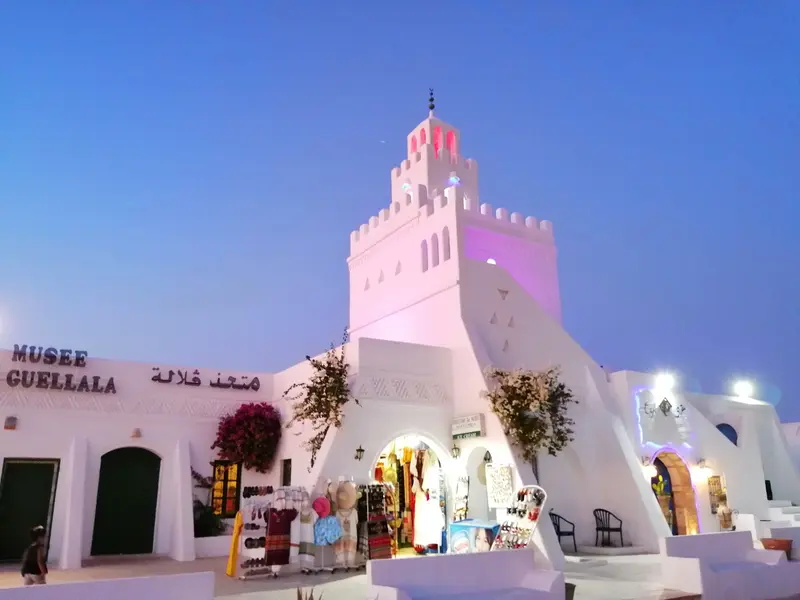
    The museum, opened in 2001, on a hill above Guellala pottery village, showcases Djerba's daily life, crafts, and traditions over 4,000 m² in several pavilions. From the site, you look over the village to the mainland.
    Open in Google Maps
    Museum of Traditional Heritage
    Museum

    5Museum of Traditional Heritage

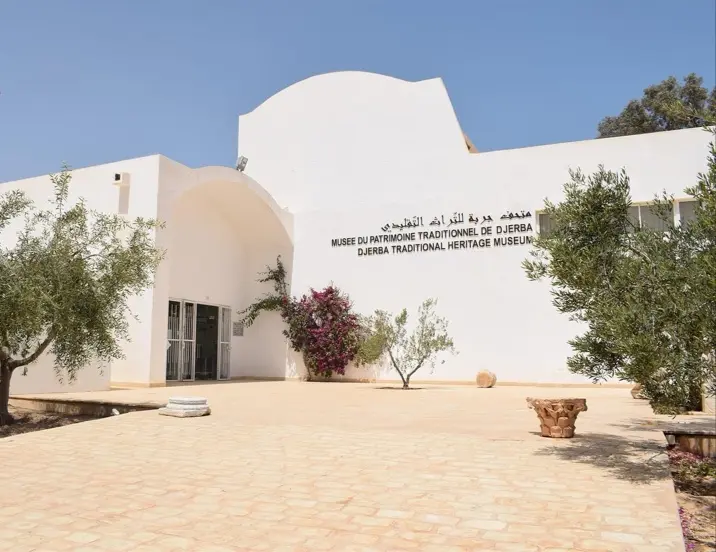
    The museum in Houmt Souk is housed in the former Zaouïa Sidi Zitouni and was expanded in 2008 with a new building of approximately 2,000 m². It is dedicated to the island's traditional heritage.
    Open in Google Maps
    Mosque Fadhloun
    Mosque

    6Mosque Fadhloun

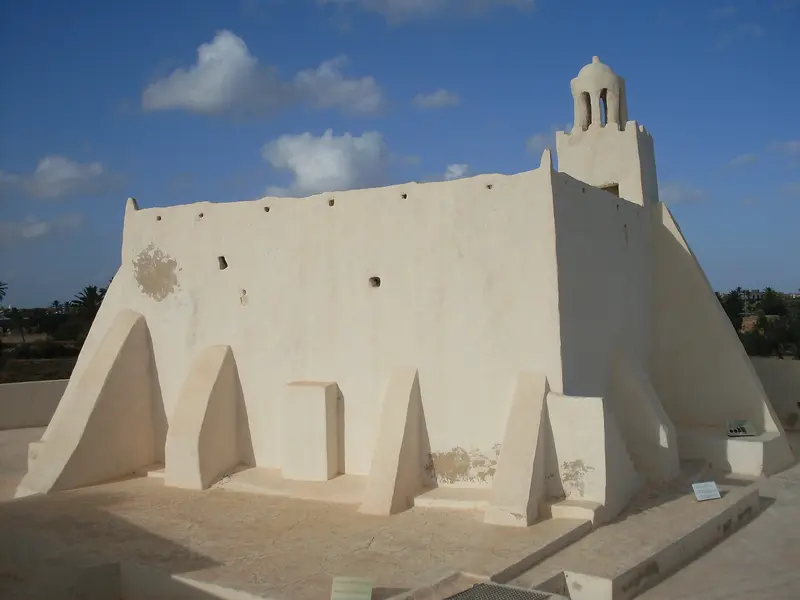
    The Ibadite Mosque on the road between Houmt Souk and Midoun may date back to the 11th century. It is considered an example of the island's simple, fortified mosques, which also served as a refuge during attacks.
    Open in Google Maps

    City walks in Djerba

    Curated walking tours through the city's highlights, handpicked by experienced travel journalists.

    Walking Tour of Houmt Souk

    A short stroll through Djerba's main town: from the Folklore Museum past the mosques in the business district to Borj El Kebir Fortress and the fishing port. Just under 2 kilometers, a good two hours including visits.

    Open in Google Maps
    Stops (5)

    Restaurants in Djerba

    1

    Restaurant Haroun

    Waterfront restaurant at Houmt Souk's port, with a spacious terrace. The menu highlights fish, seafood, and Tunisian specialties.
    Show on Google Maps
    2

    Restaurant Dar Hassine

    Restaurant in a former Tunisian house in Houmt Souk. Known for couscous and grilled fish.
    Show on Google Maps
    3

    Chez Hanini

    Simple eatery near Houmt Souk's Central Market with Djerban cuisine like couscous and grilled fish. Buy your own fish at the market and have it grilled here; check opening hours beforehand.
    Show on Google Maps
    4

    Chez Moktar

    Restaurant in Midoun with a colourful dining room. The menu includes Tunisian dishes like Couscous and Brik, plus Italian cuisine.
    Show on Google Maps
    5

    Little Sailor

    Restaurant on the west coast near Sidi Jmour beach. The menu features Djerban dishes and seafood.
    Show on Google Maps

    Dining and Drinks

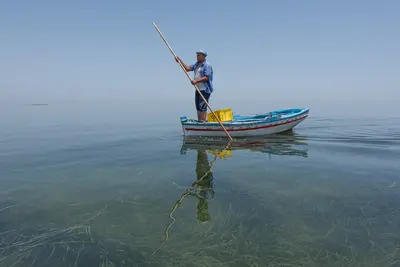
    Djerba's cuisine lives from the sea. Lunch is cheapest in Houmt Souk; for fish outside a resort setting, head to Ajim.

    Rouz djerbi

    The Island Dish: steamed, spiced rice, often with vegetables and chickpeas, sometimes with fish or meat.

    Our Grilled Fish

    Fish of the day, calamari, or couscous with fish. Make sure the fish is on ice.

    Fricassee and Brik

    Frittiertes Brot mit Thunfisch, Ei, Kartoffel und Harissa; Brik ist knuspriger Teig mit Ei.

    Market of Houmt Souk

    Vegetables, olives, harissa, spices and seafood. Sample olives and oil before buying.

    Best Time to Visit

    When is the best time for your trip?

    May
    June
    September
    October
    22–27°C·1–36 mm(little rain)
    In May and June, as well as September and October, average daily high temperatures are between 27 and 31 °C, and the sea is 19 to 27 °C. July and August are the hottest, with highs around 33 °C.
    Djerba has a dry, mild climate. From May to August, little rain falls; most precipitation occurs from October to December. In winter, daily highs reach 16 to 18 °C, and the sea cools to 15 to 16 °C. Air and precipitation data: Institut National de la Météorologie, 1981–2010, according to Wikipedia.

    Seasons

    Jan
    Feb
    Mar
    Apr
    May
    Jun
    Jul
    Aug
    Sep
    Oct
    Nov
    Dec
    Swim season
    In-between time
    Winter
    Best Time to Visit
    ▶Show detailed monthly data
    MonthTemp (°C)Rain (mm)
    January12.927
    February13.714
    March15.816
    April18.312
    May21.85
    June25.21
    July27.80
    August28.71
    September26.720
    October23.436
    November18.627
    December14.541

    Culture

    An island World Heritage SiteUNESCO inscribed Djerba in 2023 as testimony to a distinctive settlement pattern. The island is divided into districts (houma) made up of scattered farmsteads (menzel) that were long self-sufficient.Faith communitiesDjerba is still home to a Jewish community, mainly in Erriadh and Houmt Souk. Its centre is the La Ghriba synagogue, the destination of an annual pilgrimage about three weeks after Passover.Many Muslim Djerbans traditionally follow the Ibadi branch of Islam. The plain, whitewashed mosques scattered across the island bear witness to this.Crafts and marketsPottery: many potters still work in Guellala in the south of the islandSouks: textiles, spices, dates, ceramics and silver jewellery in Houmt Souk; bargaining is normalStreet art: since 2014 international artists have painted the house walls of Erriadh as part of the Djerbahood project

    Travel and Explore

    Arrival By Air: Djerba-Zarzis Airport (DJE) is located in the northwest of the island. Direct flights operate from Frankfurt and Munich among others, depending on the season with Tunisair, Nouvelair, Lufthansa, Discover or TUIfly; check current schedules. Tunisair Express connects Djerba with Tunis. By Bus: Buses from Tunis usually take ten hours or more to Djerba, and direct services are rare. By Train: The railway line ends in Gabès on the mainland. Continue by bus or louage. Causeway and Ferry Roman Causeway: In the southeast, a 7 km long causeway near El Kantara connects the island with the Zarzis peninsula. Its origins date back to antiquity. Jorf-Ajim Ferry: In the southwest, car ferries shuttle between Jorf on the mainland and Ajim. The crossing only takes a few minutes, but in summer you often have to wait over an hour. In strong winds, services are temporarily suspended. Getting Around the Island Taxi: The most important means of transport. From the airport to Houmt Souk is a short ride; make sure the meter is running. Bikes and Scooters: Rentals available in Houmt Souk and Midoun; the island is largely flat. Louages: Shared taxis depart from the louage station in Houmt Souk.

    Accommodations in Djerba

    Find perfect stay in Djerba

    Booking.com* (Affiliate link)
    Search Hotels
    Agoda* (Affiliate link)
    Search Hotels
    Airbnb
    Vacation Rentals

    * Affiliate link: if you book through it, we earn a small commission. The price stays the same for you.

    Plan your trip to Djerba

    Save places, build a route and plan your city trip, all in one place.

    1. 1
      Sunrise over alpine peaks and a sea of clouds
      1234

      Round trip

      12 days · 4 stops

      Saved

      Pick a route

      Pick a ready-made one or save places and plan your own.

      Open bookmarks
    2. 2

      Trip to Djerba

      Live
      • 1La Ghriba Synagogue3 days
      • 2Borj El Kebir4 days
      • 3Djerbahood5 days
      Budget

      Plan your trip

      The planner sorts stops, days and budget. Plan together in real time.

      Start trip planning
    3. 3
      9:41 No signal
      Djerba
      Available offline

      Use it on the road

      Download the guide to your phone and use it on site, even offline.

    Nearby

    Djerba & the Southeast

    Djerba & the Southeast

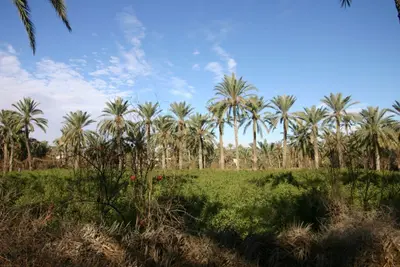
    Southeastern Tunisia links the flat island of Djerba in the Gulf of Gabès with the arid mountainous region around Matmata, approximately 40 km southwest of Gabès. You come for Djerba's beaches and its villages, whose settlement pattern has been a UNESCO World Heritage Site since 2023, and for the Berber cave dwellings dug into the ground. Djerba has its own international airport and is the usual base for the region.
    Gabès

    Gabès

    Gabès, a port city on the Gulf of Gabès in southeastern Tunisia, lies about 400 km south of Tunis on the mainland west of Djerba. You come for its palm oasis right by the sea, considered the Mediterranean's sole coastal oasis, and for the henna market in the Jara quarter. The city, with over 100,000 inhabitants, is the terminus for the Tunis railway line and a starting point for Matmata. Worth seeing are the old quarters Jara and Menzel, the Mausoleum of patron saint Sidi Boulbaba, and the Chenini oasis.
    Matmata

    Matmata

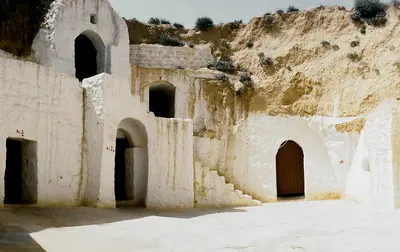
    Matmata is a Berber village about 600 m high, 40 km southwest of Gabès in southern Tunisia. You visit to see the dwellings dug into the earth around a deep courtyard, including the Hotel Sidi Driss, a filming location for 'Star Wars'.The old village is small and easily explored on foot. New Matmata, the current main town, is approximately 15 km away.
    Kerkennah Islands

    Kerkennah Islands

    The Kerkennah Islands are located in the Gulf of Gabès off Sfax and are reachable by ferry from Sfax. This flat archipelago is a tranquil destination away from the major seaside resorts and is known for Charfia fishing, which has been a UNESCO Intangible Cultural Heritage since 2020.The two main islands, Gharbi and Chergui, together cover approximately 160 square kilometers and are home to around 15,400 people (2024 census). The largest town is Remla on Chergui, and sandy beaches are found primarily around Sidi Fredj.
    Sfax

    Sfax

    Sfax, with approximately 274,000 inhabitants (2024 Census), is Tunisia's second-largest city, located about 270 kilometers southeast of Tunis on the Gulf of Gabès. Its Medina is still completely enclosed by a roughly 2.75-kilometer-long city wall with 69 towers and is largely untouched by tourism.Sfax is a commercial and port city: Its port is one of the country's most important fishing ports, and about 40 percent of Tunisian olive oil originates from the surrounding area. You can explore the Old City with its Great Mosque, Kasbah, and Dar Jellouli on foot, and ferries depart from the port to the Kerkennah Islands.

    Sources & method

    • Photos: Wikimedia Commons, Unsplash, Pexels, Google Maps. Each photo carries its credit.
    • Place data such as addresses and ratings comes from Google Maps.
    • The content is based on web research from public, traceable sources. How the content is made · The role of AI