Fernweh: Home
    ExploreTravel GuidesPlan a tripMy tripLast visited
    de|en
    All Places & RegionsAll highlightsAbout FernwehFAQPrivacy PolicyImprint
    ExploreTravel GuidesPlan a tripMy tripLast visited
    • Overview
    • Places in the region
    • Best travel time
    • Round trips
    • Nearby
    Tunis & Carthage

    Tunisia

    Tunis & Carthage

    Region

    The region Tunis & Carthage encompasses Tunisia's capital and its coastal suburbs on the Gulf of Tunis.

    by Felix Gillen

    1. Home
    2. Destinations
    3. Tunisia
    4. Tunis & Carthage
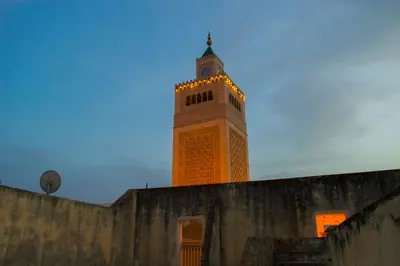
    The region Tunis & Carthage encompasses Tunisia's capital and its coastal suburbs on the Gulf of Tunis. Here, three UNESCO World Heritage Sites are close together: the Medina of Tunis, the Ruins of Carthage, and the blue-and-white village of Sidi Bou Saïd. Most travelers arrive at Tunis-Carthage Airport or by ferry at La Goulette port.
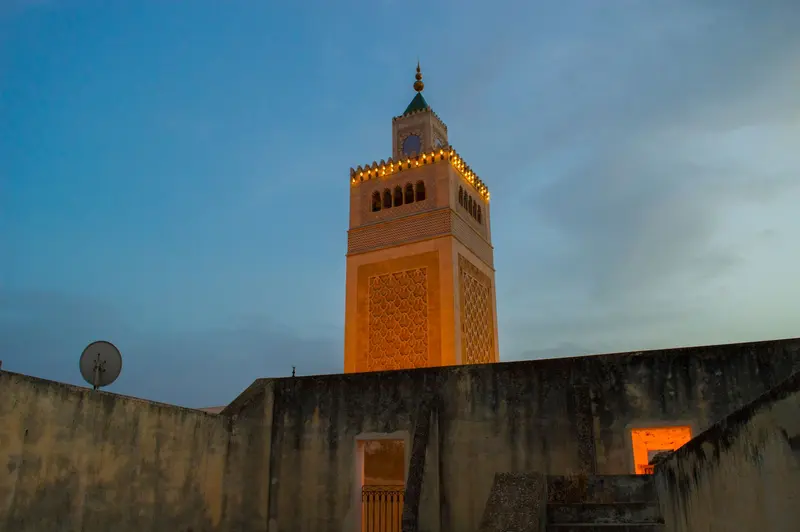
    Capital and Coast Tunis combines a 7th-century Medina with a colonial-era new town and the Bardo National Museum. East of the city, La Goulette, Carthage, Sidi Bou Saïd, and La Marsa line the coast, connected by the TGM suburban train. Key Destinations Medina of Tunis: UNESCO World Heritage since 1979, with souks, Zitouna Mosque, and the Tourbet el Bey Mausoleum Bardo National Museum: one of the world's largest collections of Roman mosaics Carthage: UNESCO World Heritage since 1979, with the Baths of Antoninus, Punic ports, and Tophet Sidi Bou Saïd: Cliffside village overlooking the Gulf, UNESCO World Heritage since 2026 Getting Around the Region TGM: 18 stations over approximately 19 kilometers between Tunis Marine and La Marsa, about 45 minutes travel time Ferries: From La Goulette port, ferries depart for Marseille, Genoa, and Palermo Day Planning: Carthage and Sidi Bou Saïd can be combined in one day; both are located on the TGM line.
    Sidi Bou Saïd

    Place 1 of 4

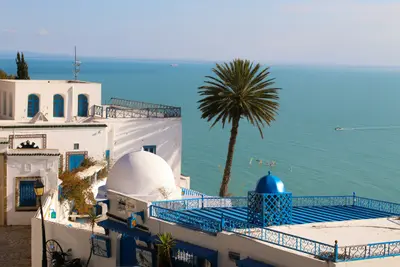
    Sidi Bou Saïd

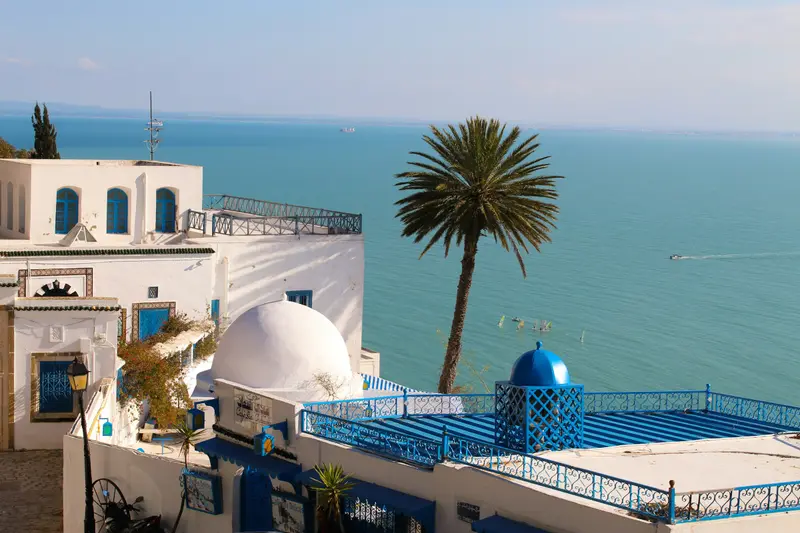
    Sidi Bou Saïd is a village on a cliff above the Gulf of Tunis, about 20 kilometers northeast of the capital and directly above Carthage.

    Discover
    Carthage
    Bernard Gagnon / Wikimedia Commons / CC BY-SA 3.0

    Place 2 of 4

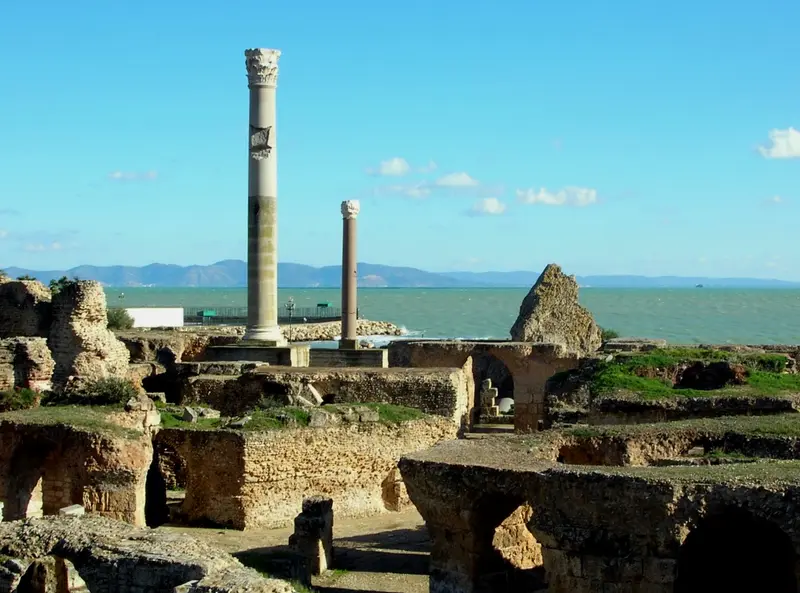
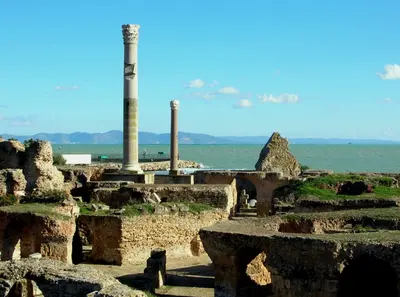
    Carthage

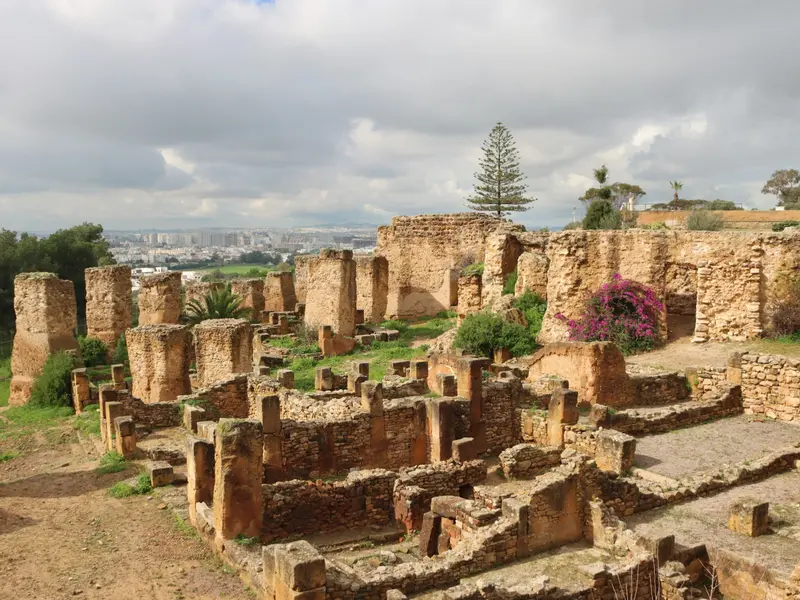
    The ruins of Carthage are scattered among residential areas on the coast northeast of Tunis and are directly accessible by the TGM suburban train.

    Discover
    La Marsa & Gammarth
    DrFO.Jr.Tn / Wikimedia Commons / CC BY-SA 3.0

    Place 3 of 4

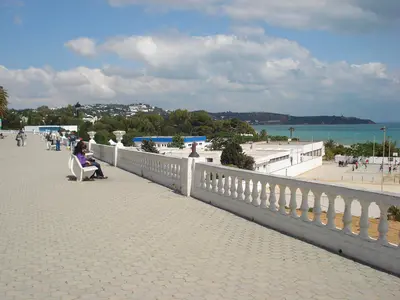
    La Marsa & Gammarth

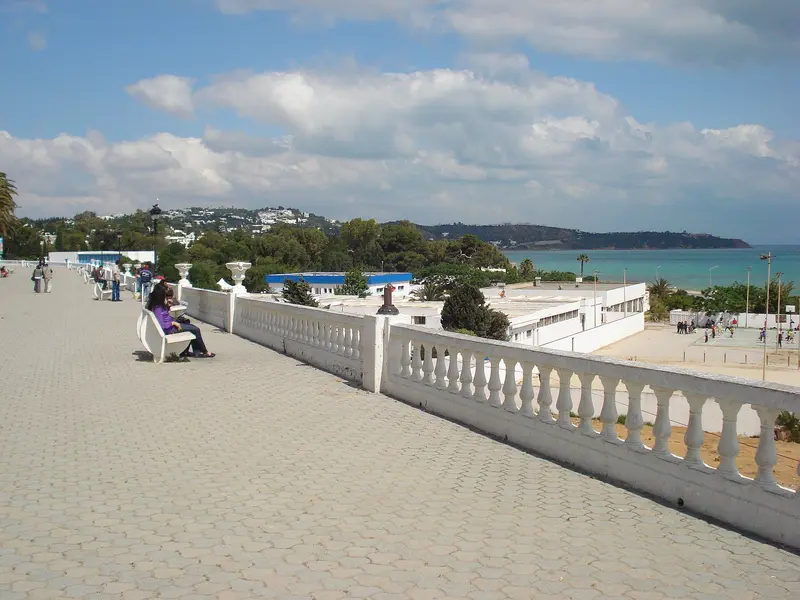
    La Marsa and the adjoining Gammarth to the north are Tunis's beach suburbs, located about 18 to 20 kilometers northeast of the capital on the Gulf of Tunis.

    Discover
    Tunis

    Place 4 of 4

    Tunis

    Tunis, Tunisia's capital, lies on the Gulf of Tunis on the country's north coast. Its 698-founded Medina, with souks, mosques, and palaces, became a UNESCO World Heritage site in 1979.

    Discover

    Best Time to Visit

    When is the best time for your trip?

    April
    May
    June
    September
    October
    17–26°C·13–58 mm(little rain)
    In May, the daily average is around 21 degrees, in October 22 degrees, with 7 to 9 hours of sunshine per day. July and August are the hottest, reaching over 28 degrees and being almost rain-free. Most rain falls from September to February, with December being the wettest at around 68 millimeters.
    Tunis-Carthage Station values, Averages 1991-2020 (Sunshine 1981-2010). Carthage, Sidi Bou Saïd, and La Marsa are nearby on the Gulf of Tunis.

    Seasons

    Jan
    Feb
    Mar
    Apr
    May
    Jun
    Jul
    Aug
    Sep
    Oct
    Nov
    Dec
    Summer: hot, dry, swimming season
    Spring and Autumn: warm, pleasant
    Winter: mild and more rainy
    Best Time to Visit
    ▶Show detailed monthly data
    MonthTemp (°C)Rain (mm)Sun (h)
    January12.3595.3
    February12.5555.7
    March14.6466.4
    April17.2387.5
    May21.0229.1
    June25.11310.3
    July28.1411.5
    August28.71510.6
    September25.6588.6
    October22.0557.0
    November17.2535.8
    December13.5685.1

    Round trips through this region

    Classic Tour: Tunis, Kairouan and the Sahel

    Classic Tour: Tunis, Kairouan and the Sahel

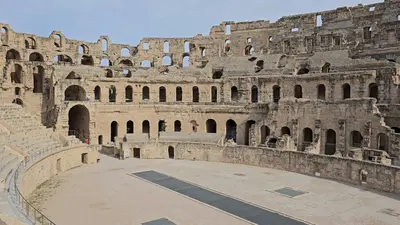
    Twelve days through the north and the Sahel: from the medina of Tunis via the ruins of Carthage and Dougga to Kairouan, on to the amphitheatre of El Djem and down to the coast at Sousse, Monastir and Hammamet. The medina of Tunis, Carthage, Dougga, Kairouan, El Djem and the medina of Sousse are UNESCO World Heritage Sites.

    12 Days
    9 stops

    Nearby

    Tunis

    Tunis

    Tunis, Tunisia's capital, lies on the Gulf of Tunis on the country's north coast. Its 698-founded Medina, with souks, mosques, and palaces, became a UNESCO World Heritage site in 1979. East of it, the colonial New Town with Avenue Habib Bourguiba adjoins; 4 km northwest is the Bardo National Museum with Roman mosaics. Tunis-Carthage International Airport is 8 km northeast; the TGM suburban train reaches Carthage and Sidi Bou Saïd in just over half an hour.
    Carthage

    Carthage

    The ruins of Carthage are scattered among residential areas on the coast northeast of Tunis and are directly accessible by the TGM suburban train. Traditionally founded by Phoenicians in 814 BC, the city was destroyed by Rome in 146 BC and later rebuilt as a Roman colony. Since 1979, the archaeological site has been a UNESCO World Heritage site. Visible attractions include the Antonine Baths by the sea, the Punic Ports, the Tophet, and the Amphitheater.
    La Marsa & Gammarth

    La Marsa & Gammarth

    La Marsa and the adjoining Gammarth to the north are Tunis's beach suburbs, located about 18 to 20 kilometers northeast of the capital on the Gulf of Tunis. In summer, Tunisians gather at the beach and around the Café Saf-Saf; in the evenings, life shifts to Gammarth's bars and clubs. La Marsa is the terminus of the TGM suburban train, coming from the city center via Carthage and Sidi Bou Saïd.
    Sidi Bou Saïd

    Sidi Bou Saïd

    Sidi Bou Saïd is a village on a cliff above the Gulf of Tunis, about 20 kilometers northeast of the capital and directly above Carthage. Its white houses with blue doors have been protected by a 1915 decree, and in July 2026, UNESCO added the village to its World Heritage List. Its alleys host traditional cafes overlooking the bay, and the palace of Baron d'Erlanger. The TGM suburban train takes about 35 minutes from Tunis Marine.
    Zaghouan & Thuburbo Majus

    Zaghouan & Thuburbo Majus

    Around Zaghouan, about 60 kilometers south of Tunis, are two Roman sites that can easily be combined in a single day. On the hillside above the town, the Roman Water Temple collects the springs that supplied Carthage via an aqueduct. A good 20 kilometers west, near El Fahs, lie the ruins of Thuburbo Majus with its Capitol, Forum, and Baths.

    Sources & method

    • Photos: Unsplash. Each photo carries its credit.
    • The content is based on web research from public, traceable sources. How the content is made · The role of AI