Fernweh: Home
    ExploreTravel GuidesPlan a tripMy tripLast visited
    de|en
    All Places & RegionsAll highlightsAbout FernwehFAQPrivacy PolicyImprint
    ExploreTravel GuidesPlan a tripMy tripLast visited
    Zaghouan & Thuburbo Majus
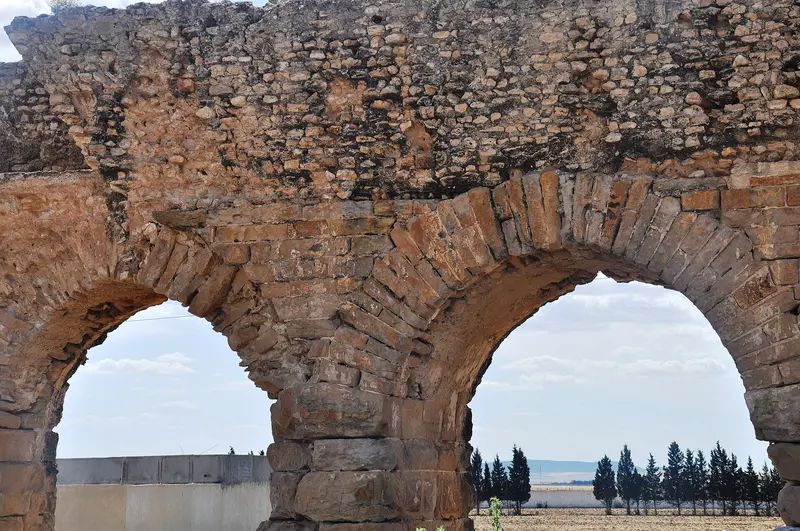
    Habib M'henni / Wikimedia Commons / CC BY-SA 4.0

    Tunisia

    Zaghouan & Thuburbo Majus

    Point of Interest

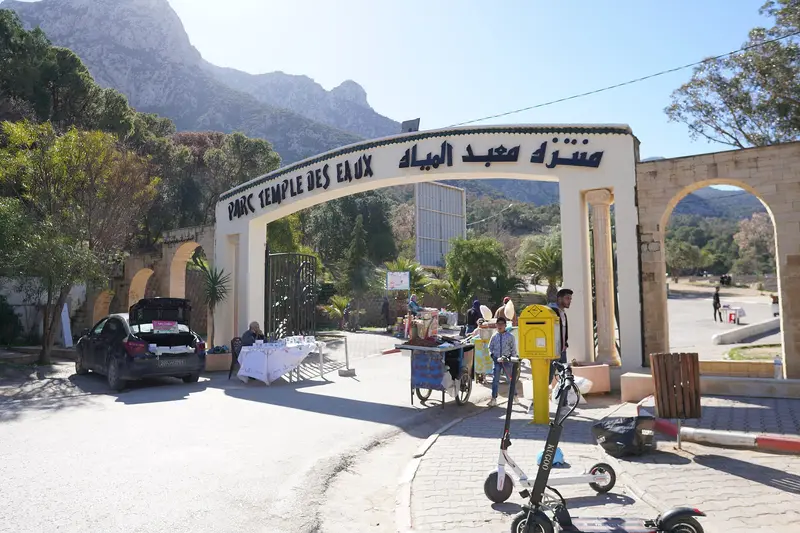
    Around Zaghouan, about 60 kilometers south of Tunis, are two Roman sites that can easily be combined in a single day. On the hillside above the town, the Roman Water Temple collects the springs that supplied Carthage via an aqueduct.

    by Felix Gillen

    1. Home
    2. Destinations
    3. Tunisia
    4. Norden & Tell
    5. Zaghouan & Thuburbo Majus
    Around Zaghouan, about 60 kilometers south of Tunis, are two Roman sites that can easily be combined in a single day. On the hillside above the town, the Roman Water Temple collects the springs that supplied Carthage via an aqueduct. A good 20 kilometers west, near El Fahs, lie the ruins of Thuburbo Majus with its Capitol, Forum, and Baths.

    Sights in Zaghouan & Thuburbo Majus

    Discover the most important sights and attractions

    Thuburbo Majus
    Historic Landmark

    1Thuburbo Majus

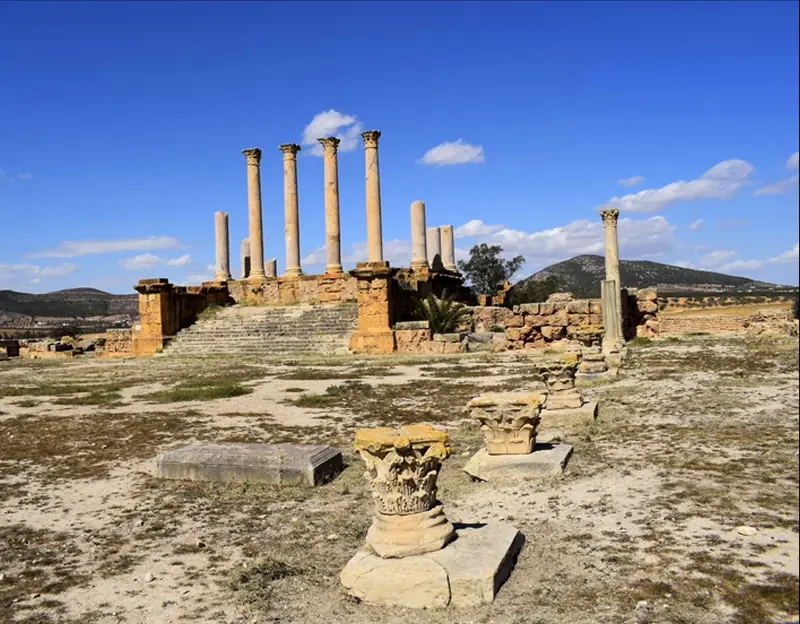
    The Roman city, some 60 km southwest of Tunis near El Fahs, was rediscovered in 1857 and extensively excavated from 1912 to 1936. Four of the six Corinthian columns of the Capitol (168) stand upright again. Nearby are the Forum, the Mercury Temple (211) with its round colonnaded court, the Summer and Winter Baths, and the Palaestra of the Petronii (225).
    Open in Google Maps
    Water Temple (Nymphaeum)

    2Water Temple (Nymphaeum)

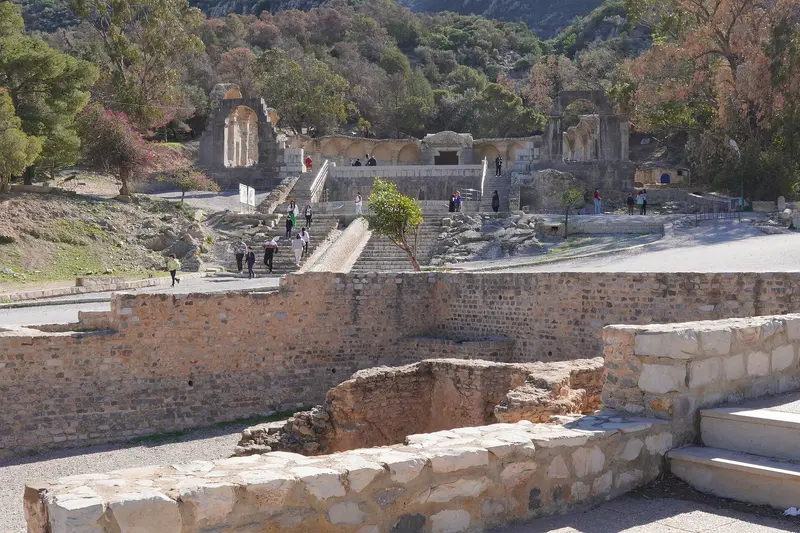
    The sanctuary on the wooded slope, approximately 2 kilometers southwest of the old town, contained the springs that fed the aqueduct to Carthage. A semicircle with twelve niches for statues surrounds a larger central niche, and in front of it lies a water basin. The signage is only in French and Arabic.
    Open in Google Maps
    The Aqueduct of Zaghouan

    3The Aqueduct of Zaghouan

    The Roman aqueduct ran from the springs near Zaghouan to Carthage, measuring 132 kilometers with all its branch lines, the main stretch being around 90 kilometers. Approximately 17 kilometers ran on arches, which rise around 20 meters high in the Oued Miliane valley; you can see arches notably near Mohamedia, south of Tunis.
    Open in Google Maps

    Restaurants in Zaghouan & Thuburbo Majus

    1

    Dar Zaghouan

    Guesthouse & restaurant on a farm just outside Zaghouan. Serves Tunisian food from its farm & local producers; day visitors often arrive via organized tours. Ask ahead if meals without a stay are possible.
    Show on Google Maps

    History

    Water for Carthage Emperor Hadrian had the springs of Zaghouan captured and channeled to Carthage, presumably between 120 and 131. Including all secondary conduits, the aqueduct was 132 kilometers long, with the main branch spanning around 90 kilometers. It could deliver up to 32,000 cubic meters of water per day. Most of the statues from the water temple are now housed in the Bardo Museum in Tunis. Thuburbo Majus Rise: under Hadrian 128 Municipium, under Commodus 188 Roman Colony Rediscovery: 1857, major excavations 1912 to 1936 Structures: Capitoline Temple from 168, Forum, Temple of Mercury from 211, Summer and Winter Baths, Palaestra of the Petronii from 225 Rose Water and Kaak Warka Zaghouan is known for its wild rose water, called Nesri in Tunisian. This is used to flavor the delicate pastry Kaak Warka, which many small shops in the town sell.

    Arrival & Exploration

    Getting There By Car: From Tunis, about an hour to Zaghouan. Thuburbo Majus is 60 km southwest of Tunis, near El Fahs. Without a Car: For Thuburbo Majus and the Water Temple, a taxi or rental car is needed. Around the Area Water Temple: 2 km southwest of the old town on a forested slope, reachable on foot. Thuburbo Majus: 20 km west of Zaghouan, easiest by car. The site is extensive; a guide helps with orientation. Aqueduct: Arches are visible, for example, near Mohamedia south of Tunis.

    Accommodations in Zaghouan & Thuburbo Majus

    Find perfect stay in Zaghouan & Thuburbo Majus

    Booking.com* (Affiliate link)
    Search Hotels
    Agoda* (Affiliate link)
    Search Hotels
    Airbnb
    Vacation Rentals

    * Affiliate link: if you book through it, we earn a small commission. The price stays the same for you.

    Nearby

    Hammamet

    Hammamet

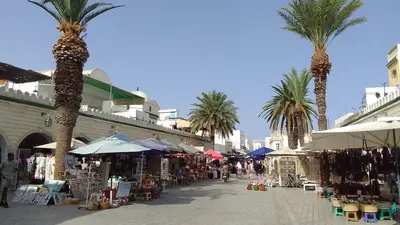
    Hammamet is located approximately 60 kilometers south of Tunis and is the most important seaside resort in the Cap Bon region. Its small, walled medina with the kasbah is right on the beach, and in summer, visitors also come for the festival at Villa Dar Sébastien.The city, with around 91,000 inhabitants, stretches along the coast as a hotel belt: Hammamet Nord, the center around the medina, and Hammamet Sud, with Yasmine Hammamet and its marina about six kilometers southwest of the old town.
    Tunis

    Tunis

    Tunis, Tunisia's capital, lies on the Gulf of Tunis on the country's north coast. Its 698-founded Medina, with souks, mosques, and palaces, became a UNESCO World Heritage site in 1979. East of it, the colonial New Town with Avenue Habib Bourguiba adjoins; 4 km northwest is the Bardo National Museum with Roman mosaics. Tunis-Carthage International Airport is 8 km northeast; the TGM suburban train reaches Carthage and Sidi Bou Saïd in just over half an hour.
    Tunis & Carthage

    Tunis & Carthage

    The region Tunis & Carthage encompasses Tunisia's capital and its coastal suburbs on the Gulf of Tunis. Here, three UNESCO World Heritage Sites are close together: the Medina of Tunis, the Ruins of Carthage, and the blue-and-white village of Sidi Bou Saïd. Most travelers arrive at Tunis-Carthage Airport or by ferry at La Goulette port.
    Nabeul

    Nabeul

    Nabeul is the capital of the governorate on Cap Bon, approximately 60 kilometers southeast of Tunis and about 12 kilometers northeast of Hammamet. The city is known for painted ceramics, Harissa, and its weekly market on Friday mornings.With around 84,000 inhabitants, Nabeul is the region's second main tourist hub after Hammamet; most hotels are located along the beachfront promenade. On the outskirts of the city lie the remains of ancient Neapolis, whose mosaics are displayed in the Archaeological Museum.
    Carthage

    Carthage

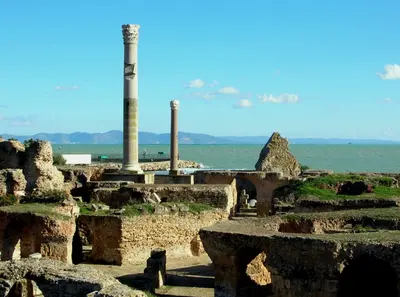
    The ruins of Carthage are scattered among residential areas on the coast northeast of Tunis and are directly accessible by the TGM suburban train. Traditionally founded by Phoenicians in 814 BC, the city was destroyed by Rome in 146 BC and later rebuilt as a Roman colony. Since 1979, the archaeological site has been a UNESCO World Heritage site. Visible attractions include the Antonine Baths by the sea, the Punic Ports, the Tophet, and the Amphitheater.

    Sources & method

    • Photos: Wikimedia Commons, Google Maps. Each photo carries its credit.
    • Place data such as addresses and ratings comes from Google Maps.
    • The content is based on web research from public, traceable sources. How the content is made · The role of AI