Fernweh: Home
    ExploreTravel GuidesPlan a tripMy tripLast visited
    de|en
    All Places & RegionsAll highlightsAbout FernwehFAQPrivacy PolicyImprint
    ExploreTravel GuidesPlan a tripMy tripLast visited
    Carthage
    Bernard Gagnon / Wikimedia Commons / CC BY-SA 3.0

    Tunisia

    Carthage

    Point of Interest

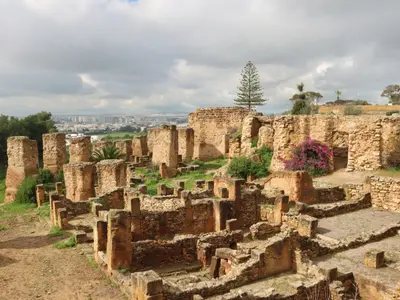
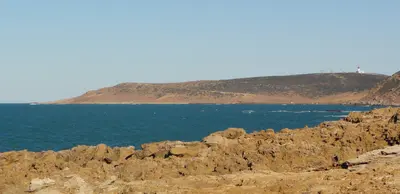
    The ruins of Carthage are scattered among residential areas on the coast northeast of Tunis and are directly accessible by the TGM suburban train.

    by Felix Gillen

    1. Home
    2. Destinations
    3. Tunisia
    4. Tunis & Carthage
    5. Carthage
    The ruins of Carthage are scattered among residential areas on the coast northeast of Tunis and are directly accessible by the TGM suburban train. Traditionally founded by Phoenicians in 814 BC, the city was destroyed by Rome in 146 BC and later rebuilt as a Roman colony. Since 1979, the archaeological site has been a UNESCO World Heritage site. Visible attractions include the Antonine Baths by the sea, the Punic Ports, the Tophet, and the Amphitheater.

    Sights in Carthage

    Discover the most important sights and attractions

    Baths of Antoninus

    1Baths of Antoninus

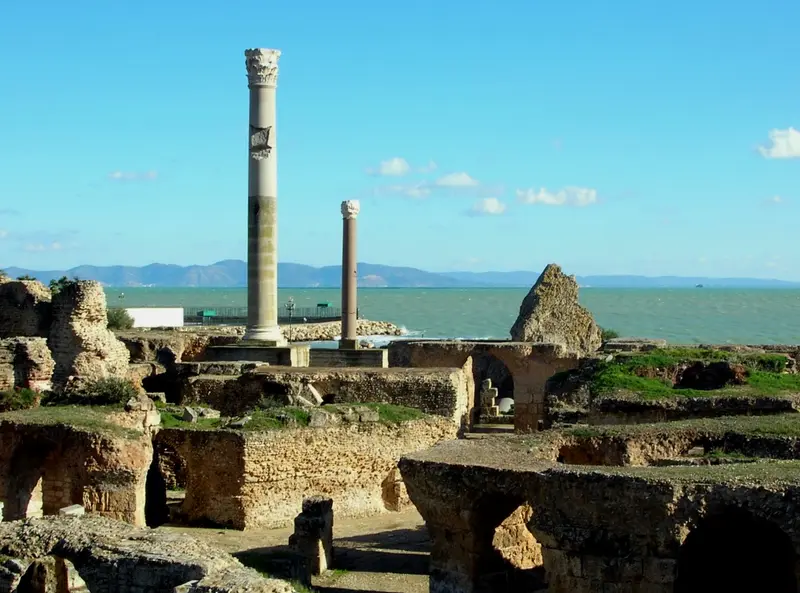
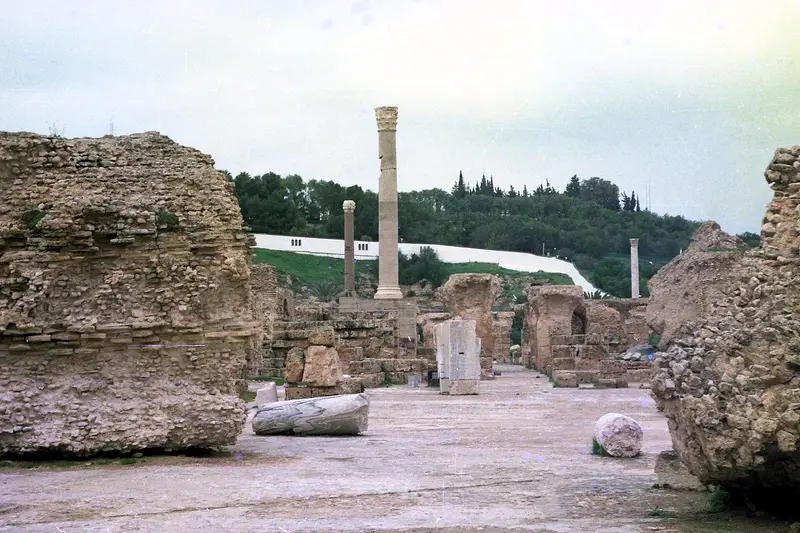
    The baths were built between 145 and 162 AD under Emperor Antoninus Pius, directly by the sea. They were the largest Roman bath complex on African soil; their ruins stretch over 200 meters along the shore. A re-erected column of the Frigidarium suggests its former height. The TGM stop Carthage Hannibal is about 250 meters away.
    Open in Google Maps
    Punic Harbors
    Historic Landmark

    2Punic Harbors

    Two lagoons mark the harbors of the Punic city: The round basin was the military harbor, the rectangular one the commercial harbor. According to the ancient author Appian, the military harbor accommodated 220 ships. On the island in the round basin, a small museum displays models of the complex. The next TGM stop is Carthage Salammbô.
    Open in Google Maps
    Tophet of Salammbô
    Historic Landmark

    3Tophet of Salammbô

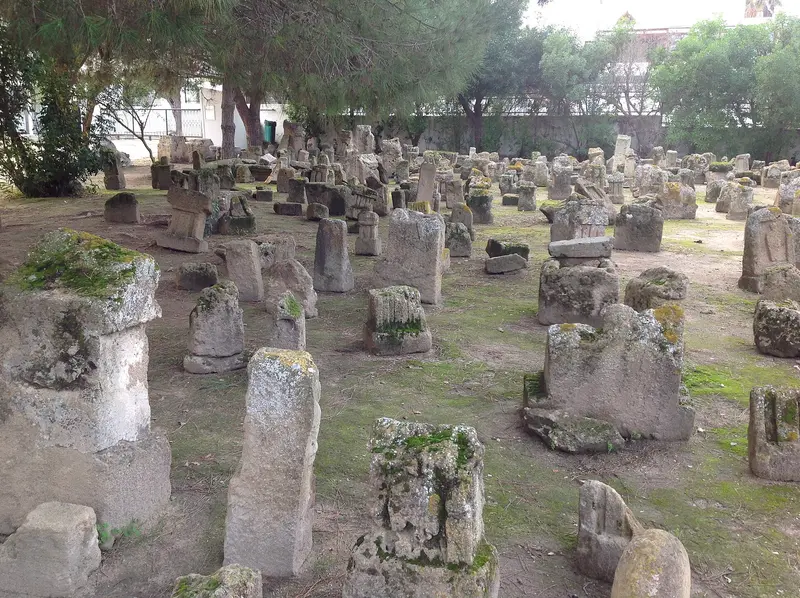
    The sanctuary of the deities Tanit and Baal Hammon was in use from the 8th century BC until Carthage's destruction in 146 BC. Mainly visible are sandstone stelae, some under Roman arches. Whether children were sacrificed here is still debated in research today.
    Open in Google Maps
    Amphitheater
    Historic Landmark

    4Amphitheater

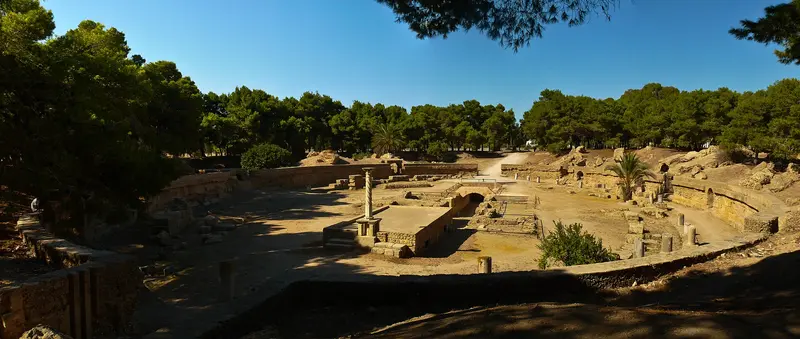
    The amphitheater, dating from the late 1st or early 2nd century, could accommodate an estimated 30,000 spectators. Primarily the arena remains, surrounded by pine trees. A cross erected in 1887 commemorates Christian martyrs whom tradition associates with this site.
    Open in Google Maps
    Byrsa Hill

    5Byrsa Hill

    The hill, the Punic city's citadel, fell to the Romans in 146 BC as the last part of Carthage. On the south slope, French archaeologists excavated a Punic residential quarter from the early 2nd century BC, the Hannibal Quarter, with stepped streets, cisterns, and mosaic floors. Also at the top are the National Museum of Carthage, closed since 2018, and the former Saint-Louis Cathedral.
    Open in Google Maps
    Cathedral Saint-Louis (Acropolium)

    6Cathedral Saint-Louis (Acropolium)

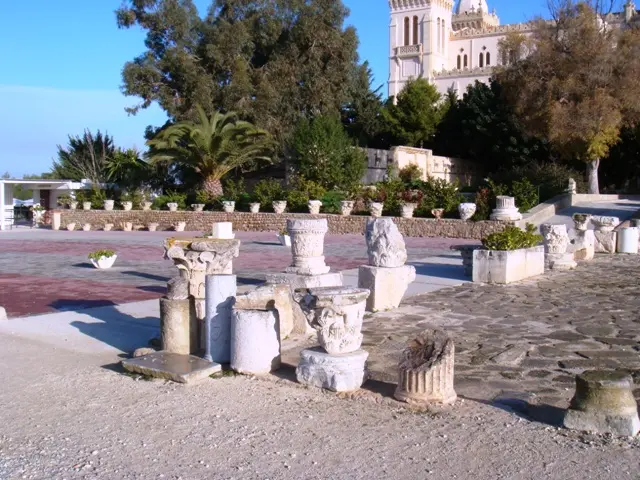
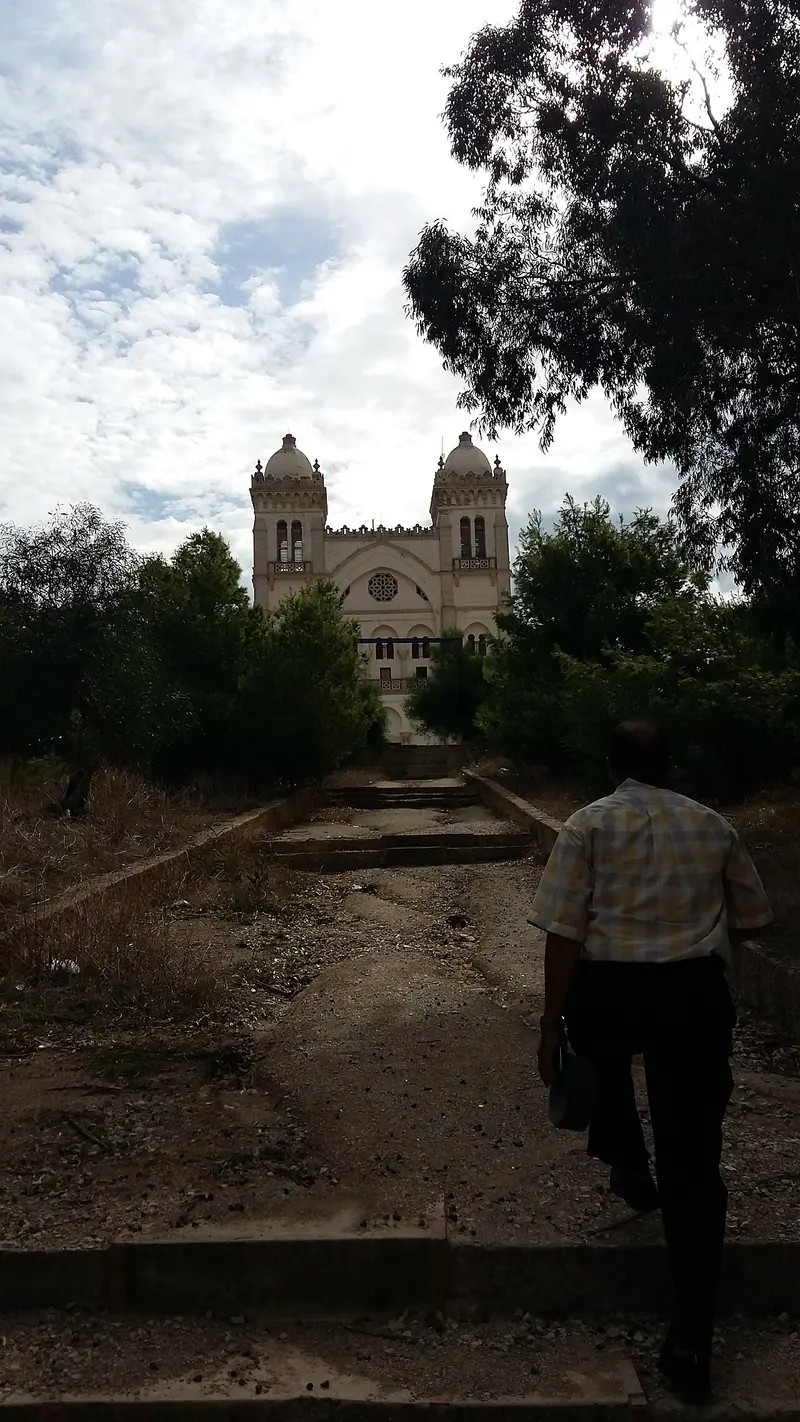
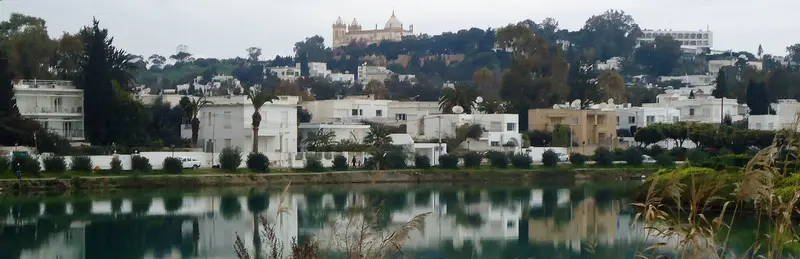
    The Byzantine-Moorish style cathedral was built on Byrsa Hill from 1884 to 1890. It was deconsecrated in 1964; since 1993, it has been a cultural centre for exhibitions and concerts. Following a 2021 closure, it provisionally and partially reopened to visitors in March 2024. In 2026, works on Byrsa Hill were tendered; inquire on-site for the current status.
    Open in Google Maps

    Restaurants in Carthage

    History & Museums

    Punic and Roman Carthage According to legend, the Phoenician princess Dido (Elyssa) founded the city in 814 BC. After the Third Punic War, the Romans completely destroyed it in 146 BC. Augustus refounded it as a Roman colony in 29 BC. Museums: What's Open National Museum on Byrsa Hill: closed since 2018; renovation of the museum and Byrsa Hill was put out to tender in summer 2026. No reopening date has been set. Former Saint-Louis Cathedral (Acropolium): provisionally and partially accessible since March 2024; due to planned works on Byrsa Hill, inquire on site. Musée Paléochrétien in Dermech: reopened in December 2025 after renovation, featuring finds from late Roman and early Christian times. Theater and Festival The 2nd-century Roman theater was largely reconstructed in the 20th century. Today, it hosts the annual Festival International de Carthage, which took place for the 60th time in summer 2026.

    Getting There & Around

    Getting There by TGM The suburban train TGM runs from Tunis Marine through Carthage to Sidi Bou Saïd and La Marsa. Key stops include: Carthage Salammbô: Tophet and Punic ports Carthage Dermech: Early Christian quarter with the Musée Paléochrétien Carthage Hannibal: Antonine Baths, approx. 250 meters away Carthage Présidence: Roman theatre and park of the Roman villas On Site Getting Around: The sites are spread out. Choose two or three stops and cover short distances on foot or by taxi. Tickets: A combined ticket is valid for several sites; those included are listed on the ticket. Foreign visitors pay 20 TND from April 2026, and 30 TND from 2027. Photography: Photography is restricted in the vicinity of the Presidential Palace.

    Accommodations in Carthage

    Find perfect stay in Carthage

    Booking.com* (Affiliate link)
    Search Hotels
    Agoda* (Affiliate link)
    Search Hotels
    Airbnb
    Vacation Rentals

    * Affiliate link: if you book through it, we earn a small commission. The price stays the same for you.

    Nearby

    La Marsa & Gammarth

    La Marsa & Gammarth

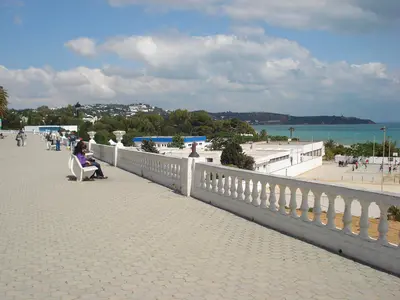
    La Marsa and the adjoining Gammarth to the north are Tunis's beach suburbs, located about 18 to 20 kilometers northeast of the capital on the Gulf of Tunis. In summer, Tunisians gather at the beach and around the Café Saf-Saf; in the evenings, life shifts to Gammarth's bars and clubs. La Marsa is the terminus of the TGM suburban train, coming from the city center via Carthage and Sidi Bou Saïd.
    Sidi Bou Saïd

    Sidi Bou Saïd

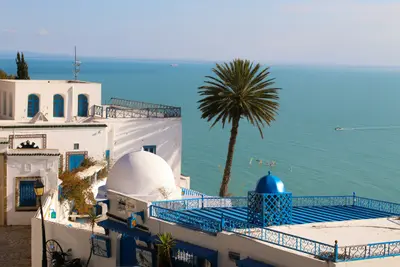
    Sidi Bou Saïd is a village on a cliff above the Gulf of Tunis, about 20 kilometers northeast of the capital and directly above Carthage. Its white houses with blue doors have been protected by a 1915 decree, and in July 2026, UNESCO added the village to its World Heritage List. Its alleys host traditional cafes overlooking the bay, and the palace of Baron d'Erlanger. The TGM suburban train takes about 35 minutes from Tunis Marine.
    Tunis & Carthage

    Tunis & Carthage

    The region Tunis & Carthage encompasses Tunisia's capital and its coastal suburbs on the Gulf of Tunis. Here, three UNESCO World Heritage Sites are close together: the Medina of Tunis, the Ruins of Carthage, and the blue-and-white village of Sidi Bou Saïd. Most travelers arrive at Tunis-Carthage Airport or by ferry at La Goulette port.
    Tunis

    Tunis

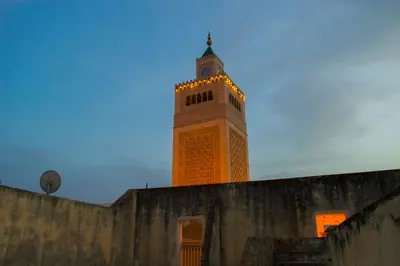
    Tunis, Tunisia's capital, lies on the Gulf of Tunis on the country's north coast. Its 698-founded Medina, with souks, mosques, and palaces, became a UNESCO World Heritage site in 1979. East of it, the colonial New Town with Avenue Habib Bourguiba adjoins; 4 km northwest is the Bardo National Museum with Roman mosaics. Tunis-Carthage International Airport is 8 km northeast; the TGM suburban train reaches Carthage and Sidi Bou Saïd in just over half an hour.
    Cap Bon & Hammamet

    Cap Bon & Hammamet

    The Cap Bon peninsula juts into the Mediterranean in northeast Tunisia, and on its southern edge, about 60 kilometers south of Tunis, lies the seaside resort of Hammamet. The region combines long sandy beaches with the Punic ruin city of Kerkouane, the pottery craft of Nabeul, and the falconry tradition of El Haouaria.Hammamet, Nabeul, and Kélibia are suitable as a base; all three are located on the coast.

    Sources & method

    • Photos: Wikimedia Commons. Each photo carries its credit.
    • Place data such as addresses and ratings comes from Google Maps.
    • The content is based on web research from public, traceable sources. How the content is made · The role of AI