Fernweh: Home
    ExploreTravel GuidesPlan a tripMy tripLast visited
    de|en
    All Places & RegionsAll highlightsAbout FernwehFAQPrivacy PolicyImprint
    ExploreTravel GuidesPlan a tripMy tripLast visited
    • Neighborhoods & highlights
    • Eat & drink
    • Culture
    • Nightlife
    • Getting around
    • Accommodation
    • Plan trip
    • Nearby
    Hammamet
    Habib M'henni / Wikimedia Commons / CC BY-SA 3.0

    Tunisia

    Hammamet

    City

    Hammamet is located approximately 60 kilometers south of Tunis and is the most important seaside resort in the Cap Bon region.

    by Felix Gillen

    1. Home
    2. Destinations
    3. Tunisia
    4. Cap Bon & Hammamet
    5. Hammamet
    Hammamet is located approximately 60 kilometers south of Tunis and is the most important seaside resort in the Cap Bon region. Its small, walled medina with the kasbah is right on the beach, and in summer, visitors also come for the festival at Villa Dar Sébastien.The city, with around 91,000 inhabitants, stretches along the coast as a hotel belt: Hammamet Nord, the center around the medina, and Hammamet Sud, with Yasmine Hammamet and its marina about six kilometers southwest of the old town.

    Sights in Hammamet

    Discover the most important sights and attractions
    Medina of Hammamet
    Museum

    1Medina of Hammamet

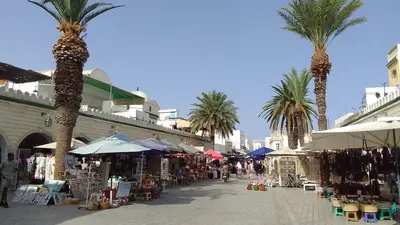
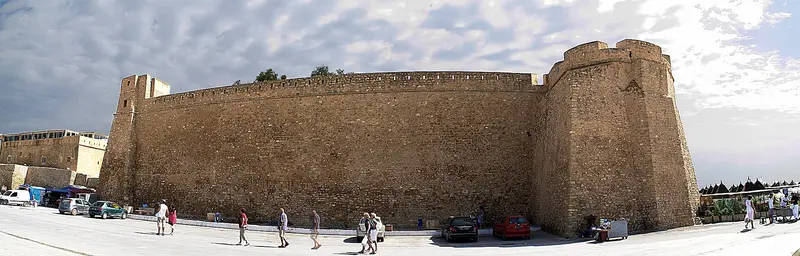
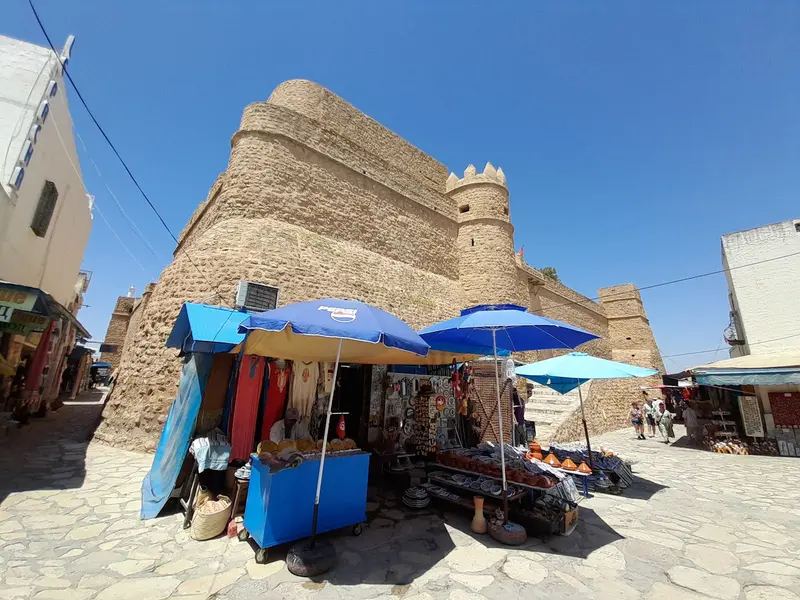
    The small walled old town lies right on the beach, its walls completed by the mid-13th century. Its narrow streets are lined with residential houses boasting intricately designed doors and artisanal craft shops.
    Open in Google Maps
    Pupput
    Museum

    2Pupput

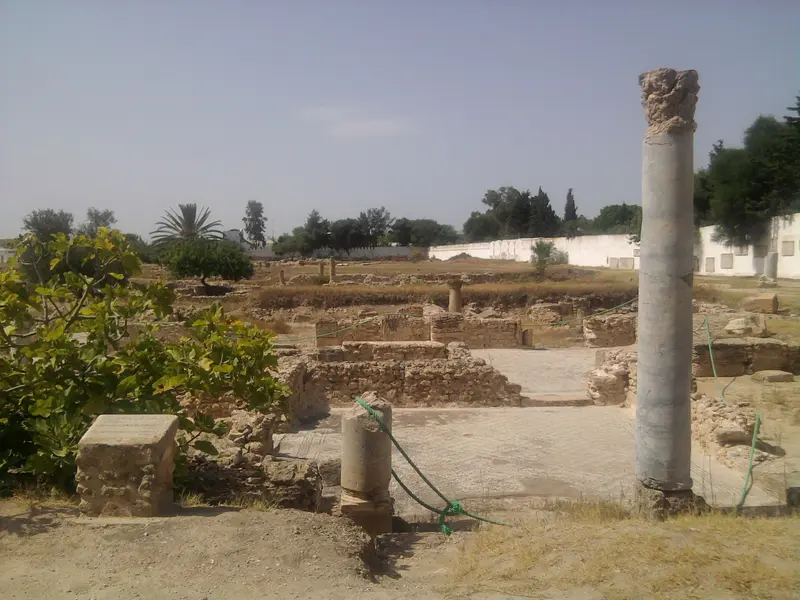
    The Roman city was elevated to a colony between 185 and 192 under Emperor Commodus. In the approximately four-hectare archaeological park, you'll see residential houses with mosaics, two bath complexes, and a necropolis. Open daily, in summer 9 AM to 5 PM, in winter 9:30 AM to 4:30 PM, admission 5 Dinar.
    Open in Google Maps
    Dar Sébastien (International Cultural Center)
    Point of Interest

    3Dar Sébastien (International Cultural Center)

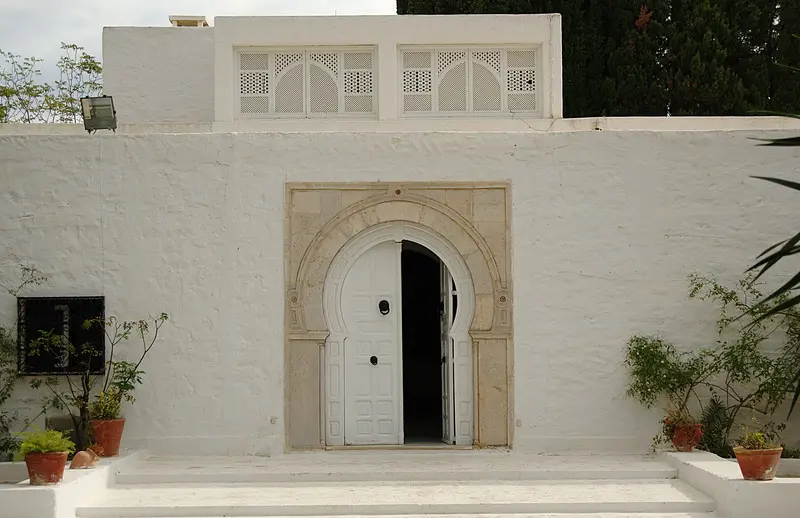
    The villa of the Romanian George Sebastian was built after 1929 and has belonged to the Tunisian state since 1962. Today, the cultural center presents exhibitions, and the Festival international de Hammamet is held every summer in the garden's open-air theater, established in 1964.
    Open in Google Maps
    Museum Dar Khadija
    Museum

    4Museum Dar Khadija

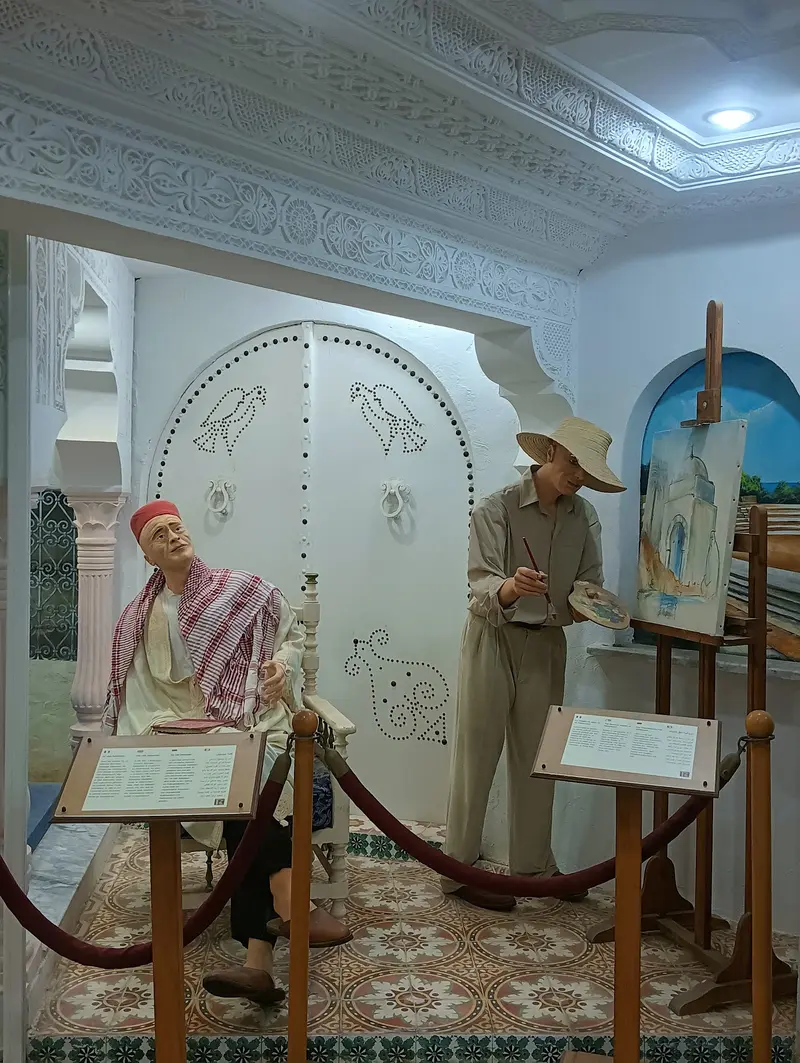
    The small museum in the Medina showcases 2,000 years of city history across three floors. From the rooftop terrace, you overlook the old town.
    Open in Google Maps
    Port Yasmine Hammamet
    Attraction

    5Port Yasmine Hammamet

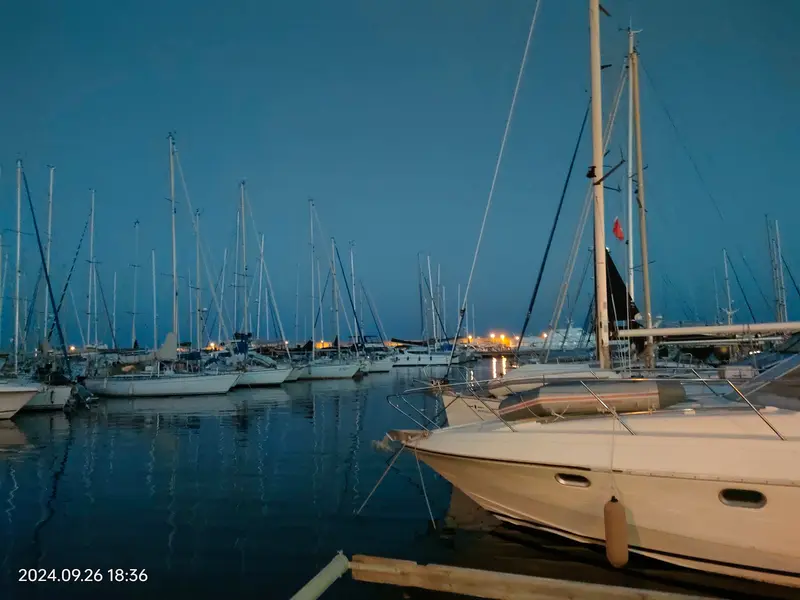
    The marina is the heart of the Yasmine Hammamet hotel district in the city's south. Restaurants and cafes line the quays, offering views of the boats.
    Open in Google Maps
    Kasbah
    Historic Landmark

    6Kasbah

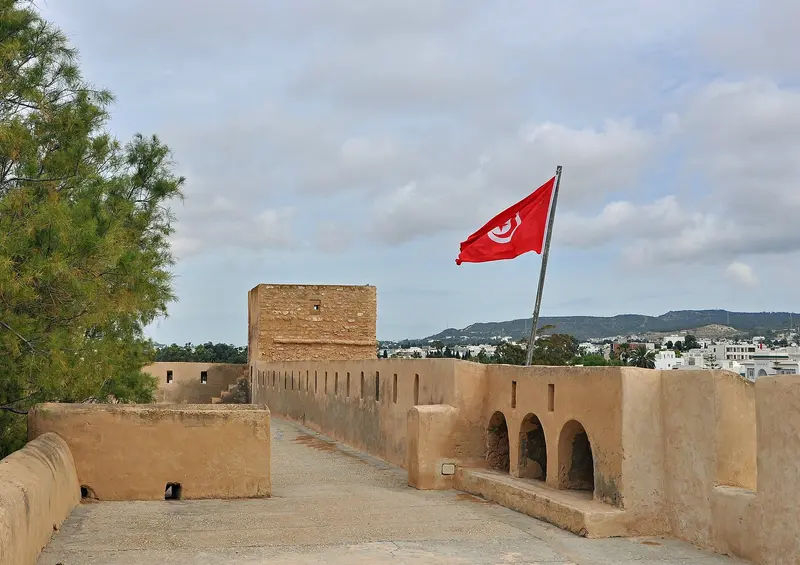
    The fortress at the northwest corner of the Medina dates back to 893 and was greatly expanded around 1463 under the Hafsids; its bastions date from the 16th and 17th centuries. In the courtyard lies the Mausoleum of Sidi Bouali; from the walls, you look out over the Medina and the bay. Admission is 8 Dinar for visitors not residing in Tunisia.
    Open in Google Maps

    Restaurants in Hammamet

    1

    Le Barberousse

    Restaurant in the Medina with a beach-view terrace. The menu offers fish, seafood, and Tunisian dishes; prices are above average for the city.
    Show on Google Maps
    2

    La Bella Marina

    Fish restaurant in Hammamet Sud. Known for grilled fish, langoustines and octopus in large portions.
    Show on Google Maps
    3

    Le Petit Pêcheur

    Seafood restaurant on Avenue de la République in the center. Serves seafood platters and Tunisian cuisine; bread and dips are brought to the table first.
    Show on Google Maps
    4

    Restaurant L'Amiral

    Restaurant right by Port Yasmine Marina. Specializing in fish dishes, with sea views from the terrace.
    Show on Google Maps
    5

    Restaurant Da Franco

    Italian restaurant in Hammamet Sud near the beach. Pasta, pizza, fish and meat Italian-style.
    Show on Google Maps

    History and Culture

    Medina and Kasbah The Medina is the historic core of the city; its walls were completed around the mid-13th century. The Kasbah dates back to an 893 fortress and was significantly expanded under the Hafsids around 1463. Its bastions and walls predominantly originate from the 16th and 17th centuries. Tour: From the Kasbah walls, you can overlook the Medina, beach, and fishing boats. Dar Khadija: This three-story museum recounts approximately 2,000 years of city history and features a rooftop terrace. Dar Sébastien and the Festival The Romanian George Sebastian had a villa built in Hammamet after the 1929 stock market crash. In 1962, he sold it to the Tunisian state, and an open-air theatre was added to the garden in 1964. Today: The villa houses the Centre culturel international de Hammamet, featuring exhibitions. Festival international de Hammamet: Held every summer in the open-air theatre, the 60th edition in 2026 ran from July 11 to August 13, featuring 32 performances from 12 countries. The Roman Pupput Emperor Commodus elevated the site to a Roman colony between 185 and 192. A large part of the ancient city disappeared under hotel constructions in the 1960s.

    Nightlife

    1

    Pupput le Bar

    Bar at the Hotel Golden Tulip President in Hammamet Nord. In the evenings, enjoy cocktails, an entertainment program, and dishes like burgers, pizza, grilled meat and fish.
    Show on Google Maps
    2

    Calypso Club

    Large open-air club in Hammamet Sud, dating back to the 1970s. Besides DJ sets, there are theme nights and concerts.
    Show on Google Maps
    3

    Latino Club

    Club in Hammamet Sud, a few hundred meters from Calypso, with theme nights and DJ sets.
    Show on Google Maps

    Getting There and Around

    Getting There Enfidha-Hammamet Airport: Approximately 40 kilometers southwest of Hammamet. Tunis-Carthage Airport: About an hour by taxi. Train: Trains from Tunis towards Sousse stop in Bir Bou Regba west of Hammamet; from there, continue by taxi. The branch line to Nabeul also stops in Hammamet; current times can be found at SNCFT. Louage: Shared taxis depart from the louage station in Hammamet, mainly to Tunis (Moncef Bey Station). Getting Around The Medina, Kasbah, and beach in the center are reachable on foot. Between the center, Hammamet Sud, and Yasmine Hammamet, the distances are long; here, the easiest option is to take a taxi.

    Accommodations in Hammamet

    Find perfect stay in Hammamet

    Booking.com* (Affiliate link)
    Search Hotels
    Agoda* (Affiliate link)
    Search Hotels
    Airbnb
    Vacation Rentals

    * Affiliate link: if you book through it, we earn a small commission. The price stays the same for you.

    Plan your trip to Hammamet

    Save places, build a route and plan your city trip, all in one place.

    1. 1
      Sunrise over alpine peaks and a sea of clouds
      1234

      Round trip

      12 days · 4 stops

      Saved

      Pick a route

      Pick a ready-made one or save places and plan your own.

      Open bookmarks
    2. 2

      Trip to Hammamet

      Live
      • 1Medina of Hammamet3 days
      • 2Pupput4 days
      • 3Dar Sébastien (International Cultural Center)5 days
      Budget

      Plan your trip

      The planner sorts stops, days and budget. Plan together in real time.

      Start trip planning
    3. 3
      9:41 No signal
      Hammamet
      Available offline

      Use it on the road

      Download the guide to your phone and use it on site, even offline.

    Nearby

    Nabeul

    Nabeul

    Nabeul is the capital of the governorate on Cap Bon, approximately 60 kilometers southeast of Tunis and about 12 kilometers northeast of Hammamet. The city is known for painted ceramics, Harissa, and its weekly market on Friday mornings.With around 84,000 inhabitants, Nabeul is the region's second main tourist hub after Hammamet; most hotels are located along the beachfront promenade. On the outskirts of the city lie the remains of ancient Neapolis, whose mosaics are displayed in the Archaeological Museum.
    Zaghouan & Thuburbo Majus

    Zaghouan & Thuburbo Majus

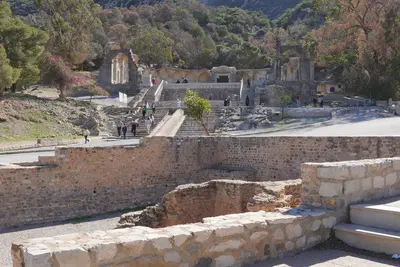
    Around Zaghouan, about 60 kilometers south of Tunis, are two Roman sites that can easily be combined in a single day. On the hillside above the town, the Roman Water Temple collects the springs that supplied Carthage via an aqueduct. A good 20 kilometers west, near El Fahs, lie the ruins of Thuburbo Majus with its Capitol, Forum, and Baths.
    Cap Bon & Hammamet

    Cap Bon & Hammamet

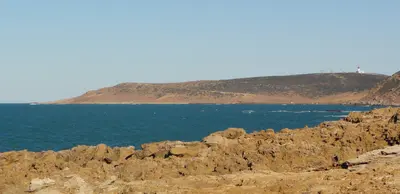
    The Cap Bon peninsula juts into the Mediterranean in northeast Tunisia, and on its southern edge, about 60 kilometers south of Tunis, lies the seaside resort of Hammamet. The region combines long sandy beaches with the Punic ruin city of Kerkouane, the pottery craft of Nabeul, and the falconry tradition of El Haouaria.Hammamet, Nabeul, and Kélibia are suitable as a base; all three are located on the coast.
    Carthage

    Carthage

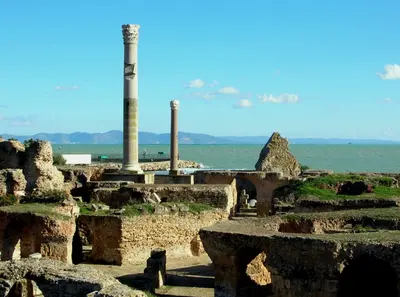
    The ruins of Carthage are scattered among residential areas on the coast northeast of Tunis and are directly accessible by the TGM suburban train. Traditionally founded by Phoenicians in 814 BC, the city was destroyed by Rome in 146 BC and later rebuilt as a Roman colony. Since 1979, the archaeological site has been a UNESCO World Heritage site. Visible attractions include the Antonine Baths by the sea, the Punic Ports, the Tophet, and the Amphitheater.
    Sidi Bou Saïd

    Sidi Bou Saïd

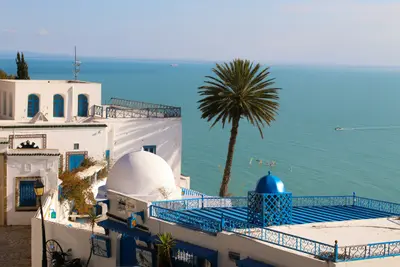
    Sidi Bou Saïd is a village on a cliff above the Gulf of Tunis, about 20 kilometers northeast of the capital and directly above Carthage. Its white houses with blue doors have been protected by a 1915 decree, and in July 2026, UNESCO added the village to its World Heritage List. Its alleys host traditional cafes overlooking the bay, and the palace of Baron d'Erlanger. The TGM suburban train takes about 35 minutes from Tunis Marine.

    Sources & method

    • Photos: Wikimedia Commons, Google Maps. Each photo carries its credit.
    • Place data such as addresses and ratings comes from Google Maps.
    • The content is based on web research from public, traceable sources. How the content is made · The role of AI